Amsterdam gets it name from the dam that was put over the Amstel river.
World Heritage-listed canals lined by gabled houses, candlelit cafes, whirring bicycles, lush parks, monumental museums, colourful markets, diverse dining, quirky shopping and legendary nightlife make the free-spirited Dutch capital one of Europe’s great cities.
Amsterdam has been a liberal place since the Netherlands’ Golden Age, when it was at the forefront of European art and trade. Centuries later, in the 1960s, it again led the pack – this time in the principles of tolerance, with broad-minded views on drugs and same-sex relationships taking centre stage.
If you look further than the red light district and ‘Brown’ cafe’s Amsterdam has so much to offer.
.We visited in April and May 2019 and stayed at the Mercure Amsterdam West. This was a short bus ride away from Dam Square and was very quiet.
The Rijksmuseum
One of Amsterdam’s most popular attractions – and certainly its most important art repository – the Rijksmuseum was founded in 1809 to house the country’s huge collection of rare art and antiquities. The museum’s impressive collection includes some seven million works of art, among them more than 5,000 important paintings spread across 250 rooms of this sprawling building. In addition to its paintings, the Rijksmuseum boasts a well-stocked library of more than 35,000 books and manuscripts, as well as numerous fascinating displays dealing with the development of art and culture in the Netherlands. Of special note are its collections of traditional handicrafts, medieval sculpture, and modern art styles. A variety of themed English language guided tours are available. For a special experience, try the fun art history canal cruise taking in many of the sites represented in the Rijksmuseum’s collections.

Dam Square
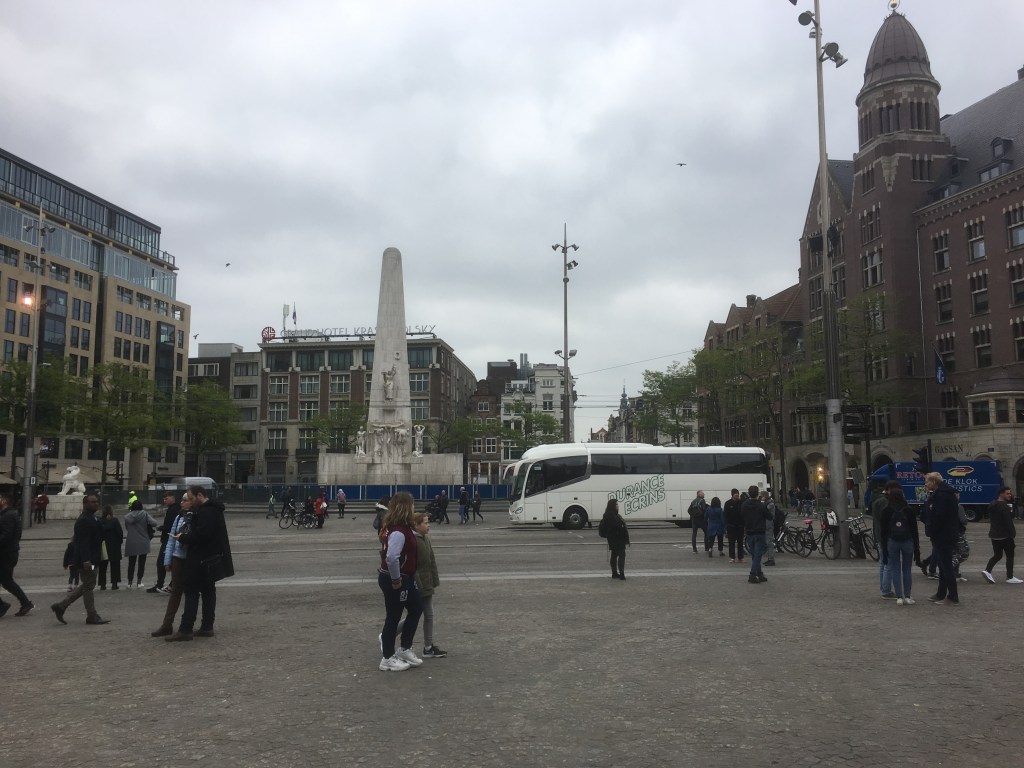
Dam Square is one of the most tourist-packed areas of Amsterdam, and for good reason. Its most prominent feature is the 17th-century Royal Palace (Koninklijk Palace), former home of the Dutch royal family and present-day venue for royal functions. Dam Square is also home to top tourist attractions like the New Church (Nieuwe Kerk); Madame Tussauds wax museum; and the National Memorial Statue, which is dedicated to Dutch soldiers who lost their lives in World War II. This huge public square is, naturally, lined with cafes and shops, and full of vendors selling food and souvenirs. Tourists will also find a Ferris wheel, perfect for getting a different perspective, as well as plenty of entertainment, which ranges from street performers to annual music festivals.
Oude Kerk
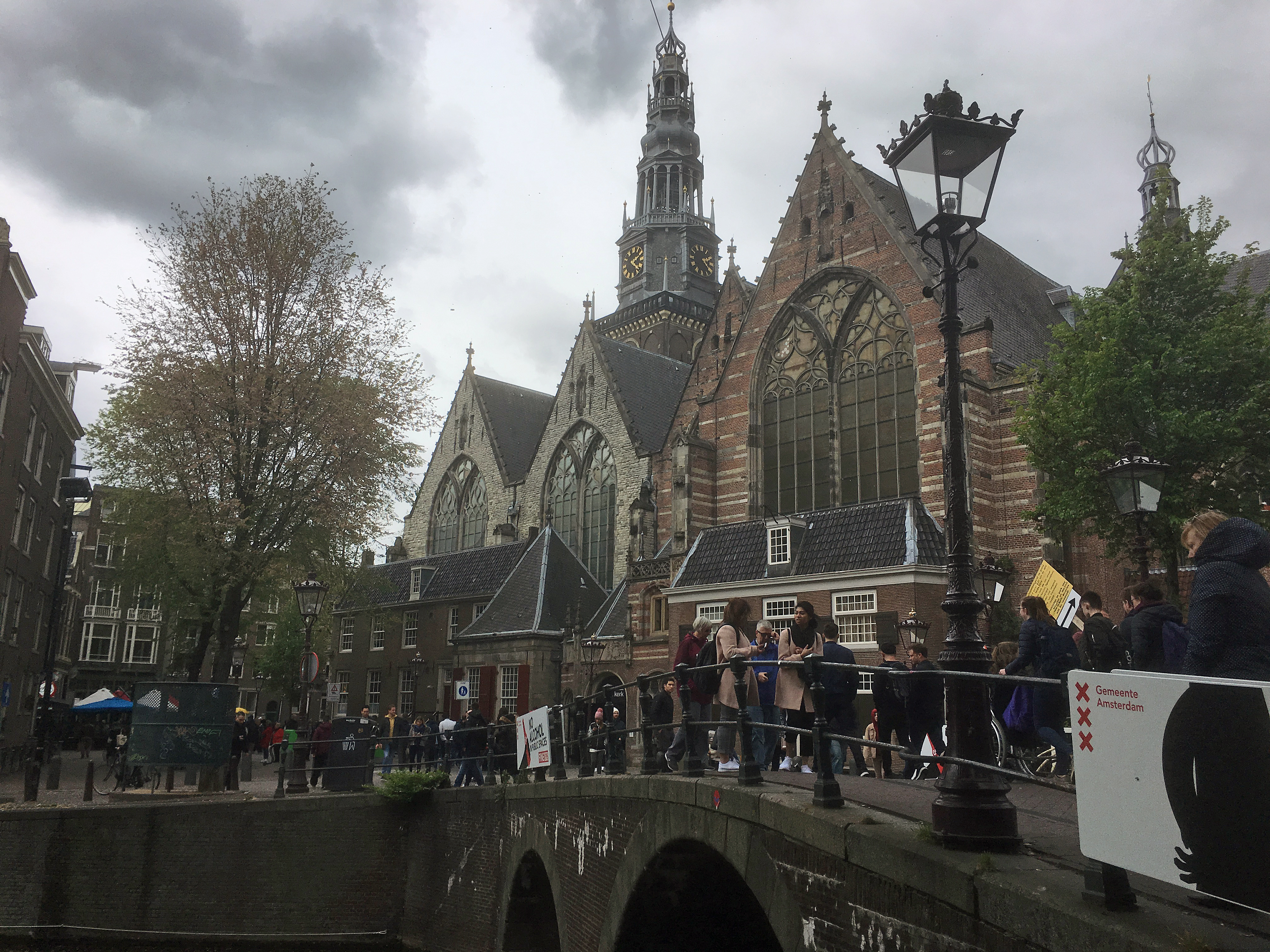
The Old Church (Oude Kerk), built in 1306 and the first hall church in North Holland, became the model for many other churches in the region. Numerous additions were built over the centuries, such as the large side chapels from the early 1500s. Also dating from this period is a portal leading to the Iron Chapel, where documents showing the city’s privileges, including the freedom from tolls granted in 1275, were kept locked behind an iron door. The tower was added in the 16th century and has a carillon from 1658 that’s considered one of the finest in the country (it also offers great views over the city). The interior of the church has features dating from before the Reformation, including three magnificent windows from 1555 from the Dutch High Renaissance, and finely-carved wooden choir stalls. After exploring this beautiful historical building, take a two-minute stroll across the bridge to Zeedijk, one of Amsterdam’s oldest streets. Many houses along here lean at an angle from the vertical, and the 15th-century house at No. 1 is thought to be the oldest surviving building in the city

A’Damlook Out Tower
A’DAM LOOKOUT is an observation deck with an unrivalled panoramic view of Amsterdam. You’ll see the city’s historical centre, its pulsating port, the unique Dutch polder landscape and you’ll spot the famous canals which belong to the UNESCO world heritage list. Complementing the experience is a state-of-the-art interactive exhibition about Amsterdam’s history and culture. A’DAM LOOKOUT is located on top of the A’DAM Tower in Amsterdam North.




The Jordaan Neighborhood
The Jordaan is the most popular of Amsterdam’s neighborhoods, known for its mix of residential areas with garden courtyards, lively markets, and upscale boutiques and eateries. Tourists could easily spend a day simply wandering the picturesque streets, but the area is also home to plenty of things to do. Known to most as the home of the Anne Frank Museum, the area is also home to lesser-known treasures like the Woonboots Museum, a floating museum dedicated to houseboats. On Saturday mornings, Lindengracht turns into a huge open-air market, where you can find local crafts, produce, flowers, and goodies perfect for filling a picnic basket. Monday mornings, it is Westerstraat that fills with 200 vendors’ stalls, this time selling a wide range of goods in a flea-market-style bazaar. The Jordaan’s restaurants and cafes have become the trendy place to sit and people-watch while enjoying traditional Dutch folk music.
The Begijnhof
The Begijnhof is one of those rare tranquil inner-city spots that many tourists simply don’t notice as they hustle from attraction-to-attraction. And that’s a shame, as this stunning old corner of Amsterdam simply begs to be strolled. Although most of the old homes are occupied, the tiny lanes and pathways around them provide public access, so don’t be shy to explore. You’ll be rewarded with views of well-kept green lawns – the courtyards – surrounded by some of the oldest houses in Amsterdam, including its only remaining wooden house from the 14th century. Originally occupied by a commune of pious Catholic women (begijnen), the area’s small chapel (still open for services) saw the last of these women buried here in 1971.
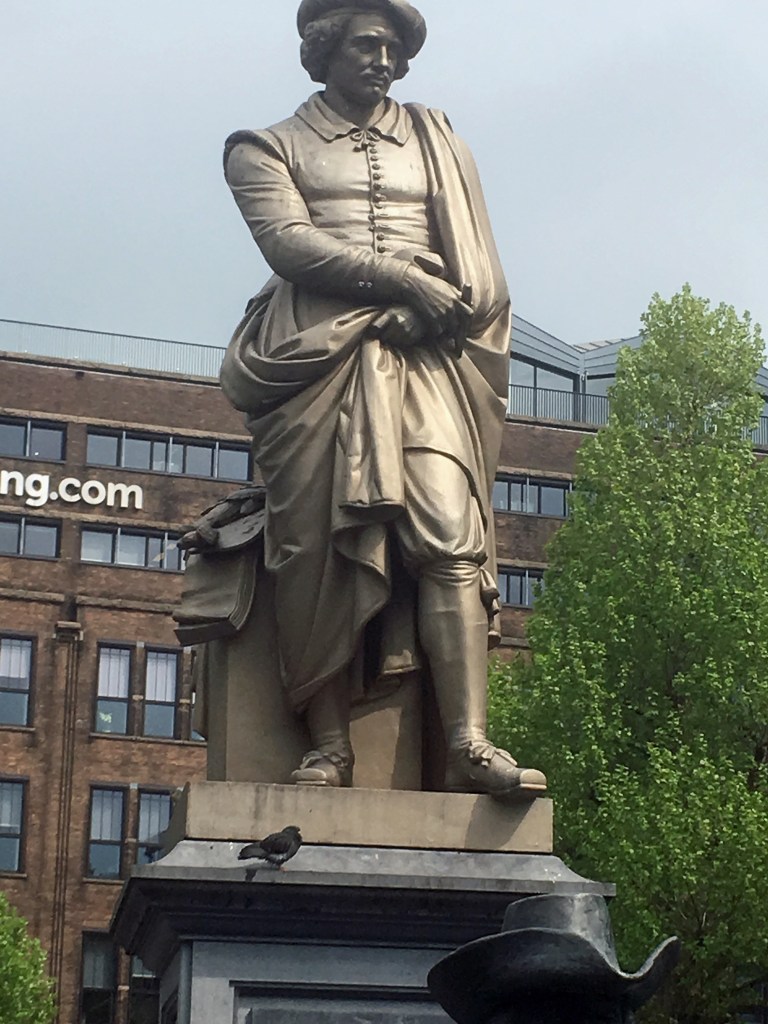
Rembrandt Statue in Rembrandt Square
Rembrandt, along with his wife Saskia, spent the happiest (and most successful) years of his life in the house on the Jodenbreestraat, now home to the Rembrandt House Museum. It was here, in the Jewish Quarter, that he found models for his Biblical themes, and where he painted the sights from his many outings along the canals. Rembrandt lived here for 20 years, and the house has been furnished in 17th-century style with numerous etchings and personal objects. English language guided tours are available.
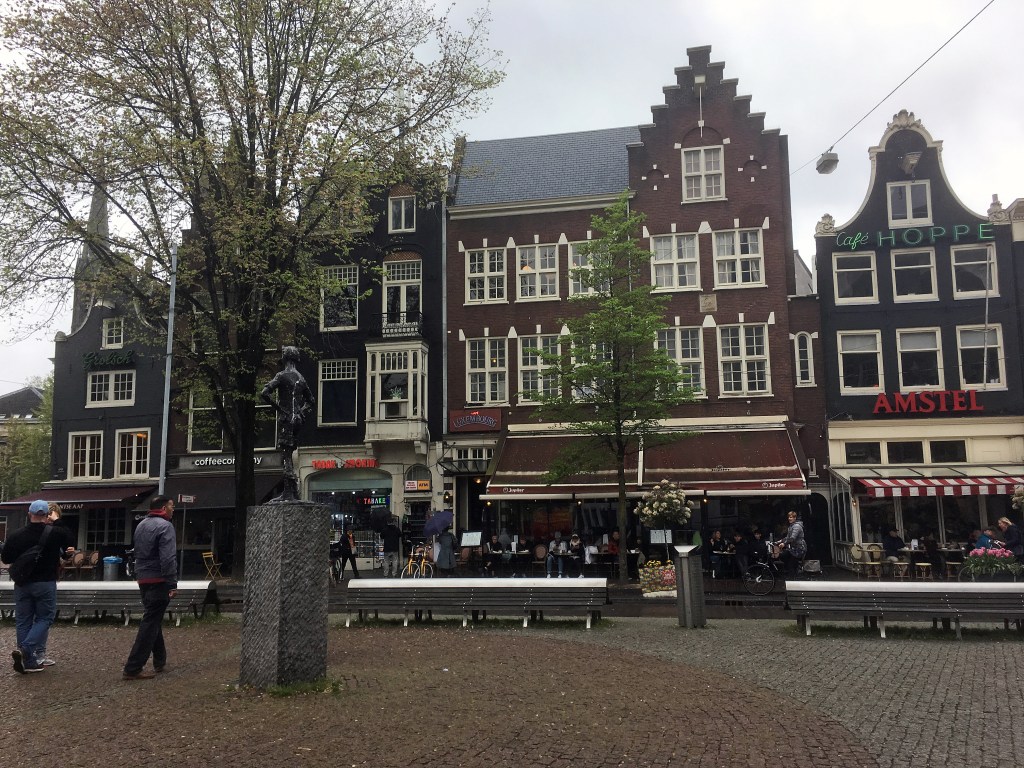
A two-minute walk from Rembrandt House Museum, is Zuiderkerk (South Church) where three of Rembrandt’s children are buried as well as one of his pupils. Constructed between 1603 and 1611, it was the first Protestant church to be built in Amsterdam after the Reformation and was designed by architect Hendrick de Keyser, who is also buried here. After extensive restoration, it is now a center for local cultural activities and events. Another Rembrandt-related destination in the city is Rembrandt Square, home to numerous cafés and restaurants, along with a statue of the famous painter.
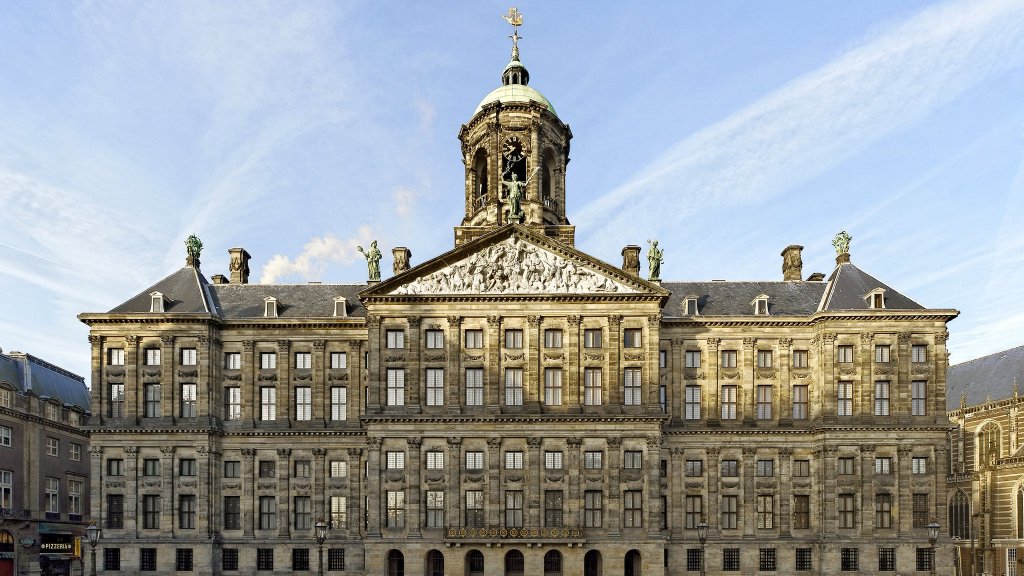
The Royal Palace
Formerly the Town Hall, the Royal Palace serves as the King’s residence when he’s in the city. Its construction was a monumental task when started in 1648 and required the sinking of 13,659 piles to support the mammoth structure. Based upon the architecture of ancient Rome, the exterior is strictly classical, while the interior is magnificently furnished, its apartments decorated with a wealth of reliefs, ornamentation, marble sculptures, and friezes, along with ceiling-paintings by Ferdinand Bol and Govert Flinck, pupils of Rembrandt. Other highlights include one of the finest furniture collections in the world; the City Treasurer’s room with its marble fireplace and ceiling paintings by Cornelis Holsteyn; and the Hall of the Aldermen, also containing paintings by Bol and Flinck. The largest and most important room is the Council Hall, sumptuously decorated and one of the most beautiful staterooms in Europe. English language guided tours are available
Amsterdam Canals
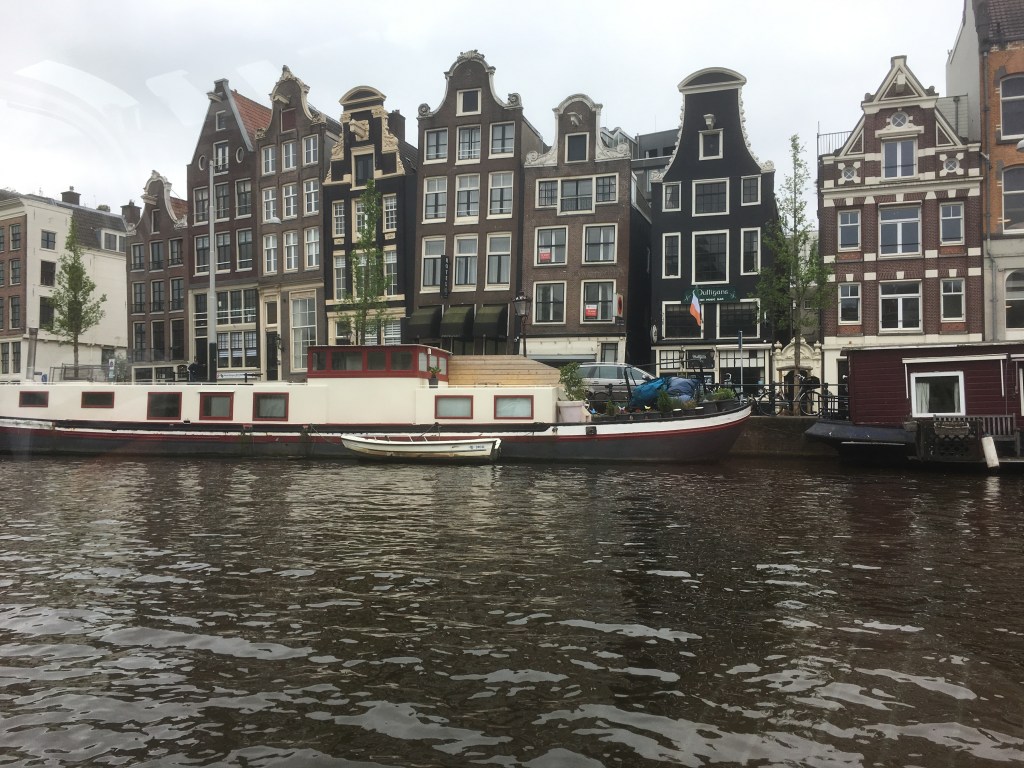
Amsterdam has more than one hundred kilometers of canals, about 90 islands and 1,500 bridges. The three main canals (Herengracht, Prinsengracht and Keizersgracht), dug in the 17th century during the Dutch Golden Age, form concentric belts around the city, known as the Grachtengordel. Alongside the main canals are 1550 monumental buildings. The 17th-century canal ring area, including the Prinsengracht, Keizersgracht, Herengracht and Jordaan, were listed as UNESCO World Heritage Site in 2010, contributing to Amsterdam’s fame as the “Venice of the North”.


City of Bikes
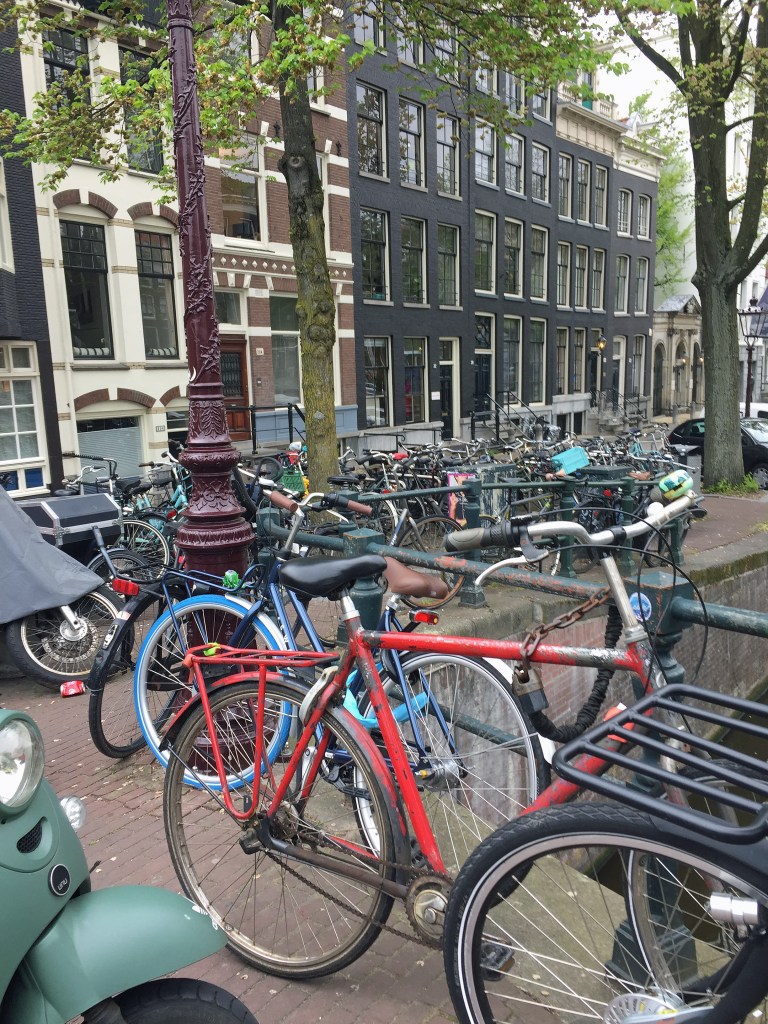
Amsterdam has roughly 800,000 people with 1 million bikes. At one time people just got on the nearest bike and rode this to your destination and then left it. Now people actually own bikes and theft is a real problem and estimates range from 50,000 to 80,000 are stolen each year mainly from outside the owners home and during the day. The secret to owning a bicycle in Amsterdam is to never buy new ones and to always buy from 2nd hand sellers who sell rusty and very old ones. The reason for this is that bicycle thieves are never interested in rusty and ugly looking bicycles. .
The World Famous Cow Museum
Amsterdam has a vast number of museums and the most quirky is the world famous cow museum. Why you’d put a cow museum in a city and not in the countryside is beyond us.

Amsterdam Parking
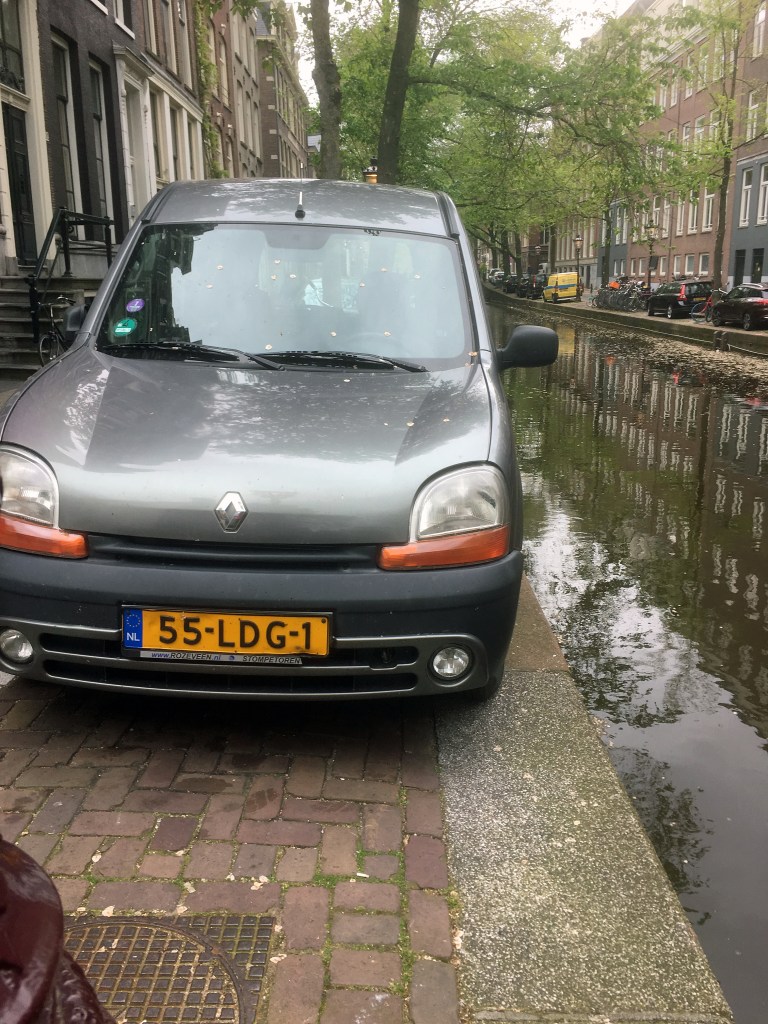
In some parts of Amsterdam small railings have been put alongside the canals by insurance companies to prevent cars being driven in to the canal when parking. There are still about 3 cars per month that end up in the canal.
This is a good bit of parking which is just alongside the canal. Getting out of the drivers side of the car is fine if this is a British car where the driver is on the right however this is a Dutch car, with the driving seat on the left (or right as you look at this picture). The driver either climbed over the passenger seat or ended up in the canal.
Bits We Missed
Some of the museums in Amsterdam, including Anne Frank and Van Gogh, are so busy that you need to book months in advance. When we visited we tried to book Anne Frank two months before and there were no tickets. The website said that some are available on the day but we found there were none. This is a good excuse to re-visit one day.
 Heather and Keith's travels