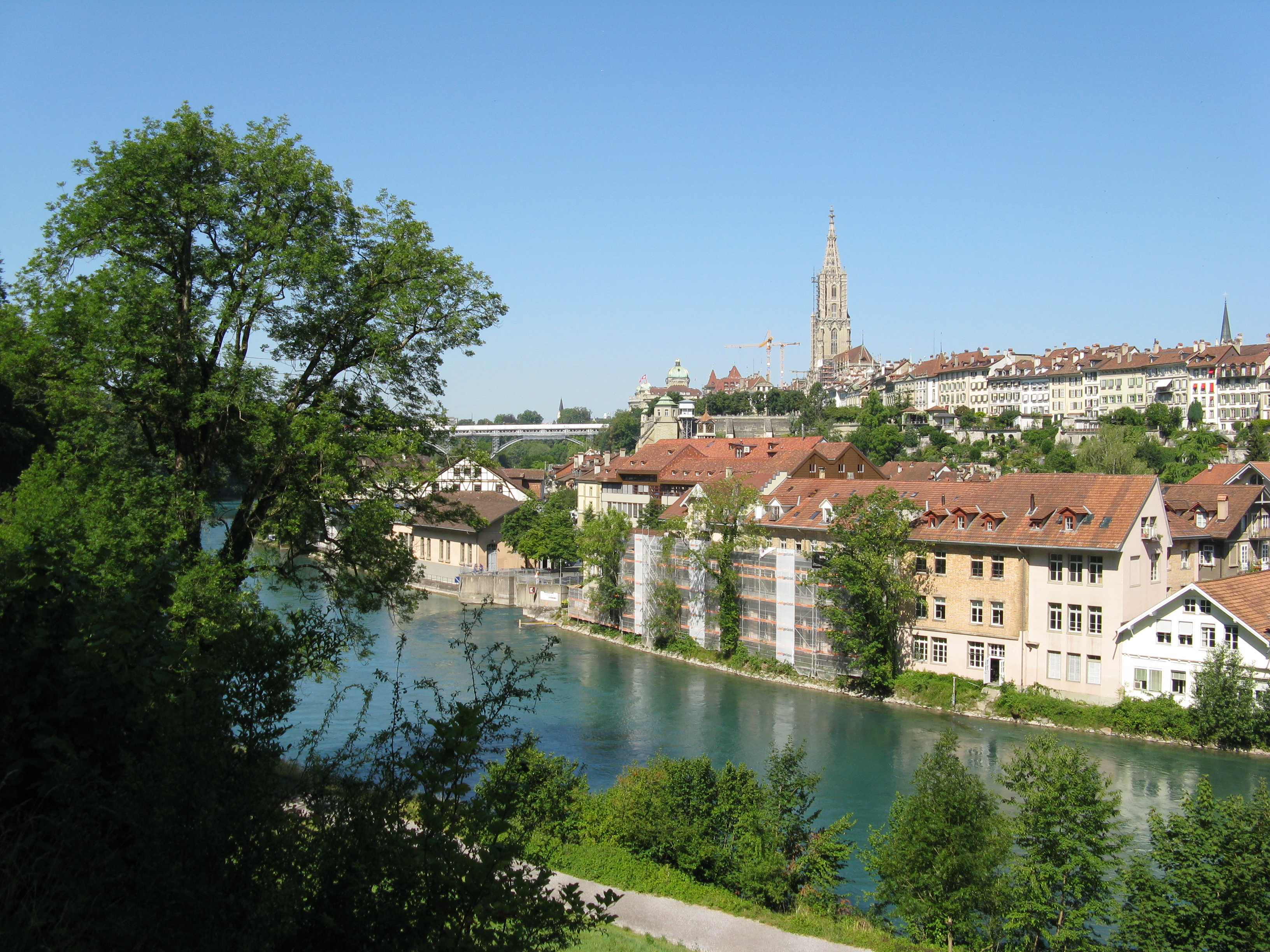
One of the planet’s most underrated capitals, Bern is a fabulous find. With the genteel old soul of a Renaissance man and the heart of a high-flying 21st-century gal, the riverside city is both, medieval and modern. The 15th century old Town is gorgeous enough to sweep you off your feet and make you forget the century (it’s definitely worthy of its 1983 Unesco World Heritage site status).
Bern has 6km of covered arcades which are the longest
shopping promenades in Europe. It is also Europe’s most flower decorated city. The city is small, easy to get round and 1/3rd of it is public parks and woods. In Bern all tourist hotels give visitors a free transportation pass which you can use on buses and trolley buses.
It is often overlooked by tourists who head for Zurich, Geneva and Lucerne. This is a mistake because it is so pretty and in 1983, the historic old town in the centre of Bern became a UNESCO World Heritage Site. Bern is ranked among the world’s top ten cities for the best quality of life.
We visited in July 2018 and stayed at the Sorell Hotel Ador.
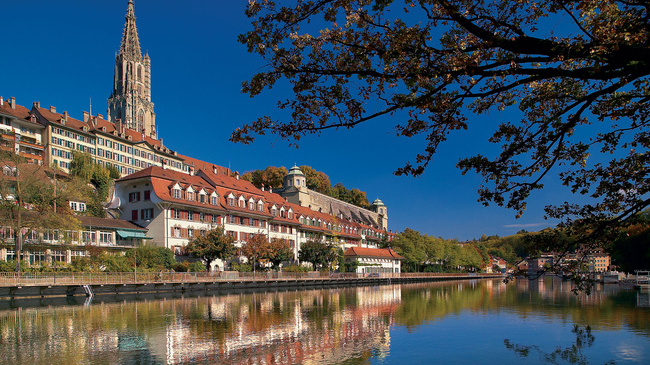
Bern Cathedral
Bern Cathedral is a Swiss Reformed cathedral, (or minster) in the old town area of Bern. Built in the Gothic style, its construction started in 1421. Its tower, with a height of 100.6 m (330 ft), was only completed in 1893. It is the tallest cathedral in Switzerland.
Bärengrabenear
The Bärengraben, or Bear Pit, is an enclosure housing bears, situated at the eastern edge of the old city of Bern, next to the Nydeggbrücke and the River Aare. Although still in use, the Bärengraben has been supplemented since 2009 by the adjacent BärenPark, a larger and more natural enclosure alongside the River Aare.
The Bärengraben is a Swiss heritage site of national significance, and is of particular significance in Bern because the bear is a symbol of both the city and surrounding canton, and is featured in their coat of arms.

Zytglogge (Clock Tower)
The Zytglogge is a landmark medieval tower in the old town. Built in the early 13th century, it has served the city as guard tower, prison, clock tower, centre of urban life and civic memorial.
Despite the many redecorations and renovations it has undergone in its 800 years of existence, the Zytglogge is one of Bern’s most recognisable symbols and, with its 15th-century astronomical clock, a major tourist attraction. It is a heritage site of national significance, and part of the Old City of Bern, a UNESCO World Cultural Heritage site.

Federal Palace (Parliament Building)
The Federal Palace houses the Swiss Federal Assembly (legislature) and the Federal Council (executive). It consists of a central assembly building and two wings (eastern and western) housing government departments and a library.
The two chambers where the National Council and the Council of States meet are separated by the Hall of the Dome. The dome itself has an external height of 64 m, and an internal height of 33 m.

Swiss National Bank
The Swiss National Bank (SNB) is the central bank of Switzerland, and is therefore responsible for the monetary policy of the nation of Switzerland and also for the issuing of Swiss franc banknotes.
The bank is otherwise known as: German: Schweizerische Nationalbank; French: Banque nationale suisse; Italian: Banca nazionale svizzera; Romansh: Banca naziunala svizra, which are the four official languages of the country.

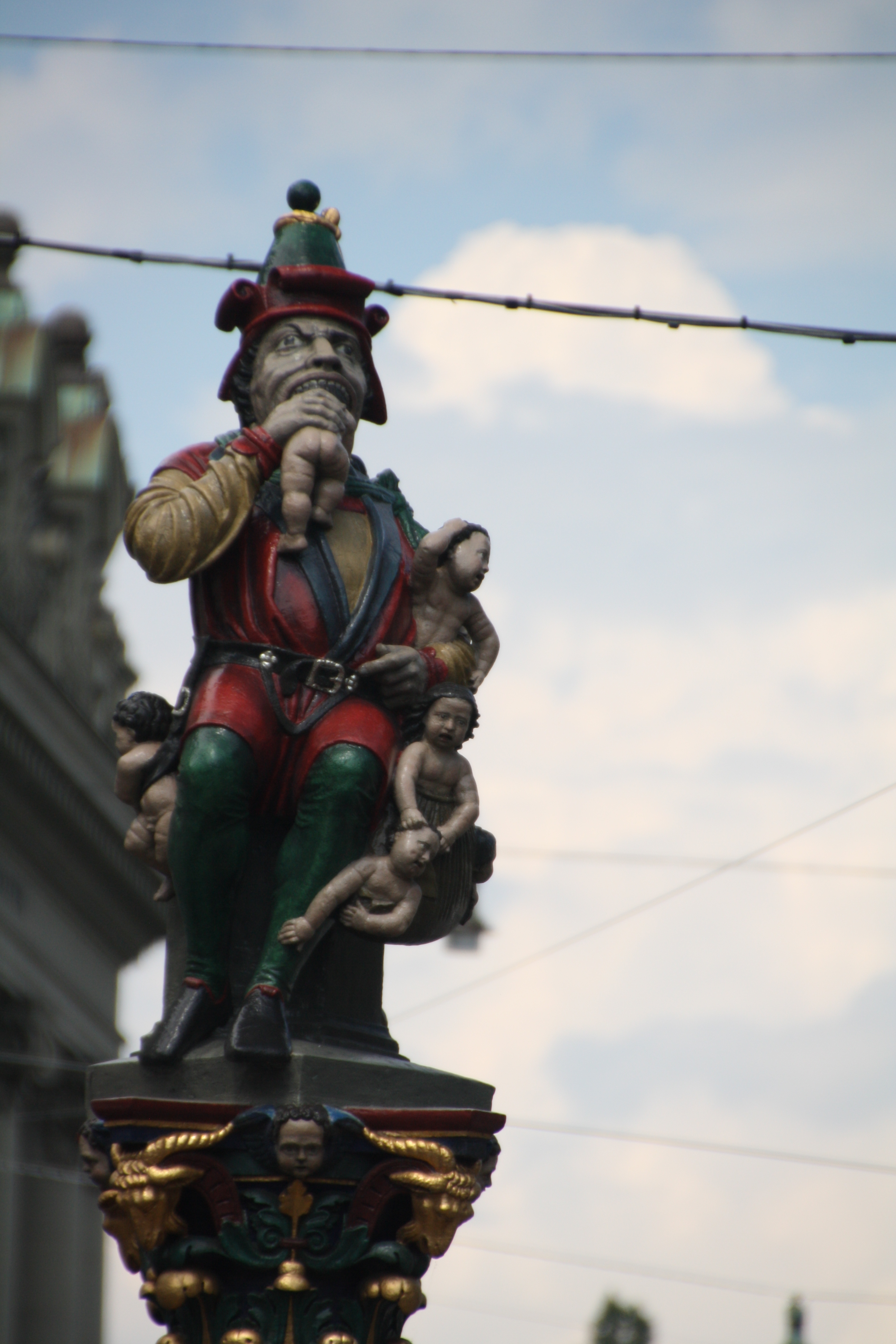
Child-Eater Statue
The fountain sculpture towers above the ground, a baby half stuffed into the giant’s mouth, and a sack full of three alarmed tots slung over his shoulder presumably for later snacking. The unsettling sculpture is no modern work of art; built in 1546, it is one of the oldest fountains in Bern. Strangely, no one is exactly sure why it’s there.
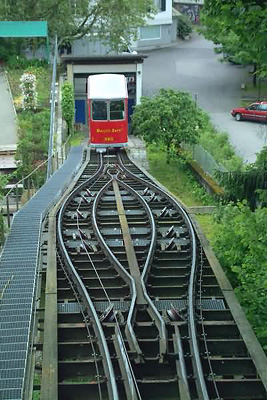
Drahtseilbahn
The Marzilibahn, officially the Drahtseilbahn Marzili–Stadt Bern is a very short funicular tramway. Its 105 meters of track lead from the Marzili neighbourhood to the Bundeshaus, the seat of the Swiss federal government and parliament.
We only found this on day 3 having first walked up 500 steps on day 1 and then walking up a winding road up hill on day 2.
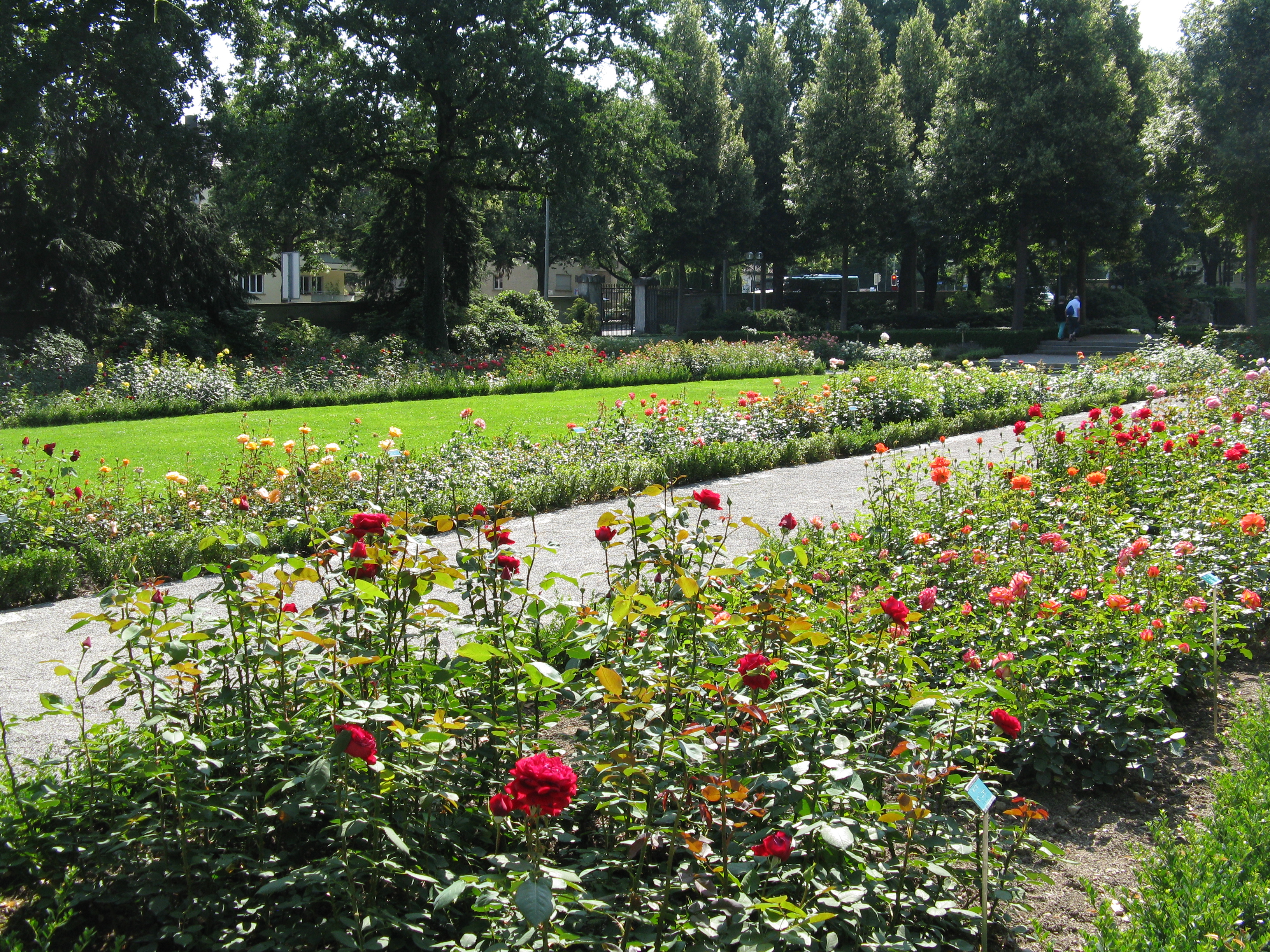
Rosengarten
The Rosengarten, rose garden, is a park northeast of the old town and is popular as a vantage point with good views of the old town.
From 1765 until the opening of the Schosshalden Cemetery in 1877, the site was used as a cemetery . In 1913 it was converted into a public park and from 1917 roses were bred here.
Urban Swimming
Only good or well trained swimmers should attempt to swim in the river Aare because of it’s fast flowing current, see picture below where the water flows over the weir. On the banks of the river there is an urban swimming and sunbathing area which consists of 4 separate swimming pools. It’s the only city that we have been to where you can have a city break and a beach type holiday.

Outdoor Games
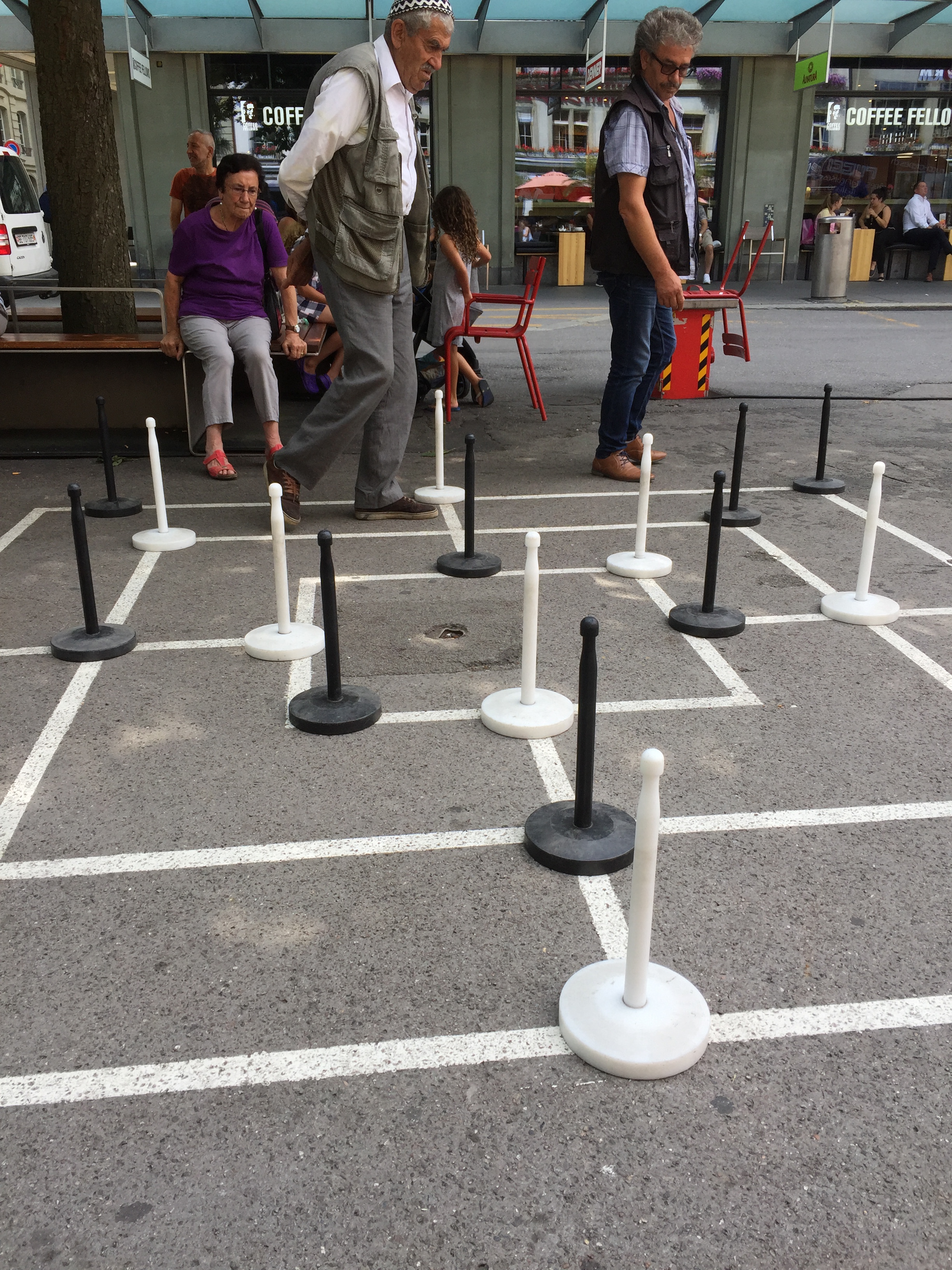
There are some trees at the south end of Bärenplatz in Bern, just opposite the Federal Palace and under these trees there are two outdoor board games. The first is chess and the second is a game that the locals called Mill. It took us several days to find out that in English this game is called Nine Men’s Morris and was invented by the roman’s.
In the days that we were there the same players were present from 9 am to 9 pm. It’s a great way for retired people to keep there brains active and keep in touch with their friends.
Chess Game

Nine Men’s Morris Game
City View
Just some random pictures of the old town

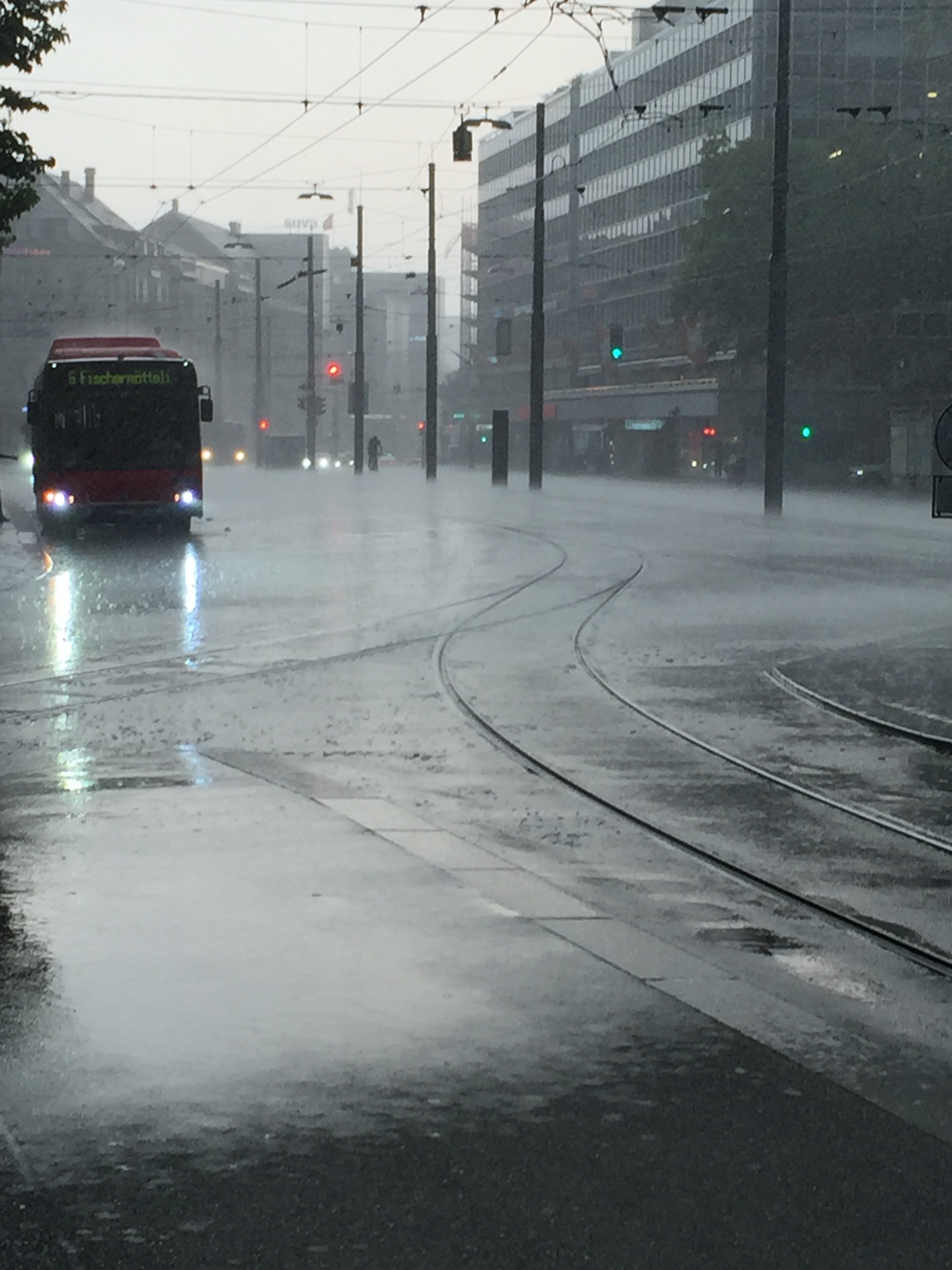
Finally, when it rains in Bern it rains, this is 7:30 in the evening.
 Heather and Keith's travels