Proximity to nature gives Slovakia’s capital its strongest flavouring. The Danube wends through town, and cycle paths through its verdant flood plain begin just outside the centre.
The charming – if tiny – old town is the place to start appreciating Bratislava. Stroll narrow pedestrian streets of pastel 18th-century buildings or sample the myriad pavement cafes under the watchful gaze of the city castle, harking back to medieval times. Done with the old? In with the new(er): the city boasts intriguing socialist era architecture worth checking out and one of Eastern Europe’s most spectacular modern art spaces. Contrasts like this are all part Bratislava’s allure.
We visited Bratislava in June 2014 and stayed at the Crowne Plaza Hotel opposite the presidential palace and only a short walk in to the old town.
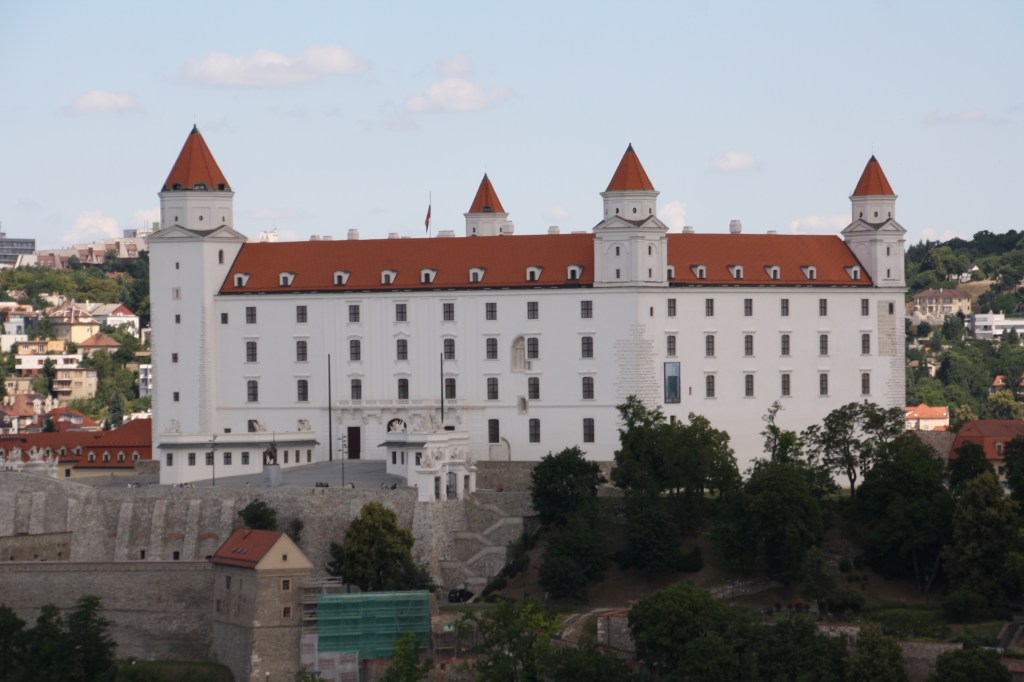
Bratislava castle
Bratislava Castle is the main castle of Bratislava. The massive rectangular building with four corner towers stands on an isolated rocky hill of the Little Carpathians directly above the Danube river in the middle of Bratislava. Because of its size and location, it has been a dominant feature of the city for centuries.
The location provides excellent views of Bratislava, Austria and, in clear weather, parts of Hungary. Many legends are connected with the history of the castle.
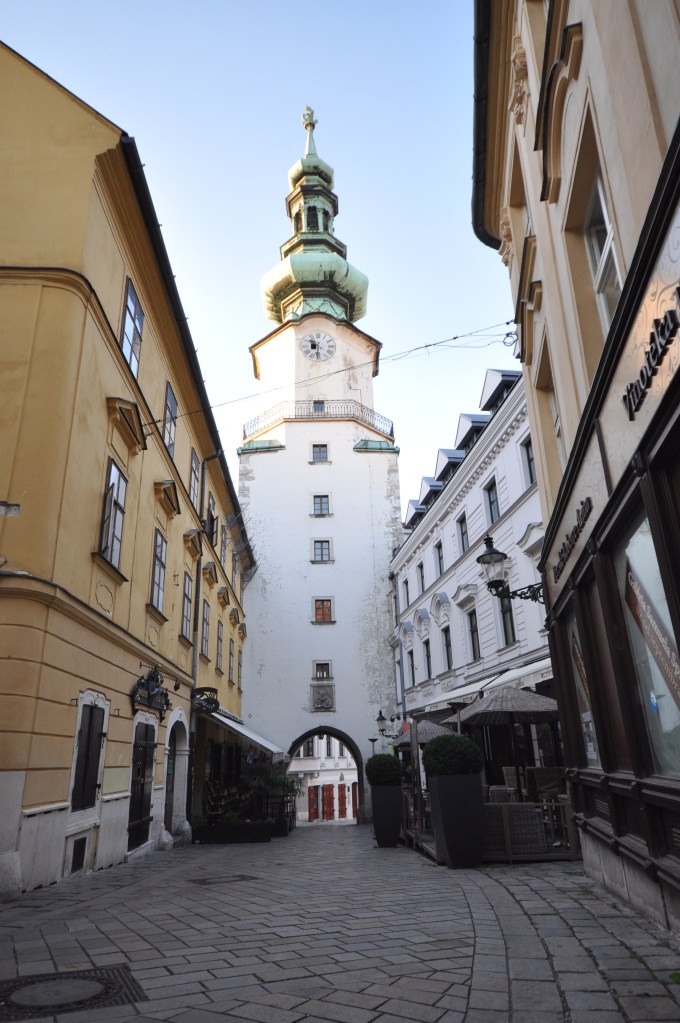
Michaels gate
In Bratislava, Michael’s Gate is the only city gate that has been preserved of the medieval fortifications and ranks among the oldest town buildings. Built about the year 1300, its present shape is the result of baroque reconstructions in 1758, when the statue of St. Michael and the Dragon was placed on its top. The tower houses the Exhibition of Weapons of Bratislava City Museum.
In the medieval times the town was surrounded by fortified walls, and entry and exit was only possible through one of the four heavily fortified gates. On the east side of the town, it was the Laurinc Gate, named after Saint Lawrence, in the south it was the Fishermen’s Gate (Halász kapu), (Rybná brána). This was the smallest gate of the four, used mainly by the fishermen entering the city with fish caught in the river Danube. On the west side it was the Vydrica Gate (Vödric kapu), (Vydrická brána), also called the Dark Gate or Black Gate, since it was like a tunnel—dark and long. In the north, there was St. Michael’s Gate named after St. Michael and the St. Michael church that stood in front of it (outside the town wall). Later on it was put down and materials gained from it were used in the building of additional town walls.
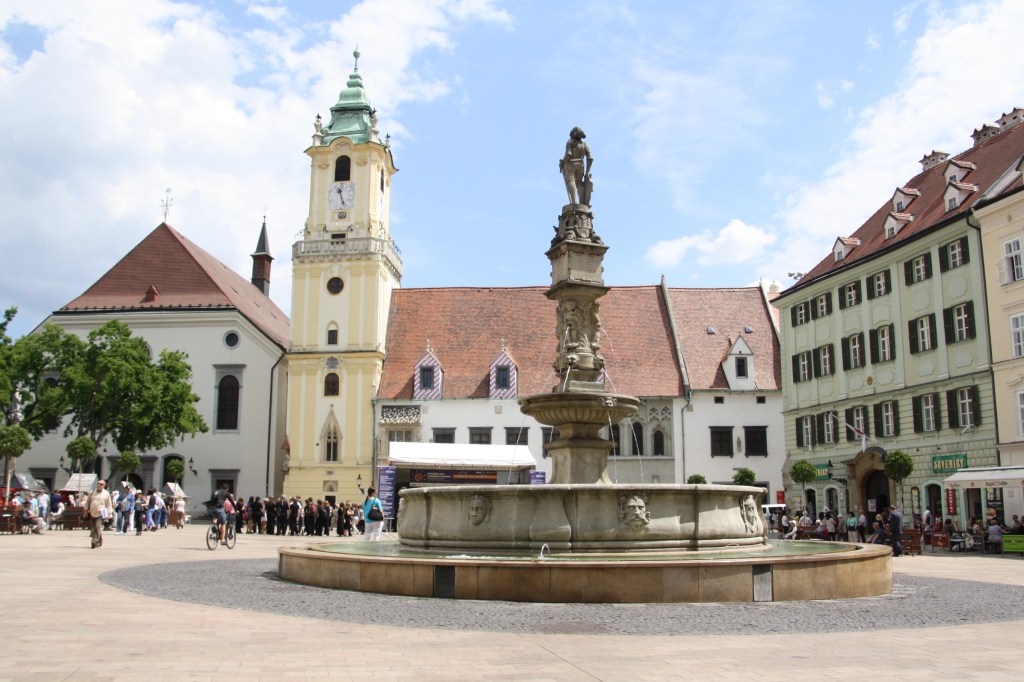
Main square
Hlavné námestie (literally “Main Square”) is one of the best known squares in Bratislava, Slovakia. It is located in the Old Town and it is often considered to be the centre of the city.
Some of the main landmarks found in the square are the Old Town Hall and Roland Fountain.
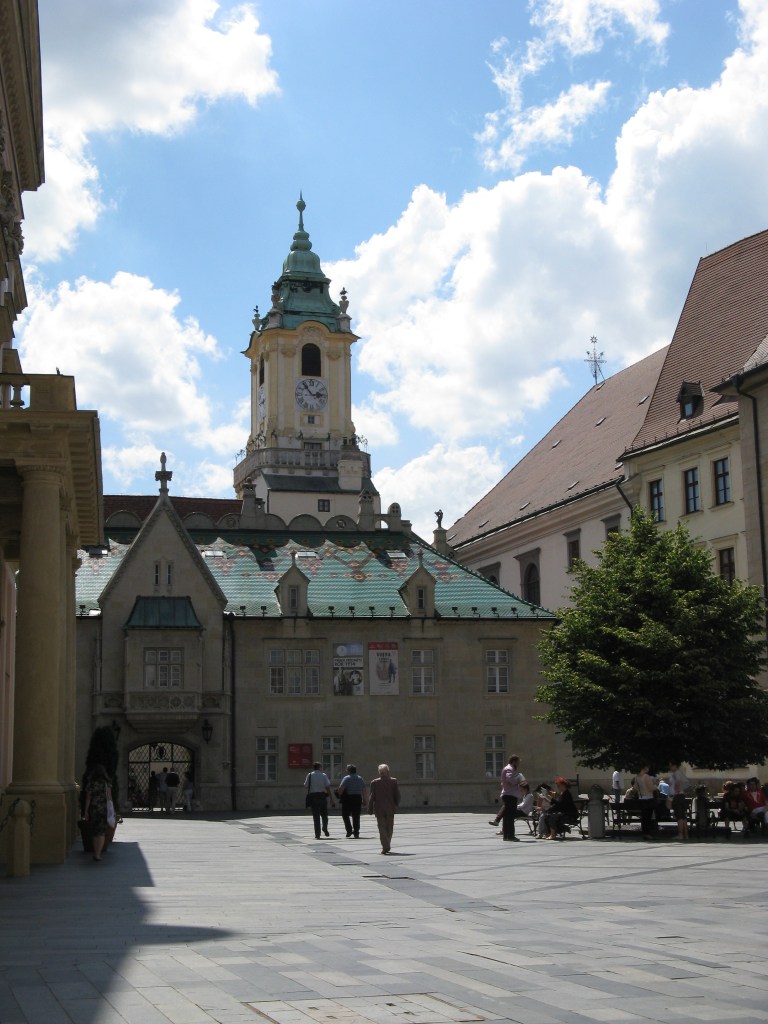
Old town
The Old Town of Bratislava is the historic centre and one of the boroughs of Bratislava. It is coextensive with the smallest Slovak administrative district by area, Bratislava I. It contains the small, but preserved medieval city centre, Bratislava Castle and other important landmarks. Bratislava’s Old Town is known for its many churches, a riverbank promenade and cultural institutions, it is also the location of most of the foreign states embassies and important Slovak institutions including the National Council of the Slovak Republic; the Summer Archbishop’s Palace, seat of the Government of Slovakia; and Grassalkovich Palace, seat of the President of Slovakia.
St Martin cathedral
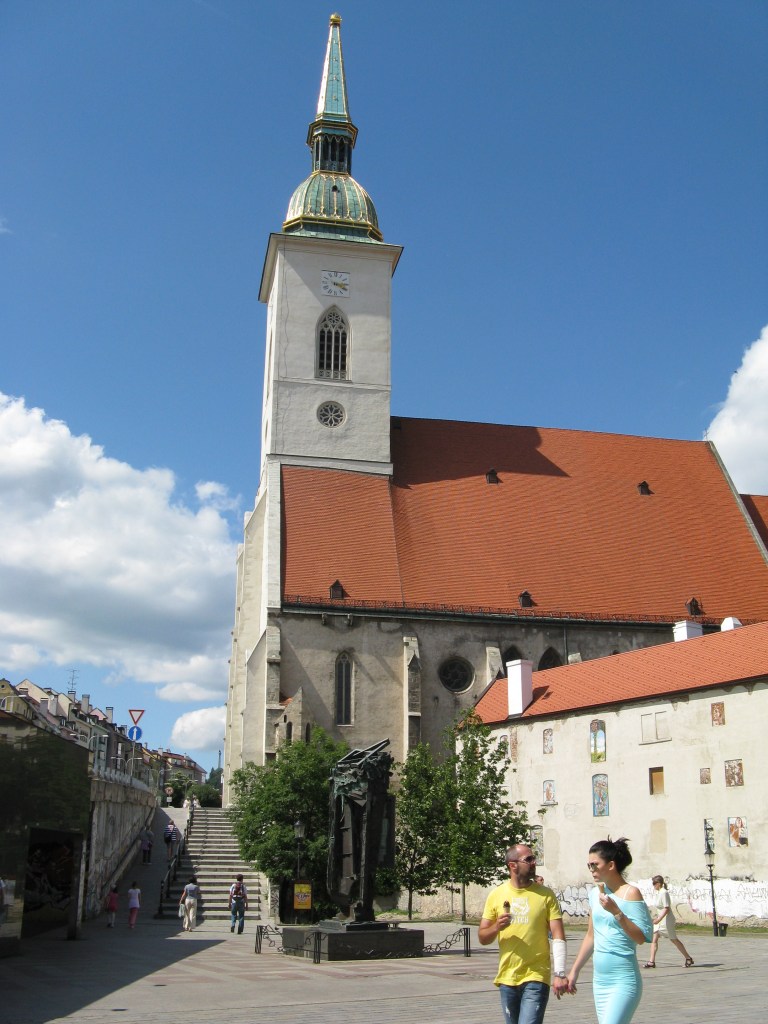
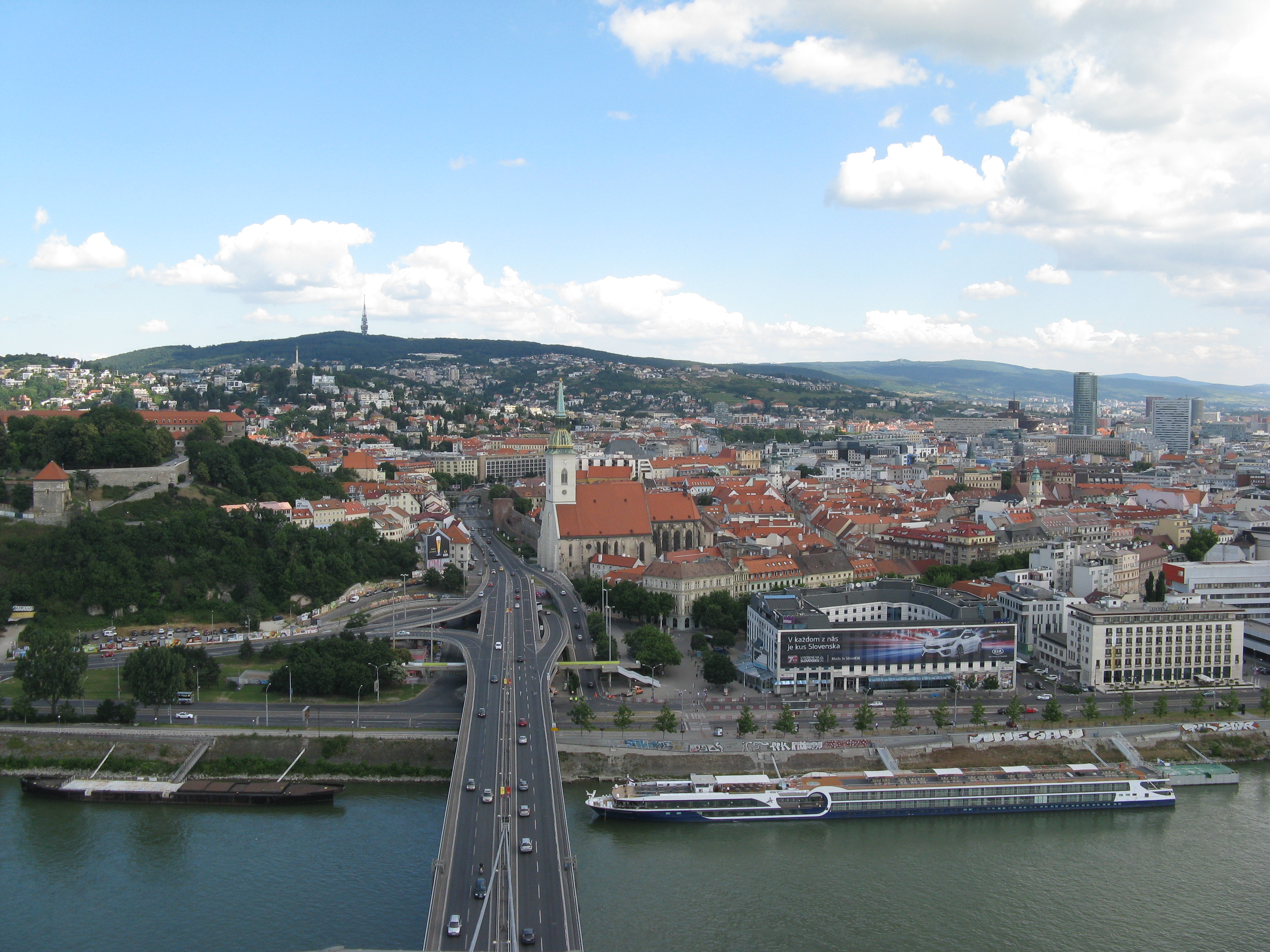
The St. Martin’s Cathedral is the cathedral of the Roman Catholic Archdiocese of Bratislava. It is situated at the western border of the historical city centre below Bratislava Castle. It is the largest and one of the oldest churches in Bratislava, known especially for being the coronation church of the Kingdom of Hungary between 1563 and 1830.
Together with the castle on the hill adjacent, and somewhat similar in its striking but fairly stark Gothic lines and colouring, St Martin’s 85 m (279 ft) spire dominates Old Town’s skyline. The tower virtually formed a part of the town’s fortifications, built as it was into the city’s defensive walls.
As with the castle, the surroundings of St Martin’s are as memorable as the structure itself. In the cathedral’s case, this includes the picturesque remains of outbuildings in a spacious staired courtyard, and a working seminary with robed adepts on a cobblestone side-street. A small but significant neighbour of the cathedral is a monument to the synagogue, which stood next door for centuries until the Communist government demolished it around 1970 to make room for a new Nový Most bridge. The cathedral contains the remains of Saint John the Merciful who died in the early 7th Century
Grasssalkovich Palace
The Grassalkovich Palace is the residence of the president of Slovakia. It is situated on Hodžovo námestie, near the Summer Archbishop’s Palace. The building is a Rococo-late Baroque summer palace with a French garden.

UFO BRIDGE & TOWER
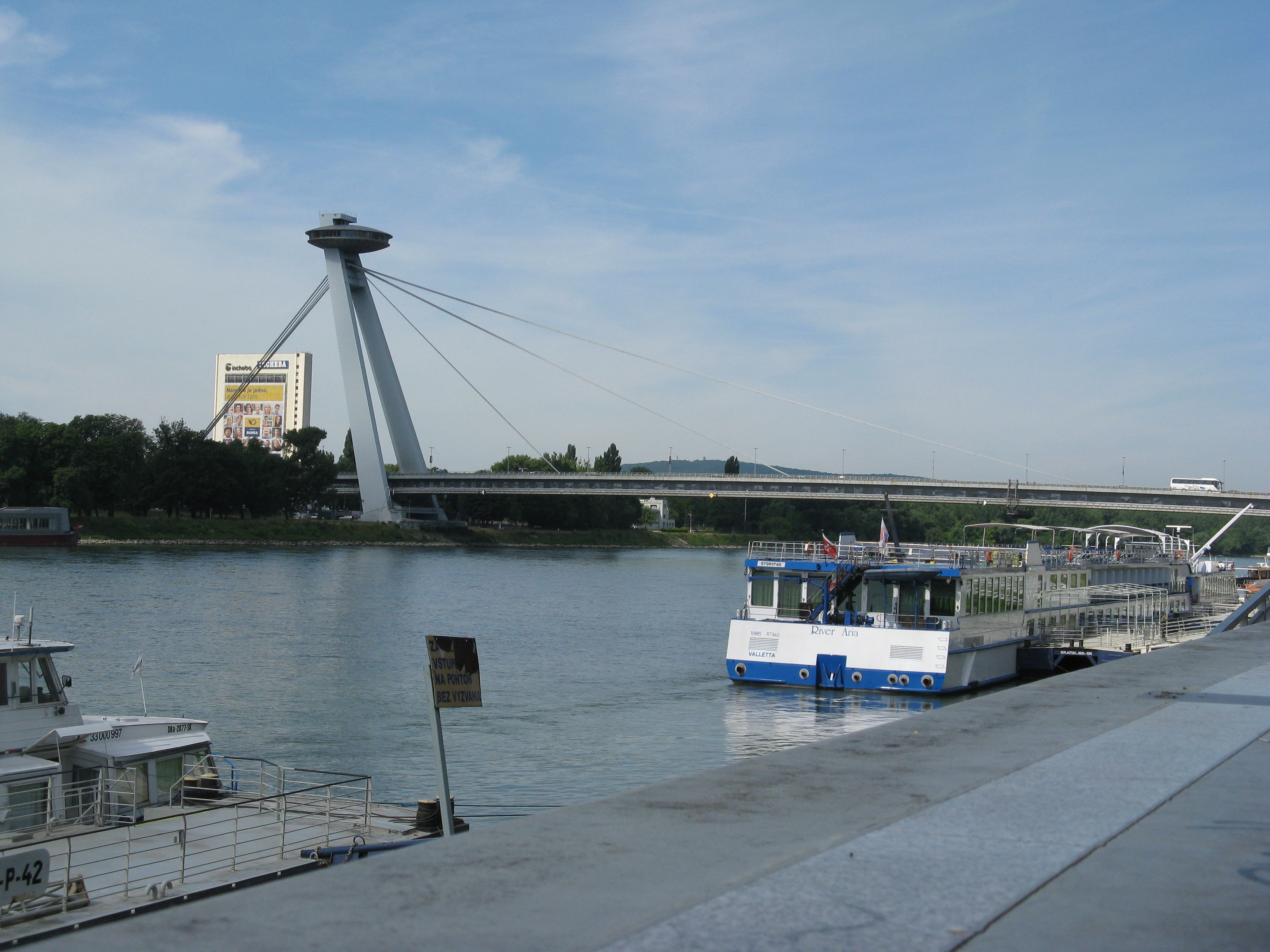
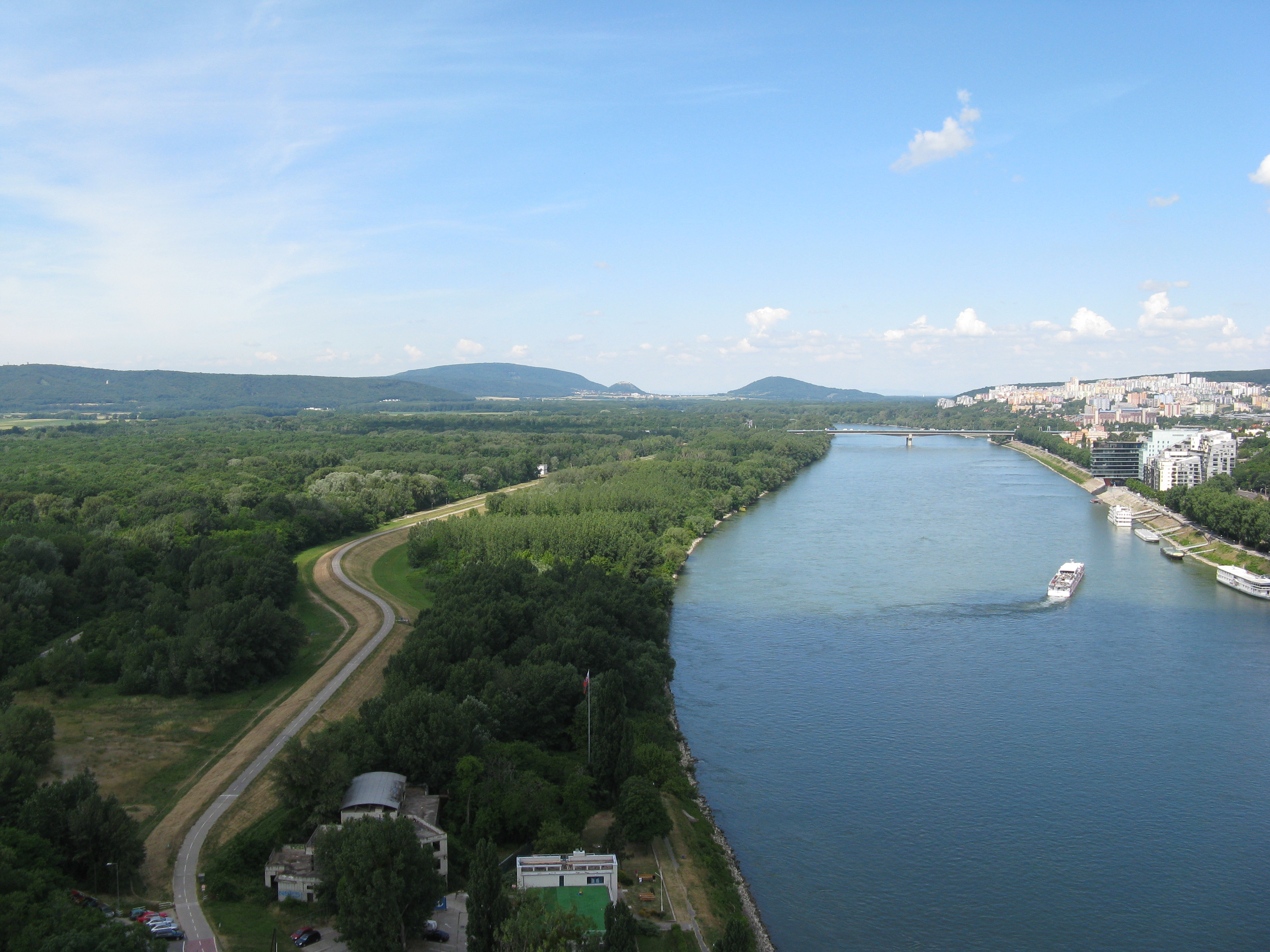
This iconic building is a symbol of Bratislava. The lift takes 45 seconds to get to the observation deck 95 meters above the ground. It gives some amazing sights and on a clear day it is said that you can see 100 km away. The bridge spans the Danube.
Men at Work
There are a number of bizarre statues in the city which depict men at work.
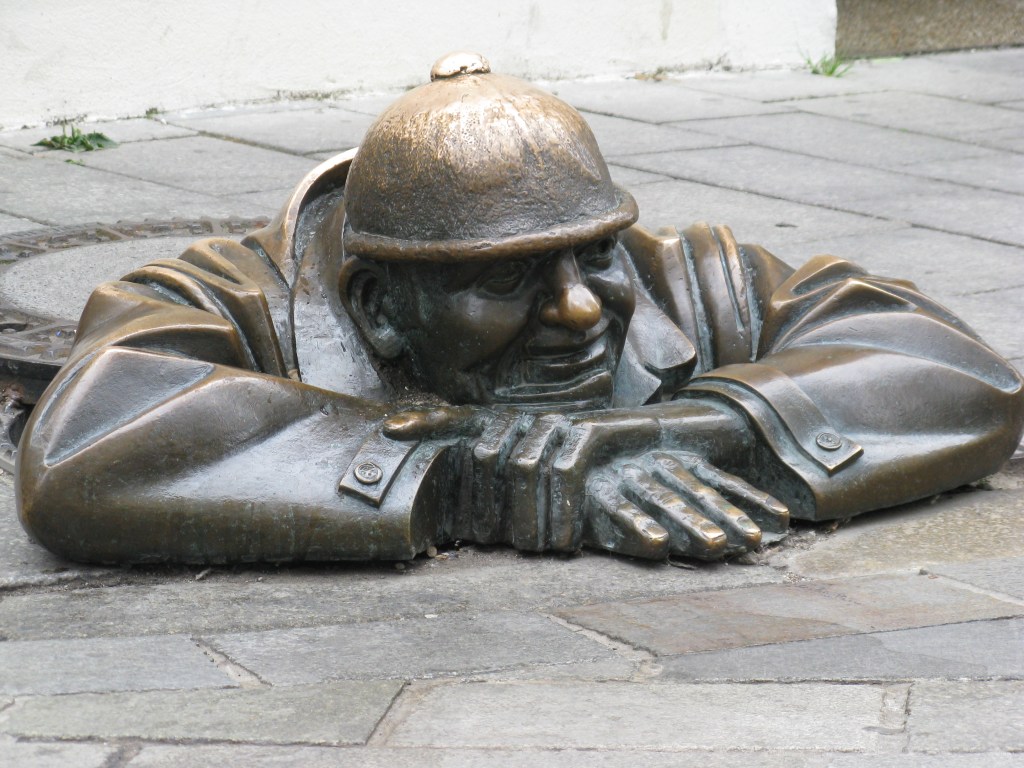
Obviously the supervisor!!!
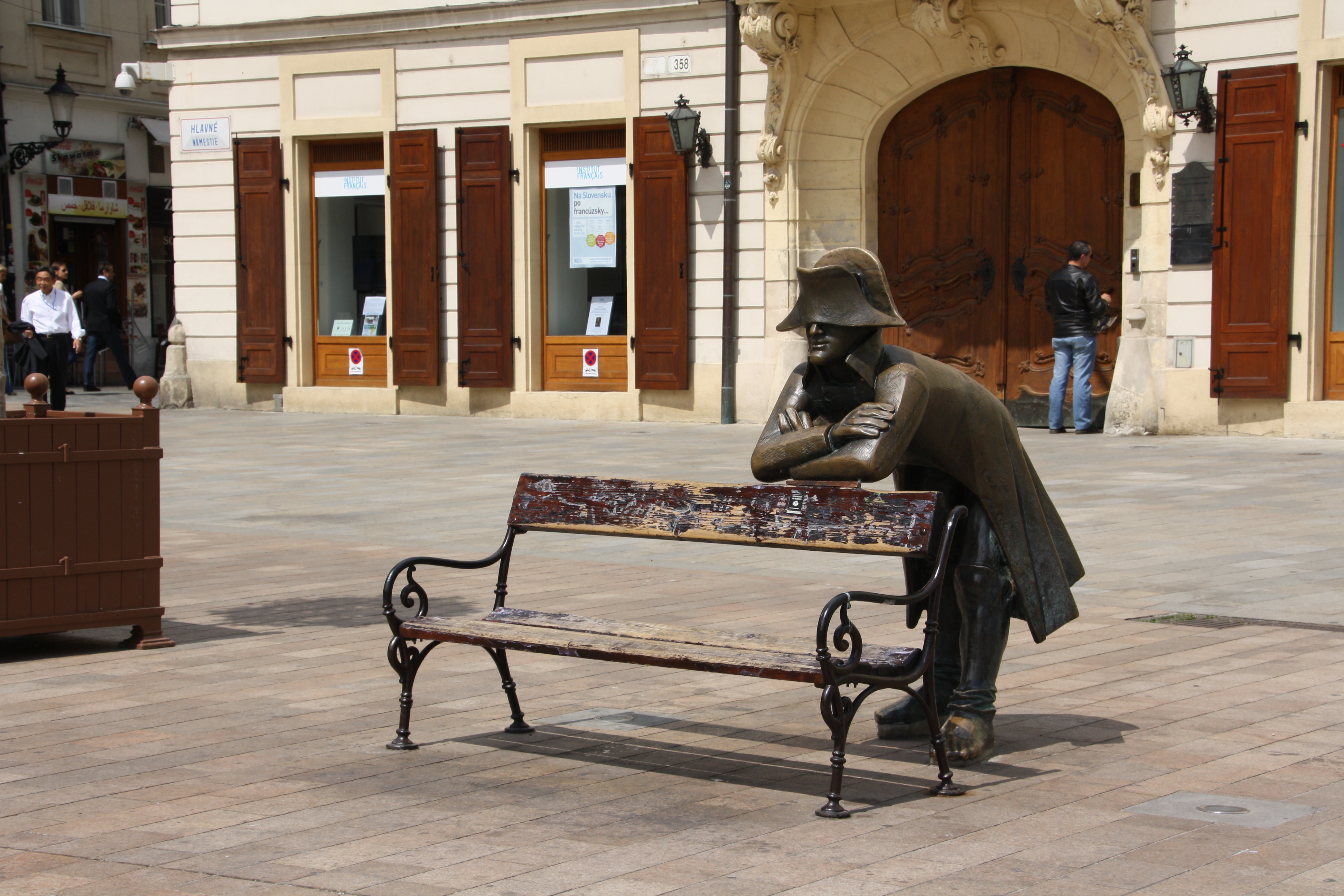
Finally
Fun ways to get around the city
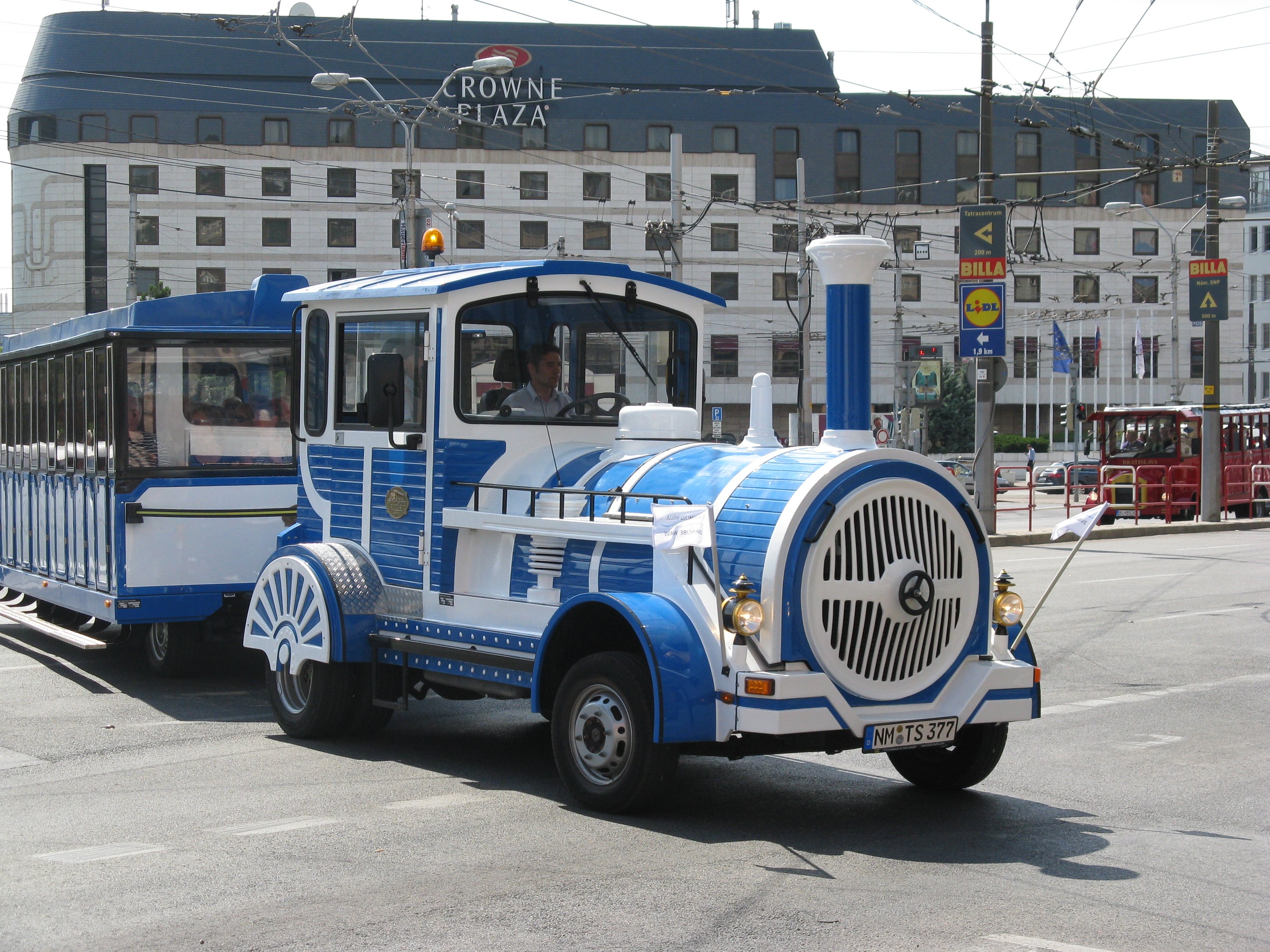
 Heather and Keith's travels