Like the country it represents, Brussels is a surreal, multilayered place pulling several disparate identities into one enigmatic core. It subtly seduces with great art, tempting chocolate shops and classic cafes. Meanwhile a confusing architectural smorgasbord pits awesome art nouveau and 17th-century masterpieces against shabby suburban-ism and the glass faced anonymity of the EU area. Brussels is officially bilingual, so all names from streets to train stations – have both Dutch and French versions.
We visited in April 2019 and stayed at the IBIS Brussels Centre, which as it’s name suggest is close to the centre.
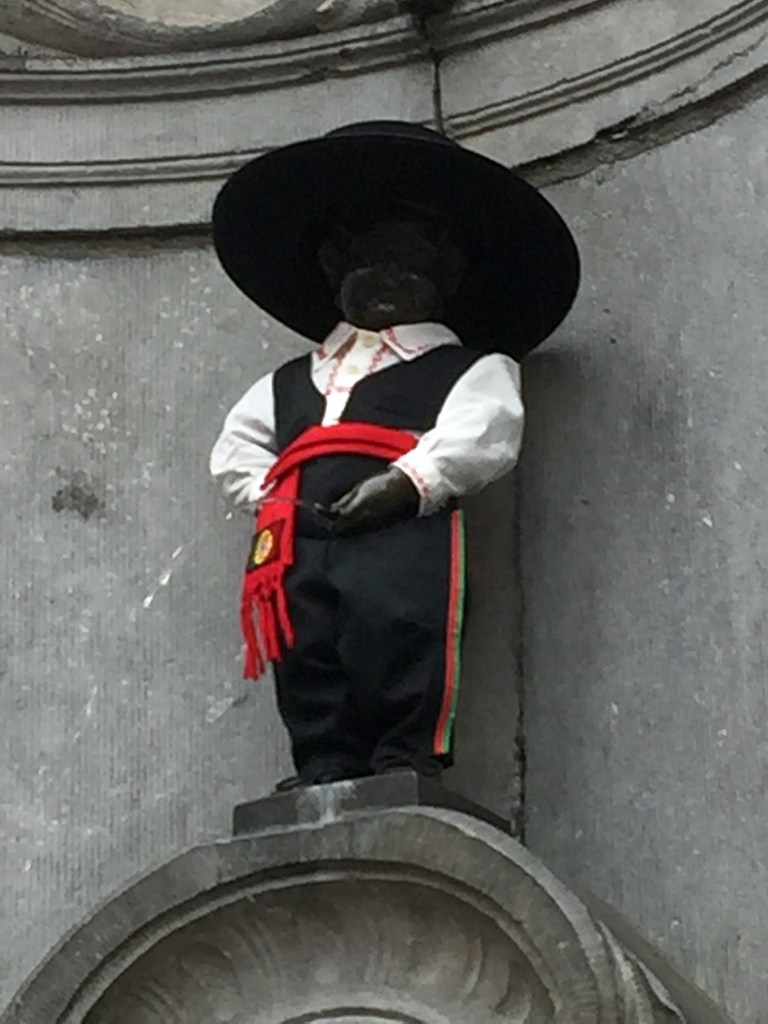
Mannekin Pis
Along the Rue de l’Etuve is Brussels’ best-known landmark, the Manneken Pis, usually besieged by a throng of tourists. Although he can be traced back to at least 1388, nothing much is known about the origin of the figure of a little boy urinating, popularly referred to as “the oldest citizen of Brussels.” The Manneken is, however, surrounded by various legends. According to one, the fountain is a memorial to a courageous infant who averted a conflagration, according to another, it commemorates the son of a count who succumbed to a pressing urge while taking part in a procession. The present statue was made in 1619 by Jérôme Duquesnoy the Elder and has been stolen on several occasions though always recovered. During major celebrations, events, and festivals in Brussels, the statue is famed for being dressed in costume.
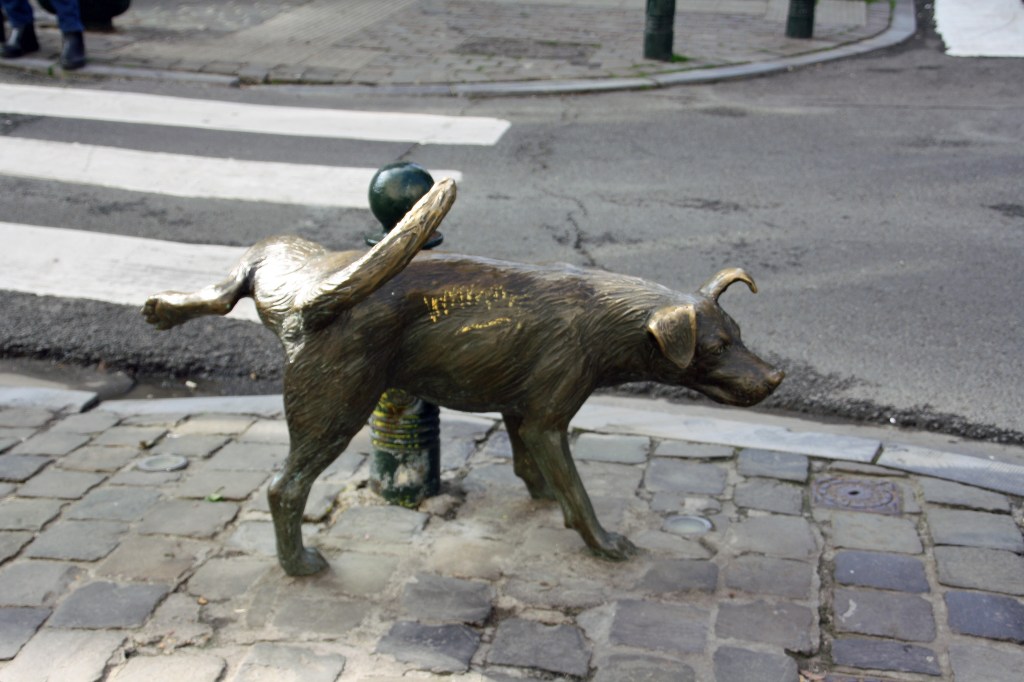
Het Zinneke
This is sometimes wrongly called Zinneke Pisand was erected in 1998.It represents a urinating dog, along the same lines as the Manneken Pis (a boy) and the Jeanneke Pis (a girl).
In August 2015, Het Zinneke was struck by a car, and was restored by the sculptor.
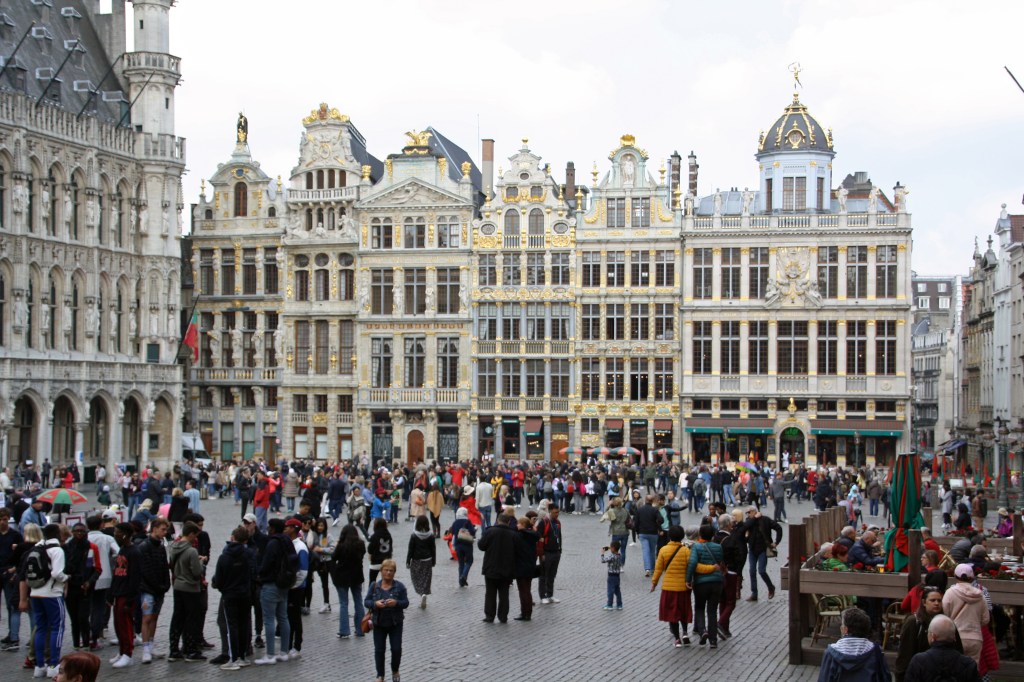
Grand Place (Grote Markt)
Right in the heart of Brussels Old Town, the city’s main plaza (known as Grand Place) is one of the best preserved in Europe. Much of the square’s elegant character is due to the unique architecture of its elegant Gildehuizen (guild houses) with their magnificent gables, pilasters, and balustrades, ornately carved stonework, and rich gold decoration. Most were built between 1696 and 1700 in the Baroque style but with some Flemish influences. The history of the Grand Place dates back much earlier though. It was first established in the 11th century and evolved soon after, to become the political and economic center for the city.
The most recognizable building on the square is the Hôtel de Ville (Town Hall), built in 1402 with the intention of upstaging the Stadhuis in the rival city of Bruges. Inside are several magnificent rooms. Among the most impressive are the Maximilian Chamber, hung with Brussels tapestries; the large Council Chamber with a superb ceiling by Victor Janssens and tapestries to his designs; the great banqueting hall and the Marriage Chamber, both beautifully paneled; and the Escalier d’Honneur, with murals illustrating the history of Brussels.
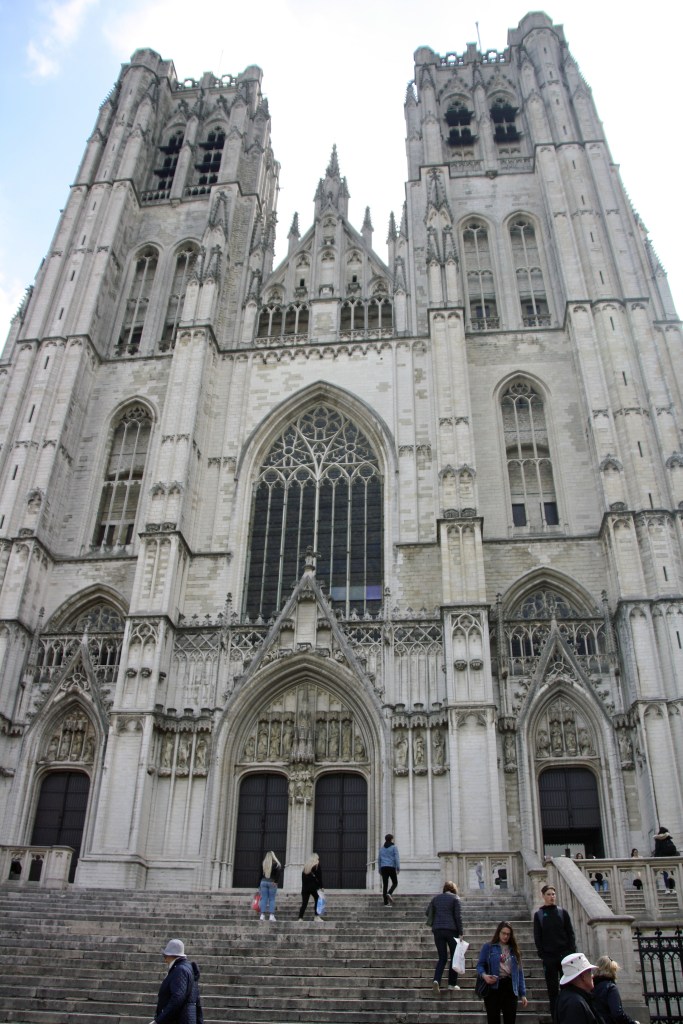
Saint-Michel Cathedral (Sint-Michiels Kathedraal)
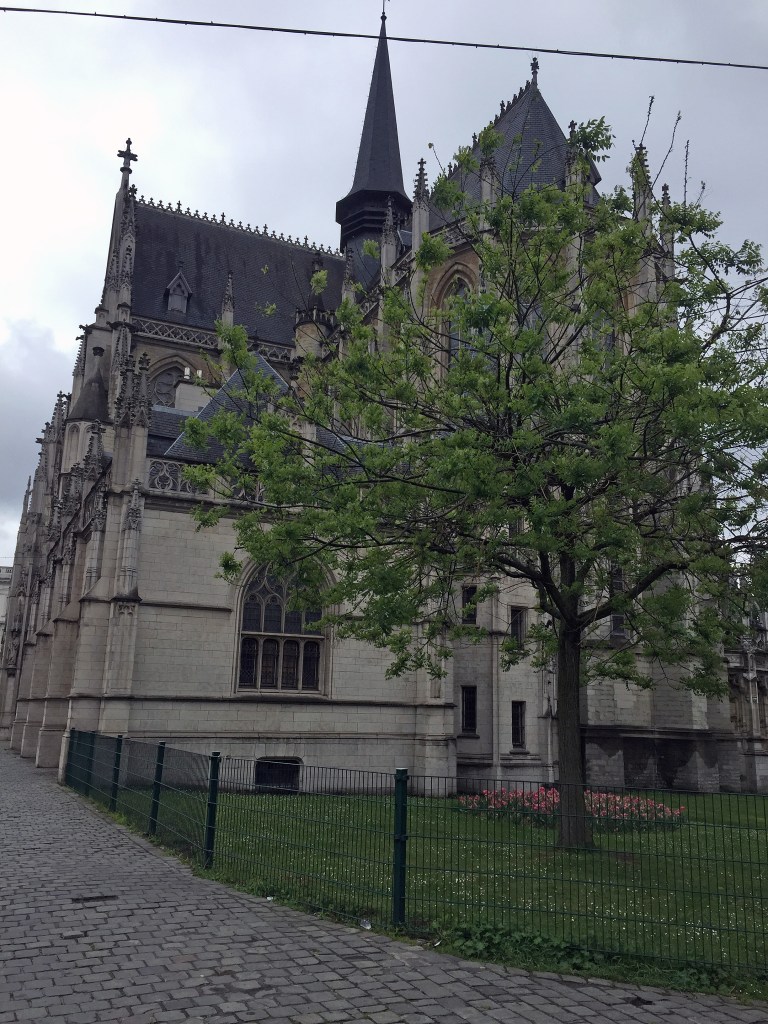
Dedicated to St. Michael and St. Gudula (the patron saints of Brussels) this Gothic church was first founded in 1225 but only completed in the 15th century. The facade is impressive, rising majestically above a broad flight of steps and crowned with twin 69-meter-high towers designed by Jan van Ruysbroeck. The beautifully proportioned interior (108 meters by 50 meters) is lavishly furnished and is home to some outstanding stained glass windows created by Bernard van Orley. Head to the transepts to see the finest examples depicting Charles V and Isabella of Portugal (south transept) and the Hungarian royal pair Louis II and Mary (north transept), and then into the Chapel of the Holy Sacrament, to the left of the choir, where the window illustrates the story of the Miracle of the Host.
Notre-Dame du Sablon
The Church of Our Blessed Lady of the Sablon, Notre-Dame du Sablon is a Roman Catholic church from the 15th century located in the Sablon/Zavel district in Brussels, which was patronised by the nobility and wealthy citizens of Brussels. It is characterised by its late Brabantine Gothic exterior and rich interior decoration including two Baroque chapels.
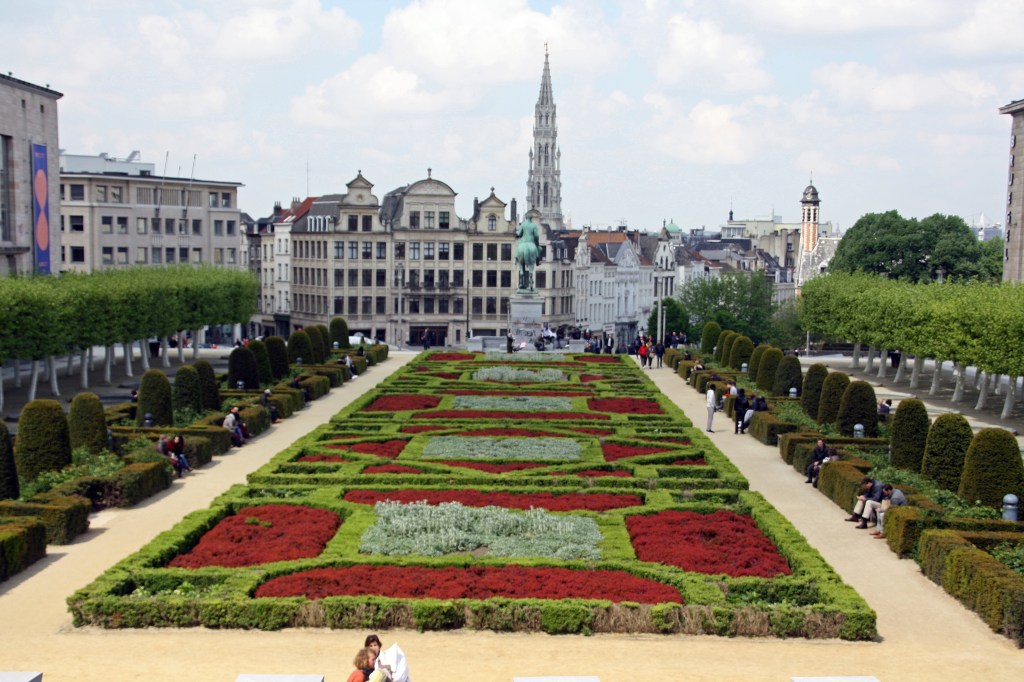
Jardin du Mont des Arts
Below the Place Royale, the Mont des Arts garden opens a wide panorama towards the Grand Place and the historic center of Brussels and ensures a green transition between the top and the bottom of the city.
The garden is structured in two parts. The main garden is composed of a green zone, vegetable compartments, small circular basins and a monumental fountain. The secondary garden contains a pool with playful fountains, associated with a playground for the little ones.
One of the characteristics of the arrangement is the creation of compositions by means of “boxes” made up of yew or hedges inside which the plantations can vary according to the seasons. His management is therefore to play on the tones and essences inside these “boxes”.
The Carillon of Mont des Arts
The carillon is composed of twenty-four bells produced by the Paccard bell foundry and is visible on the facade of the Palace of the Dynasty.
The star-shaped clock with twelve branches on the facade was designed by Jules Ghobert
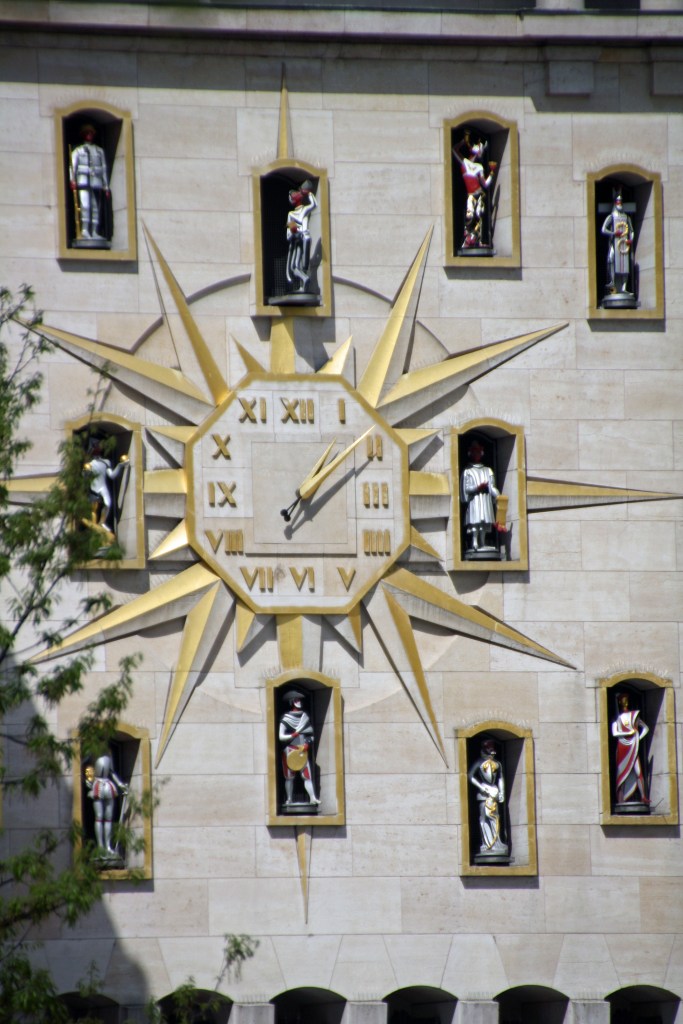
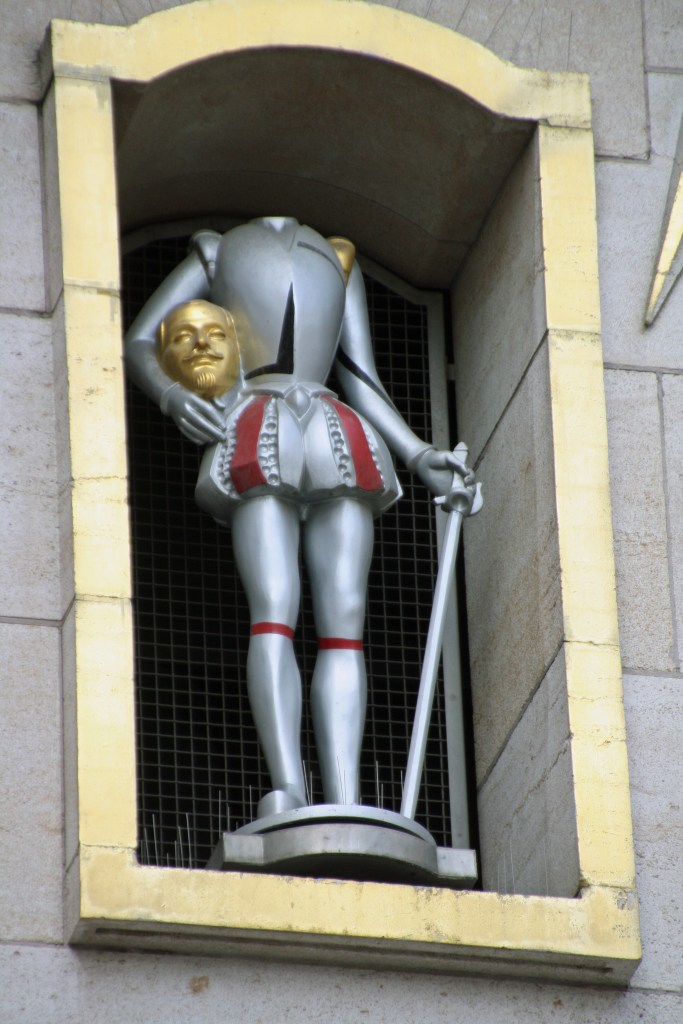
Each branch has a different figure within it, the one below is probably the most macabre.
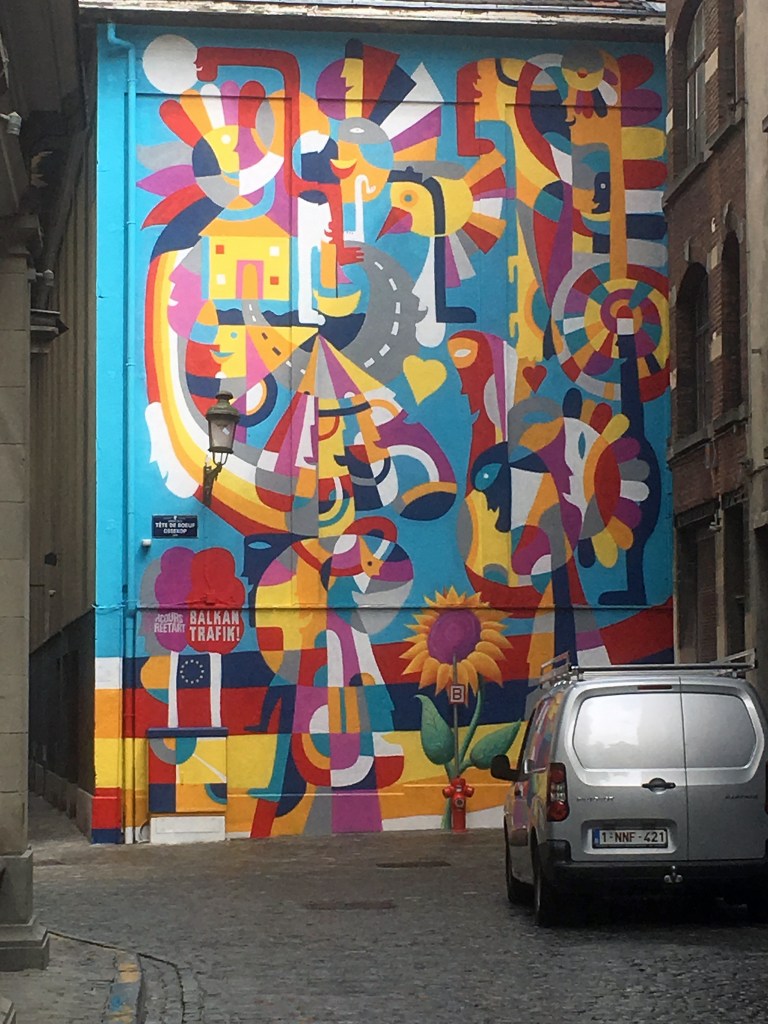
Outdoor Art
This is one way to make a sure nobody drives straight in to a building.
Beer and Chocolates
Belgium is famous for beer and chocolates and in our experience they are pretty good at producing both.
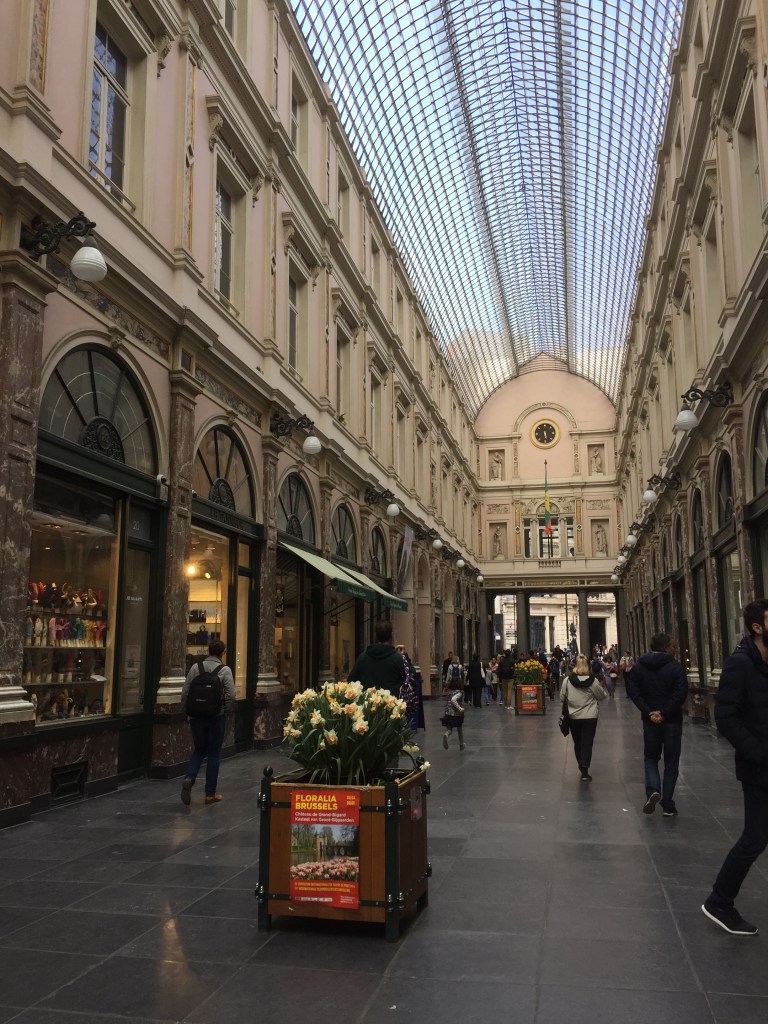
This is the Galeries Royales Saint-Hubert which has the most expensive chocolate shops in Brussels including Neuhaus . The company was founded in 1857 by Jean Neuhaus, a Swiss immigrant, who invented the chocolate praline, a decadent chocolate cream ganache center inside a chocolate shell, the original filled chocolate. The chocolate sells for 82 Euros per Kilo.
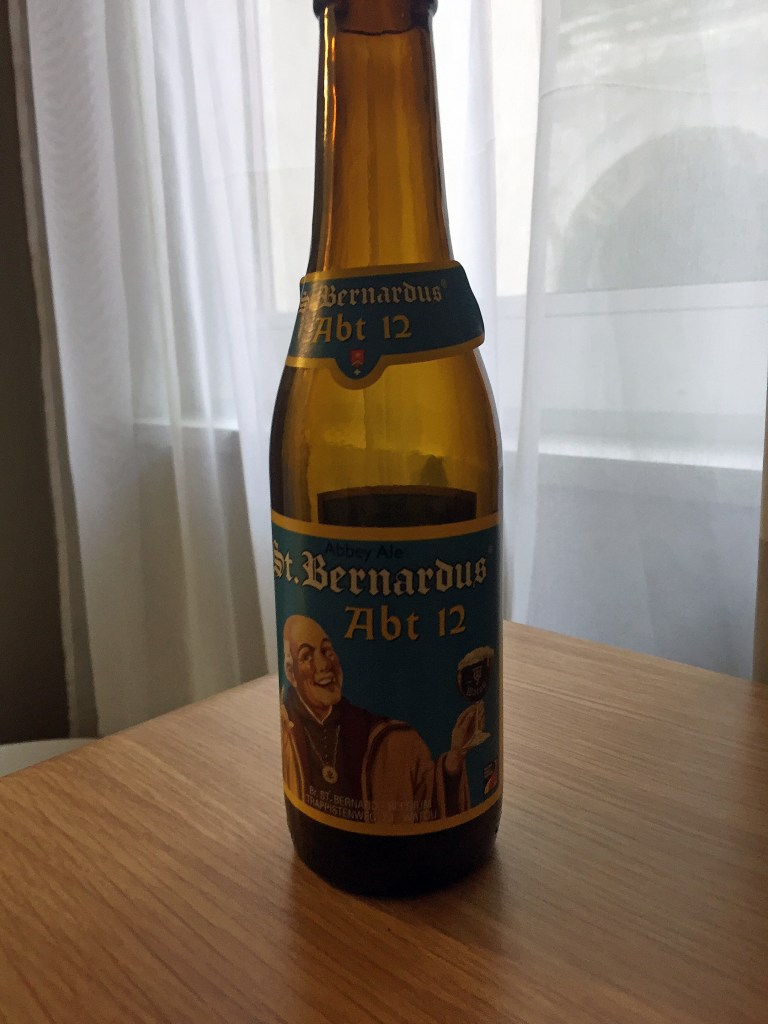
One of the most famous is the Trappist beer which must be produced within 100 m of a monastery, approved by a monk and 40% of the profits must go to charities that help people. The beers are strong and the one we tried was 10%
 Heather and Keith's travels