Romania’s capital gets a bad rap, but in fact it’s dynamic, energetic and more than a little bit funky. It’s where unreconstructed communism meets unbridled capitalism; where the soporific forces of the EU meet the passions of the Balkans and Middle East. Bucharest is known for its wide, tree-lined boulevards, glorious Belle Époque buildings and a reputation for the high life (which in the 1900s earned its nickname of “Little Paris”).
We visited Bucharest in March 2018 and stayed at the Hotel Cismigiu which is just on the edge of the old town.
Bucharest is an odd place in terms of building. There are lovely French style buildings which are attached to communist developments. When buildings were damaged either by war or the 1977 earthquake Romania’s Communist-era dictator, Nicolae Ceauşescu decreed that buildings should be replaced not as they would have been originally but in the Russian communist style.
Carturesti Carusel
Located on Lipscani Street, number 55, the bookstore is run on six levels, amounting to 1000sqm. Carusel Carusel has a top-floor bistro which serves superb Romanian Wine.
The elegant 19th-century building was in possession of the famous family of Chrissoveloni bankers in 1903, and during the communist era it was confiscated and turned into the Family store. After 1990, the real estate was recovered and rehabilitated by the current owner, Mr. Jean Chrissoveloni.

Stavropoleos Convent
Stavropoleos Monastery, also known as Stavropoleos Church during the last century when the monastery was dissolved, is an Eastern Orthodox monastery for nuns in central Bucharest. Its church is built in Brâncovenesc style. The patrons of the church (the saints to whom the church is dedicated) are St. Archangels Michael and Gabriel. The name Stavropoleos is a Romanian rendition of a Greek word, Stauropolis, meaning “The city of the Cross”. One of the monastery’s constant interests is Byzantine music, expressed through its choir and the largest collection of Byzantine music books in Romania.
The inn and the monastery’s annexes were demolished at the end of 19th century. Over time the church suffered from earthquakes, which caused the dome to fall. The dome’s paintings were restored at the beginning of the 20th century.
All that remains from the original monastery is the church, alongside a building from the beginning of the 20th century which shelters a library, a conference room and a collection of old (early 18th century) icons and ecclesiastical objects, and parts of wall paintings recovered from churches demolished during the communist regime. This new building was constructed following the plans of architect Ion Mincu.

Patriarchal Cathedral
The Romanian Orthodox Patriarchal Cathedral (also known as the Metropolitan Church) is a functioning religious and civic landmark, on Dealul Mitropoliei. It is located near the Palace of the Chamber of Deputies of the Patriarchate of the Romanian Orthodox Church. Since it is a working cathedral, it is the site of many religious holidays and observances that take place for those who follow the Orthodox Christian faith in Bucharest, including a Palm Sunday pilgrimage. The Orthodox Mass at the cathedral is known for its a cappella choir. The Romanian Orthodox Patriarchal Cathedral is a designated Historical monument—Monument istoric of Romania.
The structure was begun in 1655 and completed in 1659 under the orders of the Wallachian prince, Serban Basarb. The facade is in the Brâncovenesc style. All of the original frescoes and sculptures were destroyed, except for the icon of Constantine and Helen, who are the patron saints of the cathedral. The present-day frescoes were added in 1923 by Dimitrie Belizarie.
In 1862, the Romanian prime minister, Barbu Catargiu, was assassinated as his open carriage passed in front of the cathedral.

Palace of Parliament
The Palace of the Parliament is the seat of the Parliament of Romania. Located on Dealul Arsenalului in central Bucharest (Sector 5), it is the largest administrative building in the world with a height of 84 metres (276 ft), an area of 365,000 square metres (3,930,000 sq ft) and a volume of 2,550,000 cubic metres (90,000,000 cu ft). In terms of weight, the Palace of the Parliament is the heaviest building in the world, weighing in at around 4,098,500,000 kilograms (9.0356×10⁹ lb).
A colossal parliament building known for its ornate interior composed of 23 sections, it houses the Senate and the Chamber of Deputies, three museums and an international conference center. The museums hosted inside the Palace are the National Museum of Contemporary Art, the Museum of Communist Totalitarianism (established in 2015) and the Museum of the Palace. Though named the House of the Republic (Romanian: Casa Republicii), after the Romanian Revolution in 1989 it became widely known as the People’s House (Romanian: Casa Poporului). Due to its impressive endowments, events organized by state institutions and international bodies such as conferences, symposia, and others take place there, but even so about 70% of the building remains empty.
The former president Nicolae Ceauşescu tried to escape by helicopter from the parliament at the fall of communism. The pilot actually turned around and Ceauşescu was arrested. His execution was witnessed by many when it was shown live on television.

Cismigiu Park
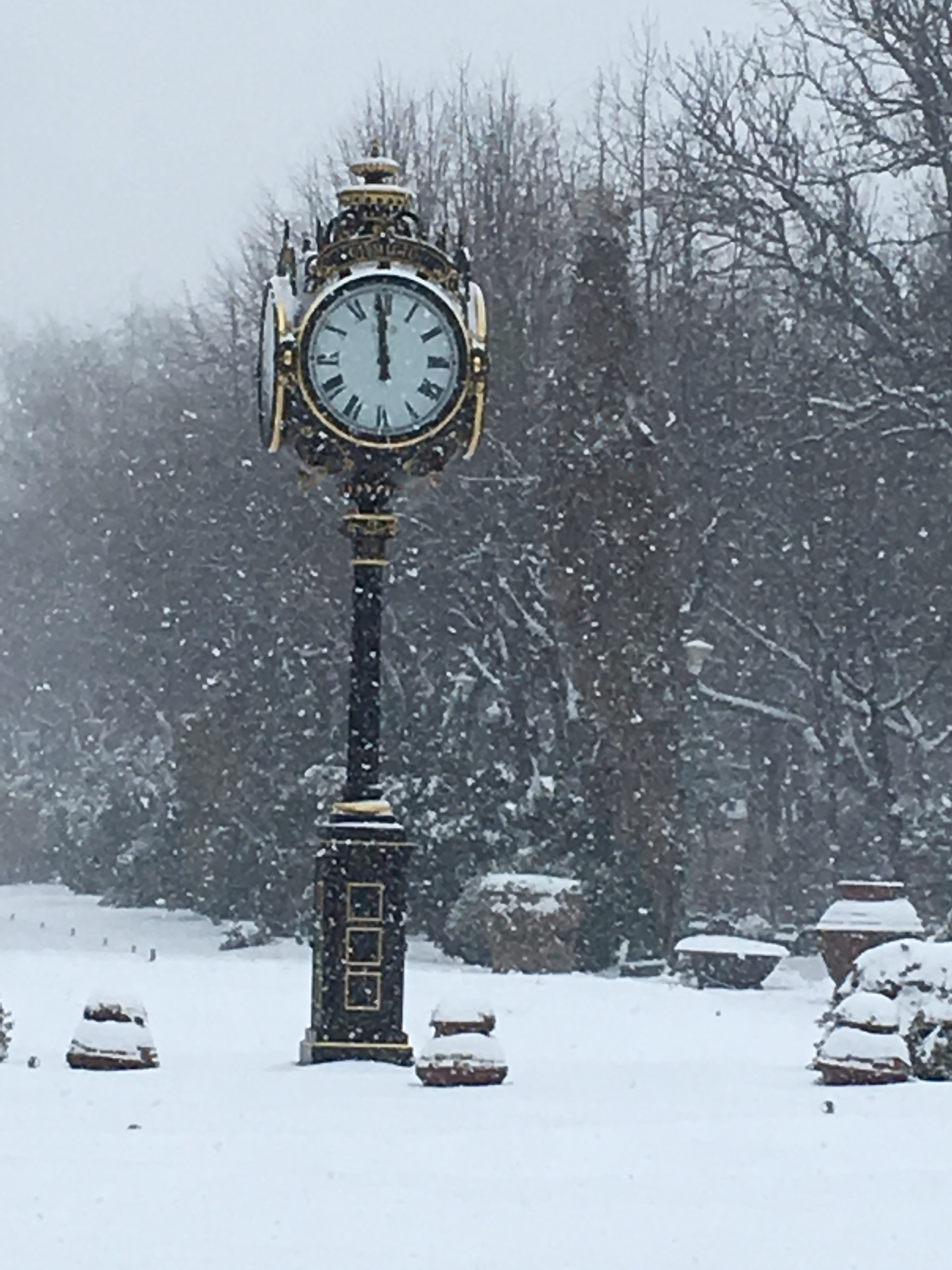
Cișmigiu Park is a vast English-style garden with fountains, monuments and a popular boating lake where the landmark Monte Carlo restaurant stands on a central island. Elegant pre-communist buildings line nearby Regina Maria boulevard. The 19th-century Gambrinus Brewery serves local beer and traditional food, and surrounding streets have snack bars, pubs and stylish, low-key nightclubs.
Unfortunately when we visited it was covered with snow and not alot was open.
Arcul de Triumf
Arcul de Triumf is a triumphal arch located in the northern part of Bucharest, on the Kiseleff Road.
The first, wooden, triumphal arch was built hurriedly, after Romania gained its independence (1878), so that the victorious troops could march under it. Another temporary arch was built on the same site, in 1922, after World War I, which was demolished in 1935 to make way for the current triumphal arch, which was inaugurated in September 1936.
The current arch has a height of 27 metres and was built after the plans of the architect Petre Antonescu. It has as its foundation a 25 x 11.50 metres rectangle. The sculptures with which the facades are decorated were created by famous Romanian sculptors such as Ion Jalea and Dimitrie Paciurea. Presently, military parades are held beneath the arch each December 1, with the occasion of Romania’s national holiday.

Romanian Athenaeu
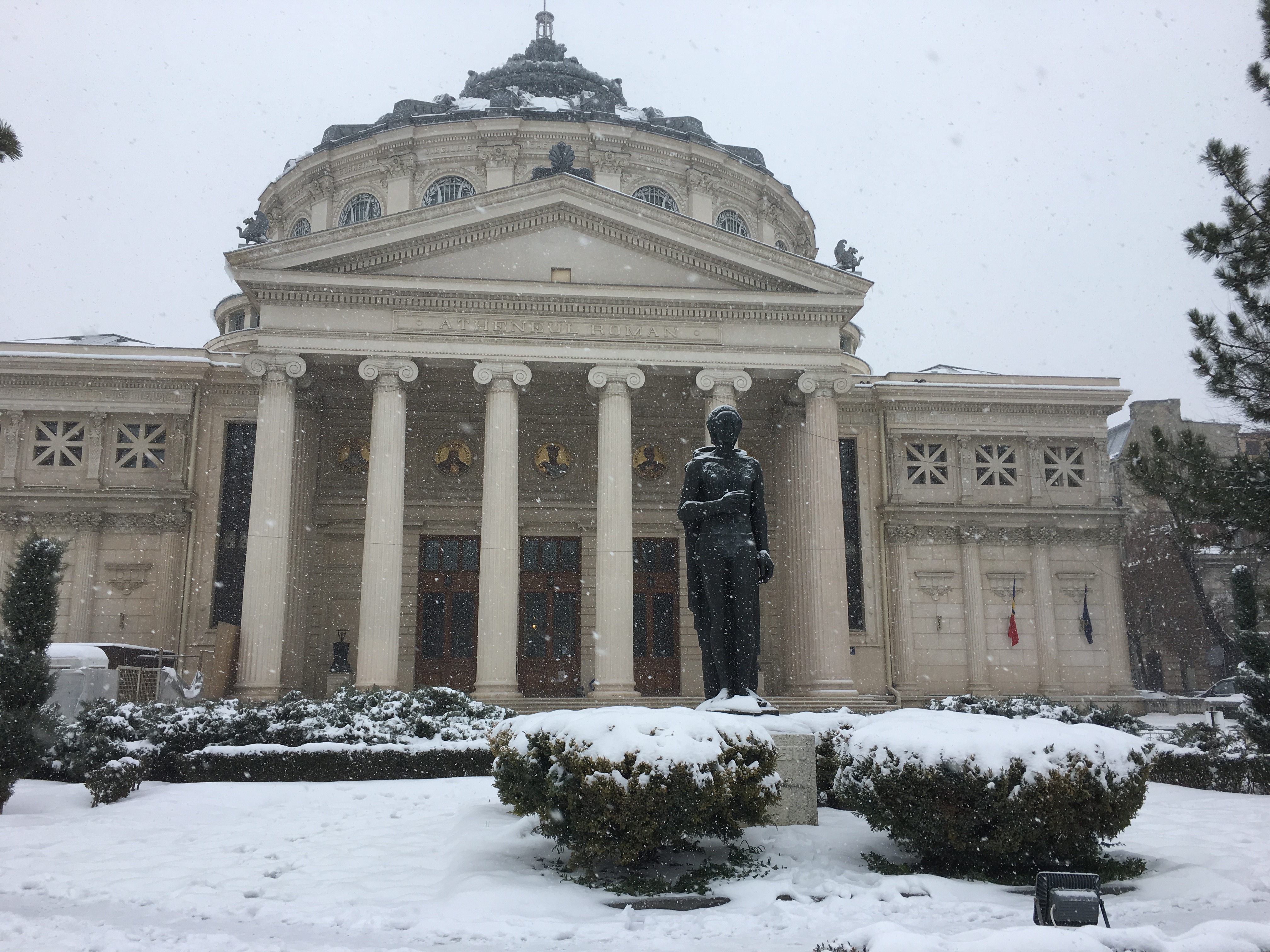
The Romanian Athenaeum is a concert hall which was opened in 1888, the ornate, domed, circular building is the city’s main concert hall and home of the “George Enescu” Philharmonic and of the George Enescu annual international music festival.
The overall style is neoclassical, with some more romantic touches. In front of the building there is a small park and a statue of Romanian poet Mihai Eminescu.
Inside, the ground floor hosts an ornate conference hall as large as the auditorium above; the auditorium seats 600 in the stalls and another 52 in loge seating.
A 75-sqm long and 3-m wide fresco by Costin Petrescu decorates the inside of the circular wall of the concert hall. Painted using the al fresco technique, the piece depicts the most important moments of Romanian history, starting with the conquest of Dacia by Roman emperor Trajan and ending with the realization of Greater Romania in 1918.
Recognized as a symbol of Romanian culture, the building has been inscribed in 2007 on the list of the Label of European Heritage sites.
Memorialul Renaşterii
The Memorial of Rebirth is a memorial that commemorates the struggles and victims of the Romanian Revolution of 1989, which overthrew Communism. The memorial complex was inaugurated in August 2005 in Revolution Square, where Romania’s Communist-era dictator, Nicolae Ceauşescu, was publicly overthrown in December 1989.
Owing to its relative unpopularity, the monument is guarded round-the-clock. Despite this, on the night of 12 May 2006, it was vandalized with a stencil graffiti figure representing the fictional revolutionary character “V” on the side facing the National Museum of Art.
In 2012 the monument was defaced a second time with a splash of bright red paint that was delivered just at the bottom of the monument’s “potato” by an unknown person. This caused the monument to look look as though it is bleeding. The paint is so inaccessibly high that it has remained in place since it was placed there.

Late Afternoon in Bucharest
The picture below is taken in the old town as the sun starts to set.

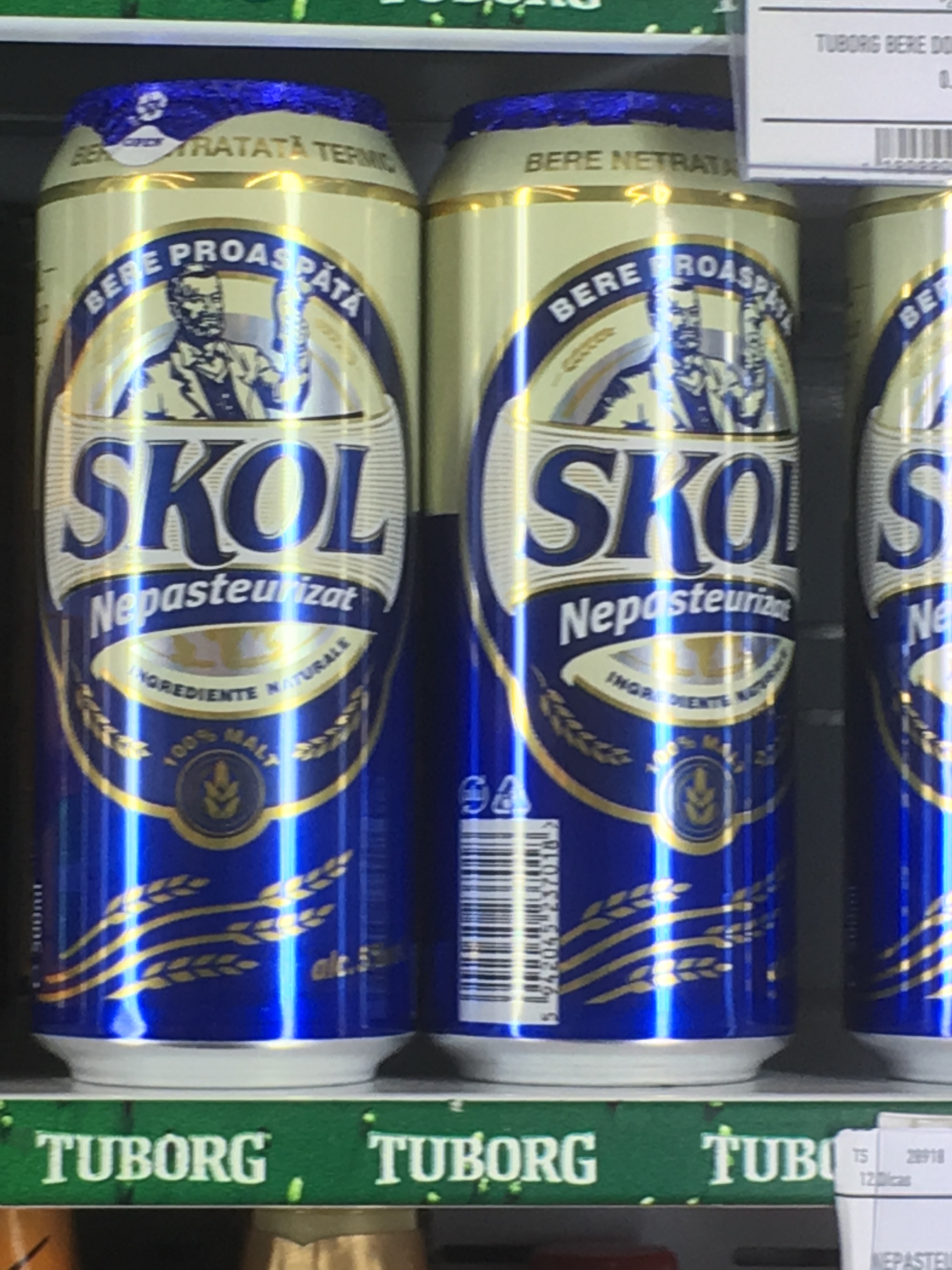
Finally for all those people who remember SKOL lager and thought that it was lost forever can rest in peace, it is widely available in Bucharest.
We didn’t try it there are too many good local beers and wines to try first.
 Heather and Keith's travels