There is no other city in Hungary like Budapest. But it’s the beauty of Budapest -both natural and man-made – that makes it unique, Straddling a gentle curve in the Danube, the city is flanked by the Buda Hills on the west bank and the beginnings of the Great Plain to the east. Architecturally it is a gem, with enough baroque, neoclassical and art nouveau elements to satisfy everyone. Budapest became a single city occupying both banks of the Danube river with the unification of Buda and Óbuda on the west bank, with Pest on the east bank on November 17, 1873.
We visited Budapest in August 2013 and stayed at the Plazzo Zichy Hotel. This is close to a bus stop and a 20 minute walk in to the centre.
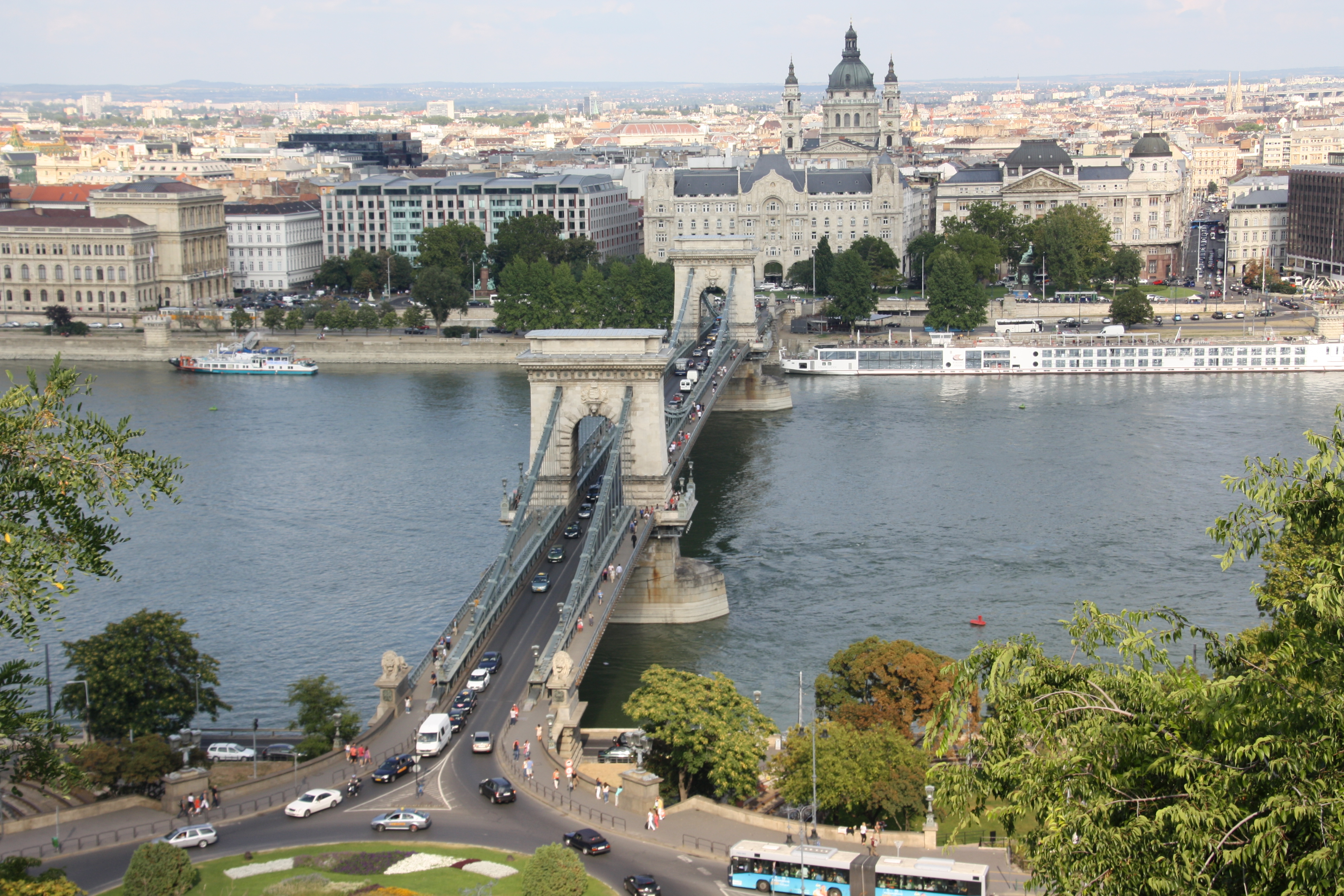
Chain Bridge
The Széchenyi Chain Bridge is a suspension bridge that spans the River Danube between Buda and Pest, the western and eastern sides of Budapest. Designed by the English Engineer William Tierney Clark, it was the first permanent bridge across the Danube in Hungary, and was opened in 1849.
It was designed in sections and shipped from the United Kingdom to Hungary for final construction.
The bridge’s cast iron structure was updated and strengthened in 1914. In World War II, the bridge was blown up on 18 January 1945 by the retreating Germans during the Siege of Budapest, with only the towers remaining. It was rebuilt, and it reopened in 1949.
Buda Royal Palace
Buda Castle is the historical castle and palace complex of the Hungarian kings in Budapest, and was first completed in 1265. In the past, it has been called Royal Palace and Royal Castle .
Buda Castle was built on the southern tip of Castle Hill, bounded on the north by what is known as the Castle District (Várnegyed), which is famous for its Medieval, Baroque, and 19th-century houses, churches, and public buildings. It is linked to Clark Ádám Square and the Széchenyi Chain Bridge by the Castle Hill Funicular.
The castle is a part of the Budapest World Heritage Site, which was declared a Heritage Site in 1987.
Budapest Great Market Hall
The Great Market Hall or Central Market Hall is the largest and oldest indoor market in Budapest. The idea of building such large market hall arose from the first mayor of Budapest, Károly Kamermayer, and it was his largest investment. He retired in 1896 so when the building was completed, he participated in the opening ceremony as a citizen.
It is located at the end of the famous pedestrian shopping street Váci utca and on the Pest side of the Liberty bridge at Fővám square.

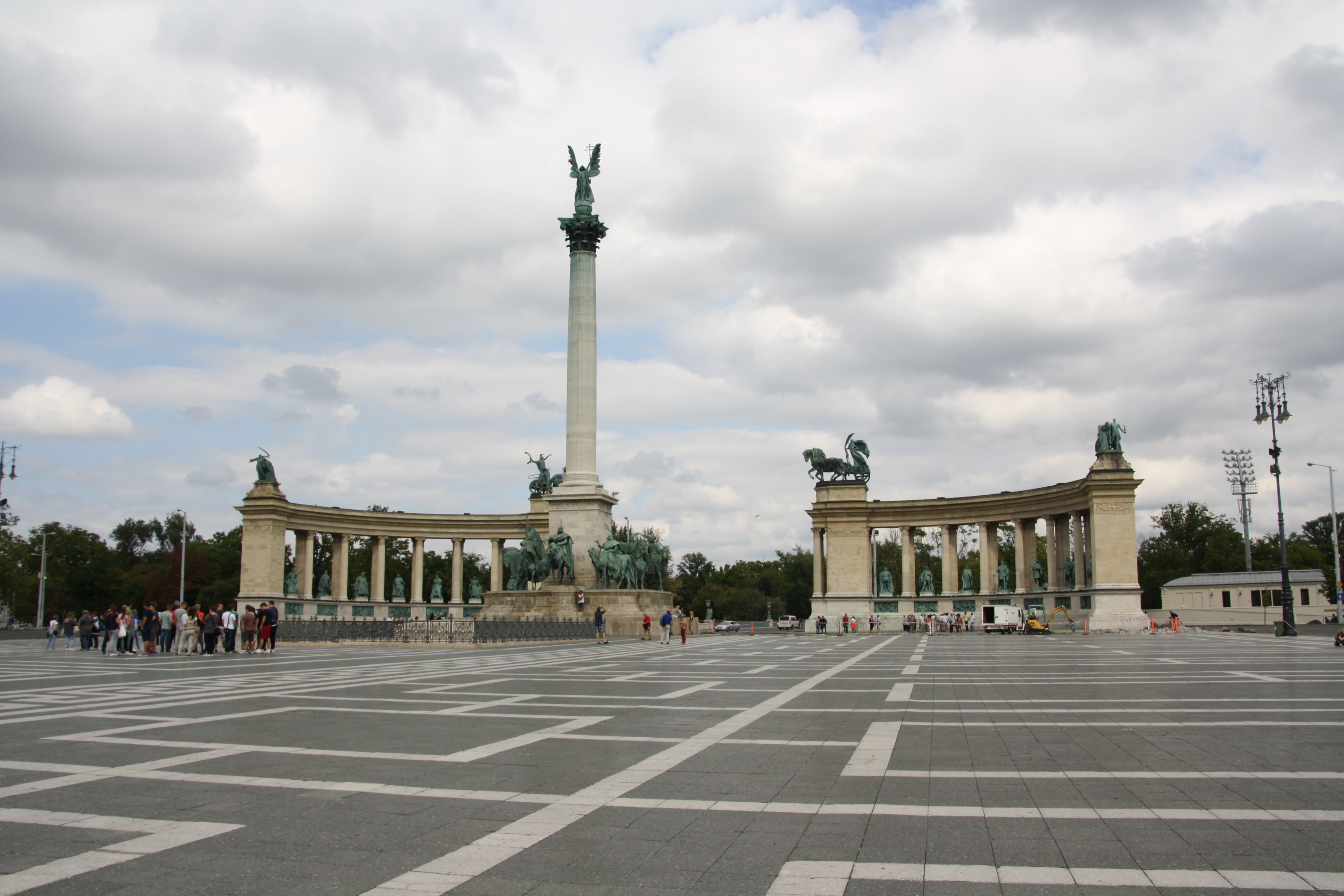
Heroes’ Square
Hősök tere is one of the major squares in Budapest noted for its iconic statue complex featuring the Seven Chieftains of the Magyars and other important national leaders, as well as the Tomb of the Unknown Soldier. The square lies at the outbound end of Andrássy Avenue next to City Park (Városliget). It hosts the Museum of Fine Arts and the Műcsarnok. The square has played an important part in contemporary Hungarian history and has been a host to many political events, such as the reburial of Imre Nagy in 1989.
When the monument was originally constructed, Hungary was a part of the Austro-Hungarian Empire and thus the last five spaces for statues on the left of the colonnade were reserved for members of the ruling Habsburg dynasty.
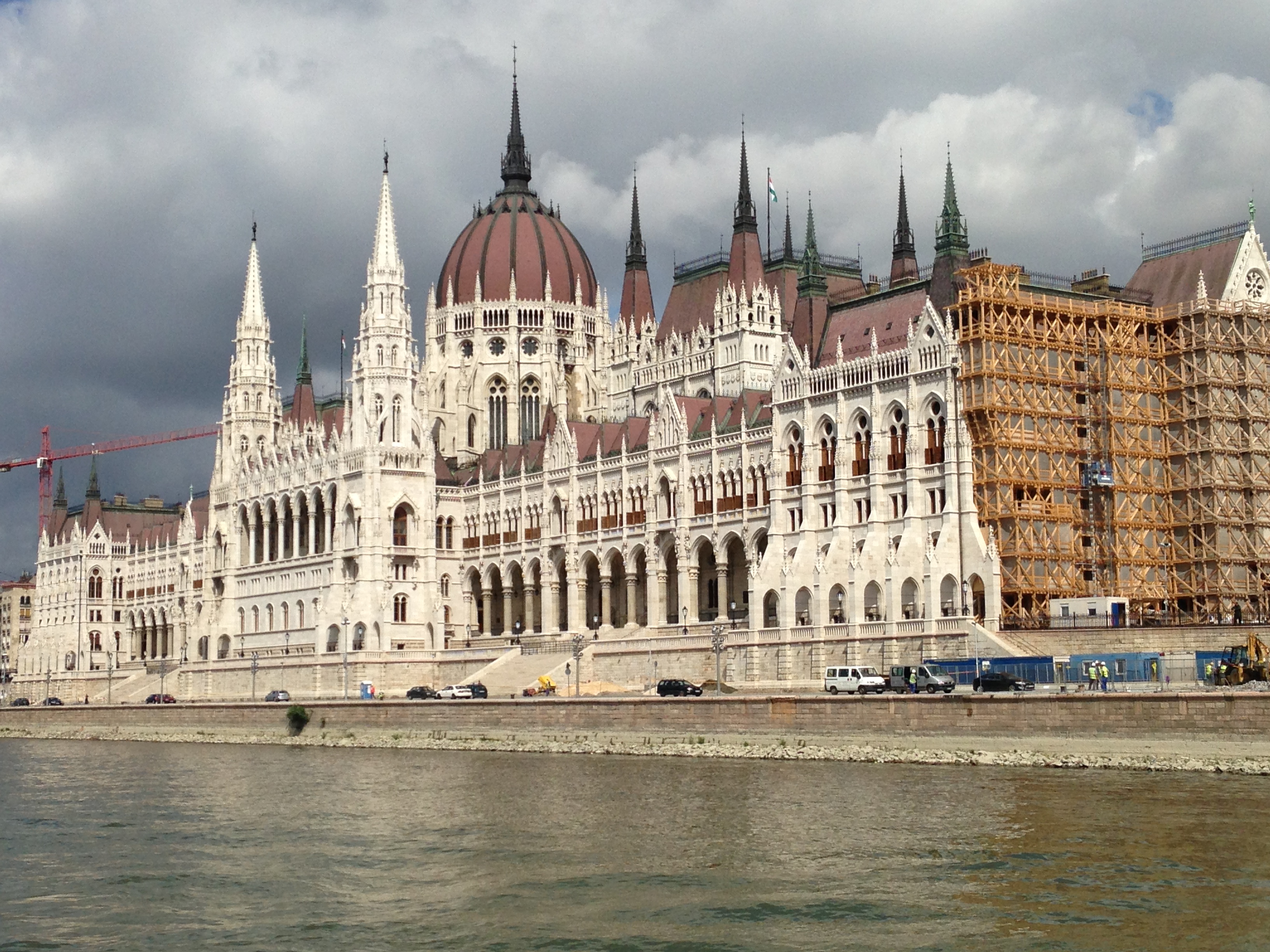
Parliament Building
The Hungarian Parliament Building also known as the Parliament of Budapest for being located in that city, is the seat of the National Assembly of Hungary, one of Europe’s oldest legislative buildings, a notable landmark of Hungary and a popular tourist destination of Budapest. It lies in Lajos Kossuth Square, on the bank of the Danube. It is currently the largest building in Hungary and still the tallest building in Budapest.
About 100,000 people were involved in construction, during which 40 million bricks, half a million precious stones and 40 kilograms (88 lb) of gold were used. Since World War II the legislature became unicameral and today the government uses only a small portion of the building. During the communist regime a red star perched on the top of the dome, but was removed in 1990. Mátyás Szűrös declared the Hungarian Republic from the balcony facing Kossuth Lajos Square on 23 October 1989.
Matyas Church
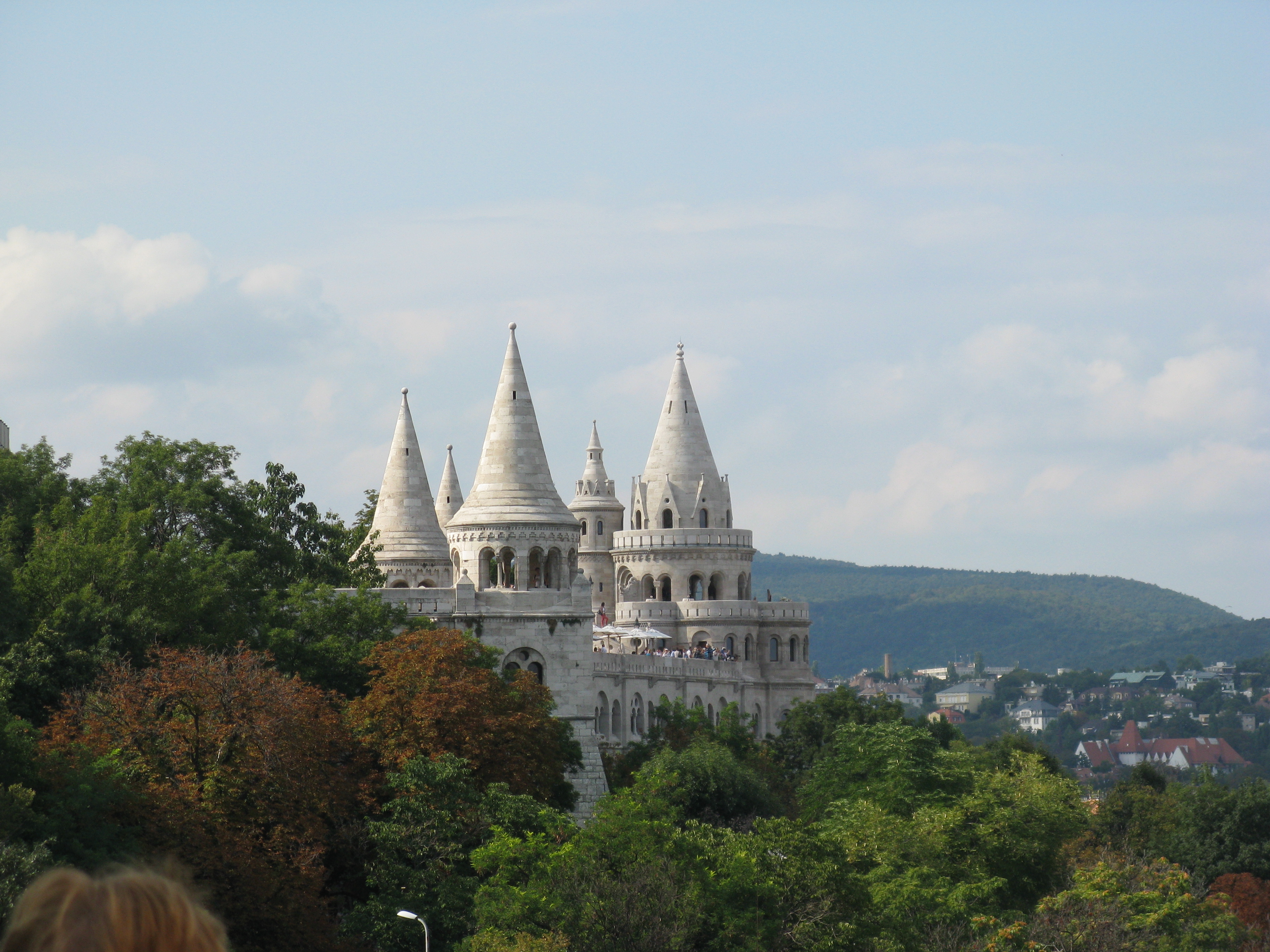
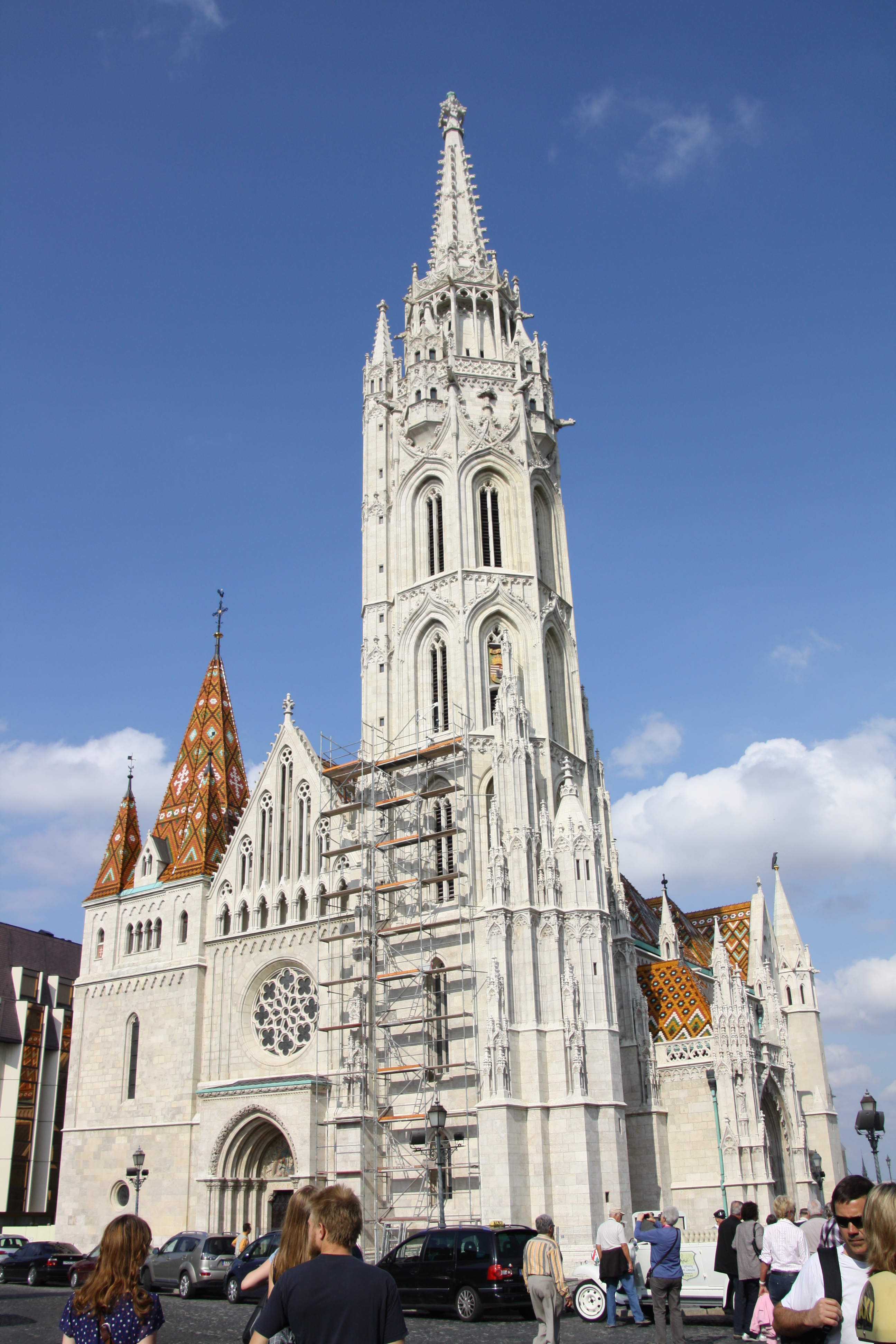
Matthias Church is a Roman Catholic church located in front of the Fisherman’s Bastion at the heart of Buda’s Castle District. According to church tradition, it was originally built in Romanesque style in 1015, although no archaeological remains exist. The current building was constructed in the florid late Gothic style in the second half of the 14th century and was extensively restored in the late 19th century. It was the second largest church of medieval Buda and the seventh largest church of the medieval Hungarian Kingdom.
River Danube
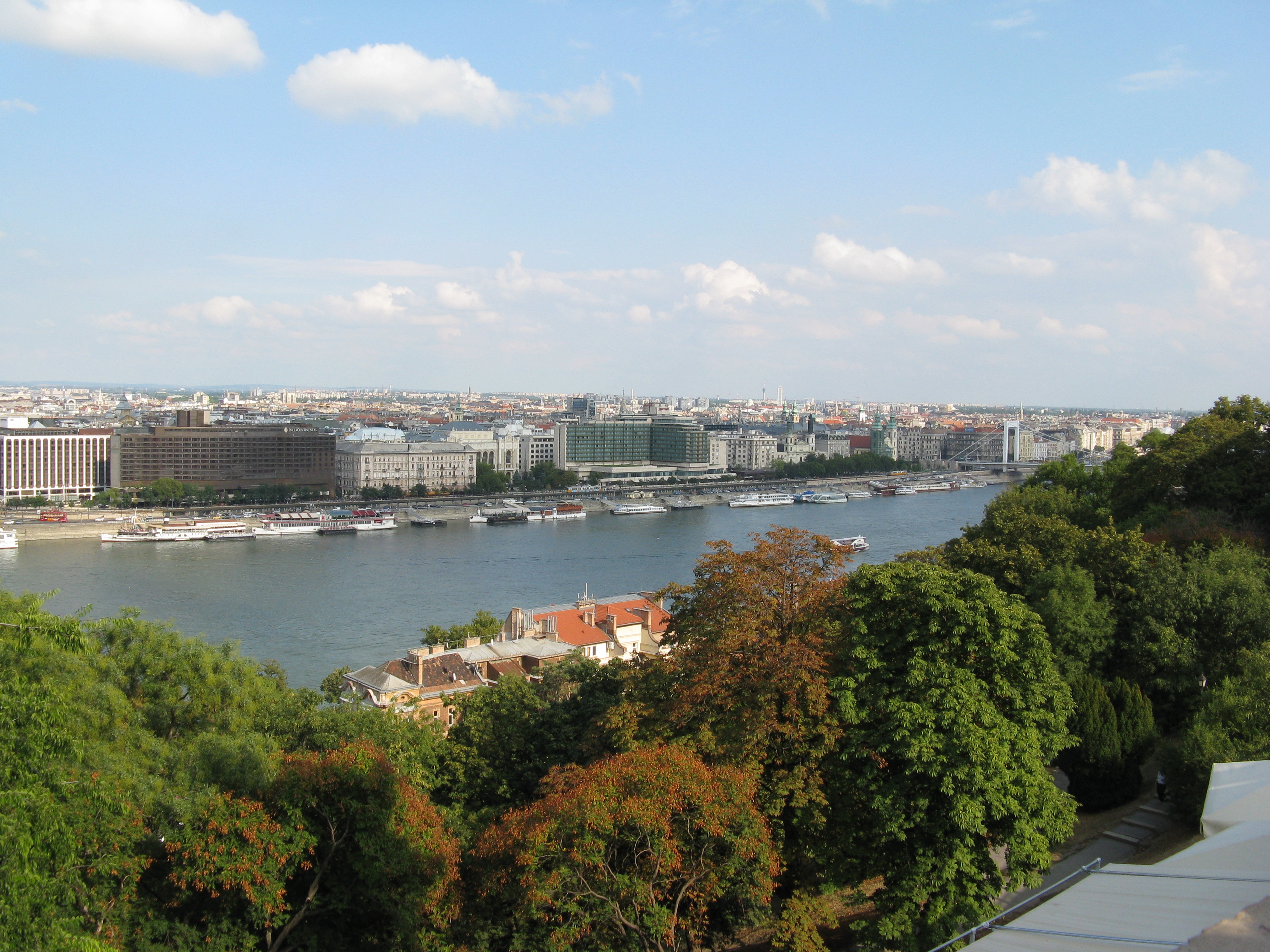
The Danube is Europe’s second-longest river, after the Volga River, and also the longest river in the European Union region. It is located in Central and Eastern Europe.
The Danube was once a long-standing frontier of the Roman Empire, and today flows through 10 countries, more than any other river in the world. Originating in Germany, the Danube flows southeast for 2,860 km (1,780 mi), passing through or touching the border of Austria, Slovakia, Hungary, Croatia, Serbia, Romania, Bulgaria, Moldova and Ukraine before emptying into the Black Sea. Its drainage basin extends into nine more countries.
Thermal Baths
Budapest has several nicknames, like the Paris of East or the Pearl of the Danube, and also the City of Spas. Indeed, there are so many natural warm spring waters under the city (imagine a cauldron topped with some layers) that Budapest has had several great thermal baths for many centuries. The Turkish baths along the river Danube are still functional and much favoured. But more than a thousand years before the Turks, the Romans and even before them, the Celts have been enjoying the warm spring waters as baths, healing waters and drinks.

Vernicular Railway
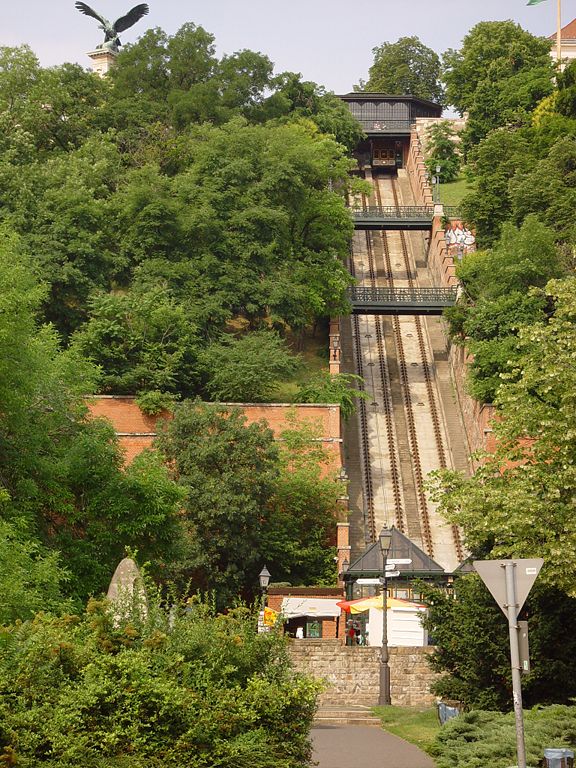
The Budapest Castle Hill Funicular or Budavári Sikló is a funicular railway which links the Adam Clark Square and the Széchenyi Chain Bridge at river level to Buda Castle above.
The line was opened on March 2, 1870, and has been in municipal ownership since 1920. It was destroyed in the Second World War and reopened on June 4, 1986. A feature of the line are the two pedestrian foot bridges which cross above it. These were present when the line opened, were removed in 1900 when the castle’s garden was extended, and rebuilt to the original design in 1983.
Budapest Metro
The Budapest Metro is the oldest electrified underground railway system on the European continent, and the second-oldest electrically operated underground railway in the world, predated only by the 1890 City & South London Railway (now part of the London Underground).

 Heather and Keith's travels