This was a trip with Explore! which visited every county in the former Yugoslavia namely Slovenia , Croatia , Bosnia and Herzegovina , Montenegro , Serbia , North Macedonia , Kosovo.
Seven countries – To see many of the nations of Former Yugoslavia, that are
now found in the captivating Balkans.
Multiple capital cities – Visit seven diverse cities and discover their varying
history and culture
Rail journeys – Including one of the most visually stunning train rides in
Europe on the Bar to Belgrade railway line.
Plitvice National Park – See the beautiful scenery, waterfalls and lakes.
On this sixteen-day adventure we discovered Europe’s newest countries and travelled by rail through some of the Balkan’s most inspiring scenery. The Former Yugoslavia is still a path untrodden by many travellers after war and communism reigned strong for much of the 20th century. However, now there are thriving new capitals open for discovery and untouched countryside to be seen. This trip got under the skin of Tito’s Yugoslavia, as well as visiting Europe’s oldest lake, Lake Ohrid, and Croatia’s largest national park, Plitvice.
How to describe each of the capital cities:
Ljubljana
Slovenia’s capital and largest city also happens to be one of Europe’s greenest and most liveable capitals. Car traffic is restricted in the centre, leaving the leafy banks of the emerald green Ljubljanica River, flowing through the city’s heart, free for pedestrians and cyclists. In summer, cafes set up terrace seating along the river, lending the feel of a perpetual street party. Slovenia’s master of early modem, minimalist design, Joe Plecnik, graced Ljubljana with beautiful bridges and buildings. The museums, hotels and are among the best in the country
Zagreb
Zagreb has culture, arts, music, architecture, gastronomy and all the other things make a quality capital city – it’s no surprise that the number of visitors has risen sharply in the last couple of years. Zagreb has finally been discovered as a popular city-break destination in its own right.
Visually, Zagreb is a mixture of straight laced Austro-Hungarian architecture and rough-around-the-edges socialist structures, its character a .sometimes uneasy combination of the two.
Sarajevo
The capital city’s antique core has a Turkic feel, delighting visitors with narrow bazaar alleys and a plethora of 1530’s ottoman buildings. Bosnia’s later annexation by Austria-Hungary is evident in surrounding groups of neo-Moorish Central European building, noticeably the recently reconstructed city hall from which Archduke Franz Ferdinand was returning when assassinated in 1914. That shooting ultimately triggered WW1
The city’s north and south flanks are steep valley sides fuzzed with red-roofed Bosnian houses and prickled with uncountable minarets rising to green-topped mountain ridges
Podgorica
Given it’s undergone five name changes, passed through the hands of everyone from the Romans to the Turks to the Austro-Hungarians, and twice been wiped off the map entirely, it’s little wonder that Podgorica seems permanently gripped by an identity crisis. It can be difficult to pin a label on the city; its streets are a hotchpotch of Ottoman oddments, brutalist blocks and shiny new malls, and it has a fraction of the big-smoke buzz other European capitals can claim. But with some excellent galleries, plenty of parks and a vibrant cafe culture, pint-sized Podgorica is worth a look.
Belgrade
Outspoken, adventurous, proud and audacious: Belgrade is by no means a ‘pretty’ capital, but its gritty exuberance makes it one of the most happening cities in Europe. It is here where the Sava River meets the Danube and old-world culture gives way to new-world nightlife. Belgrade’ literally translates as ‘White City’, but Serbia’s colourful capital is red hot.
Skopje
Skopje is among Europe’s most entertaining and eclectic small capital cities while an expensive and rather kitschy government construction spree has sparked controversy in recent years, Skopje’s new abundance of statuary, fountains, bridges, museums and other structures built to encourage a national identity has visitors cameras snapping like never before and has defined the ever-changing city for the 2lst century.
Yet plenty survives from earlier times Skopje’s Ottoman- and Byzantine-era wonders include the 15th-century Kameni Most (Stone Bridge), the wonderful Carsija (old Turkish bazaar) where you can get lost for hours.
Prisitina
Pristina is a city changing fast and one that feels full of optimism and potential, even if it’s traffic-clogged streets and mismatched architectural styles don’t make it an obviously attractive place. Far more a provincial town than great city, Pristina makes for an unlikely national capital, and yet feels more cosmopolitan than the capitals of many larger Balkan nations due to the number of foreigners working here: the UN and EU both have larger presences here and the city feels rich and more sophisticated as a result
27 May 2017 Ljubljana, Slovenia
Our journey through the Balkans began in Ljubljana, which is the capital of Slovenia. This historic city lies in the shadow of its old castle and upon the banks of the Ljubljanica River which meanders through the pedestrianised centre.
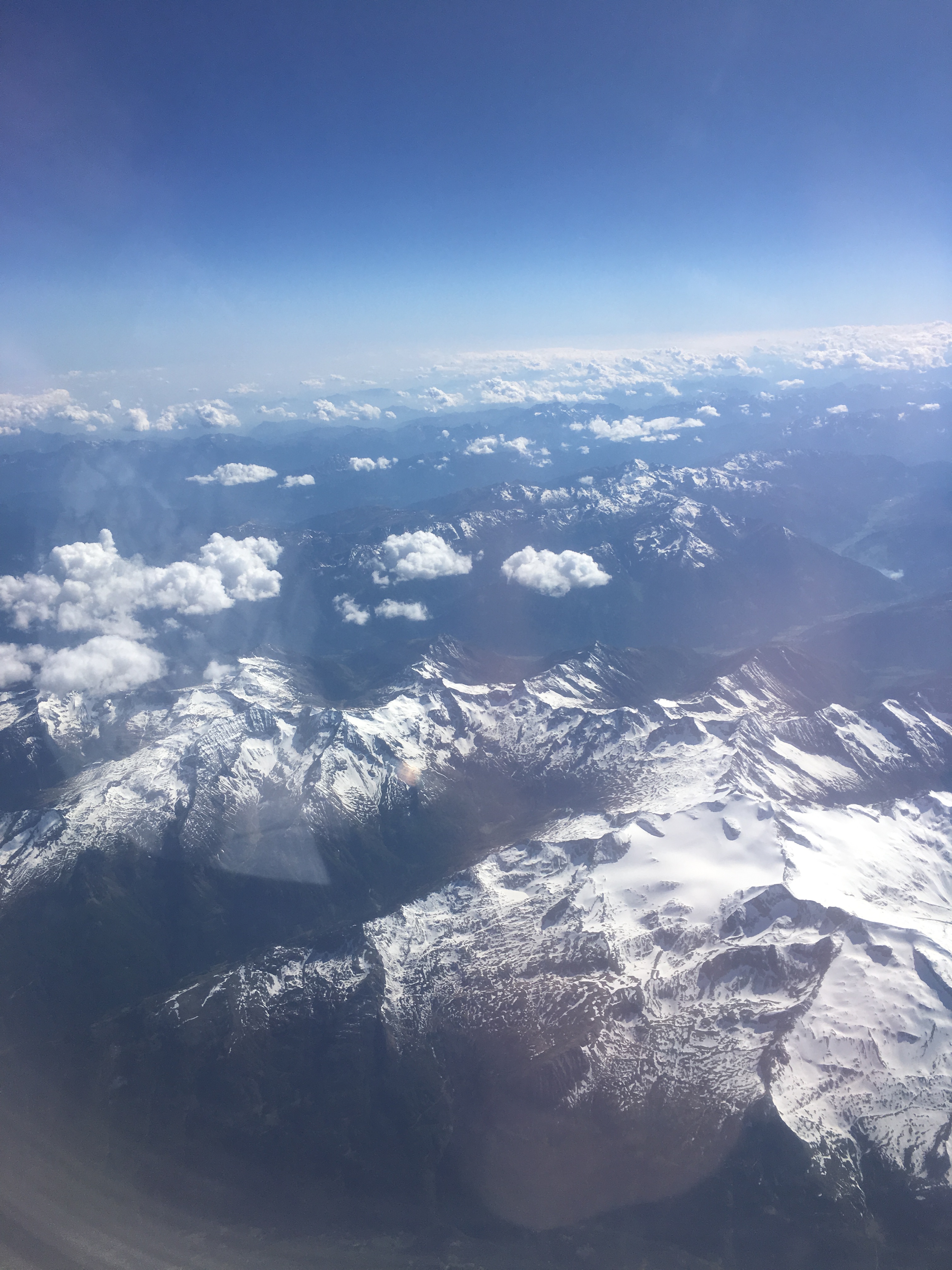
View from the plane as we fly over the Alps heading for Ljubljana Airport.
Hotel Park, this was the first hotel we stayed in which was close to the city centre.

One of the most famous bridges, Dragon bridge. it is often referred to as the mother in law bridge.

View of Ljubljana castle in the late evening from the Ljubljanica river bank

28 May 2017 Ljubljana and then by train to Zagreb, Croatia
Ljubljana is a lovely city full of art, culture and music, and the architecture has an almost Germanic feel to it. We explored the city on foot with a local guide who showed us a lot of its most attractive landmarks including the Opera House, National Gallery, Republic Square and arguably the city’s most famous, Triple Bridge. Connecting the old Medieval town to the modern business centre, the bridge, originally served as the entrance to the fortified part of the city, but now is bustling with local residents.
In the afternoon we caught the local international train to the capital of Croatia, Zagreb.
Triple bridge in Ljubljana which connects the medieval old town with the modern business centre.
Another view of the dragon bridge.

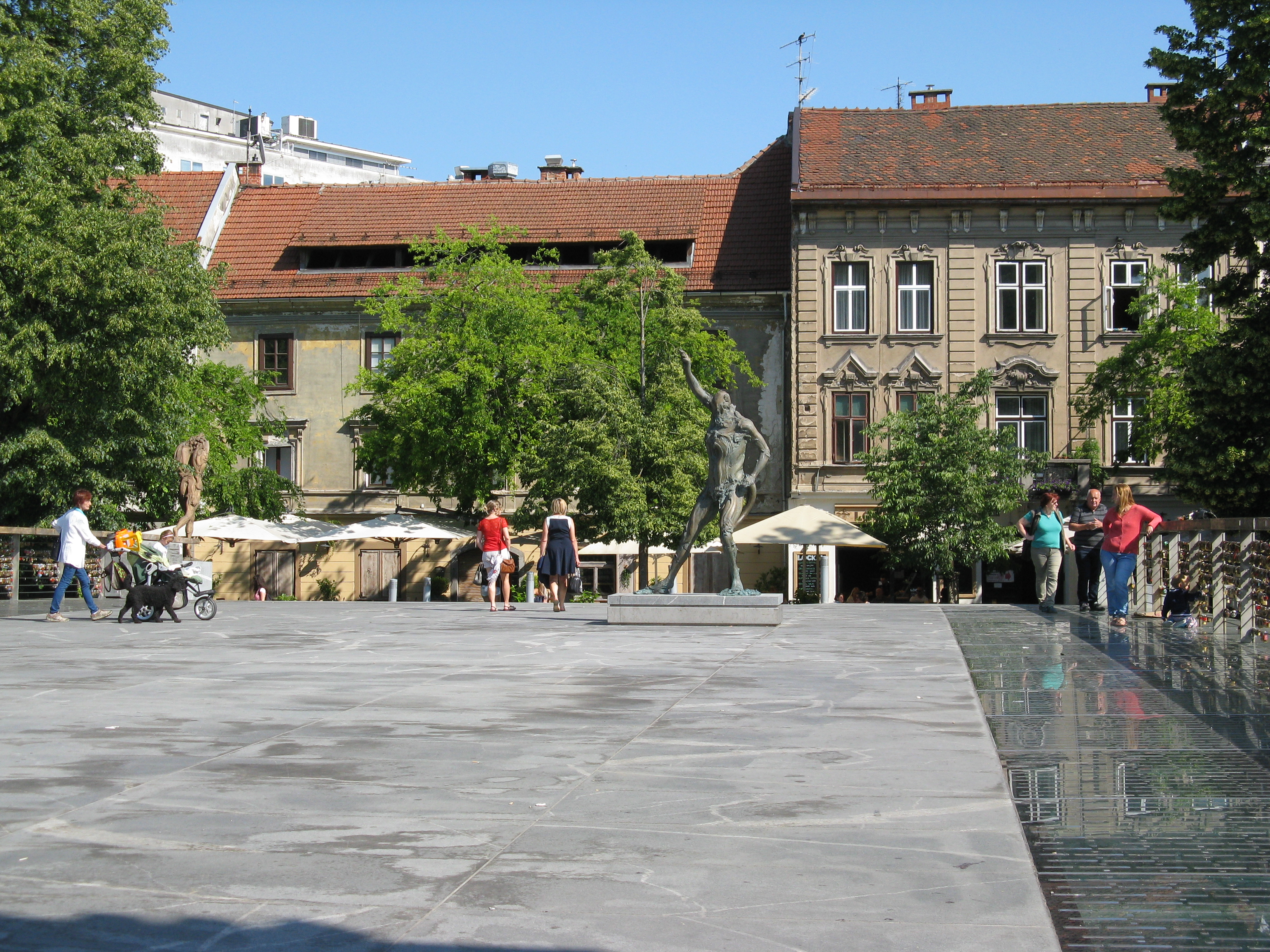
This is a statue on the butchers bridge
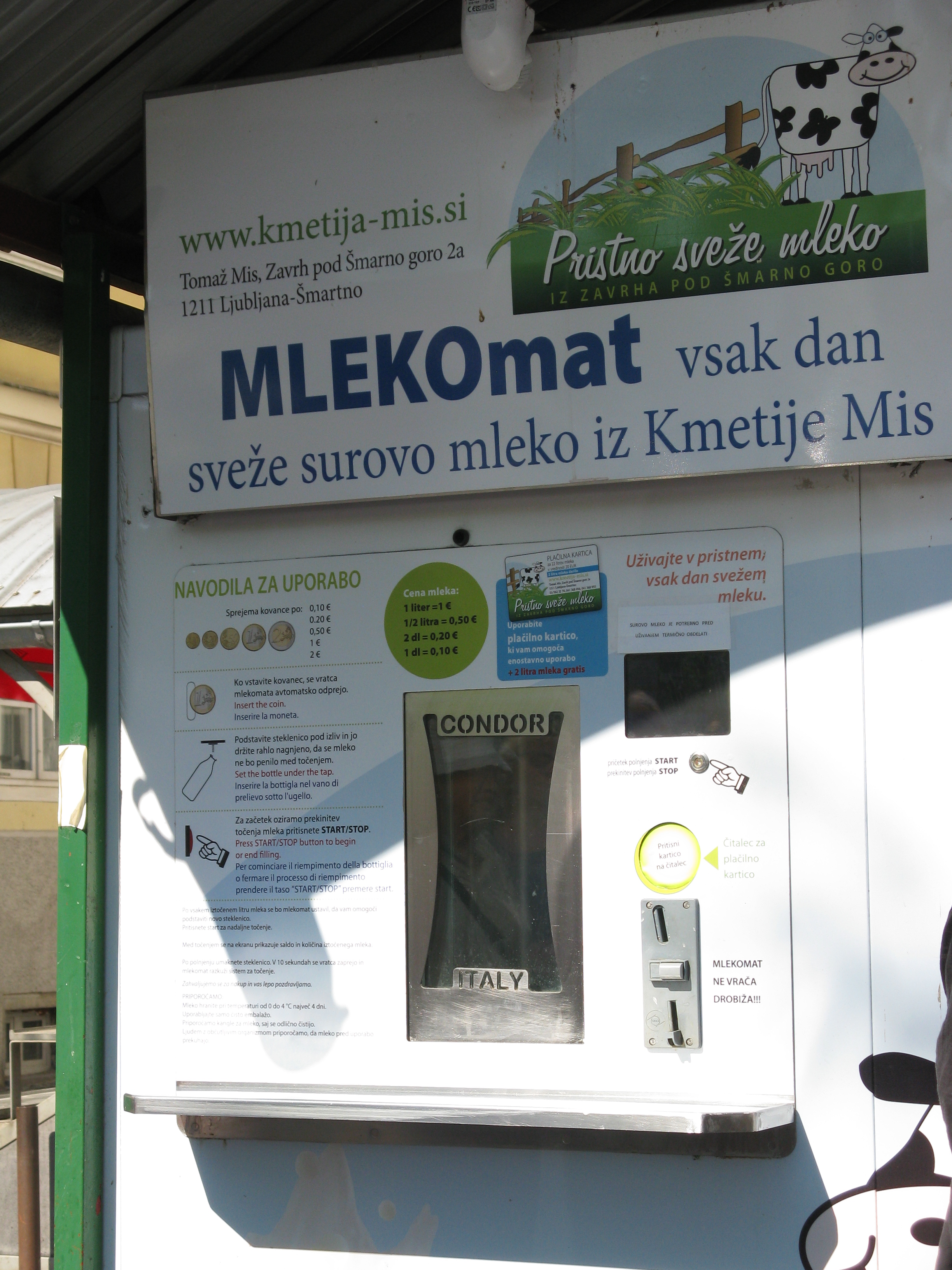
In Ljubljana it is possible to get milk from a machine which contains unpasteurised milk, definitely wouldn’t be able to sell this in the UK.
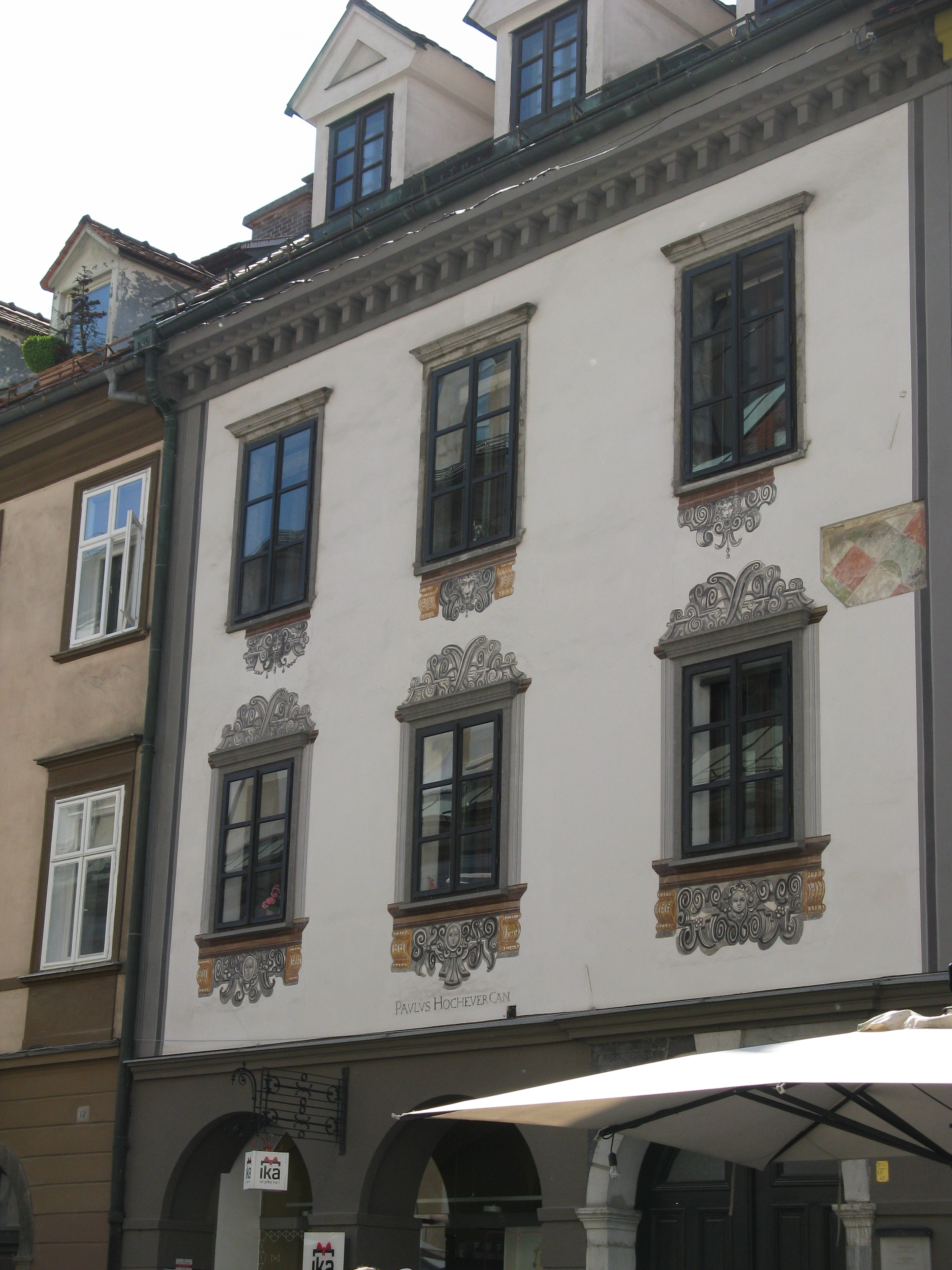
This is a picture of one of the oldest houses in ljubljana.
This is the main street in the old town.
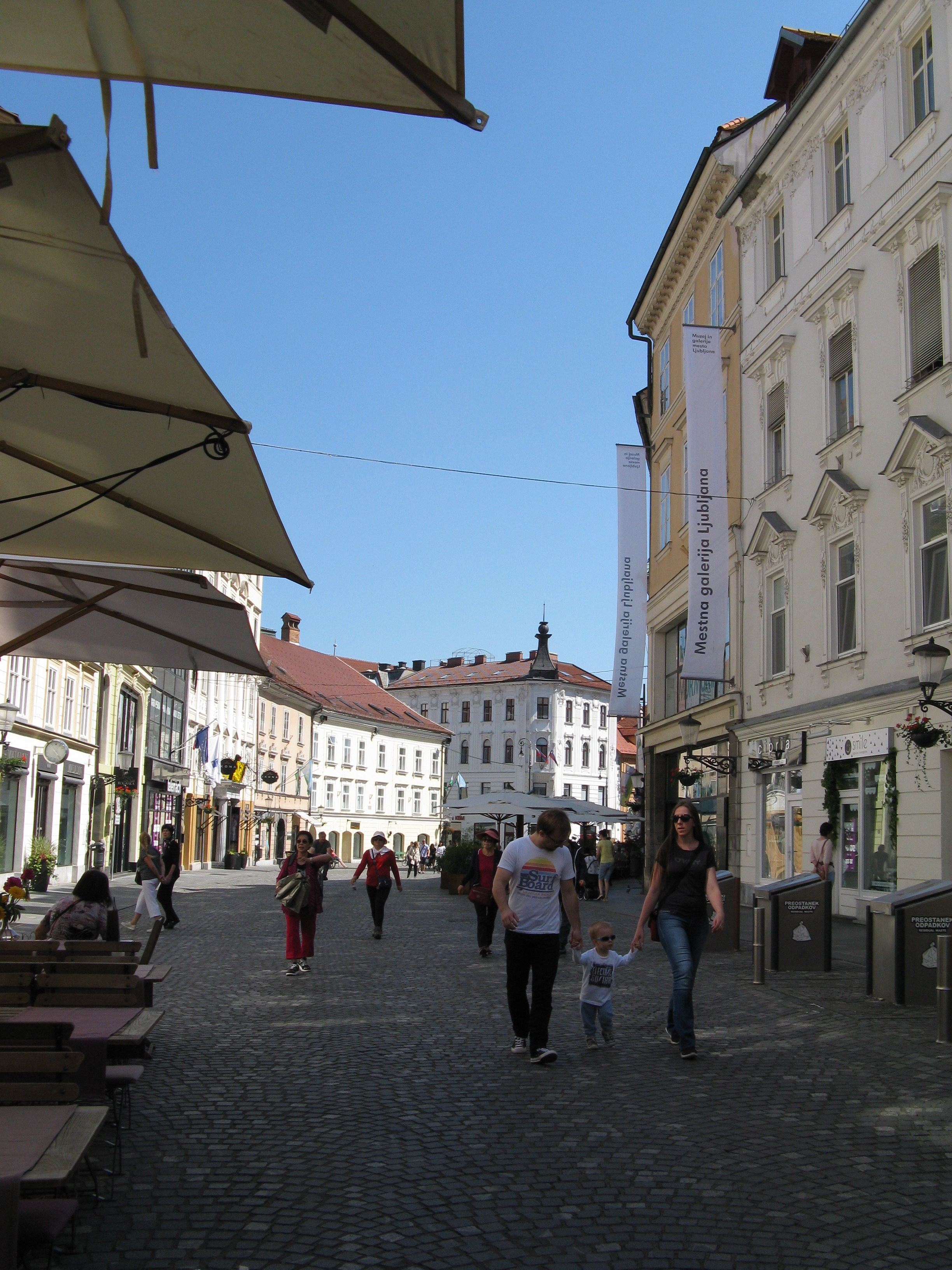
This small square leads to the oldest houses in Ljubljana.
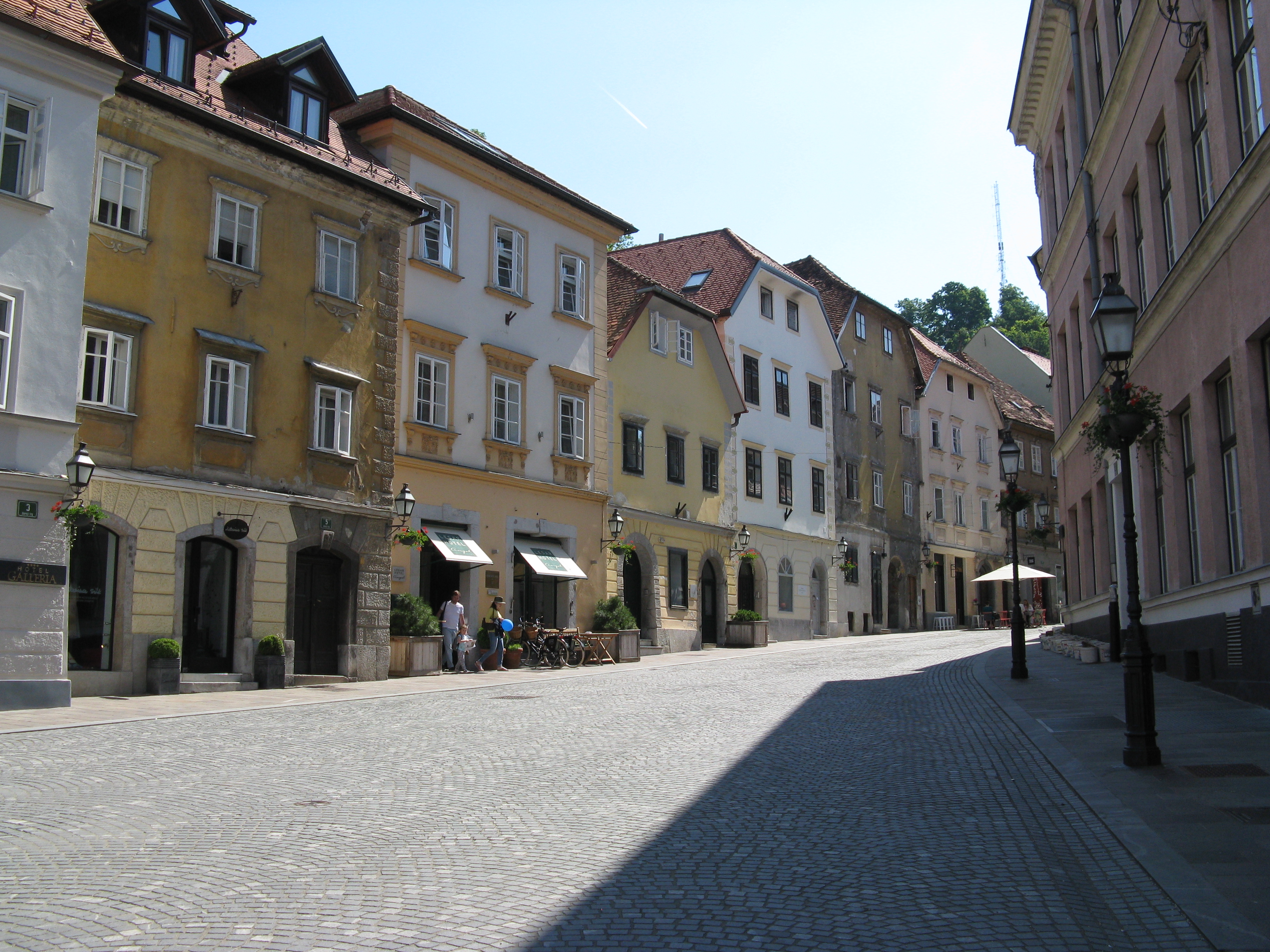
This is the main building of the university of Ljubljana.

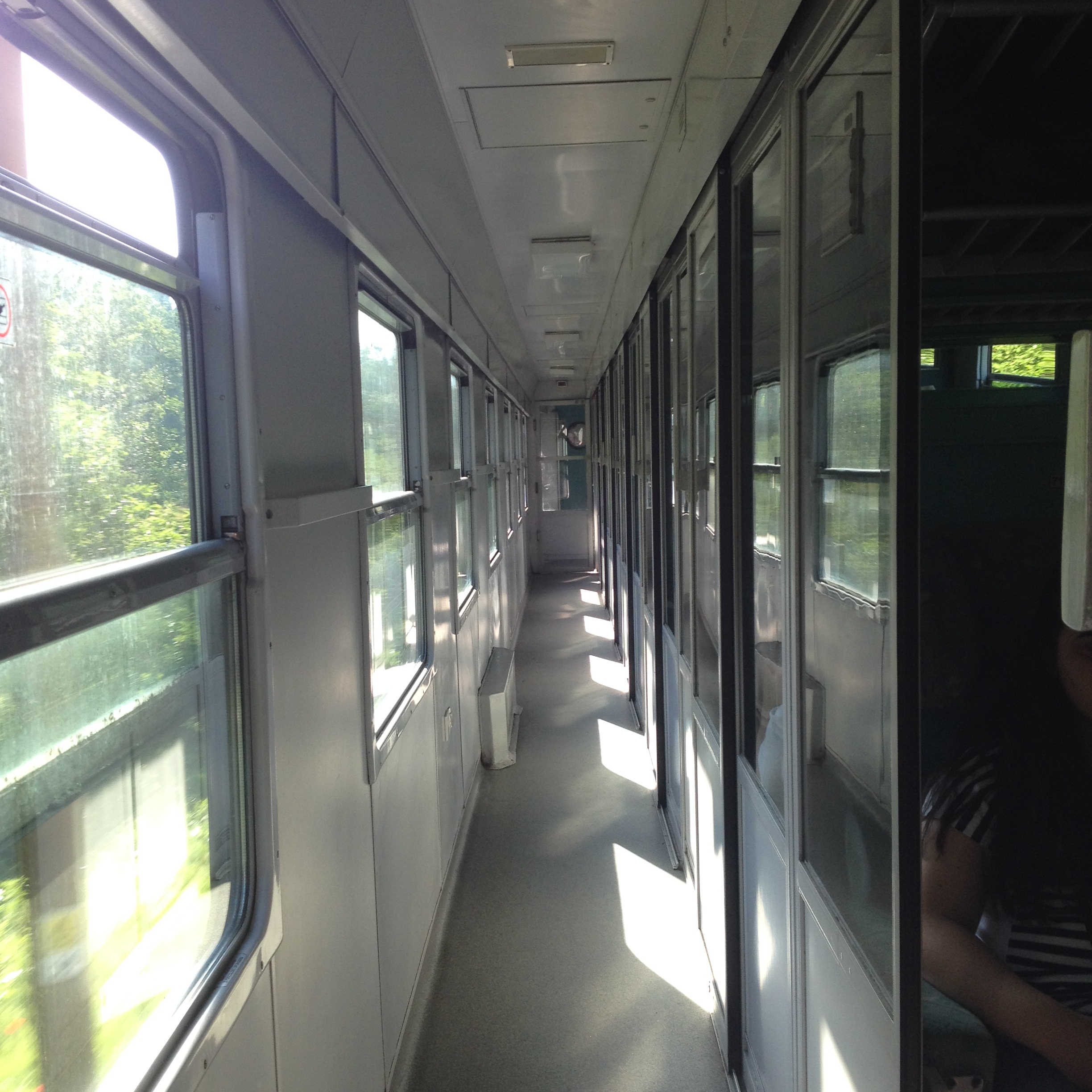
Our first train which went from Ljubljana to Zagreb. The trains are old but very comfortable. Each carriage has compartments for 6 people. It was like going back to England in the 1960’s.
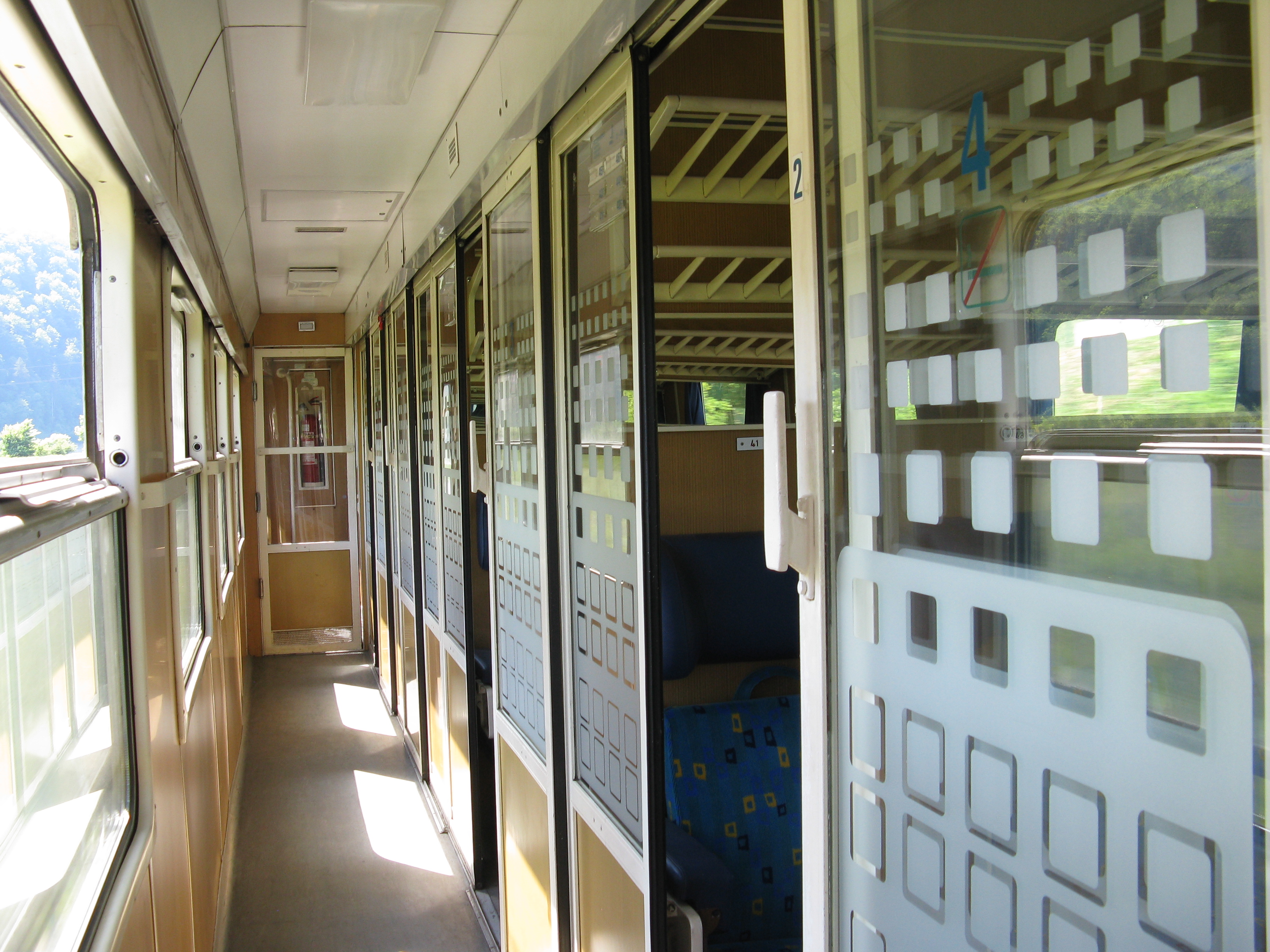
View from the train of a lovely river.
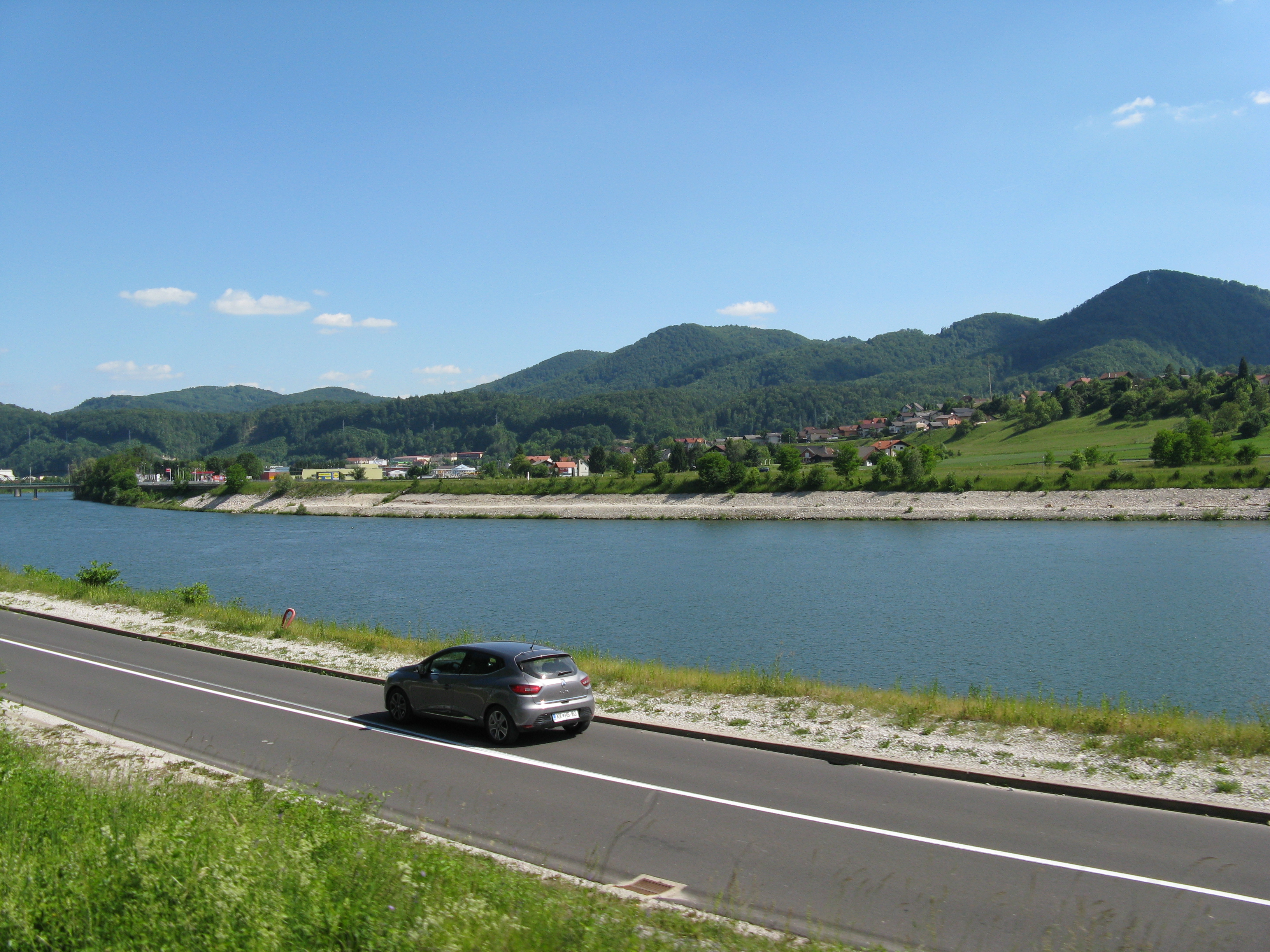
Here is another view from the train of a different river.

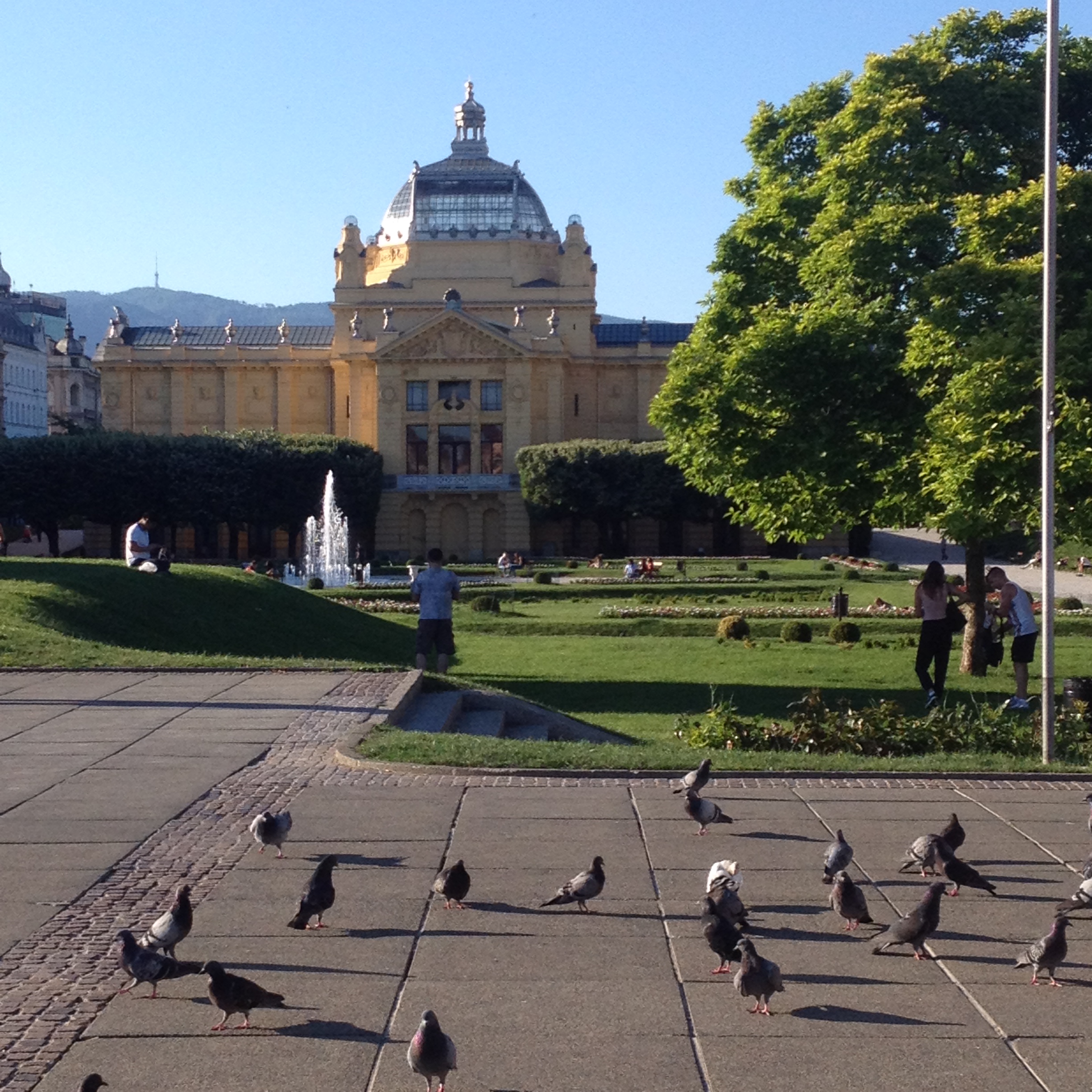
This is a picture of the Art Pavilion in Zagreb which is situated directly opposite the railway station, there is though some beautiful gardens between the two.
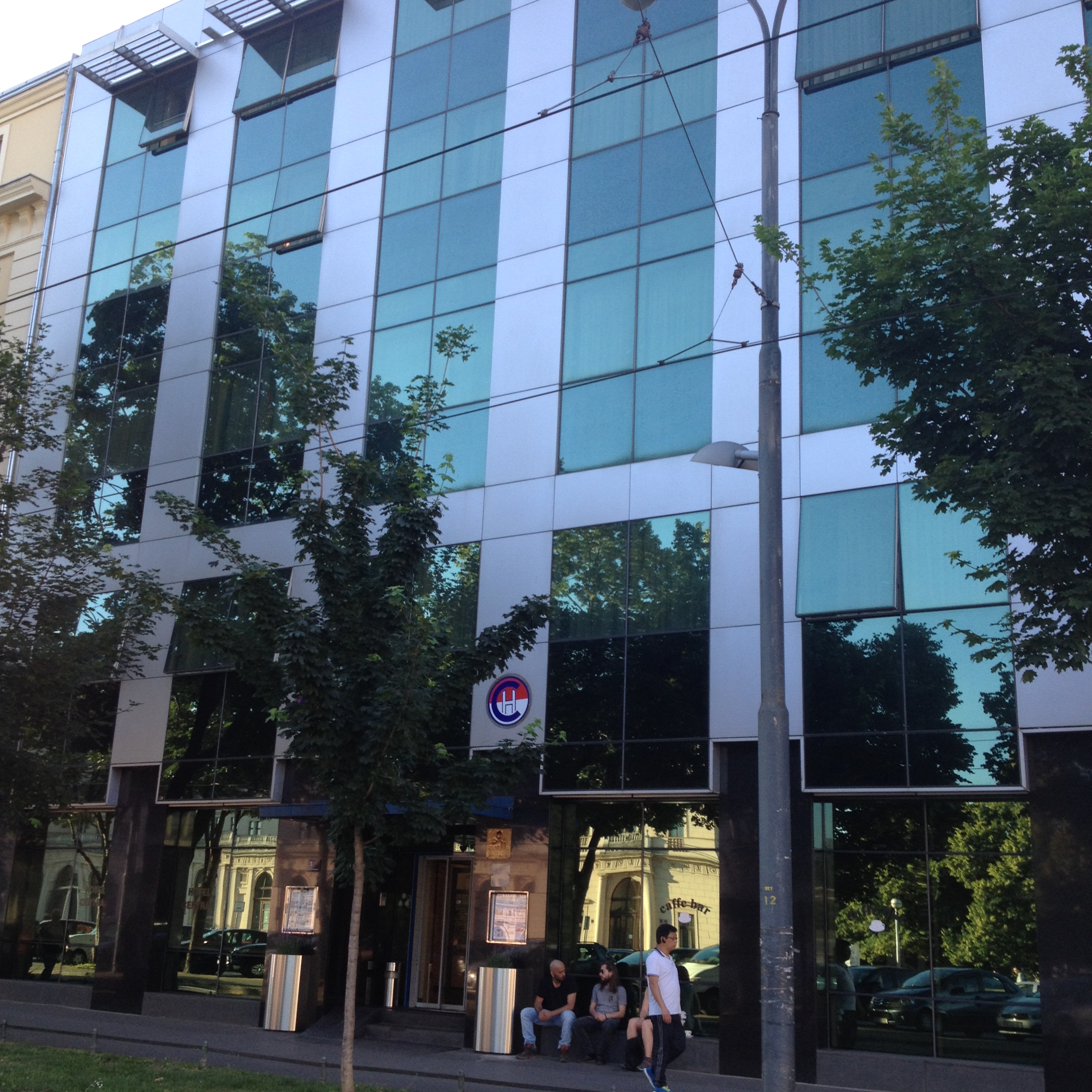
A picture of hotel central in Zagreb which is directly opposite the train station
29 May 2017 – Walking tour of Zagreb followed by a visit to beautiful Plitvice National Park
We began the day with a guided walking tour of Croatia’s capital, Zagreb. It is a city rich in art, culture and gastronomy, but for a capital city it doesn’t experience the huge rush of tourists that most other European capitals do, with most visitors choosing instead
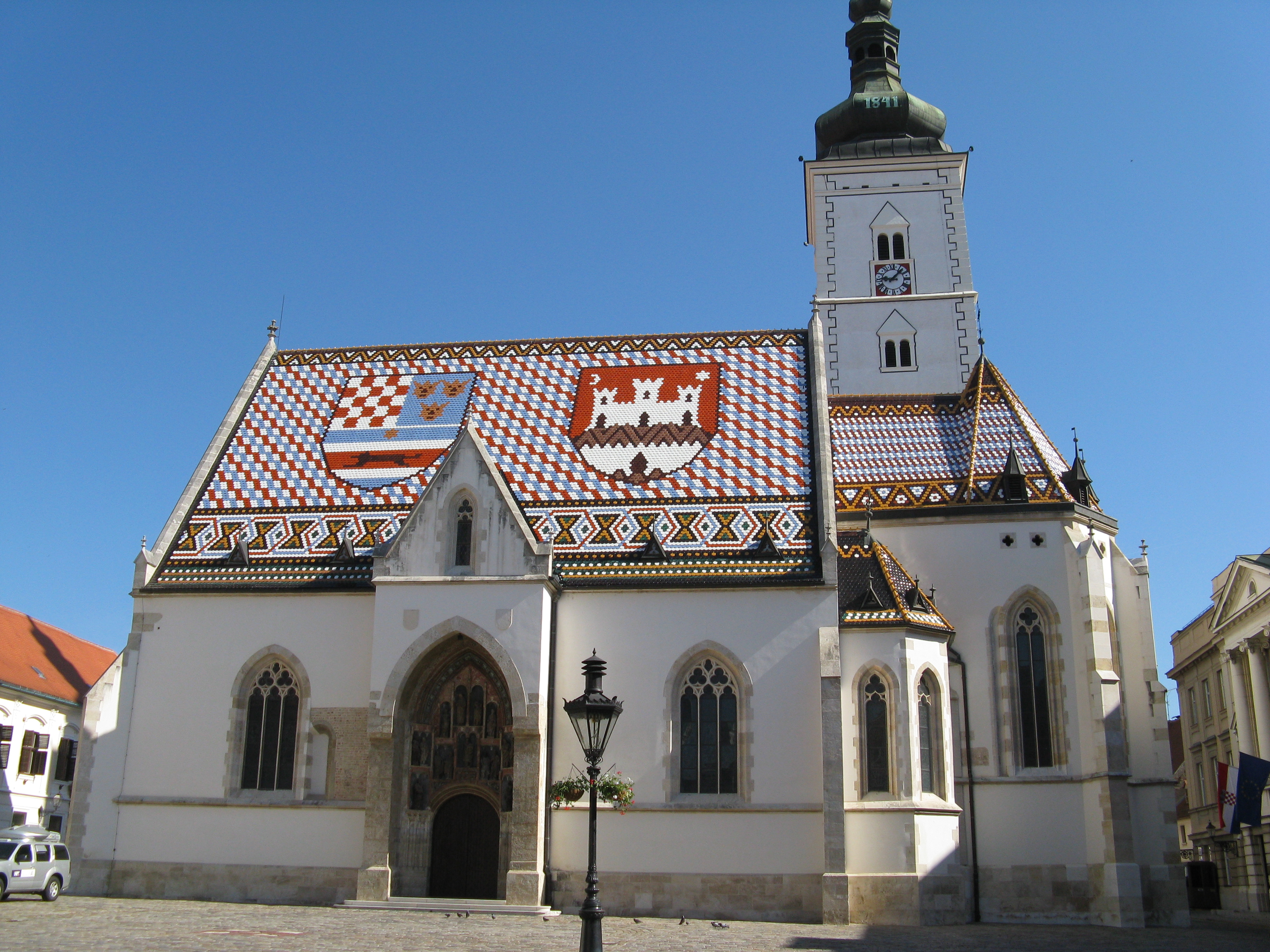
to visit better known Dubrovnik or Split. However Zagreb is just as deserving with its blend of Austro-Hungarian architecture and more hard edged socialist buildings. The city’s centrepieces are the Gothic Zagreb Cathedral and 13th century Saint Mark’s Church.
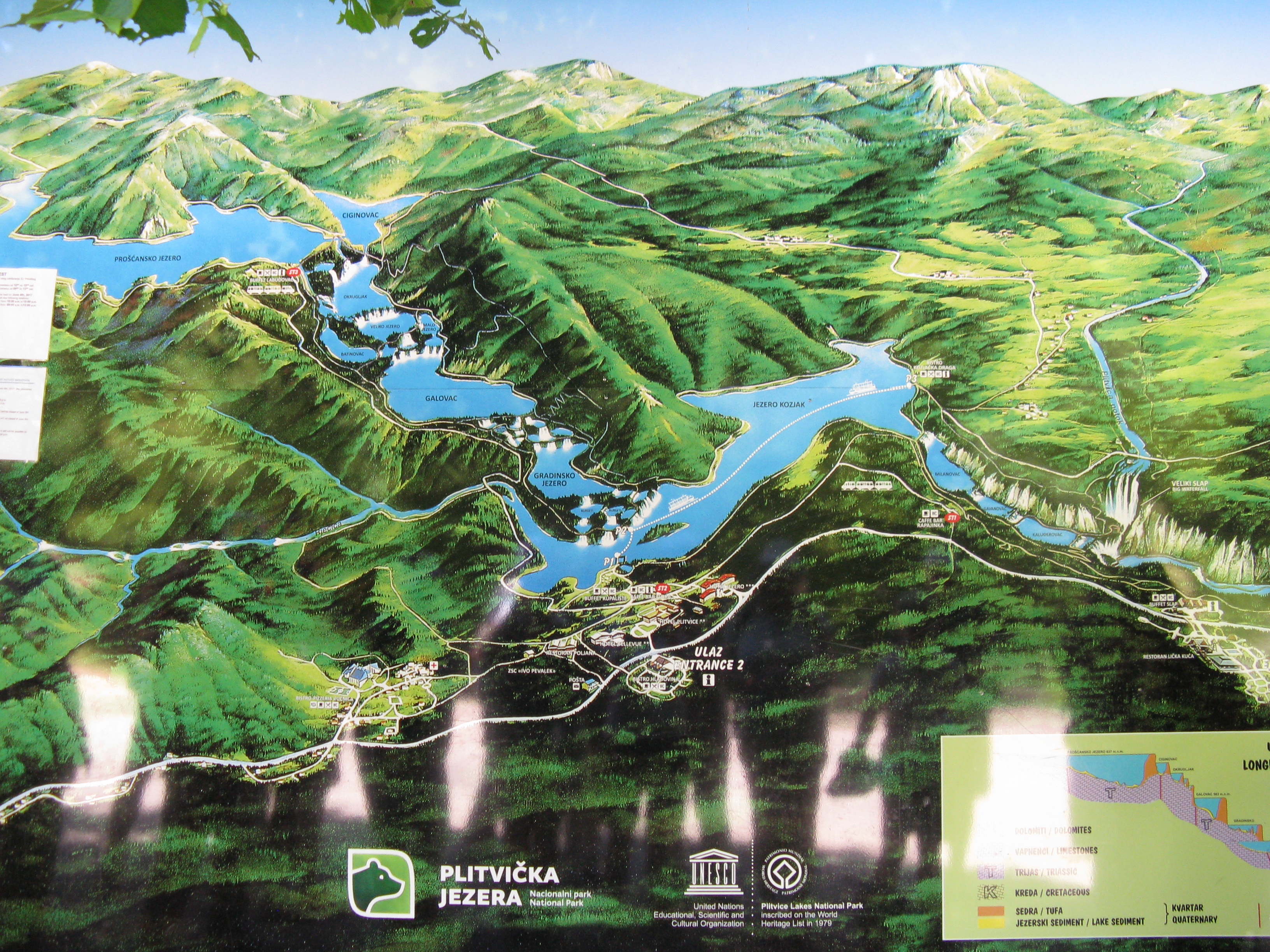
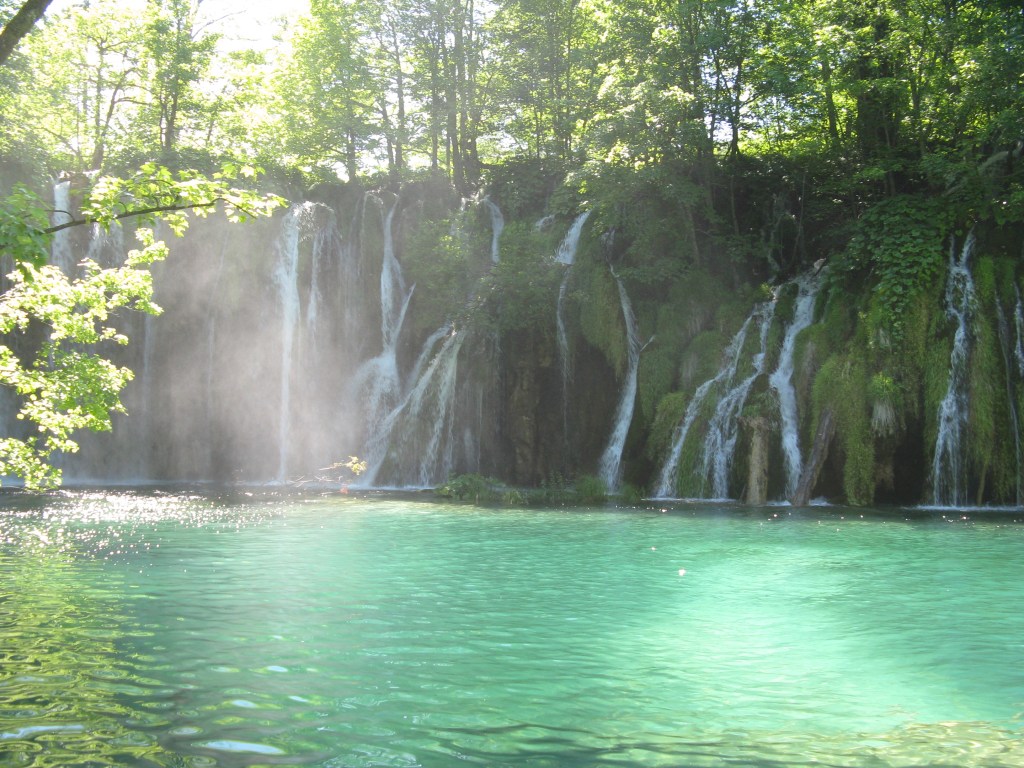
Only three hours drive out of the city is the stunning natural attraction of the Plitvice National Park. The park boasts 16 interconnecting lakes, waterfalls and dense woodland with an array of wildlife. The rare fauna includes wild brown bear, wolves, lynx and eagles, but more commonly lizards, butterflies and various bird life can be spotted. We took a couple of ferries and followed the well-marked walking trails (mostly on wooden promenades) through this magical landscape. Every turn leads us
to new breath-taking scenery and yet another stunning waterfall.
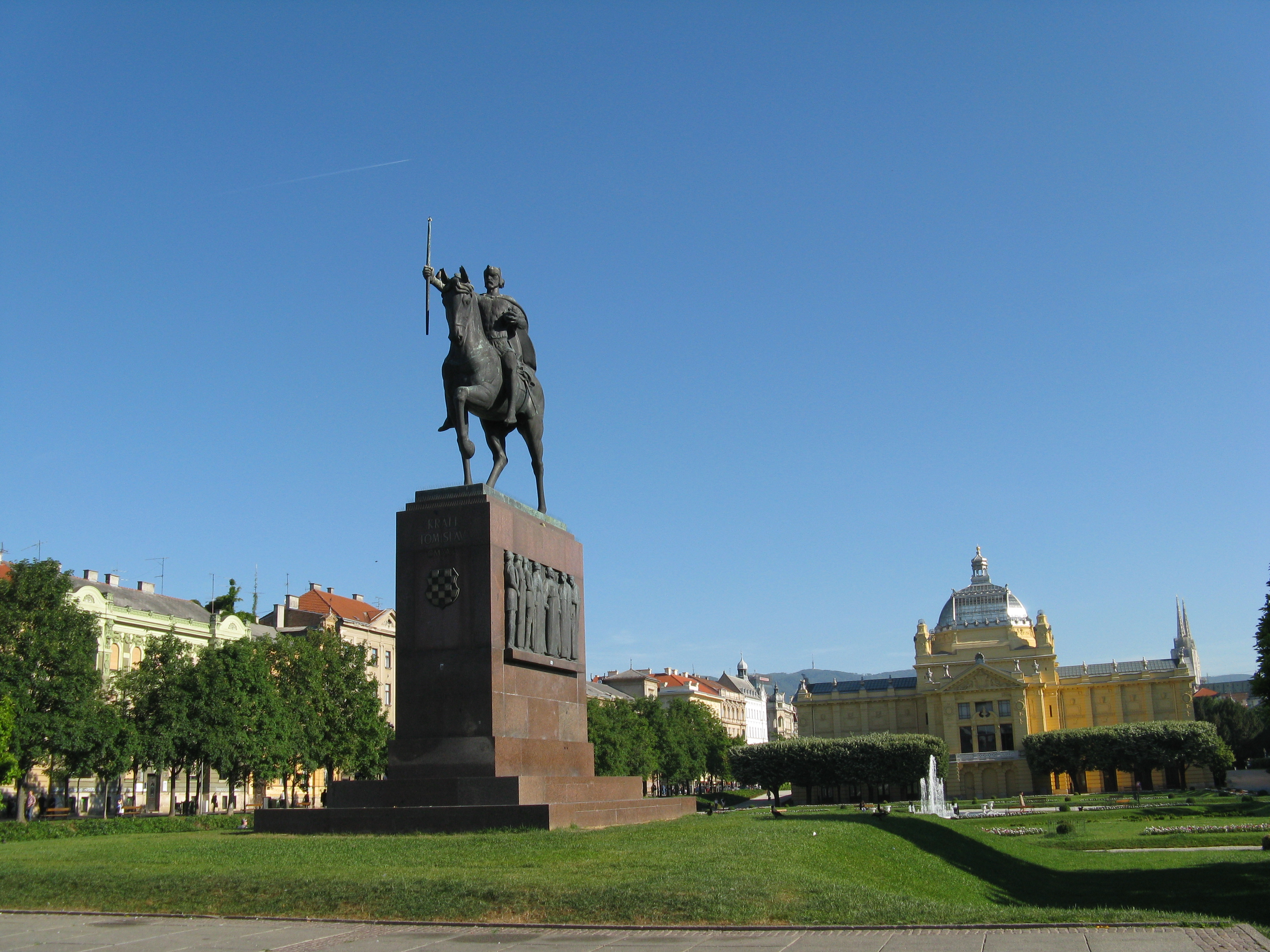
Monument of the Croatian King Tomislav and the art pavilion in a colourful park.
Mimara museum, such a beautiful building set in a wonderful park, put this on the list for the next time we visit Zagreb.

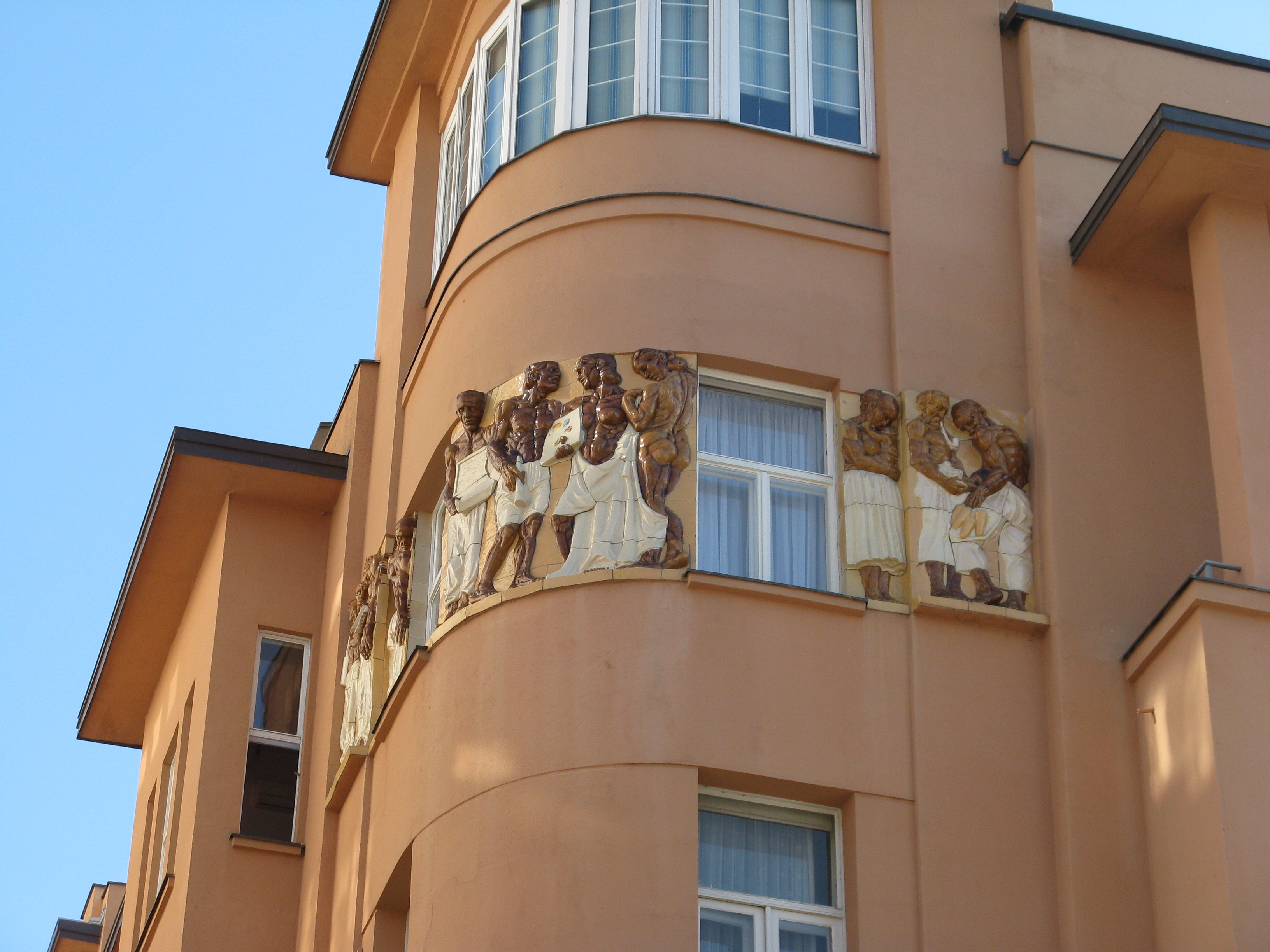
Just couldn’t resist taking a picture of the artdeco building, it was so beautiful.
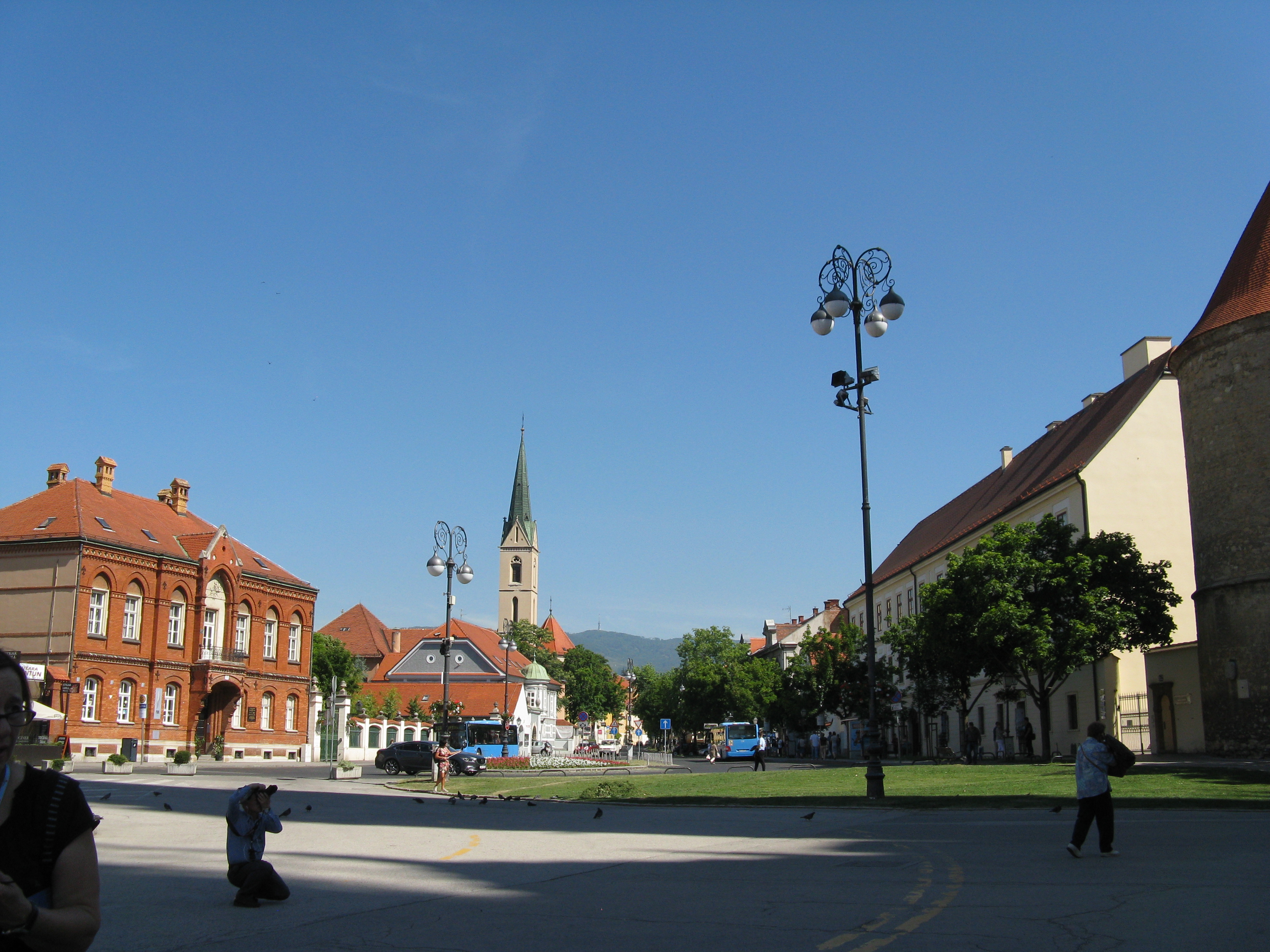
There is only one remaining entrance to the old city of Zagreb.

Zagreb’s most photographed building with it’s unusual roof. This the 13th century St Marks church.
This is a plague dedicated to Nikola Tesla who was an inventor, electrical engineer, mechanical engineer, physicist, and futurist who is best known for his contributions to the design of the modern alternating current electricity supply system. The Croatian’s will say, and it is probably true, that he actually invented it and not Thomas Edison

Gothic Zagreb cathedral.

The cathedral square which provided lovely shade on a very hot day.
A photograph of the map of Plitvicka National Parks which has a series of 16 lakes which are linked by beautiful waterfalls.
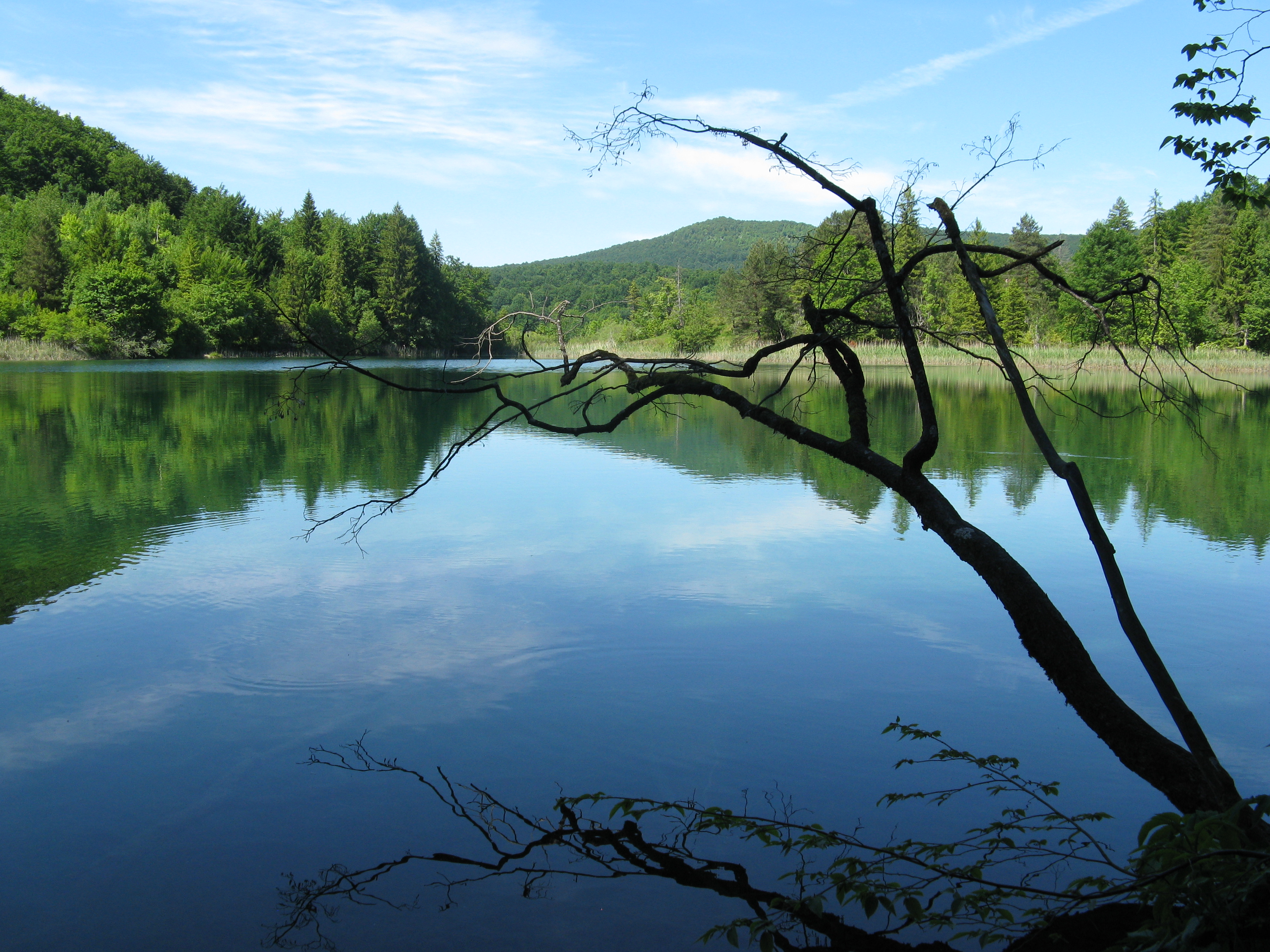
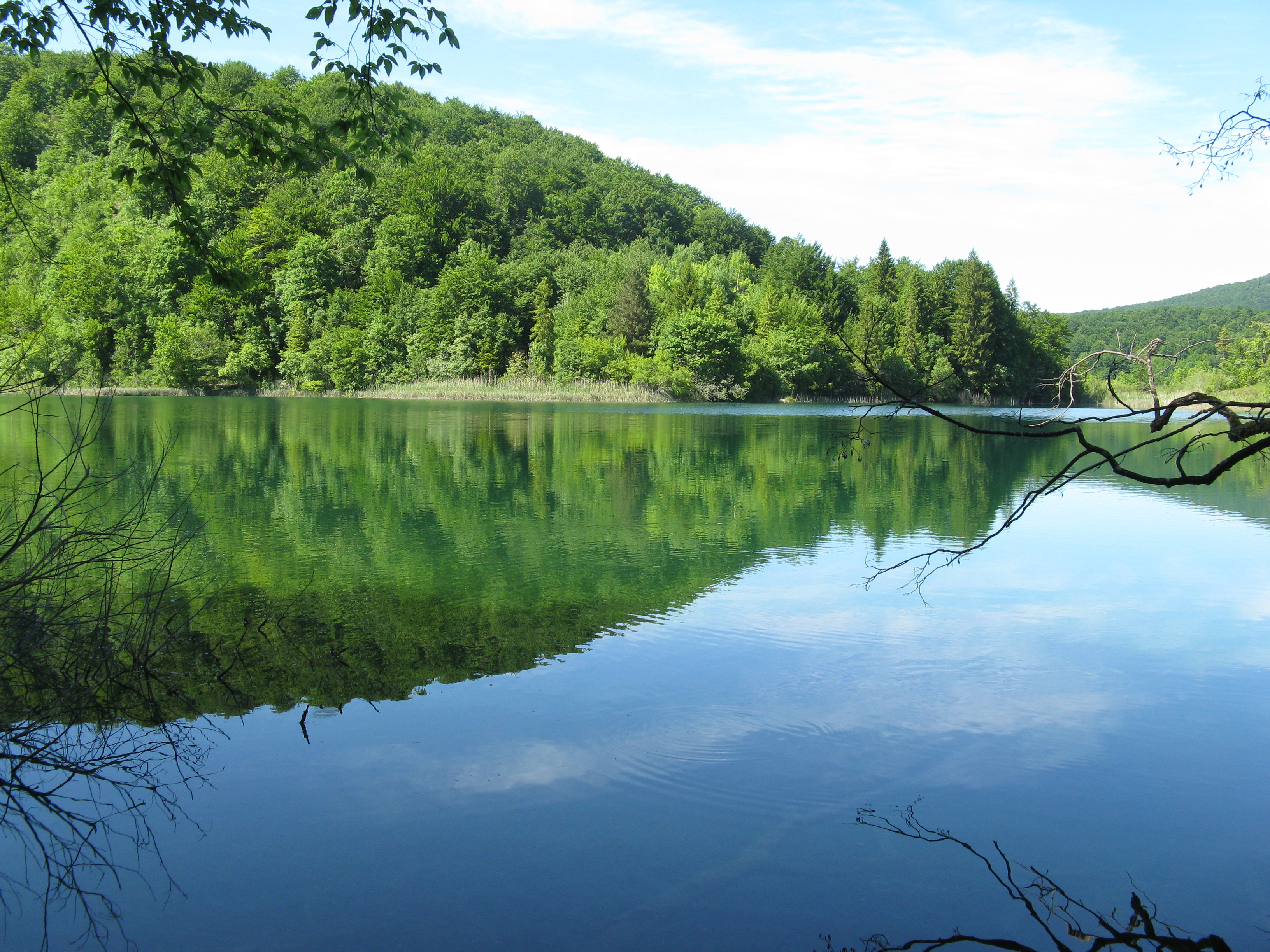
The pictures below are some of the beautiful scenery that we saw whilst we were there.

30 May 2017 – Train journey to Sarajevo, Bosnia and Herzegovina
We left Zagreb to board our train to the capital of Bosnia and Herzegovina, Sarajevo, which will took us around 11 hours. The journey was a fantastic way to see the spectacular scenery which was particularly prominent once we cross the border into the rural, mountainous areas of Bosnia and Herzegovina. There were also great views of Sarajevo as we approach the city
This is a Croatian train which is like going back to the 1960’s
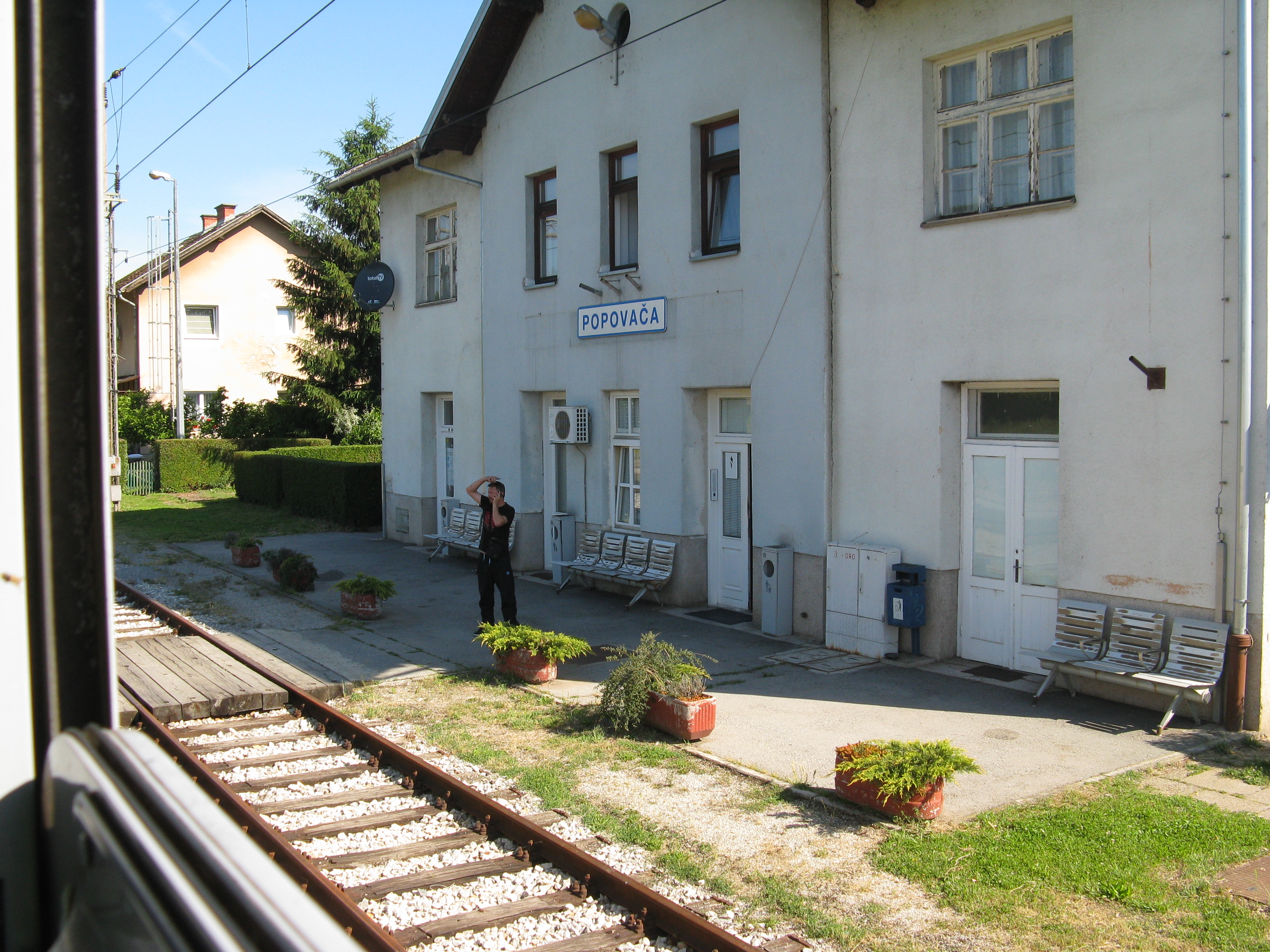
The plan was to take a train direct from Zagreb to Sarajevo but because of work on the track we had to get a rail replacement bus. This where we got off.
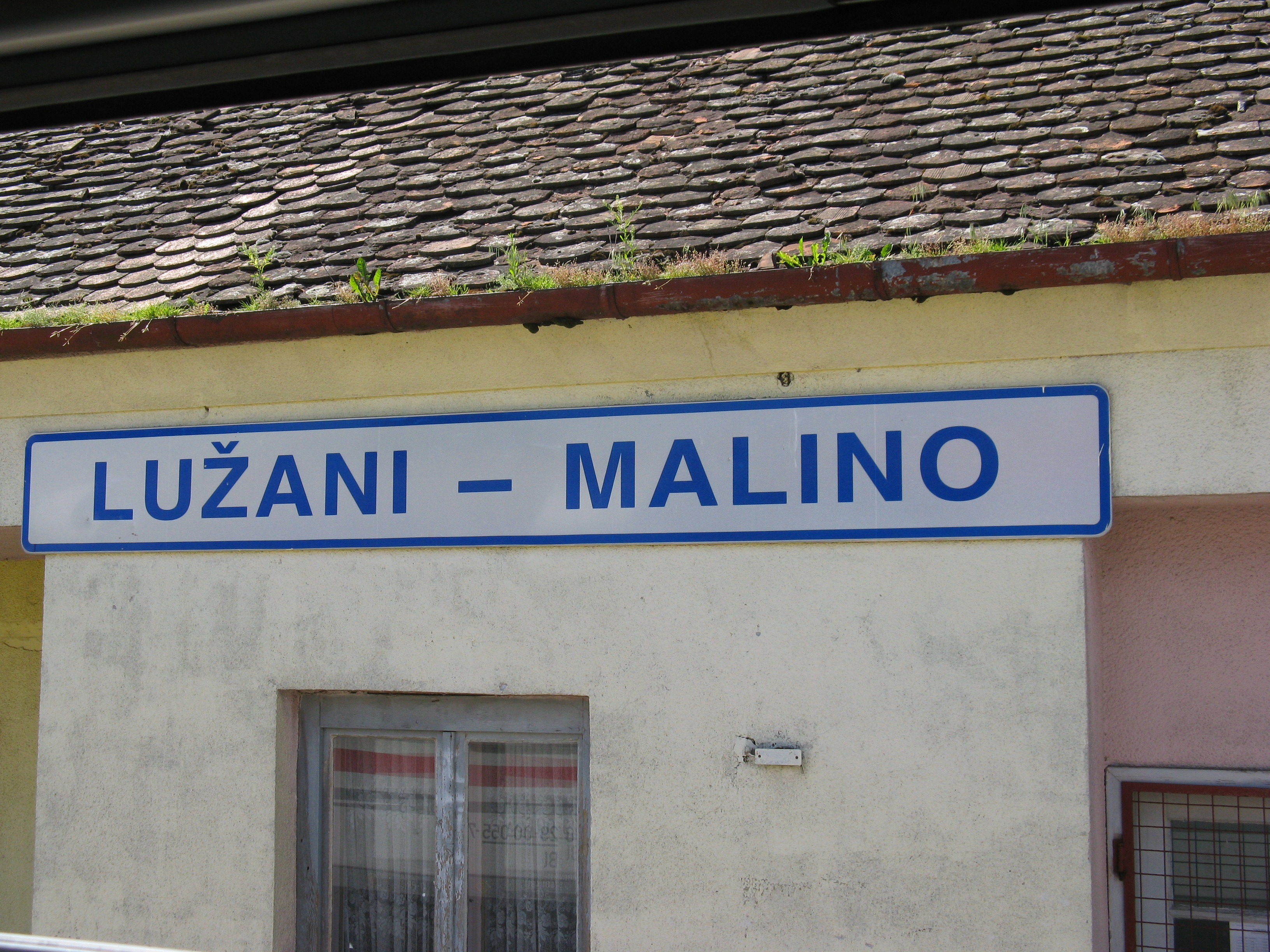
This is where we got on a Bosnian train.
The Bosnian trains are much newer.

A view from the train of the Bosnian countryside, it looks very similar to Slovenia and Croatia.
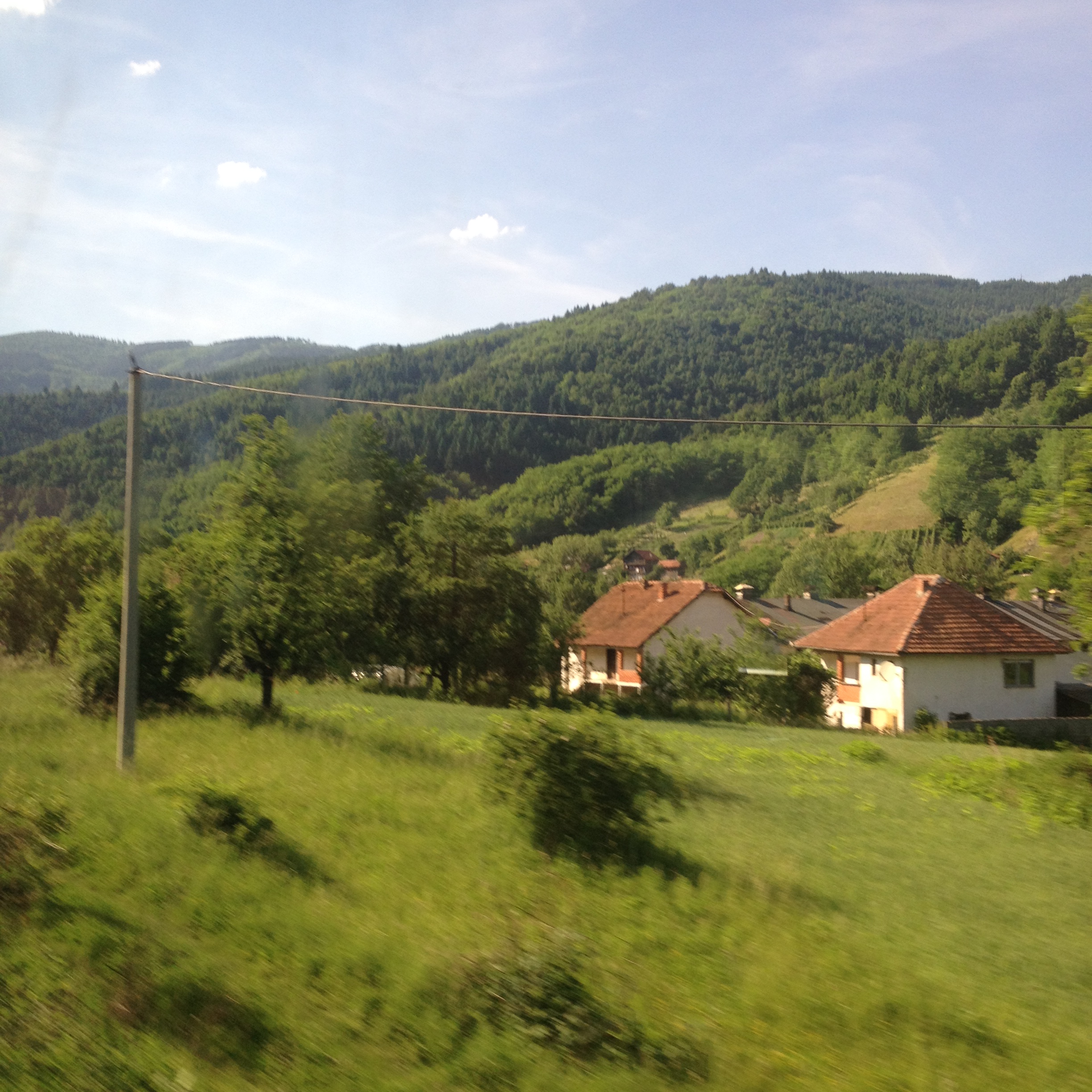
31 May 2017 – Sarajevo
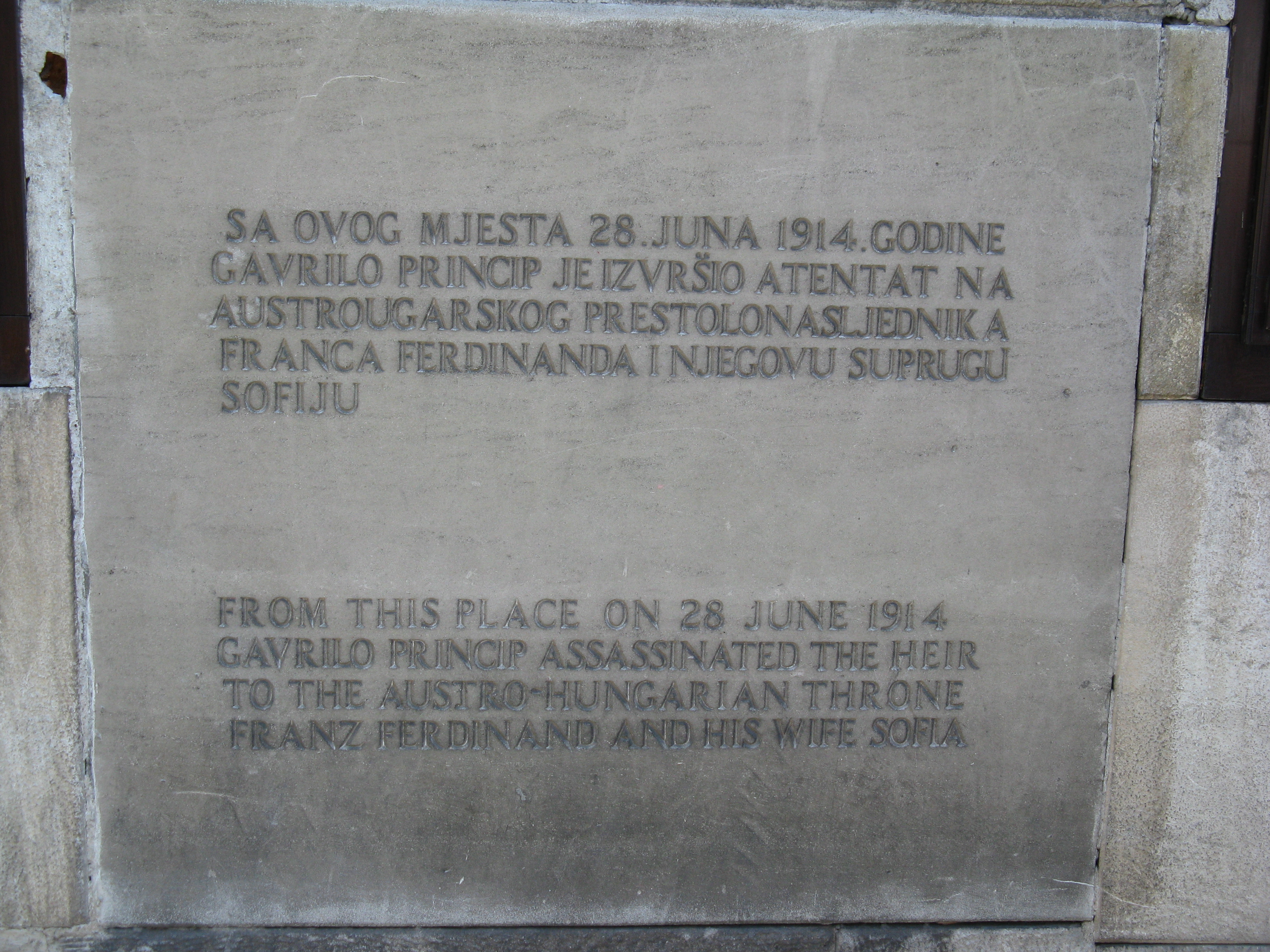
They say that the events that took place on 28th June 1914 in Sarajevo triggered the start of World War I, and in the morning we went to the city centre to begin our walking tour with a local guide to find out more. This event was the assassination of Archduke Franz Ferdinand and his wife at the northern end of Latin Bridge by a 19 year old Bosnian-Serb called Gavrilo Princip. In the city there is an Eternal Flame, which is a memorial to all those that lost their lives during the war. There are also excellent examples of Austro-Hungarian architecture, namely the City Hall
In the tour we learned more about the dreadful fate of the Jewish community which once thrived in this city, then known as ‘Little Jerusalem’.
In the afternoon will wandered through the city’s Old Town and visited a Mosque.
A picture of the city from the Muslim cemetery.
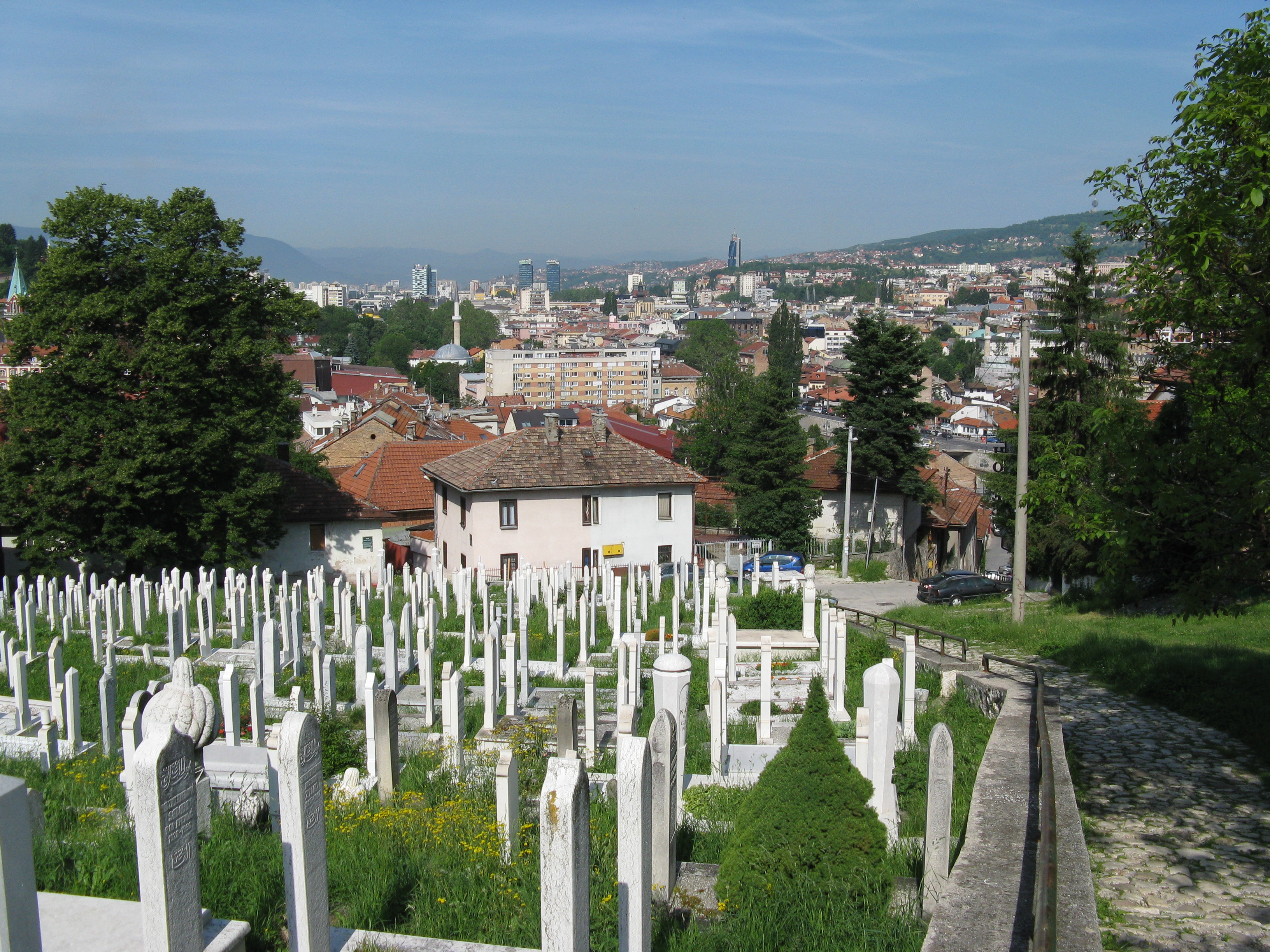
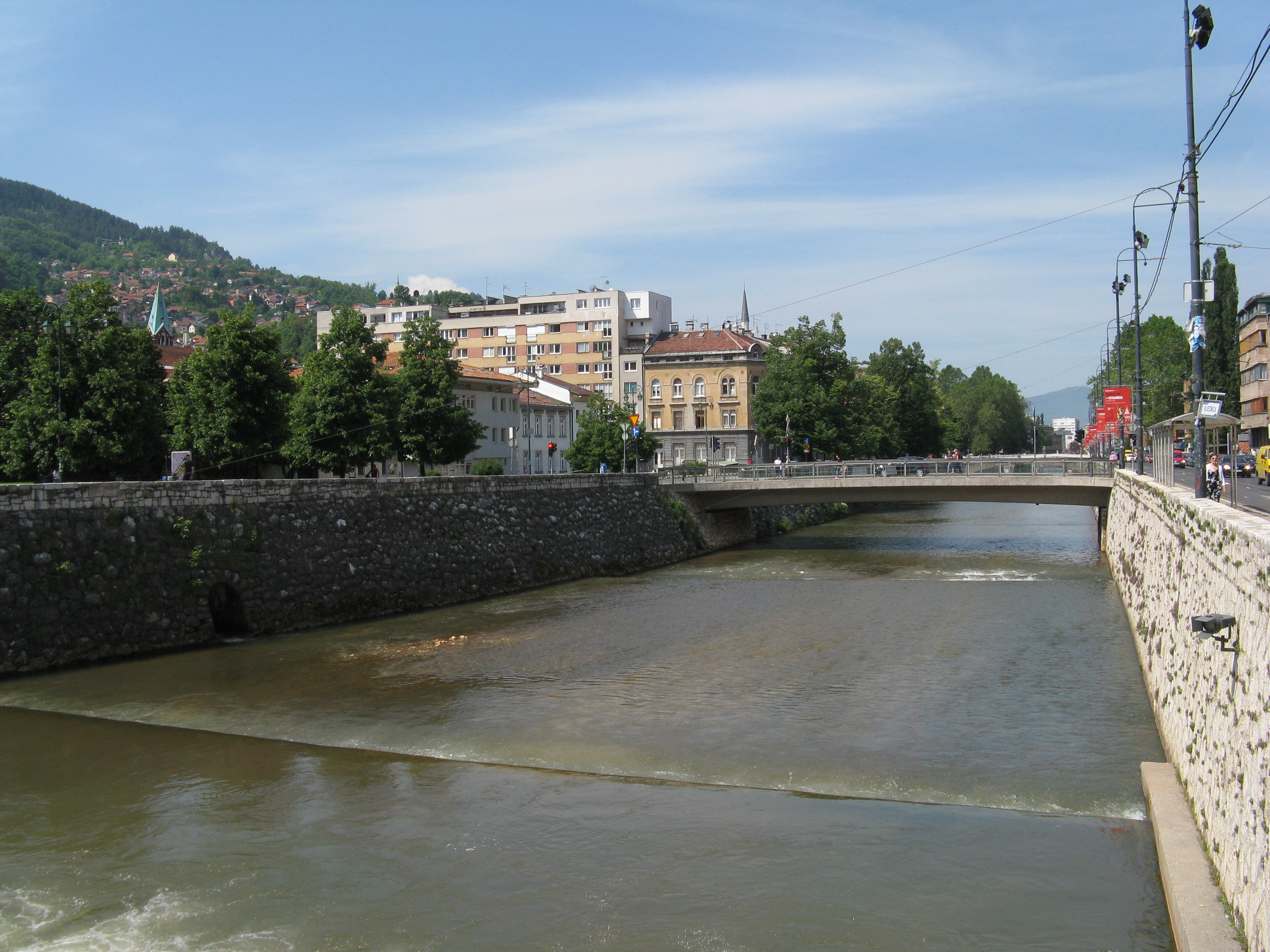
The beautiful Miljacka river which runs through the centre of Sarajevo.
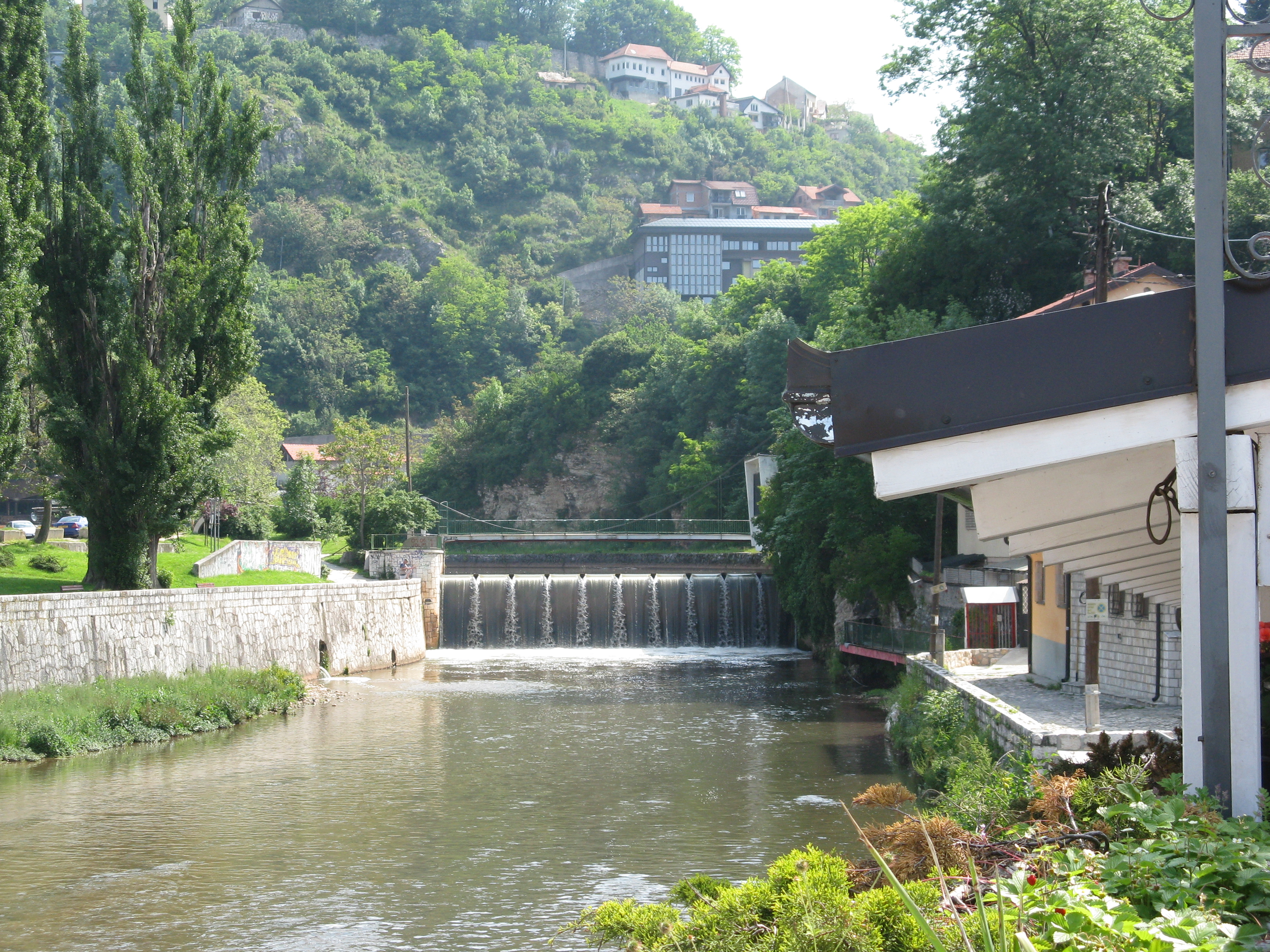
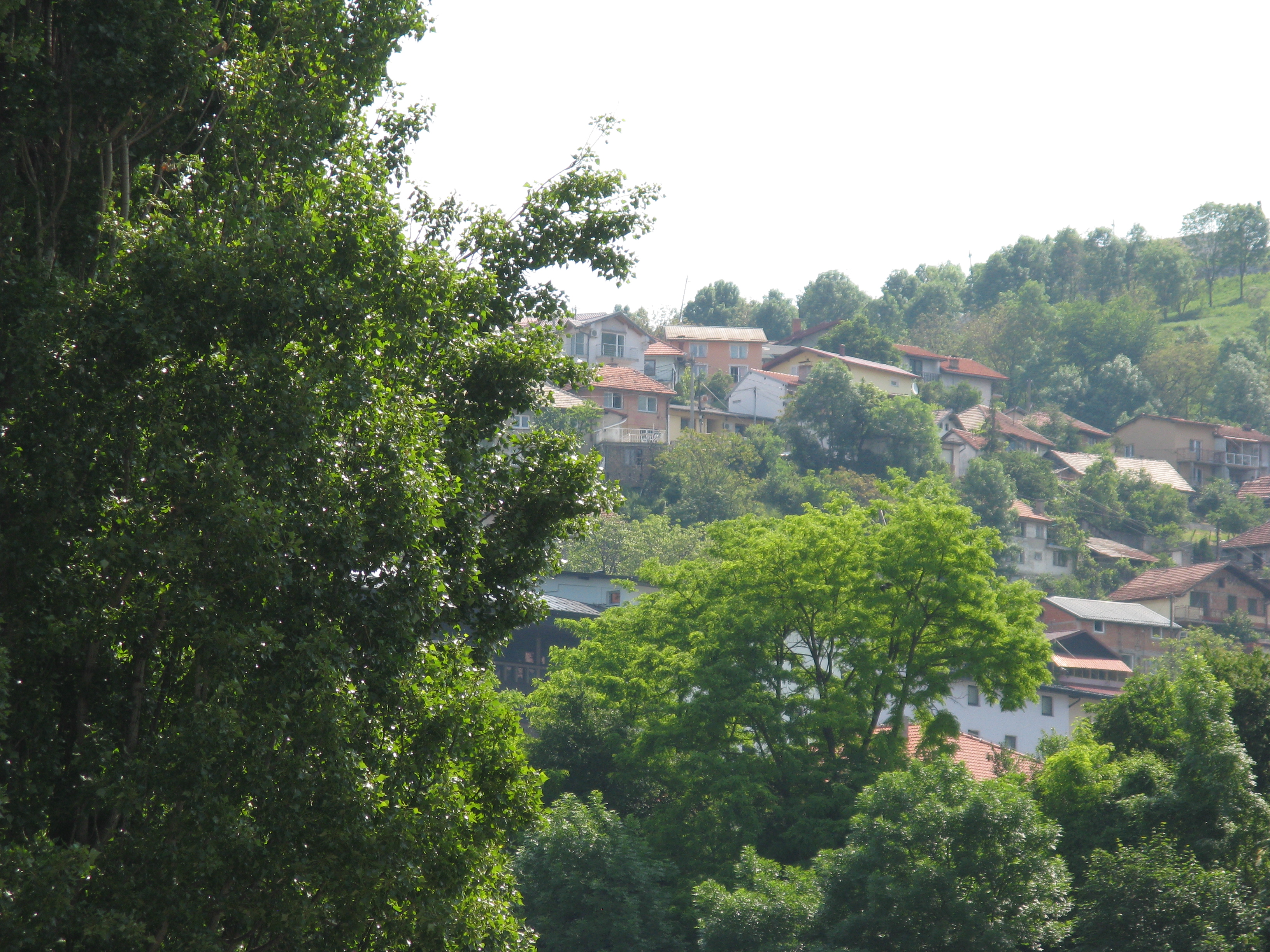
Sarajevo is a city which is surrounded by hills.
Another view of the Miljacka river
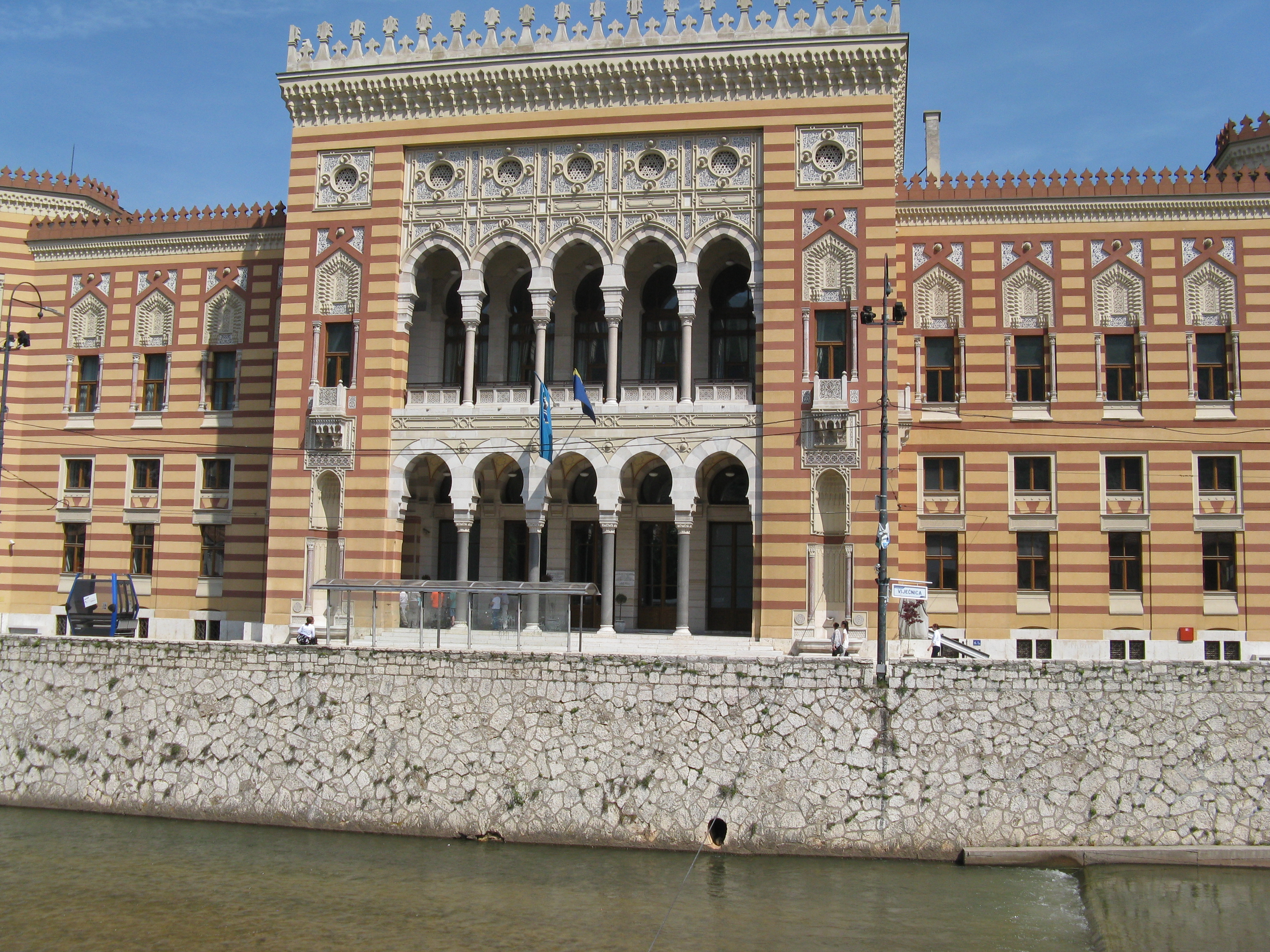
Sarajevo City Hall, known as Vijećnica, is located in the center of the city close to the river. It was designed in 1891 by the Czech architect Karel Pařík, but criticisms by the minister, Baron Benjamin Kallay, caused him to stop working on the project. It was initially the largest and most representative building of the Austro-Hungarian period in Sarajevo and served as the city hall.The building was reopened on May 9, 2014.
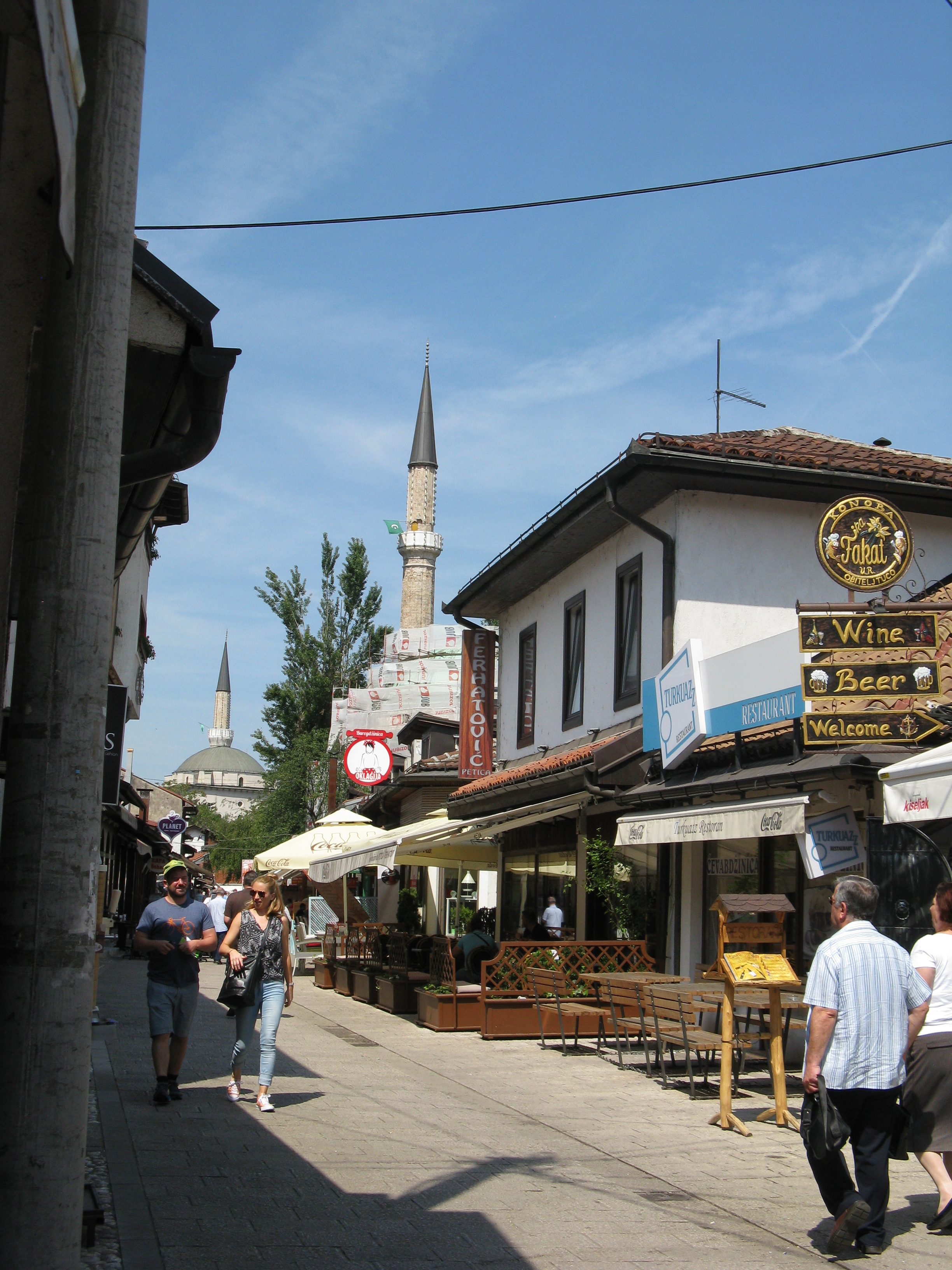
The old town Bazaar which is a Muslim area which allows the sale of alcohol, see the sign in the top right.
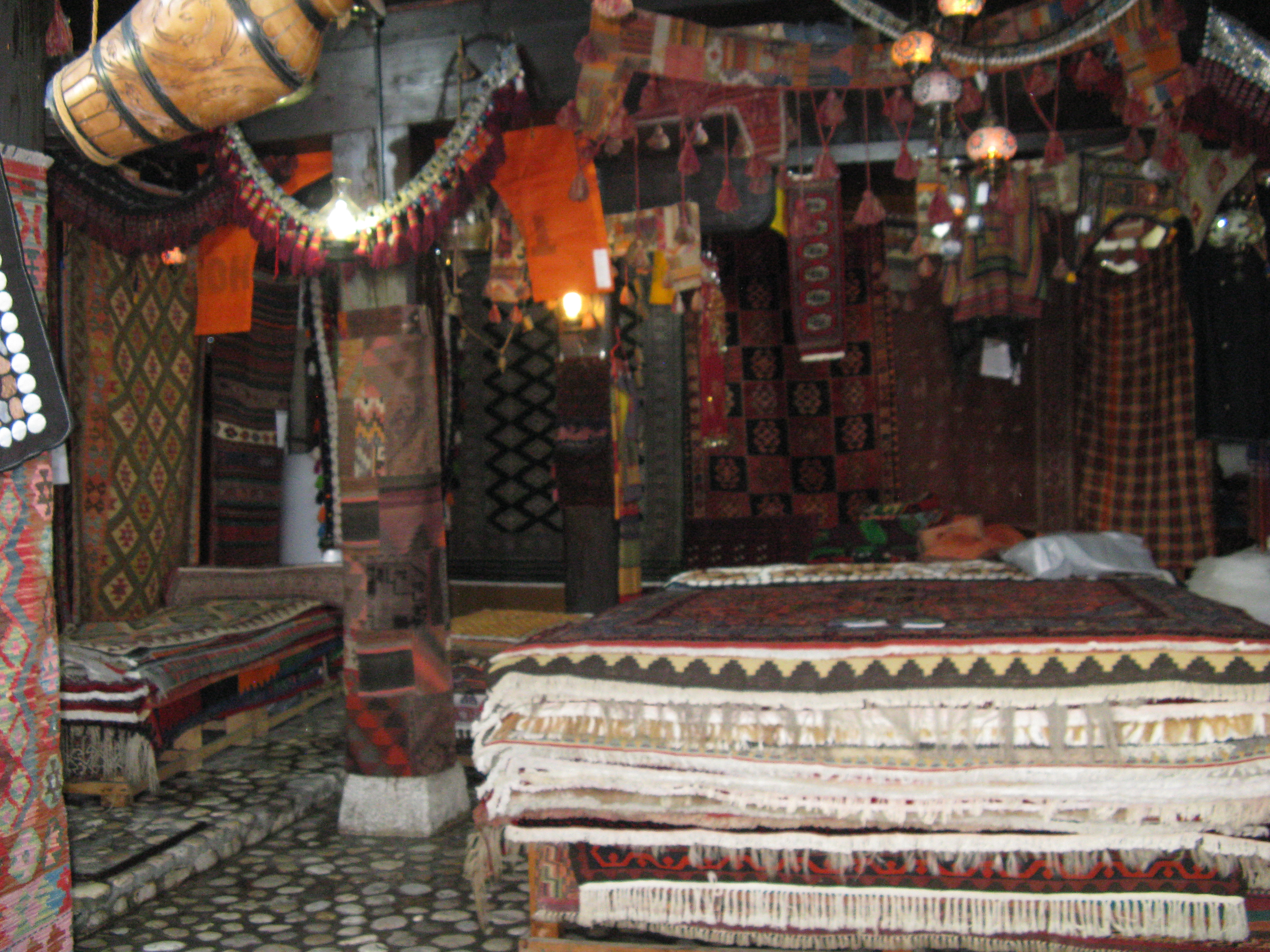
A typical shop in the Bazaar.
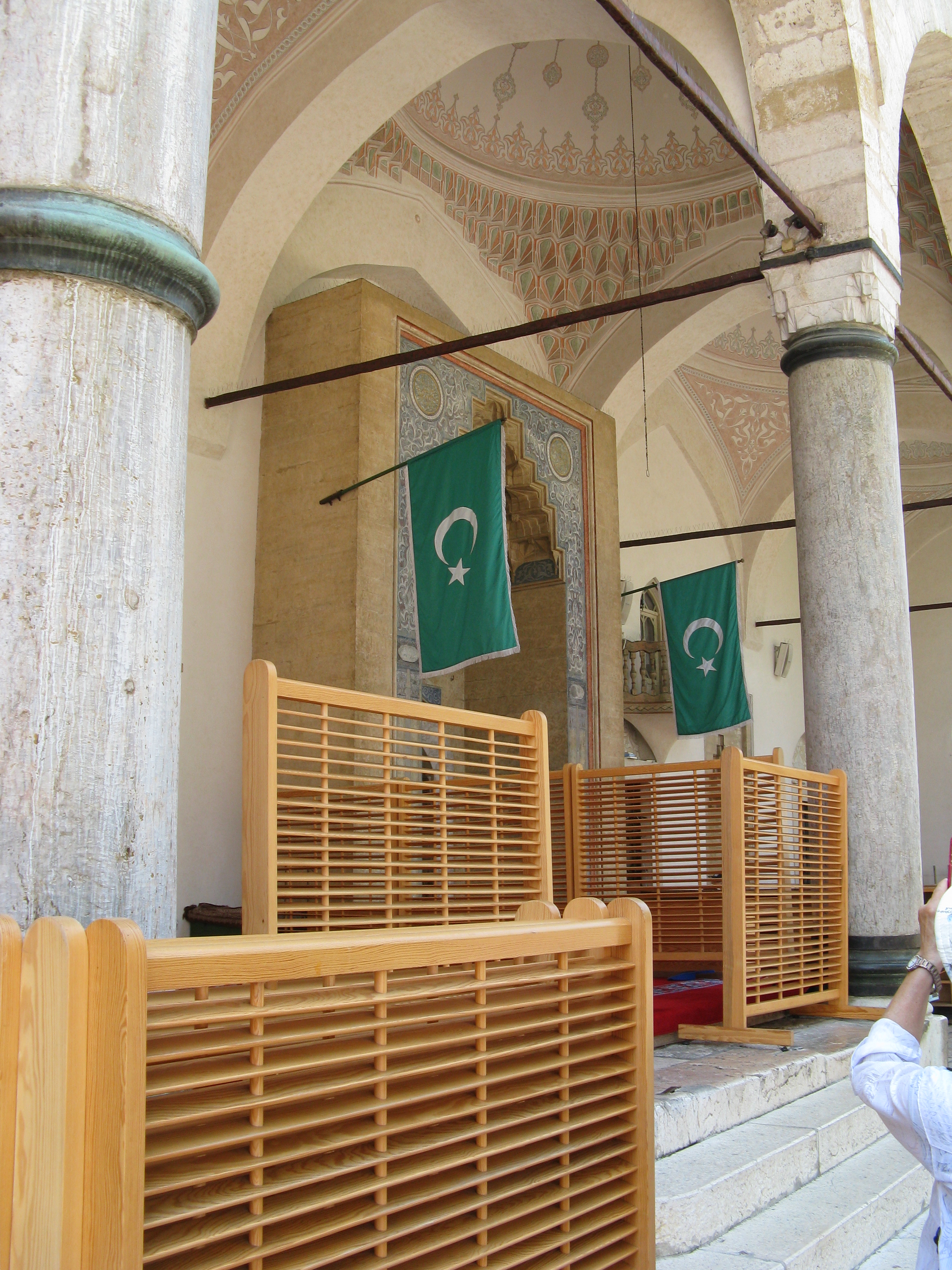
This is a picture of the outside of the the central Mosque , called Gazi Husrev-bey Mosque, is situated within the Bazaar. Built in 16th century, it is the largest historical mosque in Bosnia and Herzegovina and one of the most representative Ottoman structures in the Balkans. Being the central Sarajevan mosque since the days of its construction, today it also serves as the main Congregational mosque of the Islamic community of Bosnia and Herzegovina.
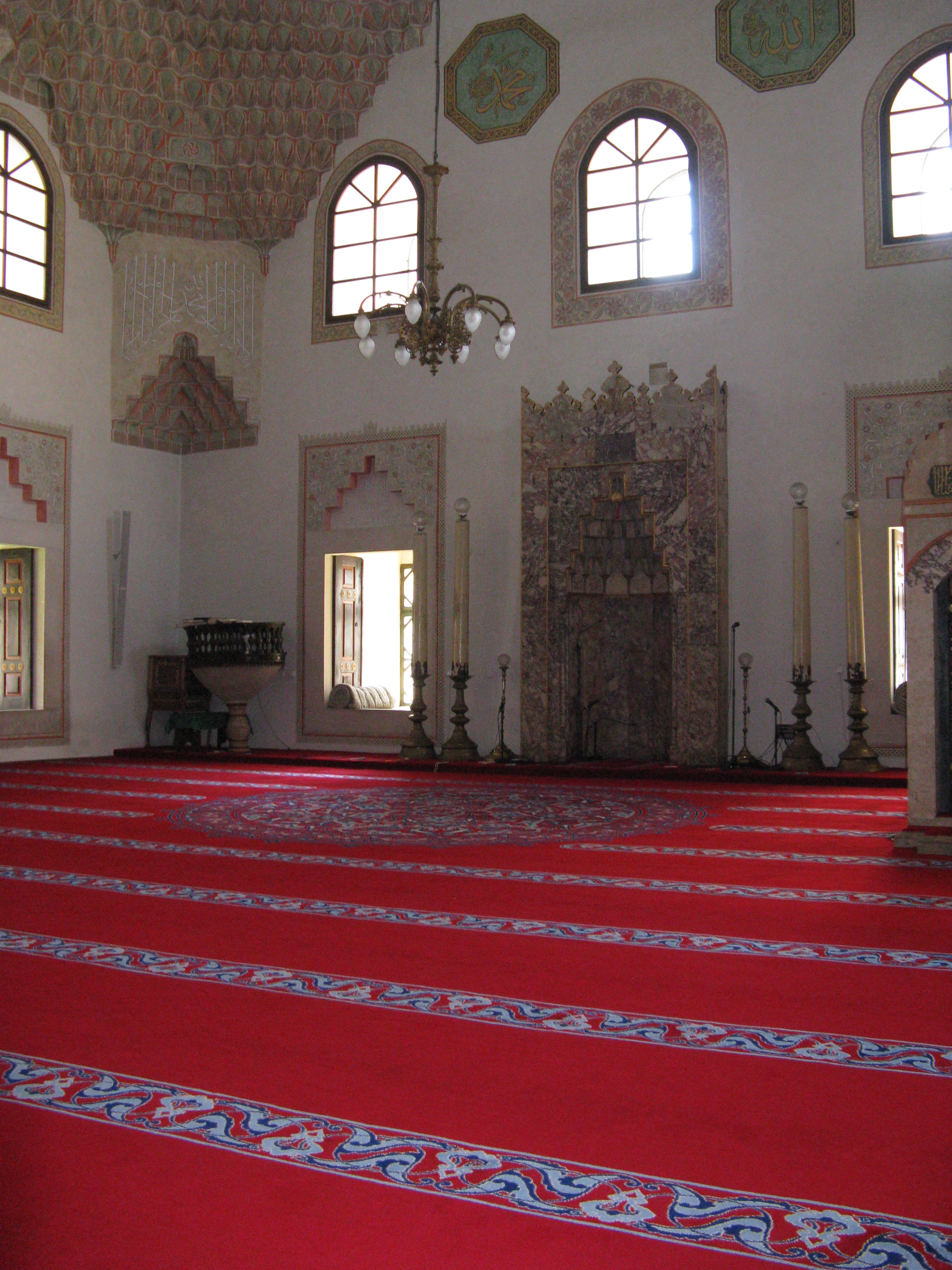
This is the inside of the Mosque. We had to remove shoes before we entered and were only allowed in when there were no prayers. This is a short window as we visited during the holy month of Ramadan.
The plaque above indicates here Franz Ferdinand was killed and is tributted to be the cause of the start of the first world war.
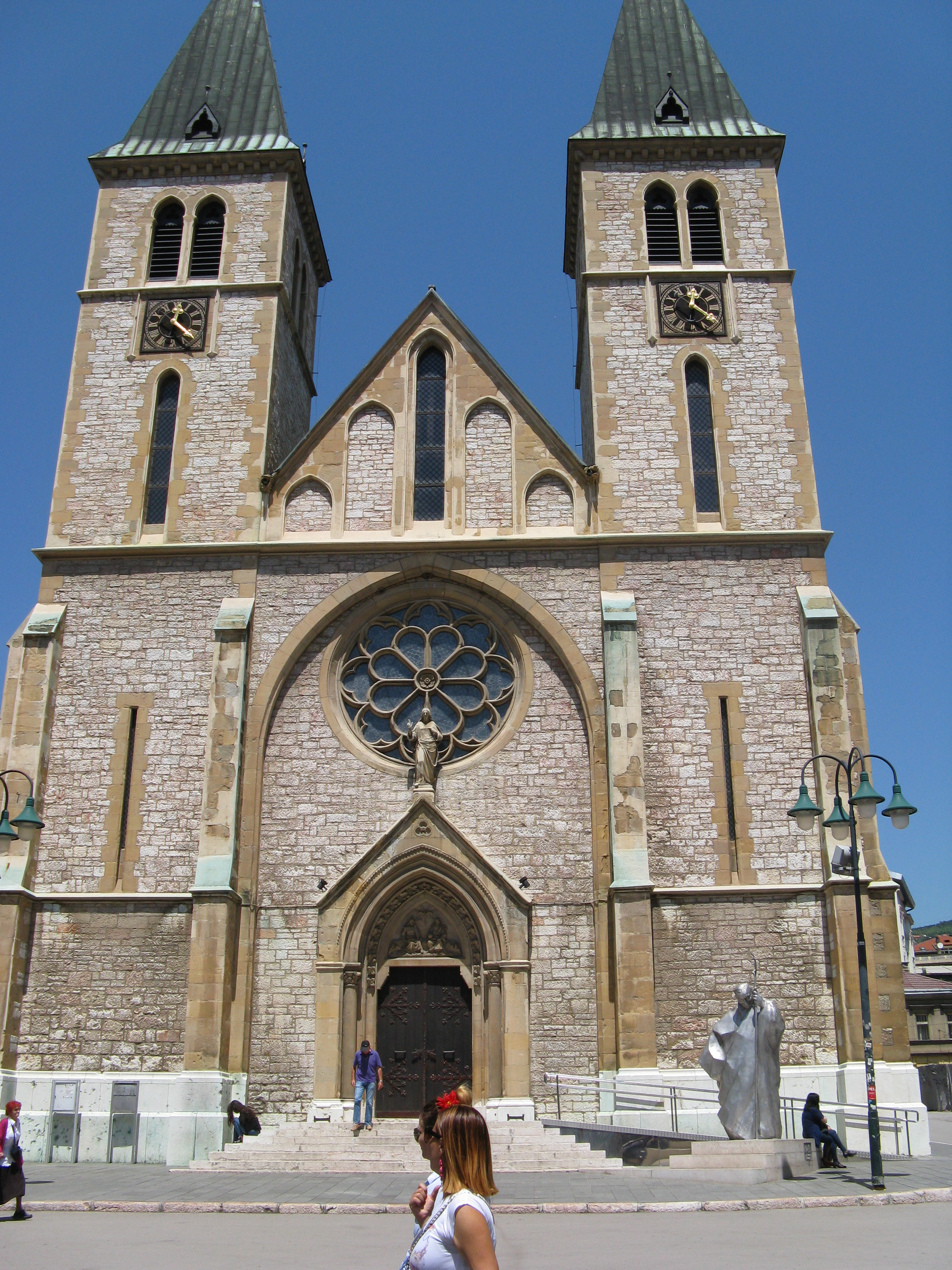
The Sacred Heart Cathedral, Sarajevo Cathedral, is the largest Christian cathedral in Bosnia and Herzegovina. It is the seat of the Archbishop of Vrhbosna, currently Cardinal Vinko Puljić, and center of Catholic worship in the city. The Cathedral is located in the city’s Old Town district.
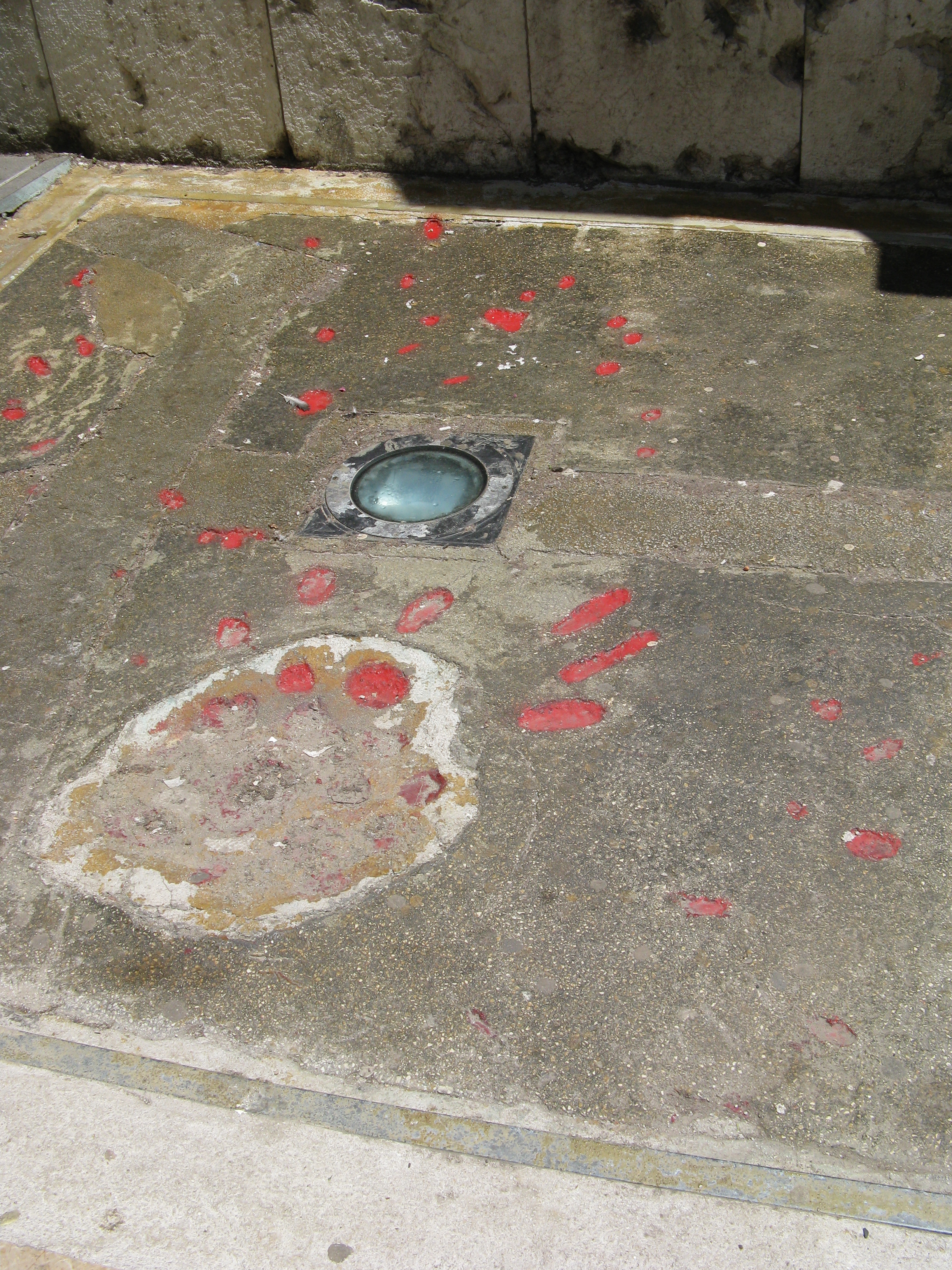
There are many red markings on the floor as a monument to the suffering in Sarajevo of the various conflict that have taken place.
The Eternal flame is a memorial to the military and civilian victims of the Second World War in Sarajevo. The memorial was dedicated on 6 April 1946, the first anniversary of the liberation of Sarajevo from the four-year-long occupation by Nazi Germany and the fascist Independent State of Croatia.
In our travels around Europe it is amazing to find the number of countries that have some form of an eternal flame in memory of one war or another.

1 June 2017- Scenic rail trip to Mostar
In the morning we boarded for the very scenic train ride between Sarajevo and Mostar, which took us just under three hours. As it chugs slowly through the mountains, which were once occupied by Bosnian Serbs during the Bosnian War, the dramatic scenery captures our attention.
In the afternoon we had a guided walking tour. Mostar is in the Herzegovina region of the country and still displays vivid scars from the 18 months the city was held under siege in the nineties. Much of Mostar was ruined during this period; however, with its relaxed atmosphere it’s hard to believe the conflicts are such recent history. The city still has a very Ottoman feel to it with its winding cobbled stone streets and skyline dotted with domes and minarets. We visited the bazaar, mosque and old city on the way to one of the country’s most famous landmarks, Stari Most. This bridge is a reconstruction of the original Ottoman bridge that was built in the mid-1500’s, but was destroyed by shelling in 1993.
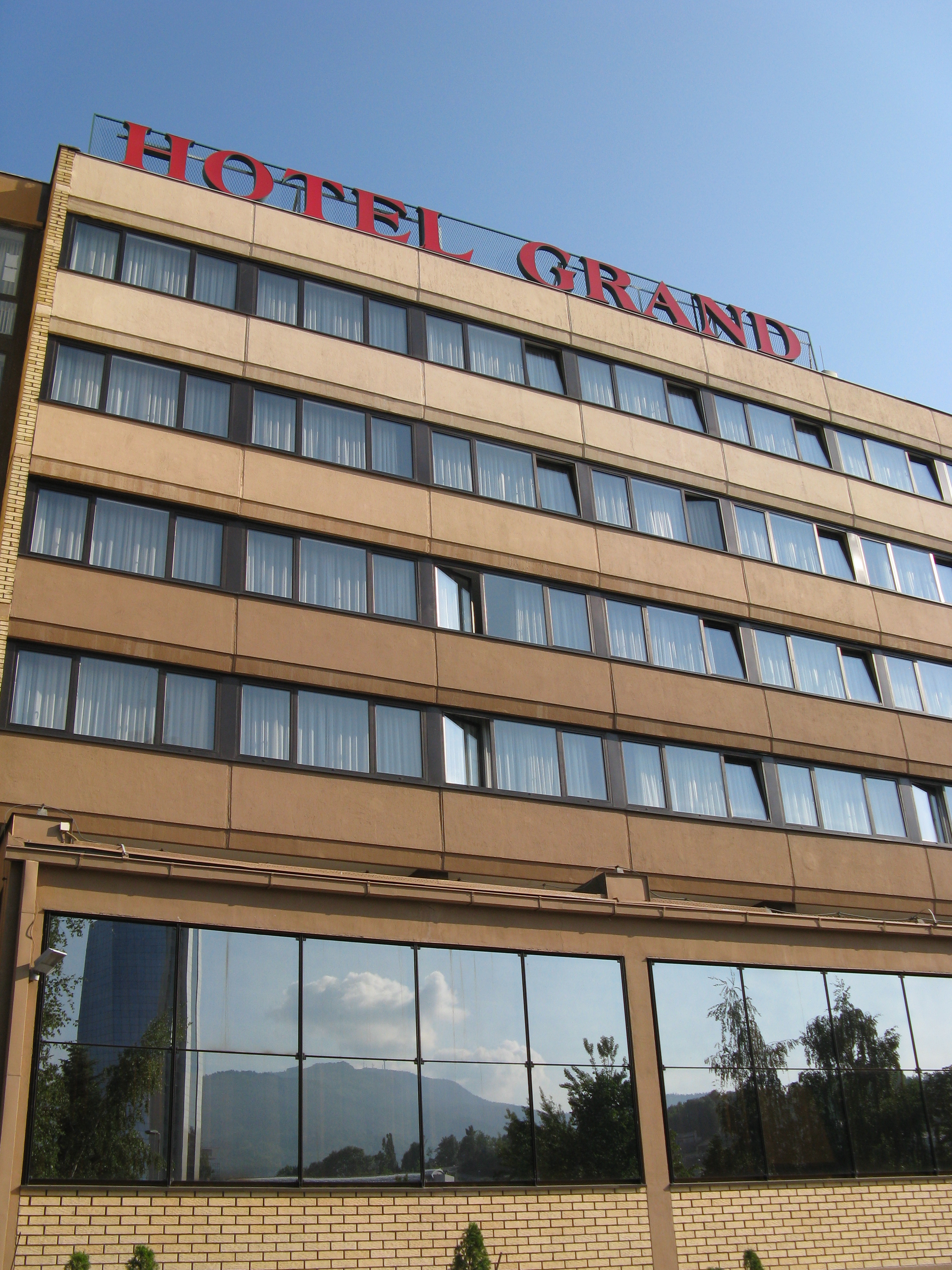
The hotel we stayed at in Sarajevo where we had 2 nights.
If you mention Bosnia then people think of bombed buildings and the remnants of a war zone, once you get out of the cities there is some stunning scenery as we headed from Sarajevo to Mostar.


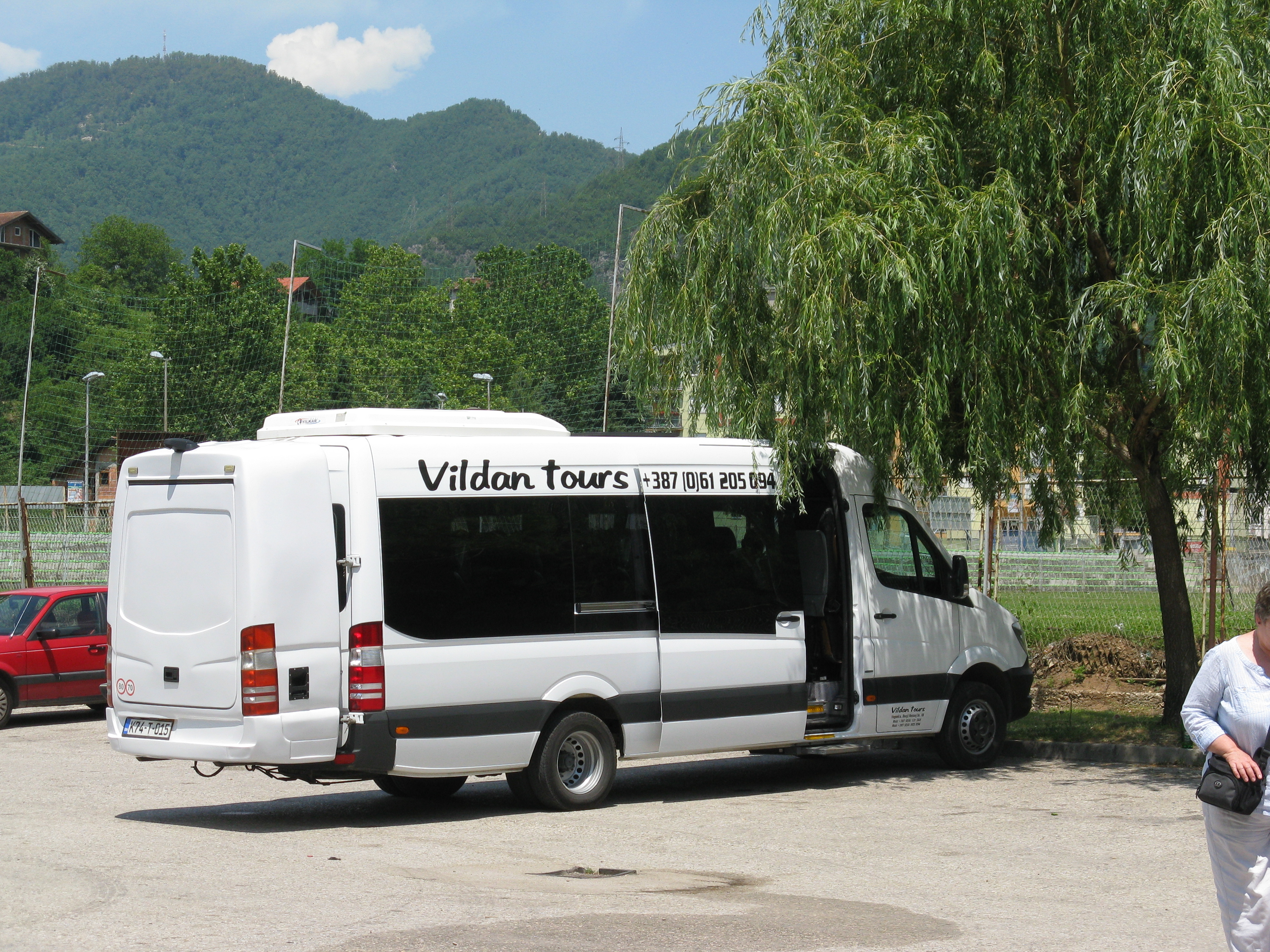
When we couldn’t use a train we had a little tour bus, here is one of them.
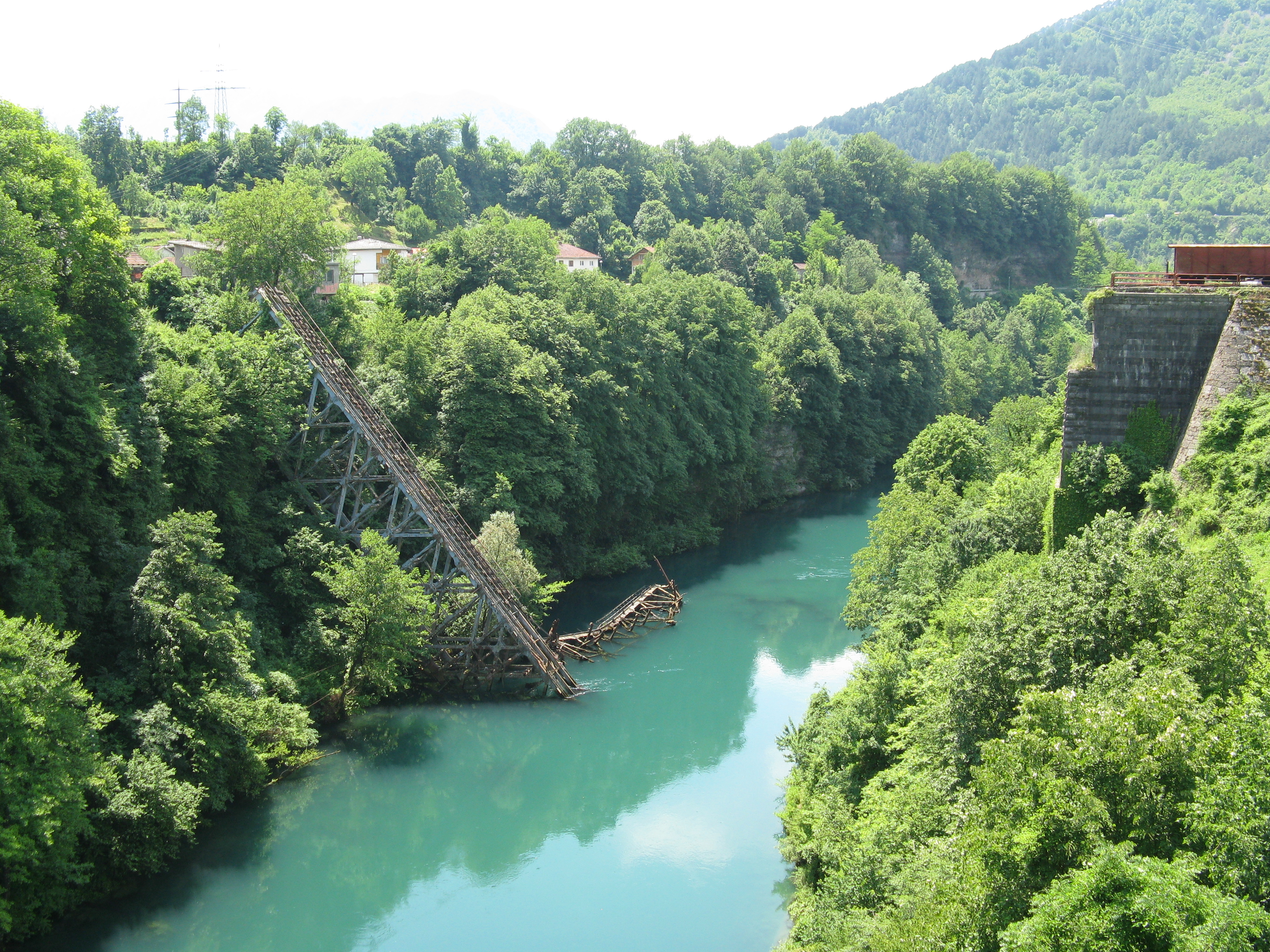
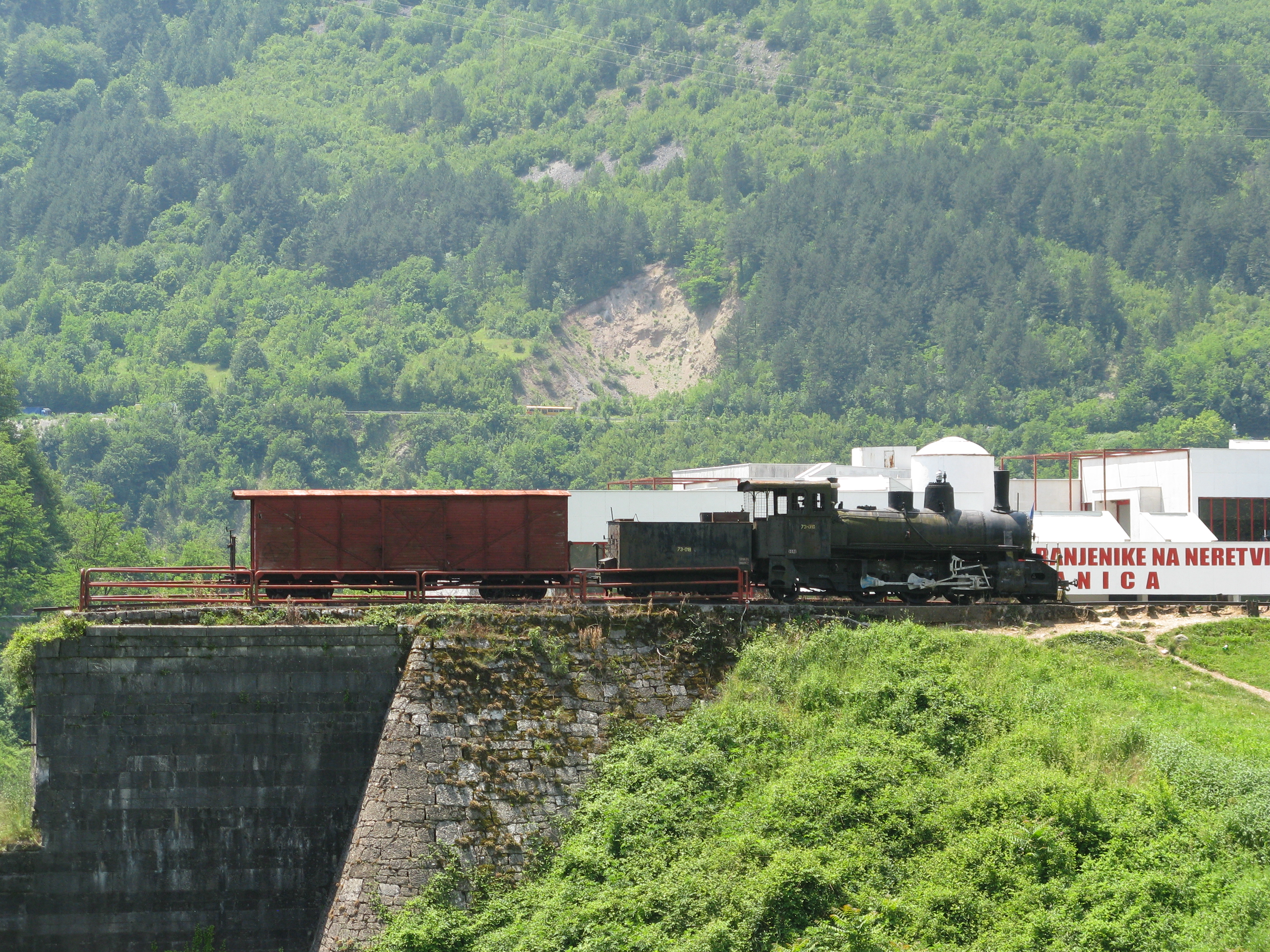
Jablanica which is a famous Yugoslavian partisan film called the Battle of Neretva was filmed in 1969 . The film is based on the true events of World War II. The Battle of the Neretva was due to a strategic plan for a combined Axis powers attack in 1943 against the Yugoslav Partisans. The film created and then destroyed the bridge.
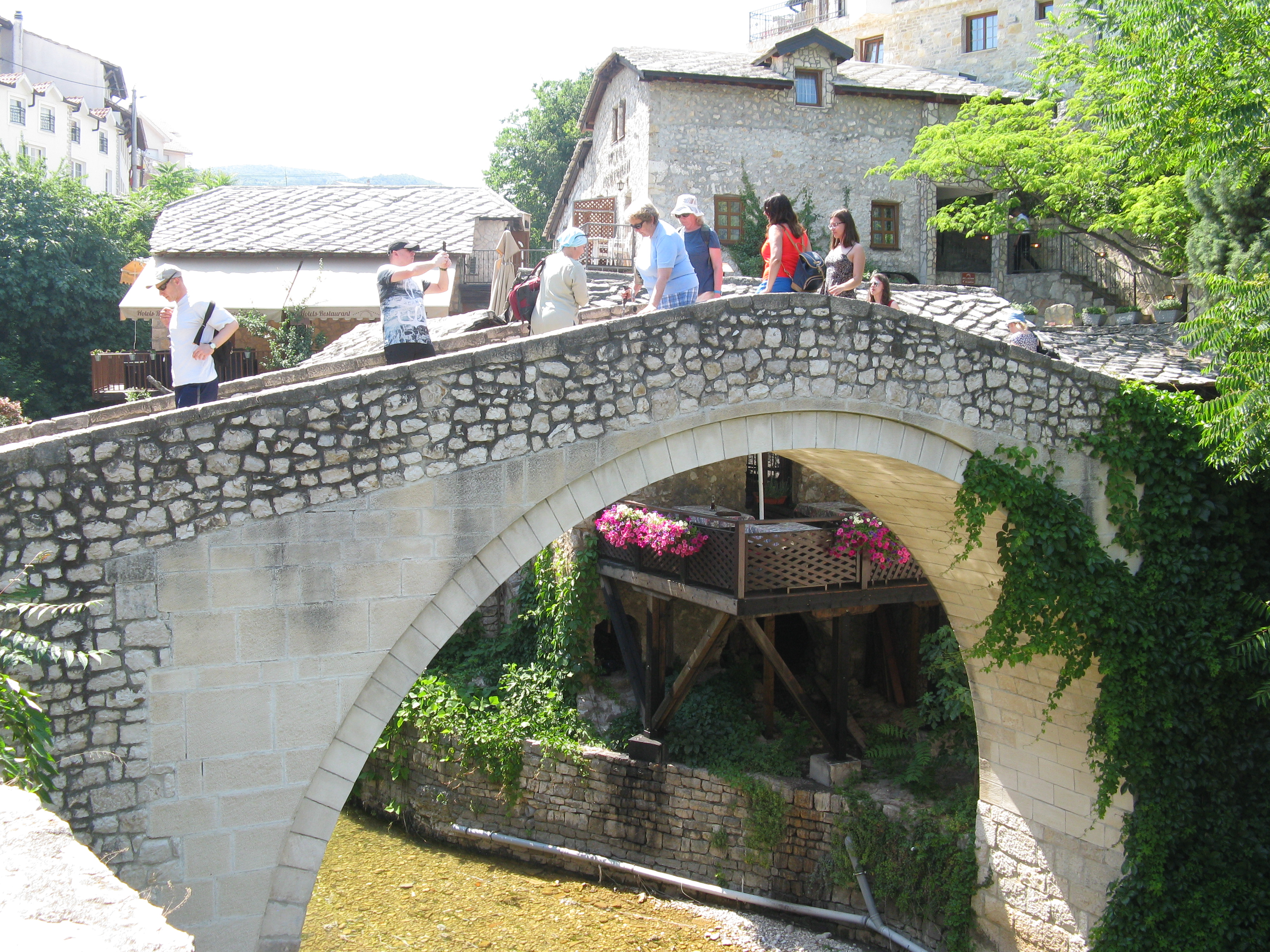
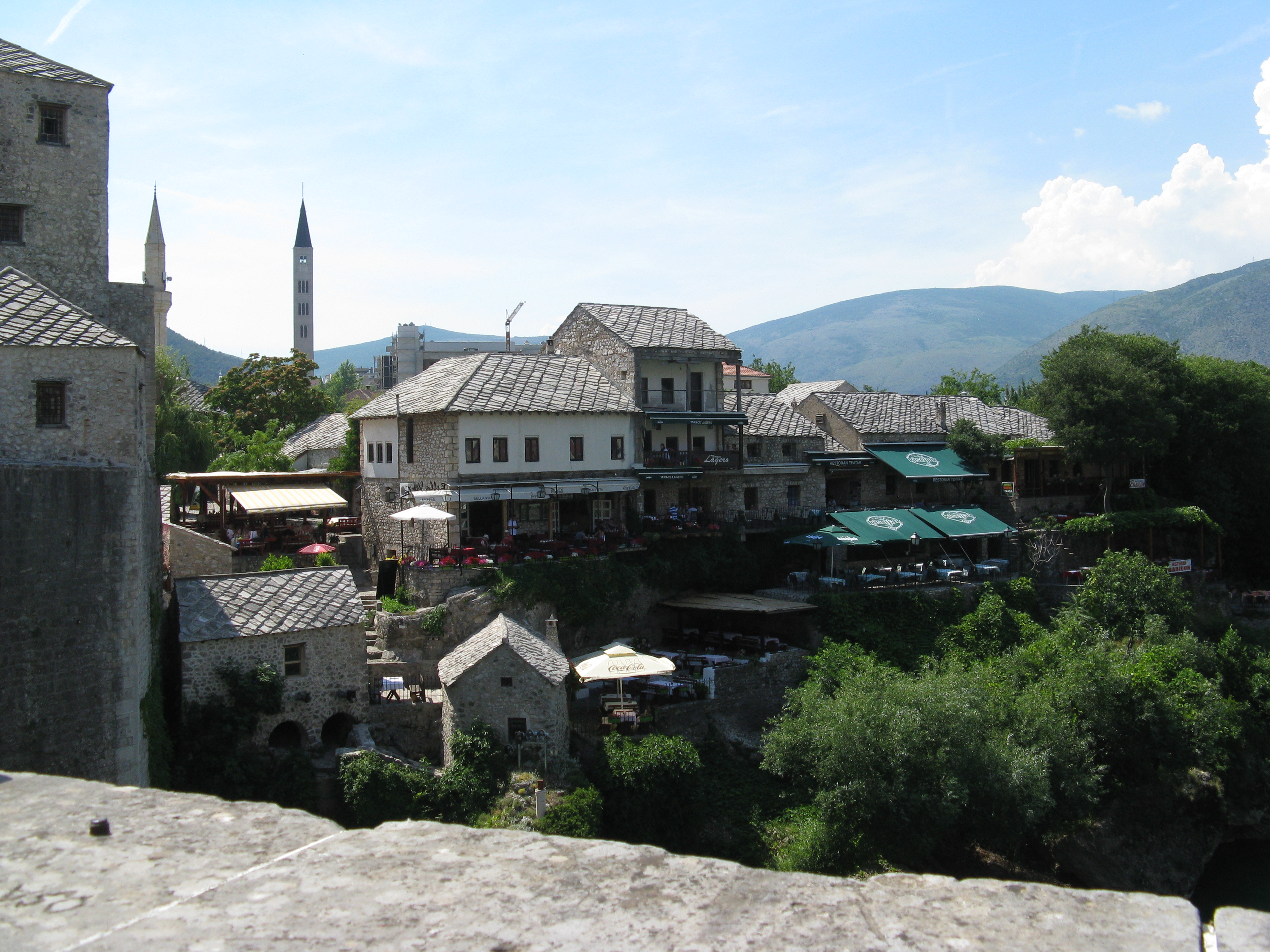
On the left is the oldest house in Mostar.

This is the oldest bridge in Mostar.
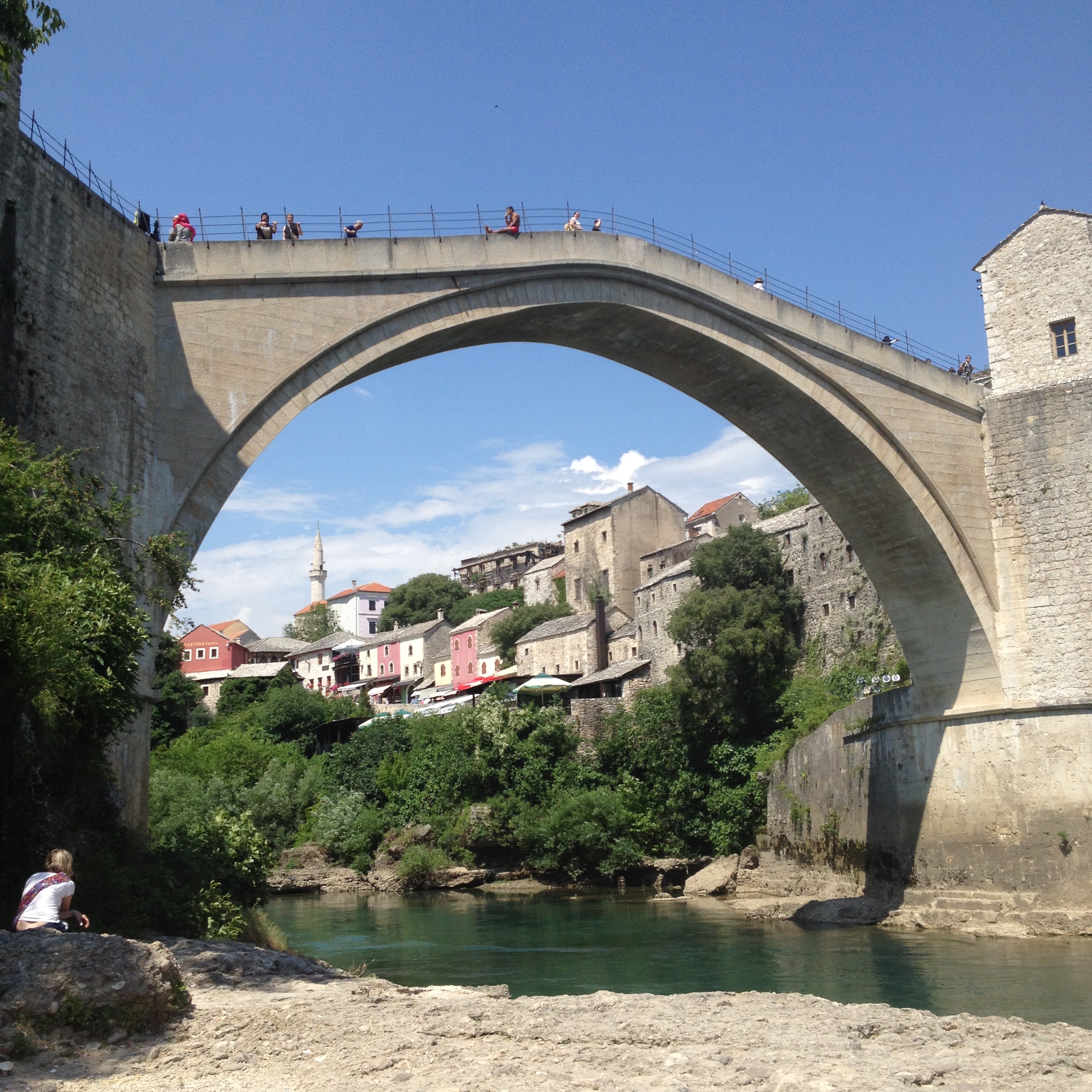
This is Stari Most, in English Old Bridge, which is a 16th-century Ottoman bridge in Mostar that crosses the river Neretva and connects the two parts of the city. The Old Bridge stood for 427 years, until it was destroyed on 9 November 1993 by Croat forces during the Croat–Bosniak War. Subsequently, a project was set in motion to reconstruct it, and the rebuilt bridge opened on 23 July 2004.
One of the country’s most recognizable landmarks, it is considered an exemplary piece of Balkan Islamic architecture.
View of the town from the bridge.
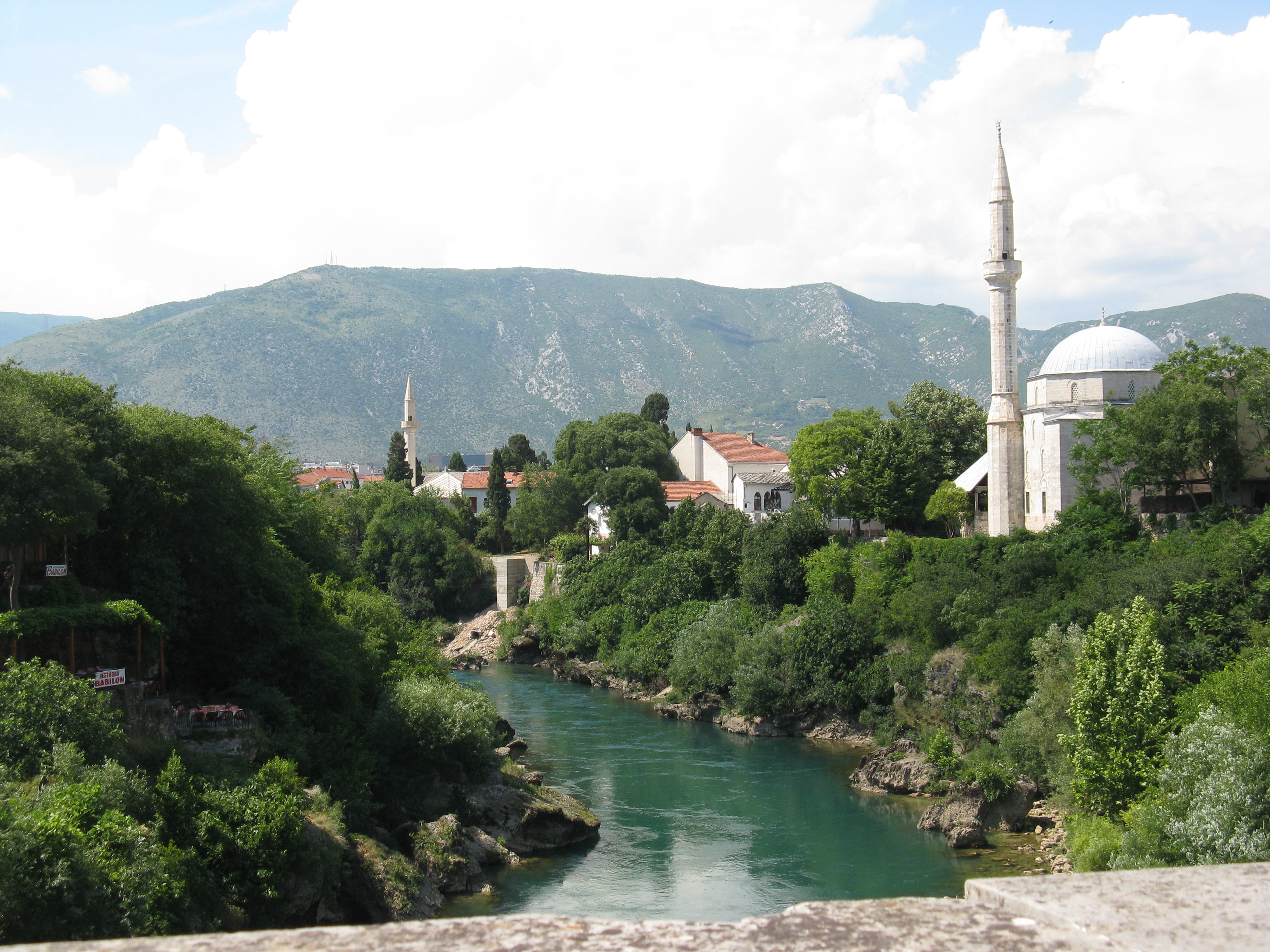
Looking in the opposite direction with the mosque in the foreground and the mountains that we had crossed to get to Mostar in the background.
2 June 2017 – Visit Old Town Dubrovnik and the Bay of Kotor en route to Podgorica
We left Mostar early in the morning and drove to Podgorica in Montenegro via Dubrovnik, Croatia and the Bay of Kotor.
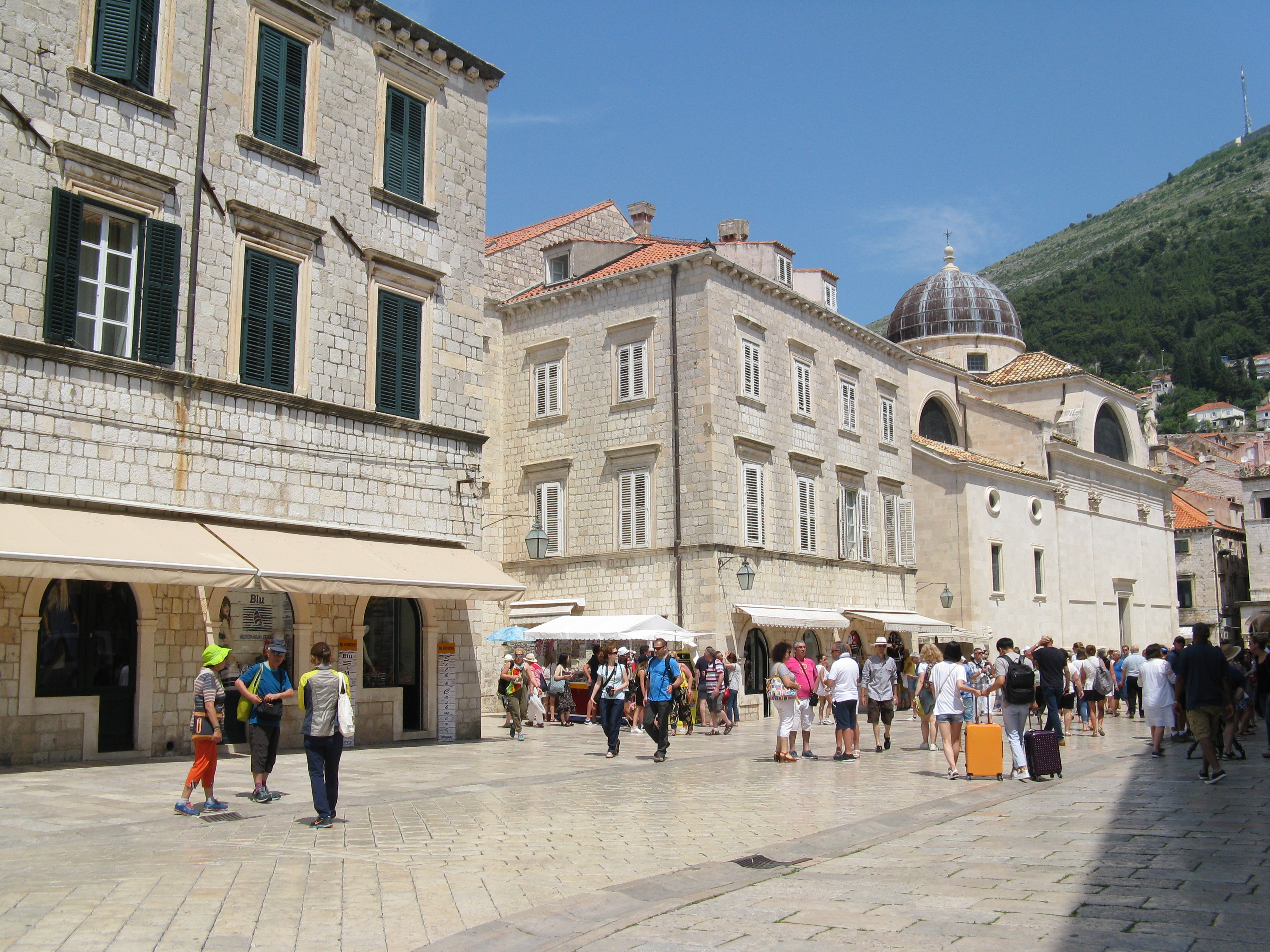
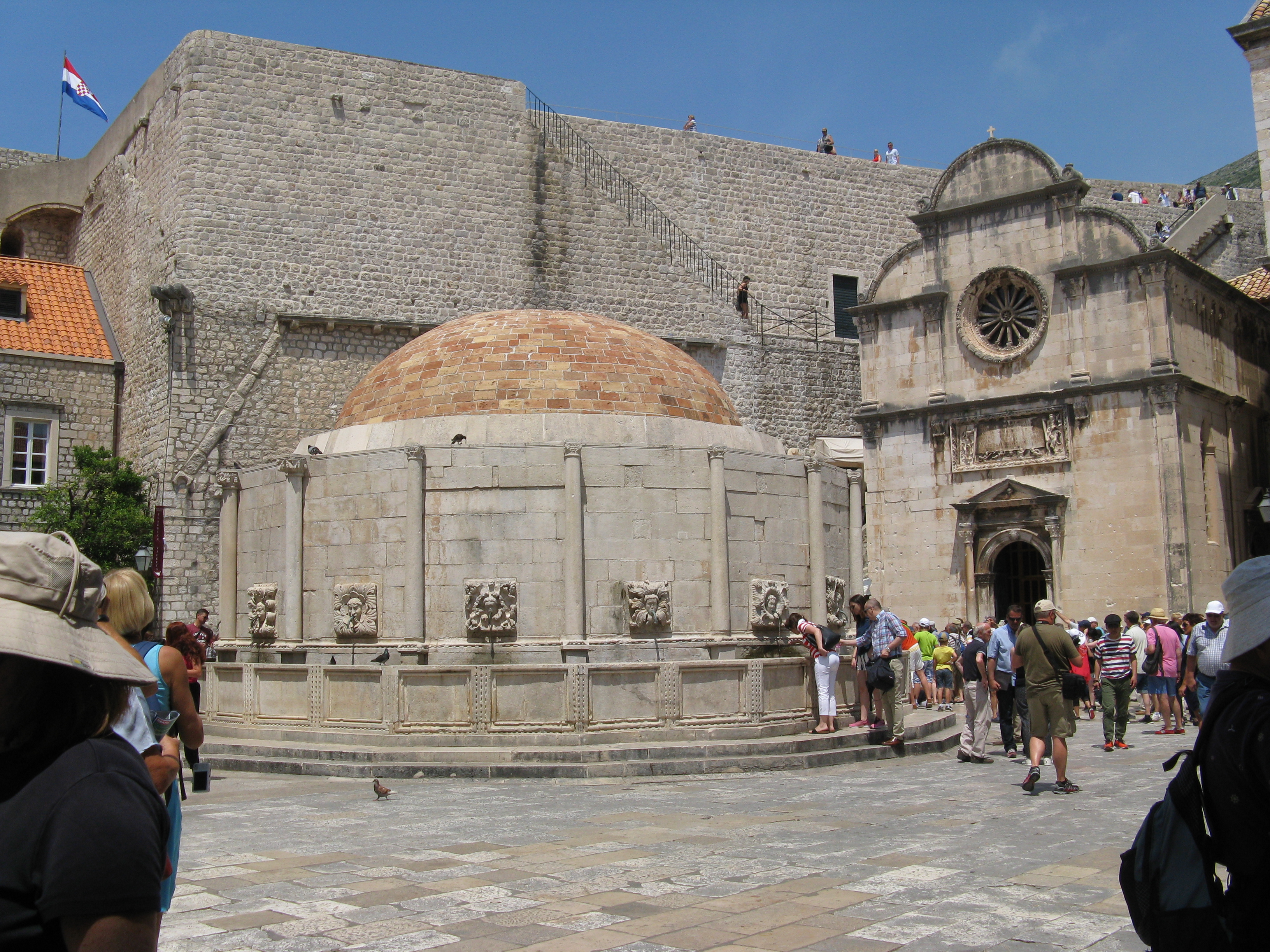
The Old Town area of Dubrovnik stands proudly on the coast surrounded by its ancient walls and the crystal clear Adriatic Sea just beyond. Despite the horrific shelling Dubrovnik came under in 1991, the Old Town is a UNESCO World Heritage Site and has been remarkably well restored.
After this we continued down the coastline, crossing into Montenegro where we stopped in the old Mediterranean port of Kotor. Sitting on the coast, Kotor is surrounded by dramatic cliffs and is one of the best preserved Medieval old towns on the Adriatic Sea.
At the end of the day we headed to Podgorica for the night.
This is the first view of the sea on the trip so far.

Dubrovnik in Croatia is stunning but the day we were there a cruise ship/s had sailed in and it was absolutely mobbed. The abiding memory was that it was extremely expensive £4 for a coke and £7 for a beer. Advice to anyone going is check the cruise ship timetables and avoid them. Also take plenty of cash. One travel quote I read is “set out the clothes you’re going to take and cash you thing you will need. Reduce the first by half and double the last”.

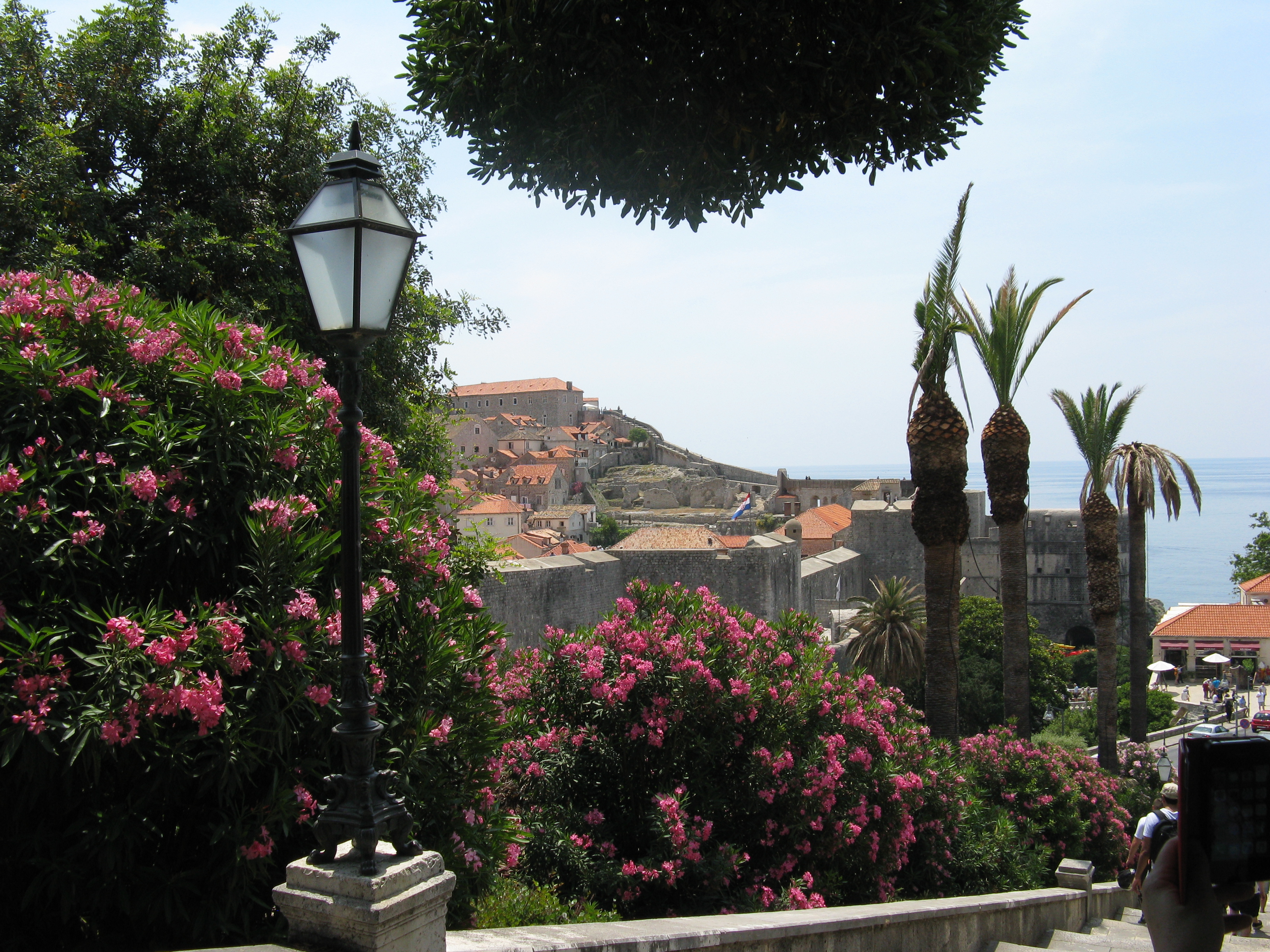
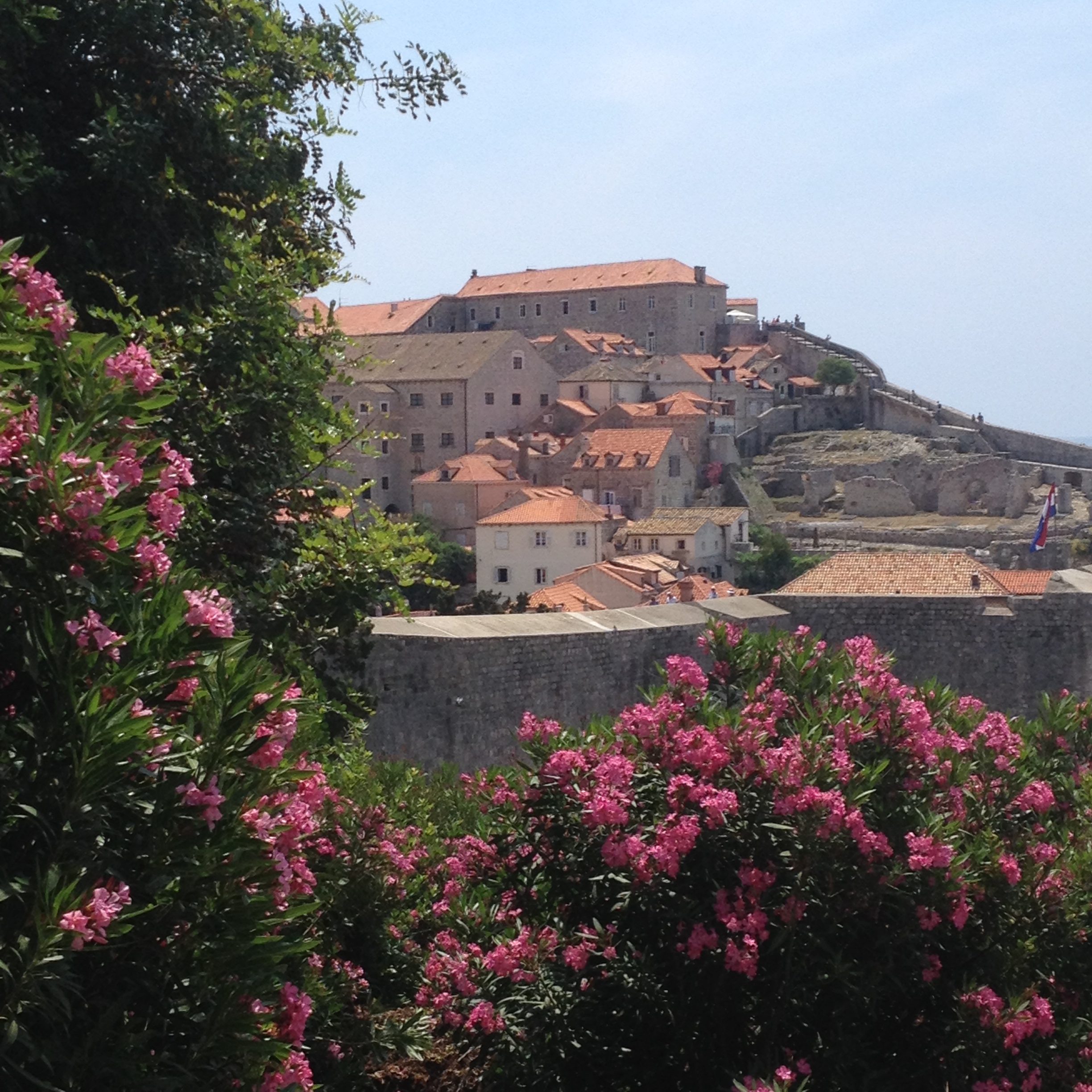
Further down the coast was the beautiful small town of Kotor which is a fortified town on Montenegro’s Adriatic coast, in a bay near the limestone cliffs of Mt. Lovćen. It has many by winding streets and squares, its medieval old town has several Romanesque churches, including Kotor Cathedral.
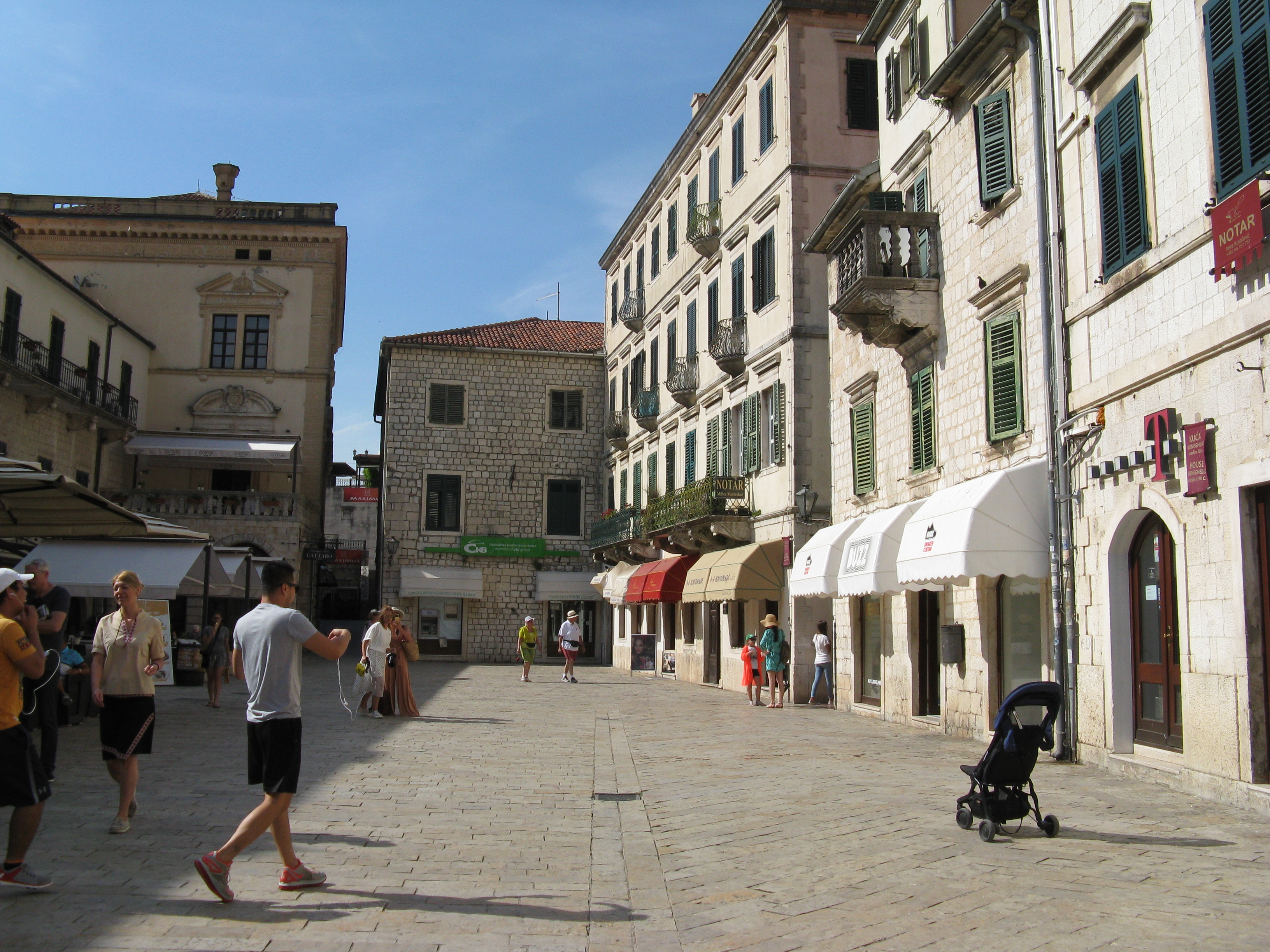
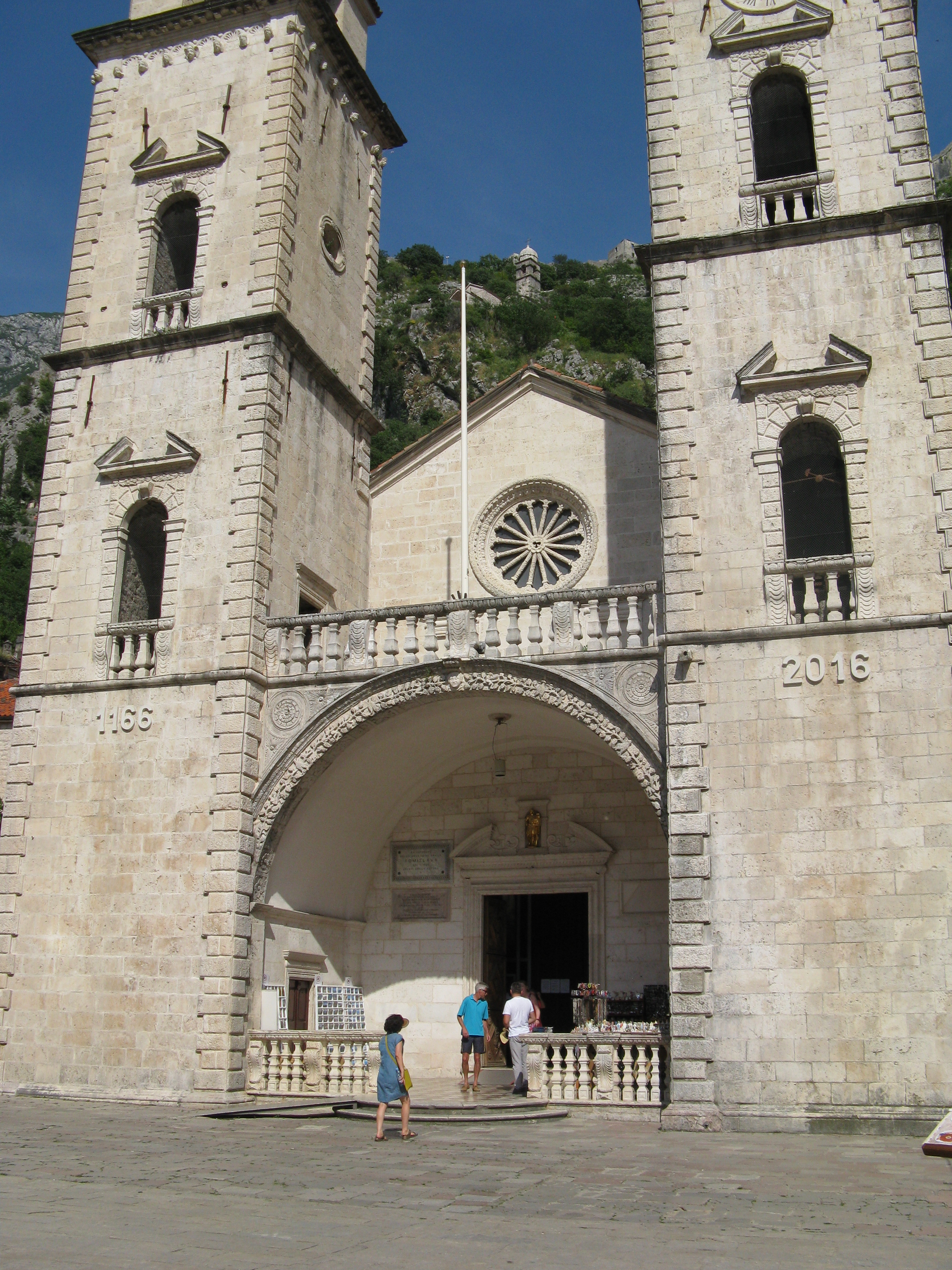
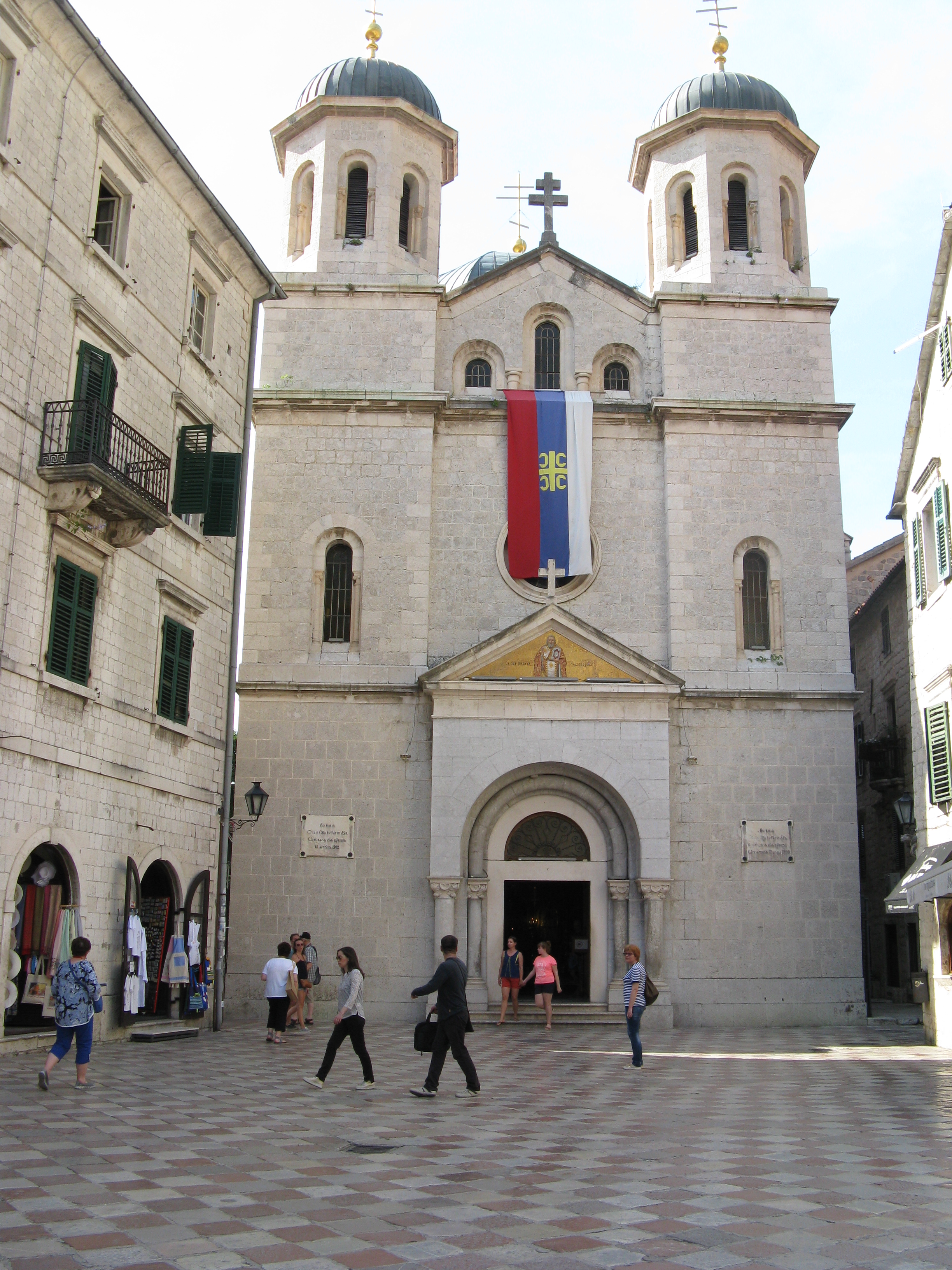
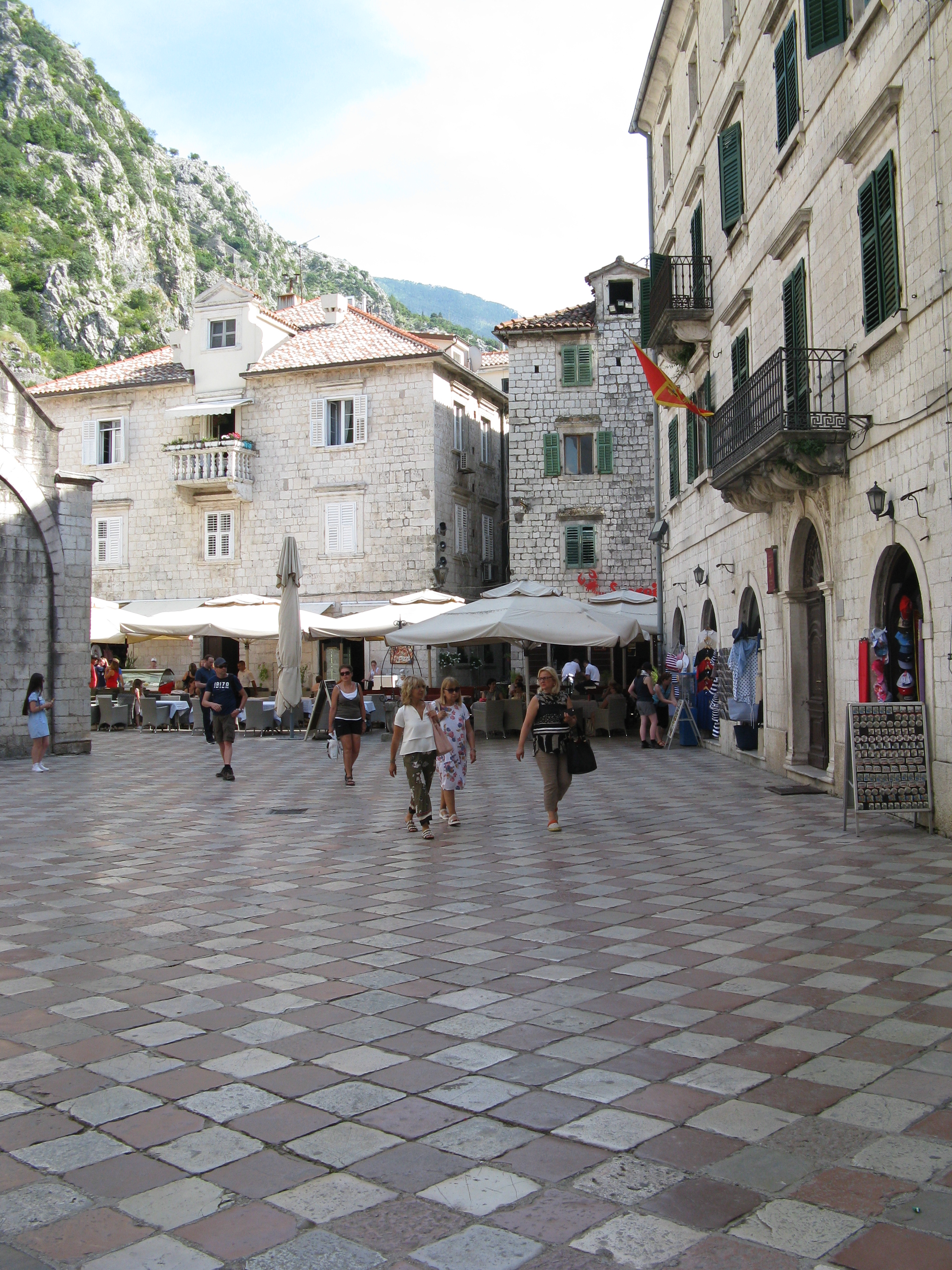
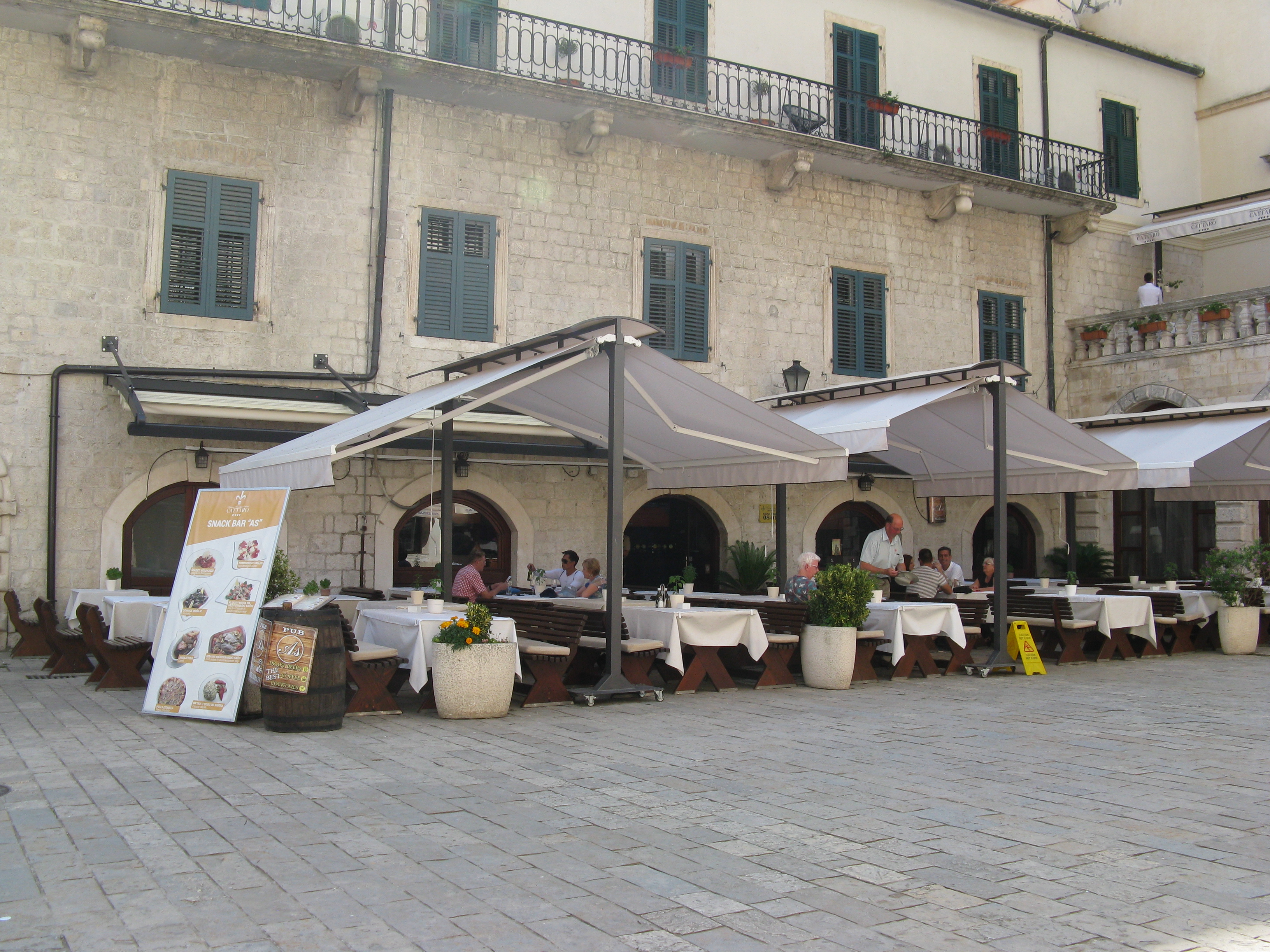
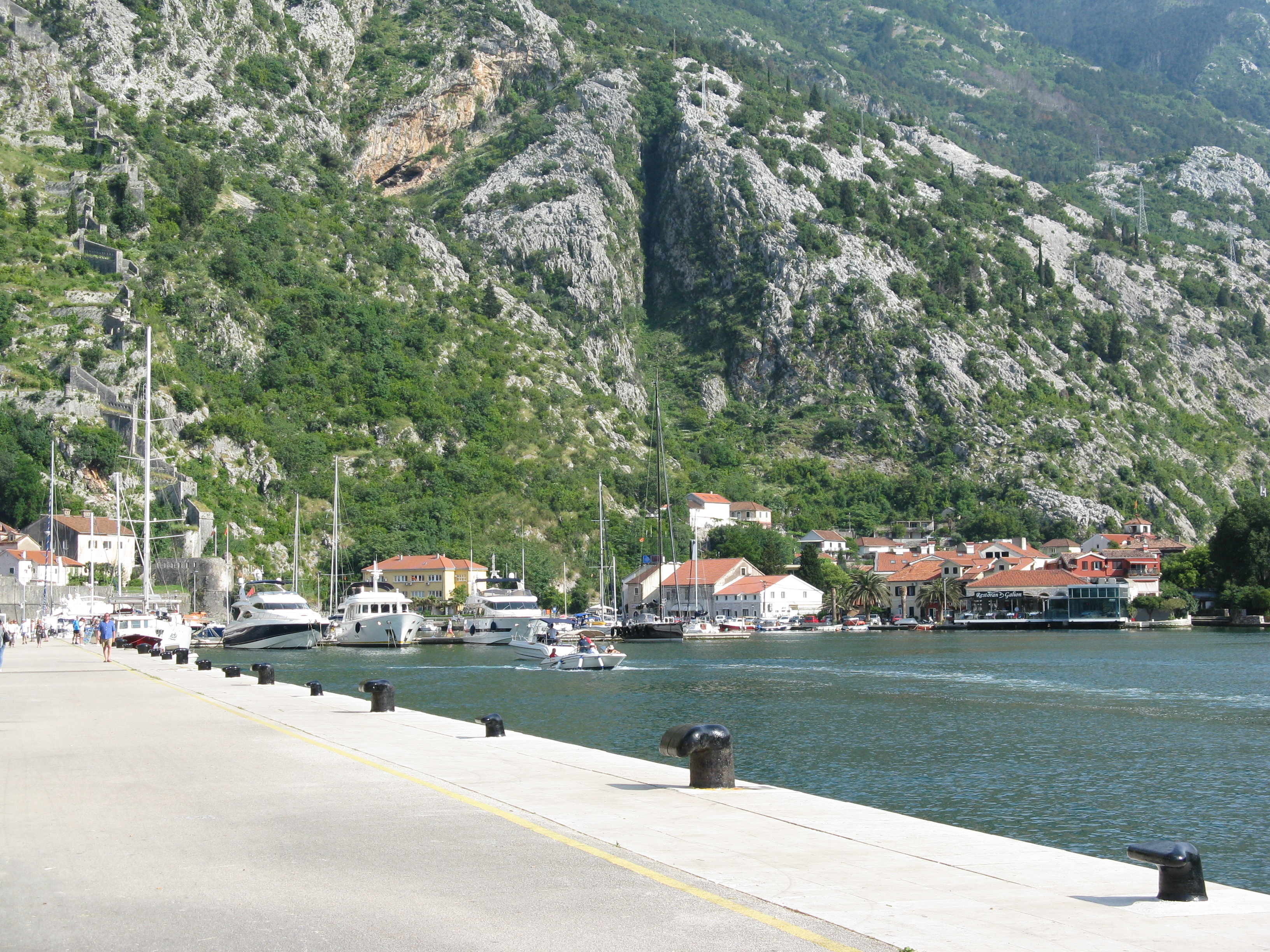
Final stop of the day was the capital city of Podgorica. As capital cities go it was extremely cheap, especially compared to Dubrovnik.

3 June 2017 – Scenic train journey to Belgrade, Serbia
The Podgorica to Belgrade route is is one of the most scenic rail routes in Europe; this 11 hour journey offers the most astounding scenery of any of the rail journeys we took during this trip. The backdrop is a mixture of gorges, canyons and snow-capped mountains as we ascend and descend following the natural topography of the land. This beautiful setting and his passion for rail travel was the motivation for former Yugoslavia’s Head of State, Tito, to have his own train built in 1959. Between the trains’ inaugural trip until his death in 1980, Tito made this journey often, regularly hosting many famous guests within the deluxe carriages, including Queen Elizabeth II.
Our hotel in Podgorica which is in walking distance of the station.

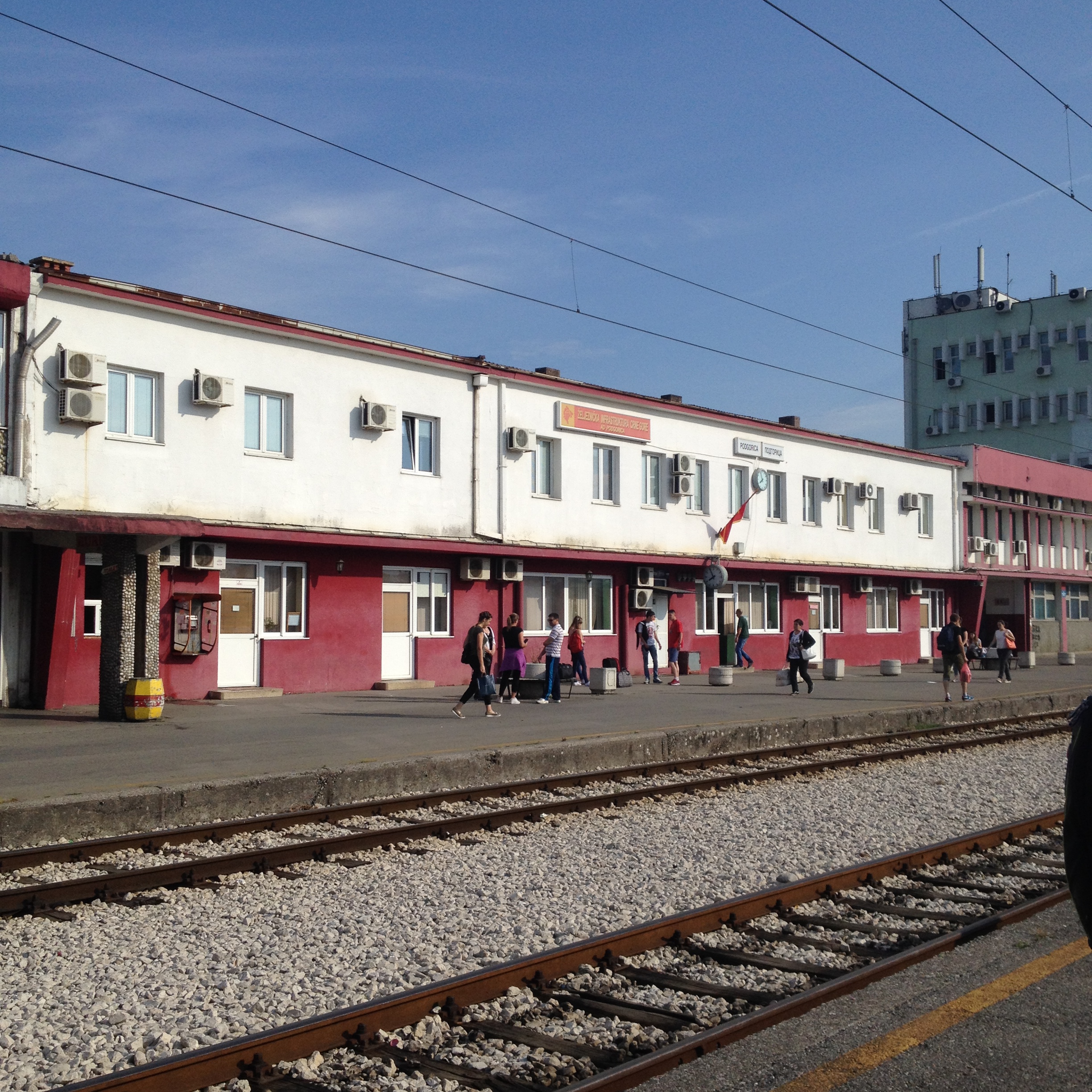
Podgorica’s main railway station, it reflects a lot about the country and could do with a bit of TLC.
Magnificent view from the train.

One of the best trains that we travelled on.

Another magnificent view from the train, the scenery was just like travelling across the Alps.

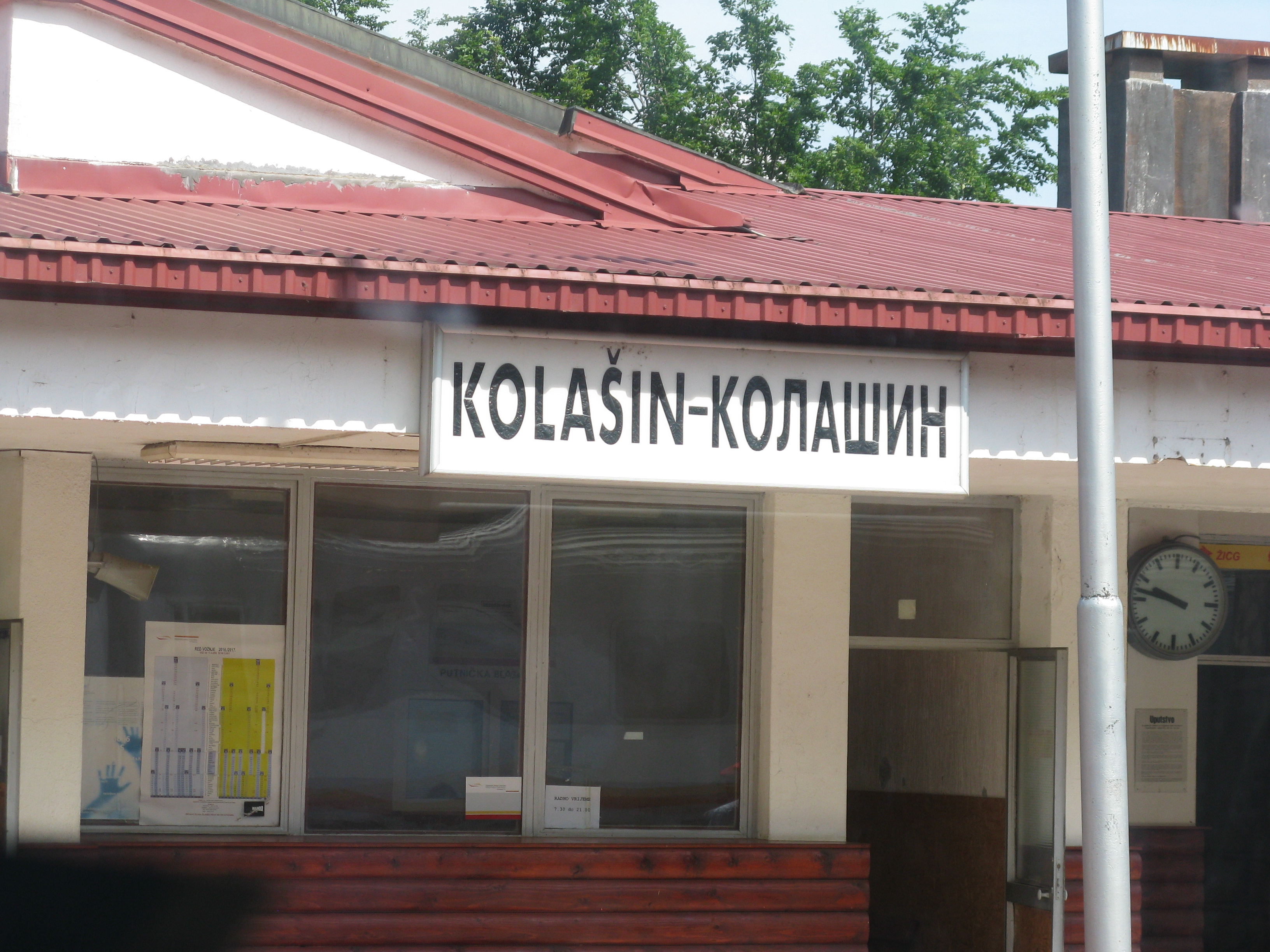
The last train station in Montenegro before we crossed the border. At all these places we had to stop whilst are passports were taken off to be checked.
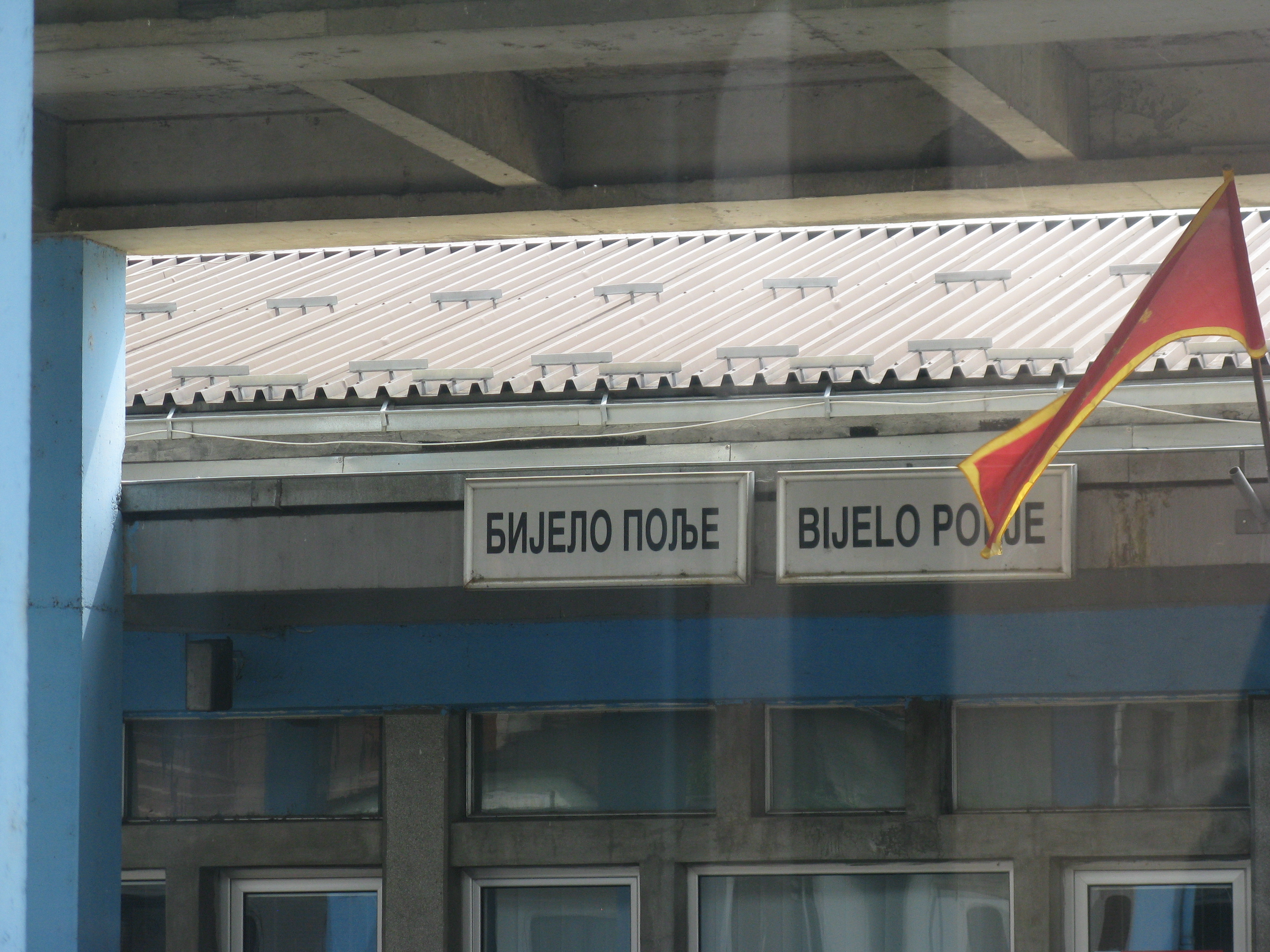
The first train station in Serbia, yet another passport check.
4 June 2017 – Walking tour of Belgrade
We began the day with a guided walking tour to see the earliest known areas of the city, Belgrade Fortress and Kalemegdan Park.
The fortress is a very appropriate setting to learn about the city’s history through the centuries including Medieval, Roman and Ottoman periods. The Romans originally built a fortification here in 2nd century AD due to its excellent strategic viewpoint on the hill overlooking the city and the confluence of the Sava and Danube Rivers. However, when the Huns and the Goths later waged war, the original structure was burnt down but fortunately rebuilt in the 6th century.
The afternoon will be free for further personal exploration, perhaps you will take the time to absorb the local atmosphere in Kalemegdan Park which is popular with the locals or take time to visit Tito’s Mausoleum which is a rite of passage when in Belgrade.
This is not our hotel, this is the most famous and by Serbian standards the most expensive hotel in Belgrade. We had a drink there and by our standards it is cheap.

The oldest shop front in Belgrade, if not the whole of Serbia.
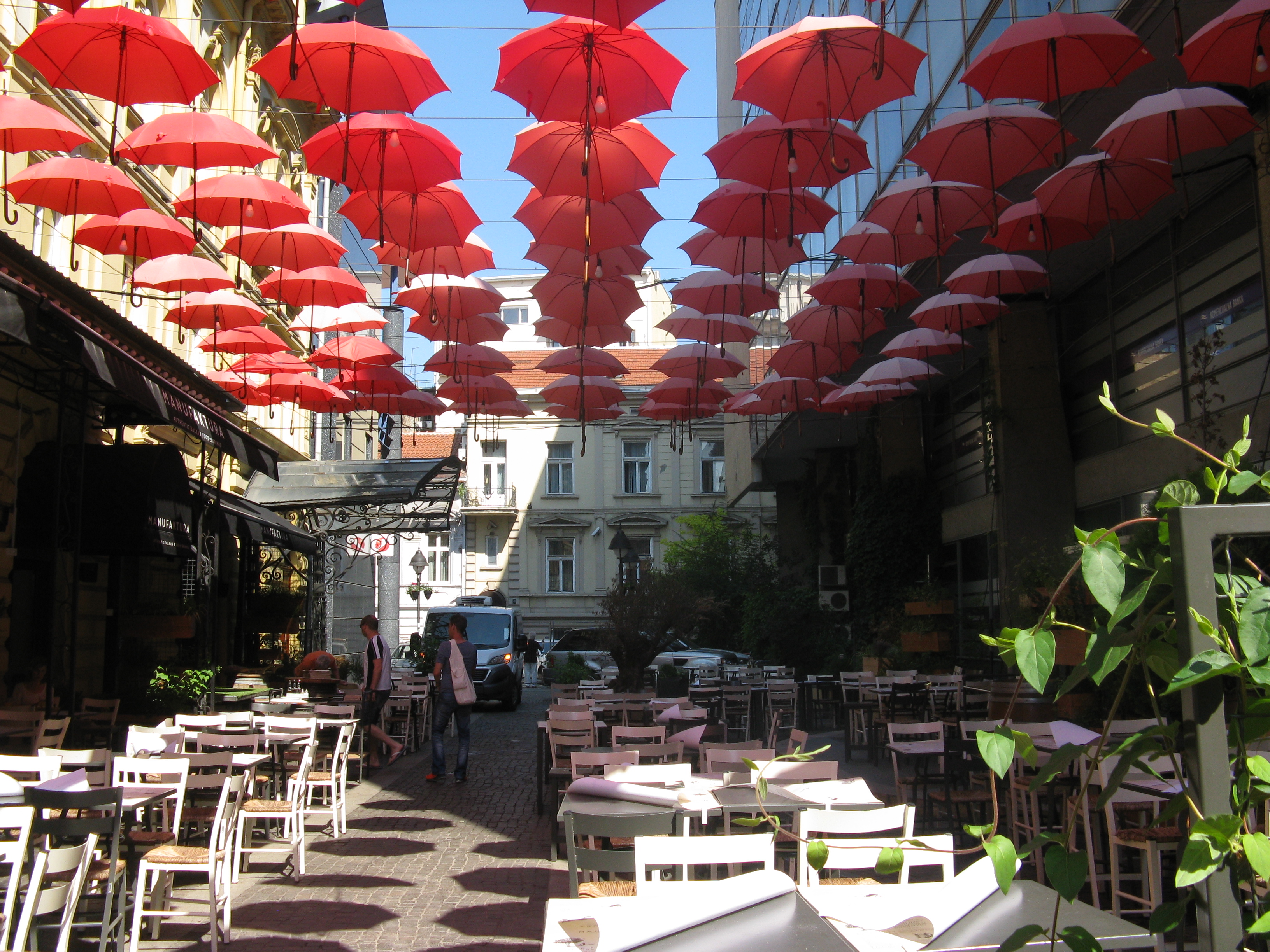
This is typical of Belgrade, you walk along a street and there floating in the air, well technically these are suspended, are a lot of umbrella’s. This sums up this beautiful quirky city.
The map of Belgrade fortress which stands high on a hill .

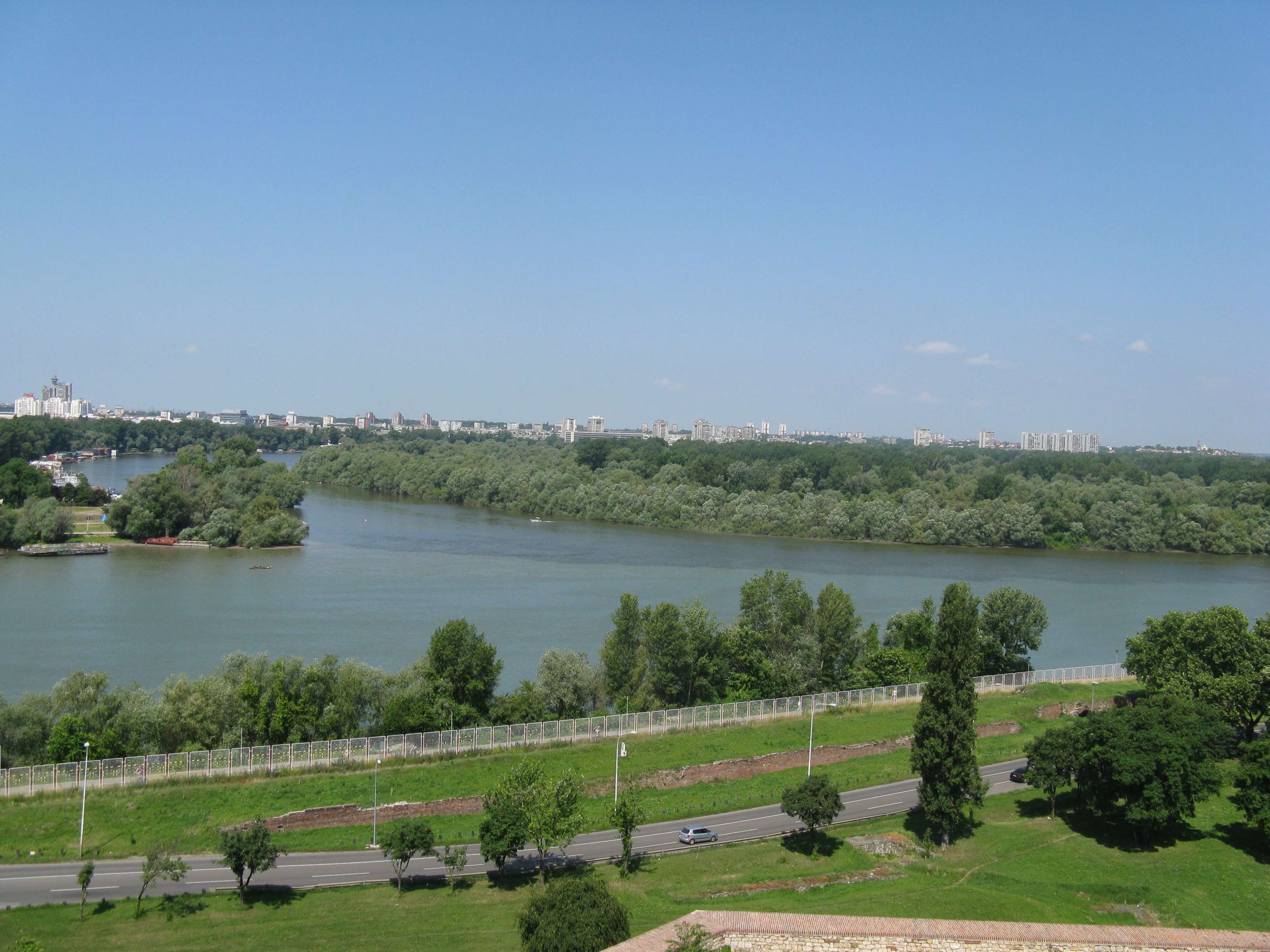
The fort overlooks the overlooking the confluence of the River Sava and Danube. At this point we achieved the milestone of seeing the river Danube in all four of the capital cities it follows through, Vienna, Bratislava, Budapest and now Belgrade.
This is the monument to the Victor, the protector of Belgrade. The statue was originally supposed to be in another part of Belgrade but as this was a naked man it was decided to put it where women could not see. However in the intervening years the fortress became a tourist attraction and open to the public.

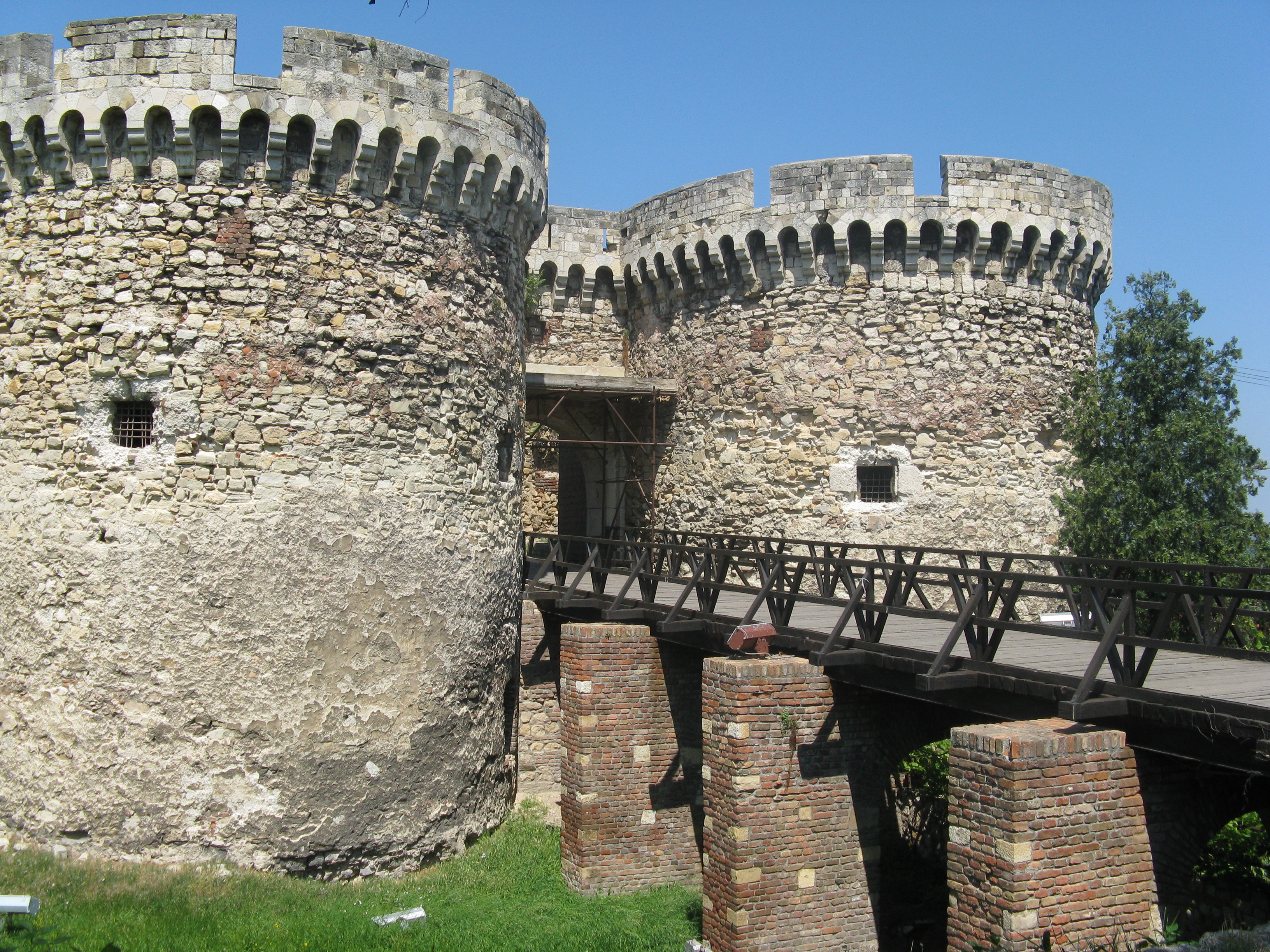
The battlements of the fortress.
The inside of the Ružica Church which is a Serbian Orthodox church located in the Belgrade Fortress. A church of the same name existed on the site in the time of Stefan Lazarević. It was demolished in 1521 by the invading Ottoman Turks.
The outside of the church.
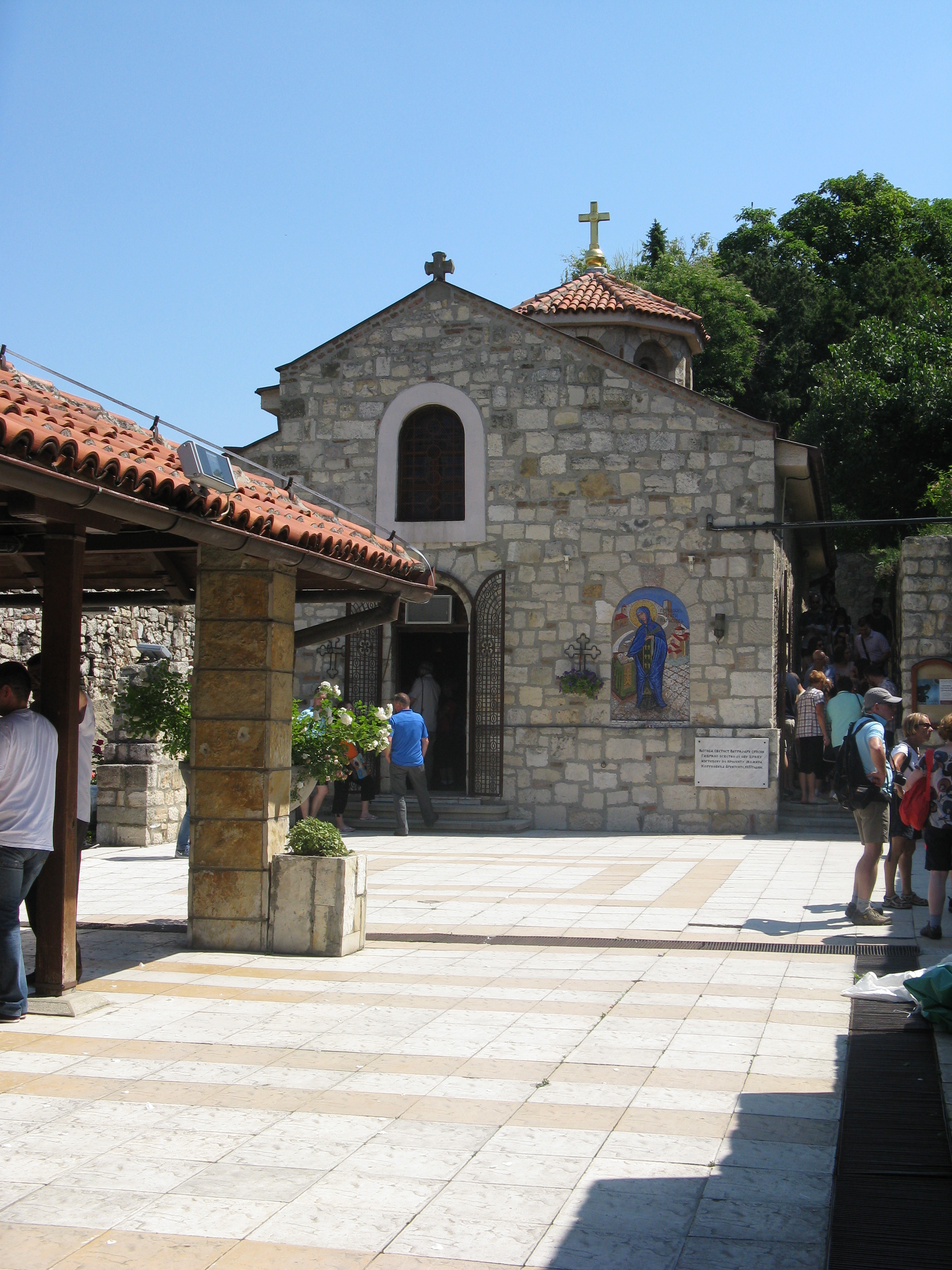
The National Museum of Serbia is the largest and oldest museum in Serbia and former Yugoslavia. It is located in the central zone of Belgrade on a square area between the Republic Square, former Theatre Square, and three streets Čika Ljubina, Vasina and Laze Pačua. Its main facade is on the Republic Square. The museum was established on May 10, 1844. Since it was founded, its collection has grown to over 400,000 objects, including many foreign masterpieces. As at June 2017 the museum is closed for renovation.
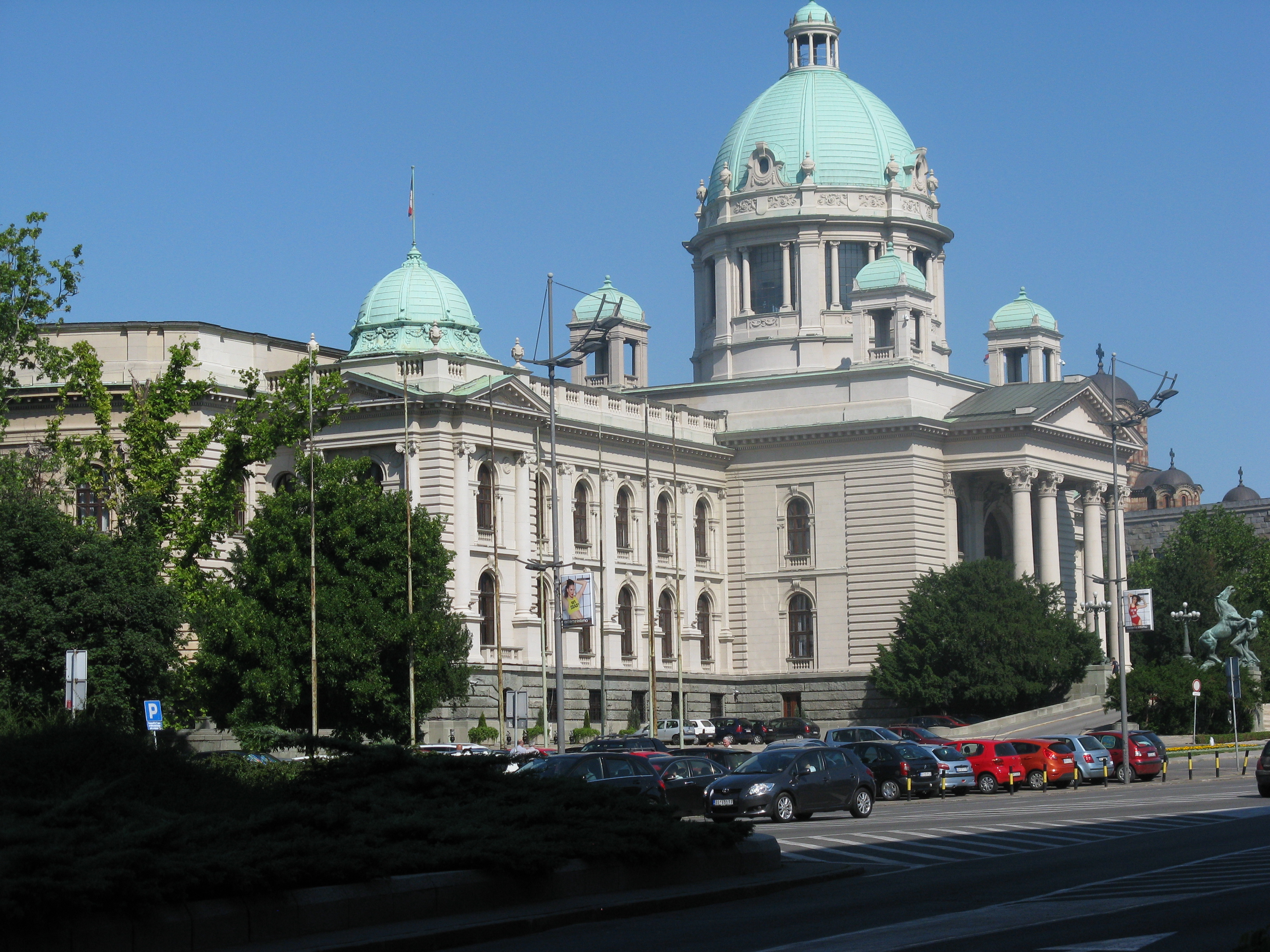
Two guards outside the Novi dvor. This means New Palace and was a royal residence of the Karađorđević dynasty of Serbia and later Kingdom of Yugoslavia. Today it is the seat of the President of Serbia. The palace is located on Andrićev Venac opposite Stari Dvor (Old Palace).
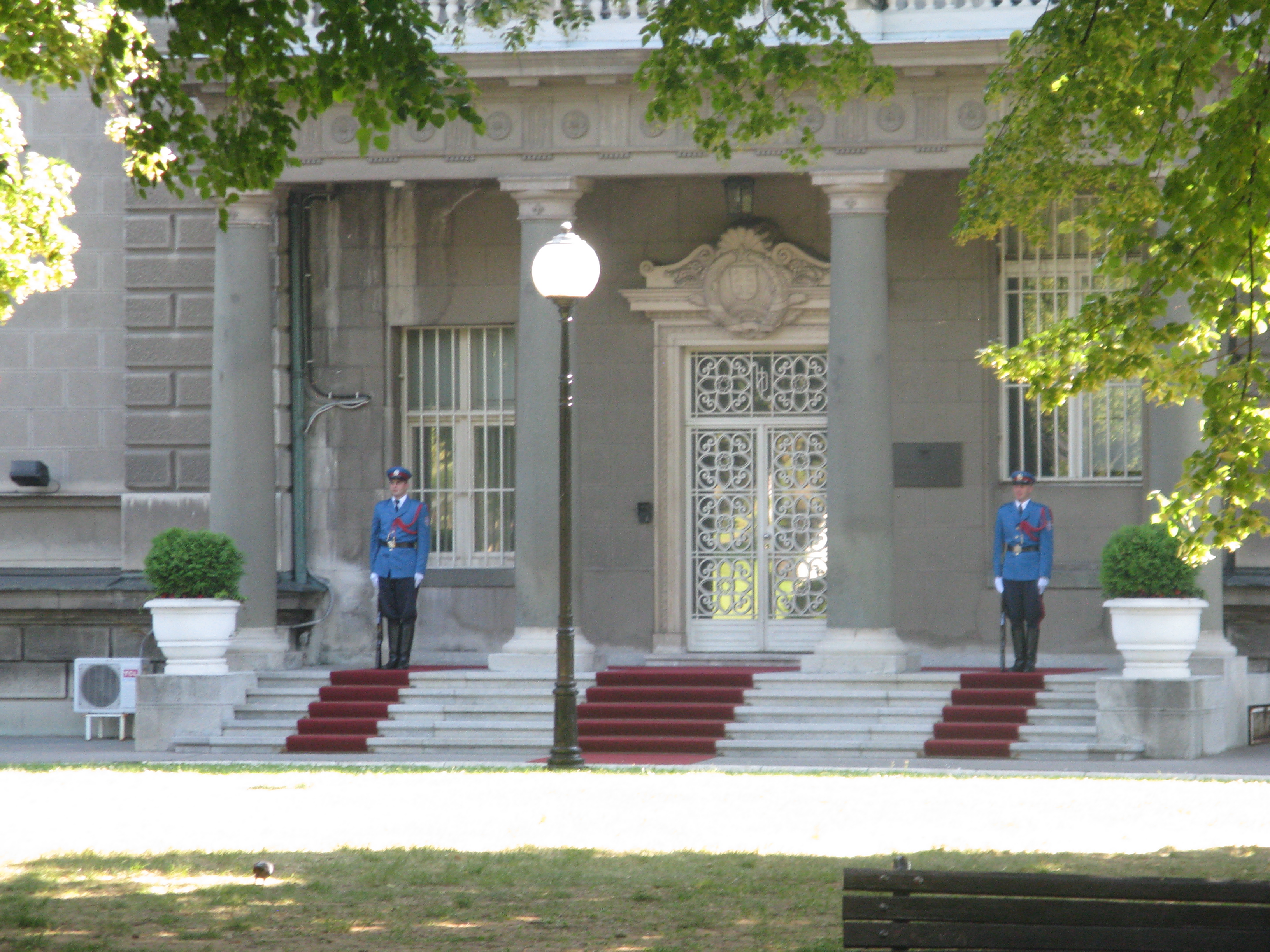
5 June 2017- Novi Sad on the Banks of the Danube
The train, to Novi Sad takes just under two hours. Although the second largest city in Serbia, Novi Sad offers a much more laidback atmosphere standing tall above the Danube River. The city is thought to have originated and expanded from the historic Petrovaradin Fortress, which sits proudly on the cityscape.
This Blue Train is a luxury train, once used by Josip Broz Tito, while president of the former Socialist Federal Republic of Yugoslavia.
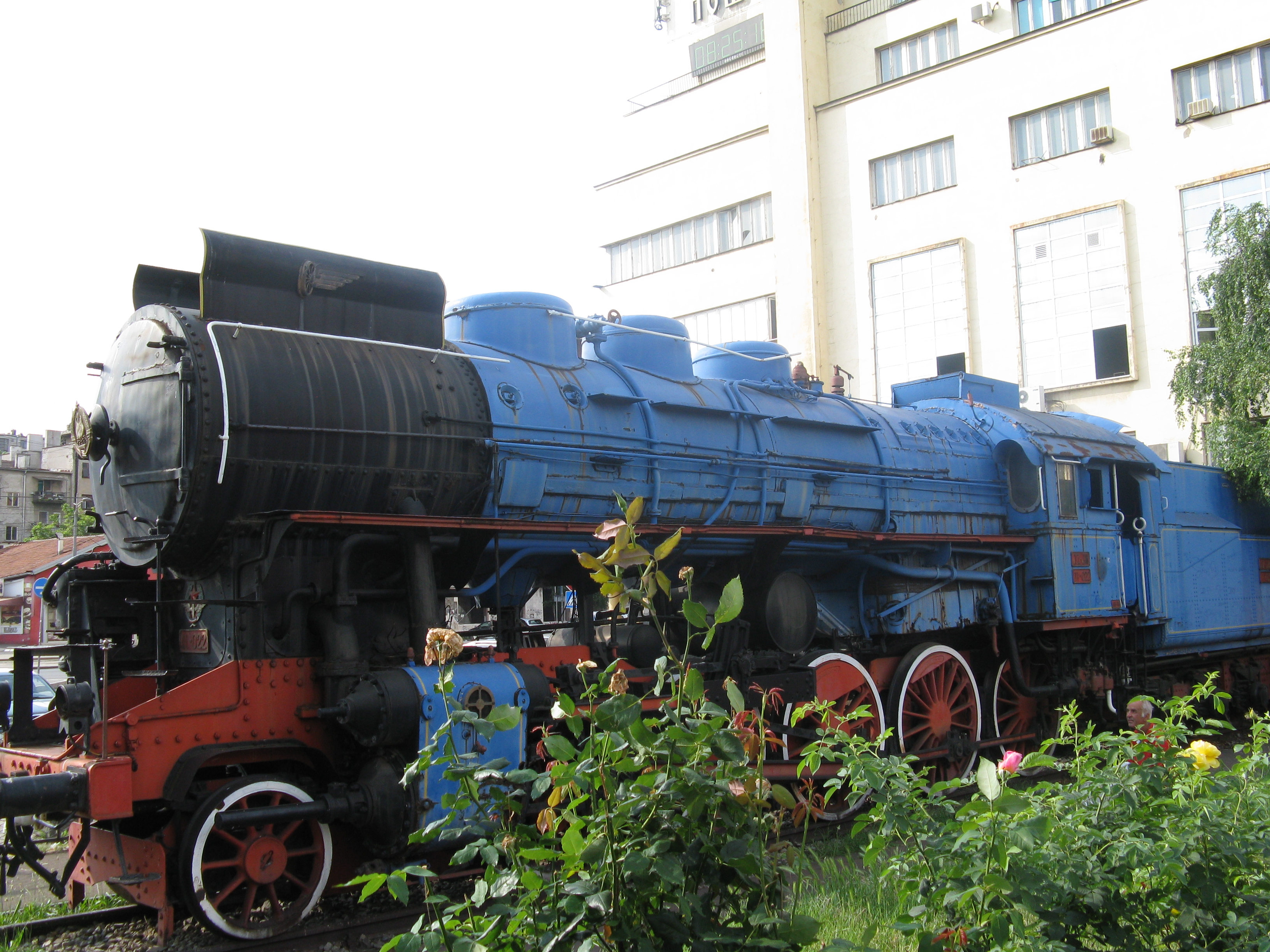
Belgrade railway station
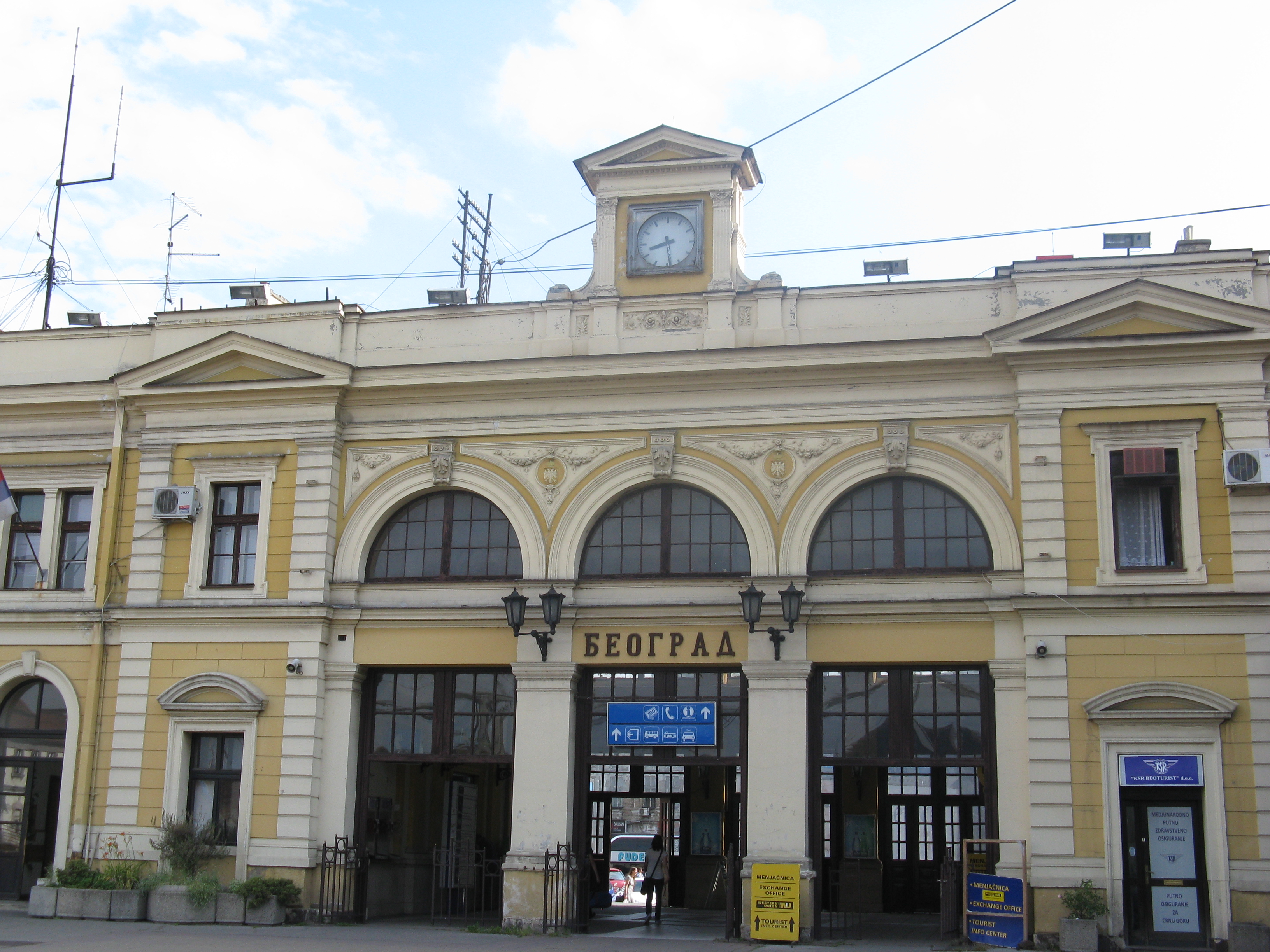
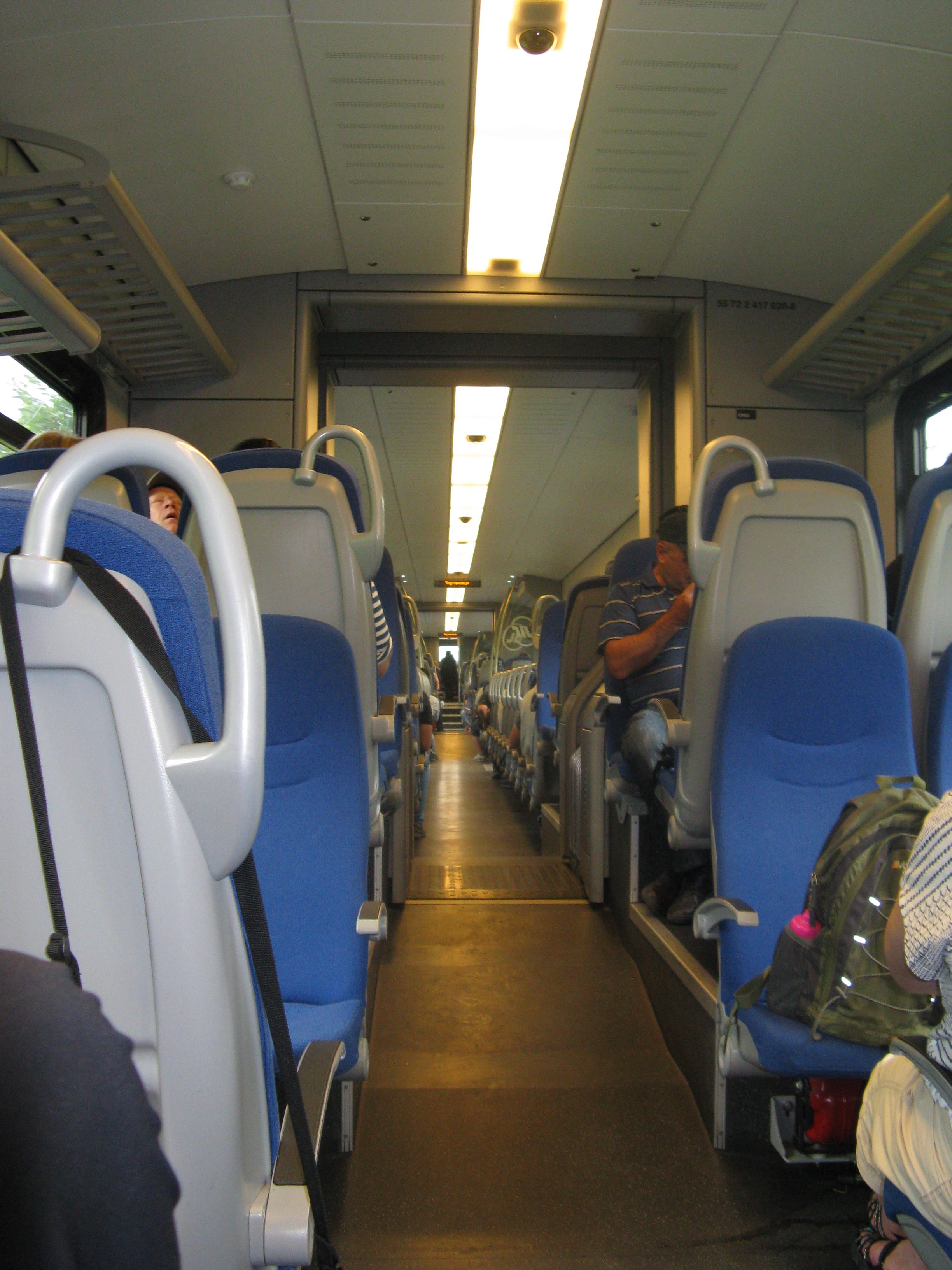
Luxury train or the journey from Belgrade to Serbia’s second largest city, Novi Sad.
Novi Sad railway station.
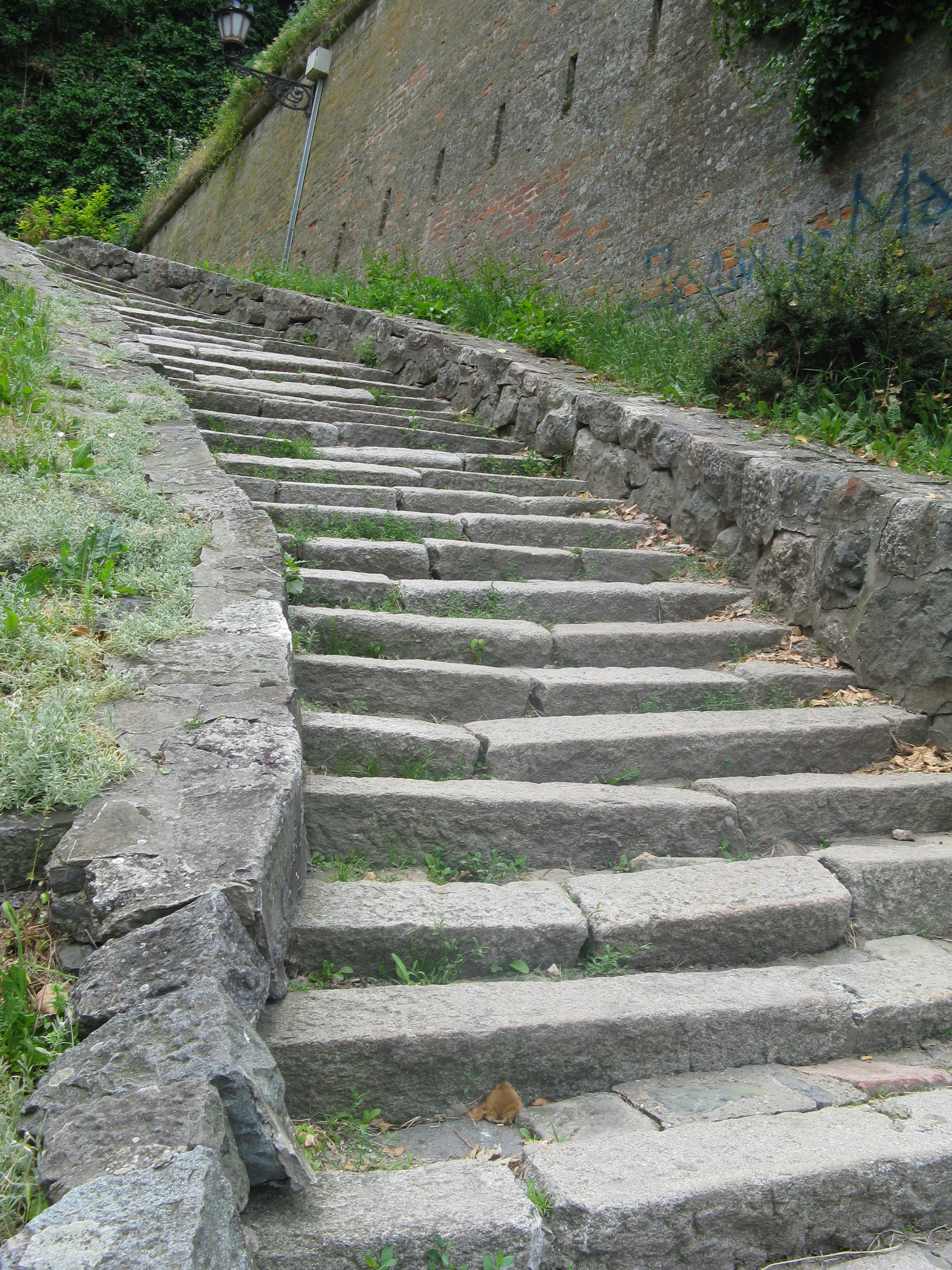
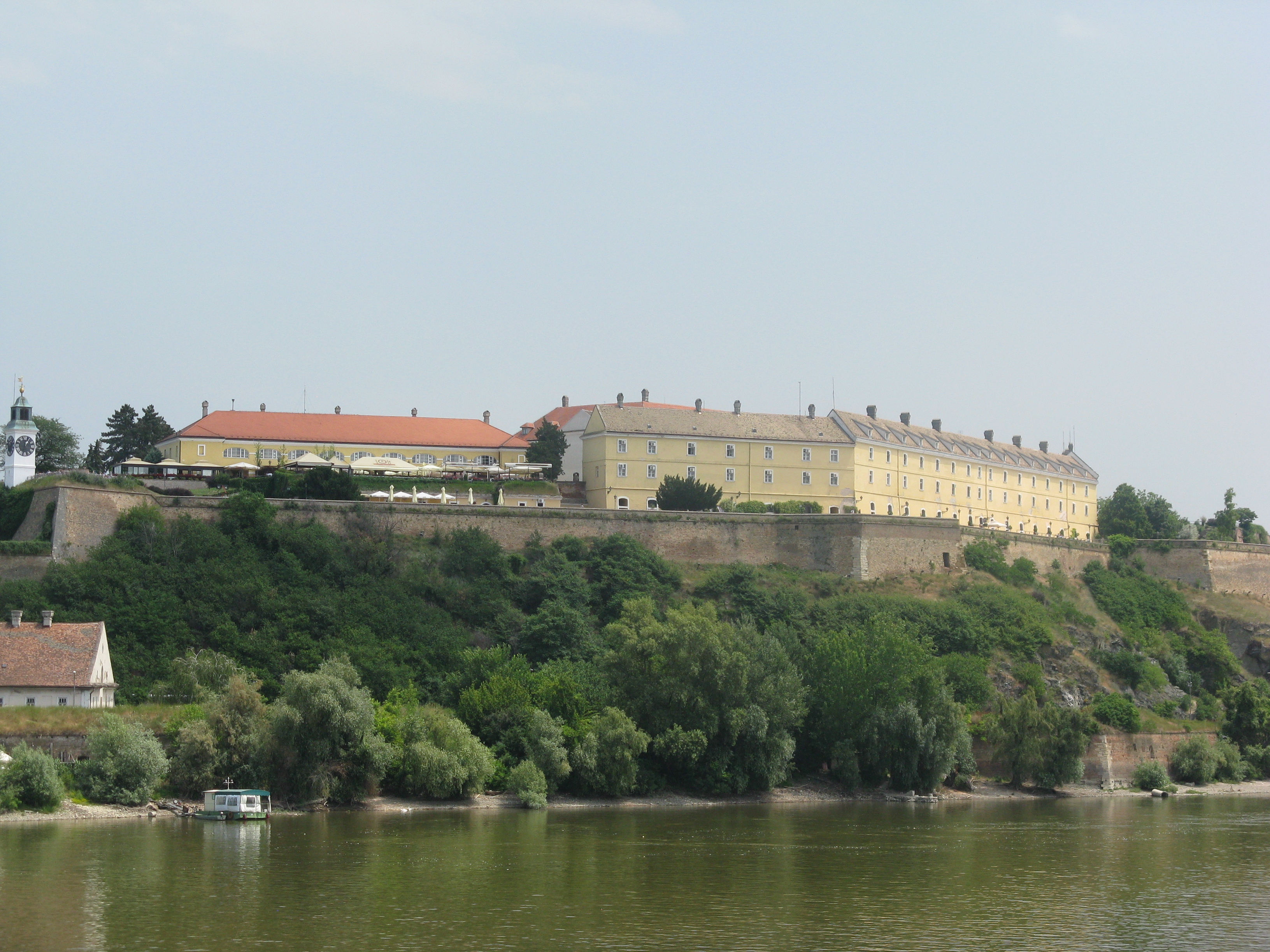
Steep steps up to Petrovaradin Fortress in Novi Sad. It is located on the right bank of the Danube river. The Fortress has many underground tunnels as well as 16 km of uncollapsed underground countermine system.
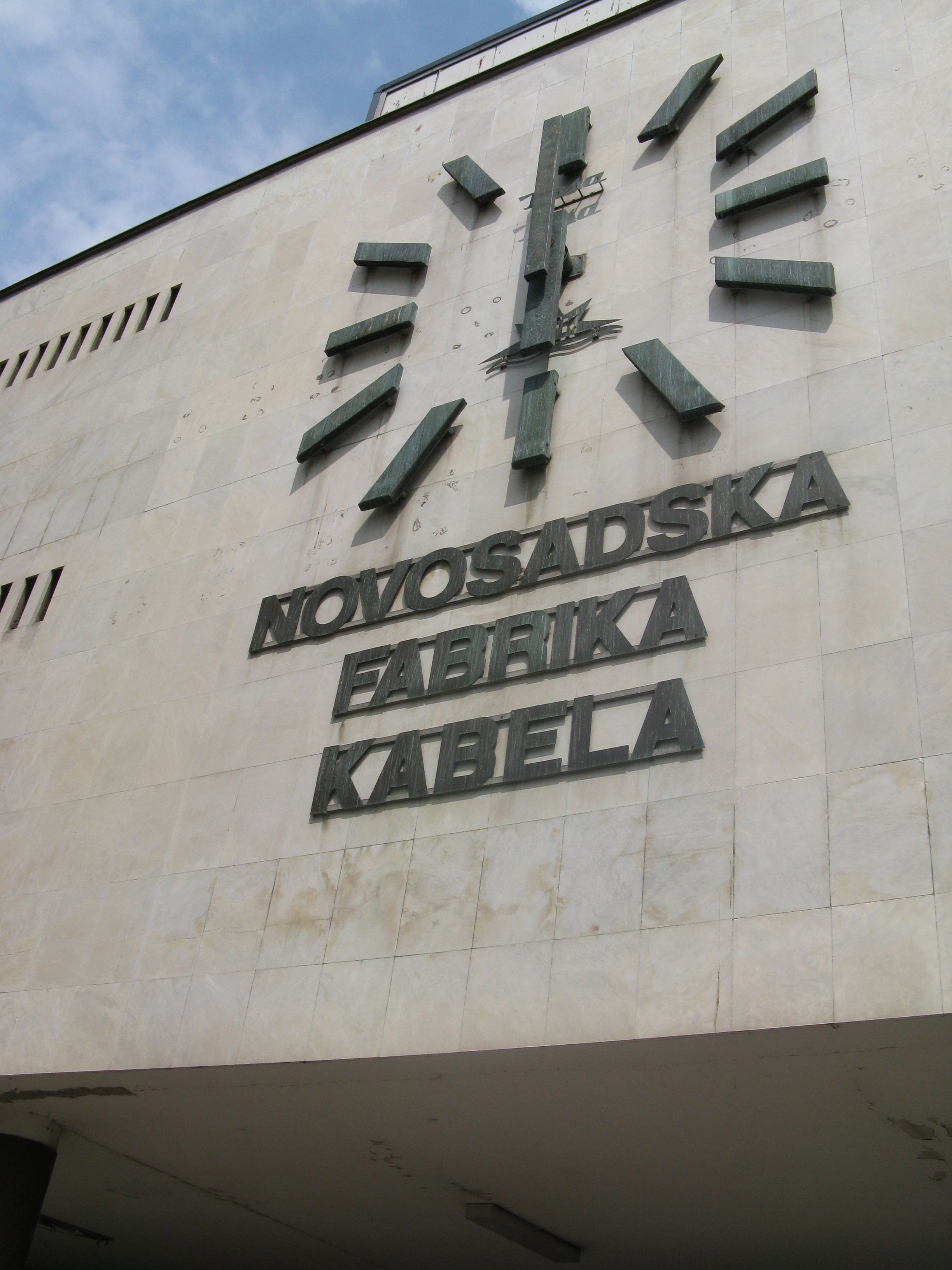
The clock above is unusual in that the hours are depicted by the long hand and the minutes by the short hand.

The remains of a bridge which was destroyed in the first world war. The Danube has 11 bridges, 3 are still standing and the remaining 8 have been destroyed over the years. The last bridge to be destroyed was in 1999 as part of the NATO bombings which targeted oil refineries, roads, bridges, and telecommunications relay stations, facilities which had military uses.

Entrance to the fortress.

The remaining part of the moat. The fortress plays host to a large music festival every year.
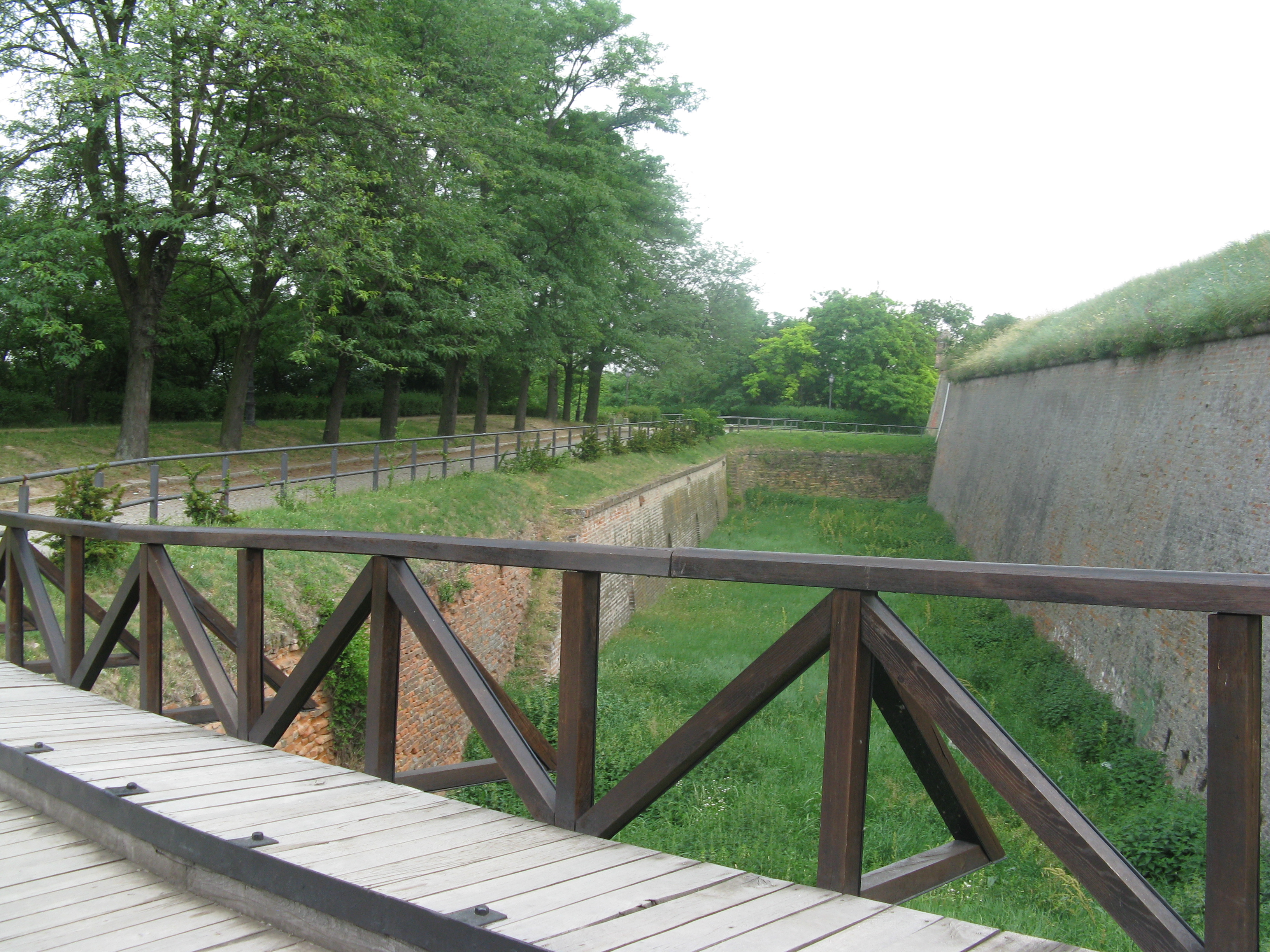
The fortress from the opposite side of the Danube.
Like many places we travelled the city’s are very green and have lots out outdoor space, this is a picture taken in the main park in Novi Sad.

This is the bishop’s palace, which lies in Liberty Square.
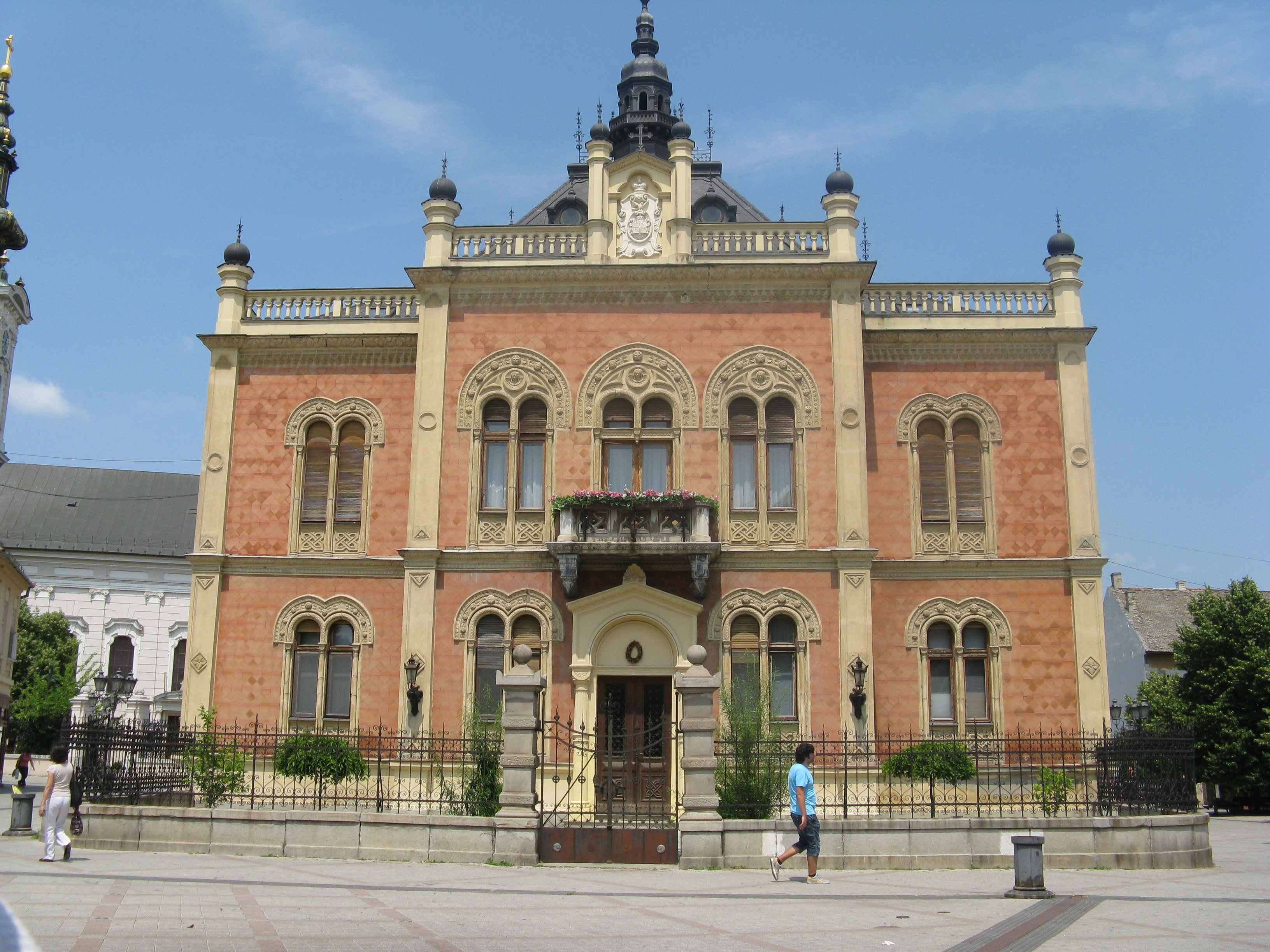
The very beautiful Novi Sad city hall.

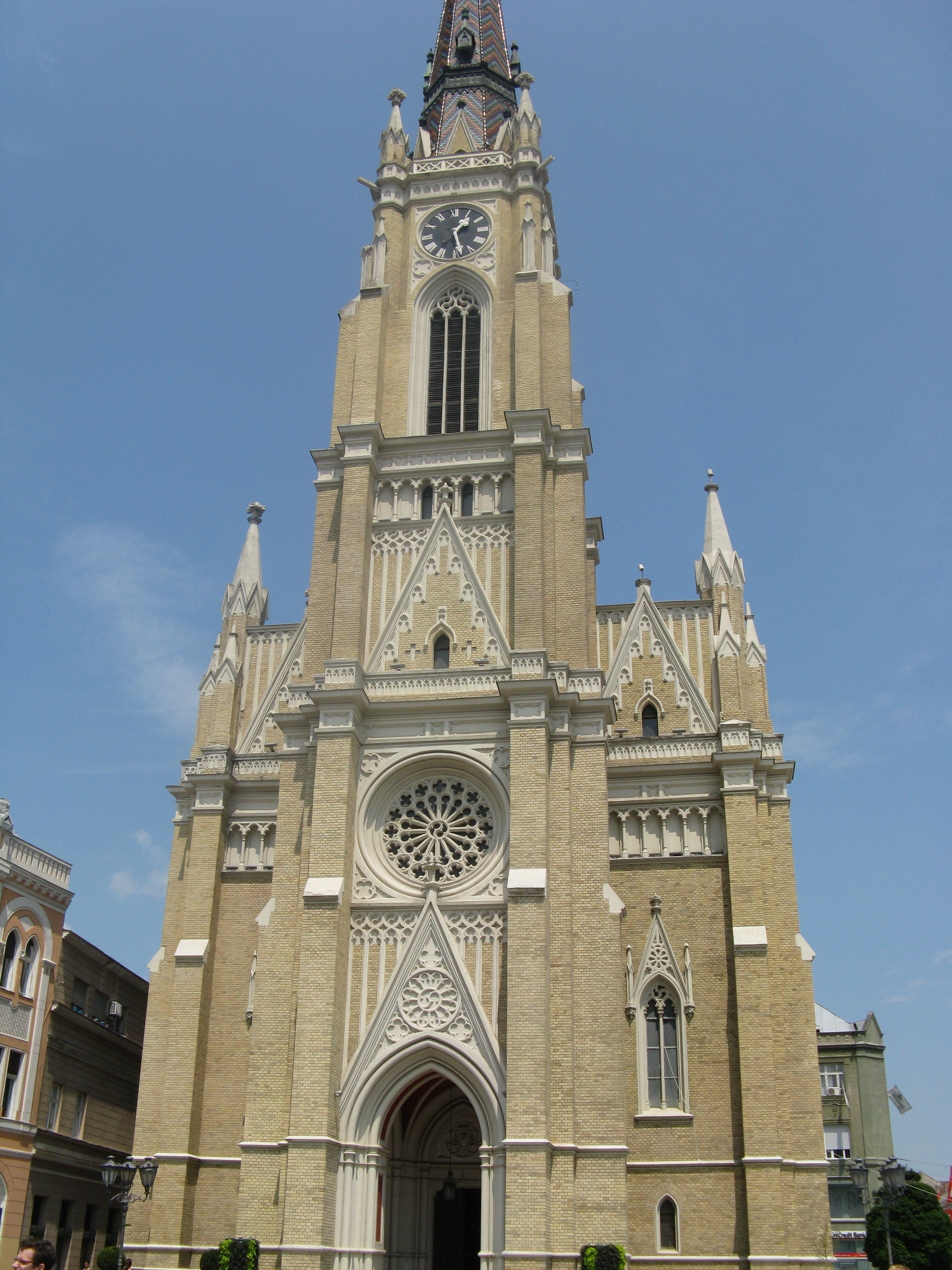
This is called “The Name of Mary Church” and is a Roman Catholic parish church dedicated to the feast of the Holy Name of Mary. It is the largest church in Novi Sad, and is located in the city center on the Trg Slobode (Libery Square). Locals refer to it as the “cathedral”, even though Novi Sad belongs to the Roman Catholic Diocese of Subotica, whose cathedral is located in Subotica.
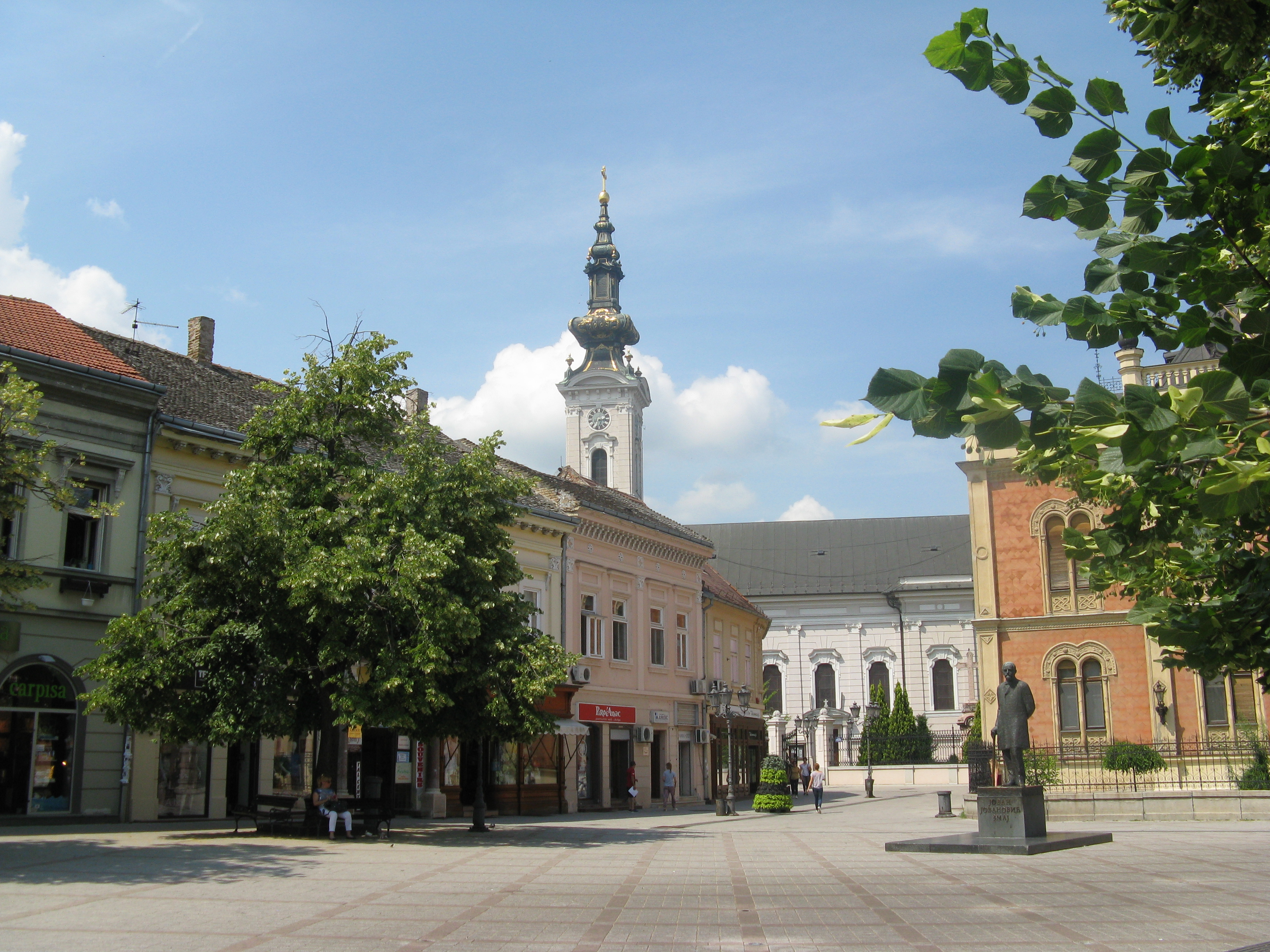
Novi Sad old town. This was an absolute gem because apart from the city and the park this feels very eastern bloc until you enter the old town with its stunning buildings and squares.
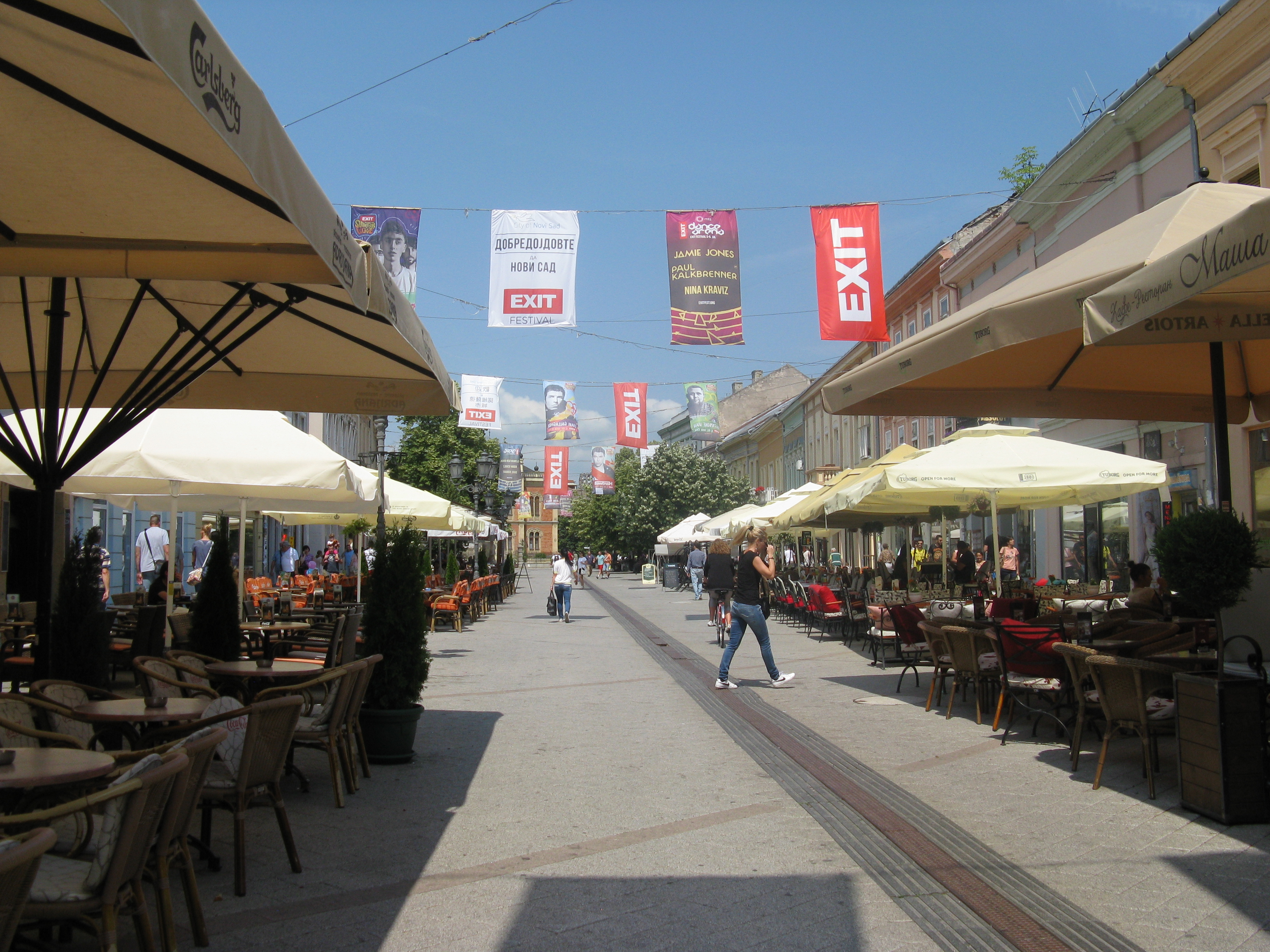
One of the small squares in Novi Sad old town.
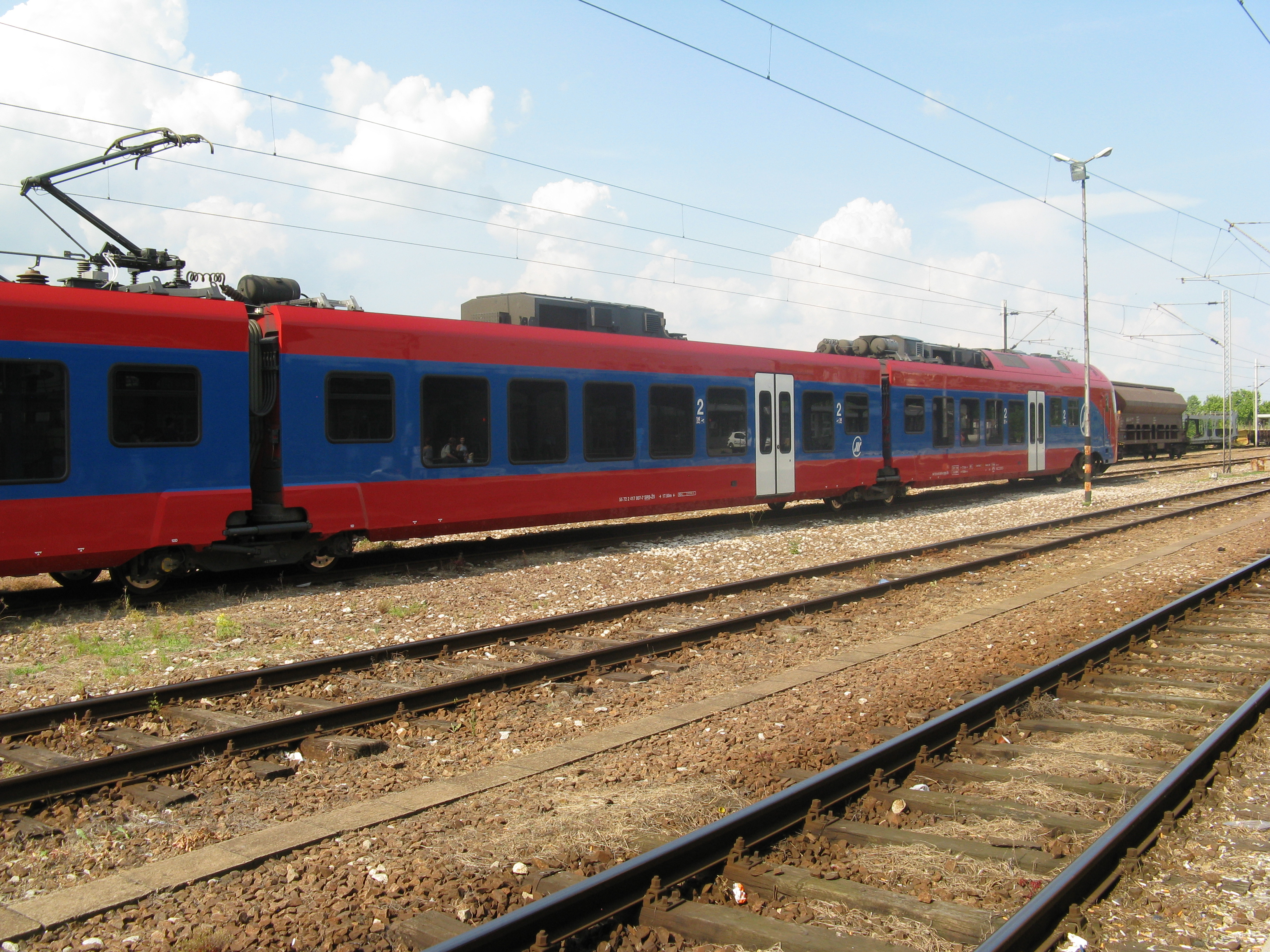
Serbia’s finest train.
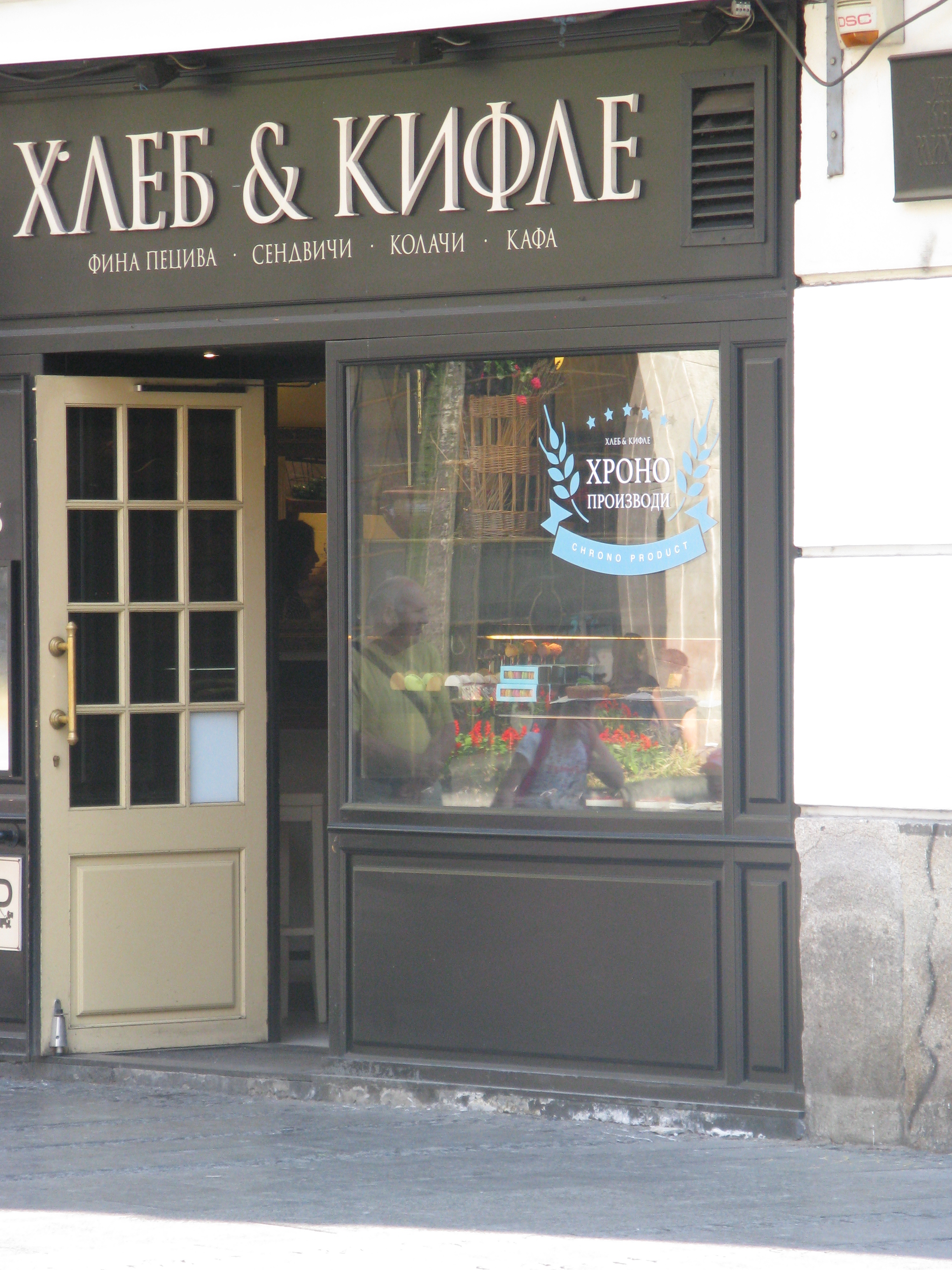
The sign at Novi Sad railway station demonstrating that every sign is shown in the Cyrillic and the Latin alphabets.

6 June 2017 – Belgrade; Overnight Train to Skopje, Macedonia
At 6:30 pm we boarded the overnight train to Skopje. The train had compartments sleeping 6 people which for us meant men in one and Women in others. Heather wasn’t happy about not spending the night with me. The beds were comfortable but the air conditioning didn’t work, however the windows opened and this kept the temperature down. As the train kept stopping and starting then I couldn’t sleep so spent the whole night listening to the train and wildlife whilst the train stopped.
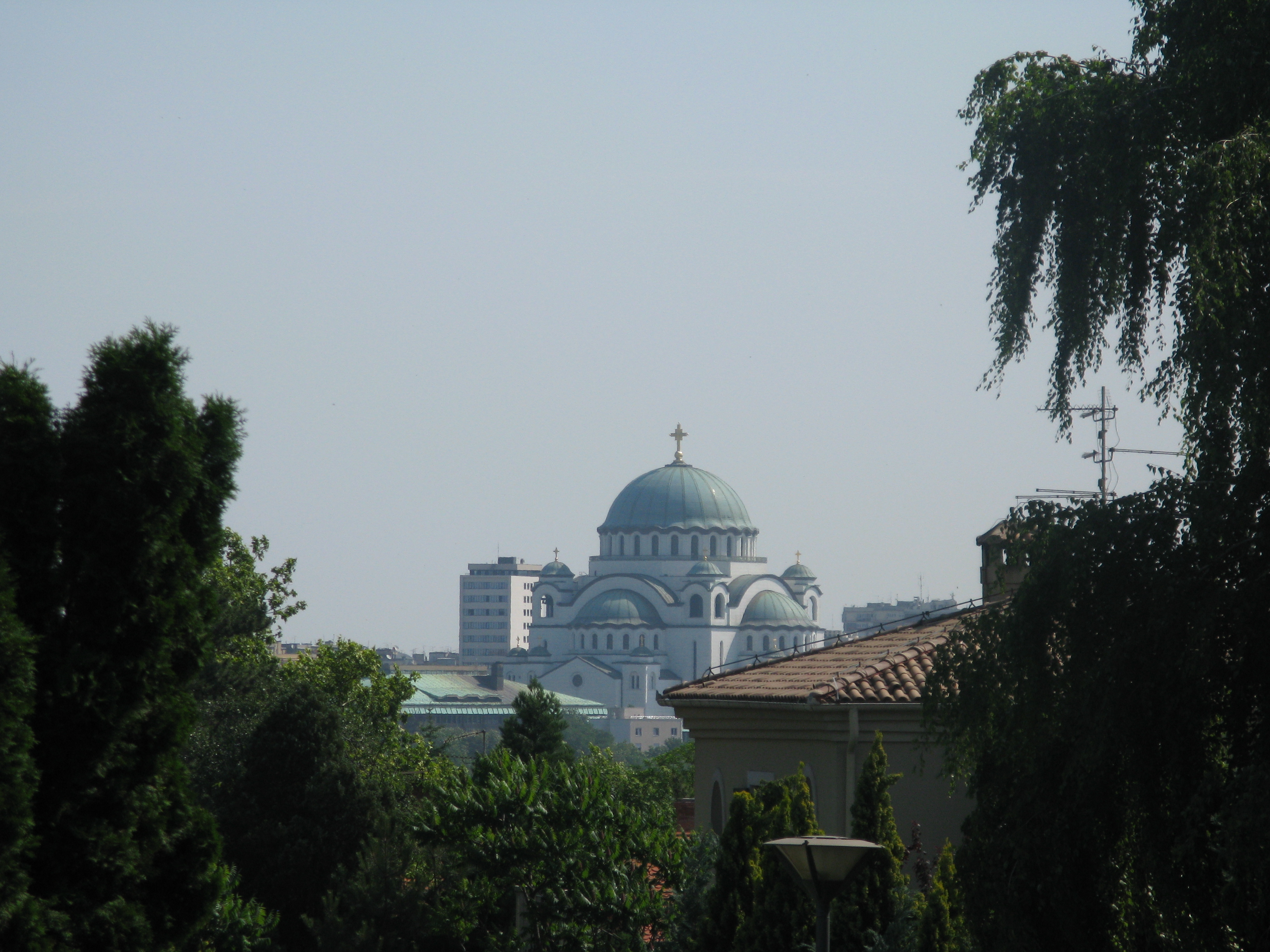
Distant view of Saint Sava Cathedral in Belgrade taken from the house of flowers.
A brief history of Marshal Josip Broz Tito, the President of the Socialist Federal Republic of Yugoslavia. Tito ensured that Yugoslavia never became part of the eastern bloc and therefore had good trade and relations with both the east and the west.

This is the house of flowers Mausoleum where Tito (1892–1980) and his wife Jovanka Broz (1924–2013) are buried.

The outside of Saint Sava’s cathedral which is still being built.
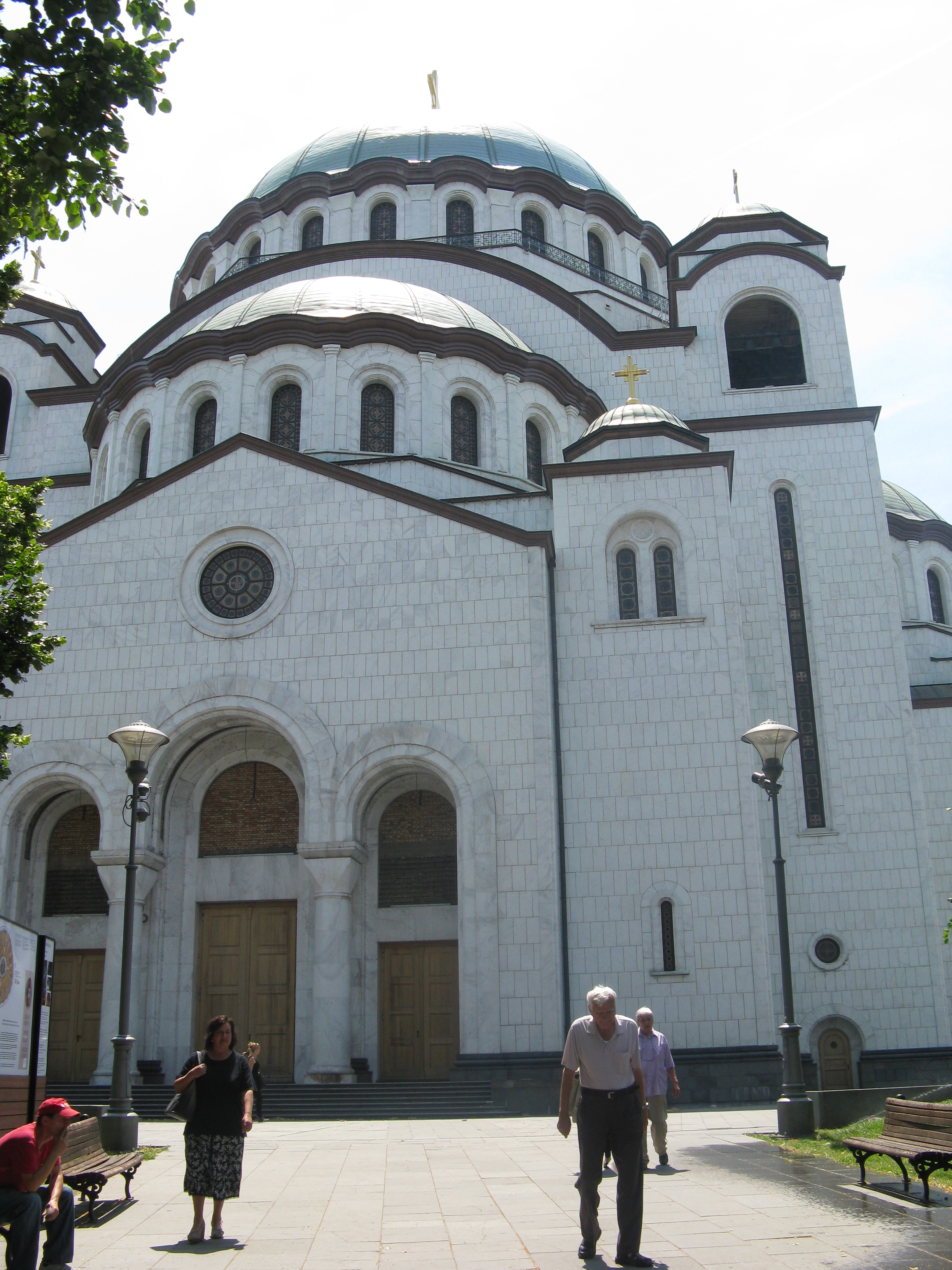
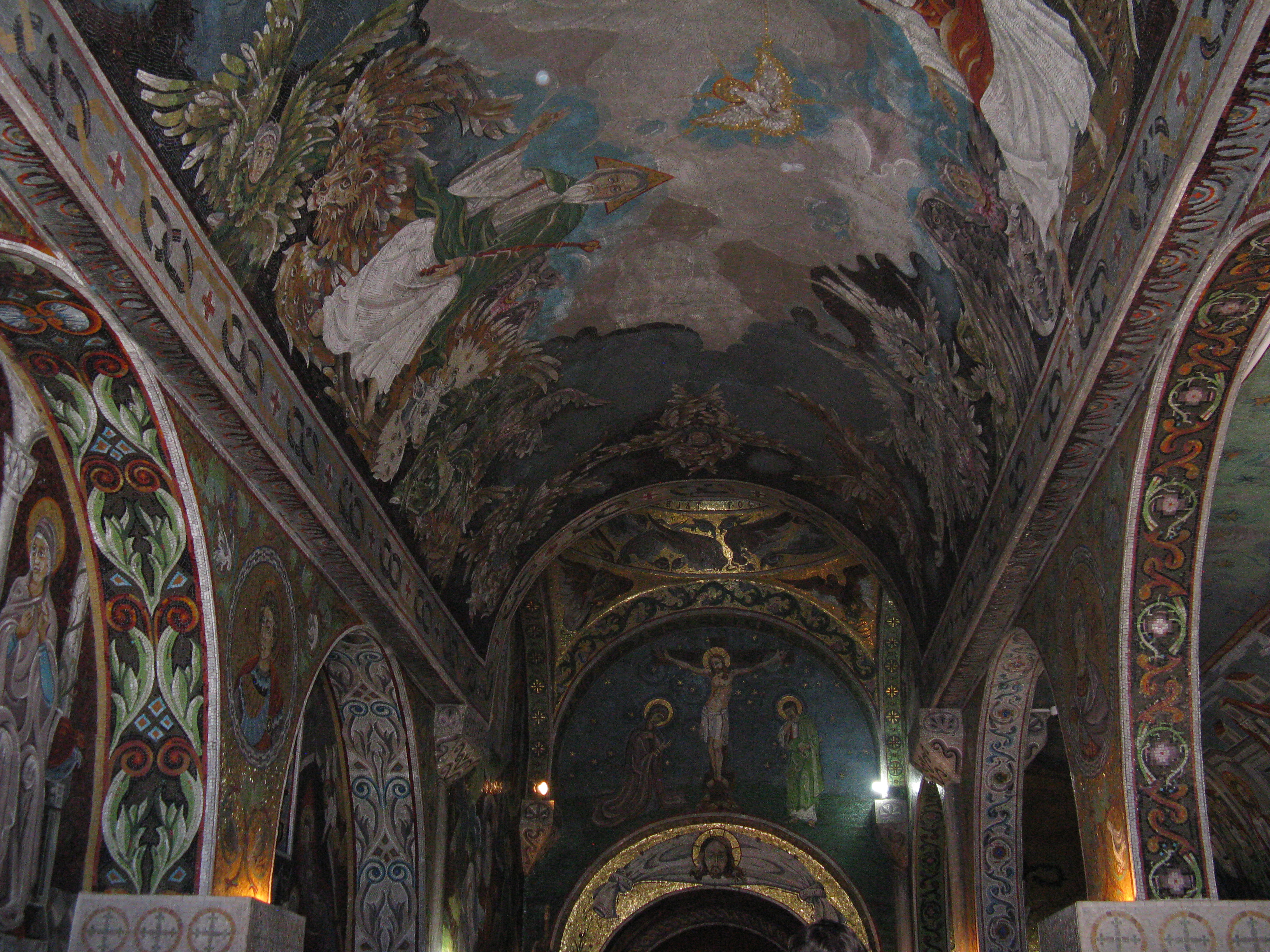
We got told to go inside but were very disappointed as it has no decorations. As we were in there we decided to follow the sign to the crypt We were amazed at the beauty and brightness of the crypt.


Church of St. Mark is a Serbian Orthodox church located in the Tašmajdan park near the Parliament of Serbia. It was built in the Serbo-Byzantine style by the Krstić brothers, completed in 1940, on the site of a previous church dating to 1835. It is one of the largest churches in the country.

This is our accommodation for the night on the Belgrade to Skopje overnight train. Very comfortable but not the luxury that Heather is used to.

7 June 2017- Tour of Skopje
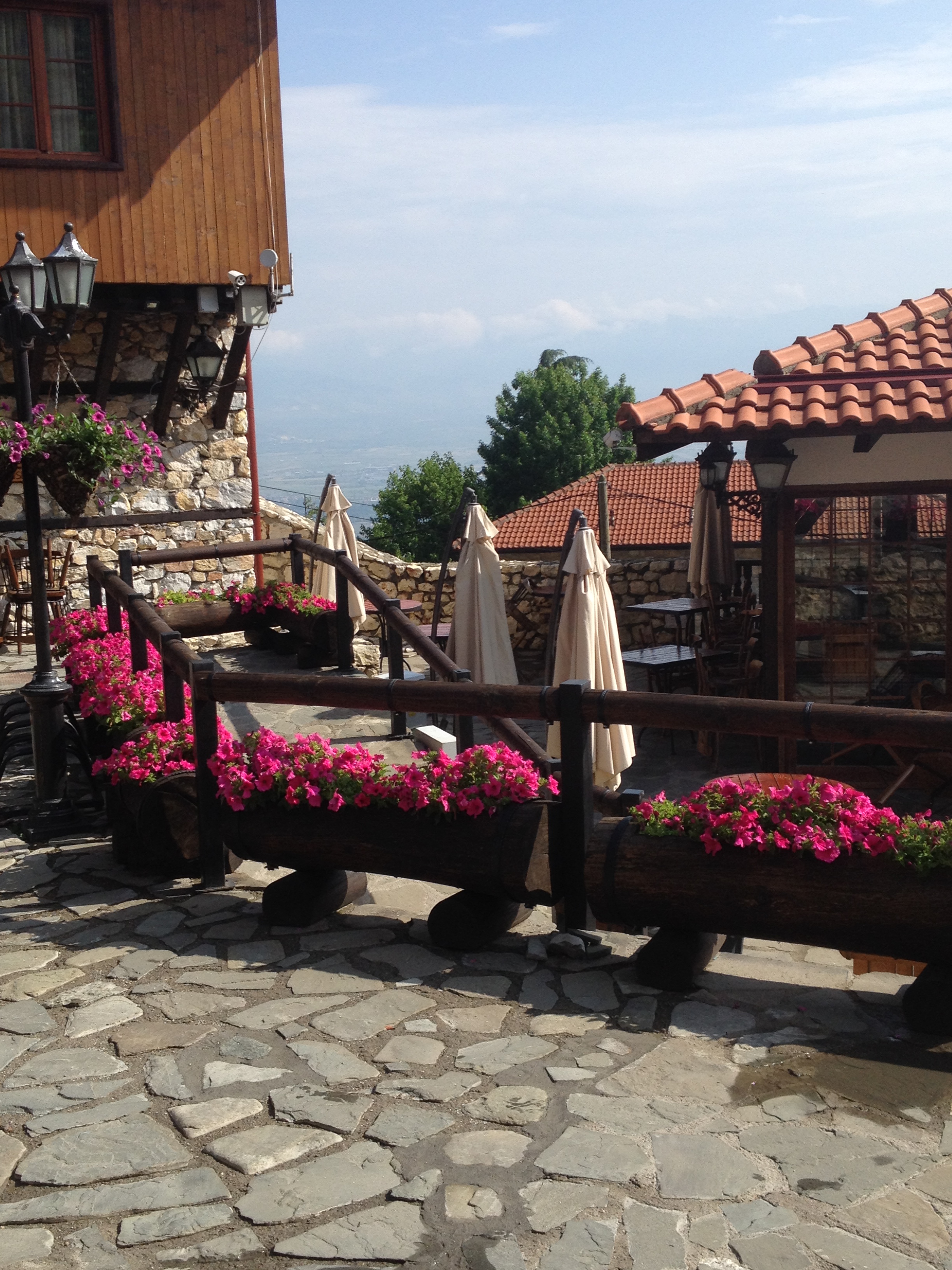
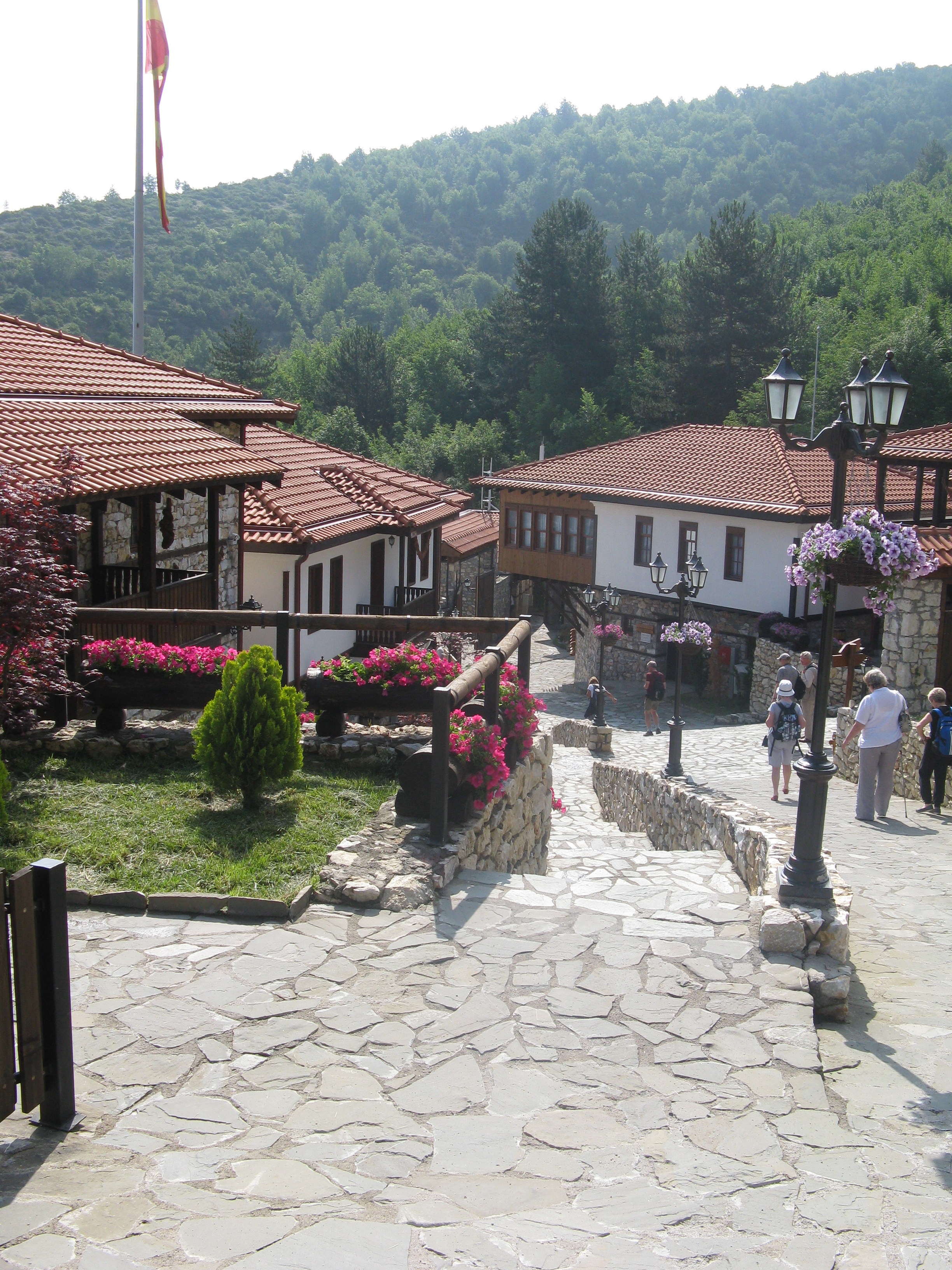
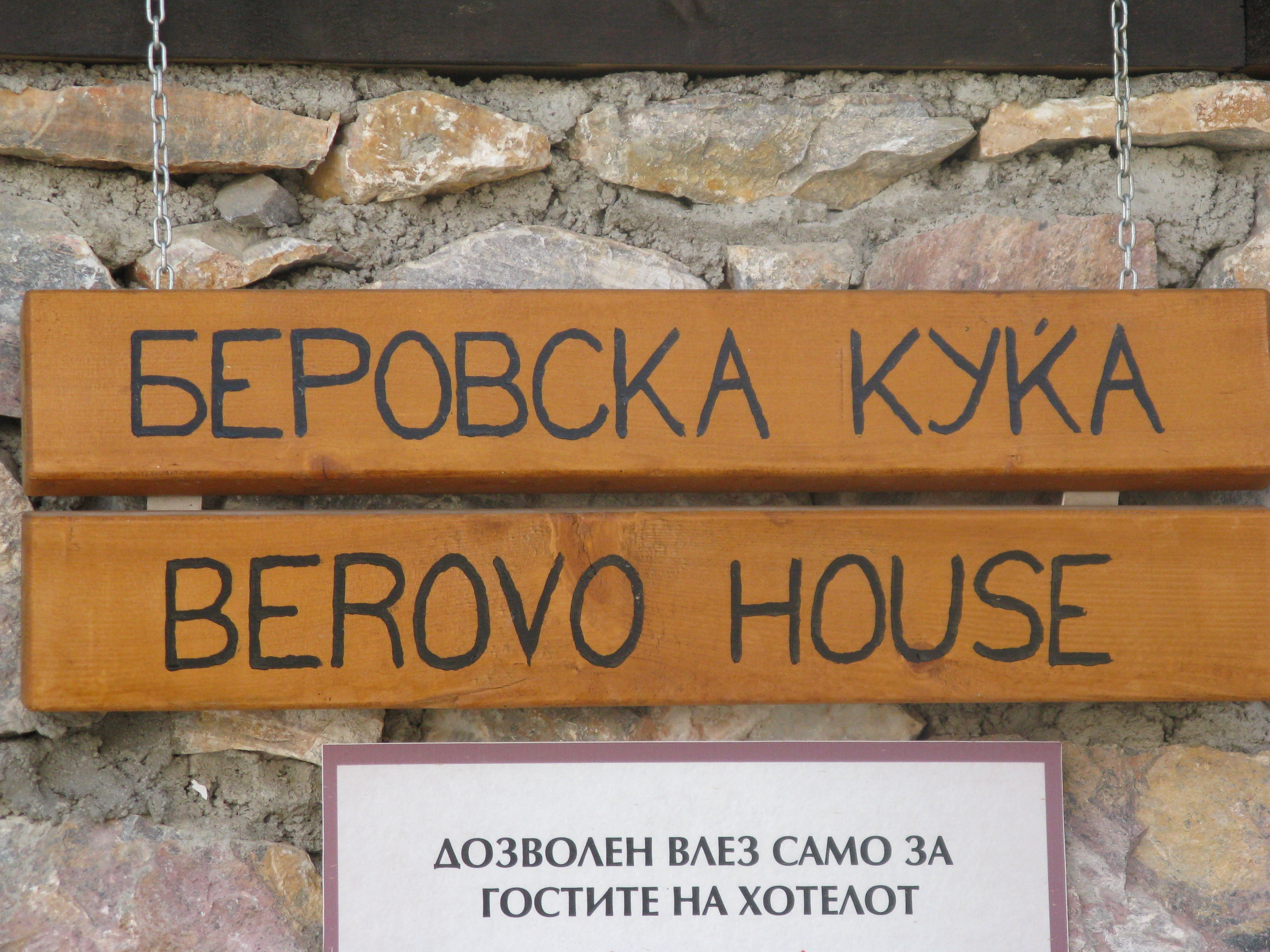
An early arrival on the overnight train allowed plenty of time to get to know the best of Skopje, the capital of Macedonia and once home of Mother Teresa. We started our explorations by driving up Mount Vodno to view the city below and then continued to the nearby Ethno Village where we enjoyed a traditional Macedonian breakfast in a local restaurant.
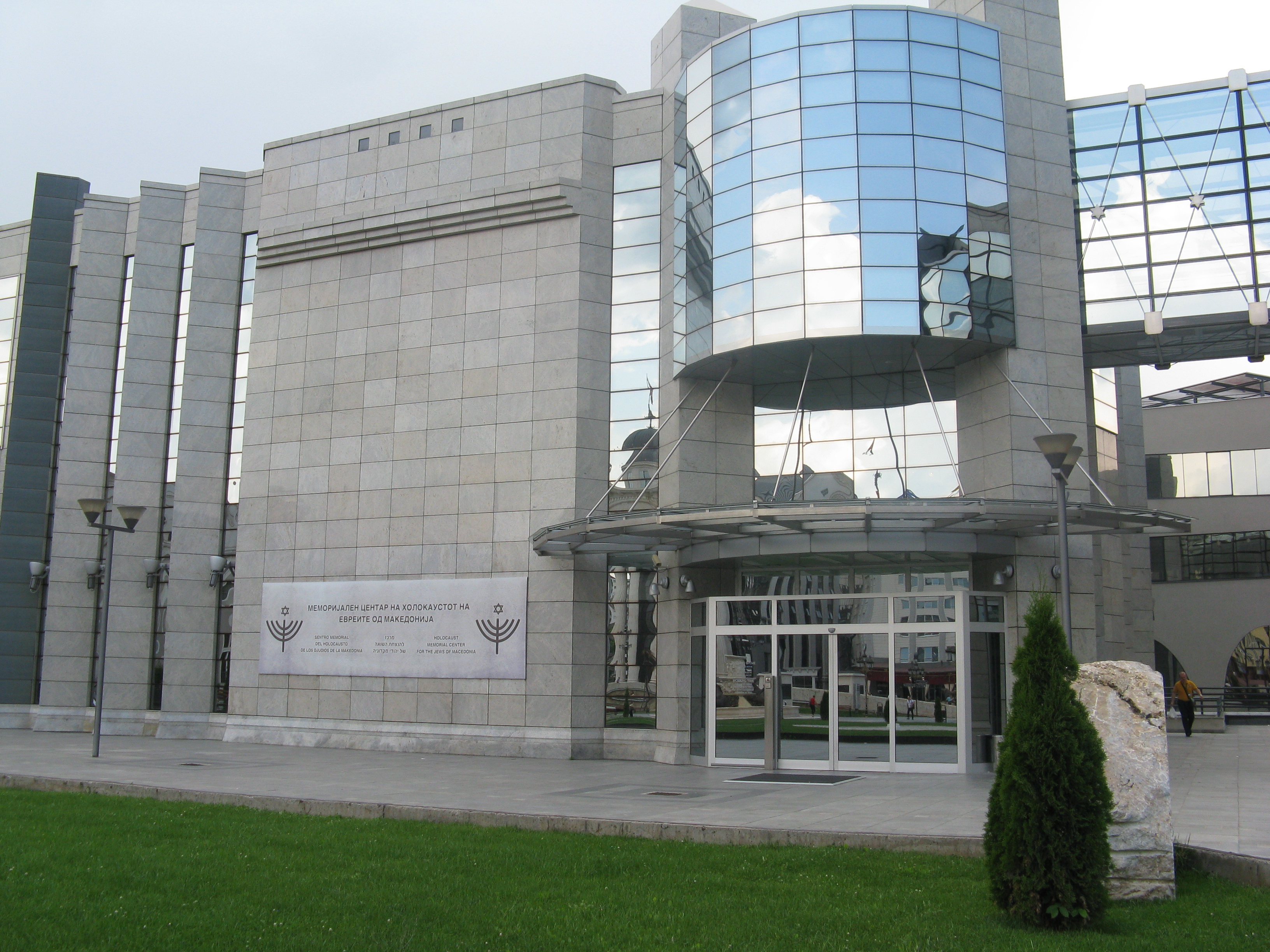
Our tour of the city included highlights such as the fortress, 12th century Old Bazaar, which is the largest and most well preserved bazaar in south-east Europe, and the Holocaust Museum. In 1963 a huge earthquake rocked the city and destroyed an estimated 75% of the town, but it is still rich in historic culture and Ottoman heritage. Skopje has been used a pawn in many wars, including World War II and many empires have ruled over the city, all having influenced the architecture, religion and traditions. Despite the turbulent and sometimes violent history, Skopje is now a peaceful city where residents are free to practice all religions, the main faiths being Macedonian Orthodox and Islam.
The city boasts many beautiful churches and mosques, although we noticed mostly minarets on the skyline due to a historic law that was enforced by the Turks stating Christian buildings could not be taller than mosques.
Breakfast stop, this restaurant is in the hills overlooking Skopje where we had a traditional Macedonian breakfast of omelette and a type of porridge.
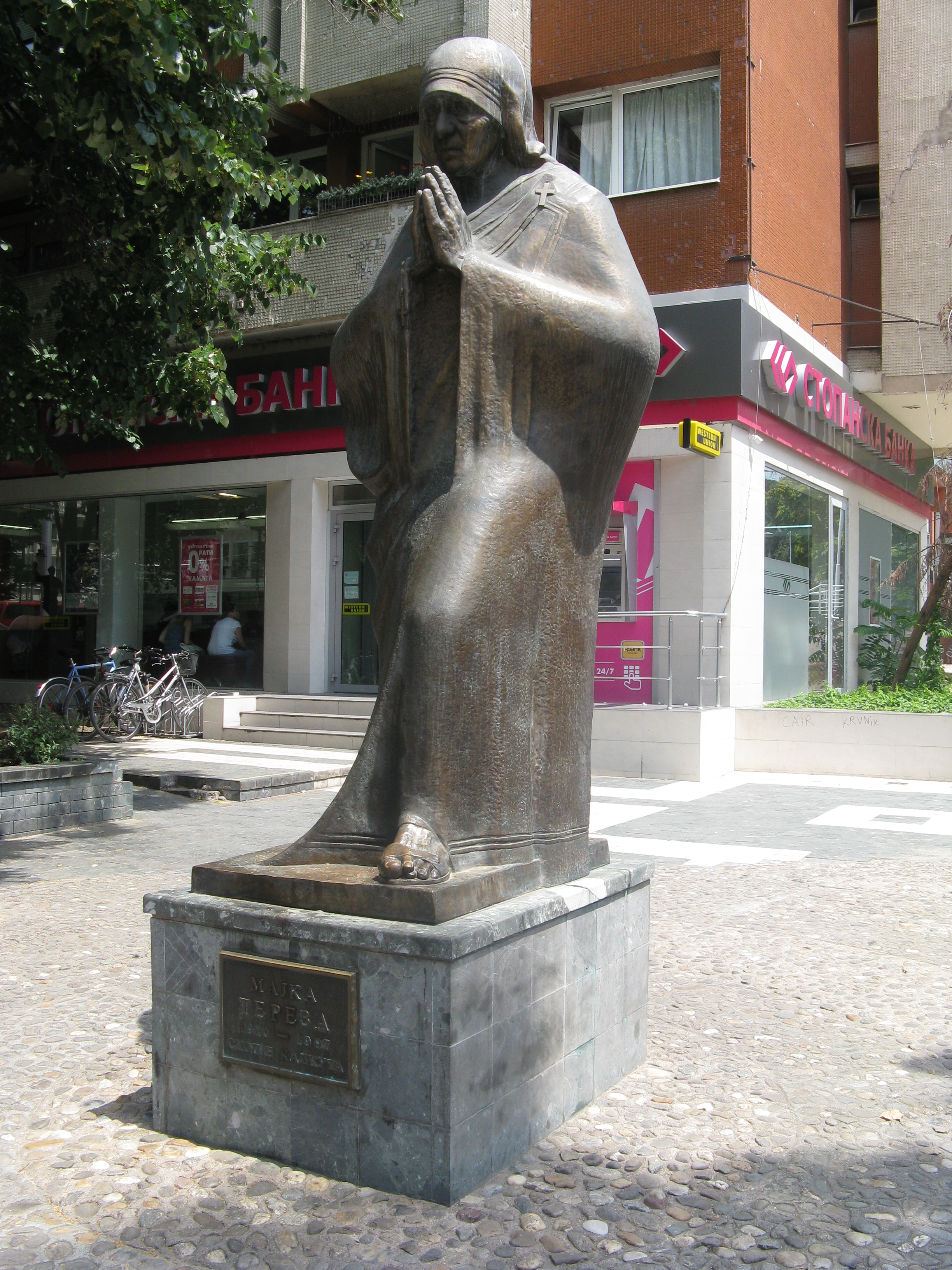
Mother Teresa, known in the Catholic Church, as Saint Teresa of Calcutta. She was born in Skopje which then was part of the Kosovo Vilayet of the Ottoman Empire. After living in Macedonia for eighteen years she moved to Ireland and then to India, where she lived for most of her life.
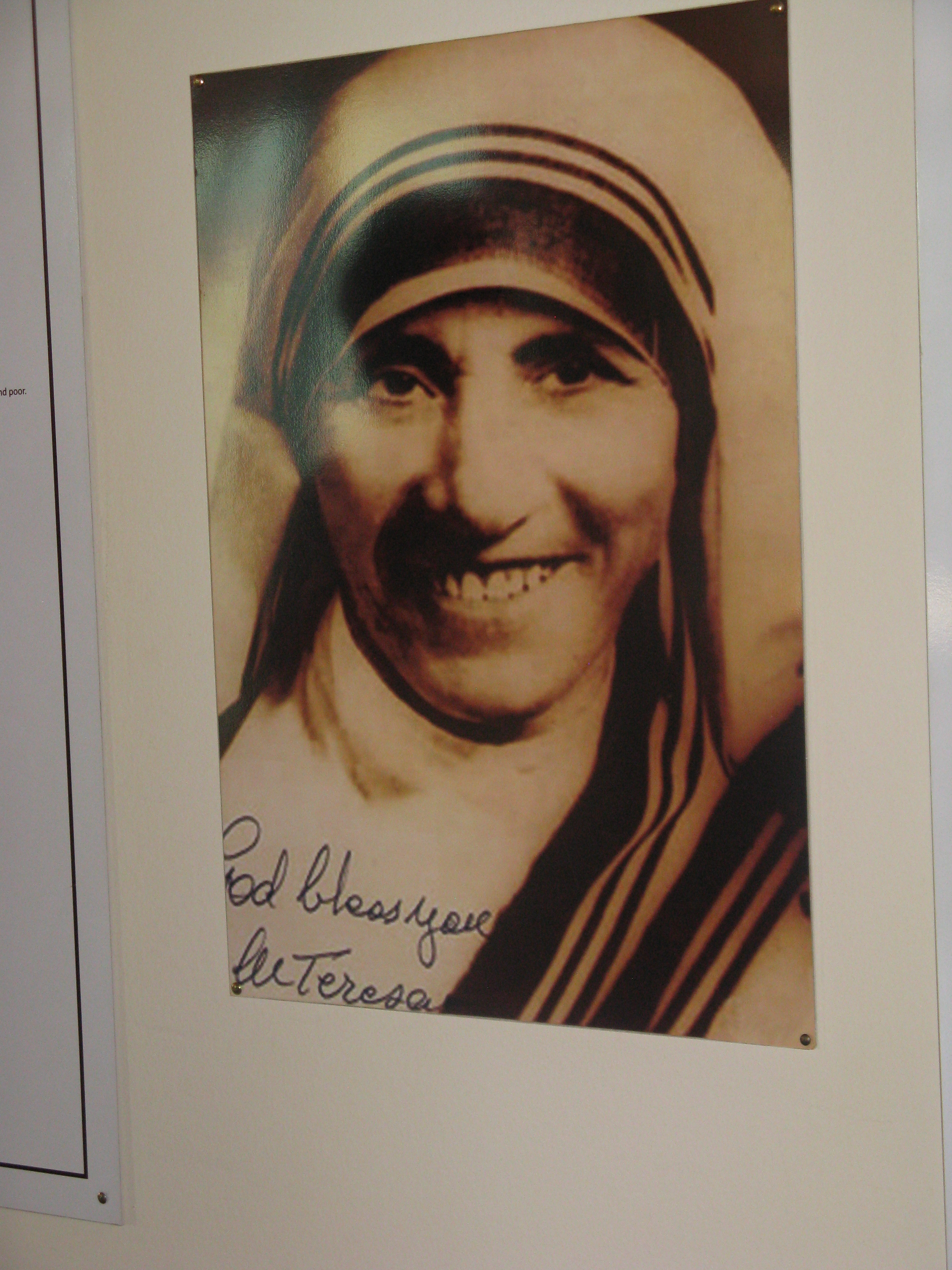
Signed photograph of Mother Teresa which is contained in the Mother Teresa museum.
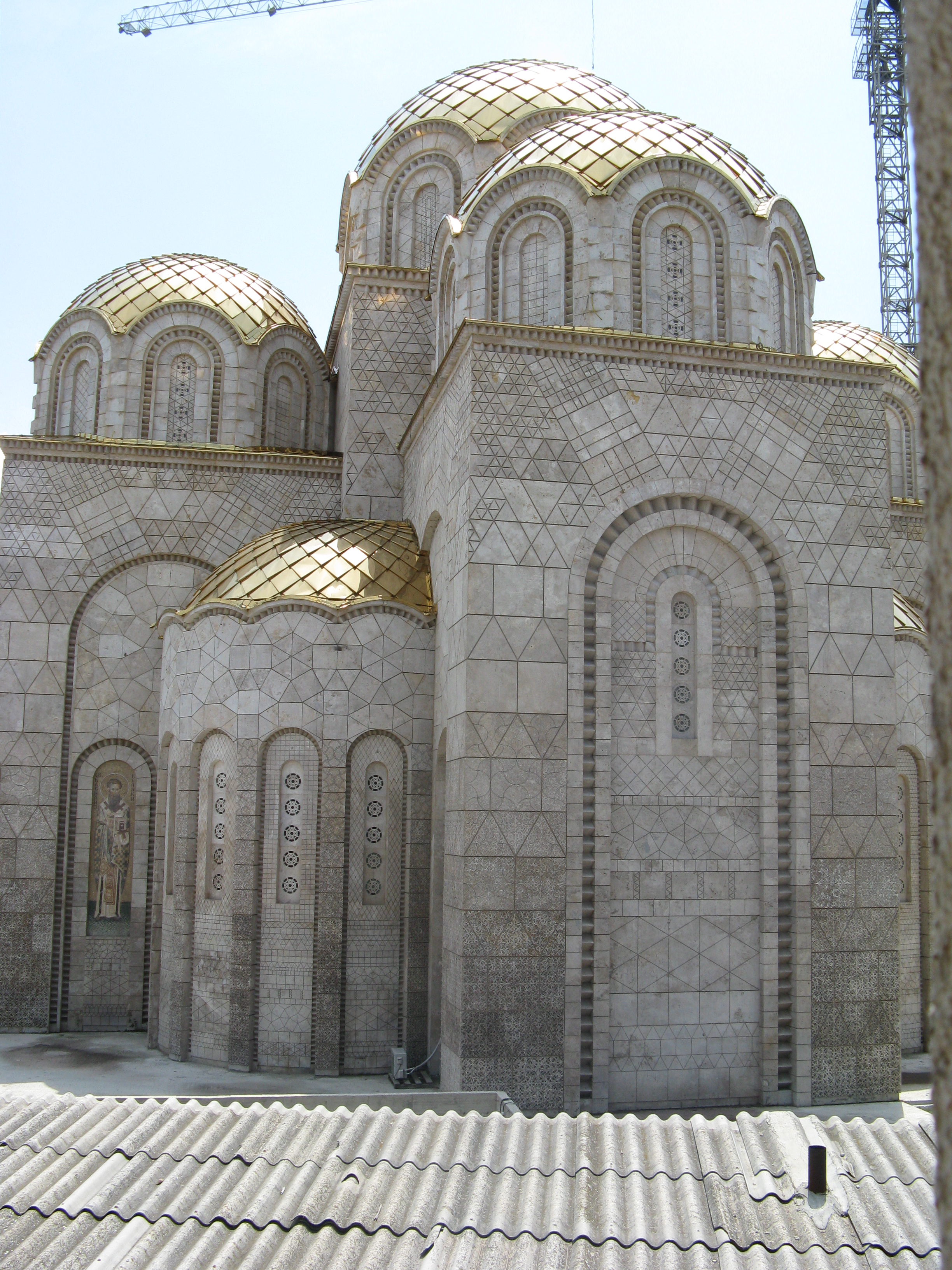
This is the new orthodox church which is currently under construction next to the Memorial House of Mother Teresa. The roof contains real gold.
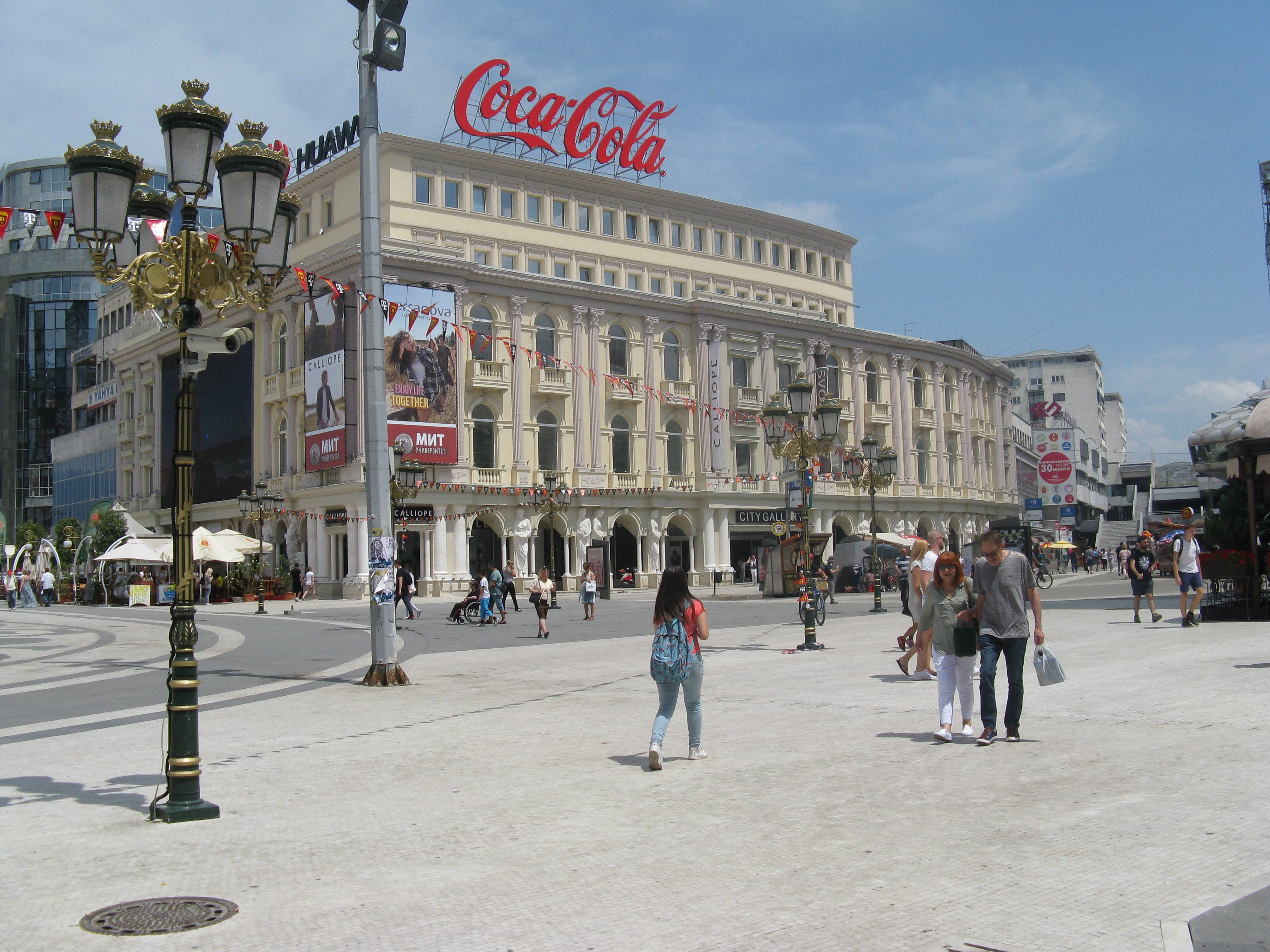
One of the more modern buildings in the old town square.
Porta Macedonia is a triumphal arch located on Pella Square. The arch is dedicated to 20 years of Macedonian independence.

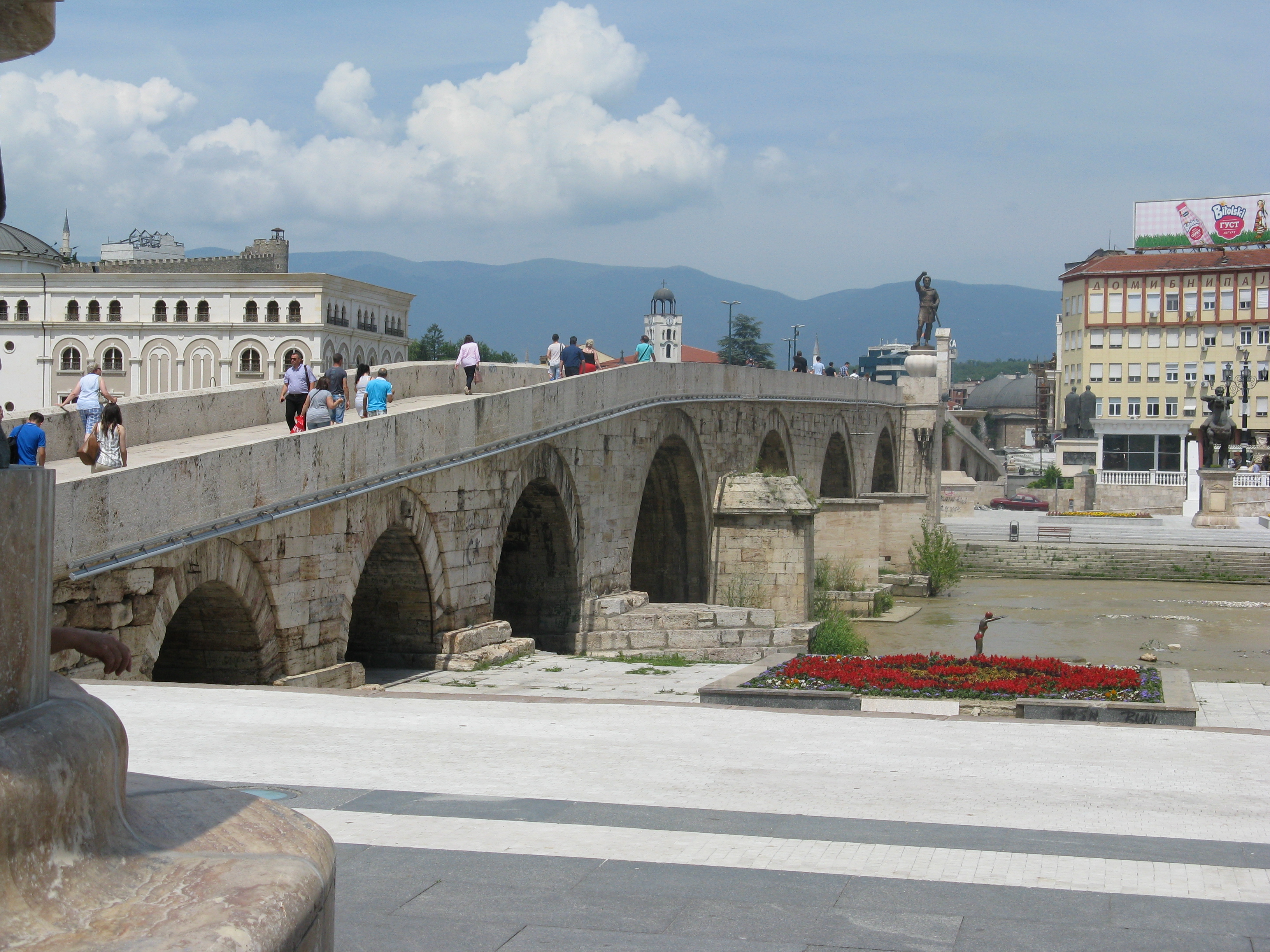
The Stone Bridge is the most famous bridge in Skopje. The bridge crosses the Vardar River. The bridge is considered a symbol of Skopje and is the main element of the coat of arms of the city, which in turn is incorporated in the city’s flag. The Stone Bridge connects Macedonia Square, in the centre to the Old Bazaar. The bridge is also less frequently known as the Dušan Bridge after Stephen Uroš IV Dušan of Serbia.
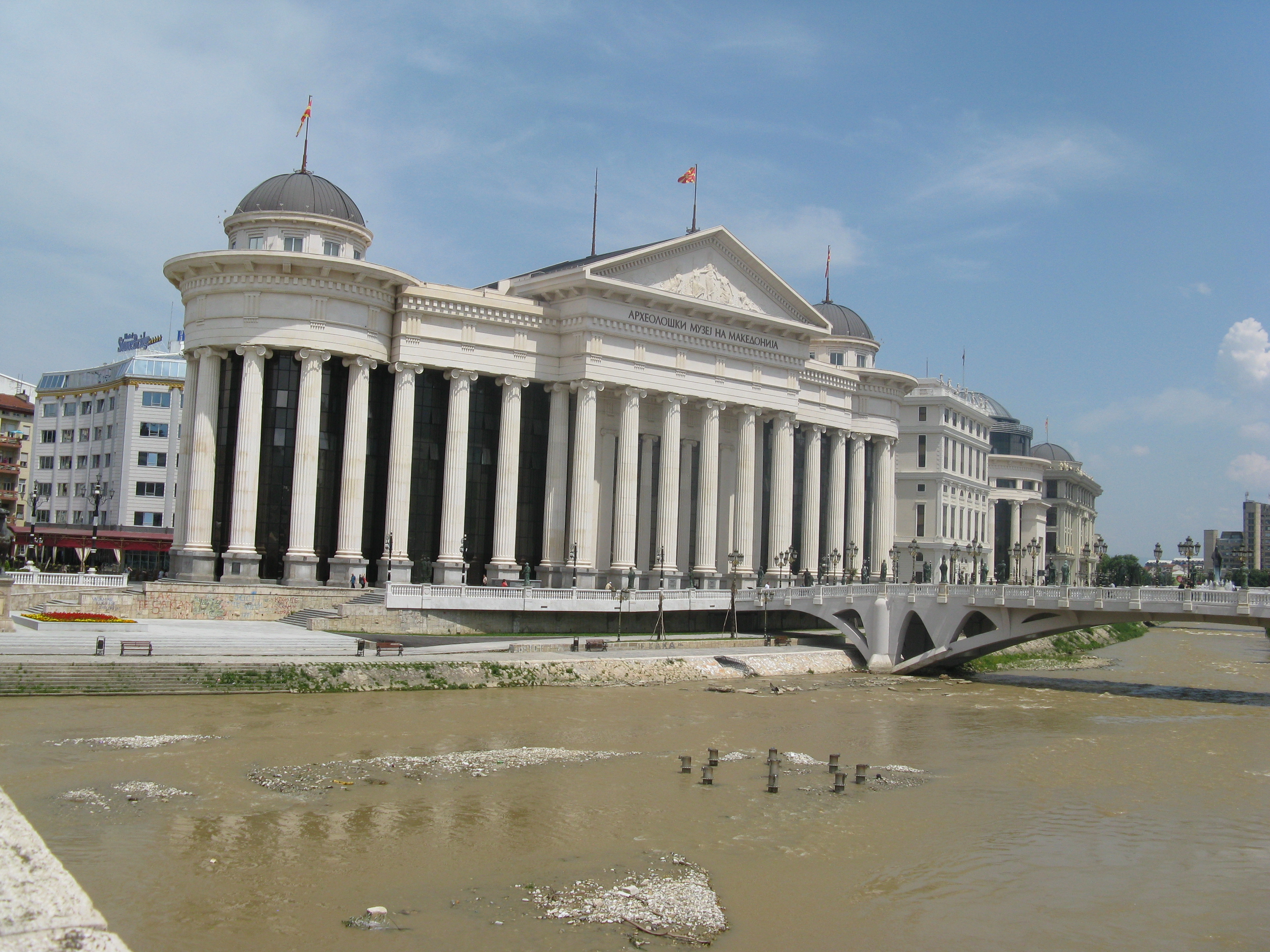
This is the Archaeological museum of Macedonia, which has been created by joining three buildings together.
This is part of the university of Macedonia.
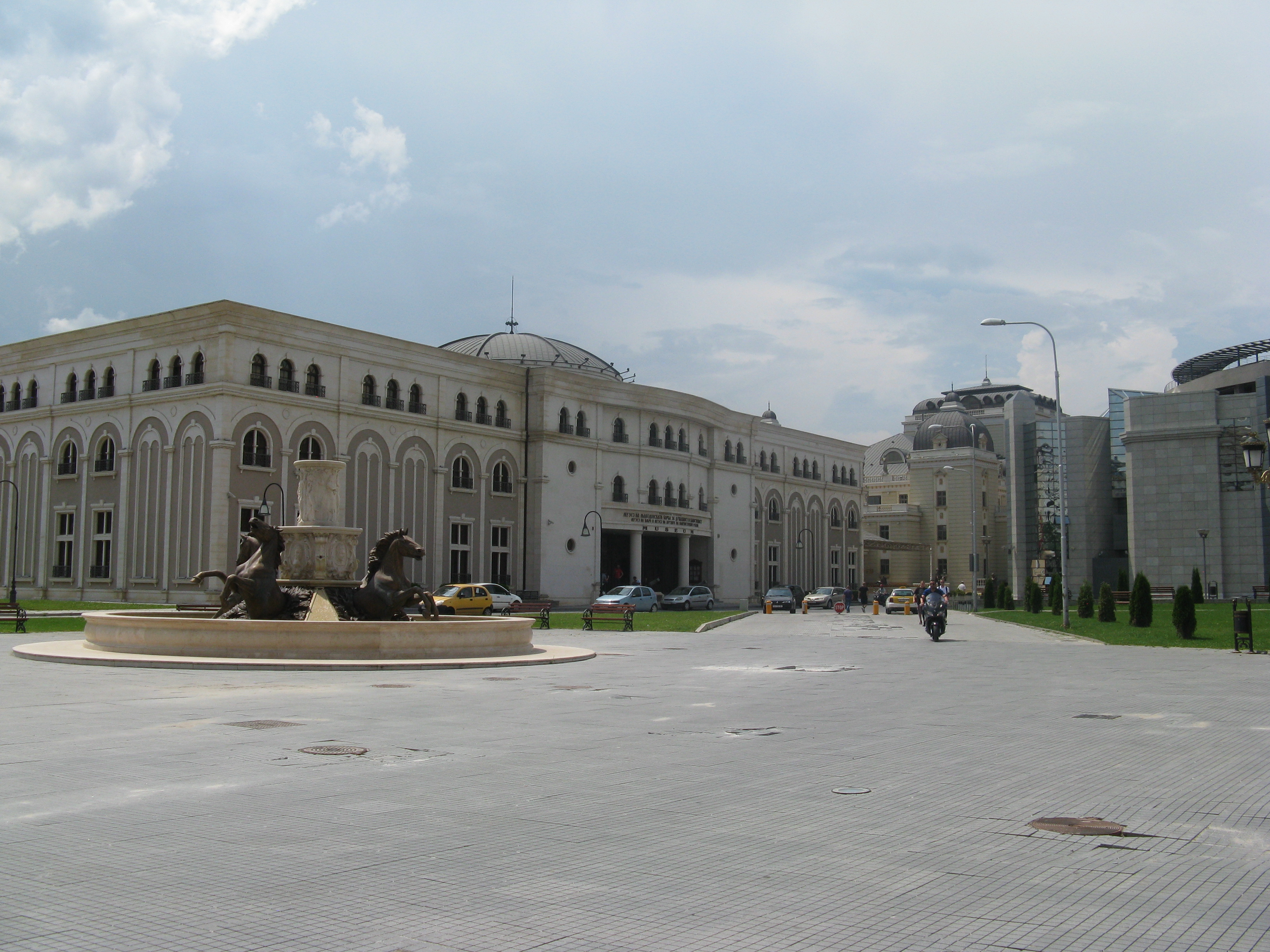
This is the museum of the history of Macedonia.
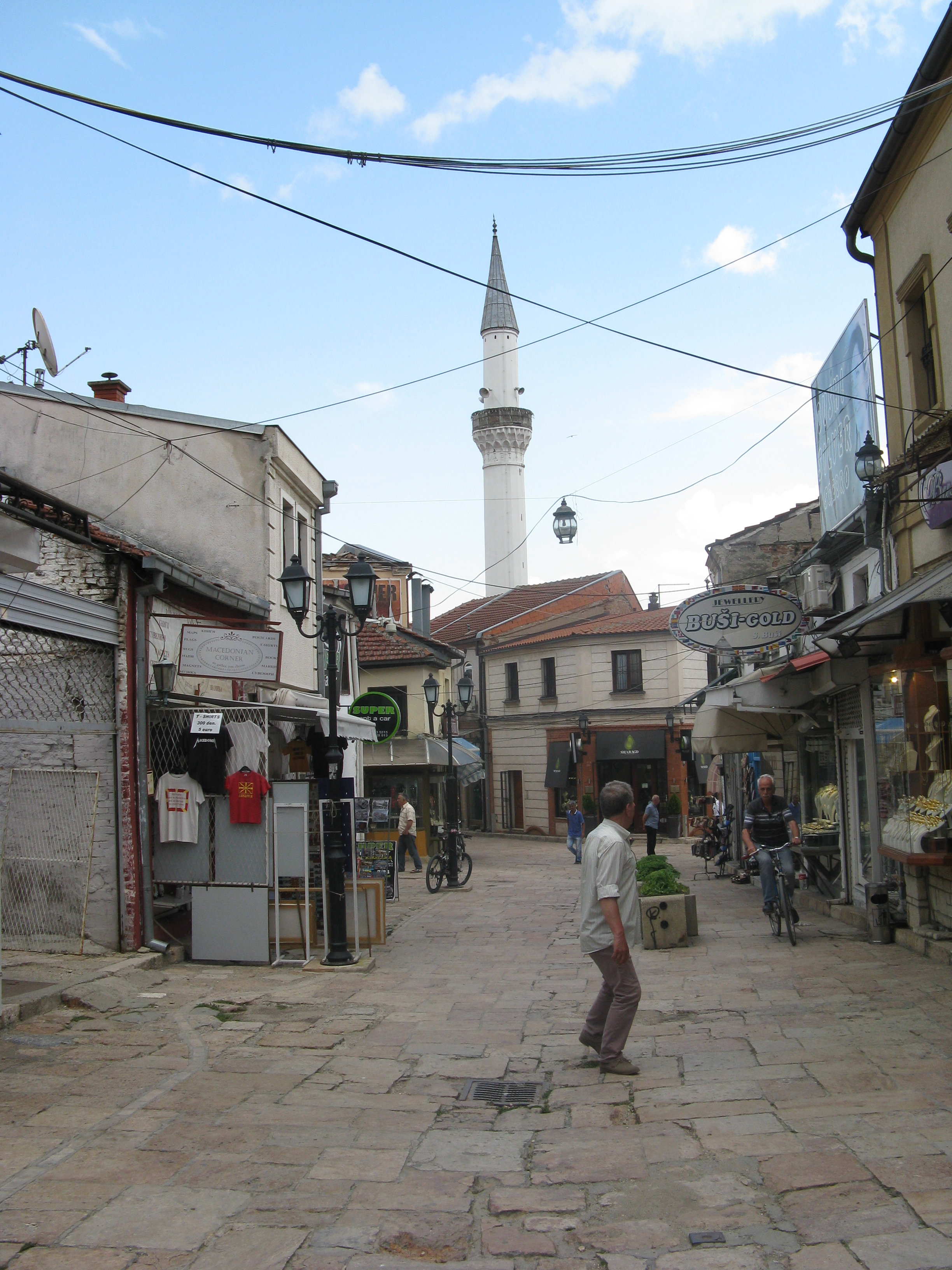
This is a the old town Bazaar. It is much smaller than the old town Bazaar in Sarajevo but equally fascinating.
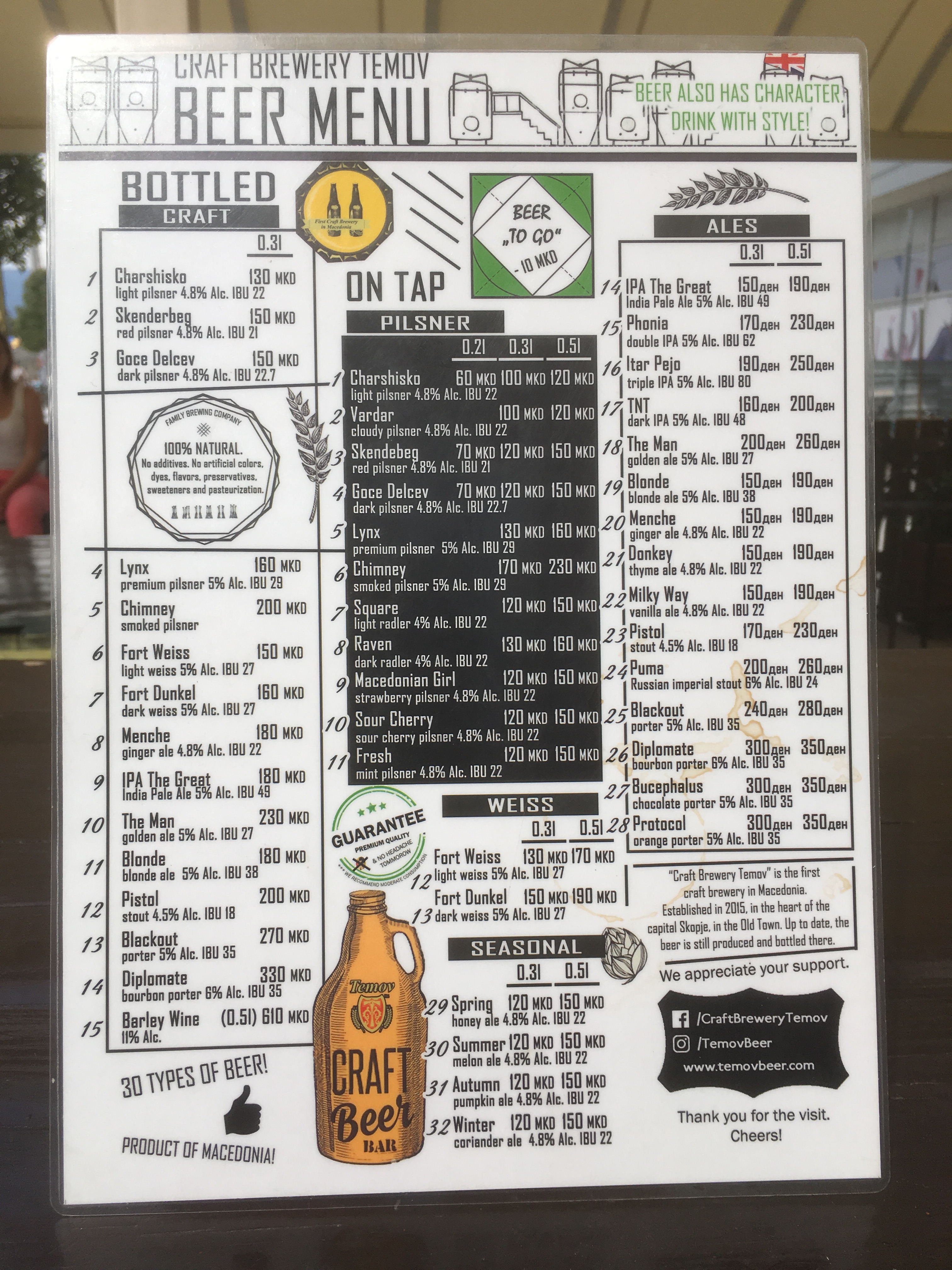
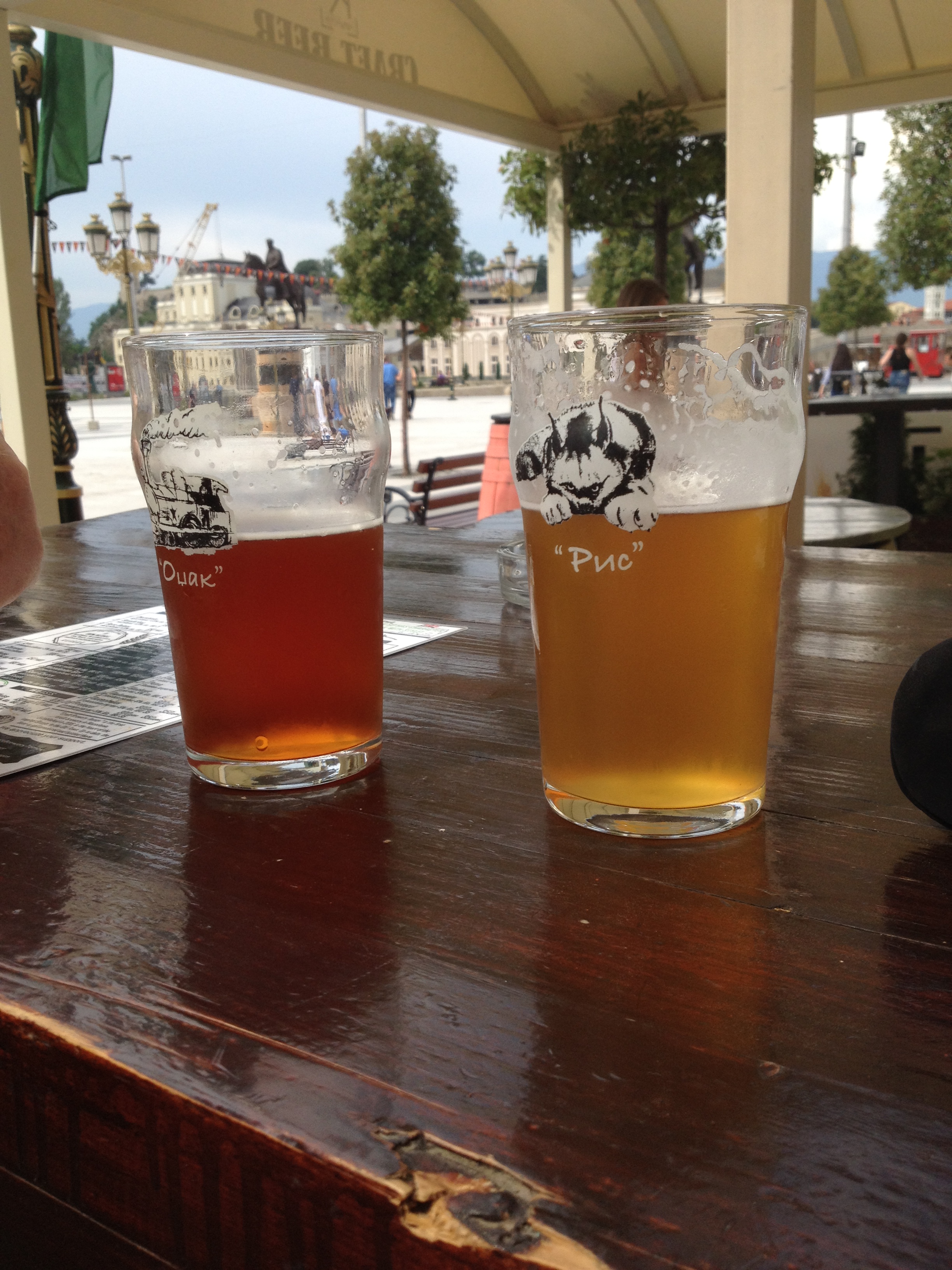
On a really hot day what can be better than an ice cold beer, this bar close to the stone bridge was recommended to us. If you are ever in Skopje here’s the place to go.
8 June 2017 – Bitola and visit to the Ancient City of Heraclea
Taking a step back in time, we visited the ancient Macedonian city of Heraclea. Named after the legendary Greek mythical hero, Heracles, it dates back to approximately 4th century BC, but many of the remains discovered are from around 2nd century BC when the Romans invaded and conquered it. The site of this once prosperous city has some excellent ruins including an amphitheatre once used for gladiator fighting and preserved mosaic floors.
We toured Bitola which is Macedonia’s second largest city. Sitting on the bank of the Dragor River, the exact origin of bustling Bitola is unknown, but it seems it grew up in the shadow of Heraclea only to outlive its parent city. Today, despite being a busy commercial centre, Bitola still radiates the relaxed cafe culture that is so popular in this area of Europe.
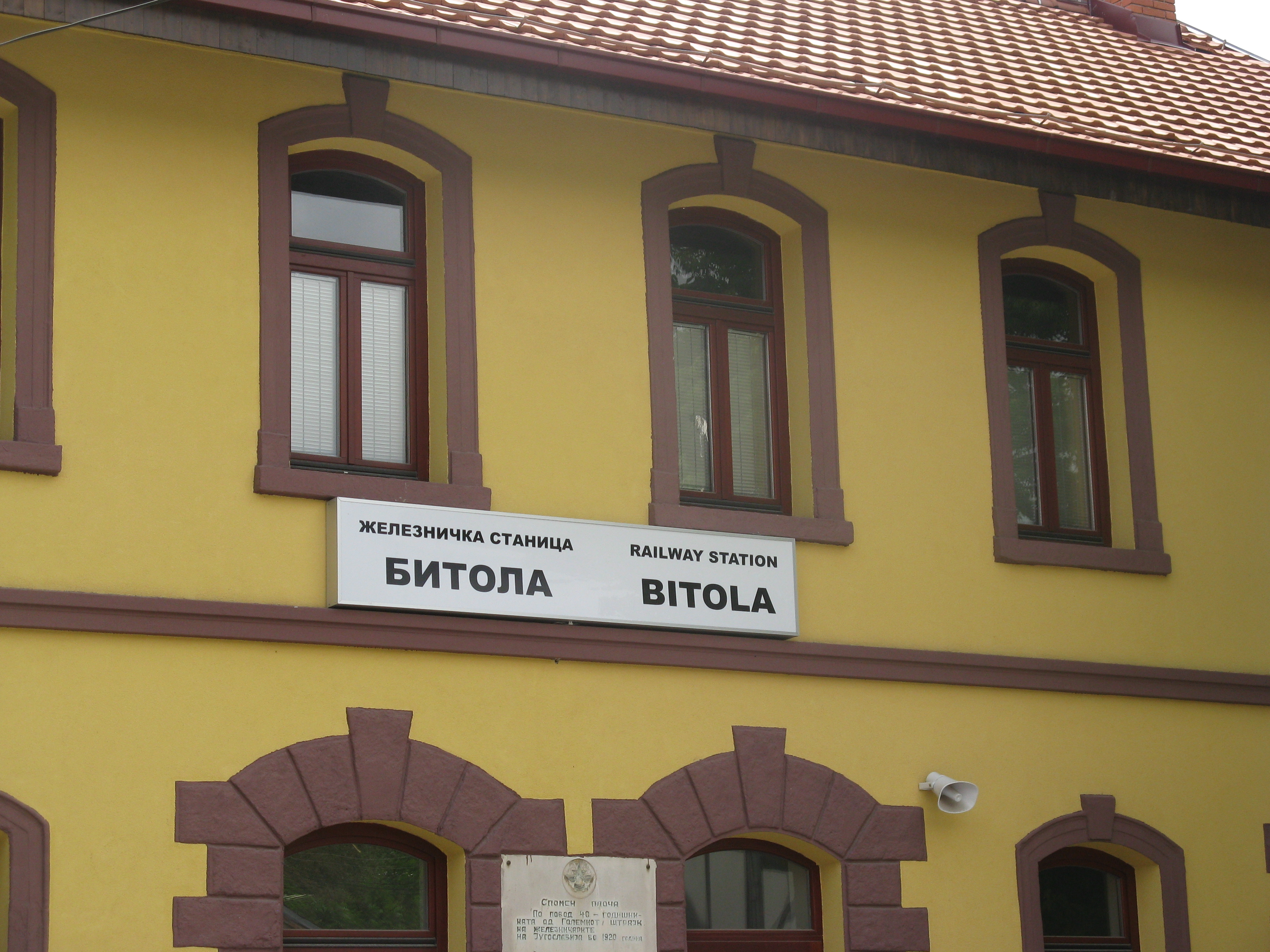
Bitola train station, which is one of the nicest train station that we visited. Bitola is Macedonia’s second largest city.
The main shopping and eating area in Bitola.

The clock tower is the pride of the people from Bitola. According to the legends, even though the existence of the Clock Tower was mentioned before in the 1664 (17th century), present Clock Tower was built in the 1830’s, in the same period when nearby, the Orthodox Church of St. Demetrious was built. The tower could not be greater than the highest minaret as this was part of the Ottoman empire.

This is another shopping street at the end of which you can see the minaret of the main mosque.
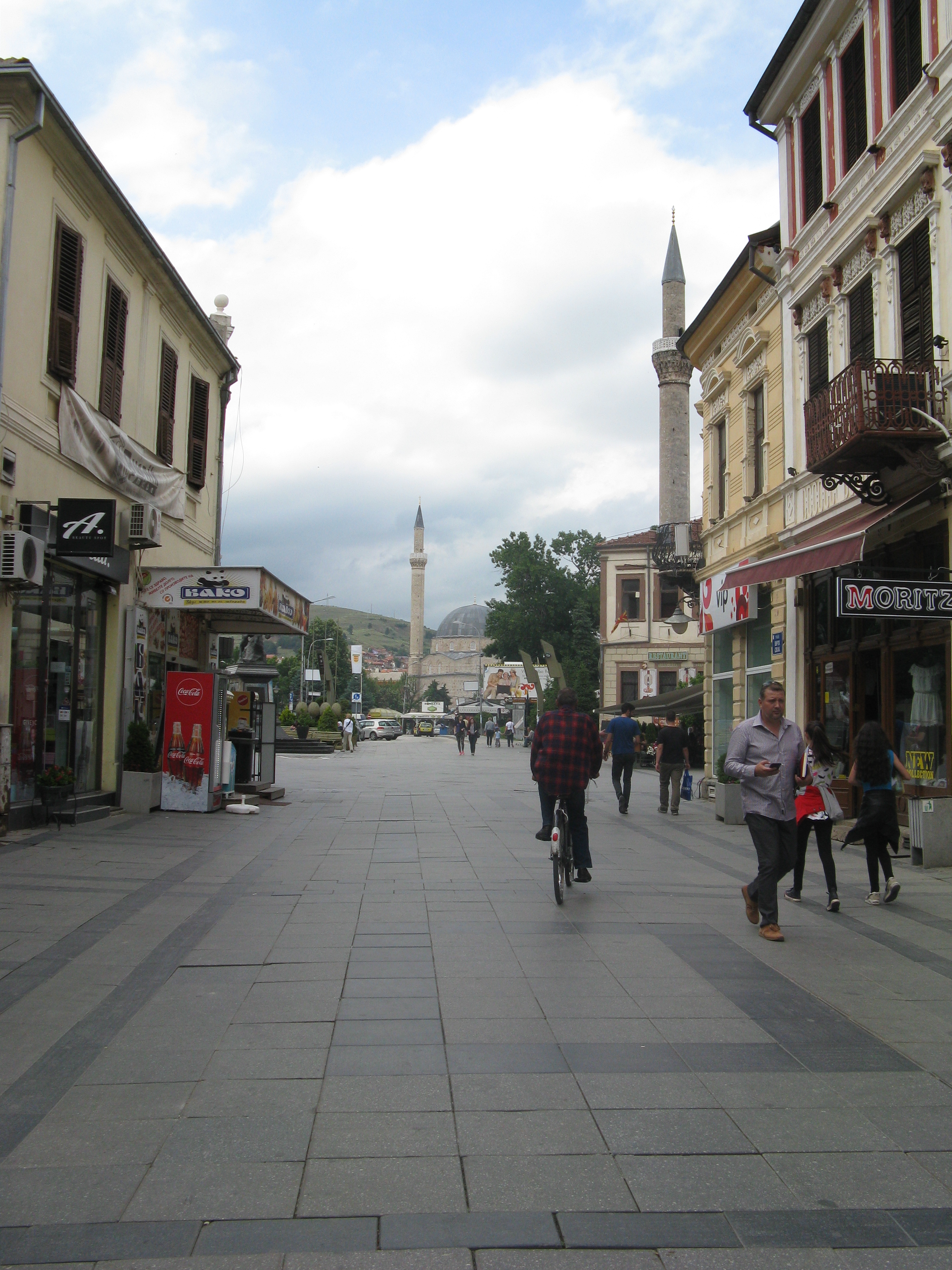
This shows the old and the new, small old buildings that are being dwarfed by modern buildings.

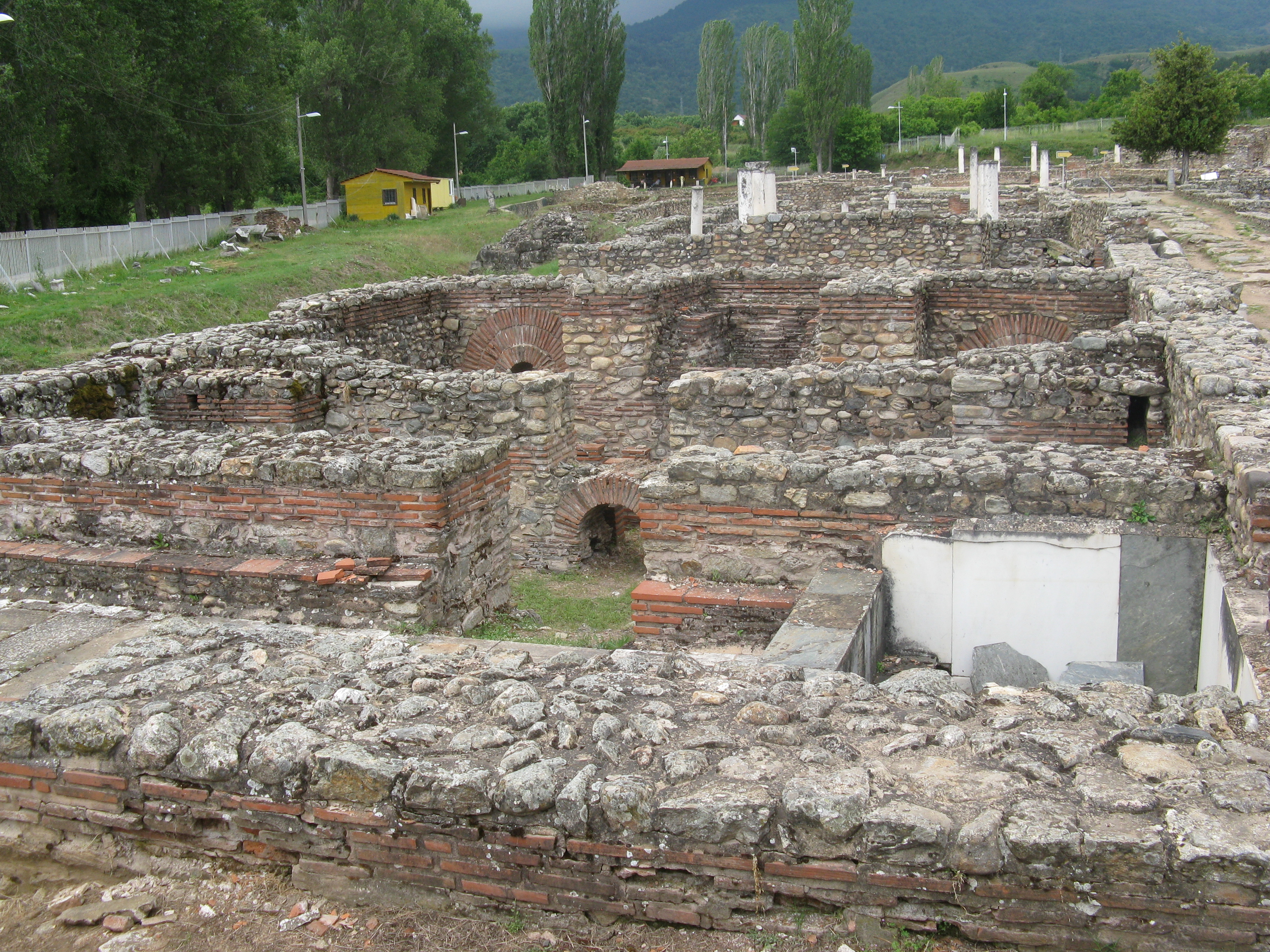
Heraclea Lyncestis was an ancient Greek city in Macedon, ruled later by the Romans. Its ruins are situated 2 km south of Bitola. It was founded by Philip II of Macedon in the middle of the 4th century BC. The city was named in honor of the mythological Greek hero Heracles. The name Lynkestis originates from the name of the ancient kingdom, conquered by Philip, where the city was built.

The remains of buildings that have been excavated so far.
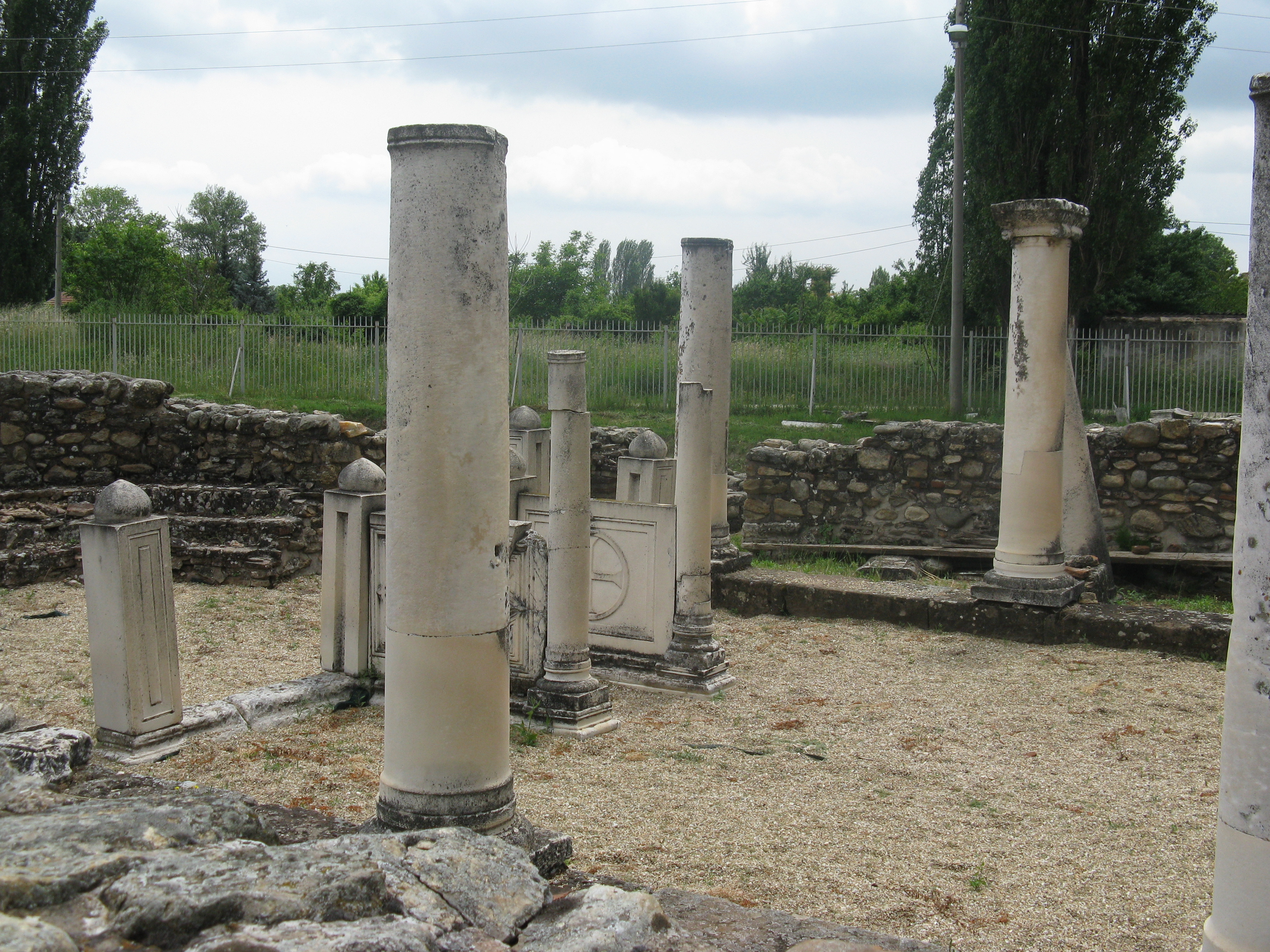
Original pillars that are still standing.
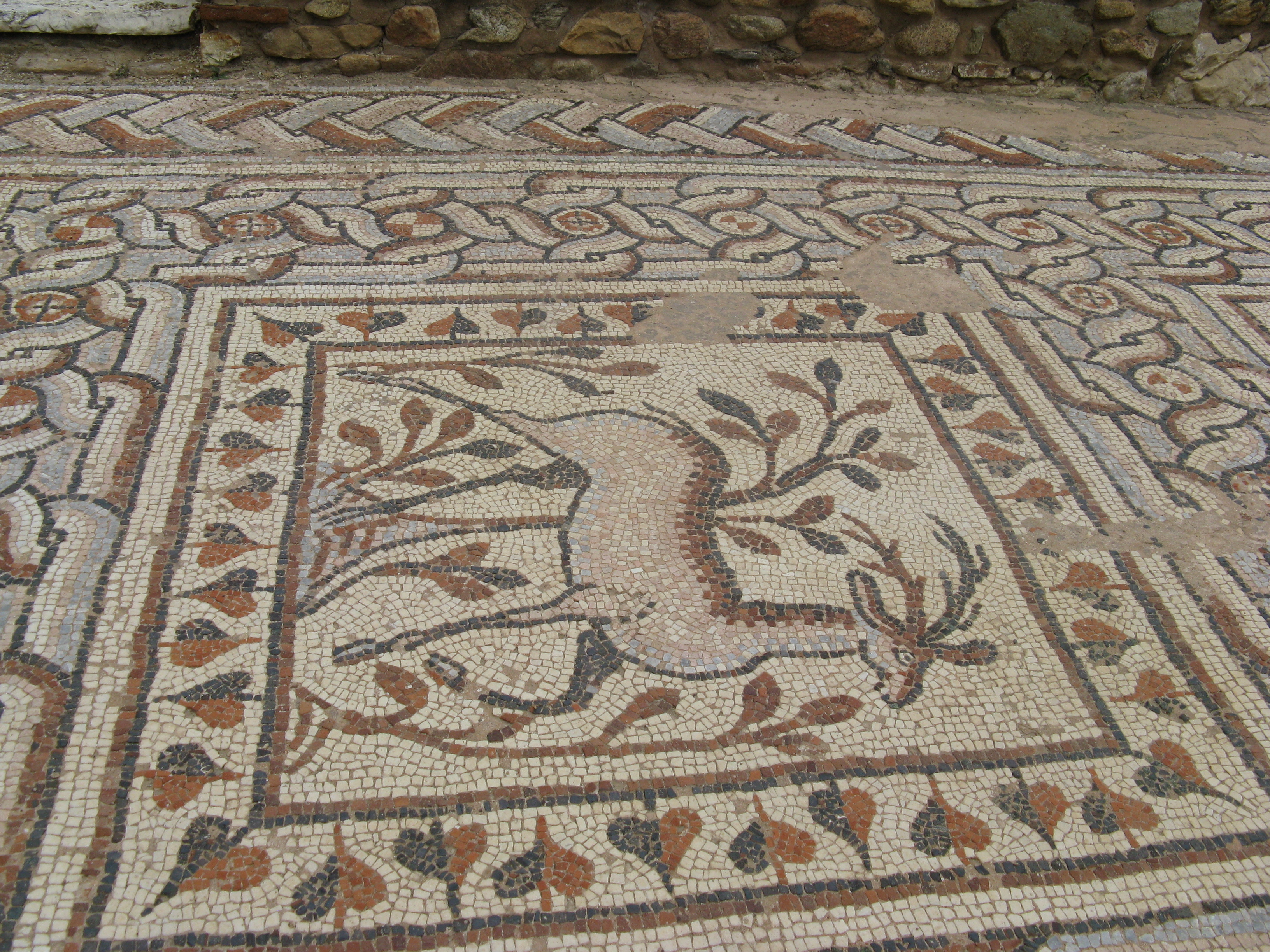
The mosaic floor is being slowly excavated.

This section of the Mosaic is pretty much complete. Each winter it is recovered with sand to protect it.
9 June 2017 – Journey to Ohrid with an Afternoon Boat ride on the Lake
We drove through the beautiful Galicica National Park to Ohrid. Popular for its wealth of attractive scenery including mountains, lakes and impressive caves, the national park is also very important to the area’s agriculture industry.
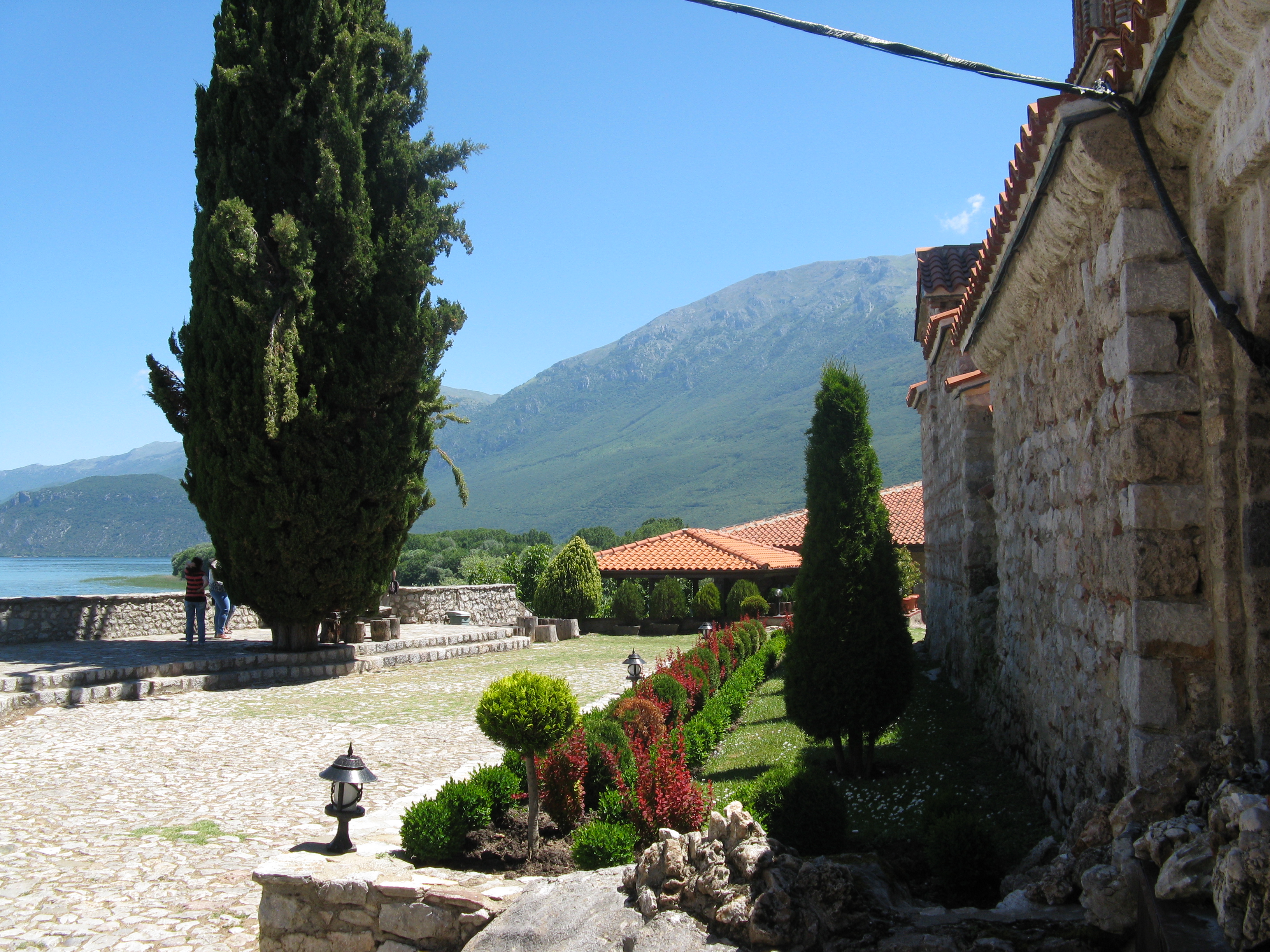
Before arriving in Ohrid we will visited the Saint Naum Monastery, which is one of the most photographed places in the country, with its red tiled roof set at the water’s edge on the banks of Lake Ohrid; one of Europe’s oldest and deepest lakes. Late in the afternoon we arrived into the 3000 year old town of Ohrid this historic settlement, which has an almost Mediterranean feel to it and is nestled into a bay on the lake. We took a trip out onto the lake by boat, so we could see the town from a different perspective.
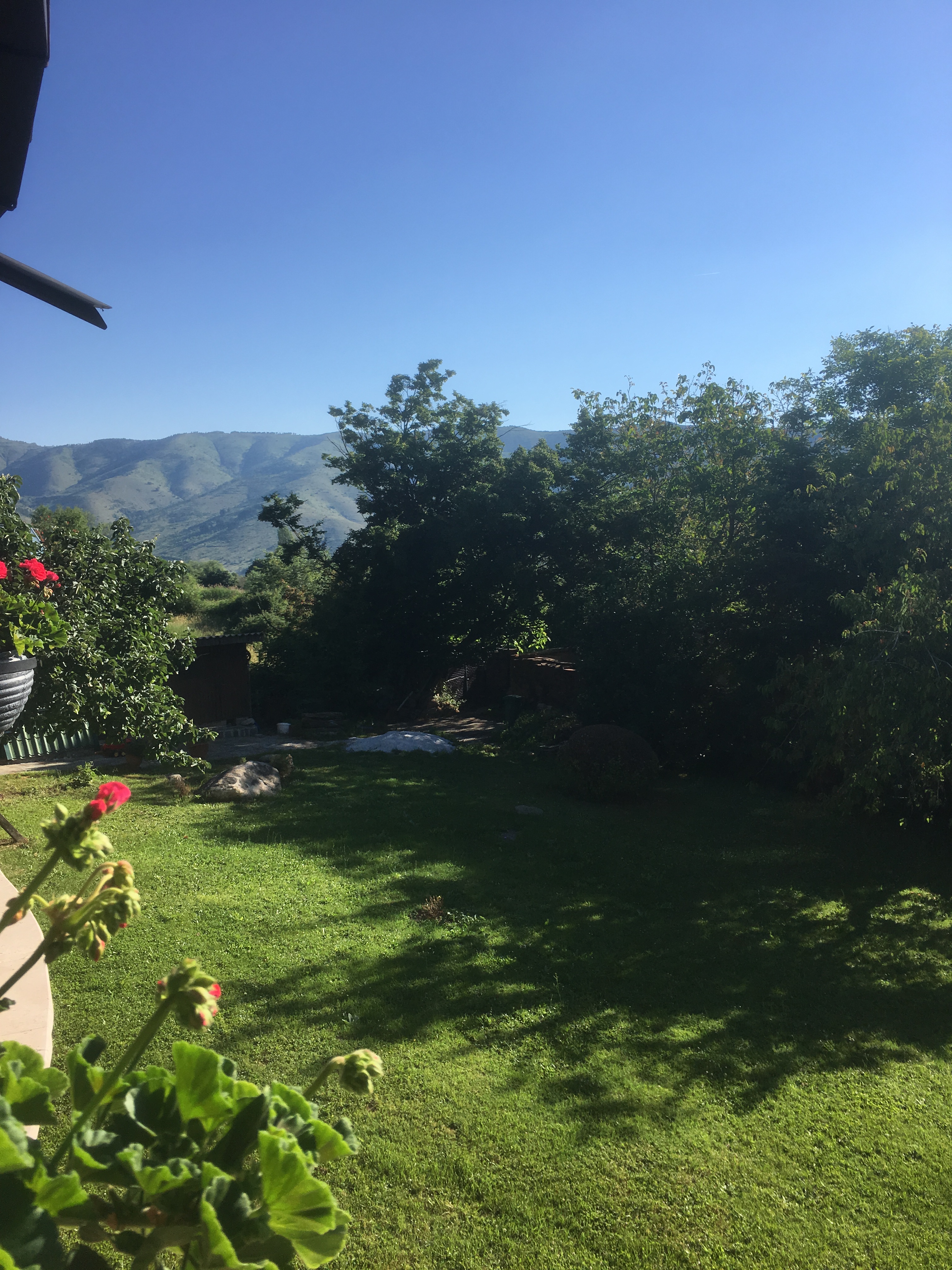
A view from our hotel room. The hotel is situated on the edge of the national park and is only a few miles from Bitola.
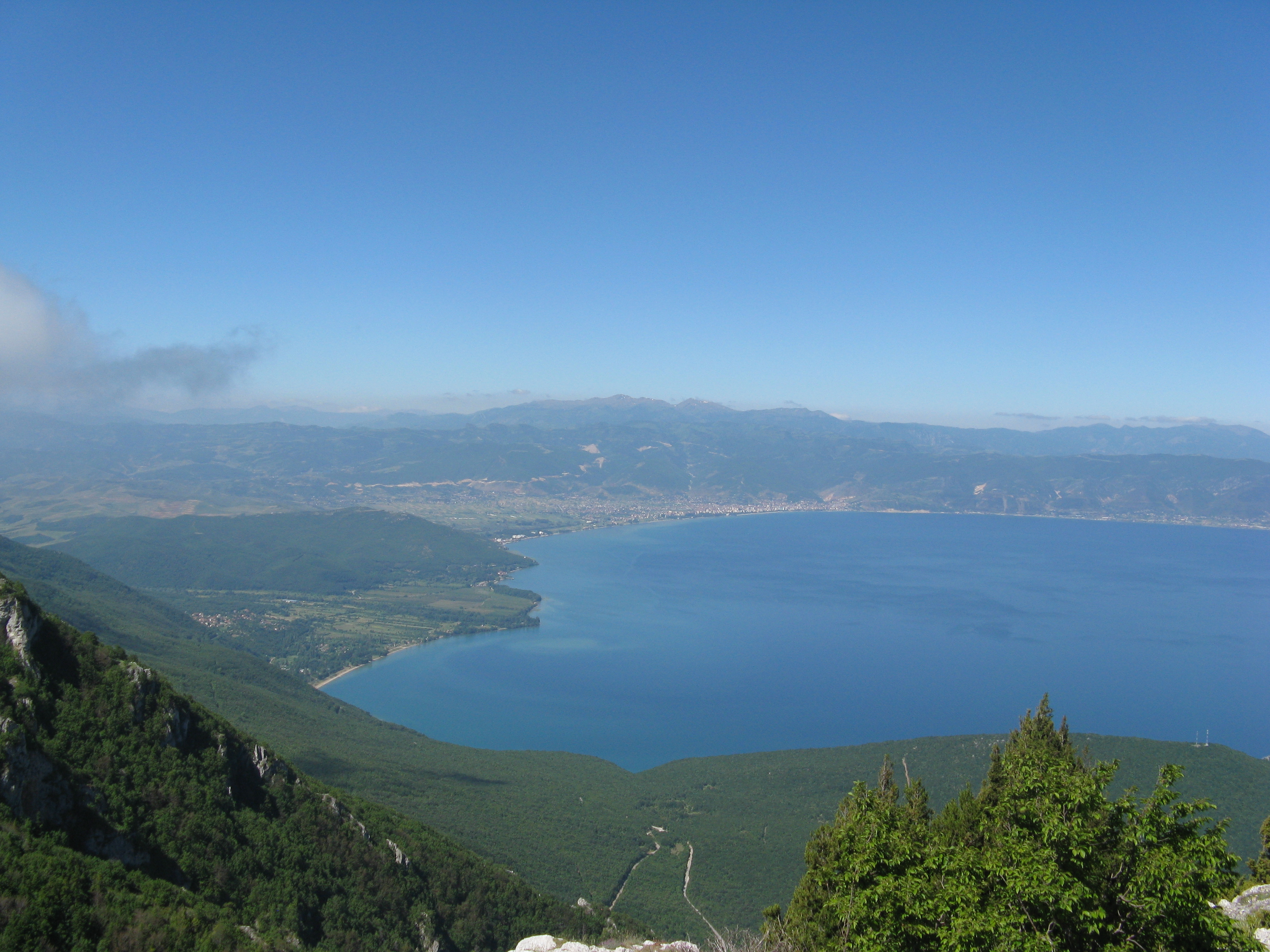
A view of lake Ohrid from the mountains.
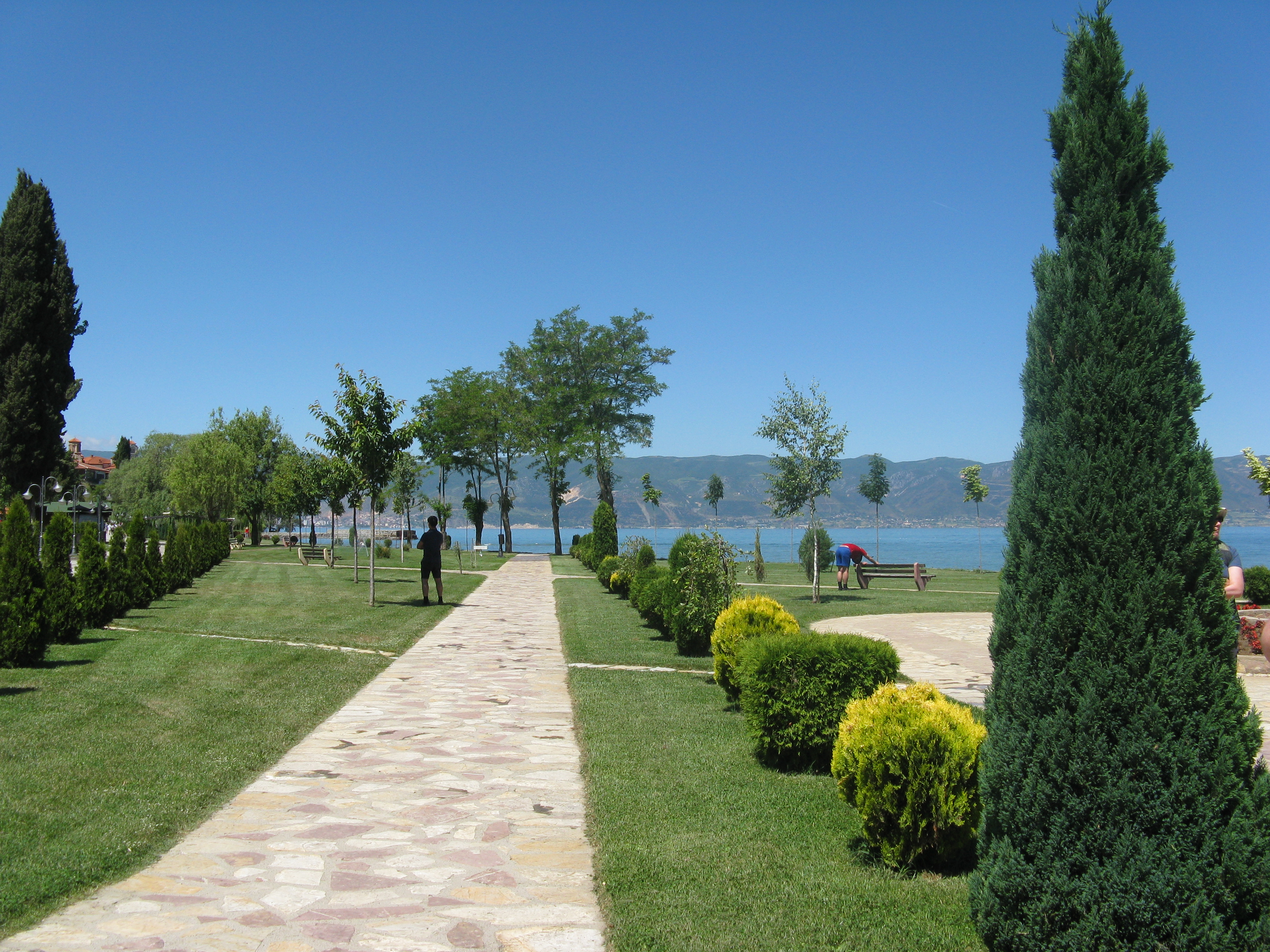
The beautiful gardens of the Saint Naum Monastery.
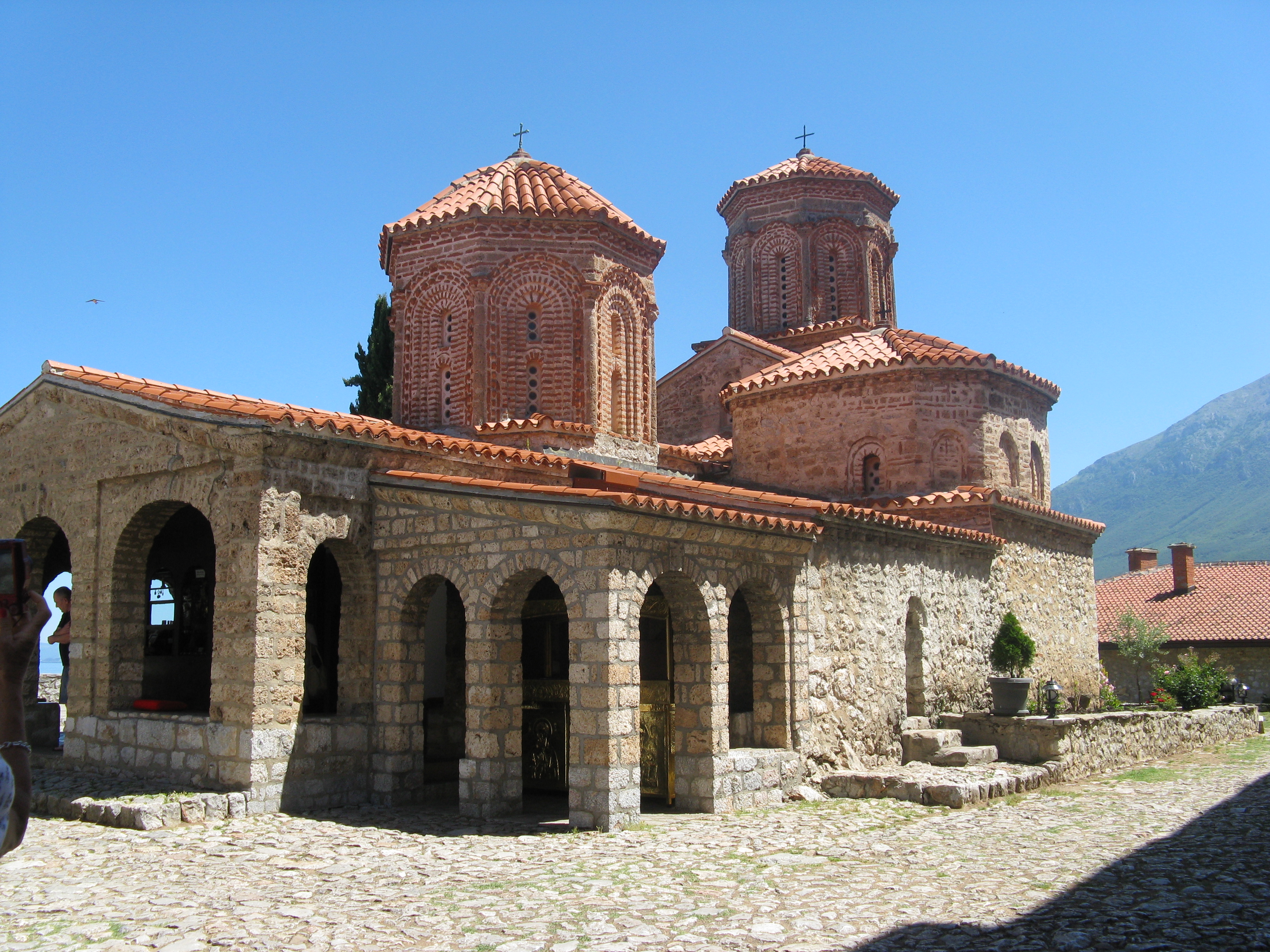
The chapel at the monastery.
The gardens close to the church.
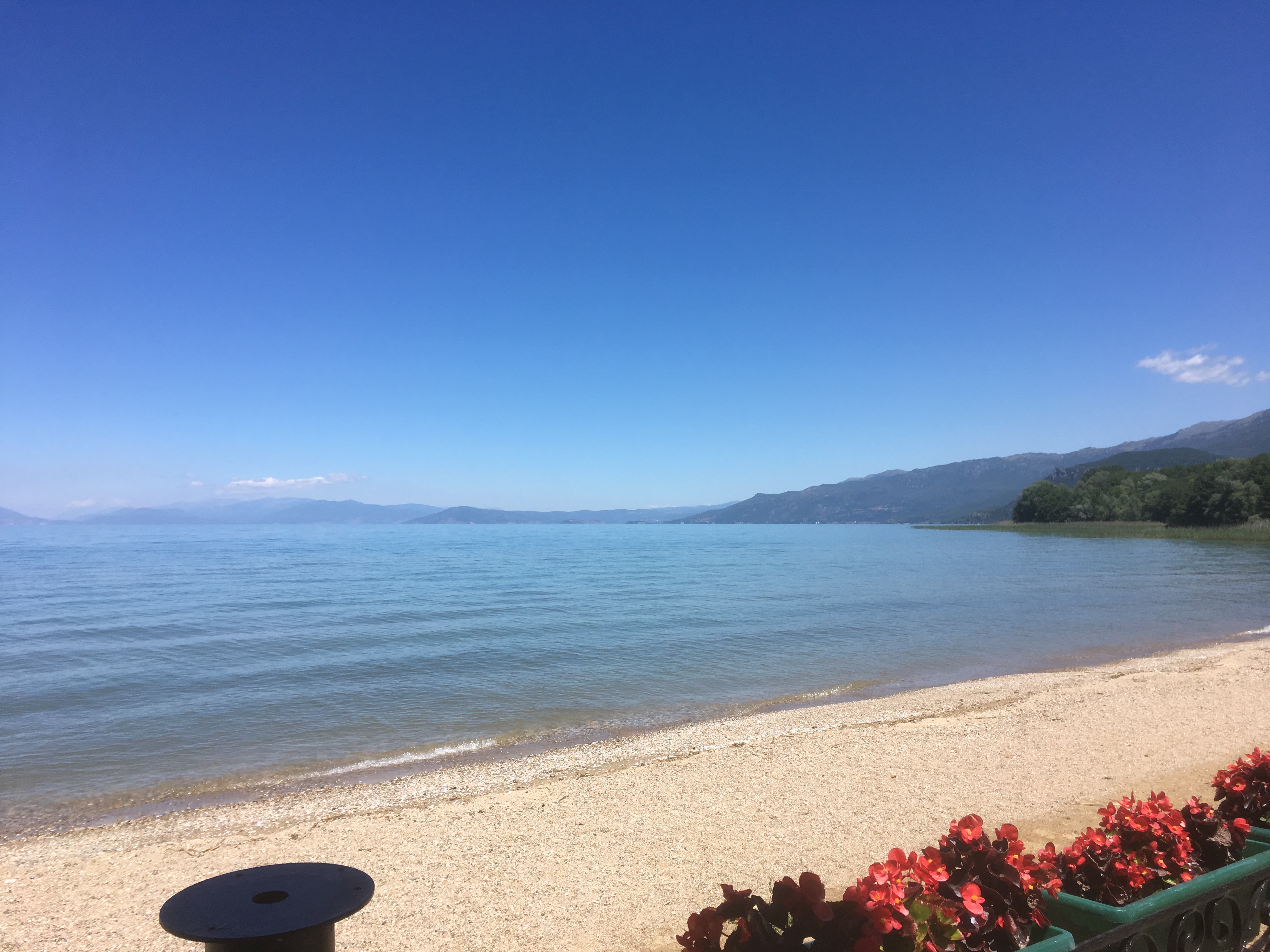
This was our lunch stop at Saint Naum Monastery. If there was chairs and parasols it would be just like a beach on a remote Greek Island.
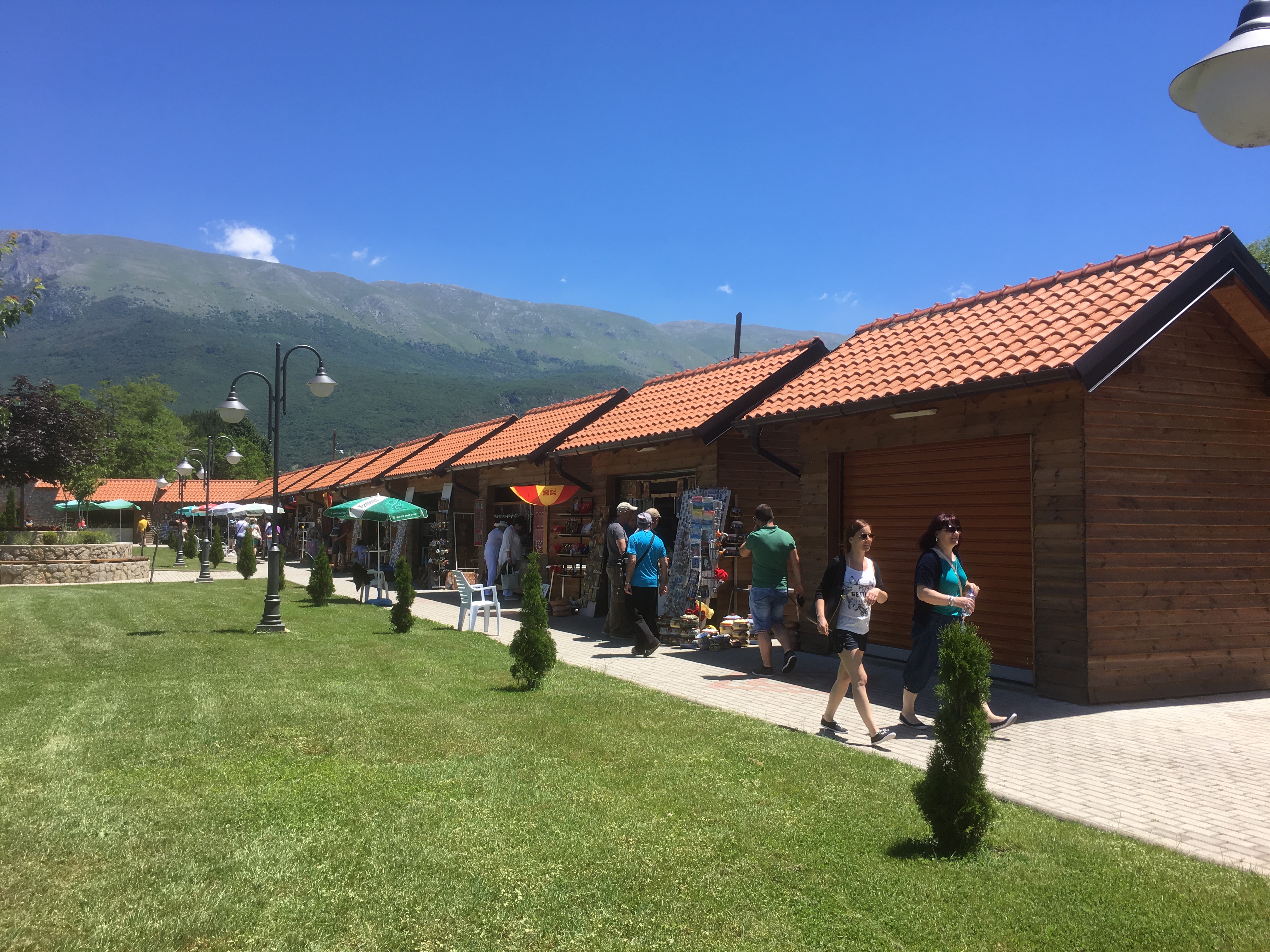
Just some small shops selling tourist goods at the entrance to the Monastery.
This was our hotel at Ohrid, which was just across the road from the lake.

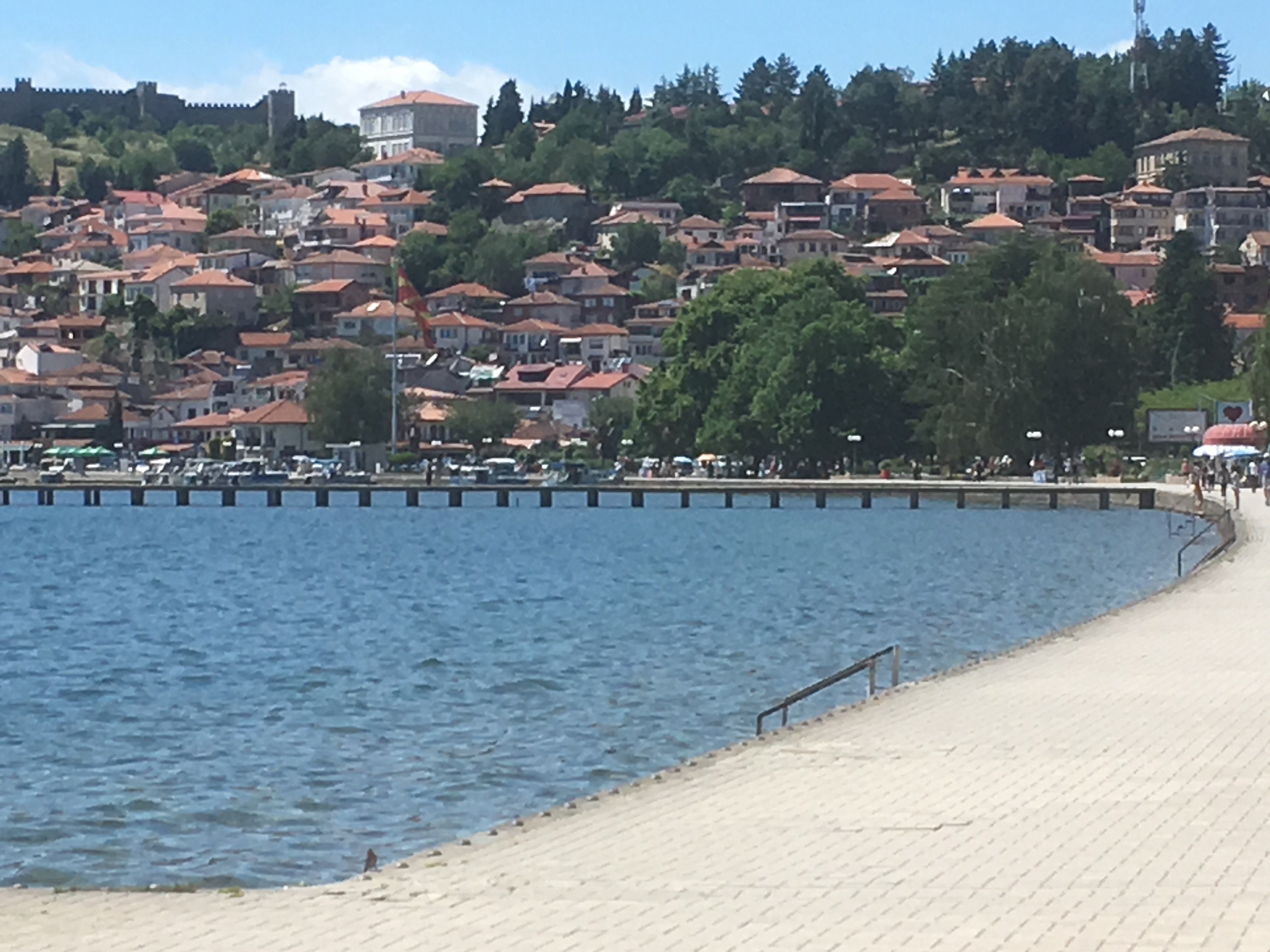
A view along the lake to the town of Ohrid.
A view of the mountains taken looking away from the town.

After a hard day, enjoying a cold Macedonian beer.

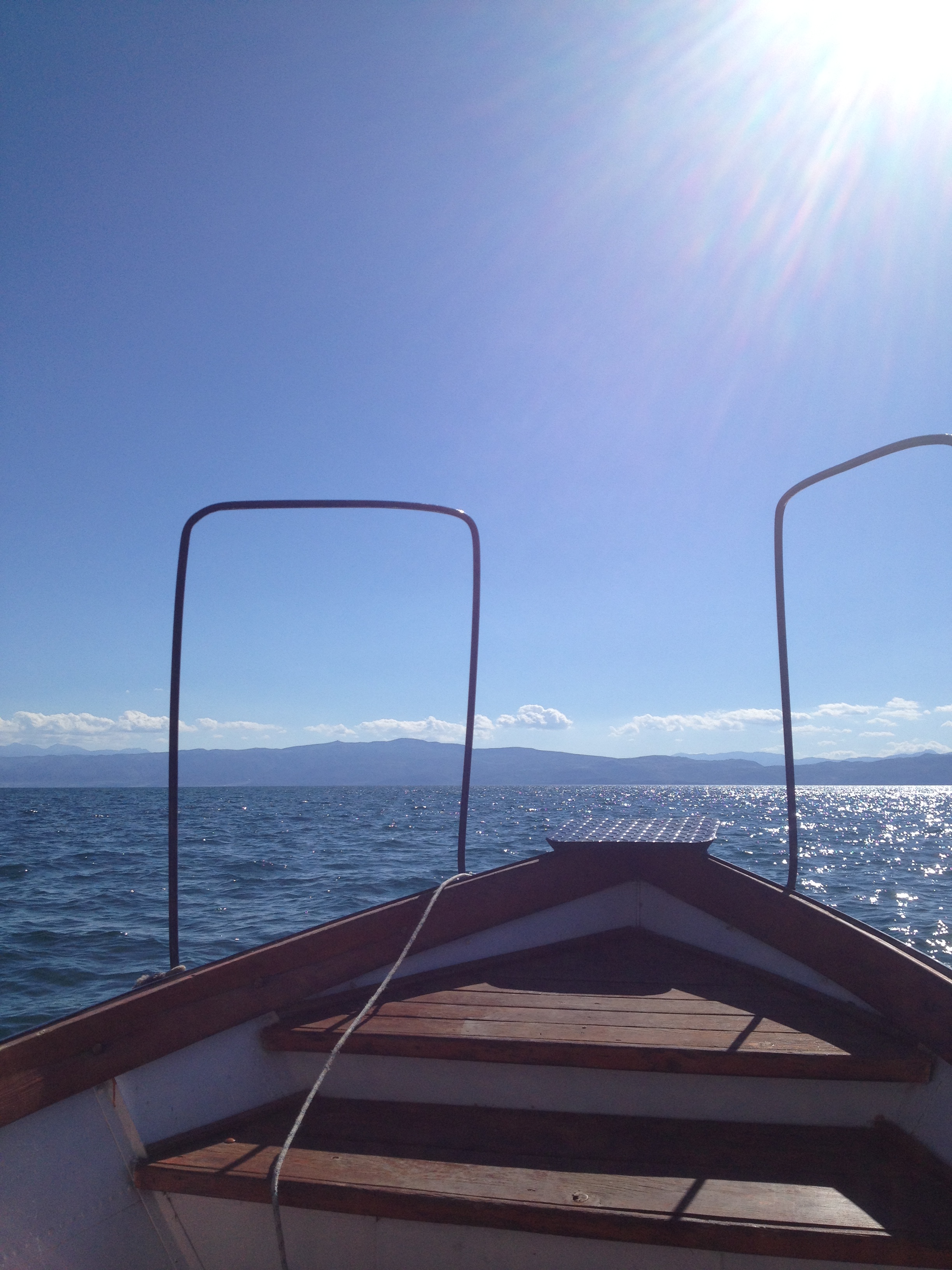
A view from the boat as we head out on a trip on the lake. The coastline in front belongs to Albania.
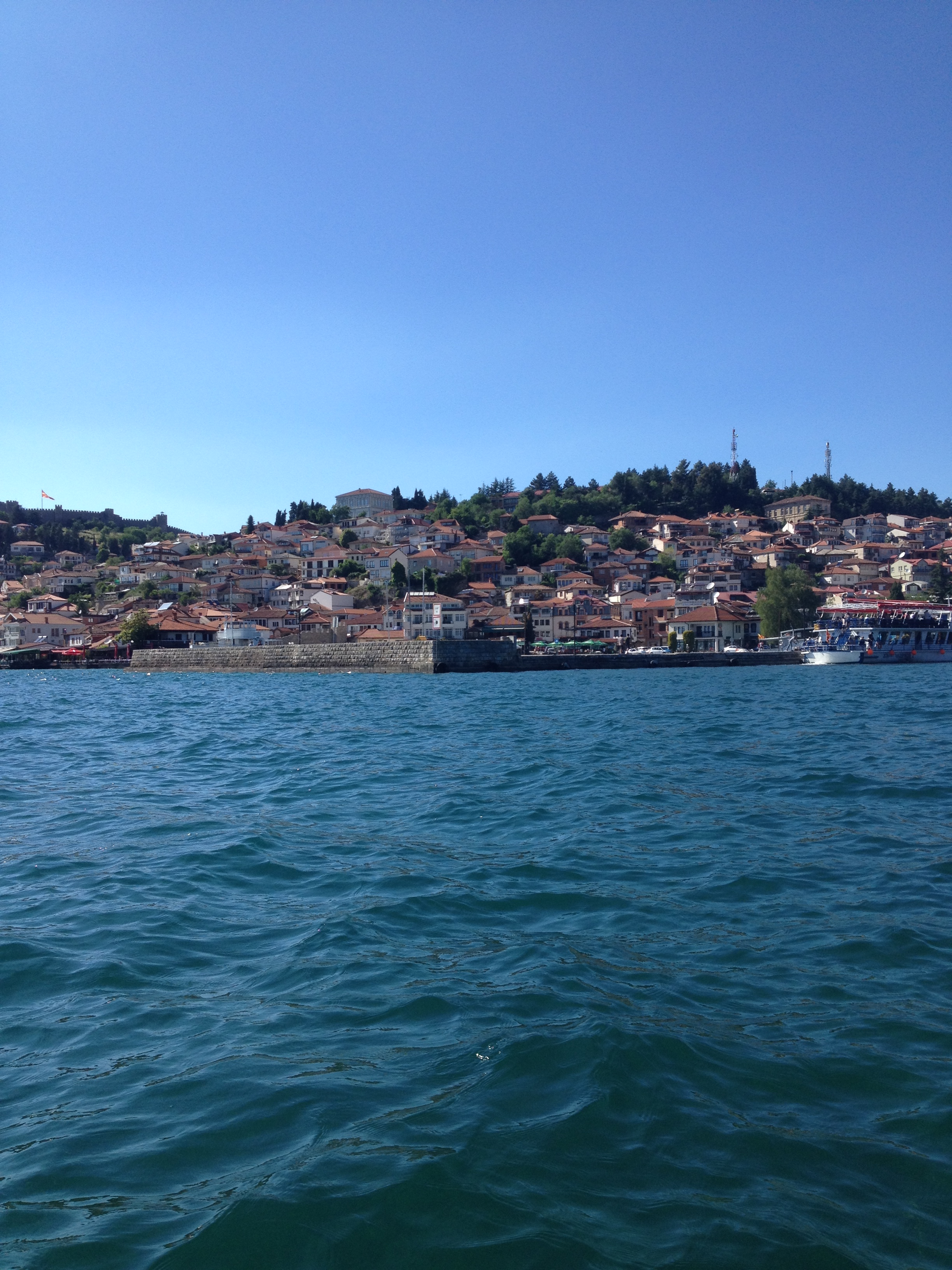
A view of the town taken from the lake.
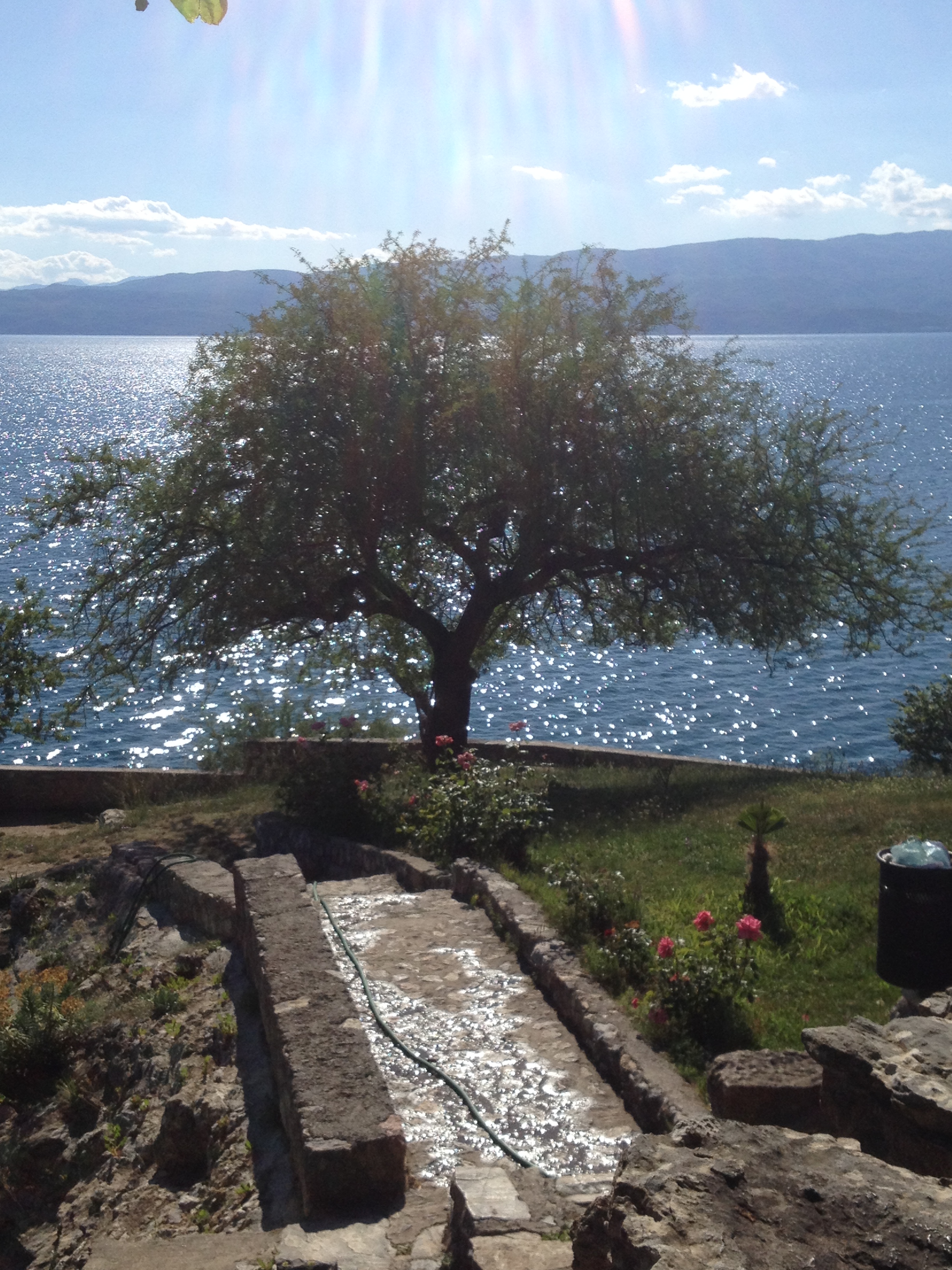
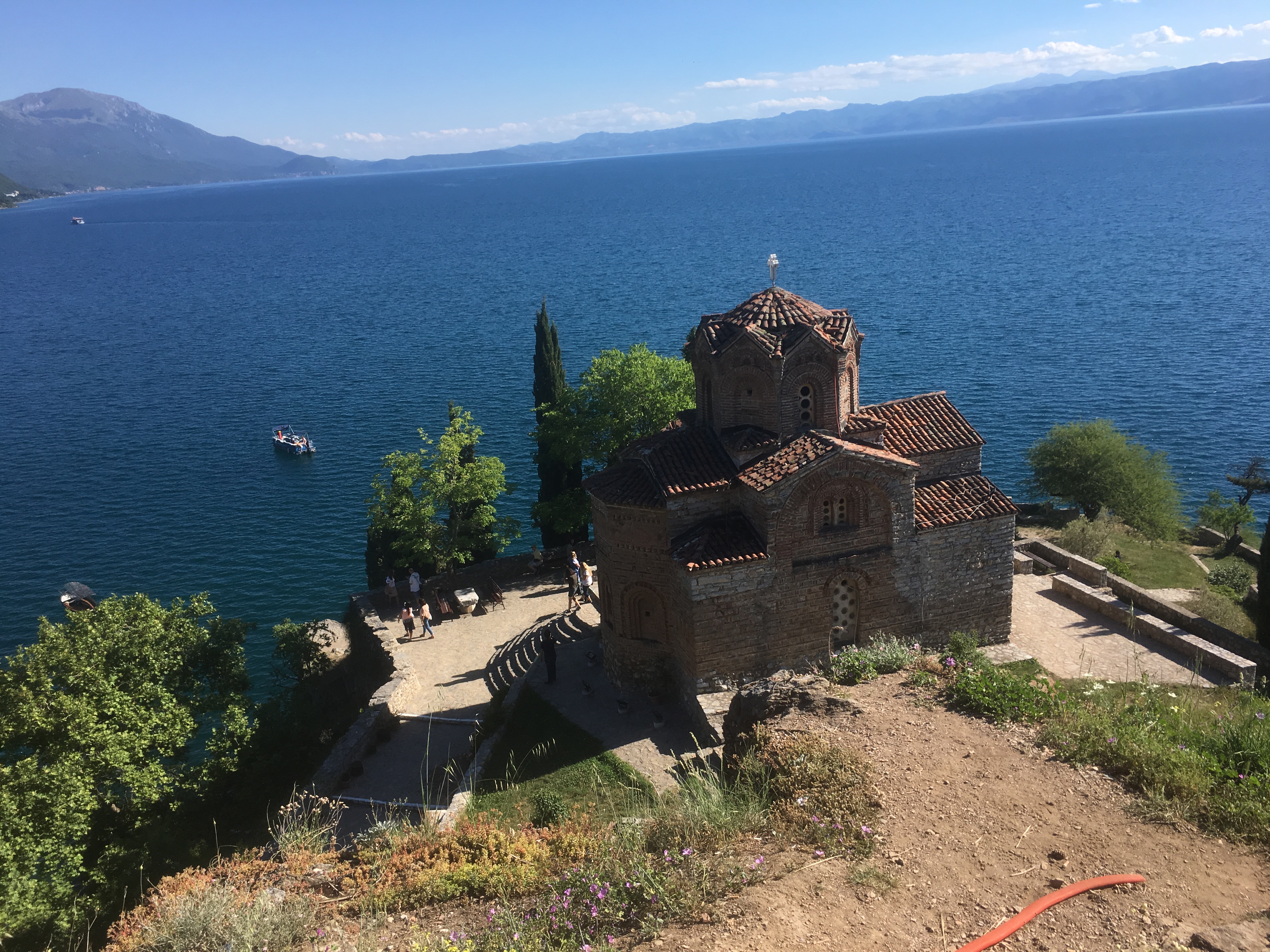
The steps lead up to the church, Saint John the Theologian.
Saint John the Theologian, Kaneo or simply Saint John at Kaneo is a Macedonian Orthodox church situated on the cliff over Kaneo Beach overlooking Lake Ohrid. The church is dedicated to John of Patmos, the writer of Revelation, who has been by some considered to be the same person as John the Apostle. The construction date of the church remains unknown but documents detailing the church property suggest that it was built before the year 1447. Archaeologists believe that the church was constructed some time before the rise of the Ottoman Empire very likely in the 13th century. Restoration work in 1964 led to the discovery of frescoes in its dome.
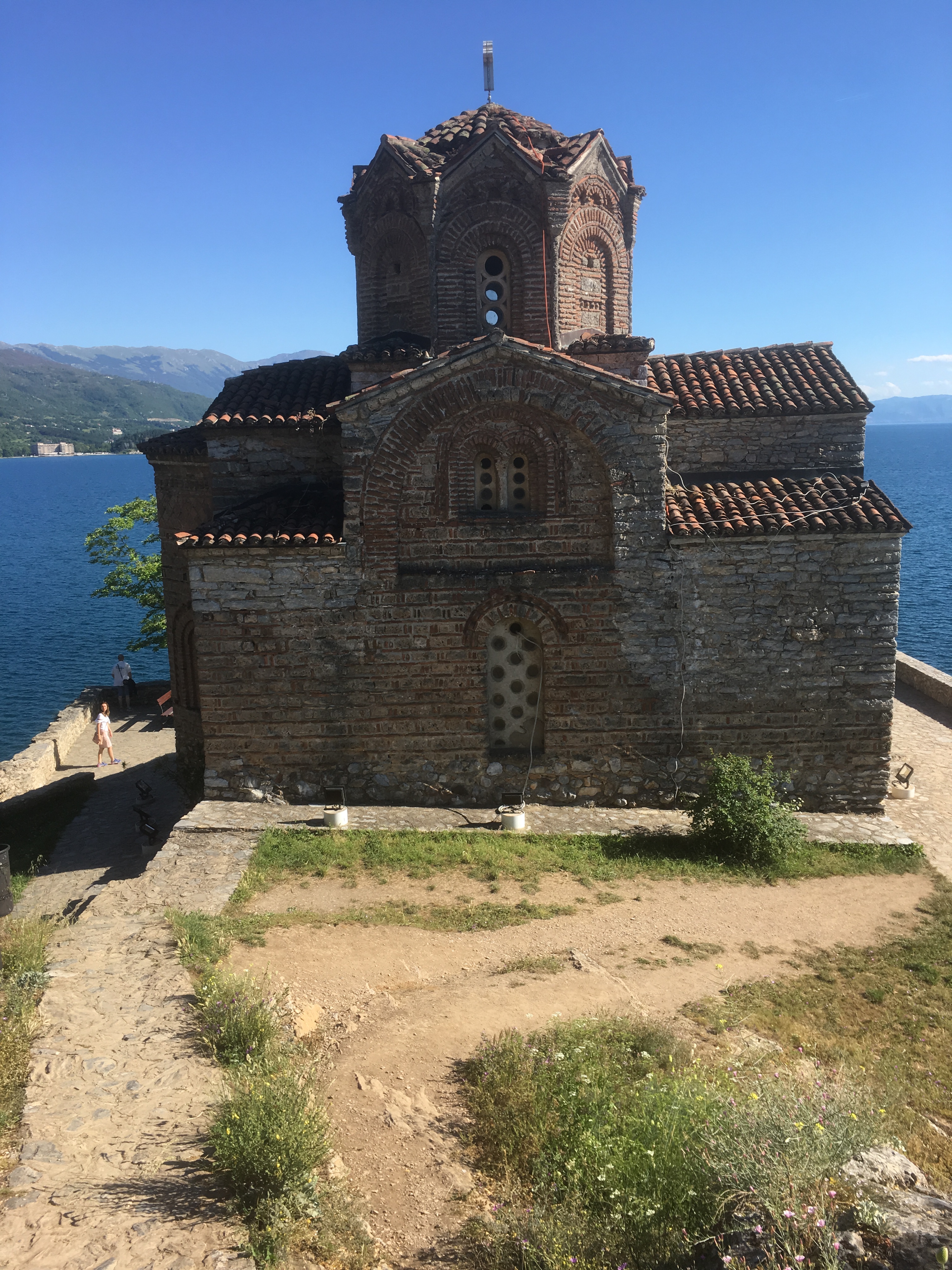
The church from the hill above.
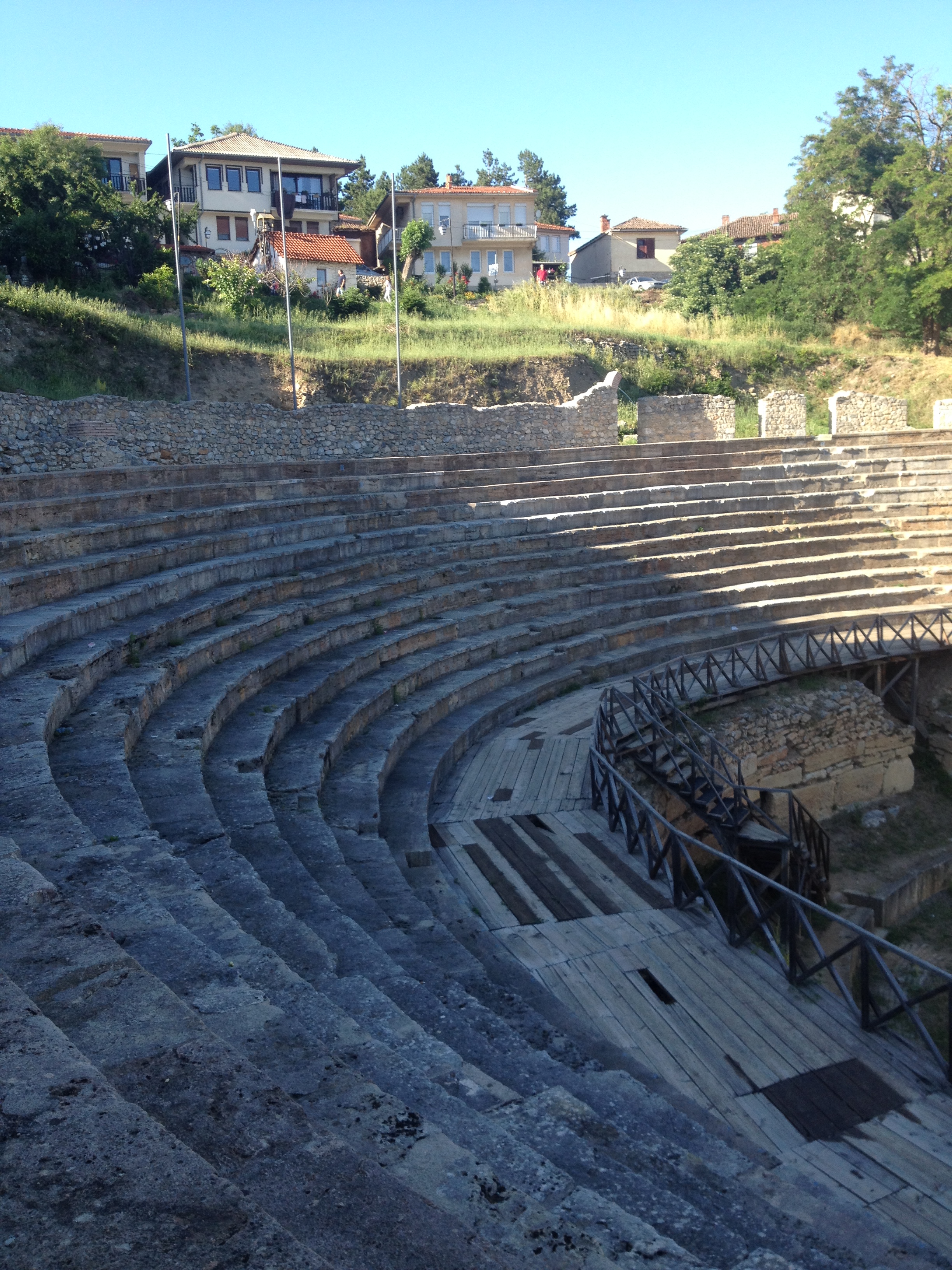
This is the old Amphitheatre in the centre of Ohrid which hosts an international music festival each year.
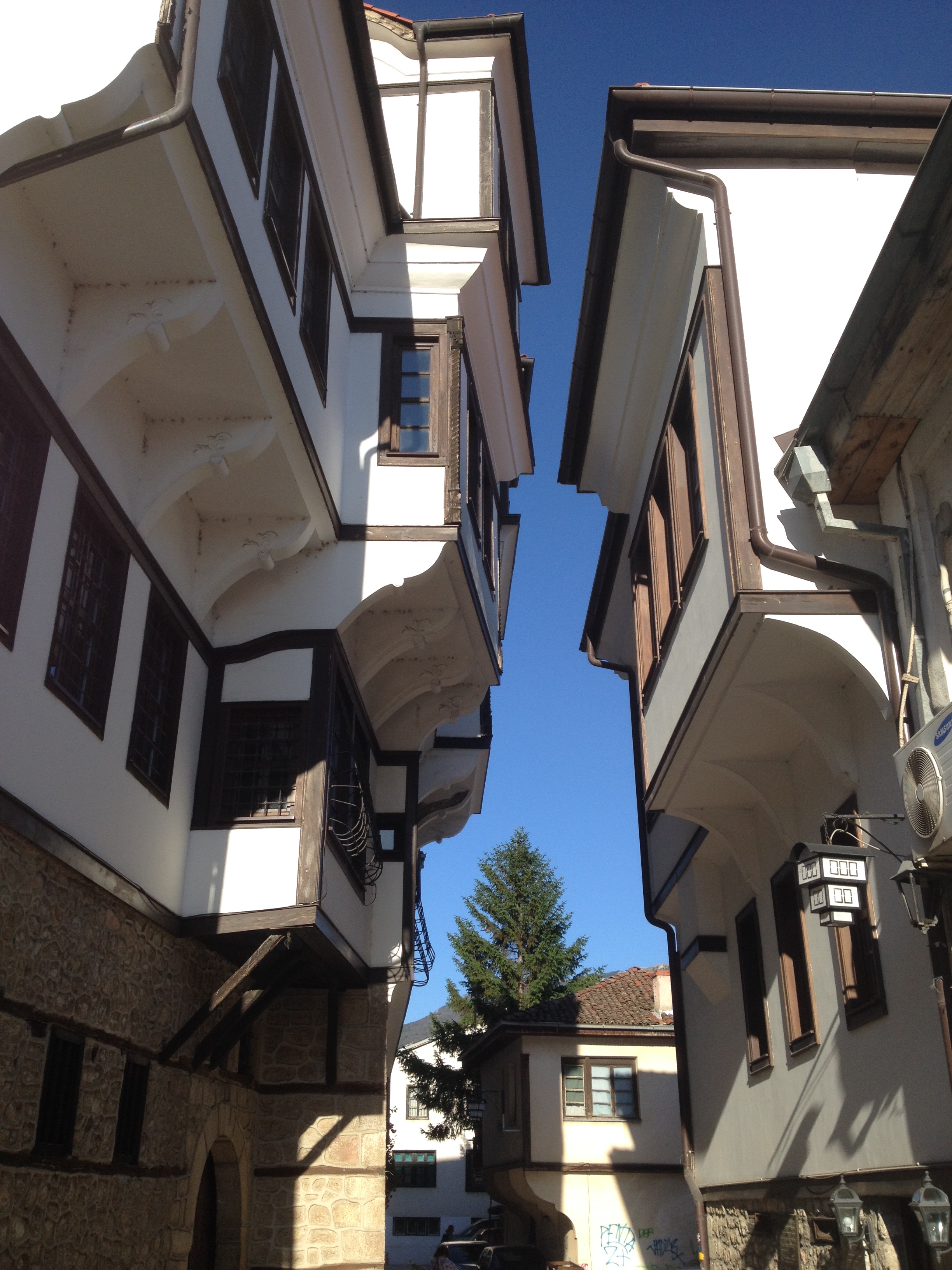
The old houses are in the old quarter of the town. The houses were expanded as the owners became richer. the taller your house the more money you had.
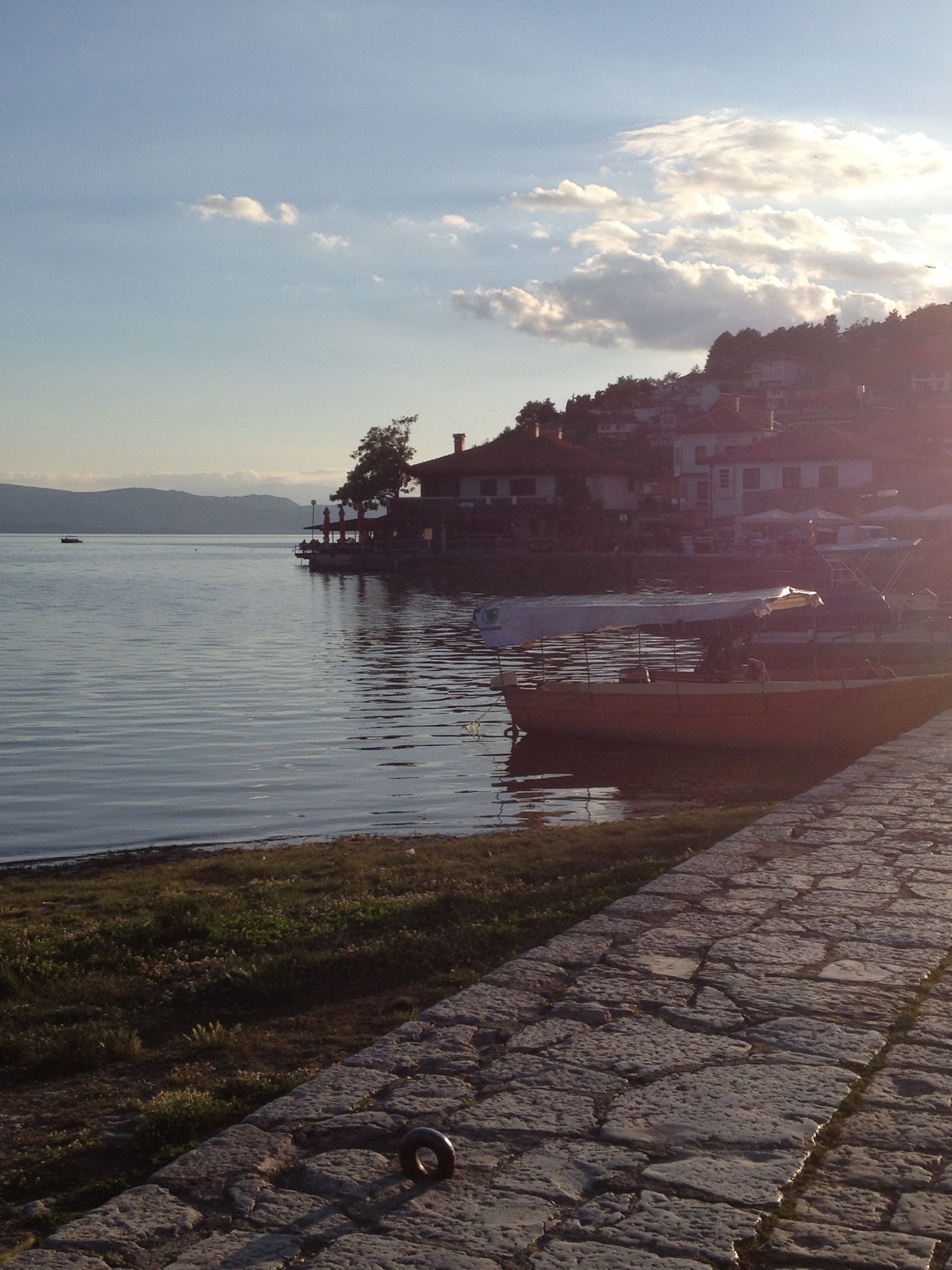
The sun starting to go down on Lake Ohrid.
10 June 2017 – Visit to Mavrovo National Park en route to Pristina, Kosovo
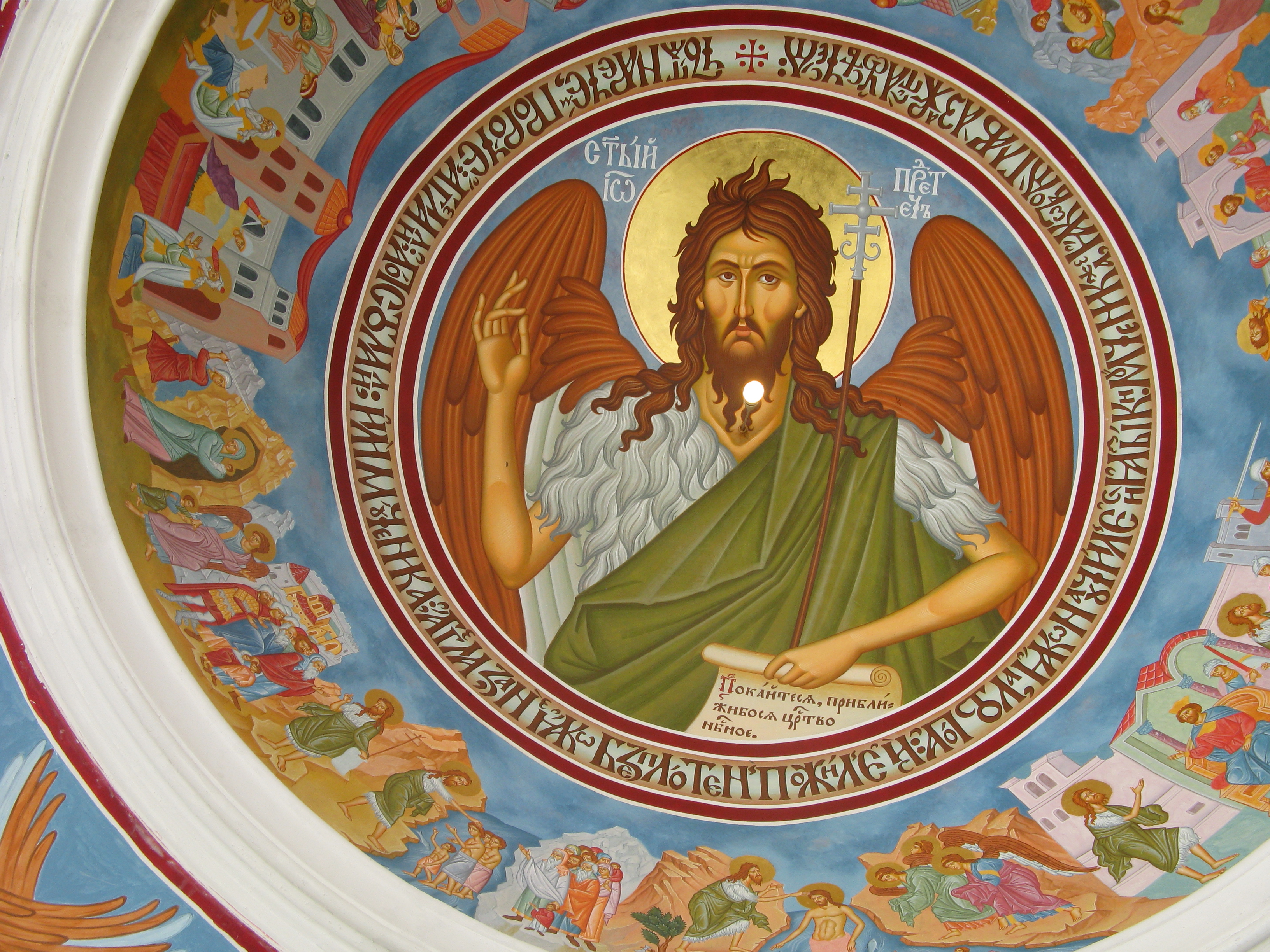
This morning we made the journey to Kosovo’s capital, Pristina. We visited Saint Jovan Bigorski Monastery, dedicated to Saint John the Baptist and built almost 1000 years ago. We also stopped in the Mavrovo National Park which is home to a wealth of pine forests, field covered plains, waterfalls and also Macedonia’s highest mountain, Mount Korab, standing at 2,764 metres high. After crossing the border into Kosovo we drove the final section to the capital city Pristina. Kosovo is still almost untouched by tourism. Unfortunately we limited our time because of a number of political demonstrations which we avoided. The main highlights are
Mother Teresa Square Bill Clinton Boulevard. Bill Clinton square
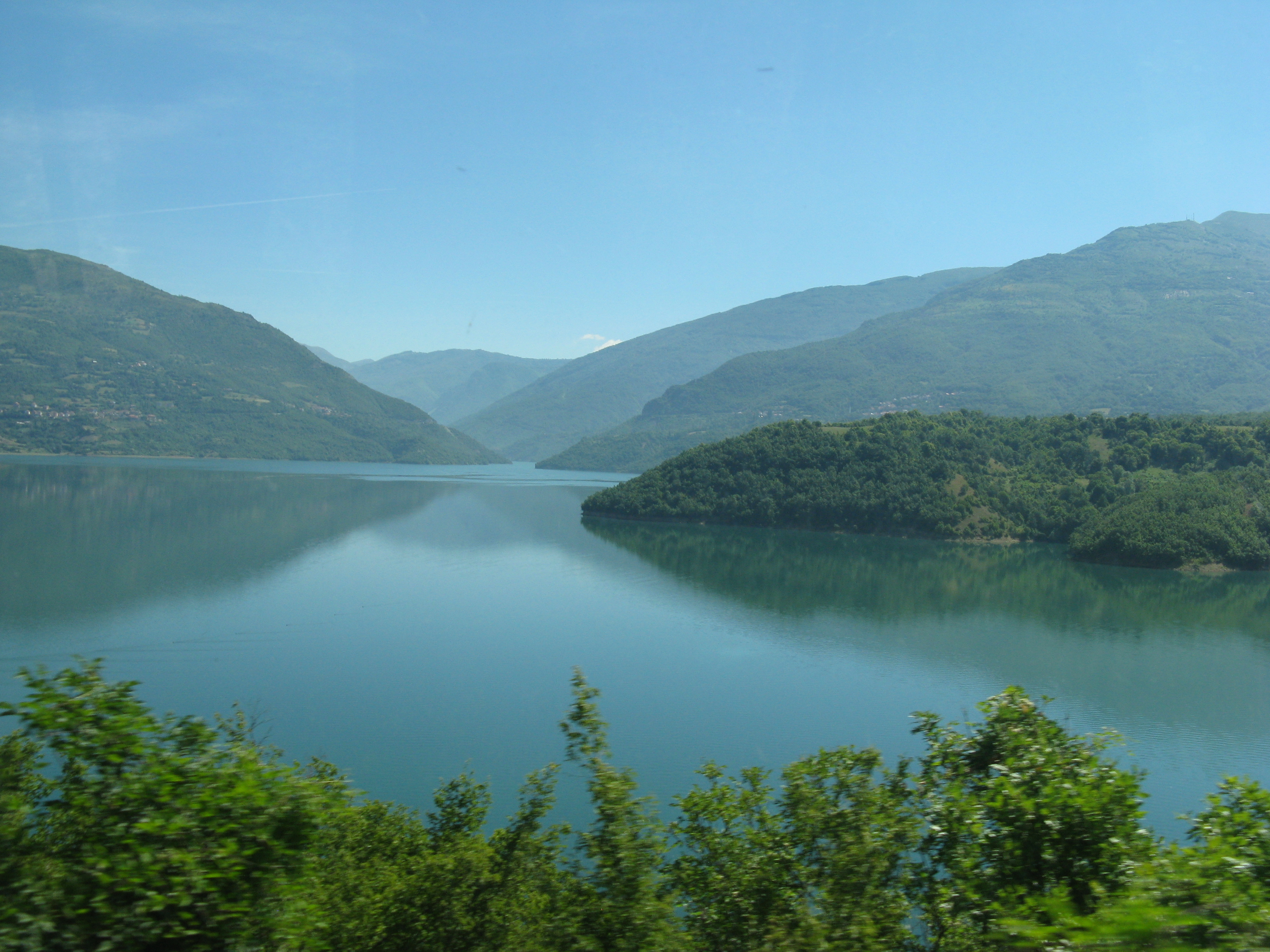
Man made lakes which fuel a hydroelectric plant.

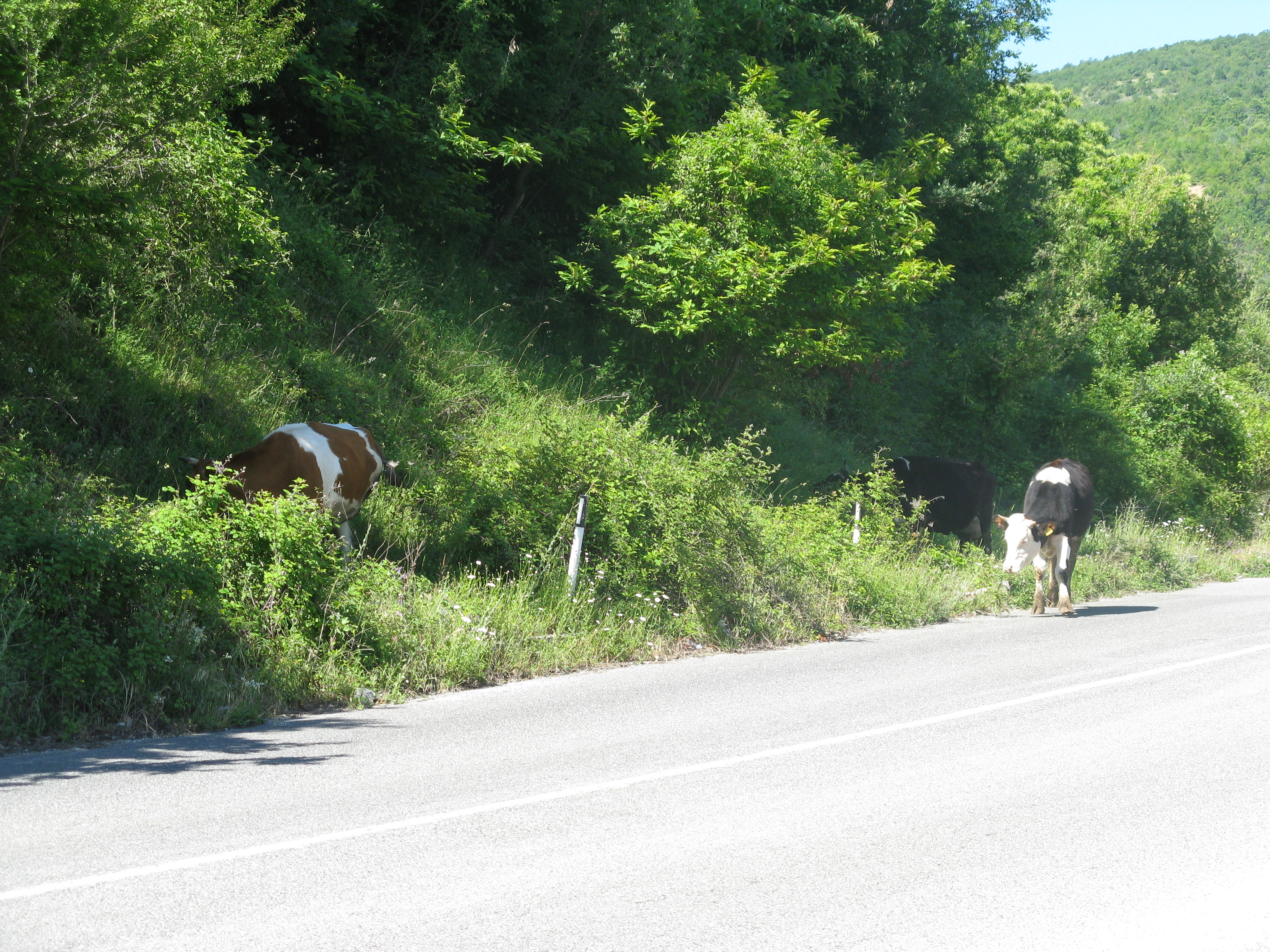
Cows taking themselves for a walk on a mountain road.
A beautiful picture of a lake on the way to the border.
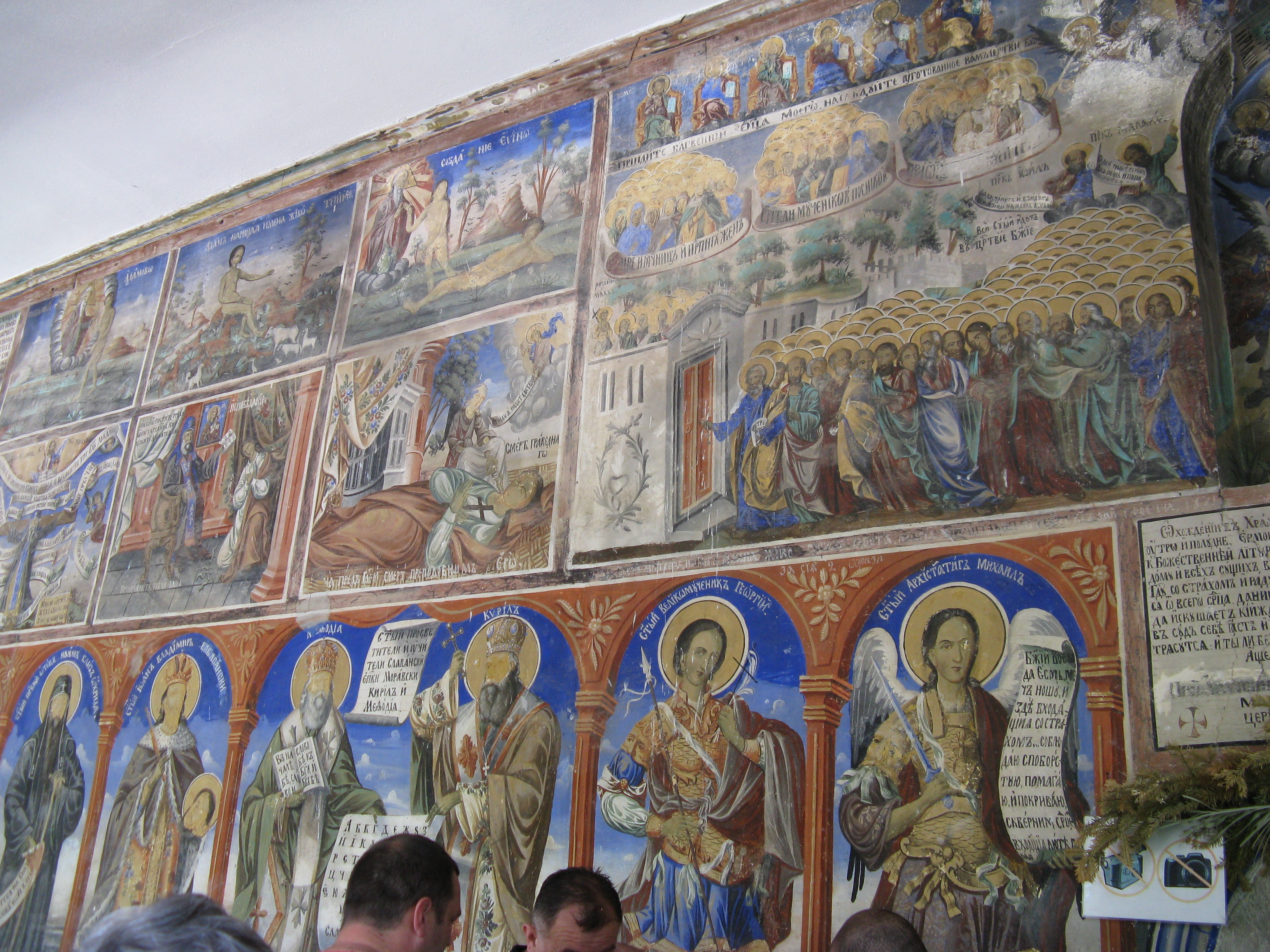
The outside of the church at Saint Jovan Bigorski Monastery. These pictures were done because people couldn’t read and didn’t want to enter the church.
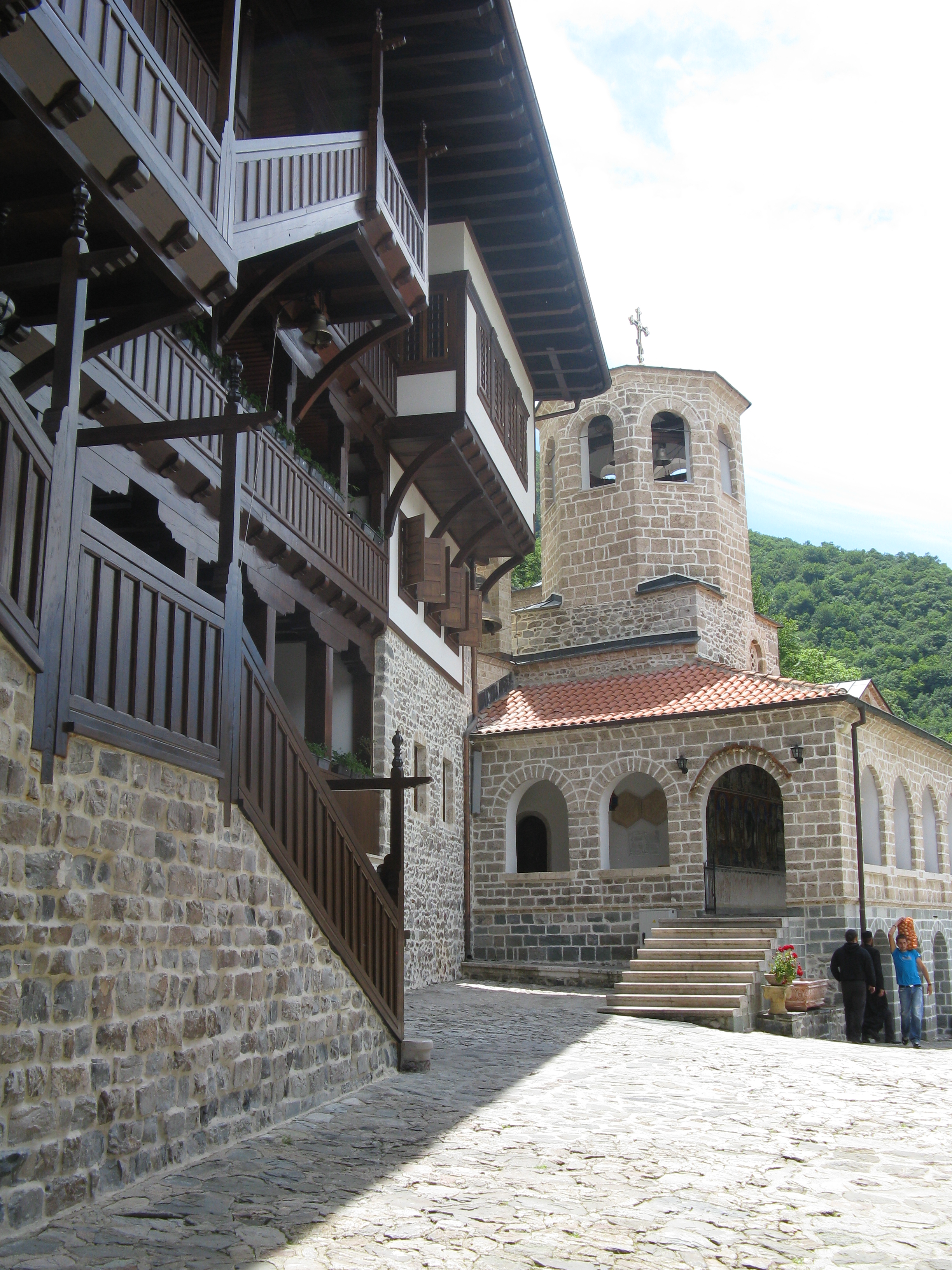
Outside of the church.
Fresco inside an arch at the entrance to the monastery.
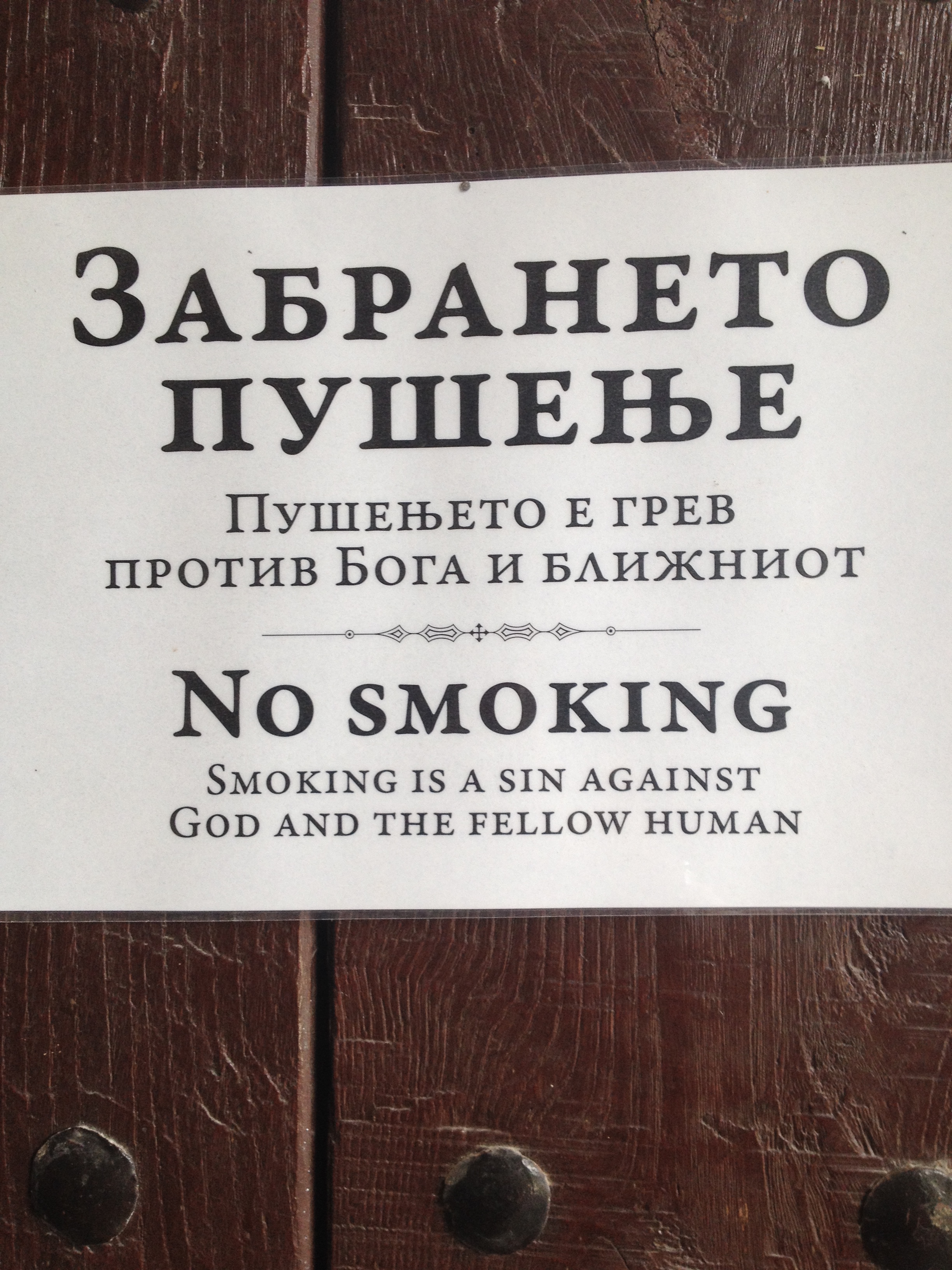
Quite apt in the modern day. Obviously people in the Balkans don’t take this seriously as smoking is the National sport in which most Adults take part regularly.
11 June 2017 – Trip ends in Pristina
Our trip ended in Pristina where we caught a 6:20 flight home via Frankfurt.
The time was short in Pristina and we hope to visit again sometime and see the bits that we missed.
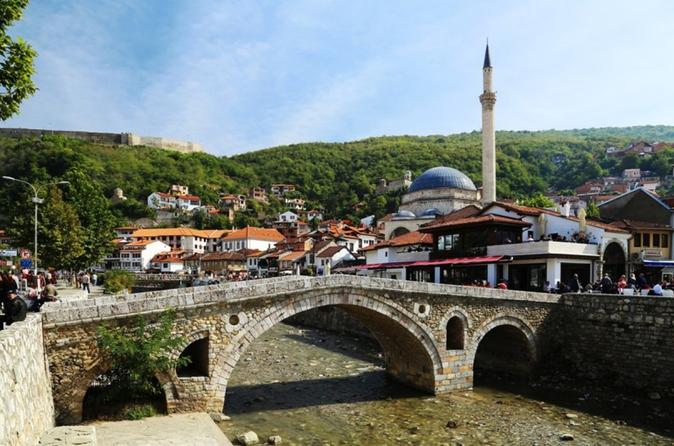
A picture of the old town in Prisitina. Unfortunately because of time we didn’t see as much of Pristina as we would have liked. We will put this on the ‘To be visited again list’.
 Heather and Keith's travels