This trip was in memory of Keith’s sister Heather who passed away at the age of 58 in August 2020. This was her favourite place and this page is dedicated to her memory.
Gibraltar is just 2.6 square miles in size and, with a population of about 33,000 people, has the 5th highest density of any country or territory in the world (behind only Macau, Monaco, Singapore and Hong Kong). You may well know that Gibraltar is home to a troop of mischievous Barbary macaques, but did you realise that it is the only wild monkey population on the whole continent? Around 300 of the furry troublemakers, descendants of North African populations and introduced to the area by the Moors, roam the Gibraltar Nature Reserve – and occasionally pinch food from tourists’ rucksacks.
This trip we made in October 2020 and stayed at the Eliott Hotel which is just off main street and an excellent place to stay with it’s central location.
The Rock
When you stand on the top of the Rock and you feel as if you were on top of the world. Europe is at your feet. Africa fills one horizon, while the gates to the Mediterranean and the Atlantic are on either side. The journey to the top of the Rock gives truly breath-taking view. From a height of 1400 feet (426m) you can see the African coastline, where the waters of the Atlantic meet the Mediterranean, Spain’s Costa del Sol and a panoramic view of the city far below, the quays, marinas and bays.
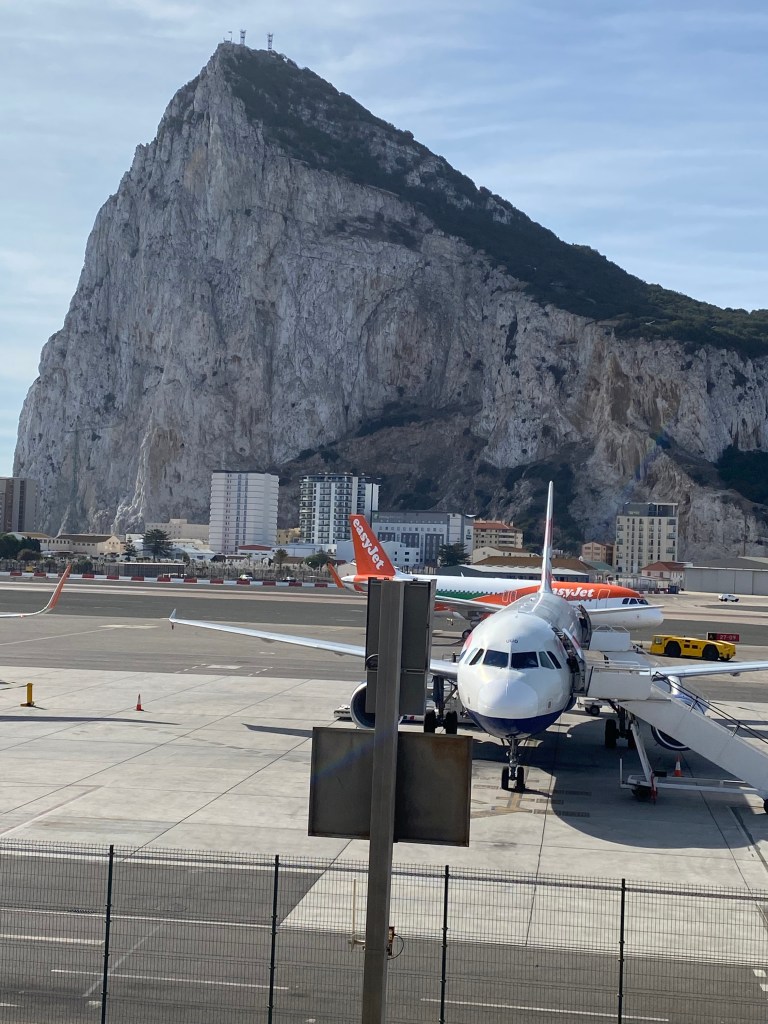
The view below was taken from the balcony at the airport whilst we were waiting for our flight home.
The Rock’s Most Famous Residents
The rock’s most famous residents are the Barbary macaques.
A popular belief holds that, as long as Gibraltar Barbary macaques exist on Gibraltar, the territory will remain under British rule. In 1942 (during World War II), after the population dwindled to just a handful of individuals (just seven monkeys), British Prime Minister Winston Churchill ordered their numbers be replenished immediately from forest fragments in both Morocco and Algeria because of this traditional belief.
Another story links Gibraltar to Africa by a subterranean passage over 15 miles (24 km) long which begins at Lower St. Michael’s Cave and passes under the Strait of Gibraltar, and the Gibraltar Barbary macaques entered the Rock from Morocco this way.
The Barbary macaques at the top of the rock are used to human’s because of the amount of visitors that they see. They are mischievous and will try to open any bags in search of food. Heather got attacked from behind because she had a rucksack on her back.
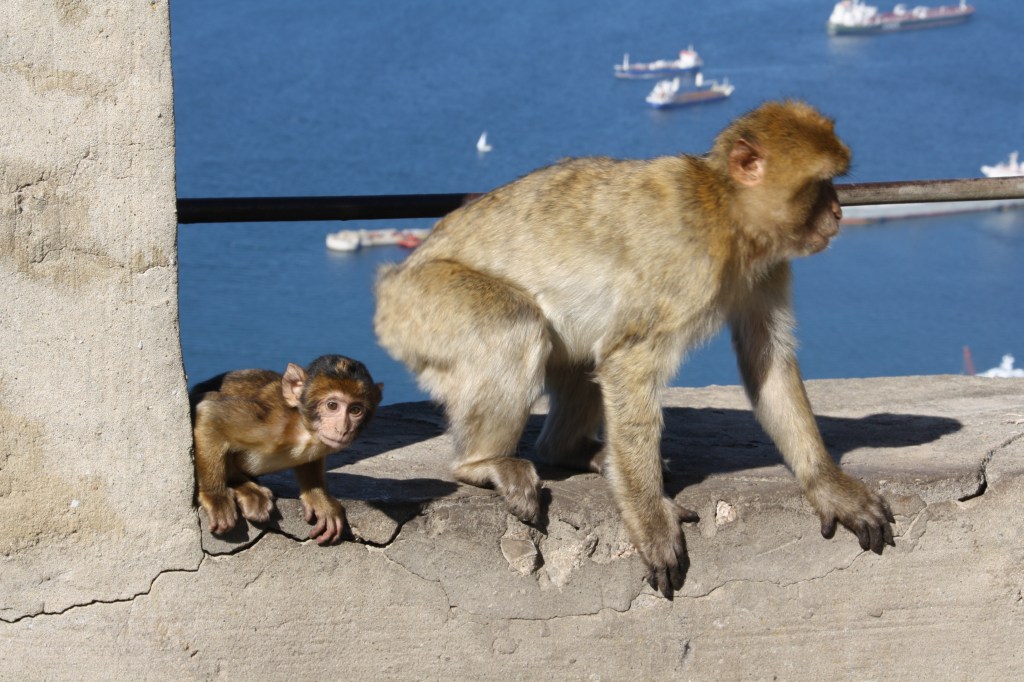
The older the monkey the less likely they are to attack you, here’s one just nonchalantly sitting down.

Main Street
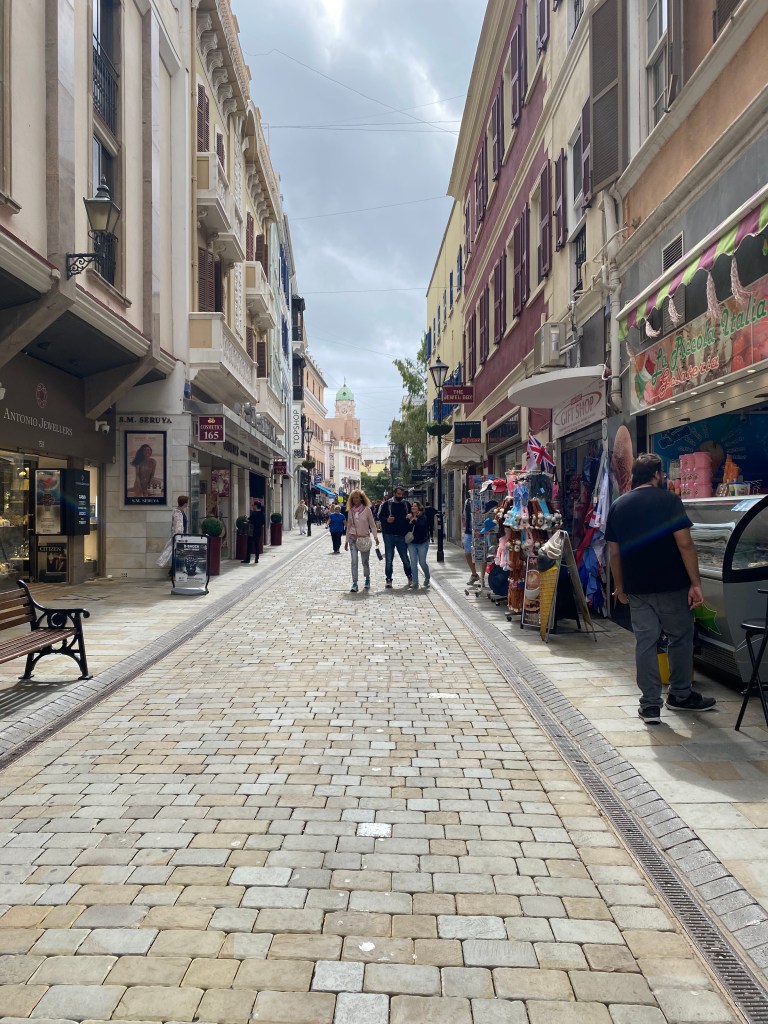
Main Street is Gibraltar’s main commercial and shopping district. It runs north–south through the old town which is pedestrianised and lined with buildings displaying a blend of Genoese, Portuguese, Andalusian, Moorish and British Regency styles, most of which have shops on the ground floor. Upper floors provide residential accommodation or offices. Tourists and visitors will find a wide variety of shops, many of which will be familiar from British high streets.
Gibraltar’s town centre is largely protected by the Gibraltar Heritage Trust and is part of a continual restoration programme.
Grand Casemates Square
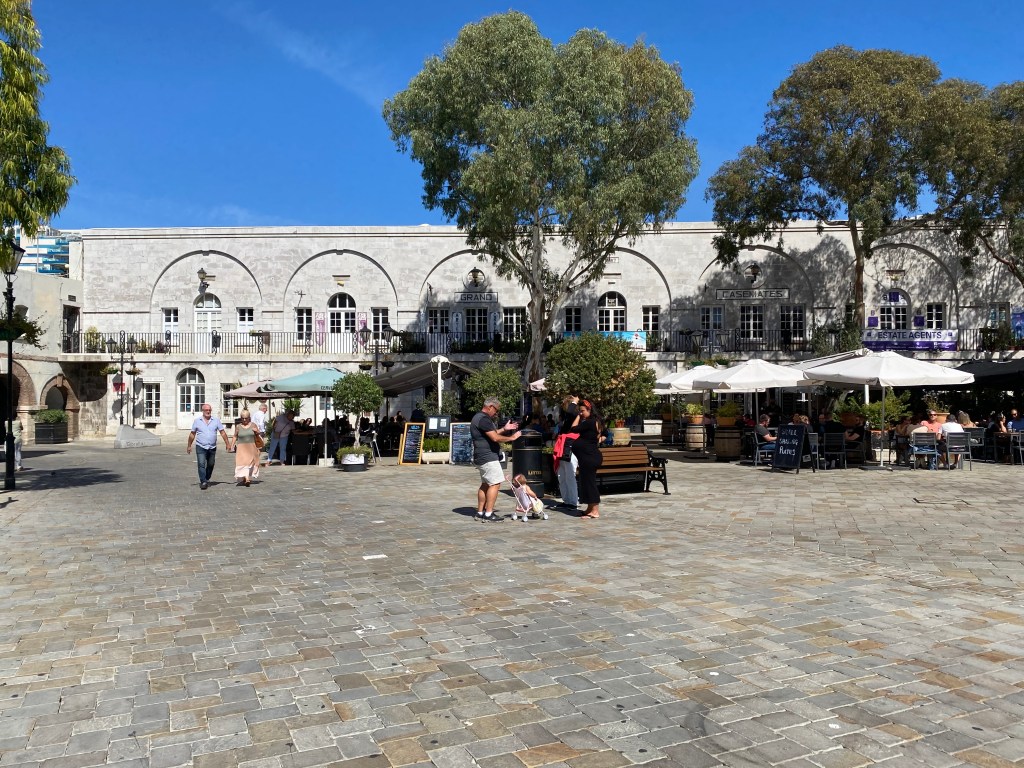
Grand Casemates Square (colloquially Casemates Square or Casemates) is the larger of the two main squares within the city centre (the other being John Mackintosh Square). The square takes its name from the British-built Grand Casemates, a casemate and bombproof barracks at the northern end of the square completed in 1817.
Located at the northern end of Main Street, the square is lined with numerous pubs, bars and restaurants and acts as the gateway into Gibraltar’s city centre for most tourists. It is hard to believe that in the past this area was used to hang criminals
Landport Gate (Tunnel)
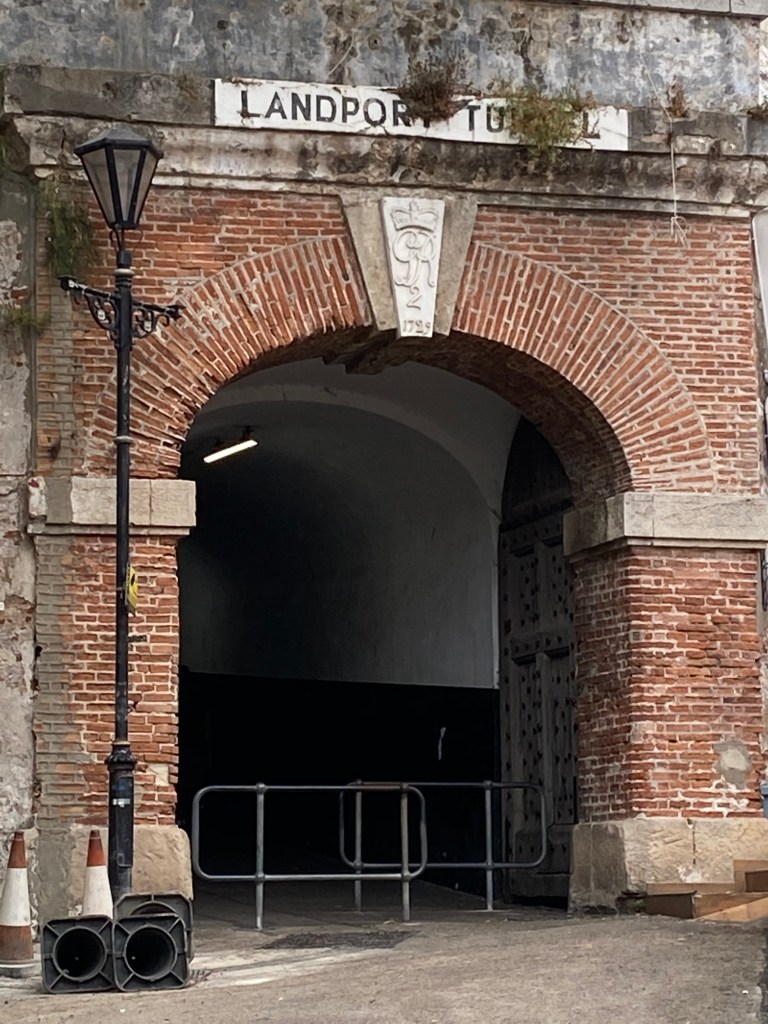
The Landport is one of the gates into Gibraltar town center. It was originally the only entrance to the fortification from the land and so was heavily fortified and guarded.
After the territory was first captured from the Spanish in 1704, the British defended the Landport with twenty guns. The gate was subsequently defended by the Inundation — a flooded and fortified area of ground measuring about 200 yards (180 m) in length by about 60 yards (55 m) broad and was “nearly man-height” in depth. There were also obstacles in it such as cheval de frise and metal hoops. There was also a moat covering the northern approach — the Landport Ditch. The ditch’s defences included a palisade and a gunpowder mine which could be exploded beneath an assault. To cross these defences, there was a drawbridge which was pulled up at night. Tobacco smugglers would exit the gate at this time and lurk outside, waiting for an opportunity to cross the neutral ground into Spain during the night.
The Pillars of Hercules
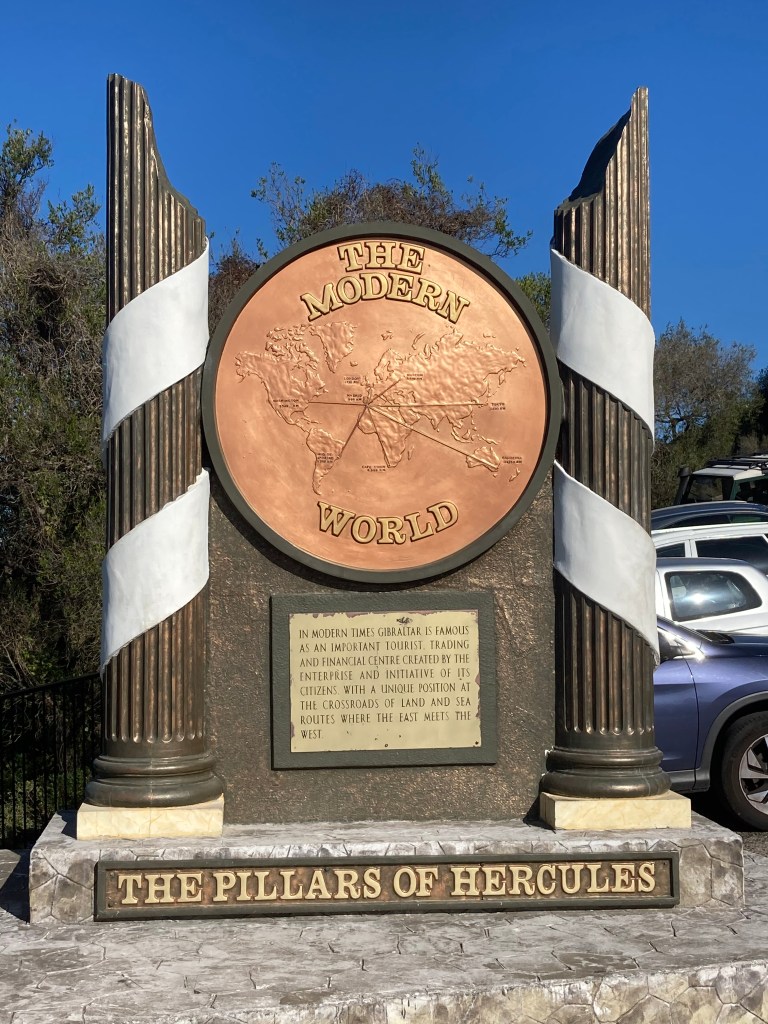
The Pillars of Hercules was the phrase that was applied in Antiquity to the promontories that flank the entrance to the Strait of Gibraltar. The northern Pillar, Calpe Mons, is the Rock of Gibraltar. A corresponding North African peak not being predominant, the identity of the southern Pillar, Abila Mons, has been disputed throughout history, with the two most likely candidates being Monte Hacho in Ceuta and Jebel Musa in Morocco
St. Michael’s Cave
St. Michael’s Cave or Old St. Michael’s Cave is the name given to a network of limestone caves located within the Upper Rock Nature Reserve, at a height of over 300 metres (980 ft) above sea level. According to Alonso Hernández del Portillo, the first historian of Gibraltar, its name is derived from a similar grotto in Monte Gargano near the Sanctuary of Monte Sant’Angelo in Apulia, Italy, where the archangel Michael is said to have appeared.
It is the most visited of the more than 150 caves found inside the Rock of Gibraltar, receiving almost 1,000,000 visitors a year.


The Tunnels of Gibraltar
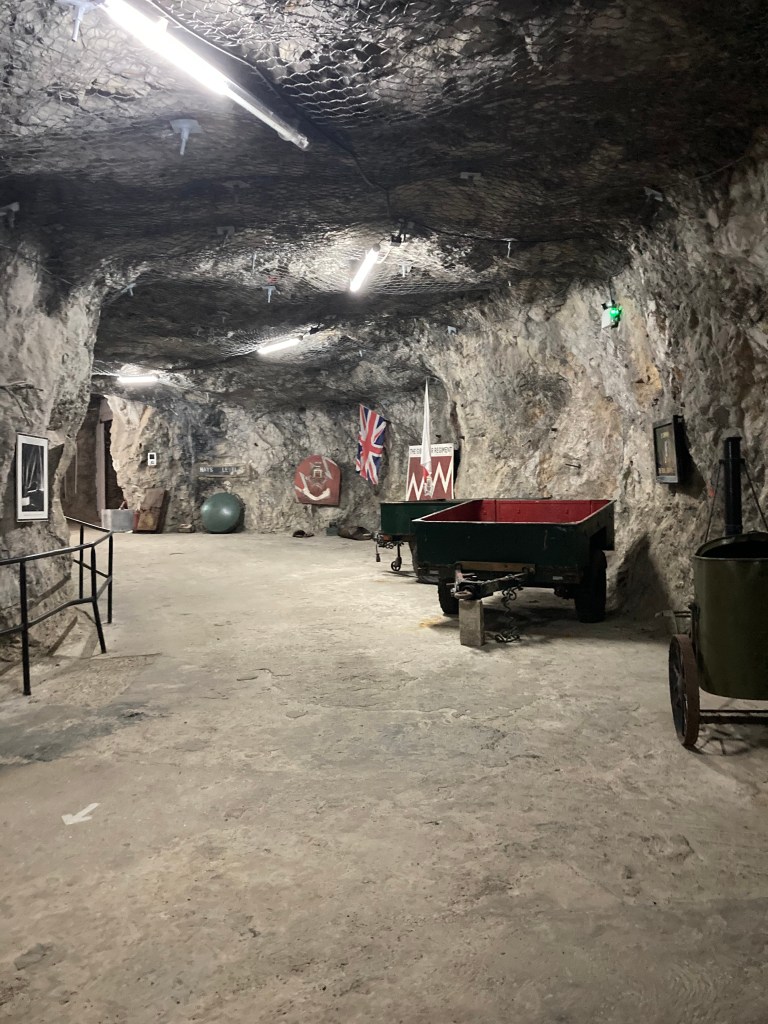
The tunnels of Gibraltar were constructed over the course of nearly 200 years, principally by the British Army. Within a land area of only 2.6 square miles (6.7 km2), Gibraltar has around 34 miles (55 km) of tunnels, nearly twice the length of its entire road network.
Siege Tunnels
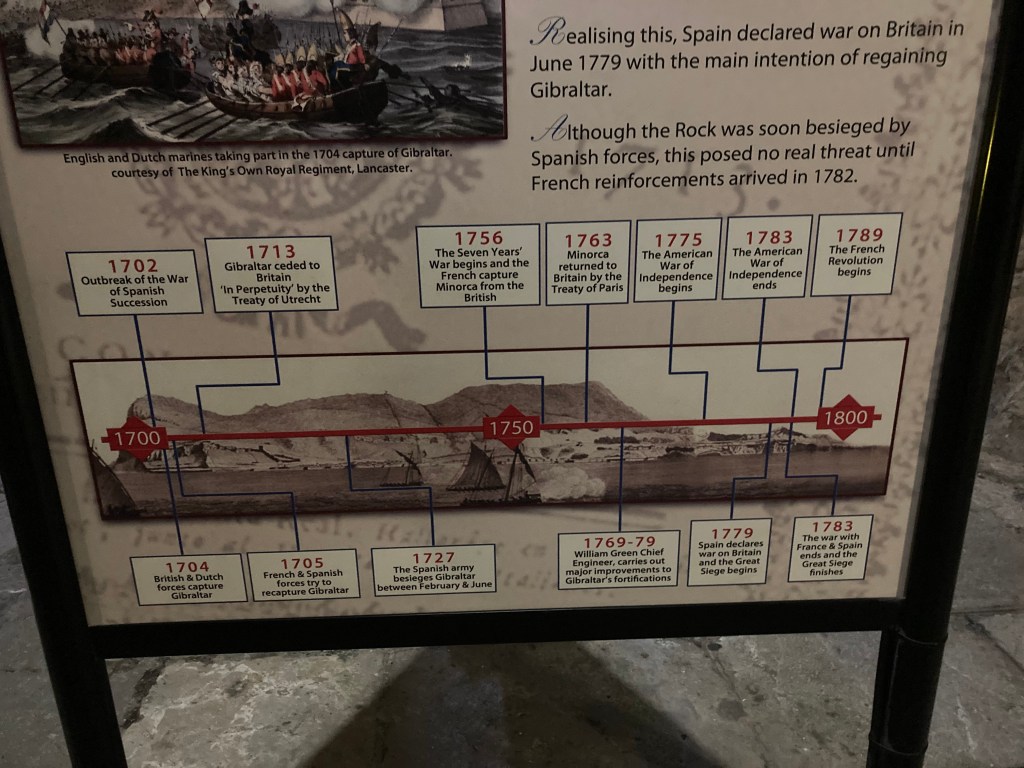
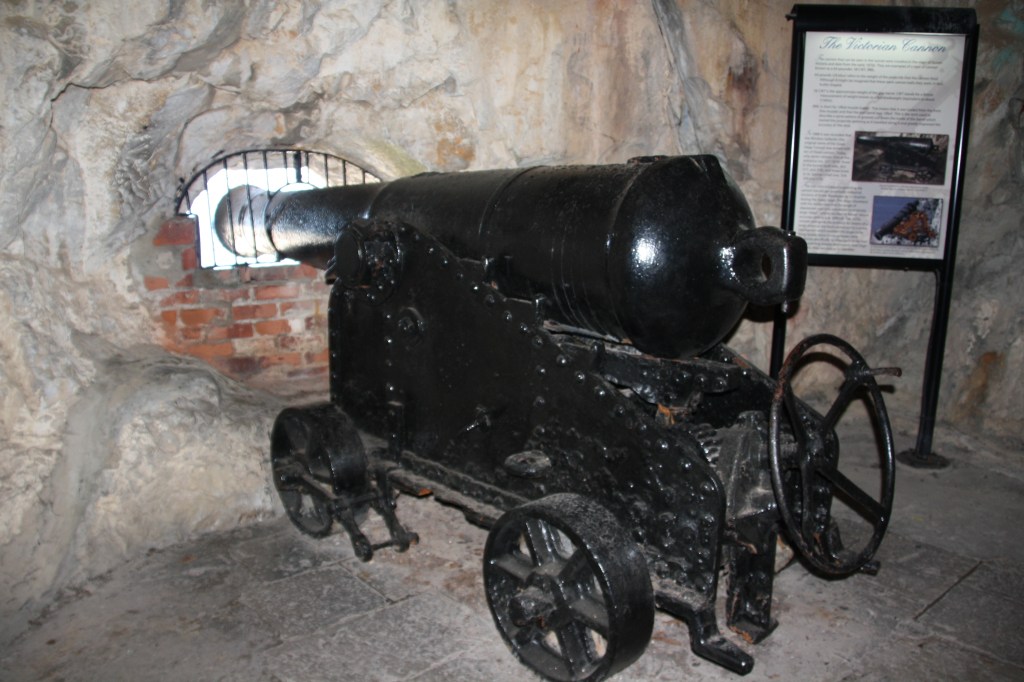
The Great Siege Tunnels, also known as the Upper Galleries, are a series of tunnels inside the northern end of the Rock of Gibraltar. They were dug out from the solid limestone by the British during the Great Siege of Gibraltar of the late 18th century.
The Great Siege of Gibraltar was an attempt by France and Spain to capture Gibraltar from Great Britain during the American Revolutionary War. Lasting from July 1779 to February 1783, it was the fourteenth and final siege of Gibraltar. During the siege, British and Spanish forces faced each other across an approximately 1 kilometre (0.62 mi) wide stretch of the marshy open ground that forms the isthmus immediately to the north of the Rock of Gibraltar. The British lines blocked access to the City and the western side of the Rock, while the eastern side of the Rock was inaccessible because of its steep terrain. Gun batteries were placed in a series of galleries on the north face of the Rock, providing overlapping fields of fire so that infantry attacks would come under heavy fire throughout their advance.
World war II Tunnels
The 20th century saw by far the greatest extent of tunnelling when the Rock was turned into a huge underground fortress capable of accommodating 16,000 men along with all the supplies, ammunition and equipment needed to withstand a prolonged siege. The tunnelling finally ceased in 1968 when the British Army’s last specialist tunnelling unit was disbanded. Since then, the tunnels have progressively been turned over to the civilian Government of Gibraltar, although a number are still owned by the Ministry of Defence and some have been sealed off entirely as they are now too dangerous to enter.

Moorish Castle
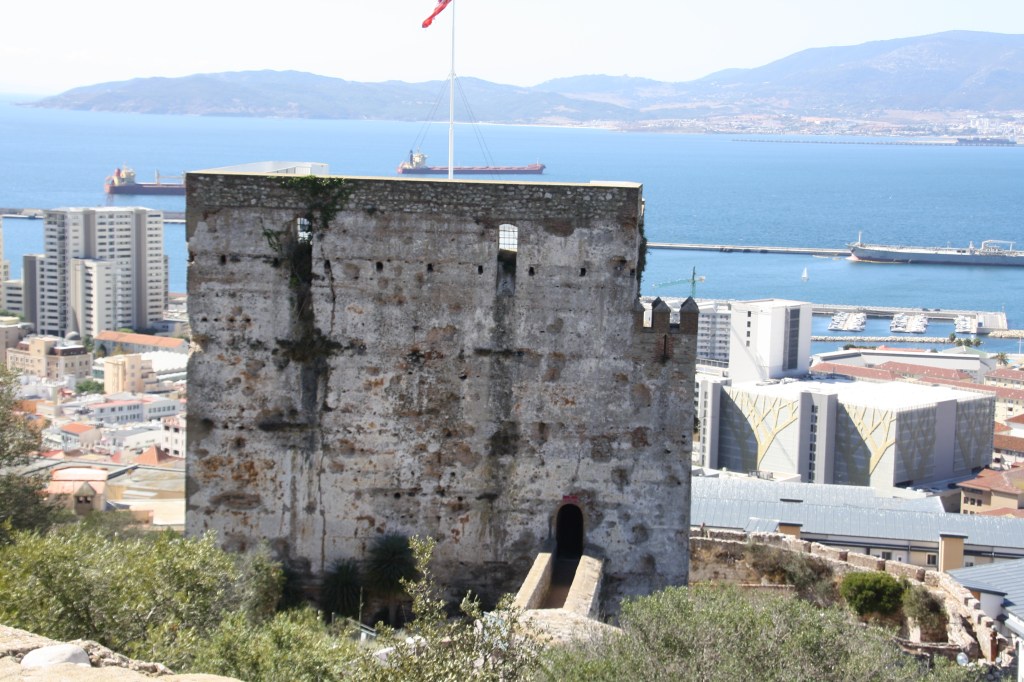
The Moorish Castle is the name given to a medieval fortification comprising various buildings, gates, and fortified walls, with the dominant features being the Tower of Homage and the Gate House. Part of the castle itself also housed the prison of Gibraltar until it was relocated in 2010. The Tower of Homage is clearly visible to all visitors to Gibraltar; not only because of its striking construction, but also because of its dominant and strategic position. Although sometimes compared to the nearby alcazars in Spain, the Moorish Castle in Gibraltar was constructed by the Marinid dynasty, making it unique in the Iberian Peninsula.
Trafalgar Cemetery
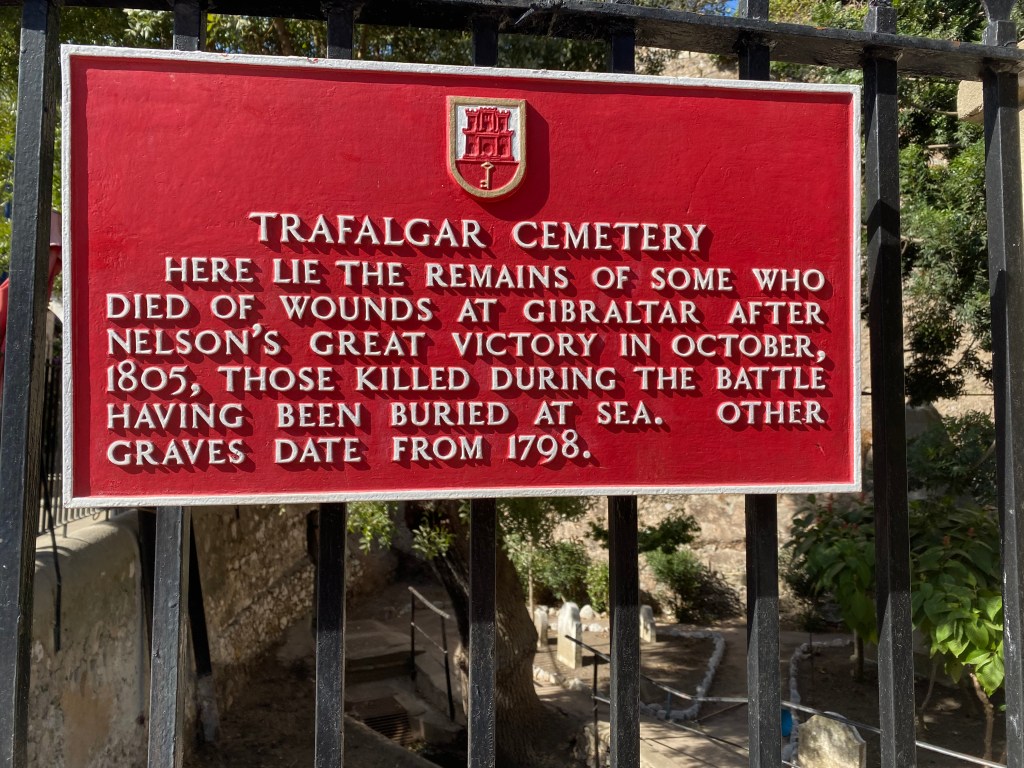
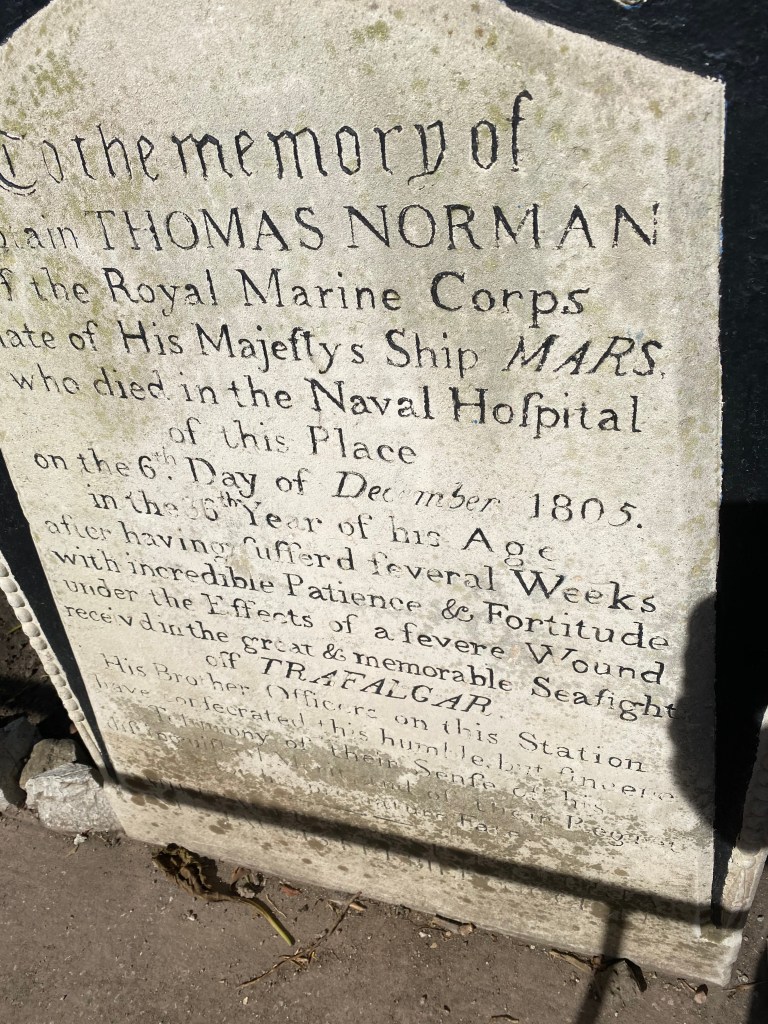
The Trafalgar Cemetery was formerly known as the Southport Ditch Cemetery, it occupies a small area of land just to the south of the city walls, in what had been a defensive ditch during the period of Spanish rule of Gibraltar. Although it is named for the Battle of Trafalgar of 21 October 1805, only two victims of the battle are buried there. The remainder of the interments are mostly of those killed in other sea battles or casualties of the yellow fever epidemics that swept Gibraltar between 1804 and 1814. In addition, tombstones were transferred to the Trafalgar Cemetery from St. Jago’s Cemetery and Alameda Gardens.
The cemetery is no longer used for burials and was abandoned for many years, but was restored in the 1980s. In 1992, a memorial to the Battle of Trafalgar was erected in the cemetery. The graveyard is the site of an annual commemorative ceremony on Trafalgar Day, the Sunday nearest to the anniversary of the Battle of Trafalgar. Trafalgar Cemetery is listed with the Gibraltar Heritage Trust.
Lighthouse
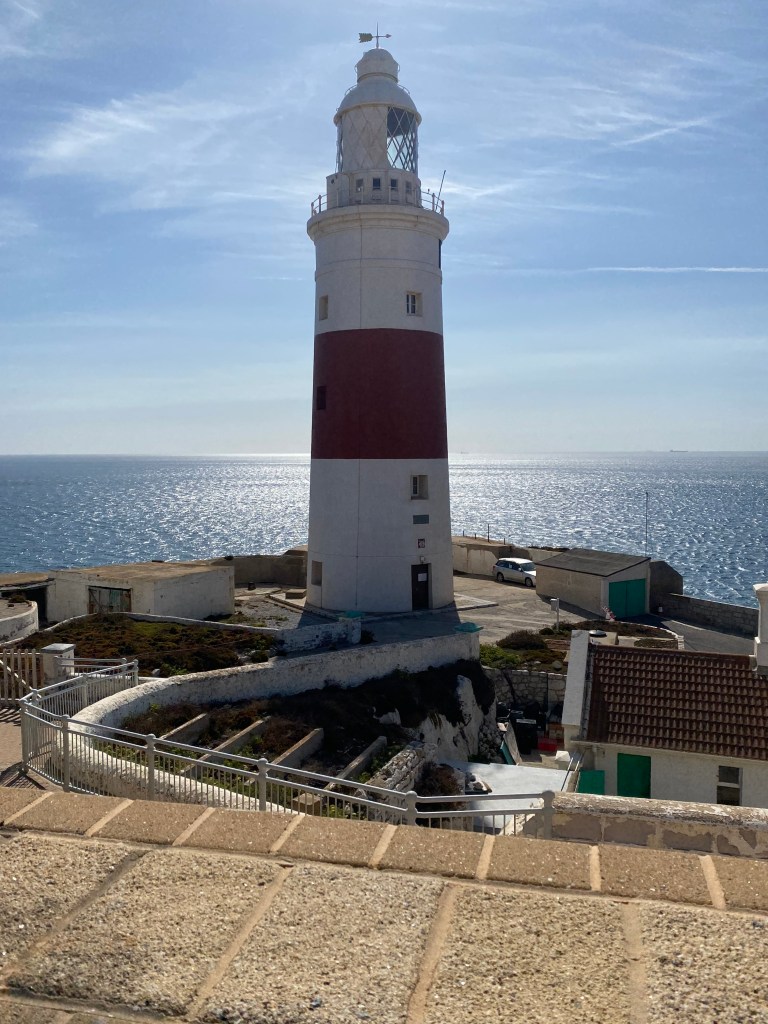
Why visit a lighthouse? Keith’s mum spent her holidays when she was young at Hale lighthouse on the Mersey and for the rest of her life she was fascinated by them so every where we go if there is a lighthouse we have to visit and take take pictures in homage to mum.
The Europa Point Lighthouse, also referred to as the Trinity Lighthouse at Europa Point and the Victoria Tower or La Farola in Llanito, is a lighthouse at Europa Point, on the southeastern tip of Gibraltar, on the southern end of the Iberian Peninsula, at the entrance to the Mediterranean Sea.
Europa Lighthouse was inaugurated on 1 August 1841 in a brief ceremony witnessed by about 10,000 people. The first upgrade of the lighthouse occurred in 1864, when the single-wick lamp was replaced with a Chance Brothers four-wick burner, with further changes in 1875 and in 1894 when the amount of light emitted was increased. A three incandescent mantle burner was added in 1905. Following further modernisation in the 20th century, the lighthouse was fully automated in 1994 and converted to LED operation in 2016.
Ibrahim-al-Ibrahim Mosque
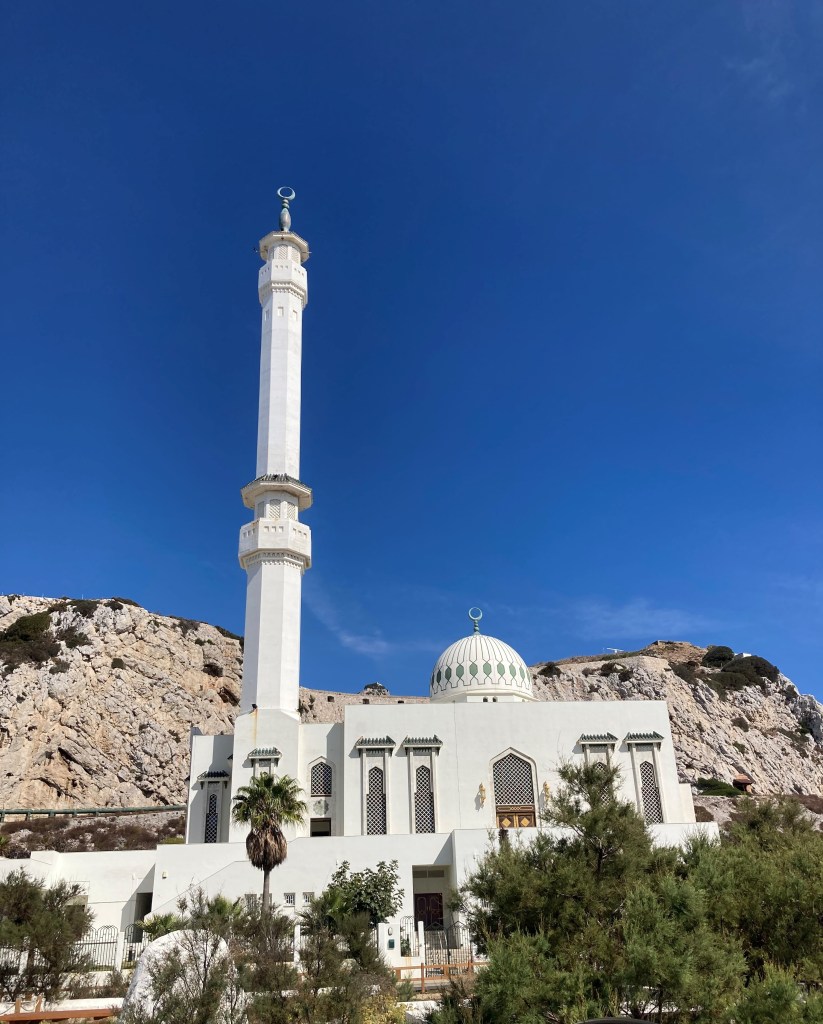
The Ibrahim-al-Ibrahim Mosque, also known as the King Fahd bin Abdulaziz al-Saud Mosque or the Mosque of the Custodian of the Two Holy Mosques, is a mosque located at Europa Point in Gibraltar. The mosque faces south towards the Strait of Gibraltar and Morocco several kilometres away.
It is the southernmost mosque in continental Europe, and is one of the largest mosques in a non-Muslim country.
Cathedral of The Holy Trinity
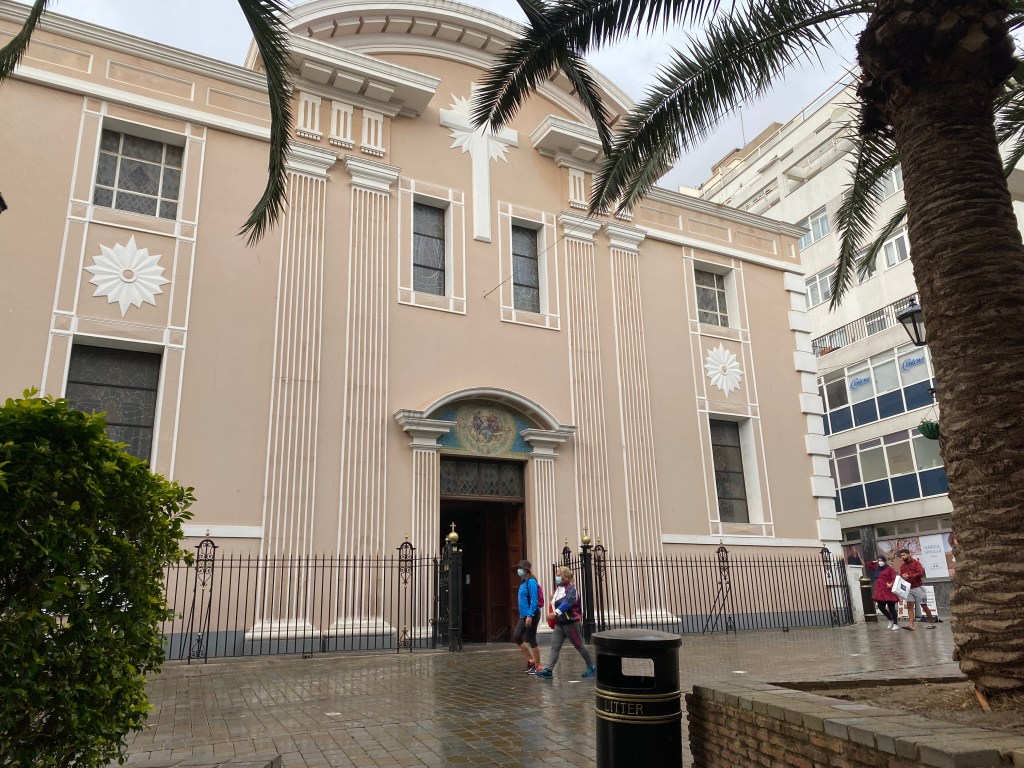
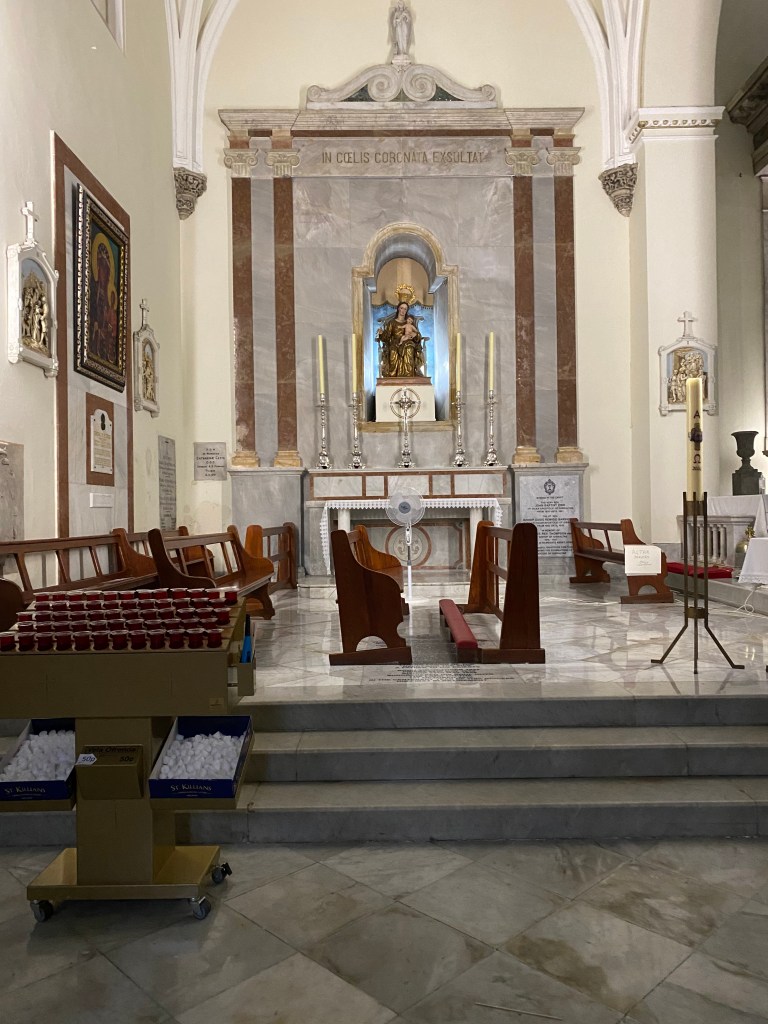
The Cathedral of the Holy Trinity is the cathedral for the Church of England Diocese of Gibraltar. Located in Cathedral Square, it is sometimes referred to simply as Gibraltar Cathedral, although it should not be confused with the Cathedral of St. Mary the Crowned, which is Gibraltar’s Roman Catholic cathedral. The cathedral is particularly notable for its Moorish revival architecture, particularly in its use of horseshoe arches. This is an architectural style inspired by Moorish architecture, appropriate given the period of Moorish control in Gibraltar’s history.
Airport
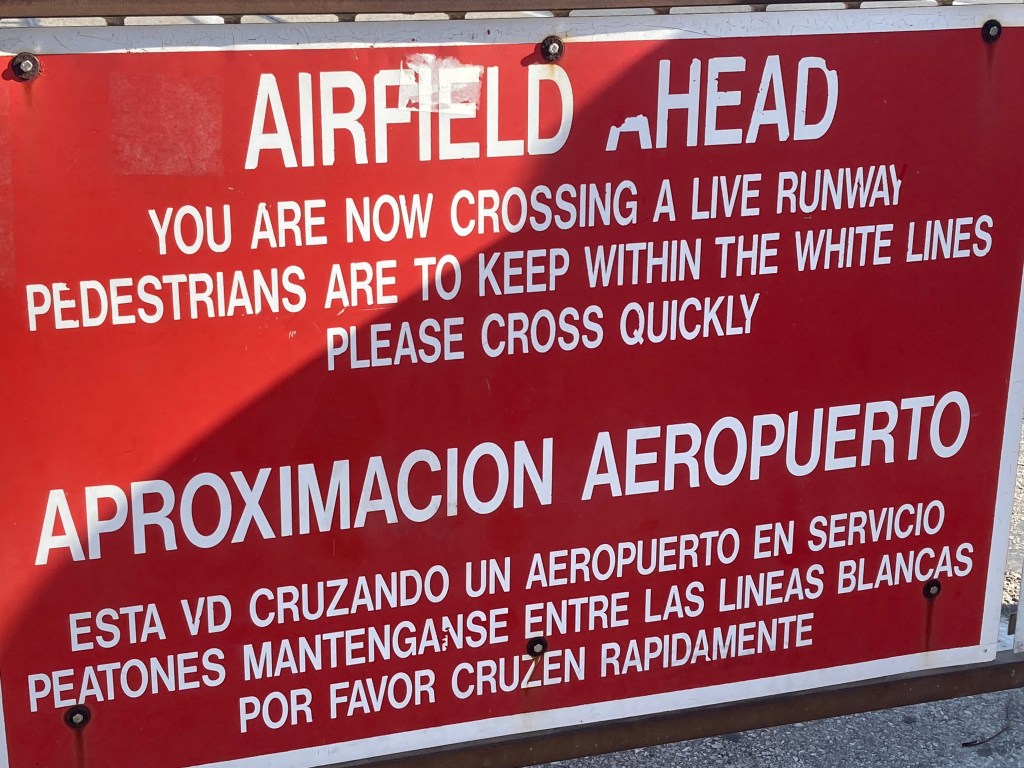
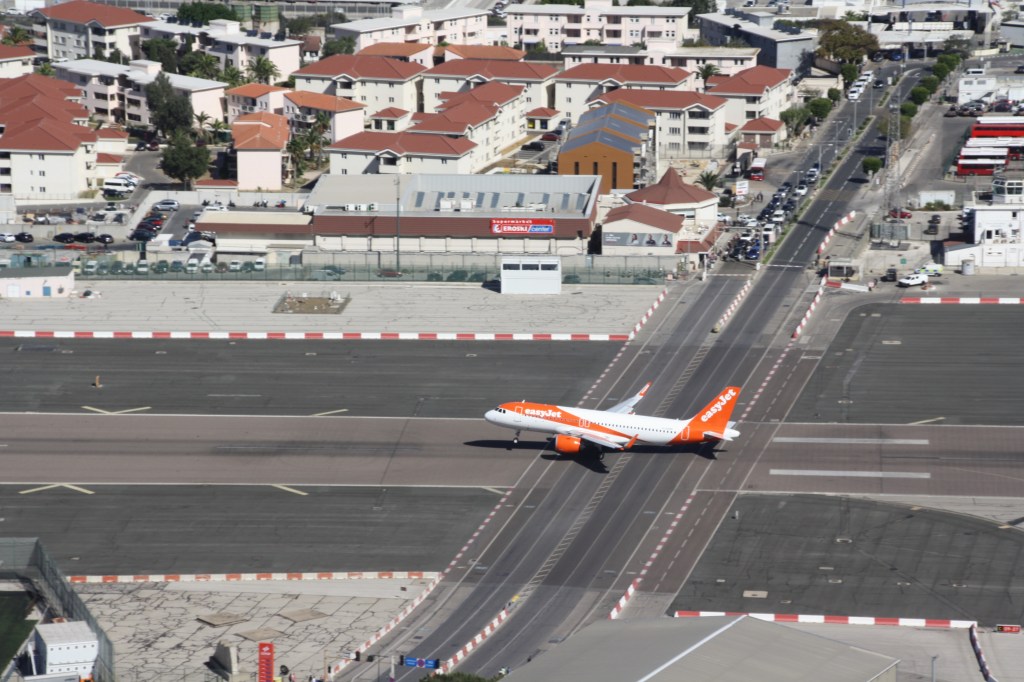
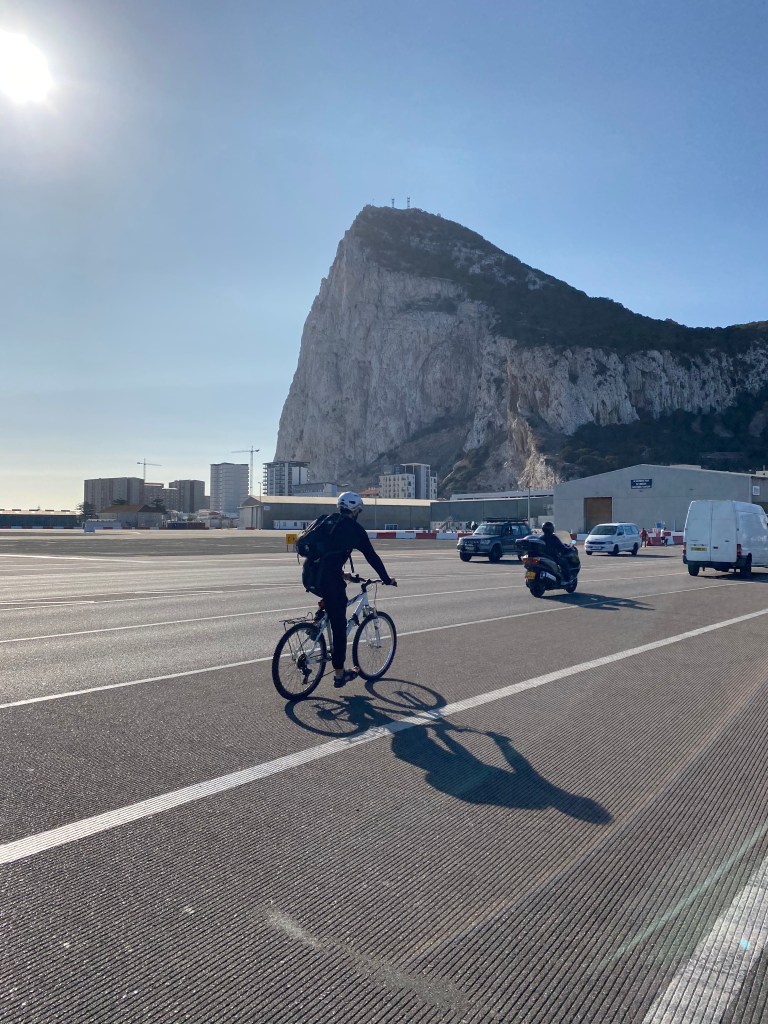
The Airport is known as Gibraltar International or North Front Airport and is unusual as the Winston Churchill Avenue (the main road heading towards the land border with Spain) intersects the airport runway, and consequently has to be closed every time a plane lands or departs. It is reputed to be the only international airport where you can walk across the runway. This may not be possible soon as a tunnel is currently under construction, it has taken 8 years so far and the completion data has not been given.
The runway goes straight across the peninsula with water at both ends which is disconcerting. It is also exposed to strong cross winds around the rock and across the Bay of Algeciras, making landings in winter particularly uncomfortable.
Lasting Memories
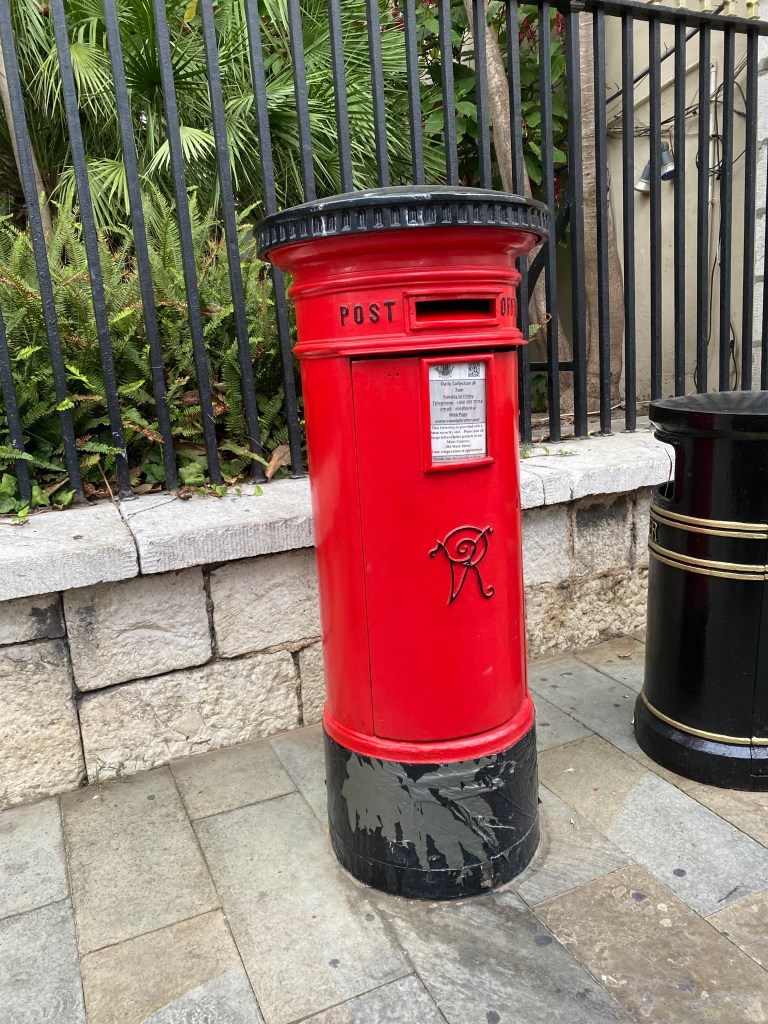
Gibraltar is a British overseas territory, crown dependency. There are similarities to the UK, the red post box, red telephone box, policemen looking as though they were on the streets of Chester.
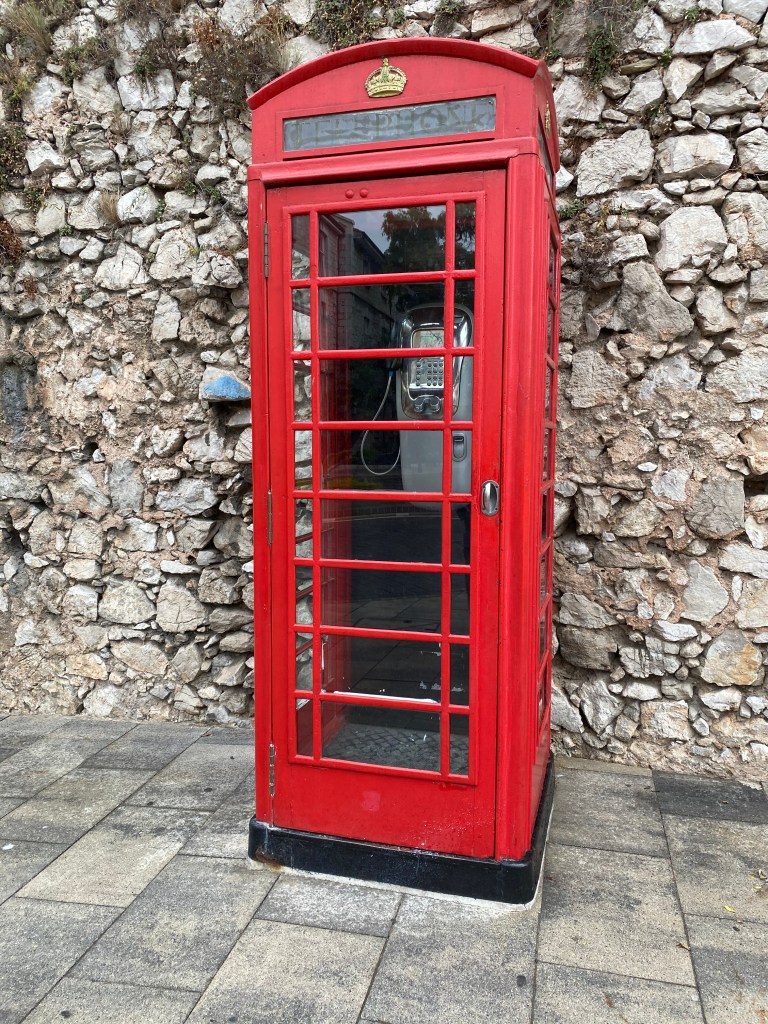
It is odd that the car’s drive on the right, the language is a dialect of Spanish with the odd English word thrown in. It is a great place to visit and with it’s familiar shops it is like England in the sun.
 Heather and Keith's travels