This web page has some of our pictures and memories over the years of all these trips. It became clear when we were writing this blog that in the pre-digital days it was good old fashioned film which wasn’t cheap to process. and therefore took significantly less pictures. After culling the pictures that weren’t very good then we were left with very few. As a consequence we haven’t given the credit these islands deserves.
We started visiting Greece in 2005 and went every year to different islands, some we visited twice, until 2007. In 2008 we ventured further a field but still had 3 trips back in subsequent years to places that we had already visited. These were:
• Zante – Laganas (1995) and Alykes (2004)
• Skiathos – Troulos (1996)
• Kefalonia – Sami (1997) and Loudata(1998)
• Santorini – Kamari (1999)
• Lesbos – Petra (2000, 2001 and 2010)
• Halikidiki – Pefkochori (2002)
• Skopelos – Skopelos Town (2003)
• Mykonos -Agios Ioannis (2005)
• Naxos -Ornos (2005)
• Thassos – Thassos Town (2006, 2014, 2015 and 2022)
• Samos – Pythagoreio (2007)
We have put the places on Alphabetical order to make it easier to read.
Halikidiki
Halkidiki is a region in northern Greece known for its jutting peninsulas, which feature Mediterranean forests that give way to sandy beaches in sheltered bays. Kassandra, the westernmost peninsula, is the most developed, offering modern resorts and nightclubs. The region’s notable archaeological sites include Stageira, Aristotle’s birthplace, and Olynthus, known for its well-preserved mosaic floors.
Pefkochori
We stayed at Pilalidis Apartments in September 2002 in Pefkochori, which is the furthest south of the main Halkidiki villages. It is a quaint village of whitewashed houses amid citrus and olive groves, extending to a popular beach resort area on the Toroneos. It was the only time we ever went anywhere in September and it was cold and wet for part of the time, we even needed blankets at night!
A view of the Pilalidis studios.

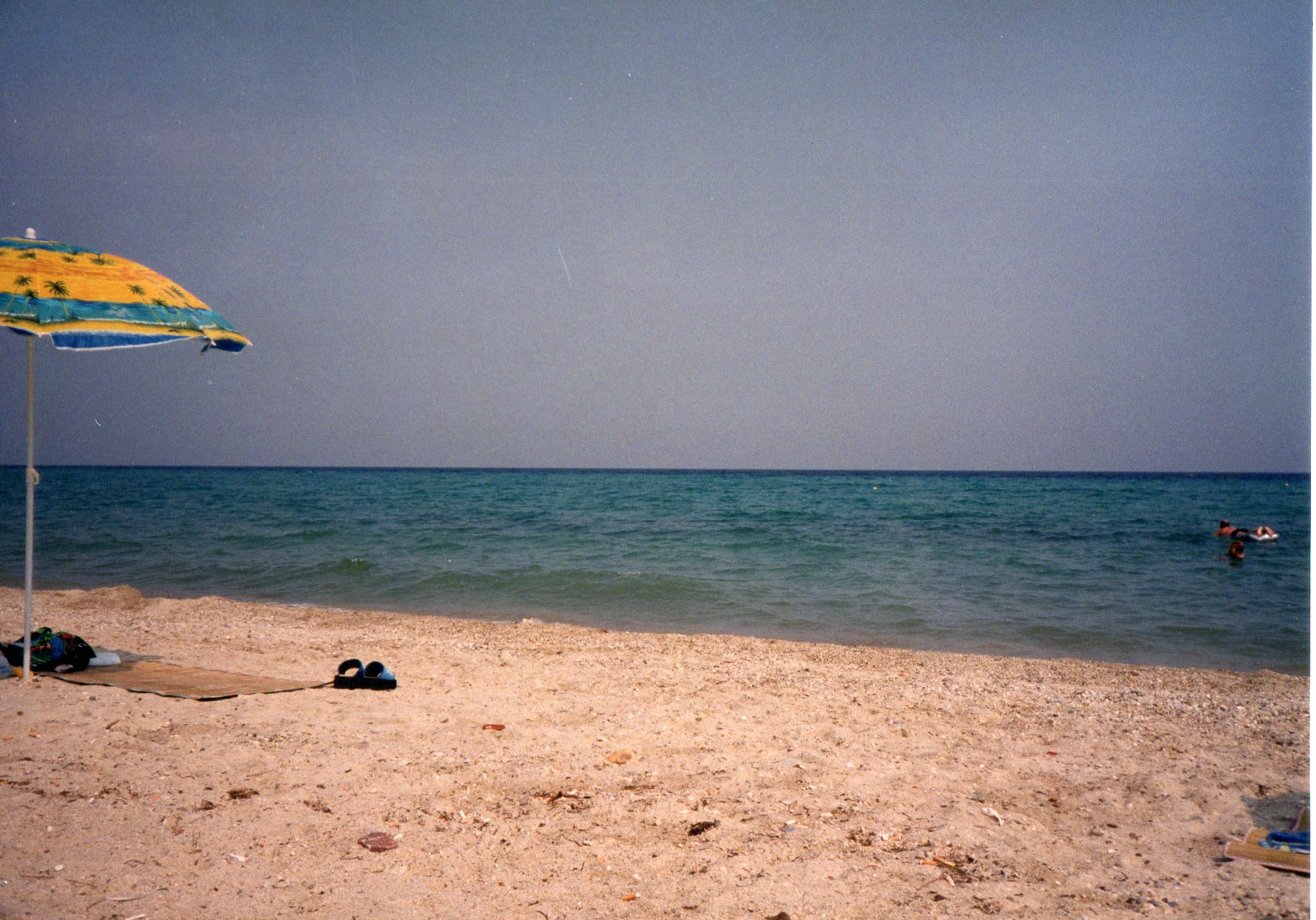
A day relaxing day on Pefkochori beach with not a sole insight. It doesn’t get much more relaxing than this
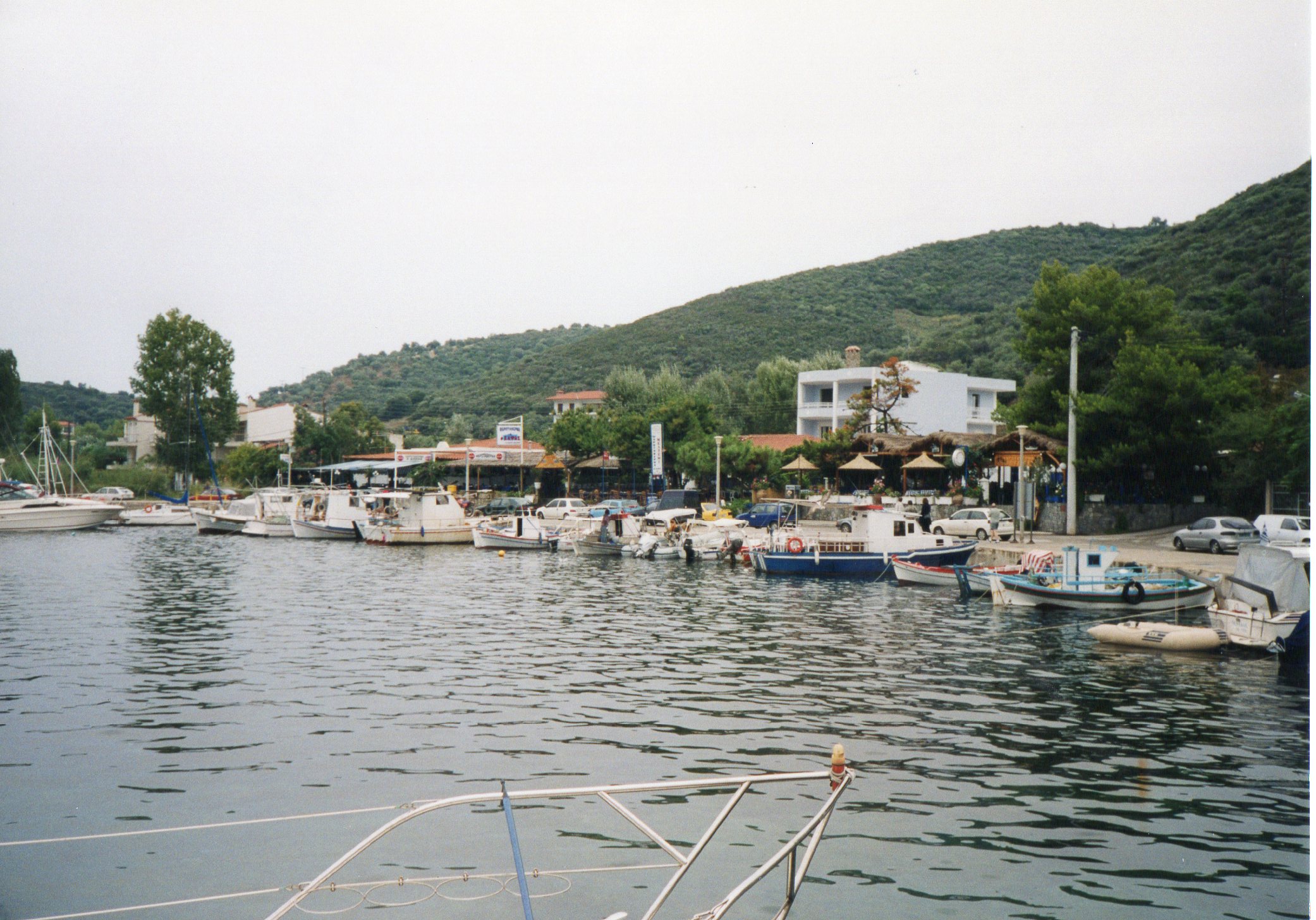
The small harbour at Pefkochori is similar to the many hundreds if not thousands that are found all over the Greek mainland and islands.
bougainvillea
Where ever you go in the Mediterranean there will always be houses adorned with stunning bougainvillea.

Kefalonia
Kefalonia is an island in the Ionian Sea, west of mainland Greece. It’s marked by sandy coves and dry rugged landscapes. Its capital, Argostoli, is built on a hillside overlooking a narrow harbour. Kefalonia’s indented coastline is made up of limestone cliffs, bays and short strips of white sand, like Myrtos Beach in the north. Many beaches are only accessible on foot or via narrow twisting roads.
We visited Cephalonia twice in Sami in 1997 and Lourdata in 1998 but stayed at two different places.
Sami
Sami is a town located on the central east coast of the island. The majority of the buildings are the same as a significant part was rebuild after the 1953 earthquake which devastated a significant part of Cephalonia.
We stayed at the Giannis Studios in June 1997 and when we stayed there we spent a few hours just watching the ships arrive from Italy across the Adriatic sea.
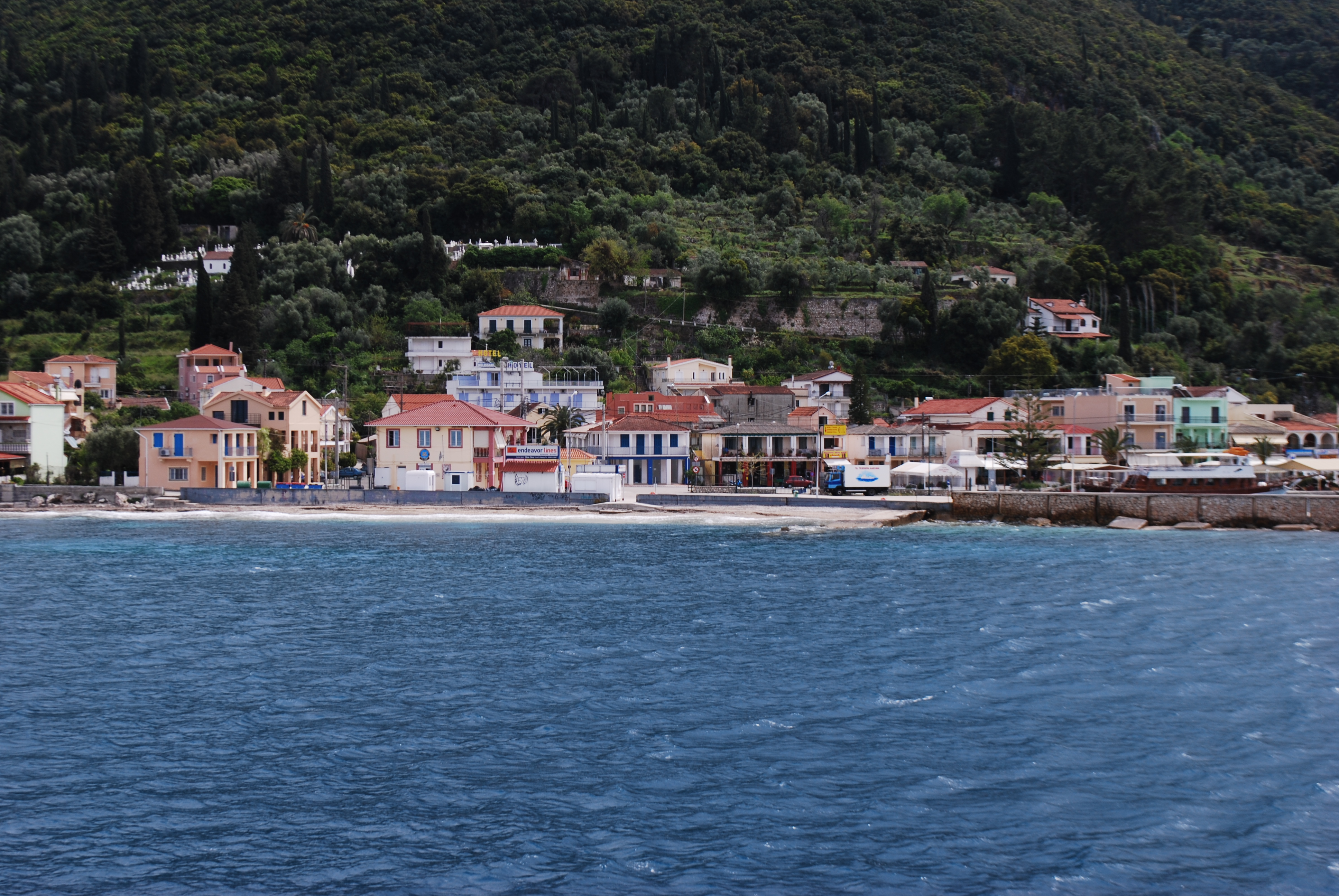
As you arrived towards the town, in Greece the term town is the same as a small English village.
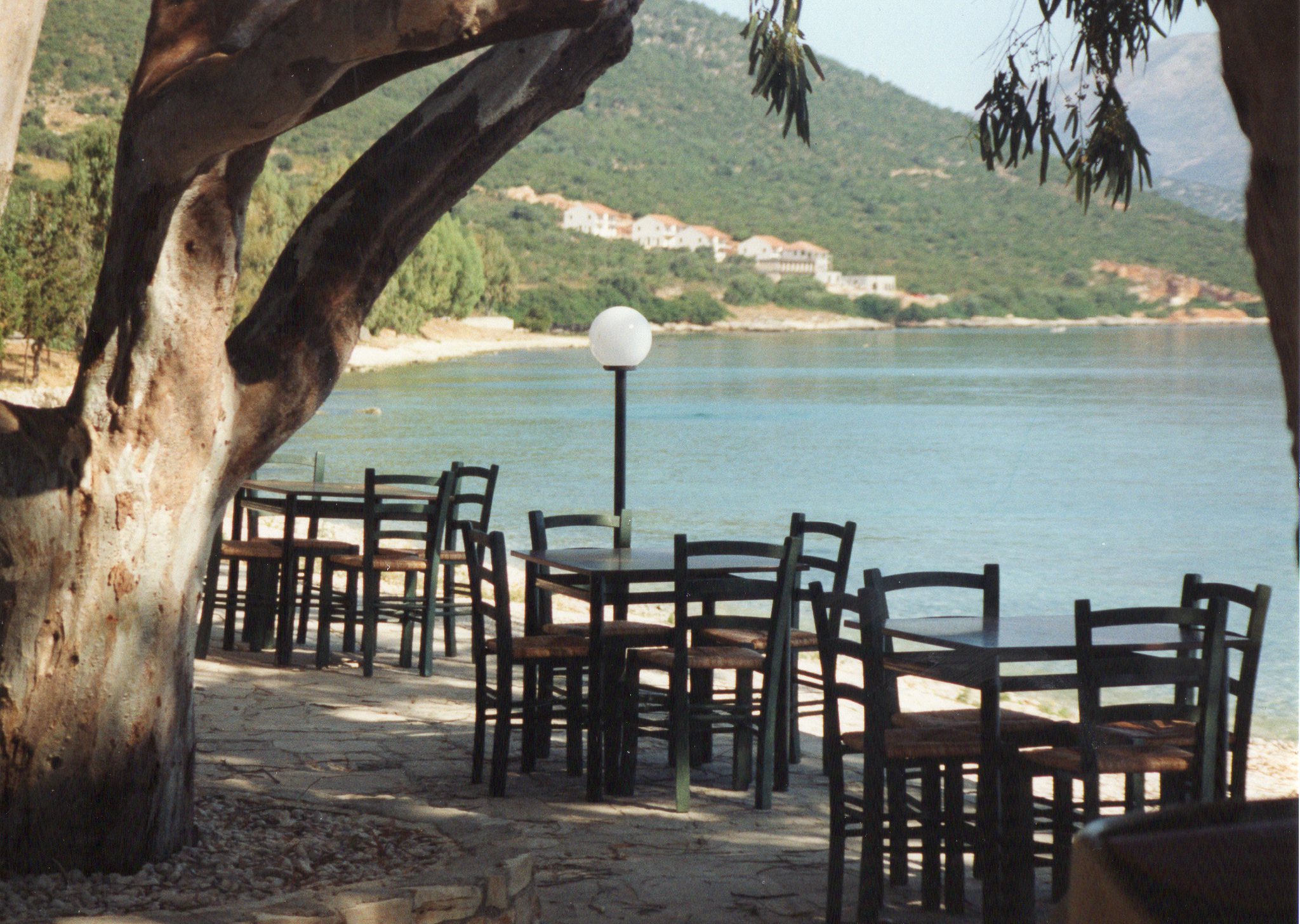
Peaceful spot to sit in anticipation of an ice cold beer later.
Idyllic view, looking along the bay towards yet another church.

Obviously Tarmac hasn’t got as far as Kefalonia.
Lourdata
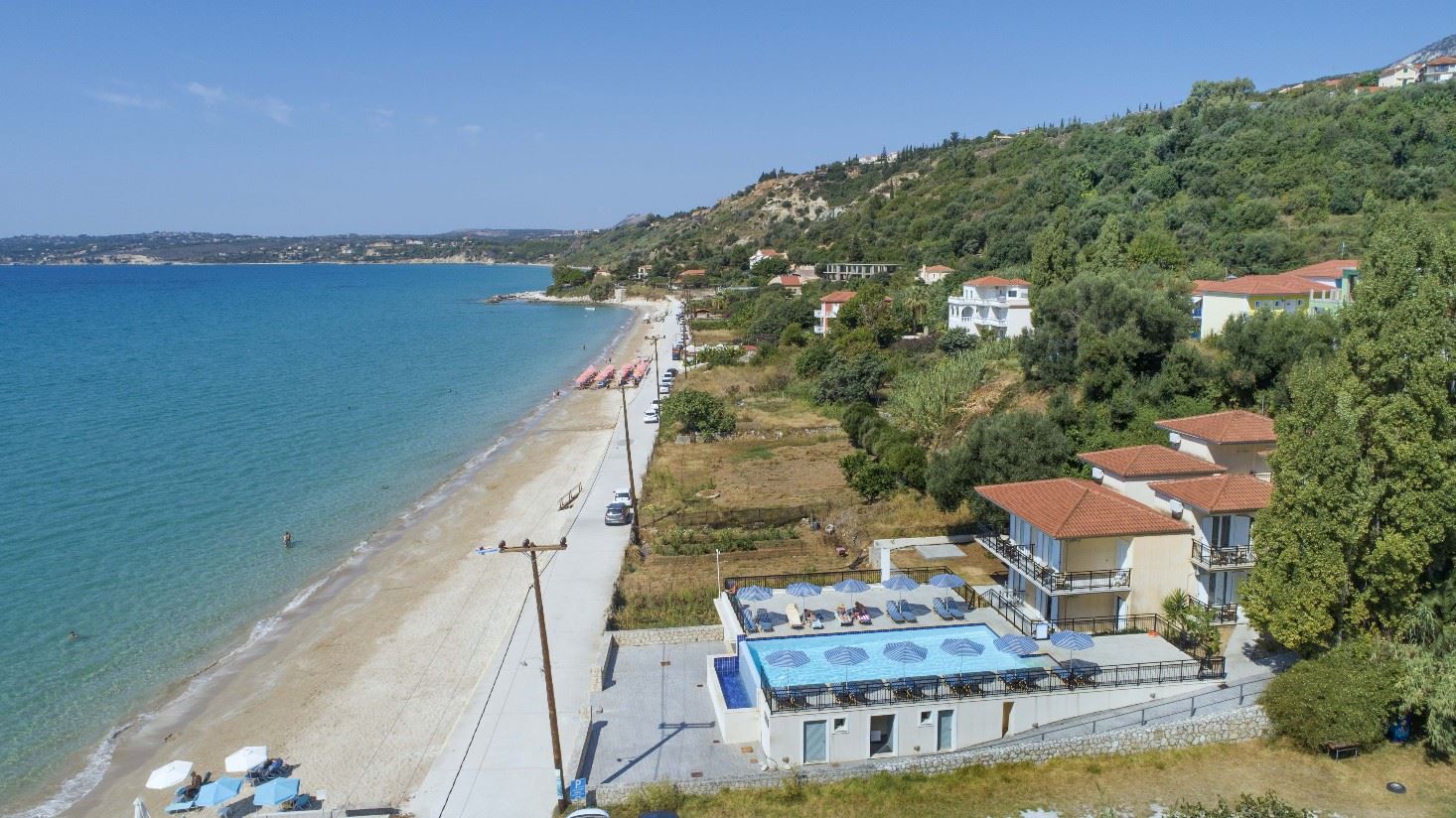
Lourdata (often referred to as Lourdas) can be best described as a small village on the Argostoli to Skala road. We stayed in small apartments in the village which had 4 restaurants (one served only fish), a hotel with a pool and the beach 1 mile down a steep winding road. Going to the beach was great but comping back in the afternoon sun was purgatory as there was no shade.
We stayed at the Aenos Village Studios in June 1998. We had a relaxing holiday but it is probably a place that we wouldn’t go to again as there was very little to do.

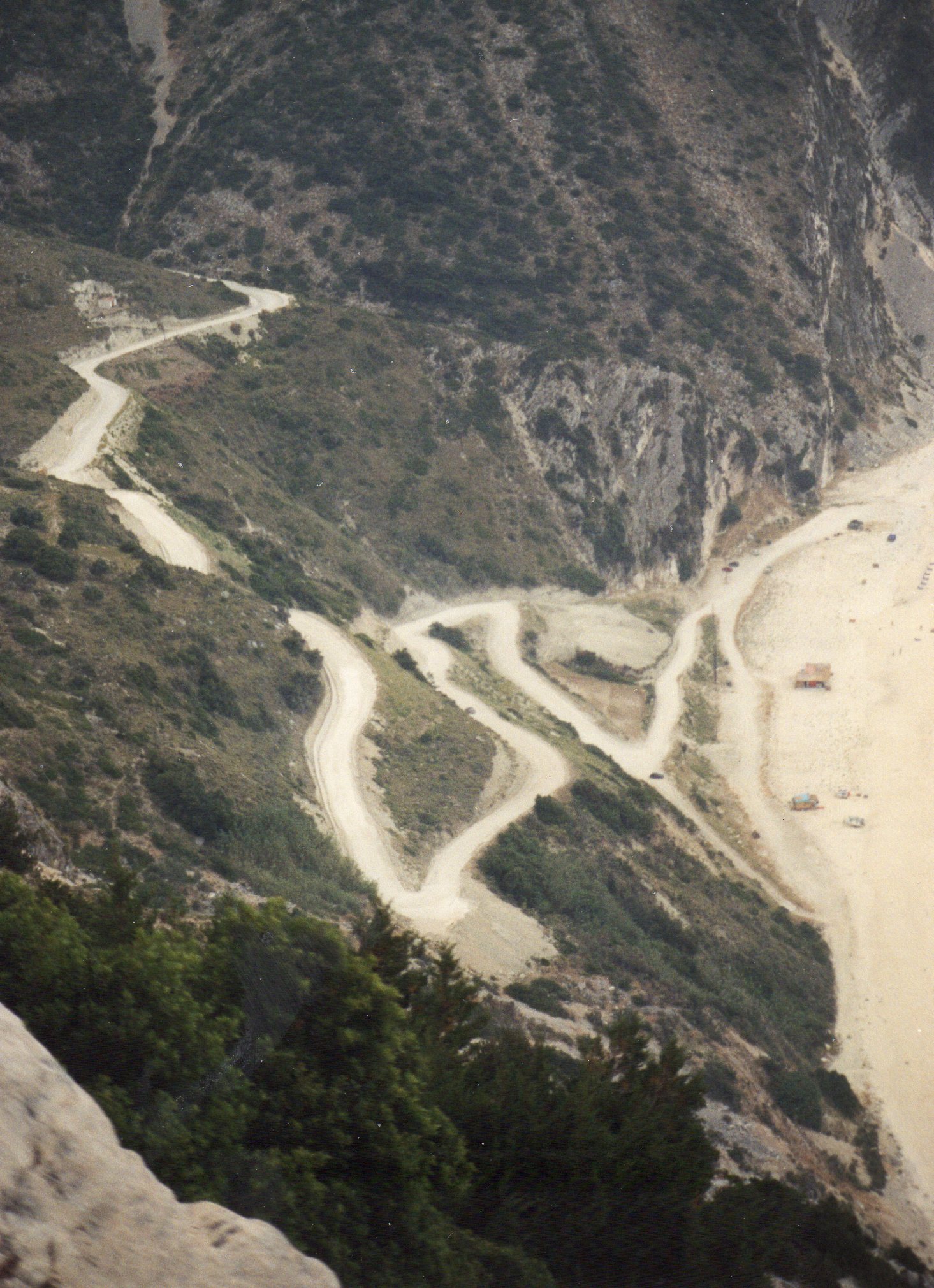
From where we stayed the beach at Lourdata was about a one mile down a zigzag road. This is probably not the best beach in Greece, added to the one mile trek back up the hill we only visited this once.
When we stayed in Lourdata we took a local bus to the fishing port of Scala. After the experience of being on the “Public Bus” as Heather terms it, we had to have a beer over looking the port.
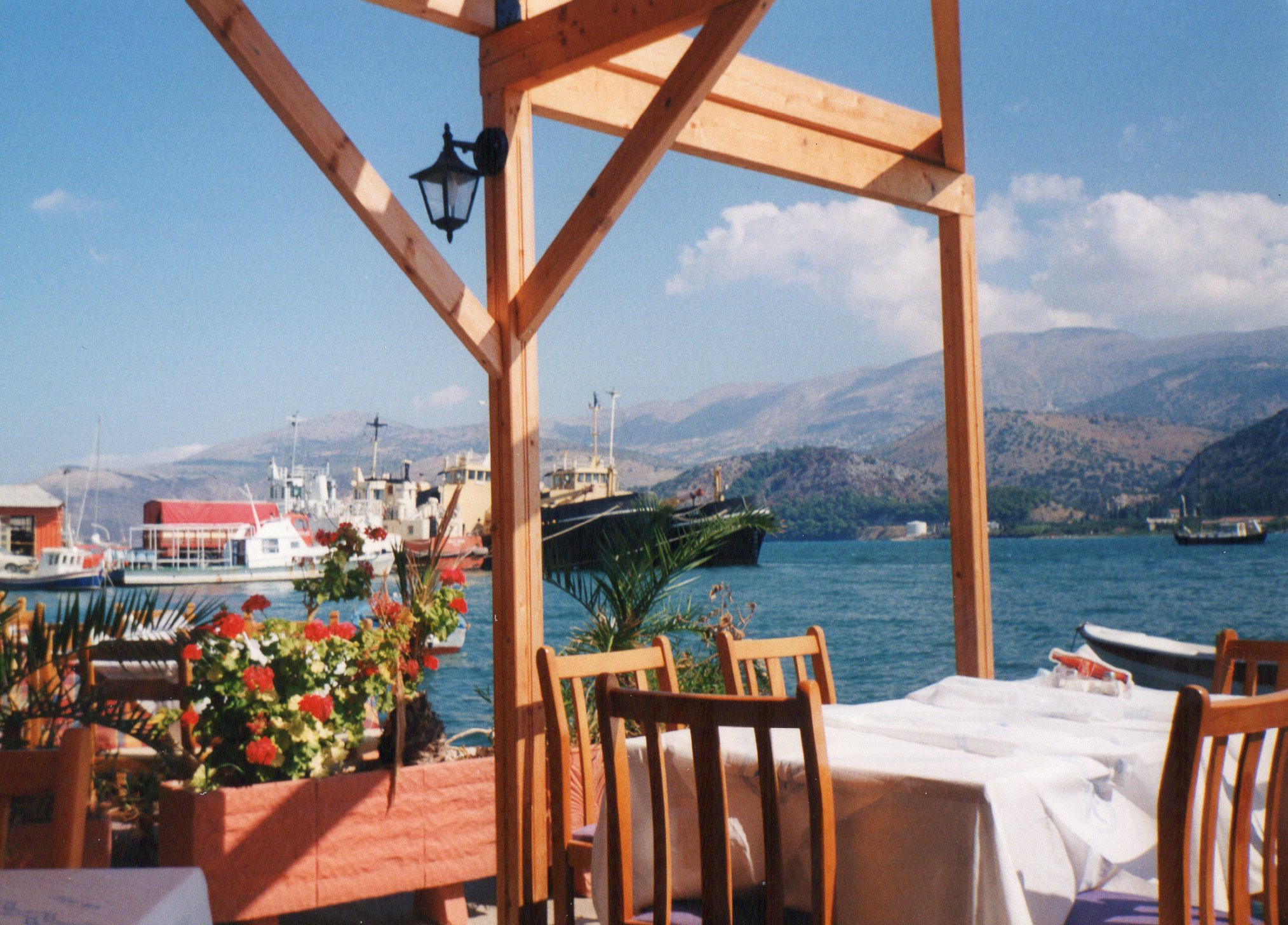
As with any great holiday time should be spent relaxing and watching the world go by.
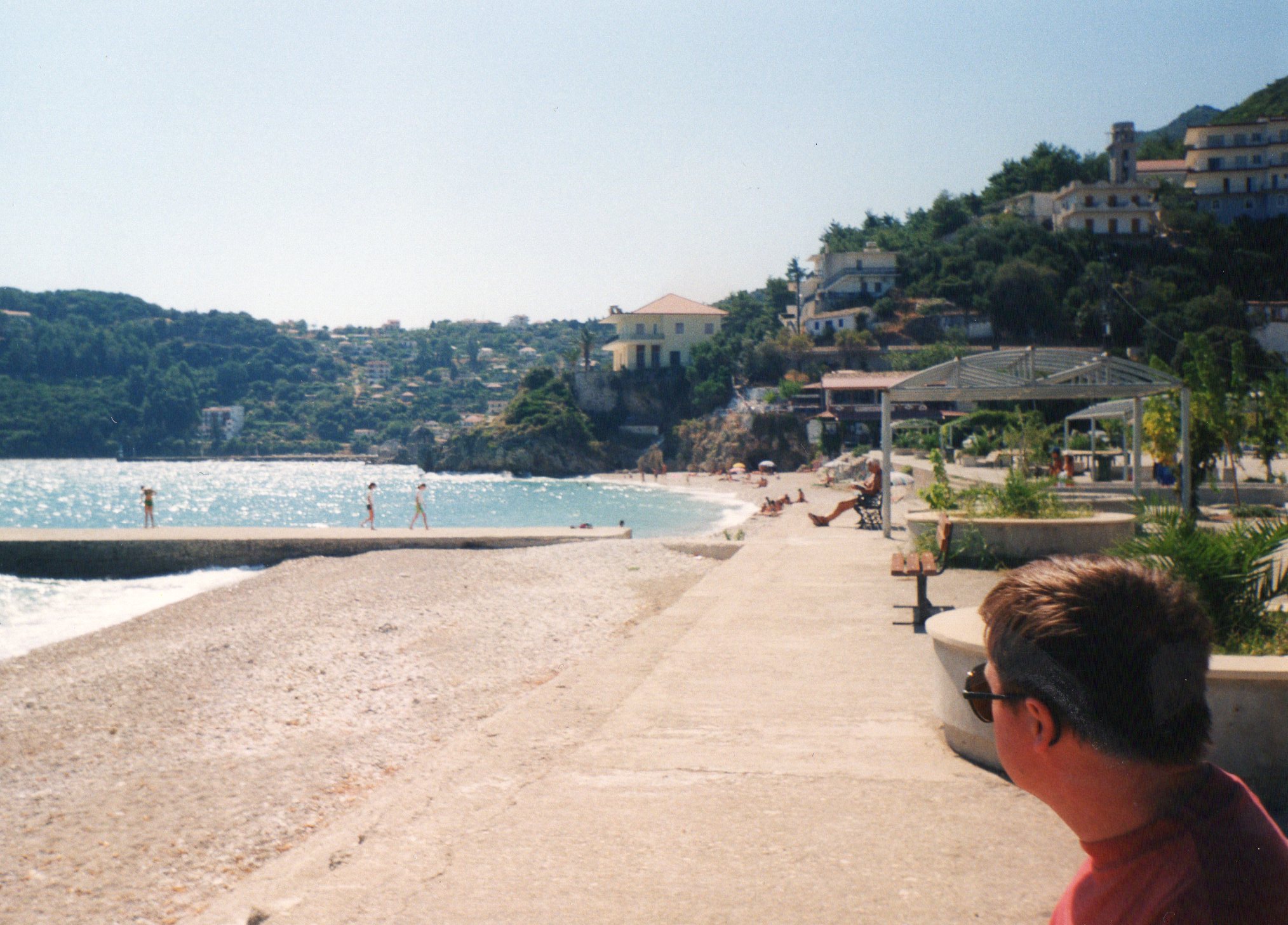
When we sat here waiting for the bus to go back to Lourdata Keith sat reading Captain Corelli’s Mandolin. When we bought the book we didn’t realise that it was set in Kefalonia. Looking around there were 3 other people reading the same book.
Scala city centre, I real hive of activity – not.

Lesbos
Lesbos (also called Lesvos or Mitilini) is in the northern Aegean Sea off the coast of Turkey. It’s famous as the birthplace of the ancient Greek poet Sappho. Lesbos is also known for its ouzo (an anise-flavored liqueur). Capital city Mitilini is home to the University of the Aegean and the Teriade Museum, whose modern art collection highlights Greek artists
Petra
While the front of the village appears to be a tourist town of the highest degree (or lowest depending upon how you look at it), the backstreets of the village give the visitor the feeling of the more remote traditional villages of the island and since most of the tourists tend to cling together like sheep along the shore, those people who are courageous enough to wander through the back streets can find themselves in a uniquely Greek setting, maybe finding what they have come to Lesbvos in search of.
We stayed at the Blue Sky Hotel in June 2000, July 2001 and June 2010.
Overlooking the village of Petra is Panagia Glykofilousa, Church on the Rock. To get to the church there is s short 114 step climb, it’s great when the temperature is in the mid 30’s. We didn’t see an entrance for the less able members of the congregation.

The Blue Sky hotel from the Panagia Glykofilousa.

At the top by the Panagia Glykofilousa there are great views of the village, this one shows the main village beach.
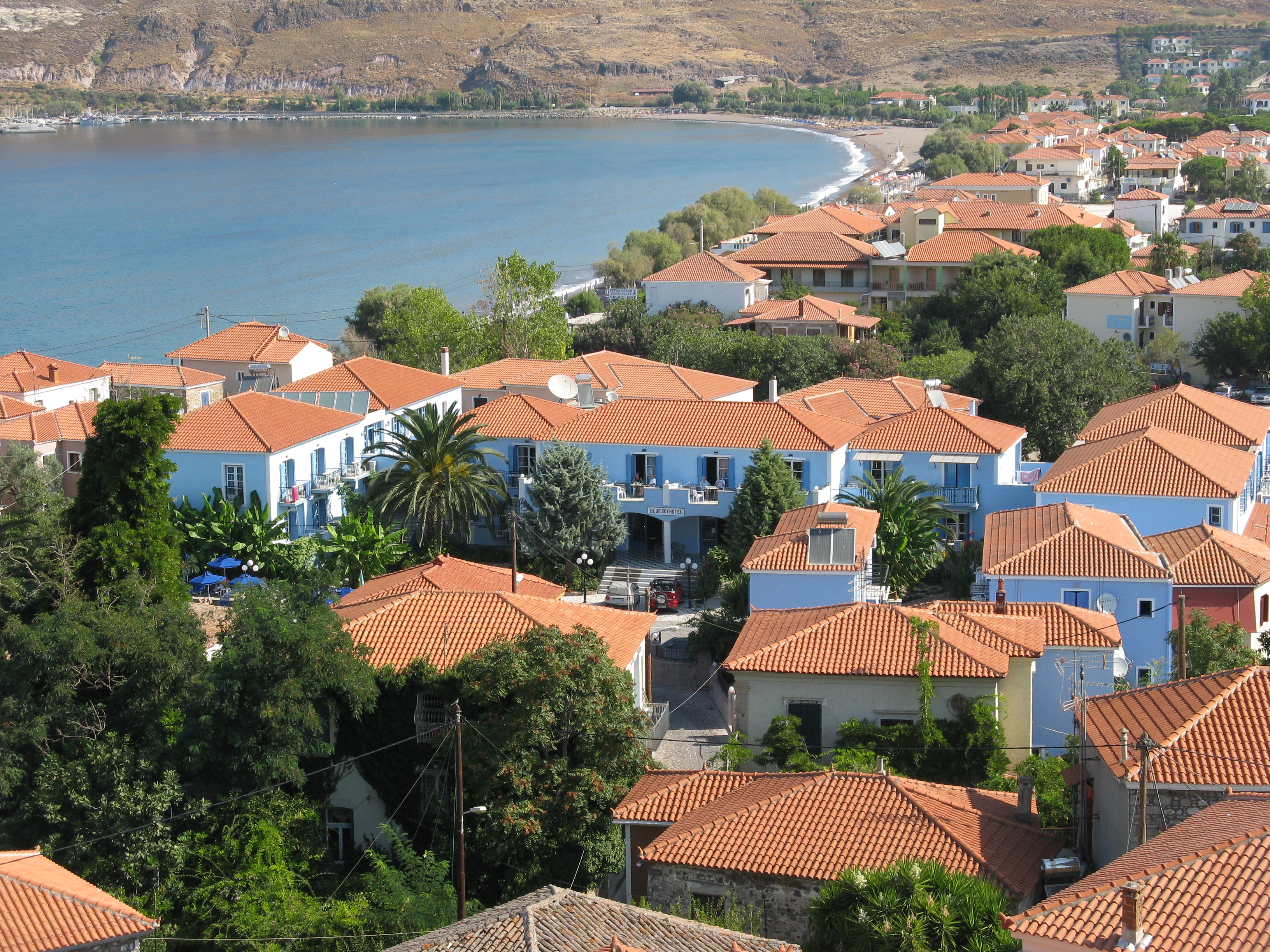
View looking inland. If you didn’t know any better this could have been a Tuscan landscape.

The inside of the Panagia Glykofilousa is absolutely stunning.

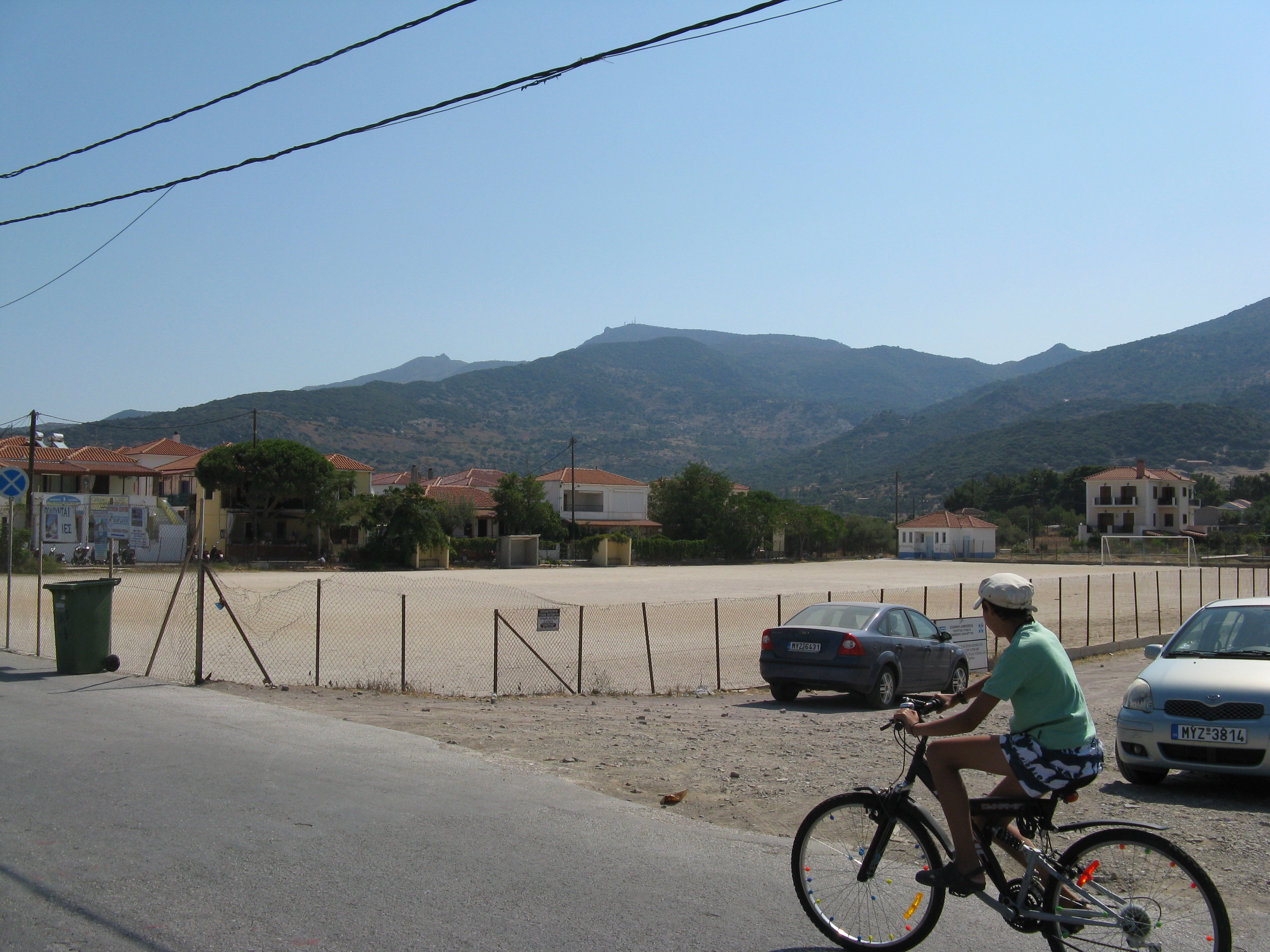
In our first visit I, Keith, was coerced in to playing football with a team of tourists playing against some locals. I stupidly expected to being playing on a grass or AstroTurf pitch, we had seen these on previous Greek trips. However the pitch turned out to be shale, not even nice soft sand. We took turns in playing in goal, which is my favoured position, and when I was playing right back I slipped and scraped the skin of my leg. My leg turned manky because of the heat so I had to take a trip to the local doctors who gave me some cream to put on it. I was told to keep this as dry as possible, not easy when the weather is so hot. This meant that I spent the rest of the holiday unable to go in the pool or the sea. We didn’t see much of Lesbos on that trip so we returned the following year on the understanding that I wasn’t allowed to play football in any form, even a kick about on the beach.
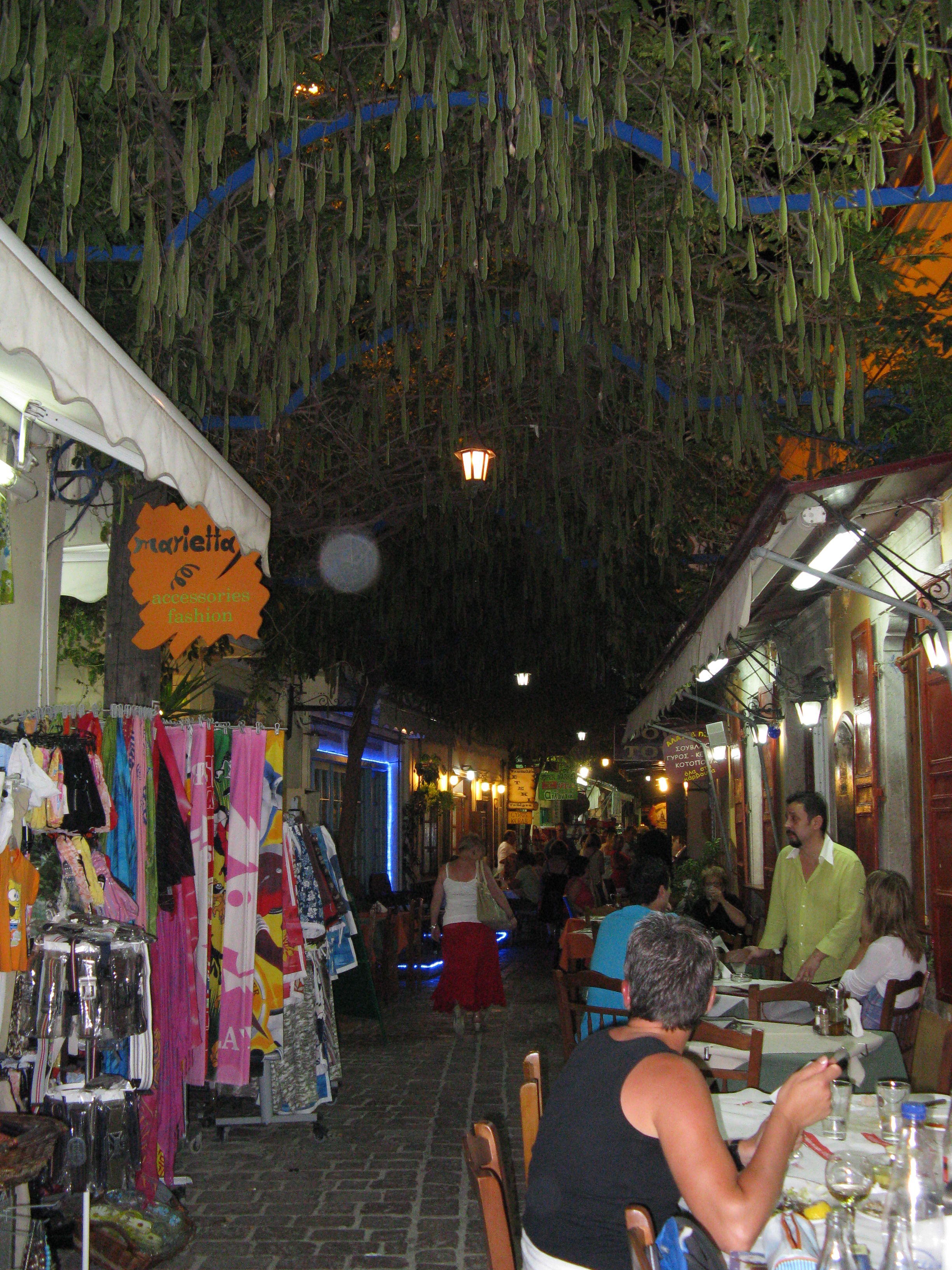
Village centre at night, this is not dissimilar to many others that are found in the towns and villages of Greek islands.
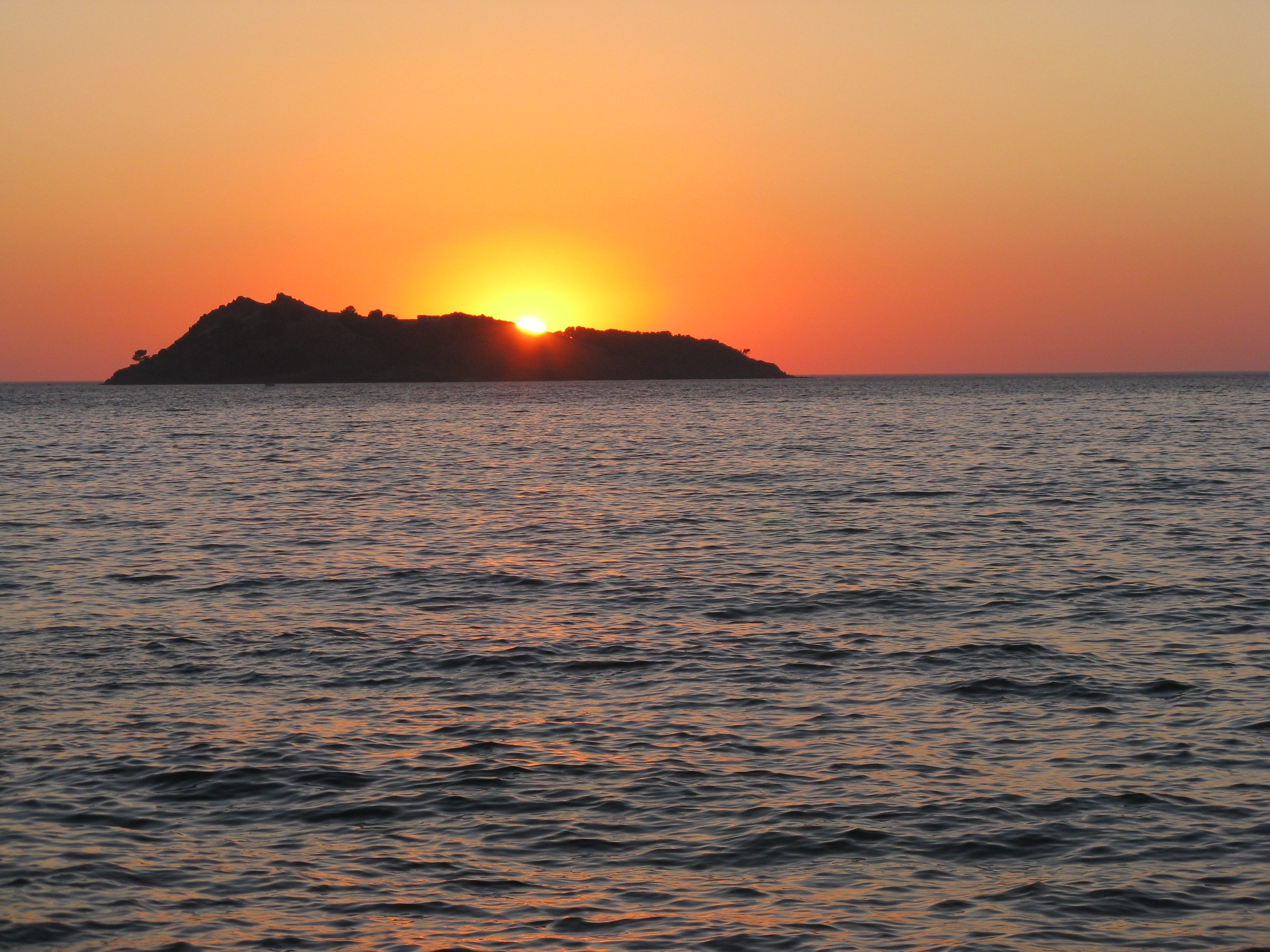
The sun setting over the bay, just going below some uninhabited island.
Molyvos
This is the second largest town on the island, after the capital Mytilene, and is situated 6km north of Petra. This is easy to get to by “Public Bus”.
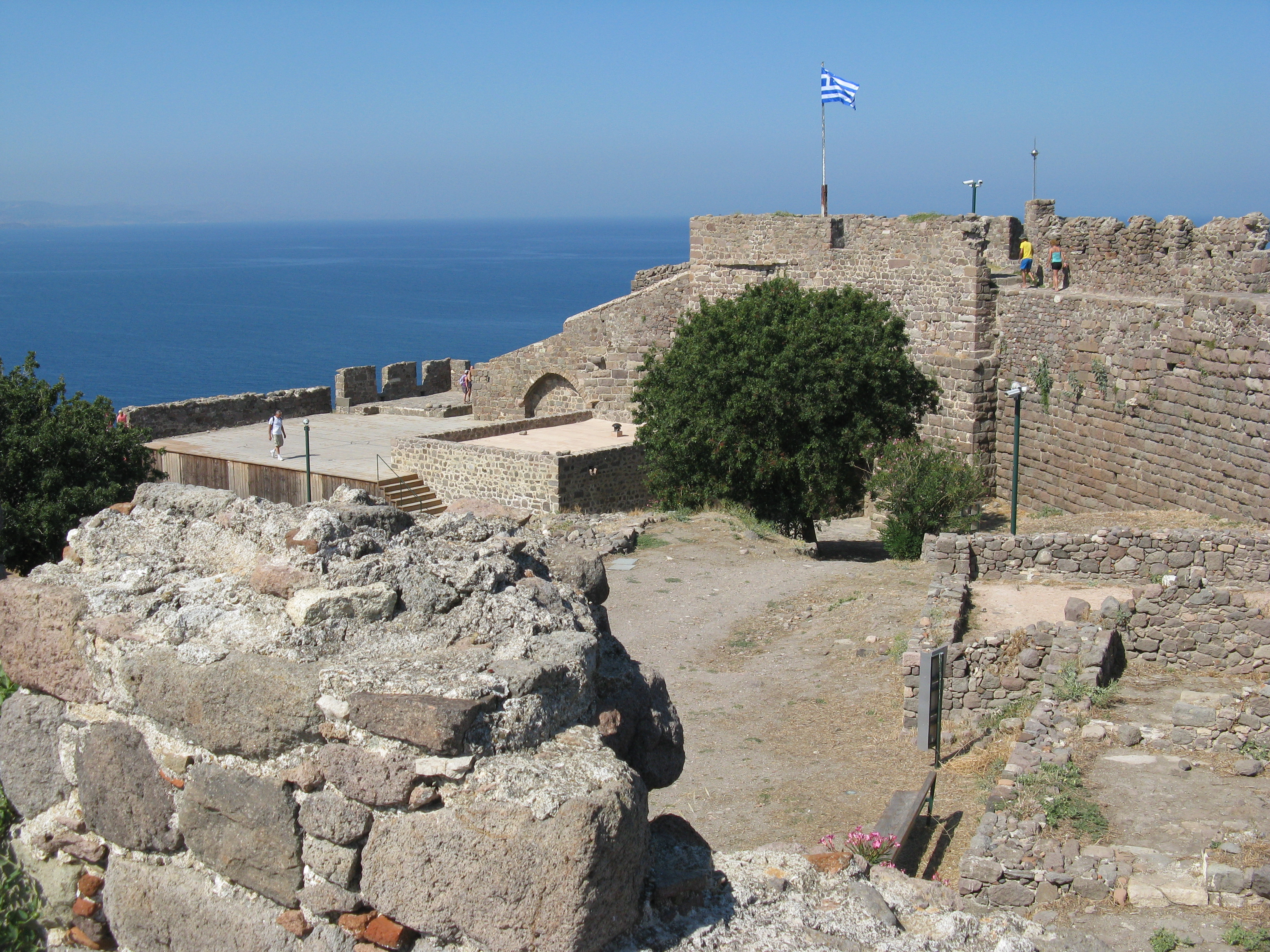
The most noticeable feature of the town is the old Genoese fortress on the hill in the middle of the town.
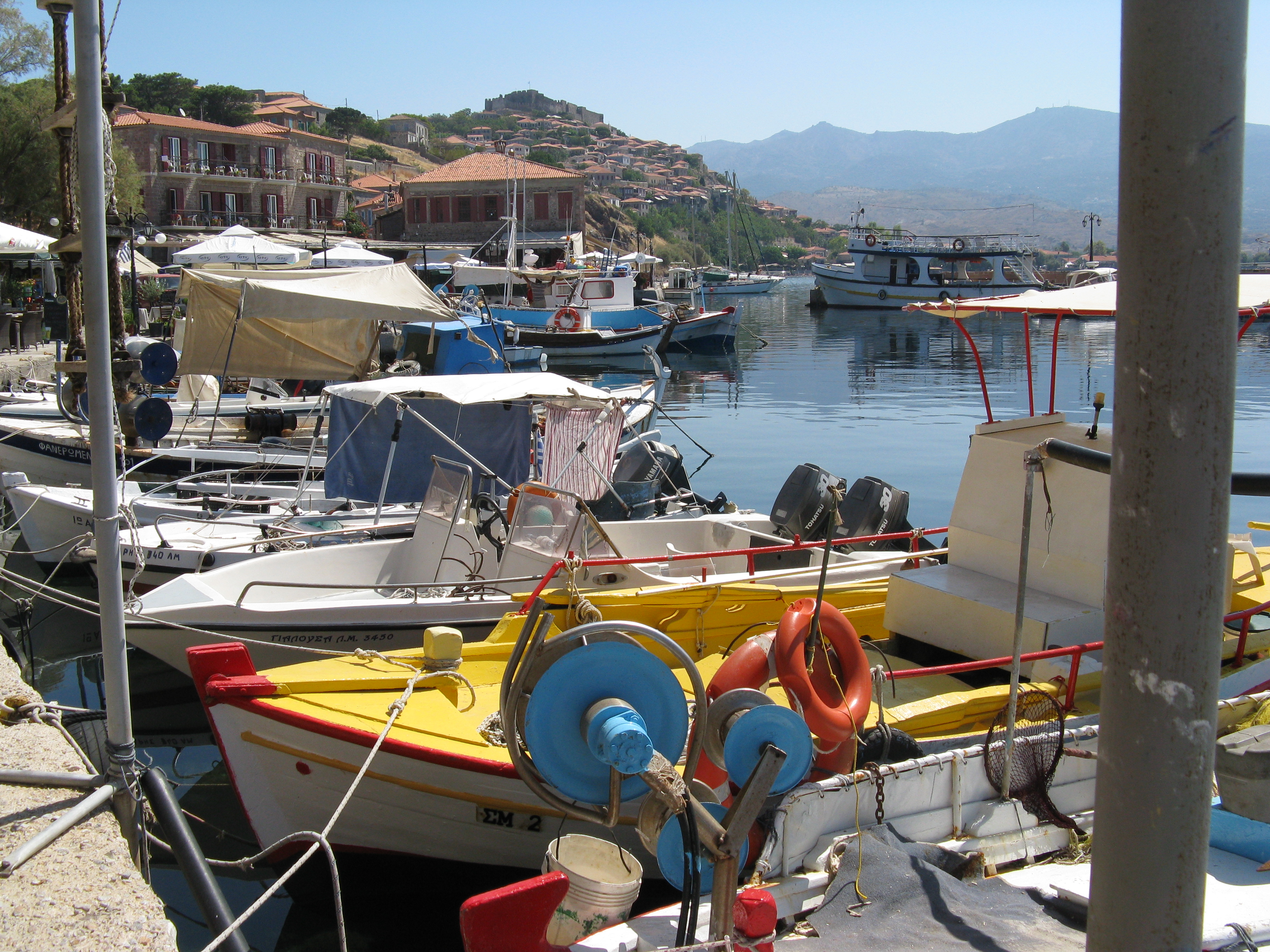
The harbour area is like many Greek islands with it’s small fishing boats that go out and return early in the morning with their catch. This has been the same for generations
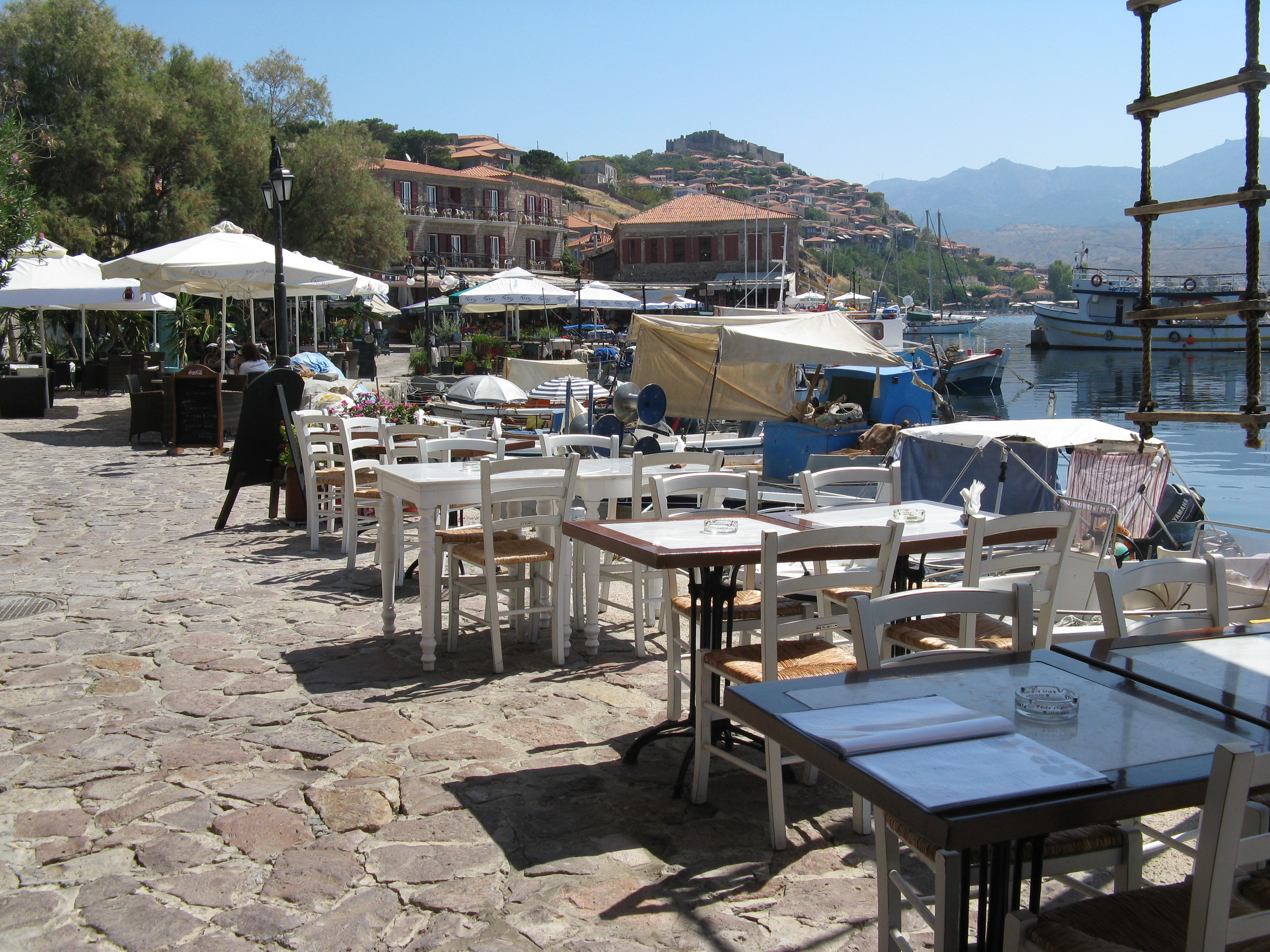
Yet another small restaurant to enjoy good food and ice cold beer.
Mykonos
Mykonos is in the Cyclades group of islands in the Aegean Sea. It’s popularly known for its summer party atmosphere. Beaches such as Paradise and Super Paradise have bars that blare thumping music. Massive dance clubs attract world-renowned DJs and typically stay open well past dawn. Iconic landmarks include a row of 16th-century windmills, which sit on a hill above Mykonos town.
We did this as a two centre holiday flying in to Mykonos and then going directly to Naxos for a week and then returning to Mykonos for the second week. It felt like two holidays in one as they are so different.
The new port is below, the ship you can see wasn’t the one we came on!

Agios Ioannis
The village is named after a small chapel standing above it, the beach looks out to the island of Delos. It is considered to bethe most beautiful beach of the island’s south-west coast, Agios Ioannis has soft sand and crystalline blue waters. A good place to get away from it all. Not too close to the town to be packed so a good place to enjoy a smallish beach.
This was where the award-winning film “Shirley Valentine” was filmed, in 1989, before Mykonos became the hot destination it is now.
We stayed at the Rochari Apartments (not to get confused with the Rochari Hotel which is on a different part of the island) in June 2005.
After a trip from Naxos in the heat there is the welcome site of the pool, after unpacking it was time for a dip.

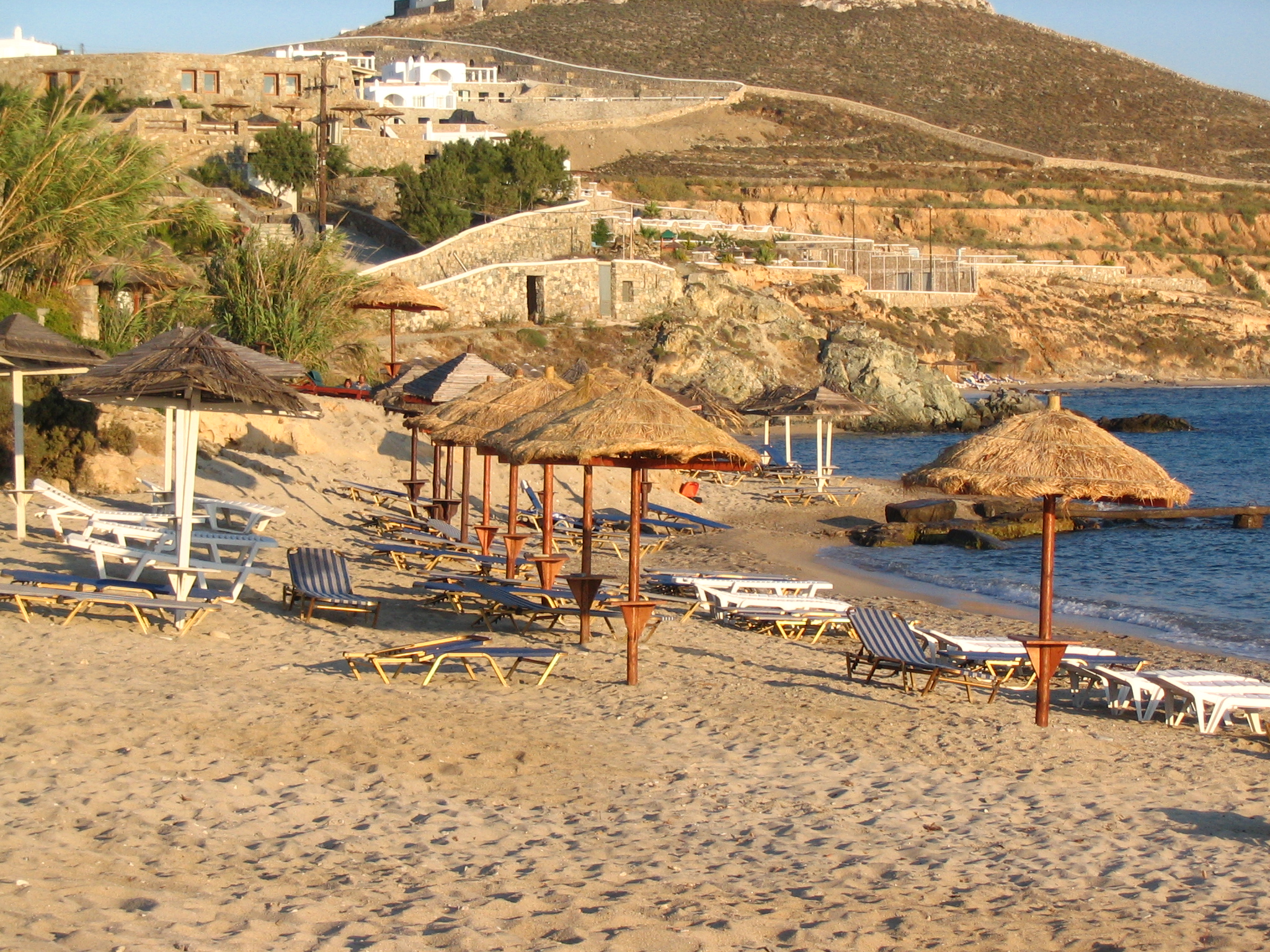
For anyone who has watched the film Shirley Valentine this is the bar and the beach where filming took place. It hadn’t changed a bit when we visited.

Mykonos Town
Mykonos is famous for it’s windmill’s, which were originally built by the venetians in the 16th century to mill wheat.

Wherever you go in Mykonos town there is normally a view of the windmill.

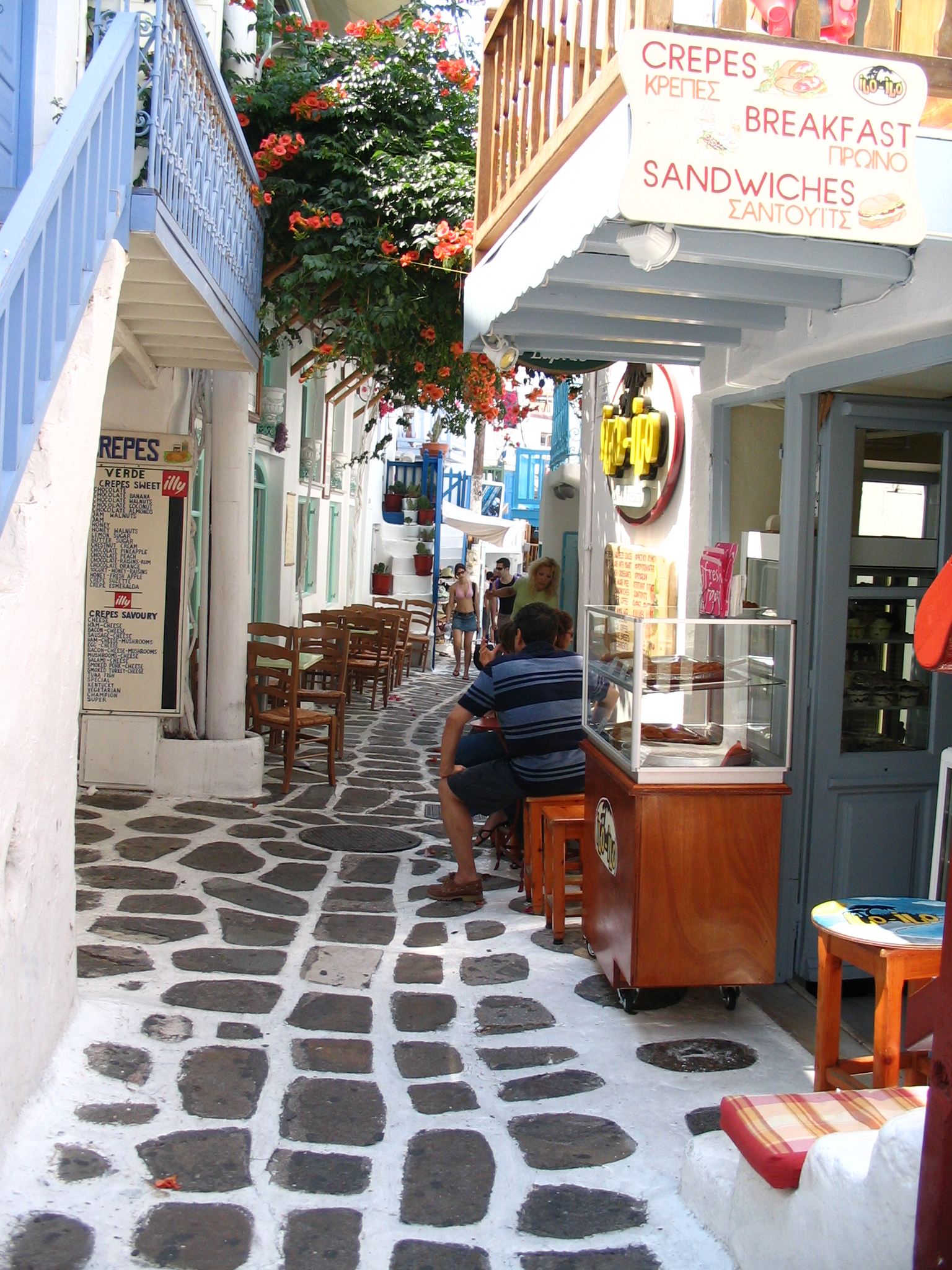
Mykonos has quaint little streets which are narrow and protect from the heat of the day.

In all these streets you will fund small bars, and of course restaurants, providing an opportunity to partake of an ice cold beer.
These are the famous residents of Mykonos town, pelicans. They just roam around town as if they owned the place.

Syros
Whilst in Mykonos we took a trip via ferry to Syros. This is the the main island in the Cyclades group where political and judiciary sit. The main court has become well known in 2020 for the appearance of English footballer Harry Maguire.
Syros does not have an international airport only a small domestic airport with flights only to Athens.
The largest towns on the island is Ermoupoli, which is the capital of the island and of the Cyclades. As there is no direct access then the town and the rest of the island is pretty tourist free.,

You can’t go anywhere in the Greek islands without finding a statue, this is Andreas Miaoulis which is directly in front of the City Hall in Miaoulis Square.

The church of the Holy Archangels was built in 1898. We only took a picture of the roof as is so stunning set against a deep blue sky.
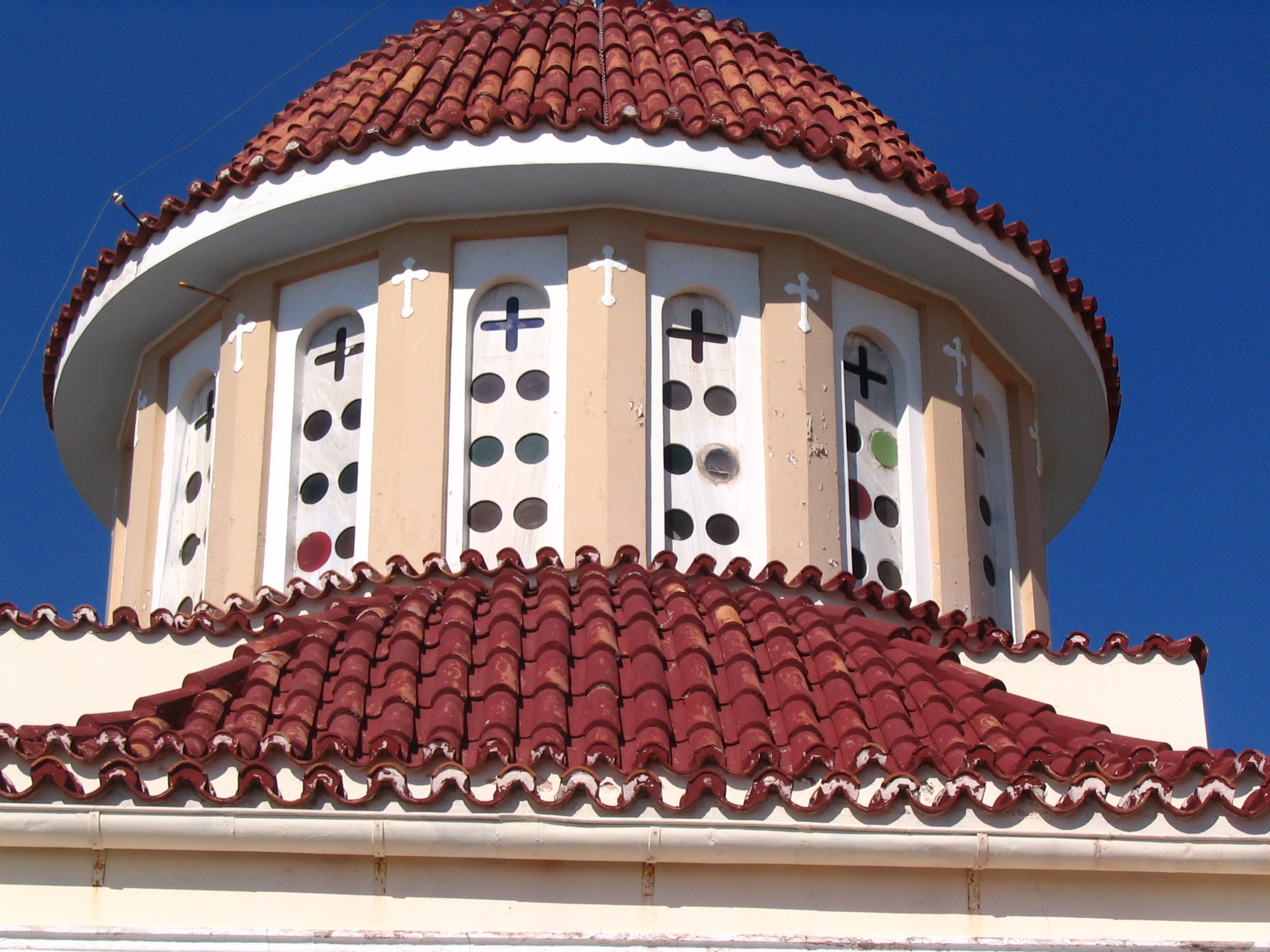
This is the central square in Ermoupoli Another picture from the main square in Ermoupoli. Beautiful church on Syros.
Naxos
Naxos is the largest of the Cyclades island group. Its fertile landscape spans mountain villages, ancient ruins and long stretches of beach. The capital, Naxos Town (highly original naming) is a port town filled with whitewashed, cube-shaped houses and medieval Venetian mansions. Kastro, a hilltop castle dating to the 13th century, houses an archaeological museum.
Naxos has to be reached by boat from Mykonos and this gives it one of its charms as it, when we went, didn’t have mass number of visitors.

Prokopios
This is a small village about 10 minutes by bus from the capital Naxos Town also known as Chora. The beach has wonderful golden sand and crystal clear waters in to the Mediterranean.
We stayed at the Anna Studios Agios in Prokopios in June 2005. It was the first time we ever had an apartment with air conditioning. The room we had faced North so it was never used!!!

The beach wasn’t very commercial, no sunbeds or parasols just use what nature provided – the trees provide cool shade when it gets too hot.

Another stunning sunset this time taken from Prokopios beach.

It is possible to work up the hill from Prokopios, anyone that does take on the challenge is rewarded with this view.

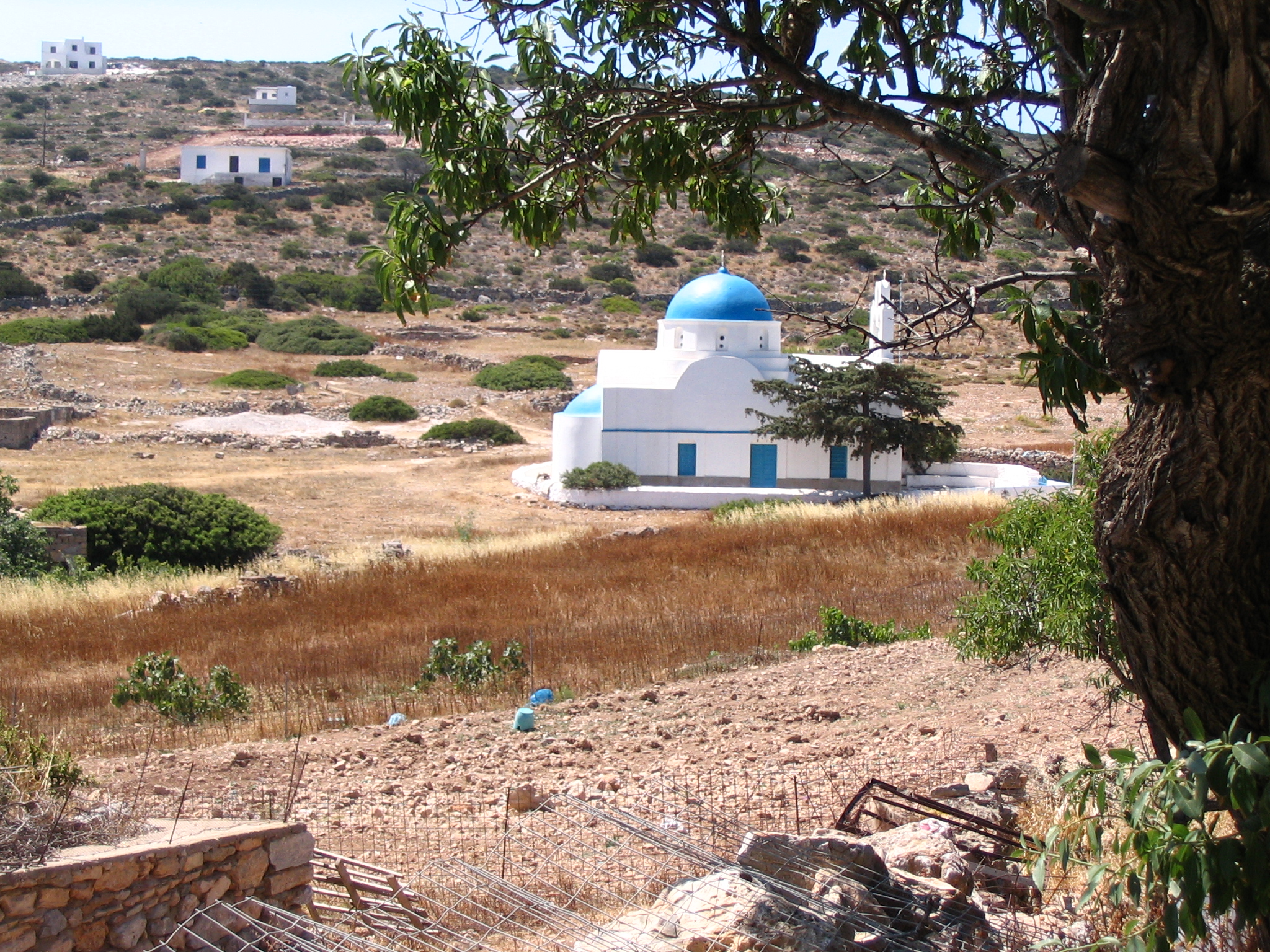
Just outside of Prokopios there was a small church which was isolated with very few houses. We just can’t remember the name of it.
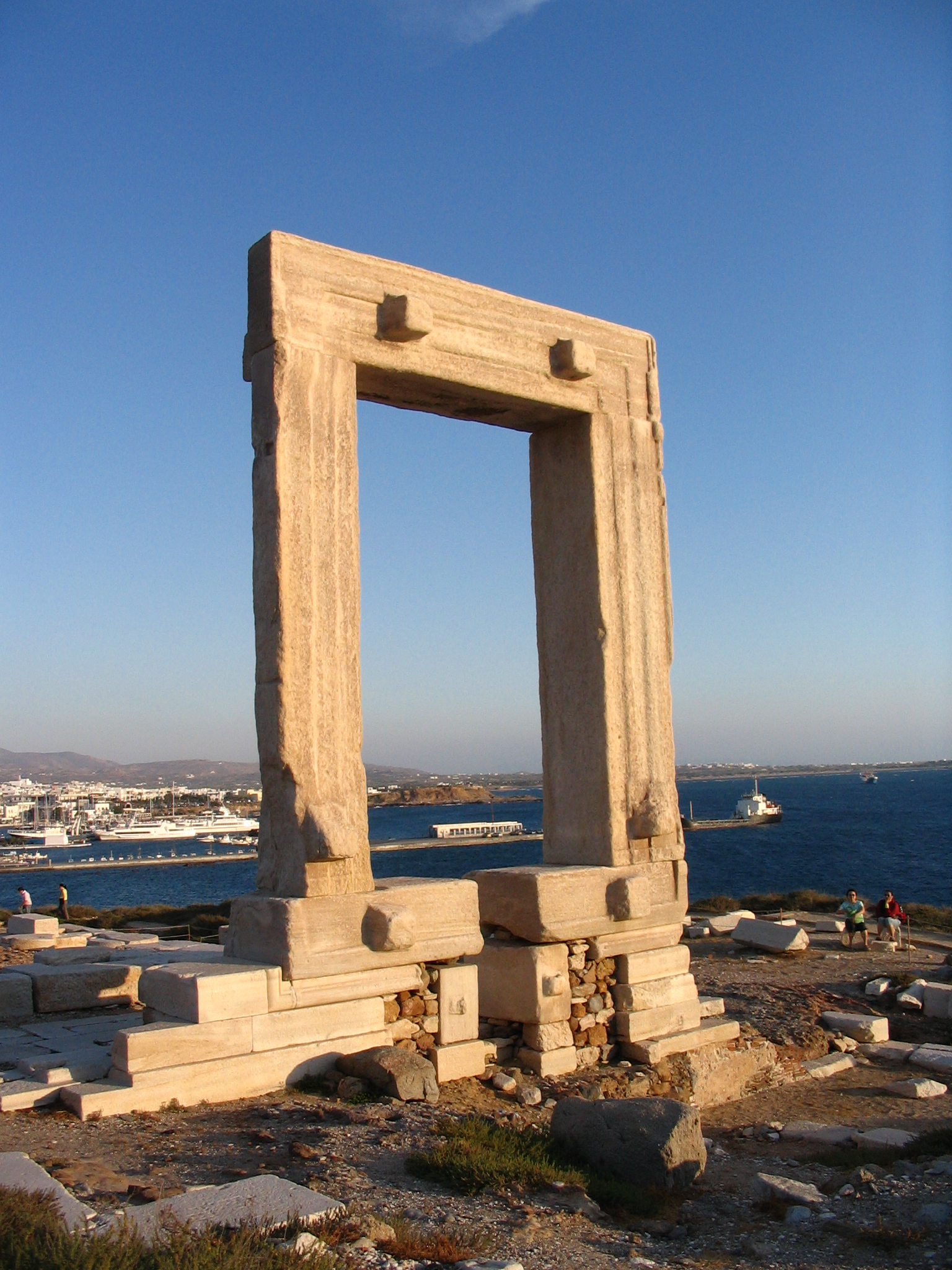
Portara, Apollo Temple
The Portara is an enormous marble frame and is visible for miles, being particularly prominent around the coastline thanks in no small part to its elevated situation. The Portara was built with four blocks of marble, each of a length of over 6 metres and weighing 20 tones. It is the entrance to an unfinished temple that faces directly toward Delos, Apollo’s birthplace. The temple was begun about 530 BC by the tyrant Lygdamis, who said he would make Naxos’s buildings the highest and most glorious in Greece. Only the walls were mostly completed when he was overthrown in 506 BC and the temple was never finished. Evidence from pottery indicates the temple’s cult was abandoned by the 5th century BC.
Iraklia
Whilst in Naxos we took a day trip to the smaller island of Iraklia. We arrived on a boat from Naxos there were a few people milling around.

The fishing boats are tied up ready for the next day.

We decided to go straight to lunch. The only restaurant that we found served a massive array of vegetarian food – omelette. You could have cheese, tomato etc as long as it was an omelette.
After such a lavish lunch and a cold beer we ventured outside to find there wasn’t a sole about. It was so eerie, where had everyone gone? The beach was deserted.

We went for a walk obviously we would run in to someone as there was at least 60 on our boat in the morning.
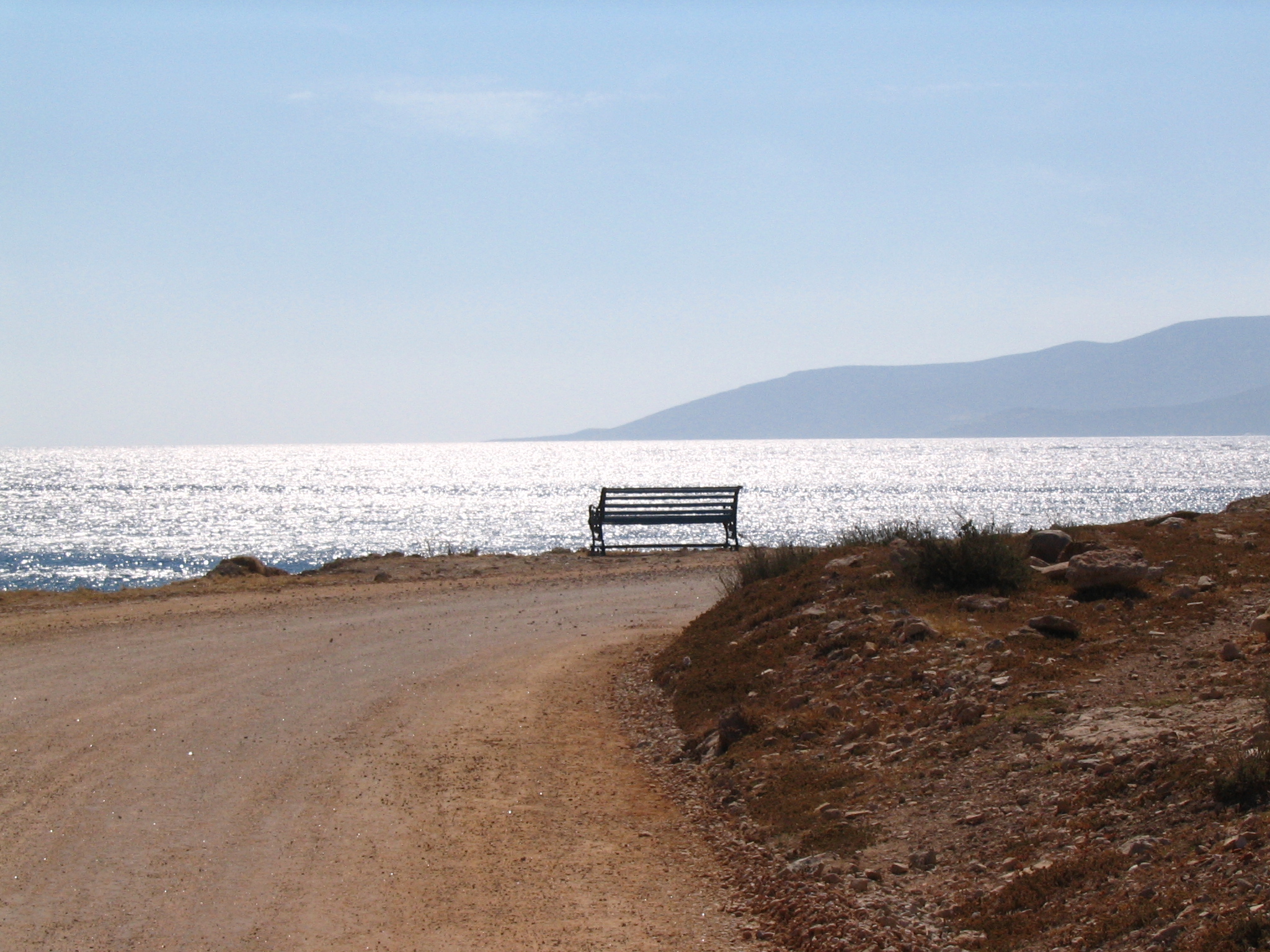
The picture below sums this up.
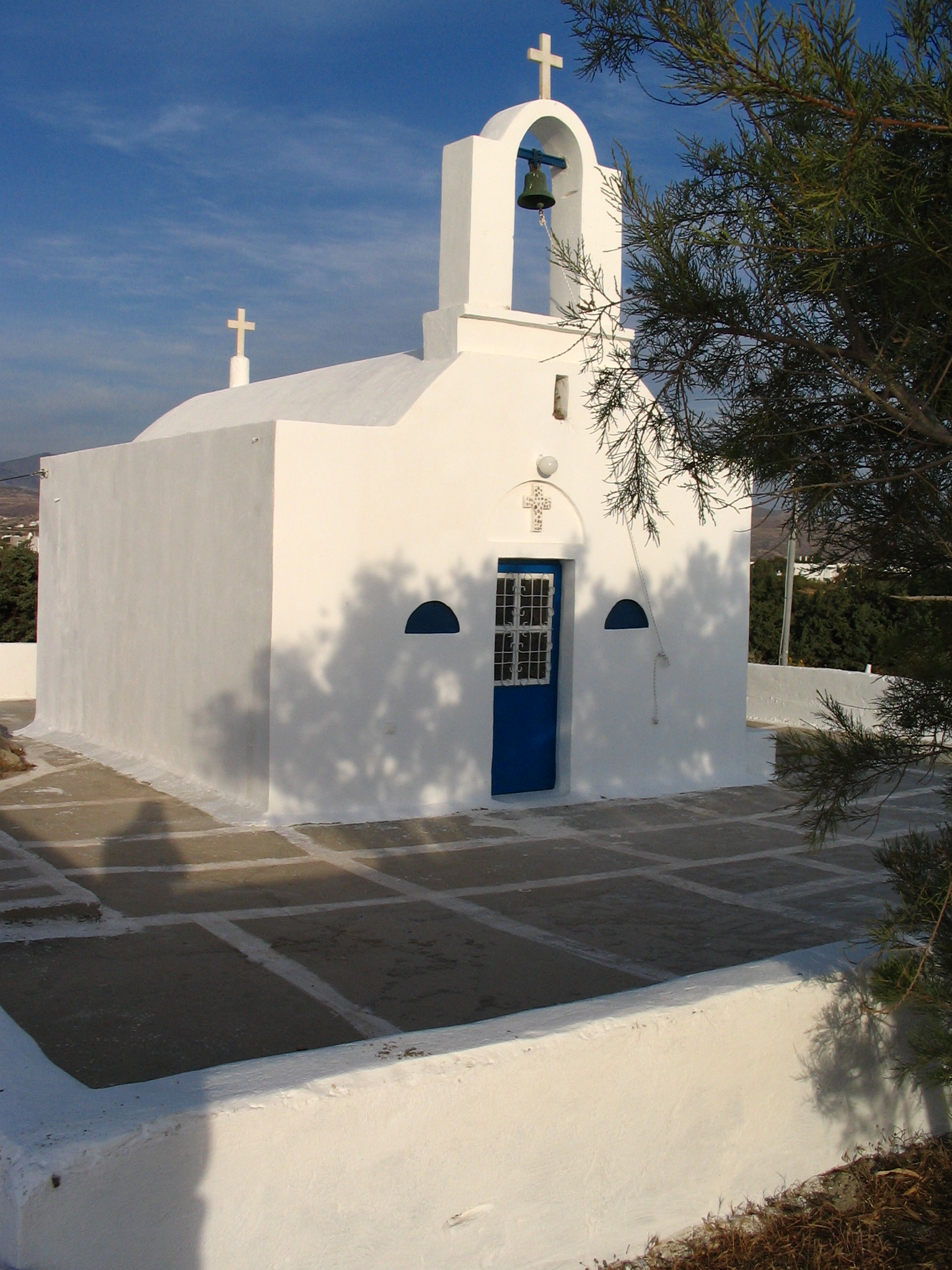
We just wandered around and visited the church of Agia Anna “Saint Anna”, like the rest of the island it was closed.
The only other person that we saw in the whole afternoon was along side the windmill.

Walking back to the harbour to sit and wait for our ferry back to Naxos which was due in 45 minutes we saw this view.

A about 20 minutes before our ferry was due cars and people appeared in cars and on bikes as another ferry was coming in. There were people holding cards offering places to stay, there were taxi’s in abundance – where they came from we will never know. Within 10 minutes they had all disappeared again. Sadly we never got a picture of this.
Time to go back to Naxos.
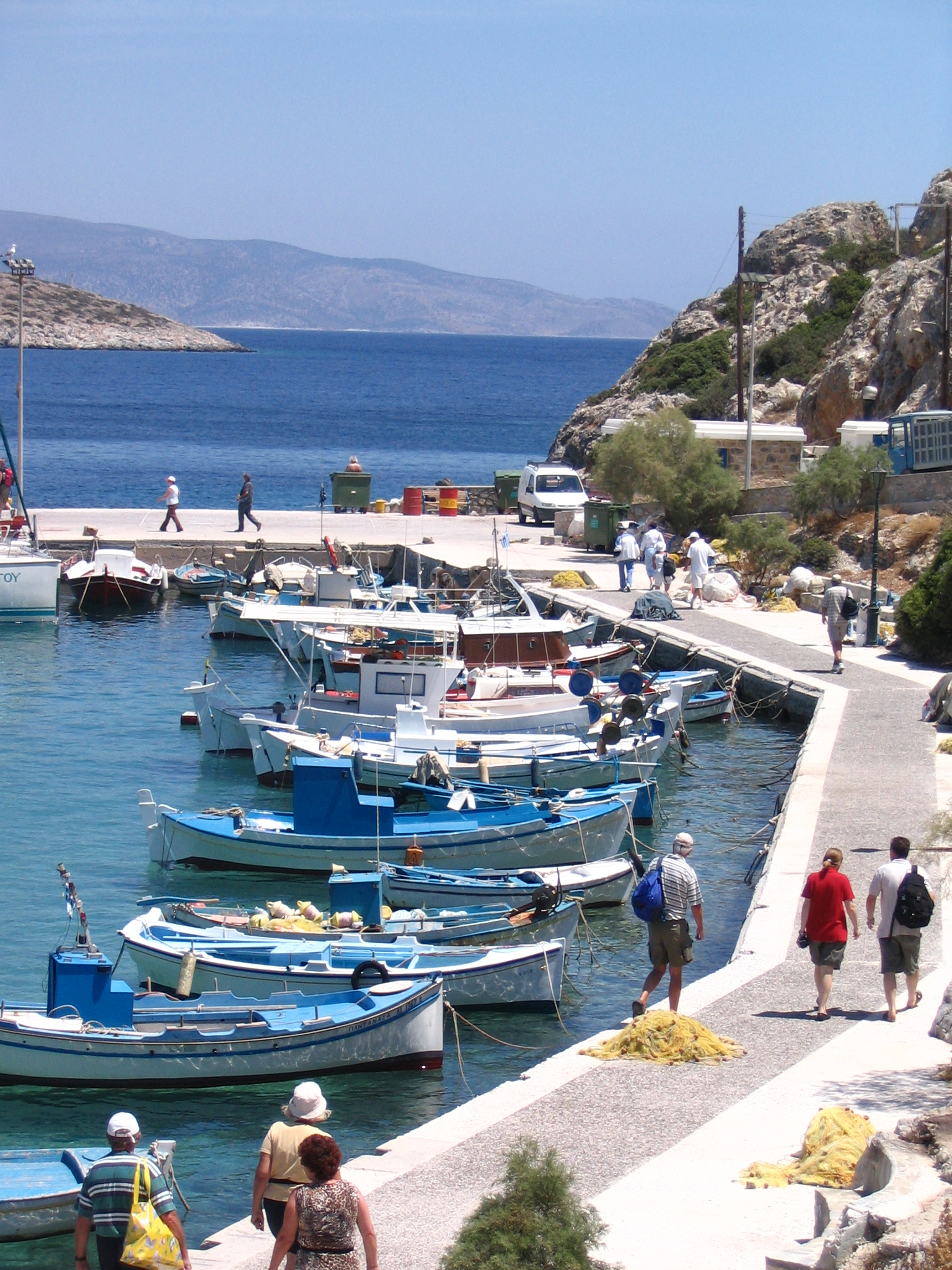
We always thought that getting away from it all for a few days would be amazing as we don’t mind a bit of peace and quiet but one afternoon on Iraklia was long enough. We couldn’t wait to get to Naxos for some normality.
Samos
Samos is in the eastern Aegean Sea, separated from Turkey by the mile-wide Mycale Strait. It was the birthplace of mathematician Pythagoras and philosopher Epicurus, and is known for producing sweet Muscat wine. On the southeast coast, the remains of the ancient port of Pythagoreion include the underground Eupalinian aqueduct, built in the 6th century B.C.
We stayed at the Villa Anna Studios in Pythagoreio in June 2007.
Pythagoreio
Pythagorio is built on the ancient city of Samos. Some ruins of the ancient city are today incorporated in modern houses of Pythagorio. The ancient city reached affluence around 530 B.C. under the tyrant Polycrates. At that time Samos became a powerful nautical state. This power led to richness and prosperity, which is evident from great works of the period, such as the great aqueduct (part of it is the Tunnel of Eupalinos), temple of Heraion, and Samos harbour. Today many of these works can be seen in the modern town and nearby area. The ancient fortification also remains.
In 1955 the town was renamed to Pythagorio after the name of famous ancient Greek Mathematician and
Philosopher from Samos Pythagoras. He even got his own statue.

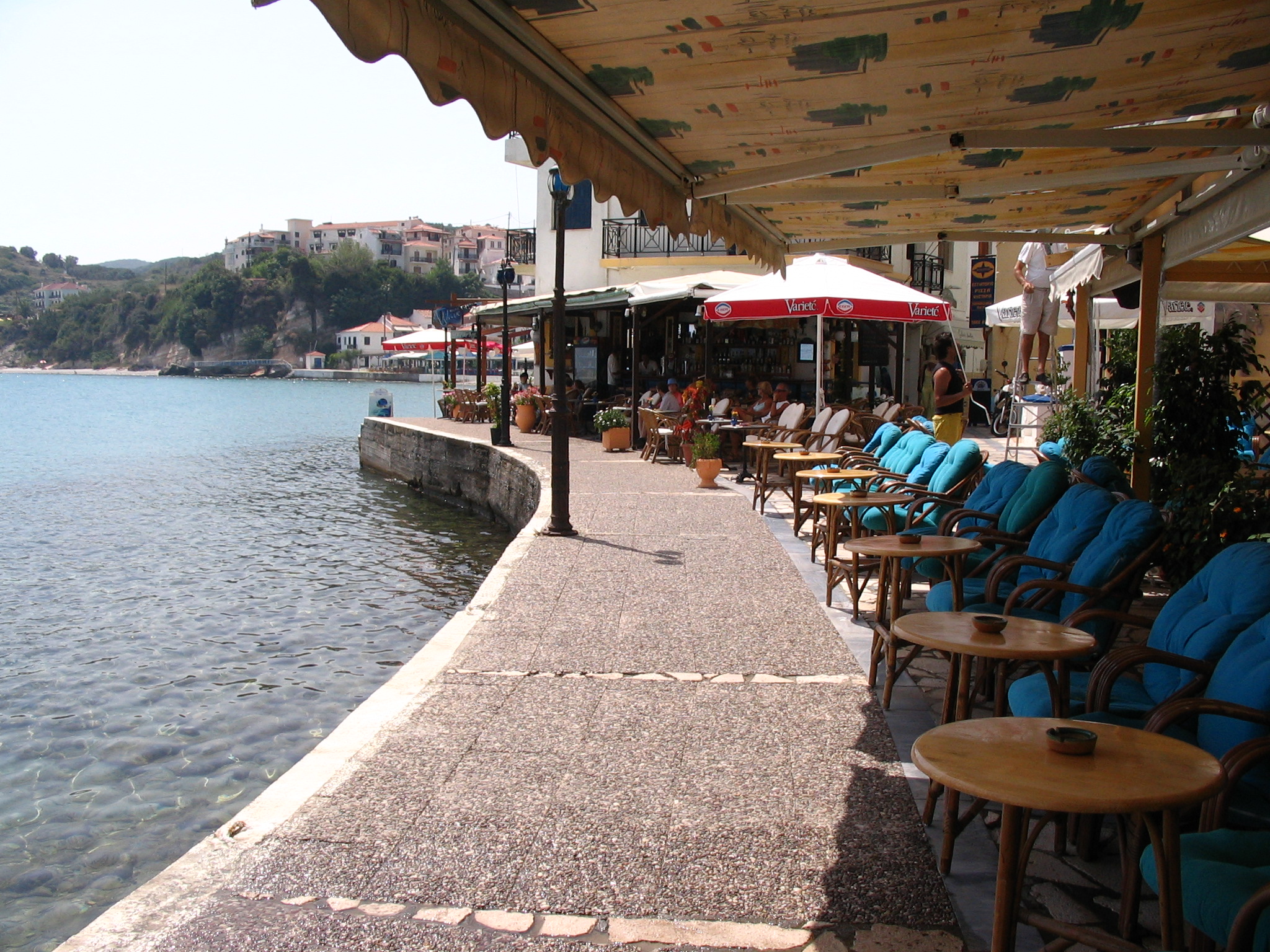
Peace and tranquillity, the boats are in with the days catch and the restaurants are preparing lunch and dinner.
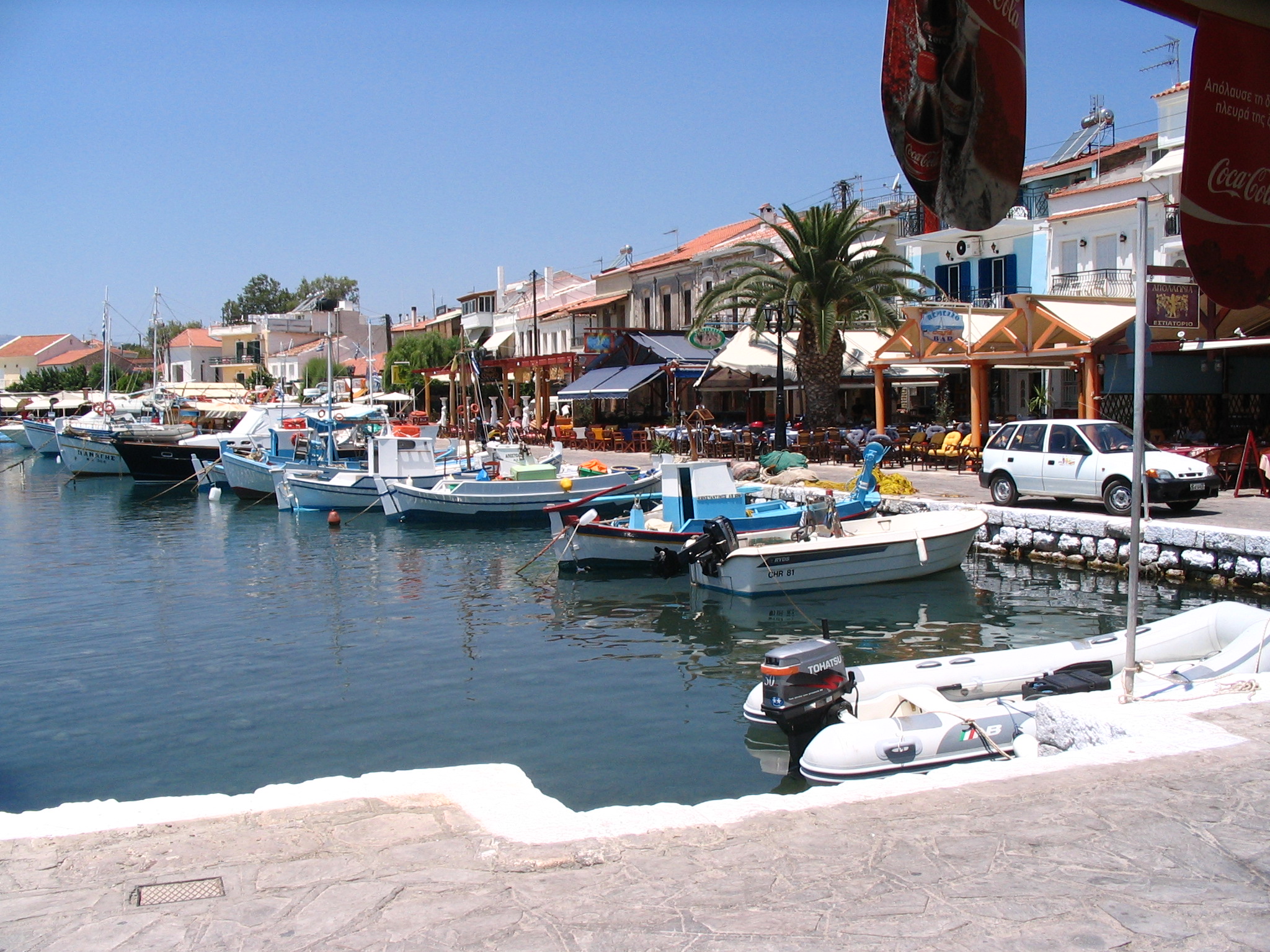
This is definitely not the place to have too much to drink one false move and your in the sea.
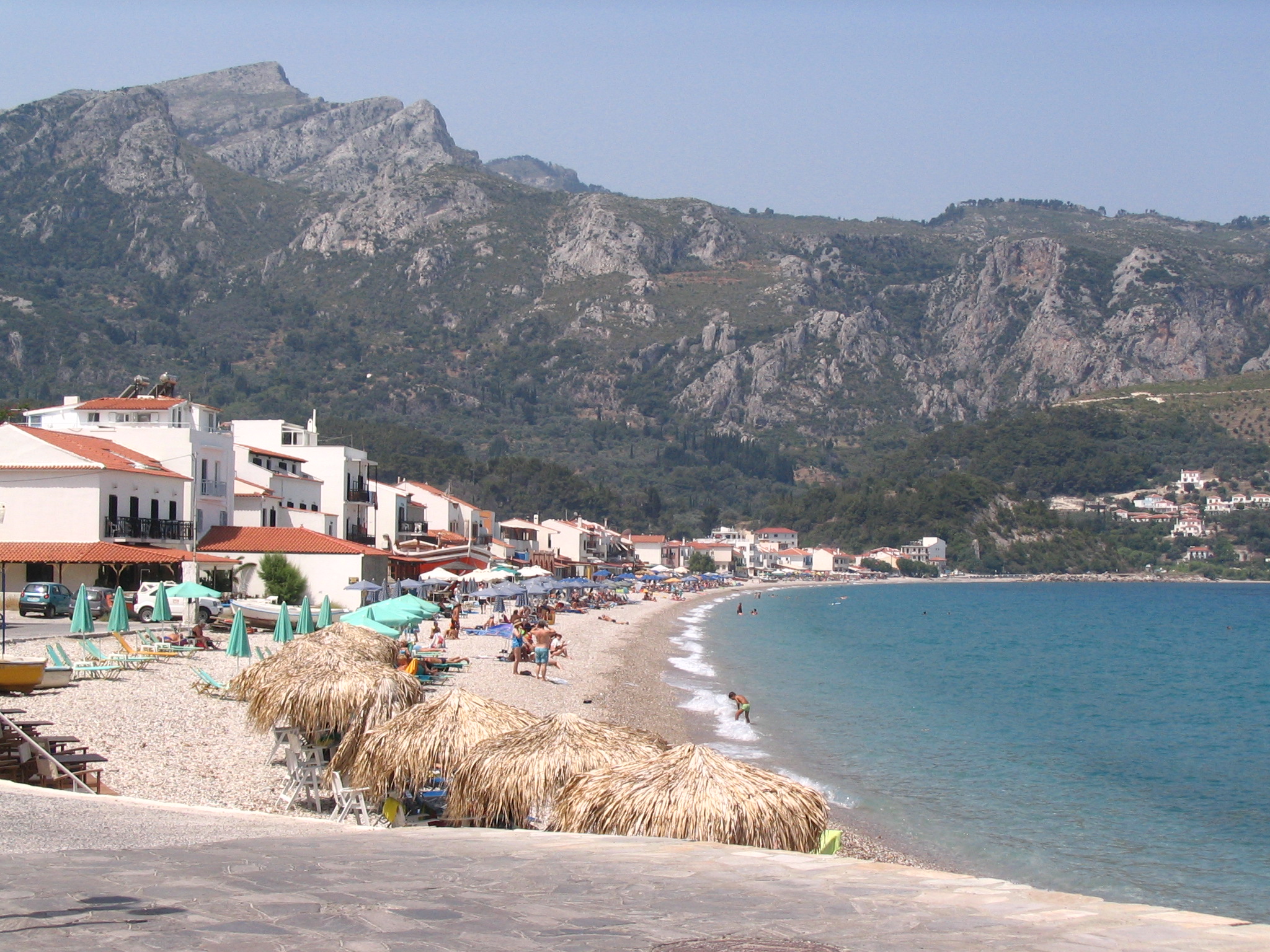
The beach is not golden sand like other beach’s on Greek islands, thinking of Golden Beach on Thassos, but small pebbles/shale.
Pythagoro at night looking from the opposite side of the bay.

Ancient Ruins
There are many ancient ruins, this is the entrance to remains of the spectacular tunnel-aqueduct. It’s amazing to think how these were constructed without the modern machinery and techniques.
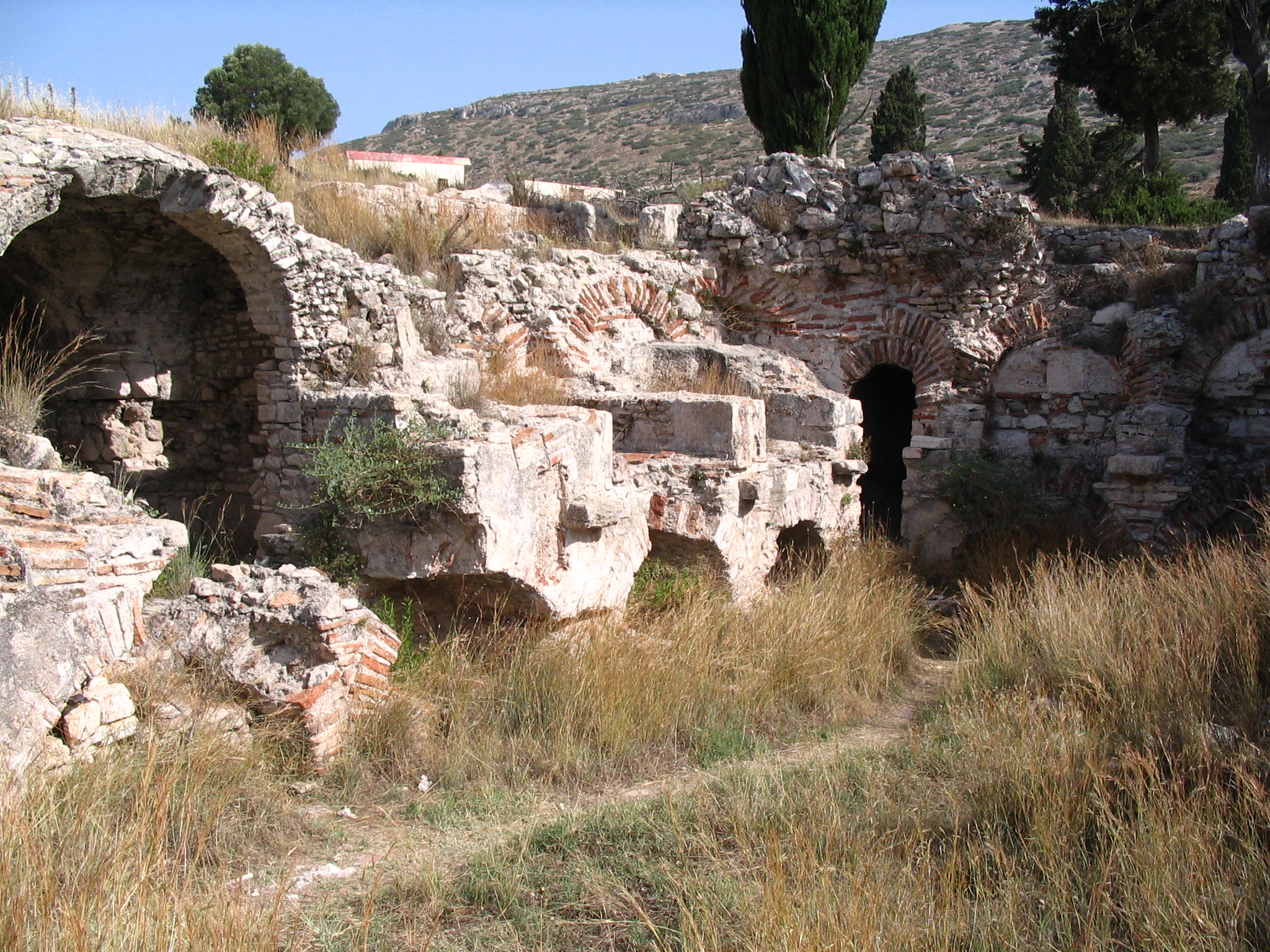
This covers a fairly large site of preserved ruins and this is part of the Heraion, temple of the Samian Hera.
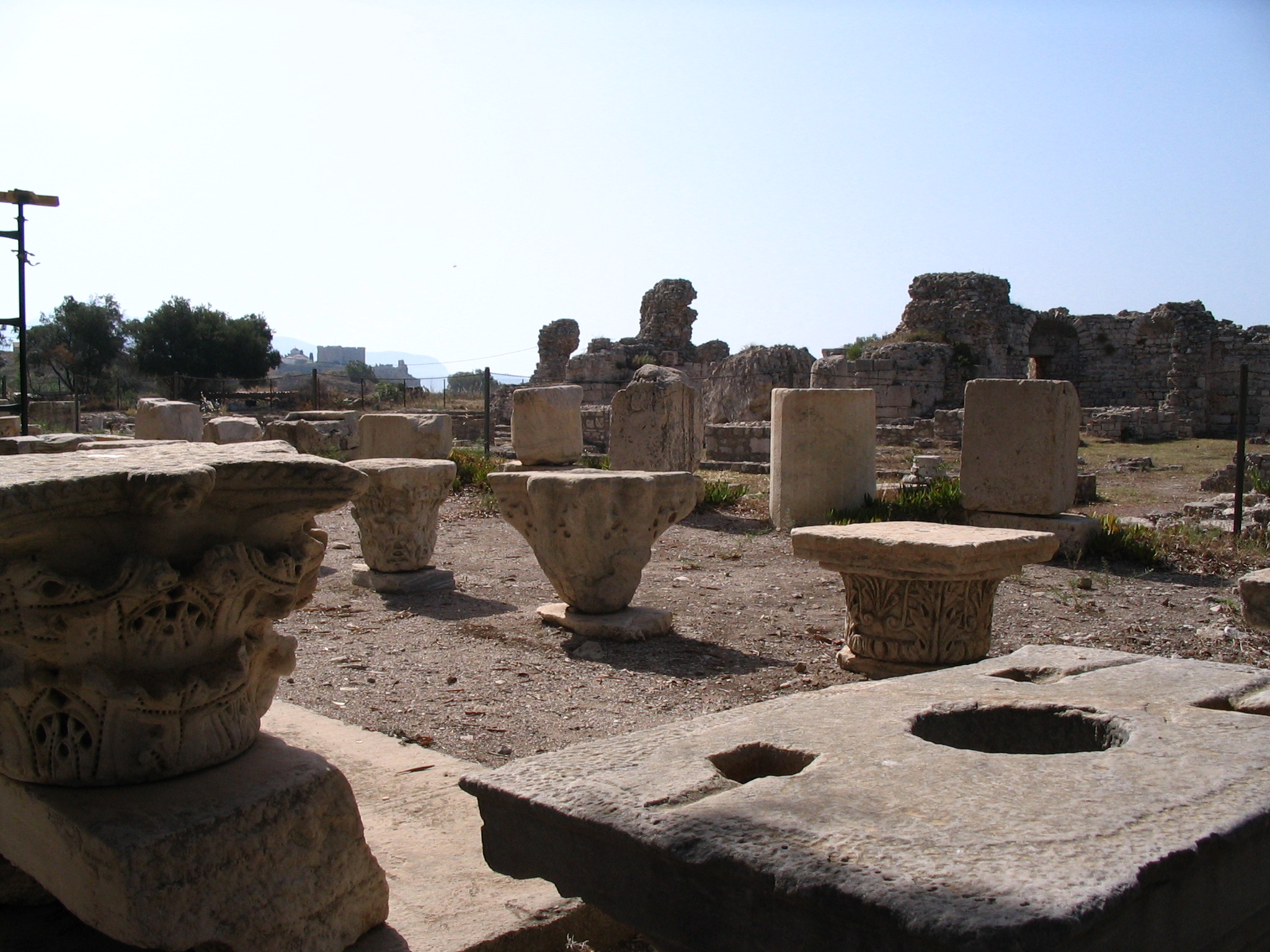
A close up of one of the remains
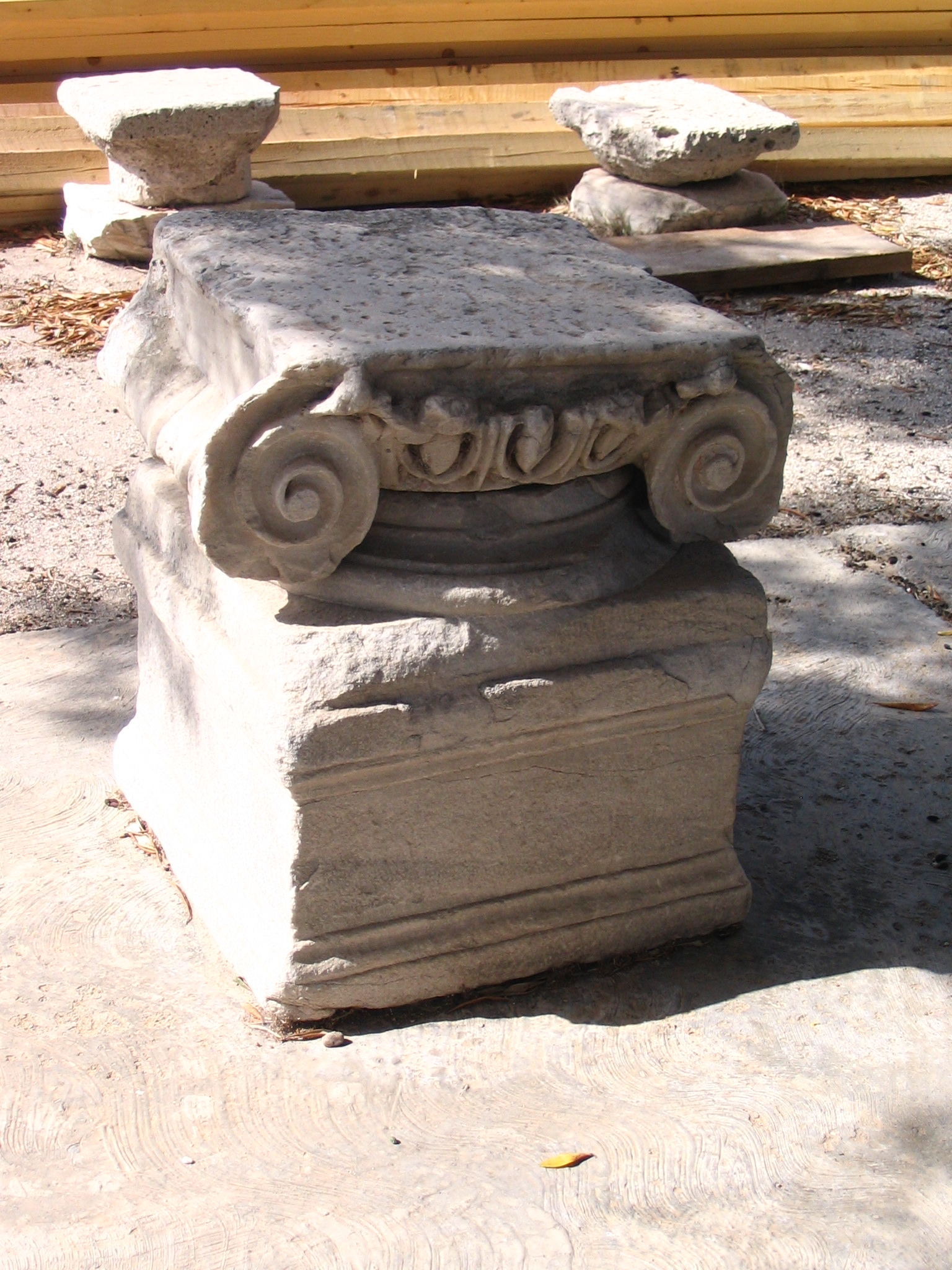
The tower of Sarakinis is the oldest tower that was built after colonisation of the island and dated from 1577.

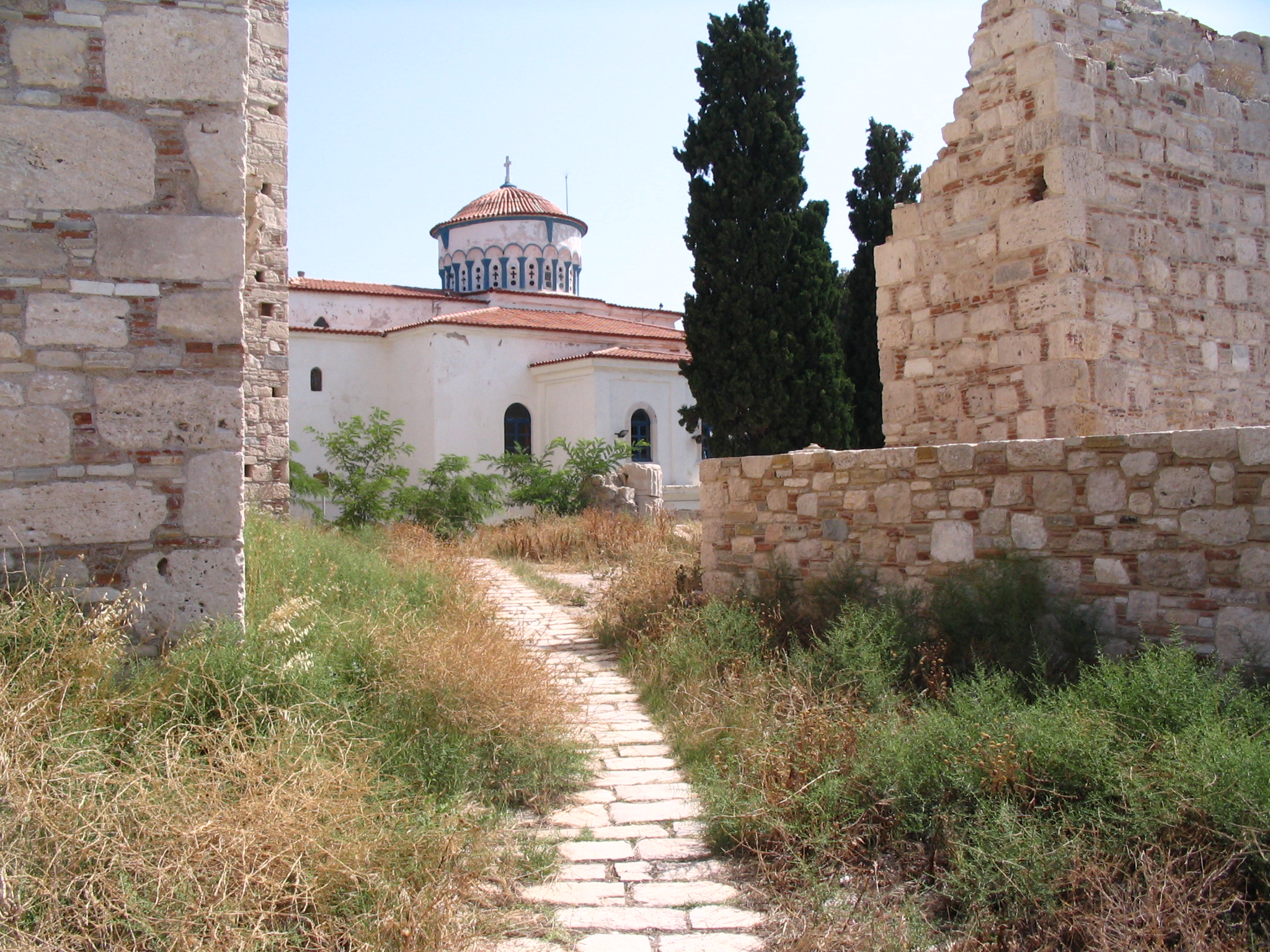
Nearto the tower there is the picturesque church, the name of which we can’t remember.
Kusadasi – Turkey
Whilst in Samos we took a day trip to Kusadassi in Turkey, this is to date (April 2021) the only time that we have been to Turkey, probably because the capital Ankara is in Asia.
The ferry awaits, need to remember the £10 or 10 euro visa entry fee. it’s the only place we have been where you don’t get a receipt for the visa and the money disappears in to someone’s back pocket. How do they account for tax?

The phrase “Yurtta sulh, cihanda sulh” – “Peace at Home, Peace in the World.

In this park there are lots of busts of famous Turks, must confess we have never heard of any of them. It goes to show that travel really does broaden the mind

Back in Samos waiting to go home. When someone said that it’s not far from the airport we didn’t expect it to be walking distance.

Santorini
Santorini is one of the Cyclades islands in the Aegean Sea. It was devastated by a volcanic eruption in the 16th century BC, forever shaping its rugged landscape. The eruption left a large caldera surrounded by volcanic ash deposits hundreds of metres deep. It may have led indirectly to the collapse of the Minoan civilisation on the island of Crete, 110 km (68 mi) to the south, through a gigantic tsunami. Another popular theory holds that the Thera eruption is the source of the legend of Atlantis. It is the most active volcanic centre in the South Aegean Volcanic Arc, though what remains today is chiefly a water-filled caldera. The volcanic arc is approximately 500 km (310 mi) long and 20 to 40 km (12 to 25 mi) wide.
The whitewashed, cubiform houses of its 2 principal towns, Fira and Oia, cling to cliffs above an underwater caldera (crater). They overlook the sea, small islands to the west and beaches made up of black, red and white lava pebbles.
We stayed at the Formithea Studios in Kamari in June 1999.
A view of the Caldera when approaching the capital Thira by boat – stunning.
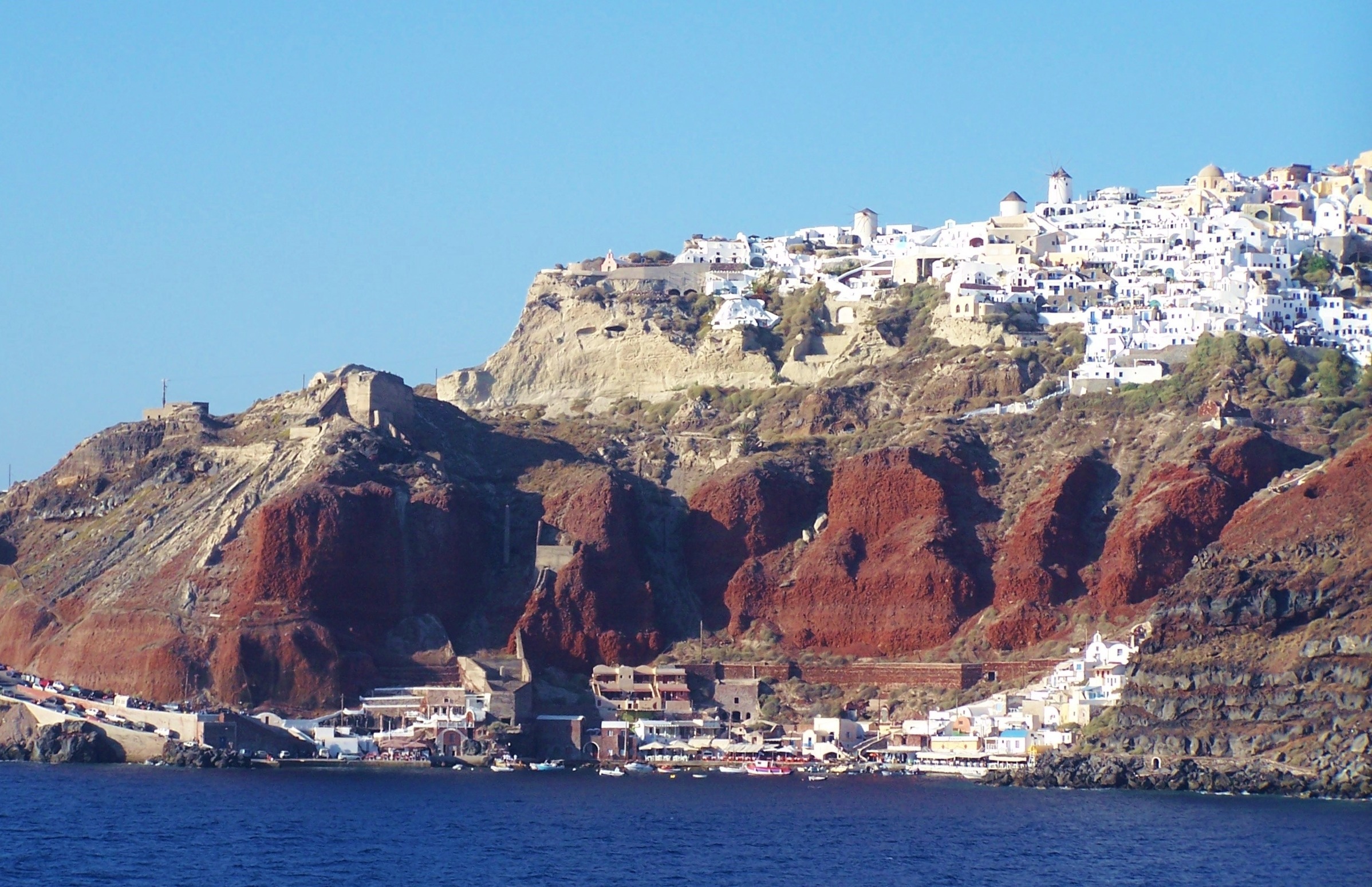
Santorini is probably the most attractive of all Greek islands and when you see pictures they always have a church with a blue roof. Although these are present all over the Greek islands most people will associate them with Santorini.
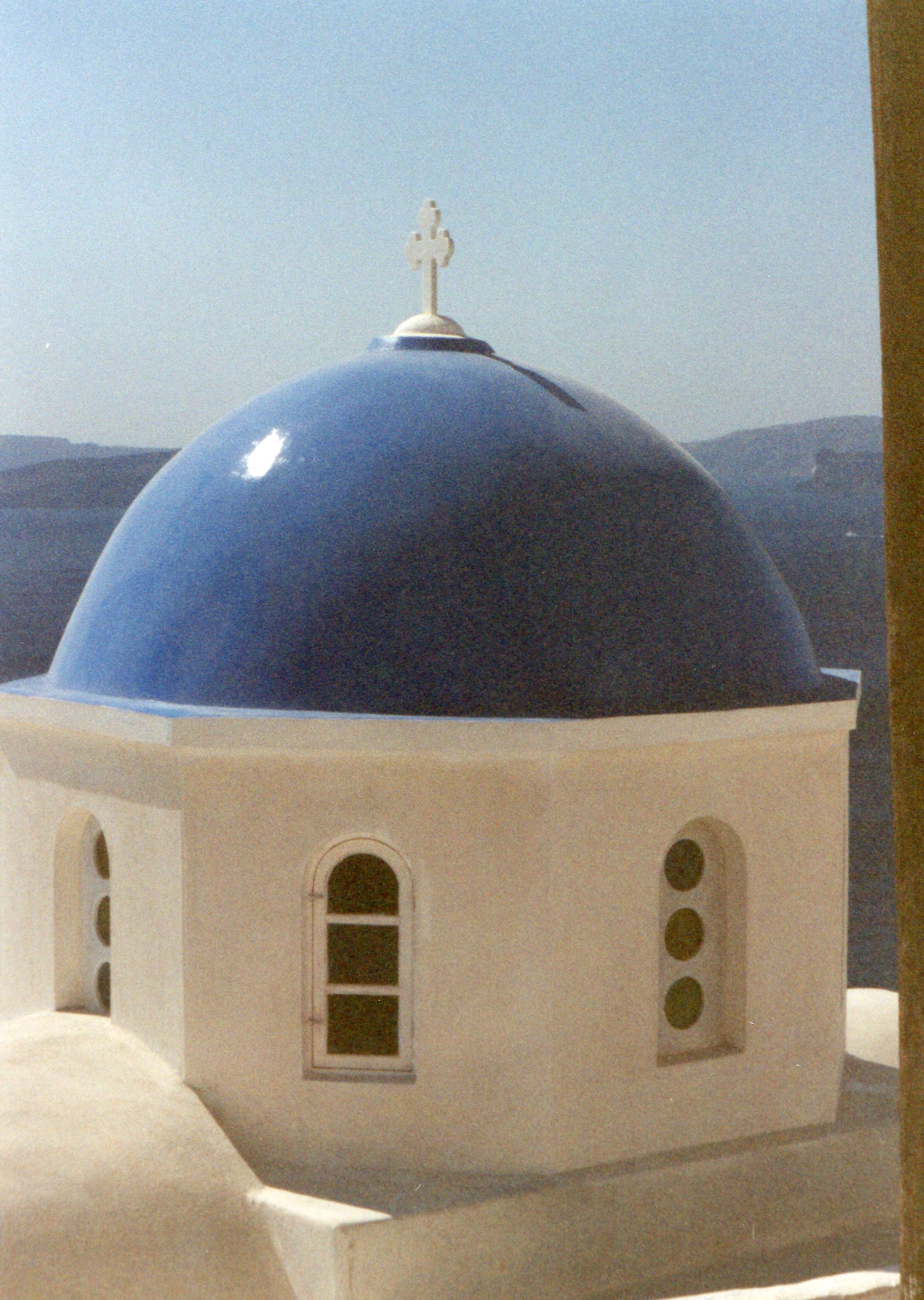
Yes another church but this time in terracota.

Santorini is definitely not one of the places for people with walking difficulties. There are no roads just narrow stepped streets.
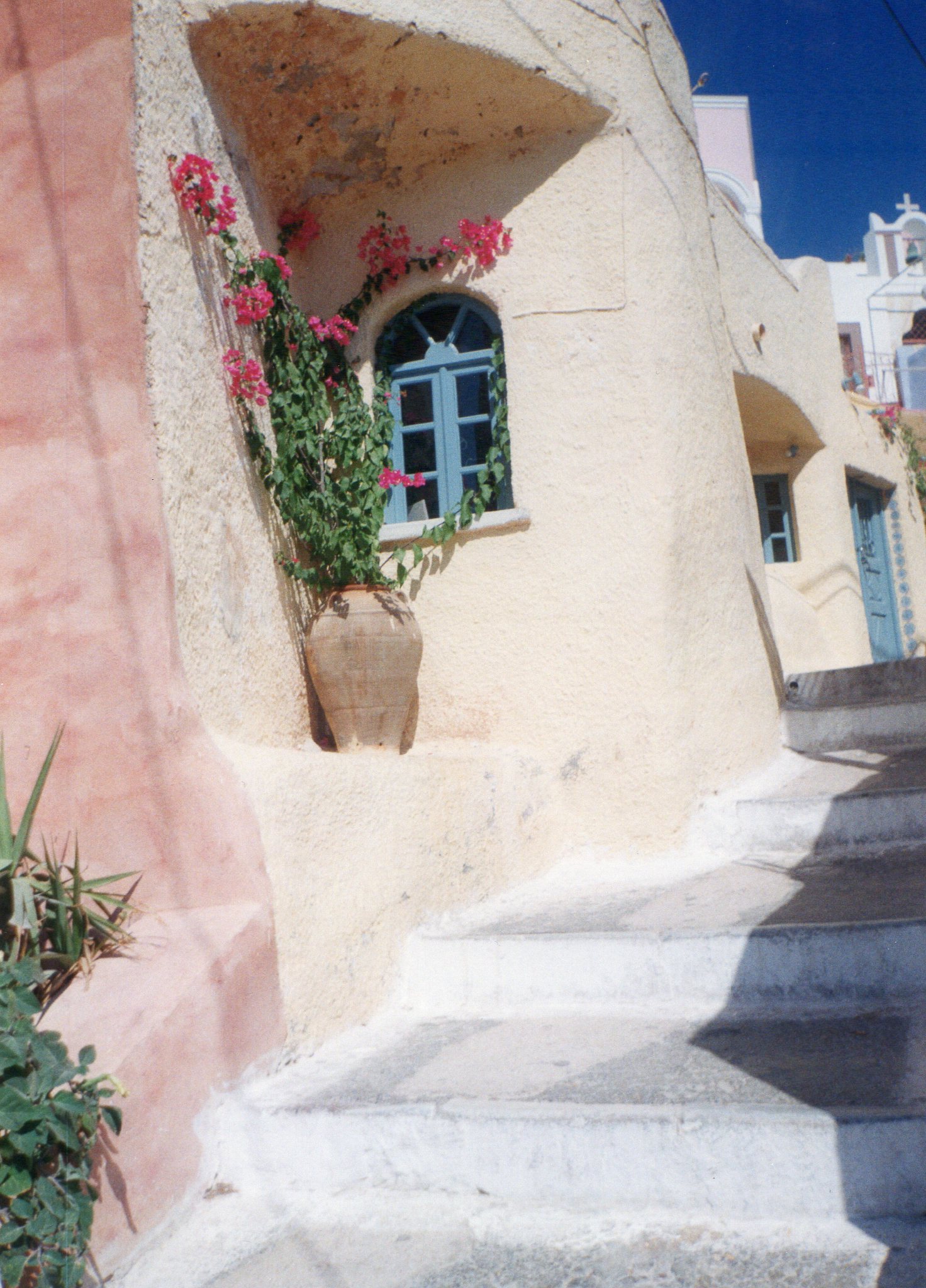
Stunning just stunning – there isn’t a lot more that we can say.

Kamari
Kamari is a one of the main resorts and is on the east coast not far from Thira. Kamari is famous because of it’s beach has black sand. It also had an open-air cinema when we were there. The promanade is lined with cafe’s and bars

Oia is on the northern part of the island and similar to Thira with white cubed houses. Similar to Mykonos it has a windmill.
Oia

The most famous place to watch the sunset is Oia. It gets absolutely rammed with tourists particularly artound the castle area. It was so busy that we couldn’t get anywhere near.

Skiathos
Skiathos, is in the northwest Aegean Sea, is part of the Sporades archipelago. It’s best known for its beaches and buzzing, youth-driven nightlife scene. The action centres around Skiathos Town, where bars and restaurants spill onto sidewalks along the old harbour and Papadiamanti street, the main pedestrian thoroughfare. Between town and the airport are many open-air, waterfront clubs.
The island has a north to southwestern axis and is about 12 kilometres (7 miles) long and 6 kilometres (4 miles) wide on average. Despite its small size has over 60, mostly sandy, beaches scattered around the 44 km (27 mi) coastline.
Troulos
Troulos is a laid-back and relatively quiet resort on the southern end of Skiathos. There’s no village centre that you would normally have in a Greek resort but there are a few shops, restaurants and bars spread out in the area, don’t expect Karaoke, Lively night life or anything like that. Troulos is meant for those that enjoy a prolonged evening meal with a glass of wine or beer in a relaxed atmosphere.
We stayed at the Esperos Studios in Troulos in June 1996.
None of our pictures were good enough for this blog.
Beach’s
Banana beach
This is one of the longest beach’s in Skiathos and is situated at the very western part of the island at Koukounaries. This is one of the most famous (or infamous) beaches on the island if not the whole of Greece. It’s notoriety comes from the fact that the beach is split into “Big Banana” and “Little Banana”. The latter beach is the islands only official nudist beach.
When we were there someone spent a day on it and obviously didn’t put enough factor 50 on there bum as the following day they could only sit down with the aid of a flotation ring.

Mandraki beach
A beautiful beach that can only be reached by sea or from a road by walking through trees. The trip to the beach was fine as the sun was not at it’s highest but on the way back the path, being sand, was hot from the midday sun.
We don’t speak a great deal of Greek so when we saw signs on the trees we just ignored them. If they had been important then they would have also been in English. Whilst we were having a cold beer in the evening we mentioned this to the owner of the bar and he said that it meant beware of the snakes. Needless to say we didn’t go back.

Skiathos Town
As the name suggests this is the main town on the island which has a beautiful harbour.
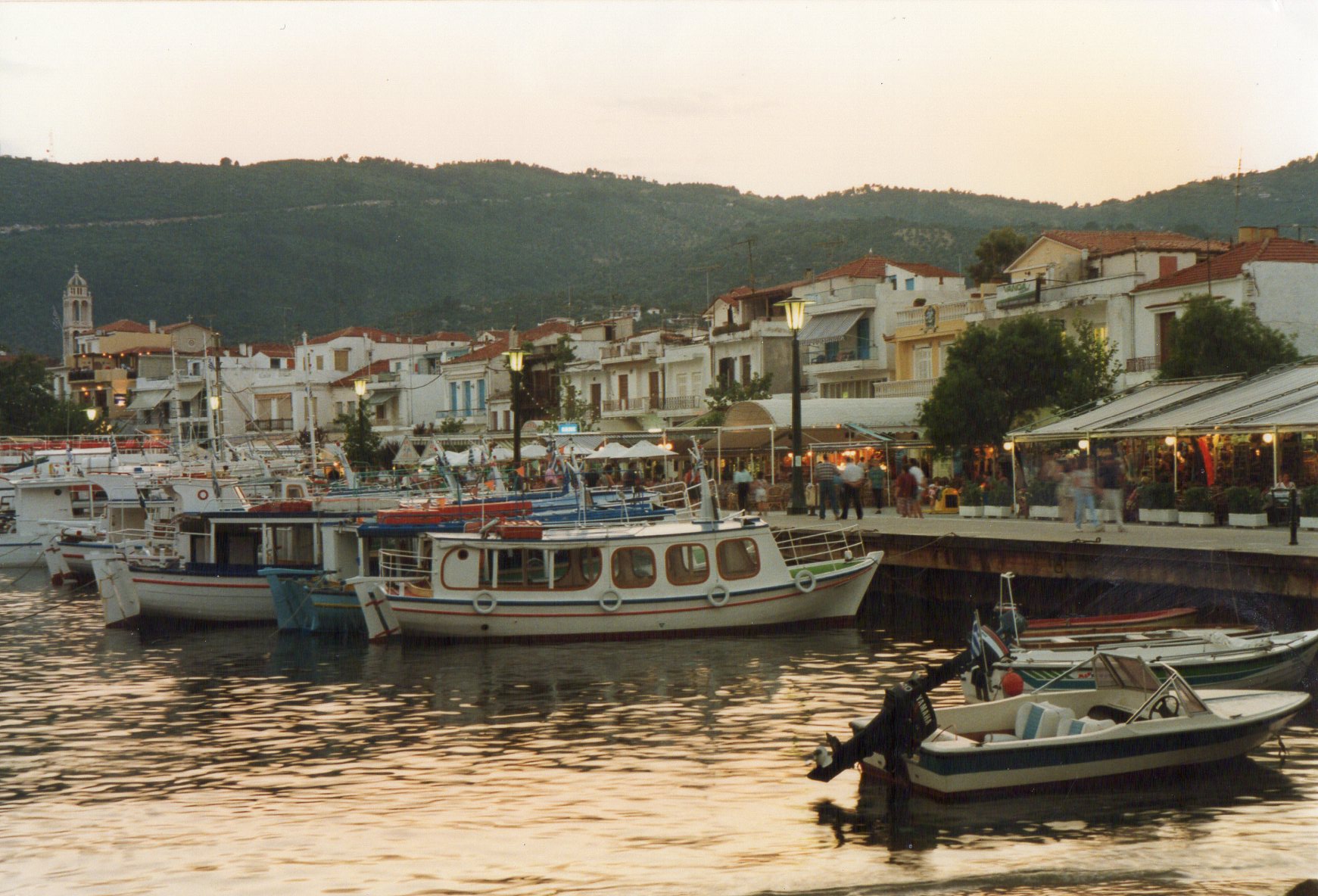
This is a view of the harbour from the opposite side of the peninsular.

Skopelos
Skopelos is in the western Aegean Sea. Skopelos is one of several islands which comprise the Northern Sporades island group, which lies east of the Pelion peninsula on the mainland and north of the island of Euboea. Skopelos is also the name of the main port and the municipal center of the island. With an area of 96 square kilometres (37 sq mi) Skopelos is slightly larger than Mykonos (85 km2/33 sq mi) and Santorini (73 km2/28 sq mi). The nearest inhabited islands are Skiathos to the west and Alonissos to the east.
We stayed at the Aegeon Studios in Skopelos Town in June 2003. It is one of the white building on the side of the hill. Lovely walk down, not so much fun on the walk back up.
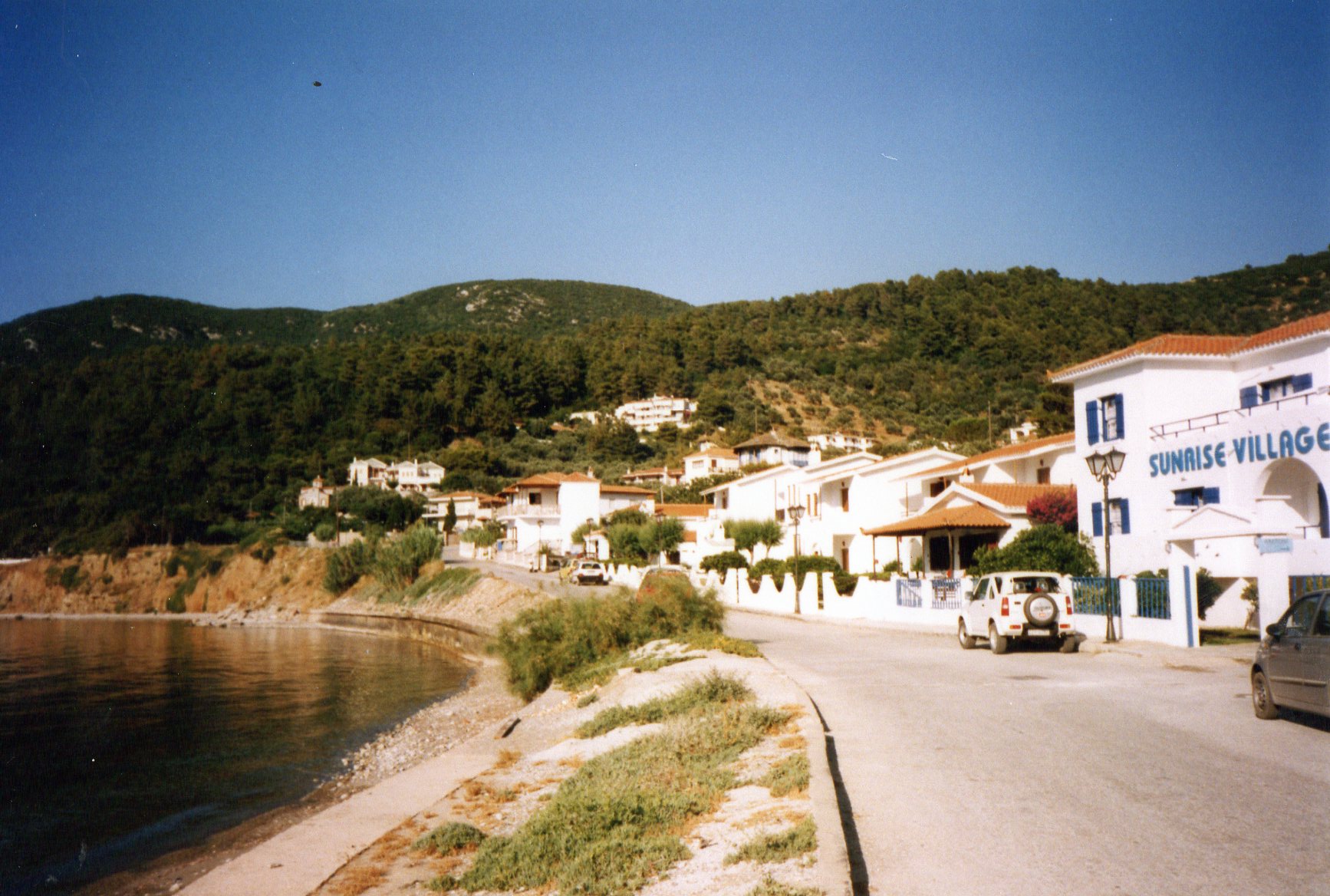
Skopelos Town
Skopelos Town is the main town on the island. It has a port and a small airfield which is only used for light aircraft. Skopelos has to be reached by boat from Skiathos and this gives it one of its charms as it, when we went, didn’t have mass number of visitors. This may have changed since the film Mama Mia was filmed here.
In the heat of midday the town is so eerily quiet.

The harbour is similar to many in the Greek islands, very simple and stunning against the blue sky.
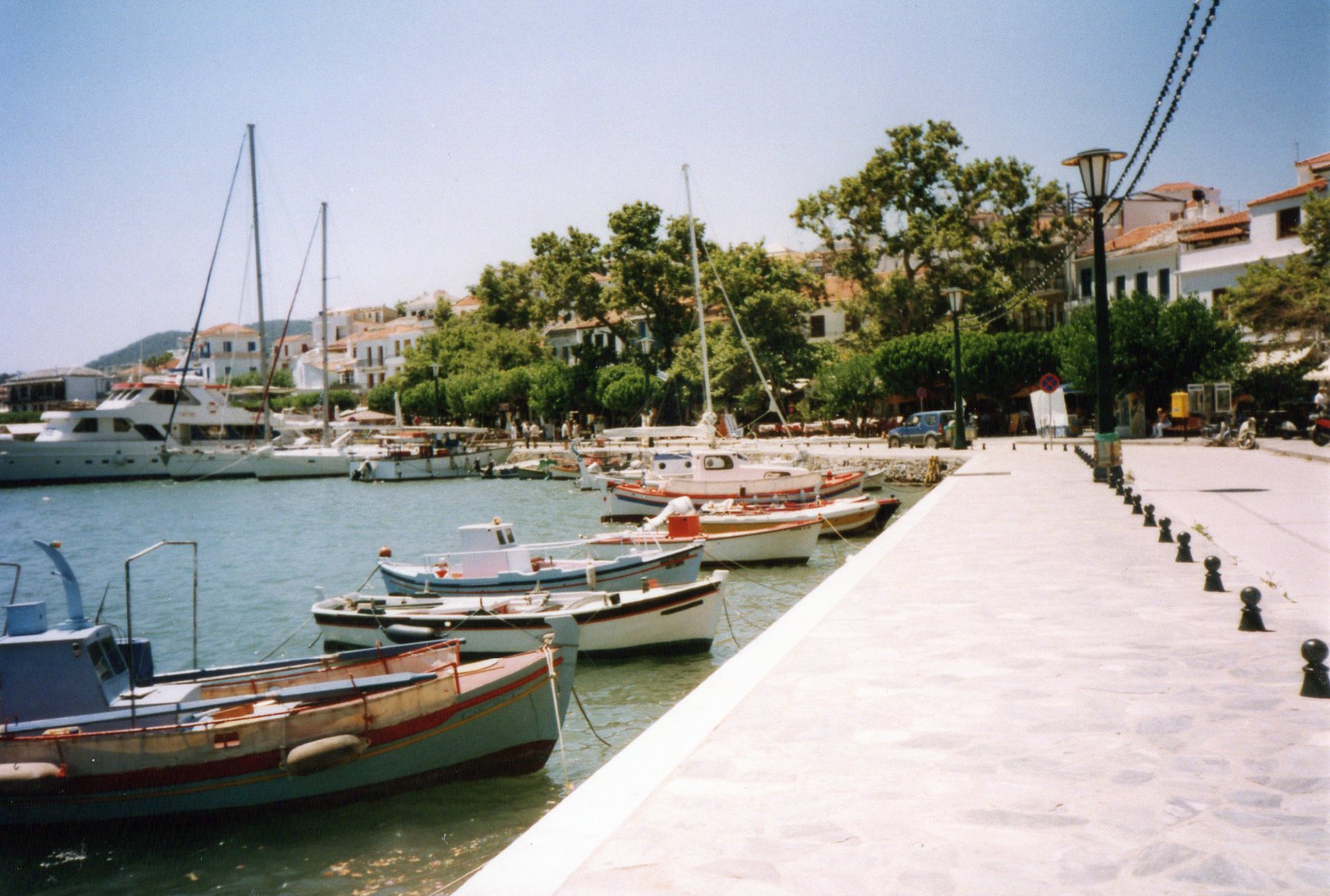
Skopelos town is decidedly hilly but is wide enough to allow one car through, never saw any busses though.

Thassos
This was one of our earlier blogs and has it’s own page.http://www.handktravels.co.uk/thassos
Zante
Zakynthos is in the Ionian Sea and a well-known summer resort. The harbour city of Zakynthos is the capital and major hub, centred around waterfront Solomos Square. Popular beaches like Agios Nikolaos, Alykanas and Tsilivi offer swimming and water sports. Accessed by boat, Navagio beach is the site of a famed 1980 shipwreck resting in a sandy cove framed by cliffs.
We stayed at the Alexander Studios in Laganas in June 1995. This was our first trip overseas together.
Laganas
Laganas is a village and beach resort which faces the calm, shallow waters of Laganas Bay, and is backed by lively bars and tavernas. When we visited Laganas there was just one street with bars and restaurants. Maybe one day we will go back and see how it has changed.
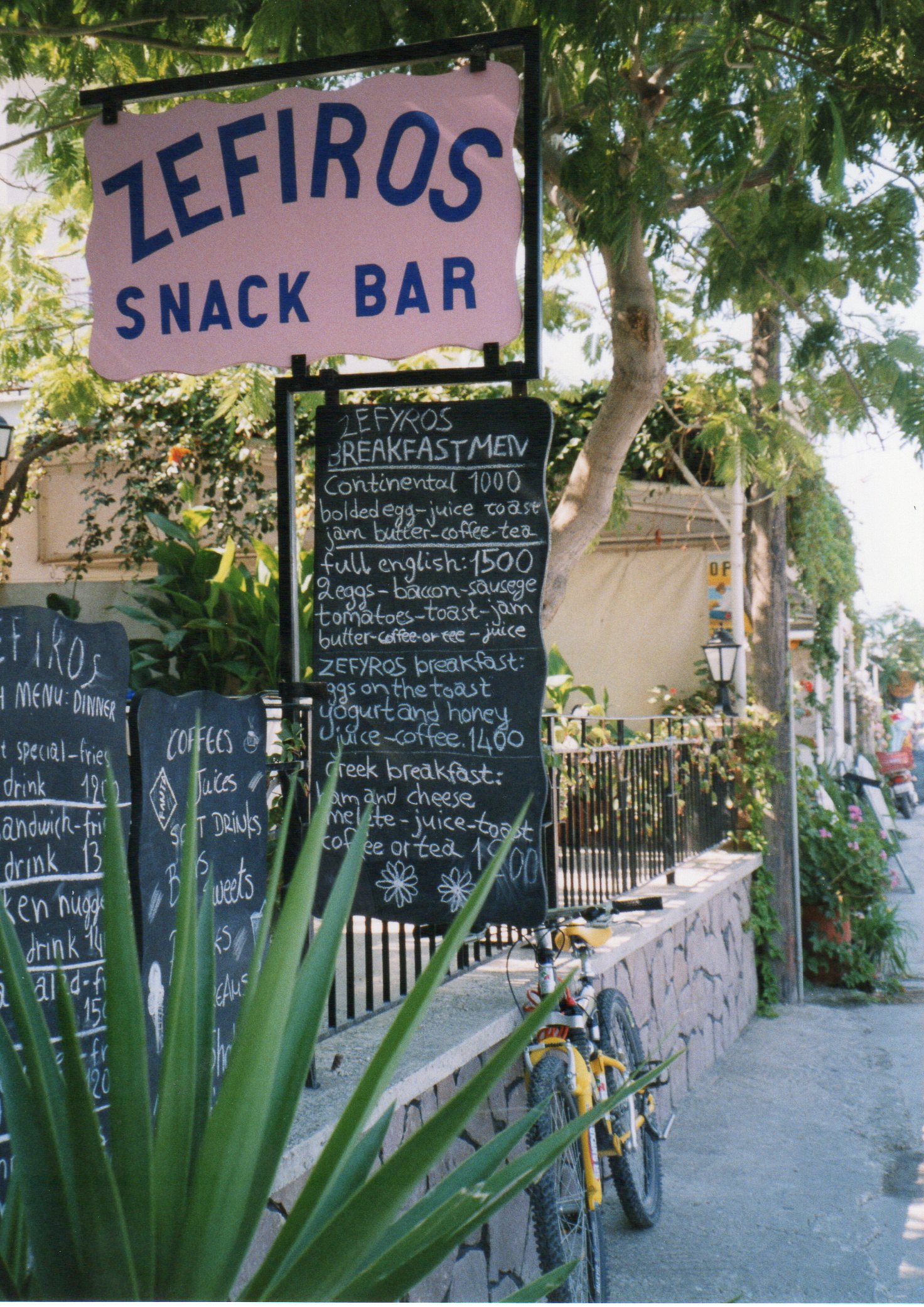
Travelled all the way from the UK on our very first trip together and so that we aren’t homesick there was the full English Breakfast to remind us of where we were just 24 hours before. The prices are in drachma prior to the adoption of the euro, so they are not as expensive as they seem.
Time for dinner in a typical Greek restaurant.

The beach at Laganas is golden and no dissimilar to banana beach on Skiathos. We wonder how much it has changed since 1995

Not far along the coast and well within walking distance is the much quieter Kalamaki Beach. This is a protected nesting ground for the endangered loggerhead sea turtles. The view below is of Lagganas taken from Kalamaki.

Zante Town
A bus ride away is the capital which is named, in typical Greek style, Zante Town.
The harbour is a lot busier than many of the other islands we have visited.

Alykes
Alykes is a small village which is situated along the northeastern coast of the island, about 10 km northwest of Zakynthos Town.
We stayed at the Akis Studios in Alykes in September 2004.

This is the life sitting in the shade getting away from it all where the main decision is do I have Mythos or Amstel!

The was quiet pleasant, although we didn’t go that much because we wanted to explore the island. However late in the evening it is pretty as the sun shines on the peninsular opposite.

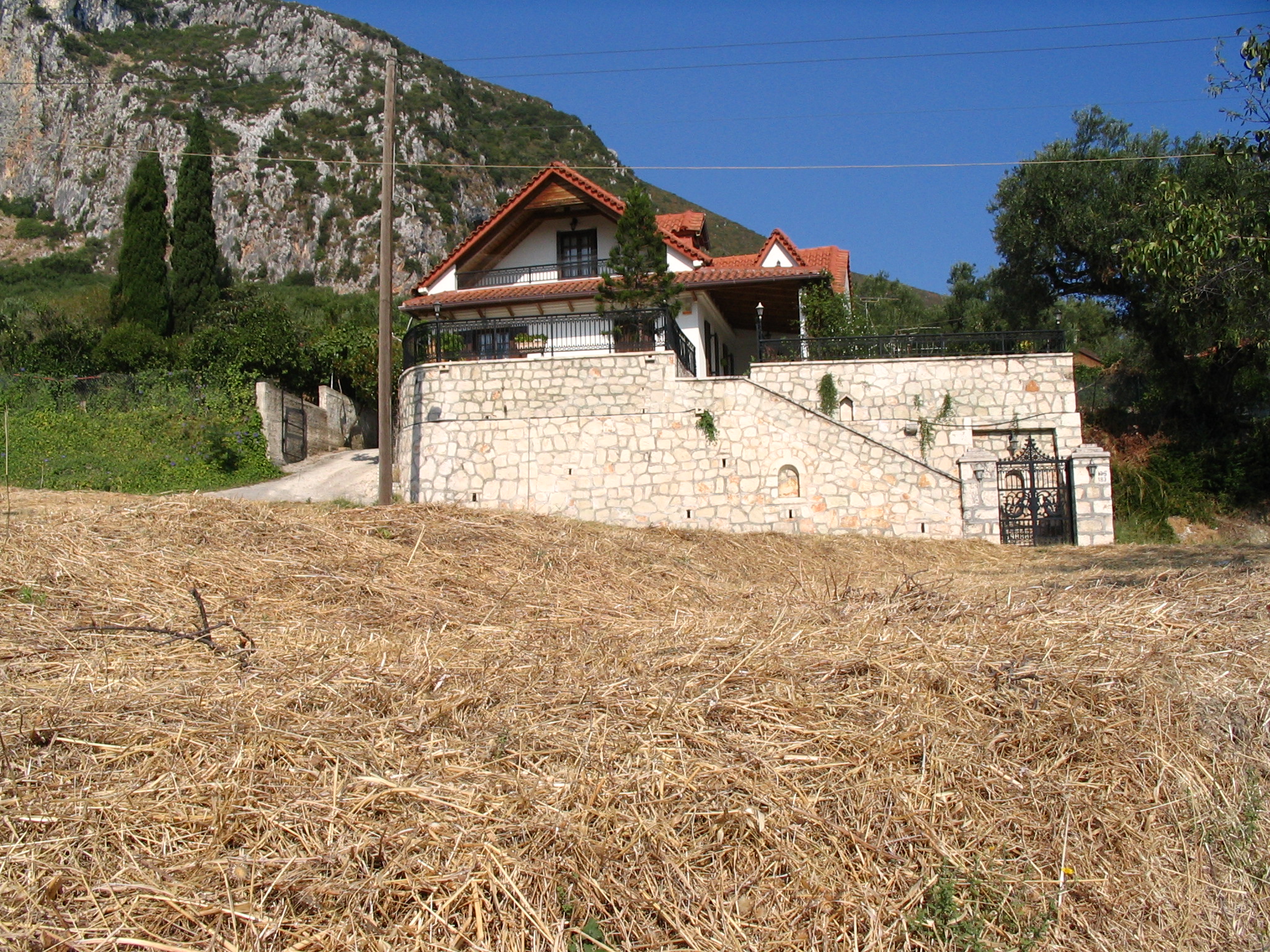
This stunning house was miles from anywhere, it’s probably an AirBnB now.
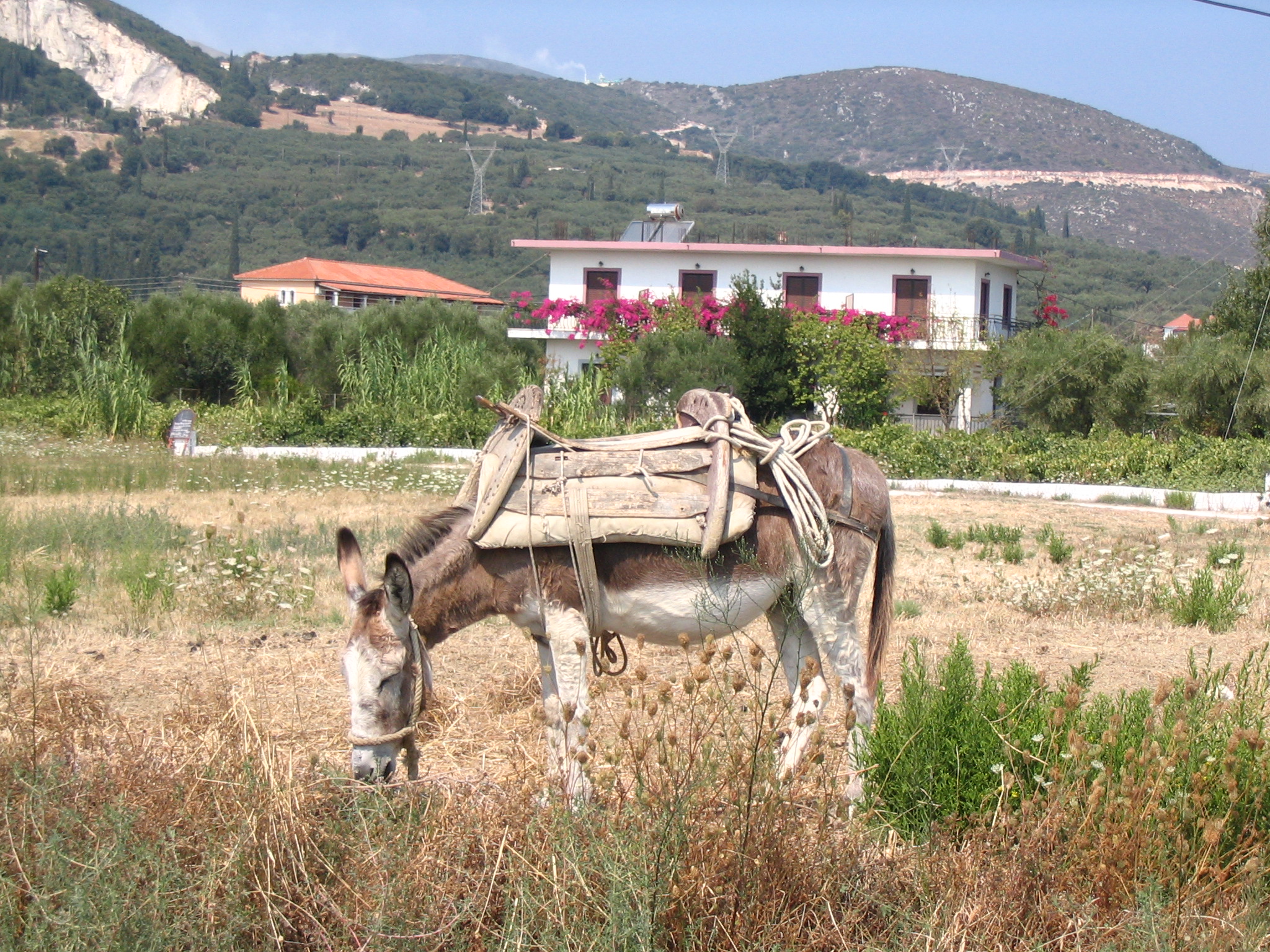
The property comes with it’s own transport that tourists can use free of charge!!
Finally
During every Greek adventure and whatever Island or Mainland destination you visit there will always be a Mythos to help you relax, reflect and unwind at the end of the day.

 Heather and Keith's travels