Spectacularly entwined with the Baltic’s bays, inlets and islands, Helsinki’s boulevards and backstreets are awash with magnificent architecture, intriguing drinking and dining venues and groundbreaking design. Helsinki is a small city which is easy to travel around on foot, albeit some parts are quite hilly.
We chose to visit Helsinki at the end of November when the temperature was just hovering around freezing with a low of -8.
We visited Helsinki in November 2016 and stayed at the Scandic Paasi Hotel which was a short walk from the cathedral (well short for us).
Helsinki Cathedral
Helsinki Cathedral was originally built from 1830-1852 as a tribute to the Grand Duke of Finland, Tsar Nicholas I of Russia. It was also known as St Nicholas’ Church until the independence of Finland in 1917.
A distinctive landmark in the Helsinki cityscape, with its tall, green dome surrounded by four smaller domes, the building is in the neoclassical style. It was designed by Carl Ludvig Engel as the climax of his Senate Square layout: it is surrounded by other, smaller buildings designed by him.
Today, the cathedral is one of Helsinki’s most popular tourist attractions. More than 350,000 people visit the church each year, some to attend religious events, but mostly as tourists. The church is in regular use for services of worship and special events such as weddings.
Suomenlinna
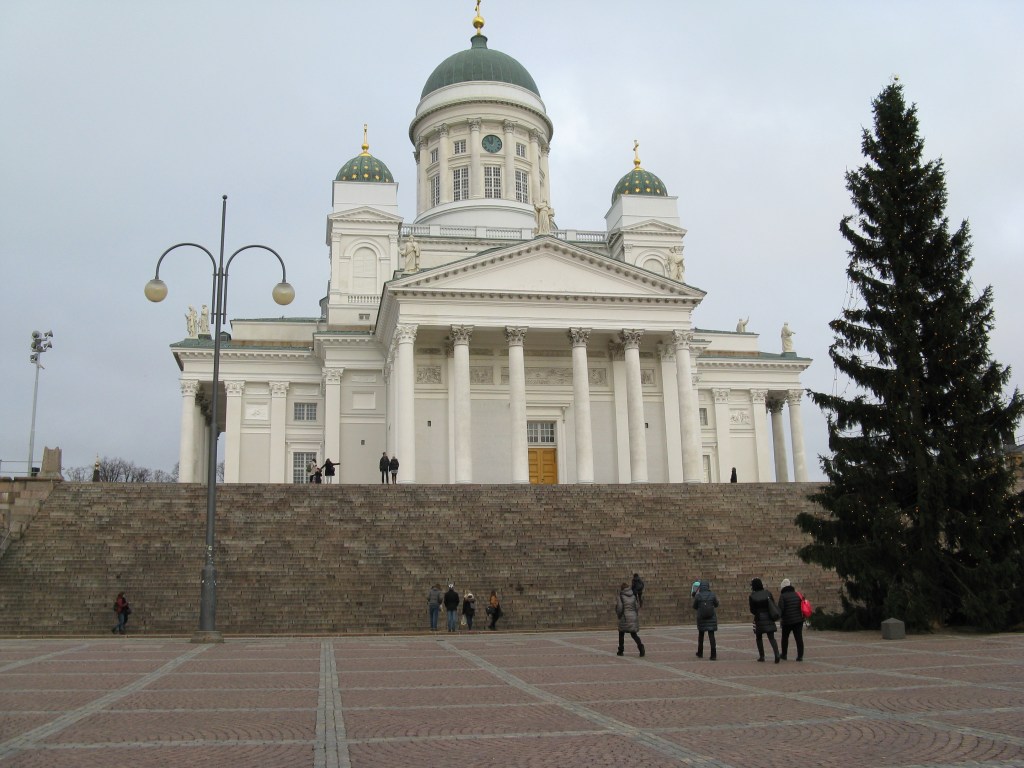
Suomenlinna is an inhabited sea fortress built on six islands (Kustaanmiekka, Susisaari, Iso-Mustasaari, Pikku-Mustasaari, Länsi-Mustasaari and Långören) and which now forms part of Helsinki.
Suomenlinna is a UNESCO World Heritage site and popular with tourists and locals, who enjoy it as a picturesque picnic site. Originally named Sveaborg (Fortress of Svea), or Viapori as called by Finnish-speaking Finns, it was renamed in Finnish to Suomenlinna (Castle of Finland) in 1918 for patriotic and nationalistic reasons, though it is still known by its original name in Sweden and by Swedish-speaking Finns.
Rock Church
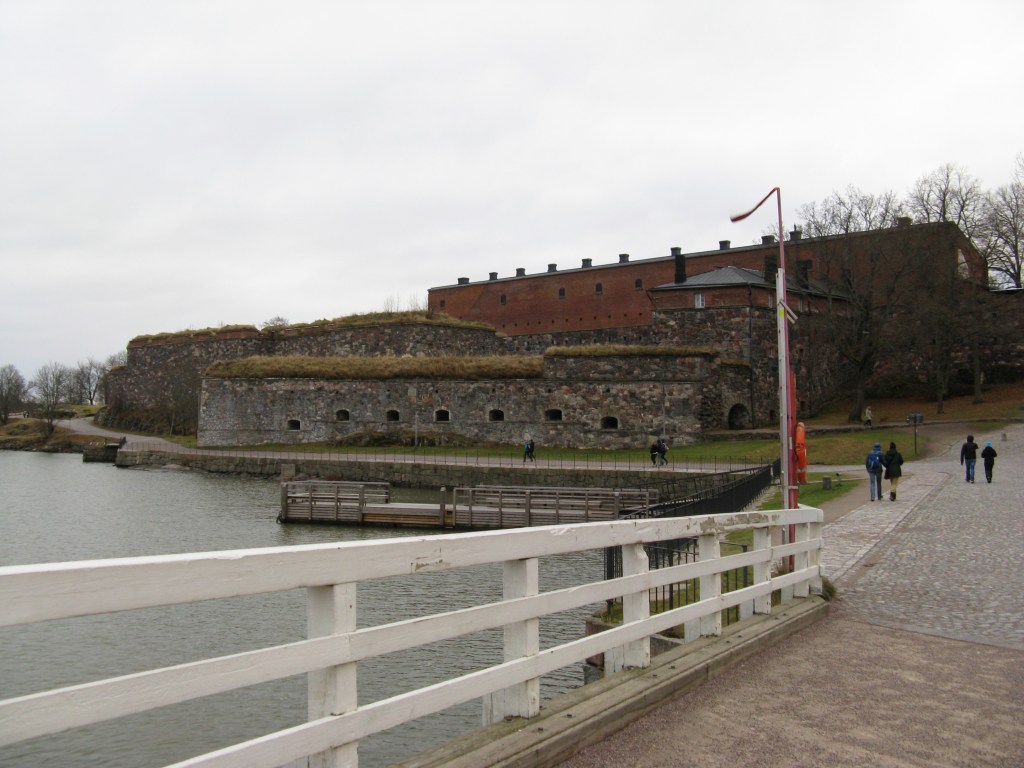
Temppeliaukio Church is a Lutheran church. The church was designed by architects and brothers Timo and Tuomo Suomalainen and opened in 1969. Built directly into solid rock, it is also known as the Church of the Rock and Rock Church.
The interior was excavated and built directly out of solid rock and is bathed in natural light which enters through the skylight surrounding the centre copper dome. The church is used frequently as a concert venue due to its excellent acoustics. The acoustic quality is created by the rough, virtually unworked rock surfaces.
The Temppeliaukio church is one of the most popular tourist attractions in the city; half a million people visit it annually. The stone-hewn church is located in the heart of Helsinki. Maintaining the original character of the square is the fundamental concept behind the building. The idiosyncratic choice of form has made it a favourite with professionals and aficionados of architecture.
There are no bells at the church; a recording of bells composed by Taneli Kuusisto is played via loudspeakers on the exterior wall.
Uspenski Cathedral, Helsinki
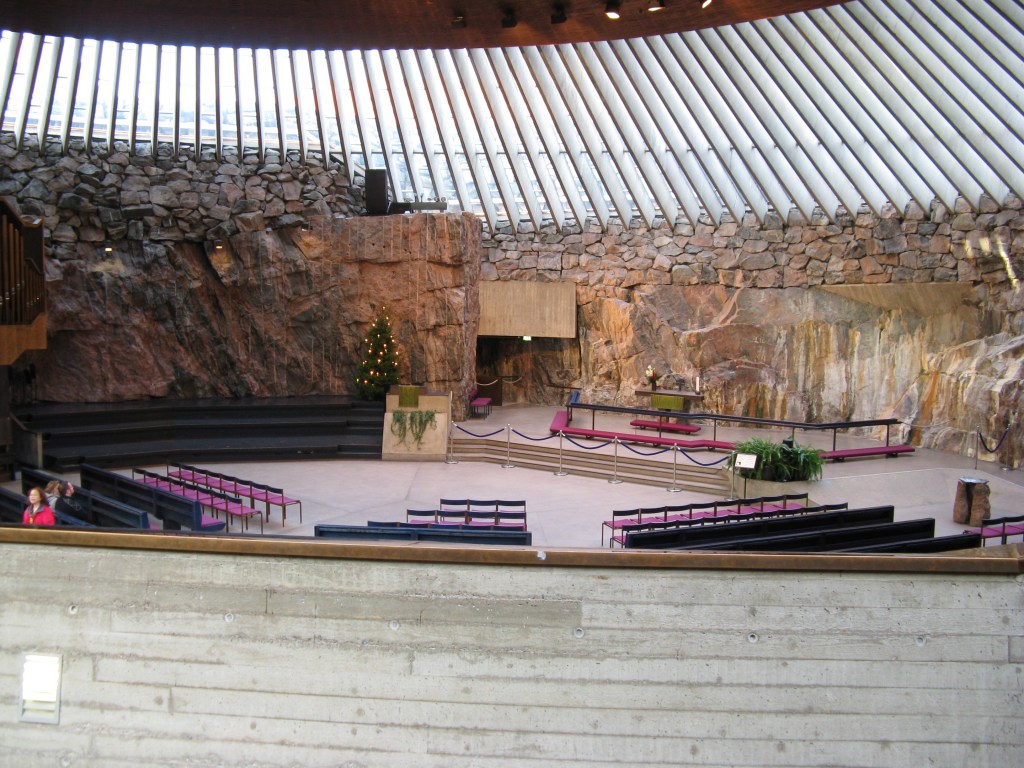
Uspenski Cathedral is an Eastern Orthodox cathedral, dedicated to the Dormition of the Theotokos (the Virgin Mary). Its name comes from the Old Church Slavonic word uspenie, which denotes the Dormition. Designed by the Russian architect Aleksey Gornostayev (1808–1862). The cathedral was built after his death in 1862–1868.
The Cathedral is set upon a hillside on the Katajanokka peninsula overlooking the city. On the back of the cathedral, there is a plaque commemorating Russian Emperor Alexander II, who was the sovereign of the Grand Duchy of Finland during the cathedral’s construction. Main cathedral of the Finnish Orthodox Church in the diocese of Helsinki, Uspenski Cathedral is claimed to be the largest orthodox church in Western Europe.

Helsinki Old Market Hall Vanha kauppahalli
The construction of the first indoor market hall in Helsinki, the Old Market Hall, was started at Eteläranta near the Market Square in 1888. This is the year written above the southern entrance of the building, but because of problems with cement delivery, the hall was not opened to the public until 1889.
At the time of opening the hall had 120 stalls as well as 6 shops in the central gallery. Regulations stated that vendors were allowed to sell meat products, eggs, butter, cheese and garden produce. At the turn of the century, some of the fish trade from the outdoor marketplace was also moved into the hall.The old market hall is one of Helsinki real delights.

Market Square
The Market Square (Kauppatori in Finnish, Salutorget in Swedish) is a central square in Helsinki, Finland, and one of the most famous market places and tourist attractions in the city.
The Market Square is located near the centre of Helsinki, at the eastern end of Esplanadi and bordering the Baltic Sea to the south and Katajanokka to the east. The Helsinki City Transport maintains an all-year-round ferry link from the Market Square to Suomenlinna, and in the summer there are also private companies providing ferry cruises, both to Suomenlinna and other nearby islands.
From spring to autumn, the Market Square is bustling with activity with vendors selling fresh Finnish food and souvenirs. There are also many outdoor cafés at the square. Some cafés also provide meat pastries (“lihapiirakka” in Finnish), and one advertises their pastries as being “the best in the Market Square… in Helsinki… in Finland!”
The height of the square’s popularity is in early October when the annual Helsinki herring market (“silakkamarkkinat” in Finnish) begins.

Another picture of the market square from the other side of the harbour.

Train station
Helsinki Central railway station is a widely recognised landmark in Kluuvi, part of central Helsinki and the focal point of public transport in the Greater Helsinki area. The station is used by approximately 200,000 passengers per day, making it Finland’s most-visited building. It serves as the point of origin for all trains in the local VR commuter rail network, as well as for a large proportion of long-distance trains in Finland. The station also hosts the Rautatientori metro station, which is the busiest station of the Helsinki Metro.
The station building was designed by Eliel Saarinen and inaugurated in 1919. It was chosen as one of the world’s most beautiful railway stations by BBC in 2013.
One of the station’s less known features is a private 50-square-metre (540 sq ft) waiting lounge exclusively for the use of the President of Finland and his/her official guests. The lounge was first completed in 1911 and was originally intended for the private use of the Emperor of Russia, but the First World War delayed its official inauguration to 1919, at which point it had been converted into a temporary military hospital, and was afterwards given to the use of the Finnish President.

Senate square
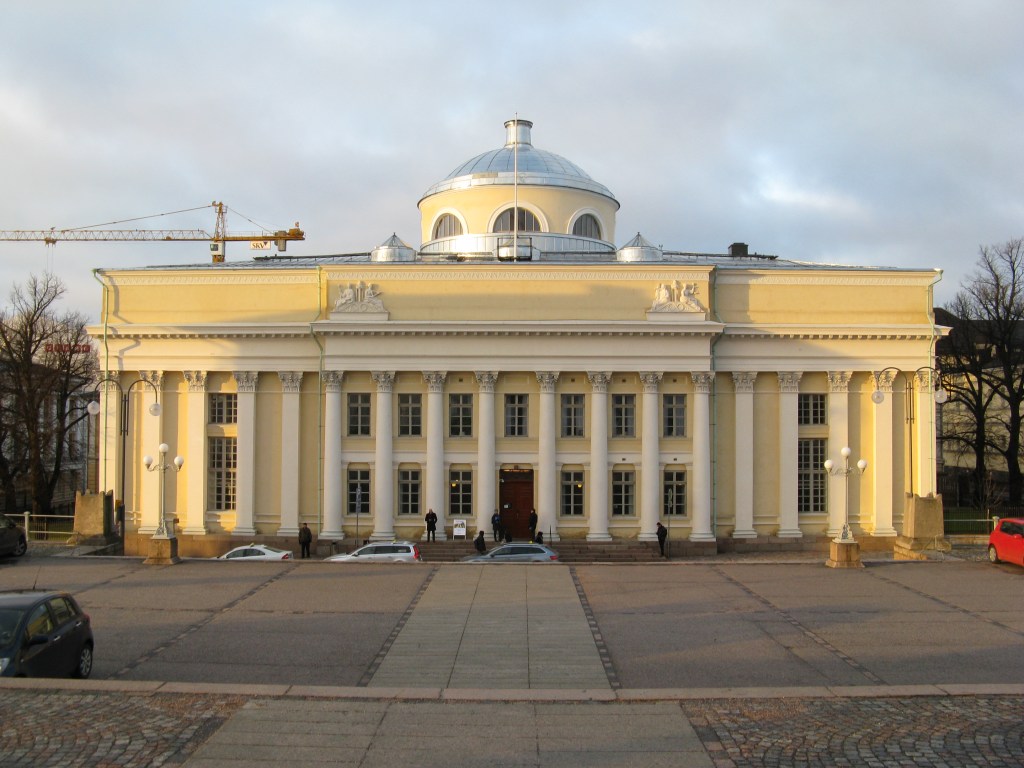
Senate Square and its surroundings make up the oldest part of central Helsinki. Landmarks and famous buildings surrounding the square are the Helsinki Cathedral, the Government Palace, main building of the University of Helsinki, and Sederholm House the oldest building of central Helsinki dating from 1757.
The Palace of the Council of State (or Government Palace) was completed on the eastern side of the Senate Square in 1822. It served as the seat of the Senate of Finland until it was replaced by the Council of State in 1918, and now houses the offices of the Prime minister of Finland and the cabinet. The main University building, on the opposite side of the Senate Square, was constructed in 1832.
The broad flight of steps on the north side of the square, in front of the cathedral are so steep that unsuspecting visitors approaching the square from the north often assume that they are approaching a cliff edge: because the steps do not come into view until one is at the very top step, one experiences a moment of vertigo. Locals even refer to the point as the ‘cliff edge.’.
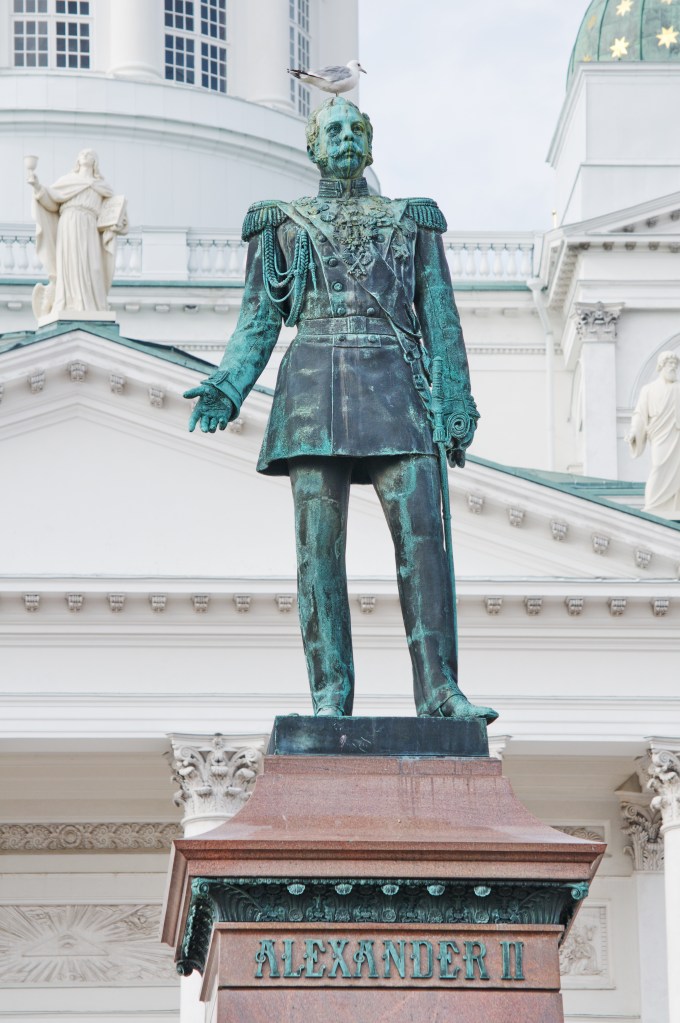
Statue of Alexander II
A statue of Emperor Alexander II is located in the center of the square. The statue, erected in 1894, was built to commemorate his re-establishment of the Diet of Finland in 1863 as well as his initiation of several reforms that increased Finland’s autonomy from Russia. The statue comprises Alexander on a pedestal surrounded by figures representing law, culture, and peasants. The sculptor was Walter Runeberg.
During the Russification of Finland from 1899 onwards, the statue became a symbol of quiet resistance, with people protesting against the decrees of Nicholas II by leaving flowers at the foot of the statue of his grandfather, then known in Finland as “the good czar”.
After Finland’s independence in 1917, demands were made to remove the statue. Ttoday the statue is one of the major tourist landmarks of the city and a reminder of Finland’s close relationship with Imperial Russia. Today, the Senate Square is one of the main tourist attractions of Helsinki.
Helsinki at Night
Helsinki starting to get ready for Christmas.

And Finally
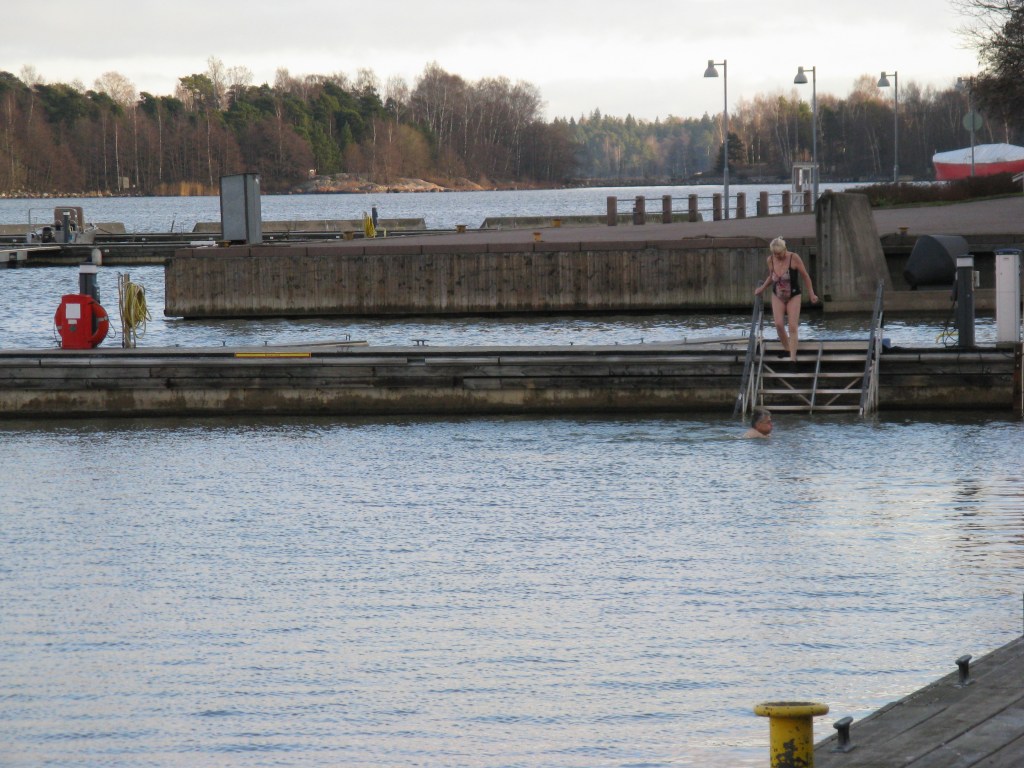
The Finns are a mad race, obviously it is cold most of the year round and they enjoy a dip in the sea, but these two people are swimming in the sea when the air temperature is a balmy -8 degrees. I suppose that it takes all sorts!!!
 Heather and Keith's travels