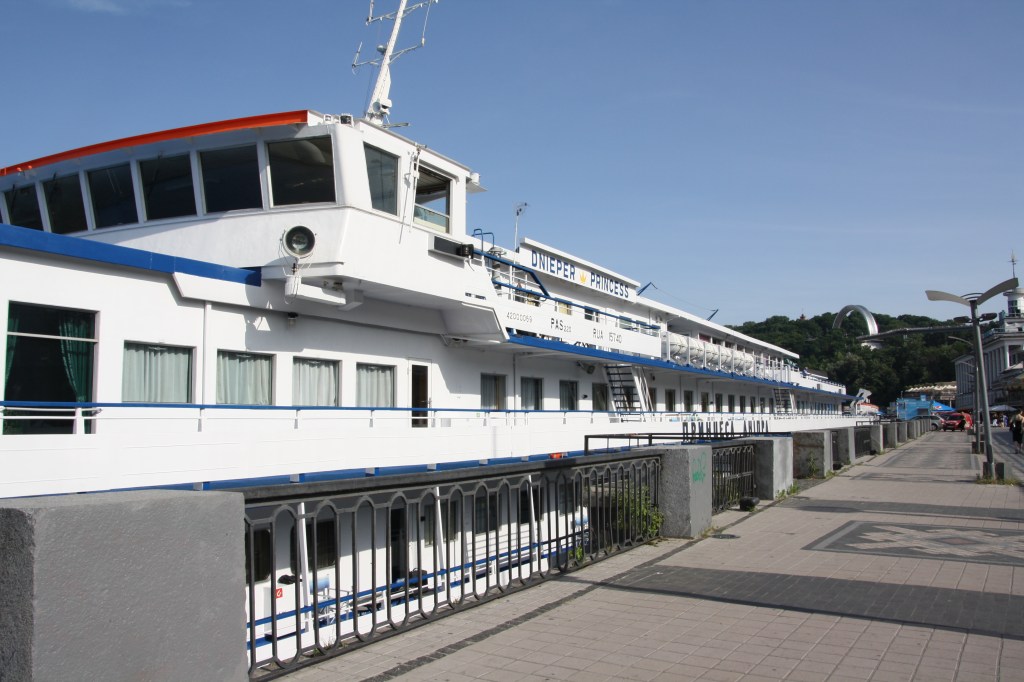
This was a trip with Jules Verne, VJV, called “Cossack Revival” which was a nine night river cruse on the m/s Dnieper Princesse which started in Kiev and ended at the port of Odessa in the black sea
The river Dnieper, the 3rd longest in Europe, is relatively unexplored by cruises but is an important transport link from the Black Sea to Kiev. Rising near Smolensk in Russia it flows for 2,200 kilometres to its delta at Kherson. From Kiev enjoy the panorama of gentle, rolling hills and the plains of rural Ukraine interspersed by the domes of village churches.
The vibrant Black Sea city of Odessa, was founded in 1794 by Catherine the Great and boasts one of Europe’s most beautiful opera houses. The famous and impressive Potemkin Steps spill 500 feet down from Primorsky Boulevard to the sea.
At the Black Sea, the waters of the ‘Blue Danube’ form the largest and best preserved of Europe’s deltas, a UNESCO natural heritage site famous for its bird life.
MS Dnieper Princess
This boat was our home for the next 9 days.
Kiev
Kiev is the capital and largest city of Ukraine with a population of 2.6 million souls. The heart of the city is beautifully situated on a series of wooded hills that rise steeply from the west (right) bank of the Dnieper which flows lazily in a broad bed, filled with ribbon-like islands.
When Kiev was liberated by Soviet troops in 1943 most of the city had been reduced to rubble and it is believed that half of the population had perished. Only two buildings were left standing on the main street, the Kreshchatik. The centre of Kiev was completely rebuilt in Soviet style during the 50s and 60s. Cultural sights of interest emphasise Kiev as the “Mother of Russian” cities and the birthplace of Orthodoxy. National heroes such as the Cossack’s — long suppressed by the Soviet authorities — are celebrated as central to Ukrainian culture and independence. In recent years Kiev has undergone a series of face lifts as its buildings and skyline have been extensively renovated. The city looks more beautiful, more prosperous and more cosmopolitan every year. Property prices have rocketed as foreigners have decided that Kiev is a nice place to ‘hang their hats” or make an investment. The pavement cafes, the dress and demeanour of the people and the relaxed atmosphere, remind the visitor of any western European city were it not — of course — for the powerful presence of Stalinist architecture which casts long historical shadows.
Kiev at night, the bridge is lit up in the blue and yellow of the Ukrainian flag.

The same bridge by day, not as spectacular
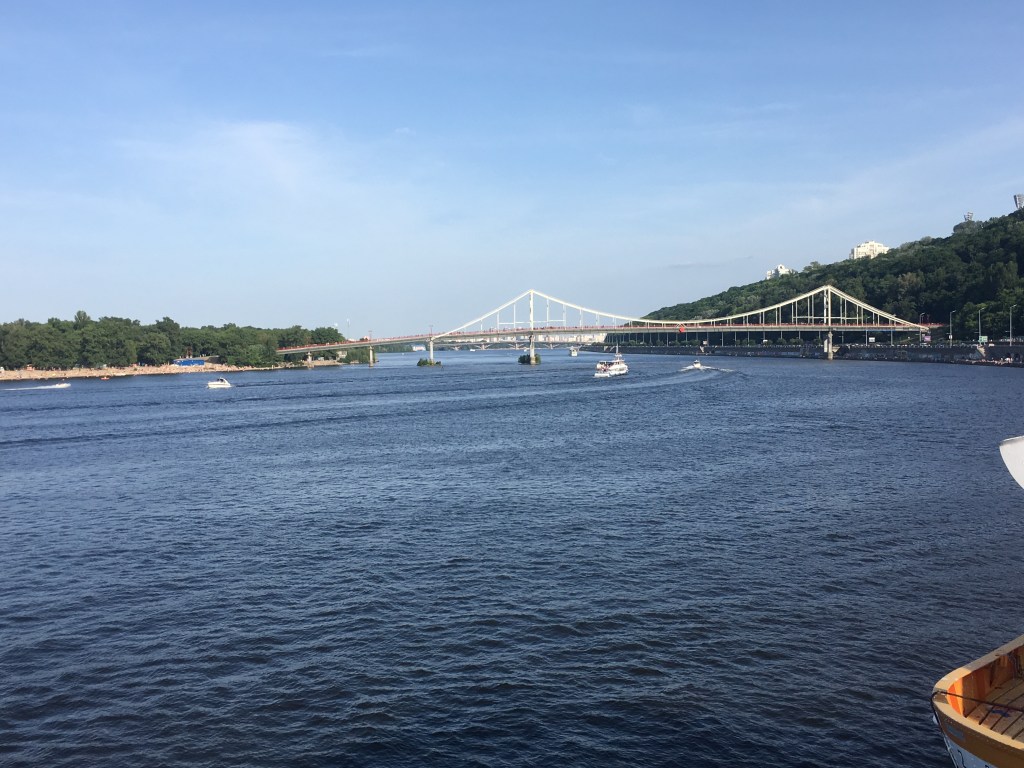
View of Kiev from the hill.

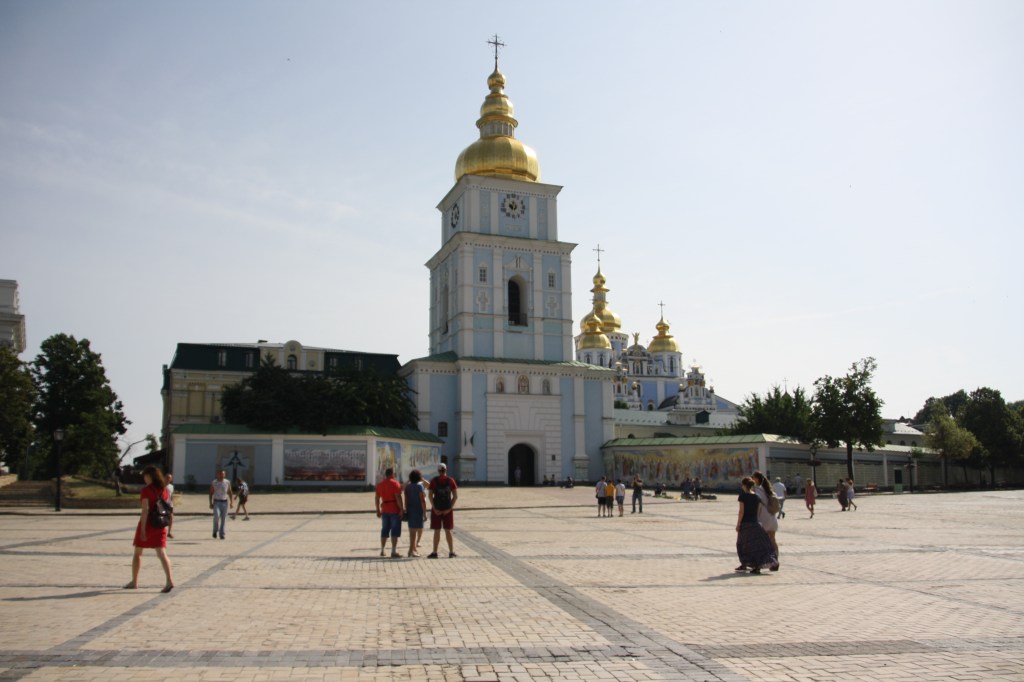
St Sophia’s Cathedral
Saint Sophia Cathedral is one of the city’s best known landmarks and the first heritage site in Ukraine to be inscribed on the World Heritage List along with the Kiev Cave Monastery complex. Aside from its main building, the cathedral includes an ensemble of supporting structures such as a bell tower and the House of Metropolitan.

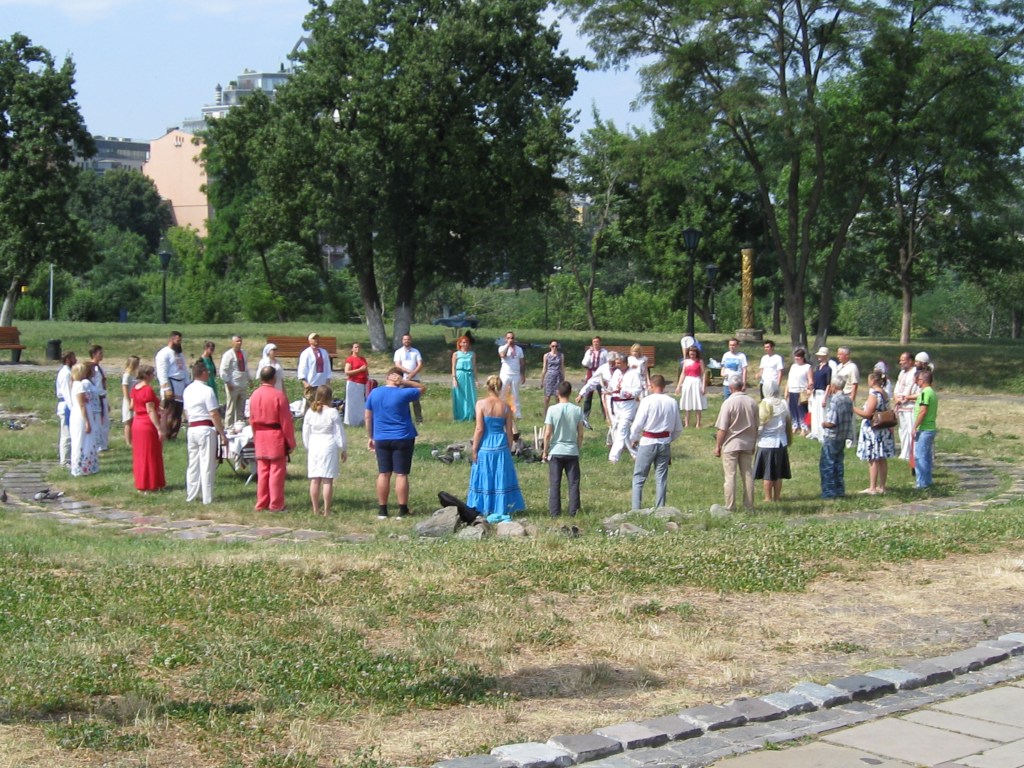
Alternative Church
In out travels we have visited may different places of worship but have never seen a real pagan service. This took place in an area which was once a church complex which had the first ever stone church but is now a park.
Outdoor Museum
Pyrohiv, also known as Pirogov, originally a village south of Kiev, is now a neighborhood in the southern outskirts of the city. It is now home to an outdoor Museum of Folk Architecture and Life of Ukraine.
The museum contains more than 200 buildings and construction brought from different parts of Ukraine to form a typical Ukrainian village. The museum has ladies in traditional Ukrainian dress.

A typical Ukrainian rural house

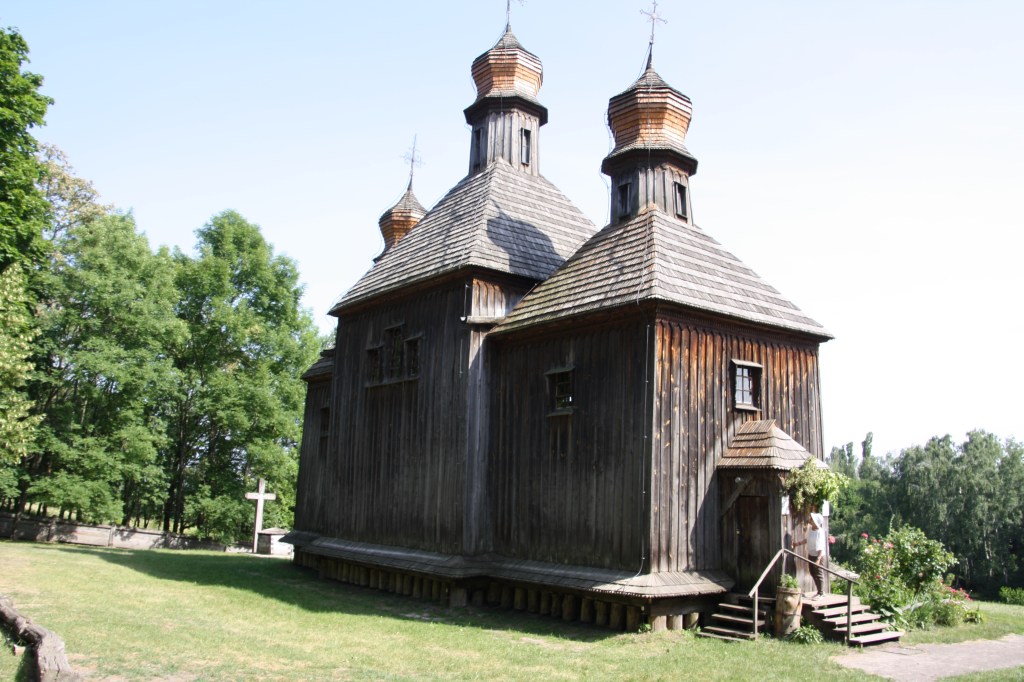
A typical Ukrainian rural Church
Cave Monastery
Kiev Pechersk Lavra, also known as the Kiev Monastery of the Caves, is a historic Orthodox Christian monastery which gave its name to one of the city districts where it is located in Kiev.
Since its foundation as the cave monastery in 1051 the Lavra has been a preeminent center of Eastern Orthodox Christianity in Eastern Europe. Together with the Saint Sophia Cathedral, it is inscribed as a UNESCO World Heritage Site. The monastery complex is considered a separate national historic-cultural preserve (sanctuary), the national status to which was granted on 13 March 1996. The Lavra is not only located in another part of the city, but is part of a different national sanctuary than Saint Sophia Cathedral. While being a cultural attraction, the monastery is once again active, with over 100 monks in residence. It was named one of the Seven Wonders of Ukraine on 21 August 2007, based on voting by experts and the internet community.
Currently, the jurisdiction over the site is divided between the state museum, National Kyiv-Pechersk Historic-Cultural Preserve, and the Ukrainian Orthodox Church as the site of the chief monastery of that Church and the residence of its leader, Metropolitan Onuphrius.

Motherland Monument
The Motherland Monument is a monumental statue in Kiev. The sculpture is a part of the National Museum of the History of Ukraine in the Second World War.
This is the Ukraine equivalent of Christ the Redeemer status in Rio.

Ukraine Choir
Whilst visiting we tried a bit of culture and attended a performance of the Ukrainian National choir. We didn’t understand most of the songs but the performance was amazing.

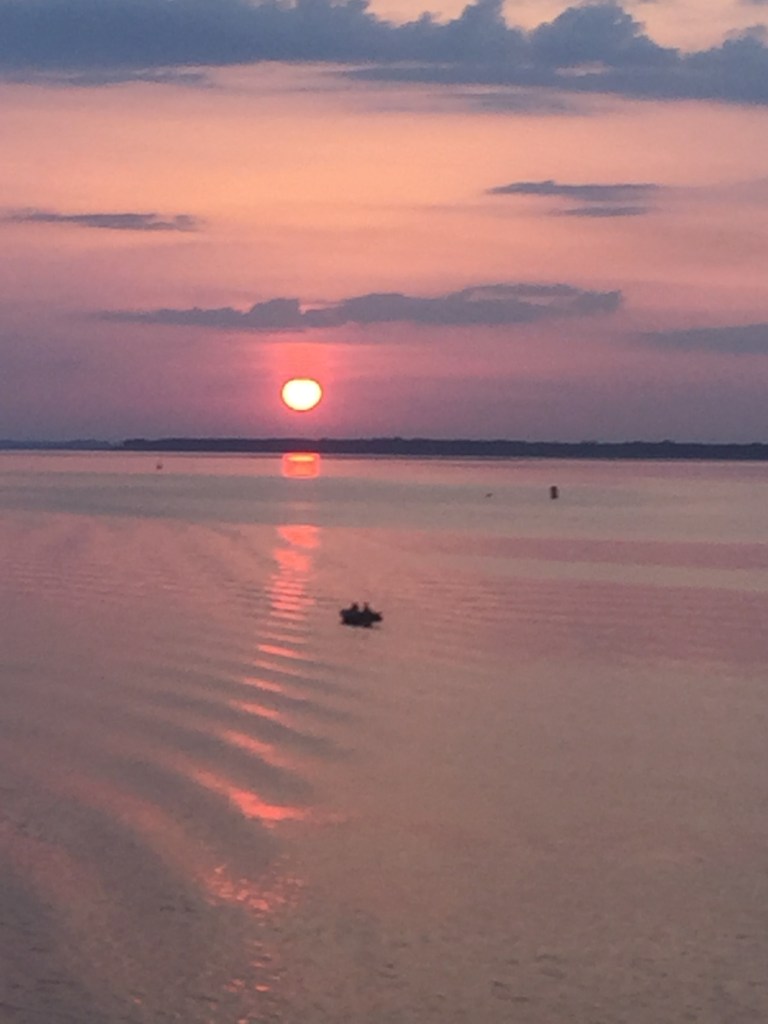
Sunset on the River Dnieper
After leaving Kiev we sailed romantically in to the sunset.
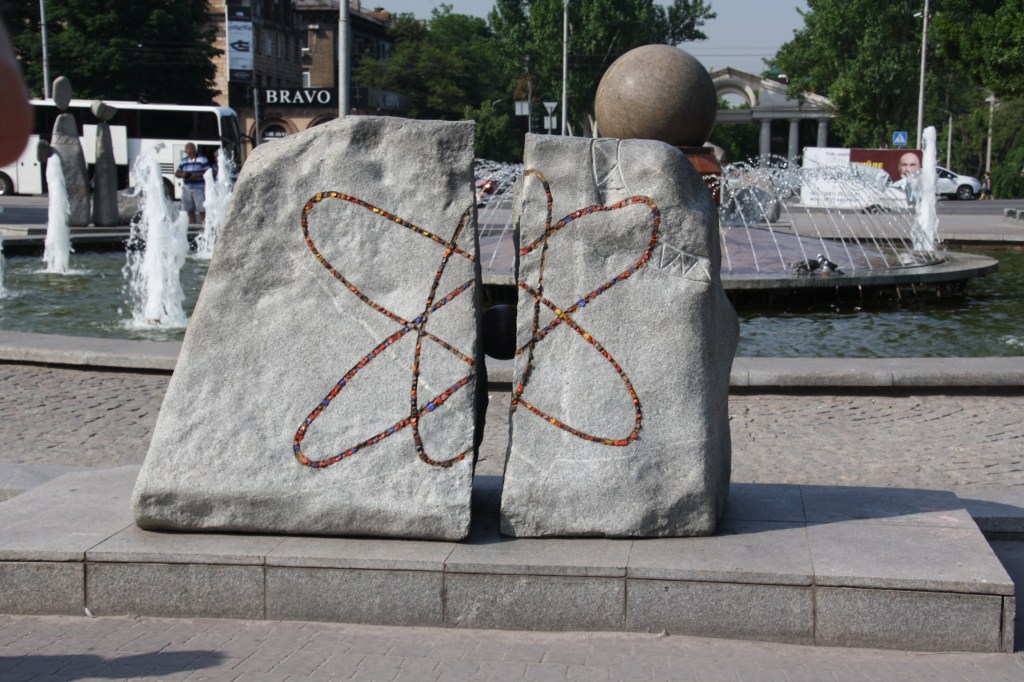
Zaporizhia Chernobyl Monument
The monument is a dedication to the disaster that occurred in Chernobyl
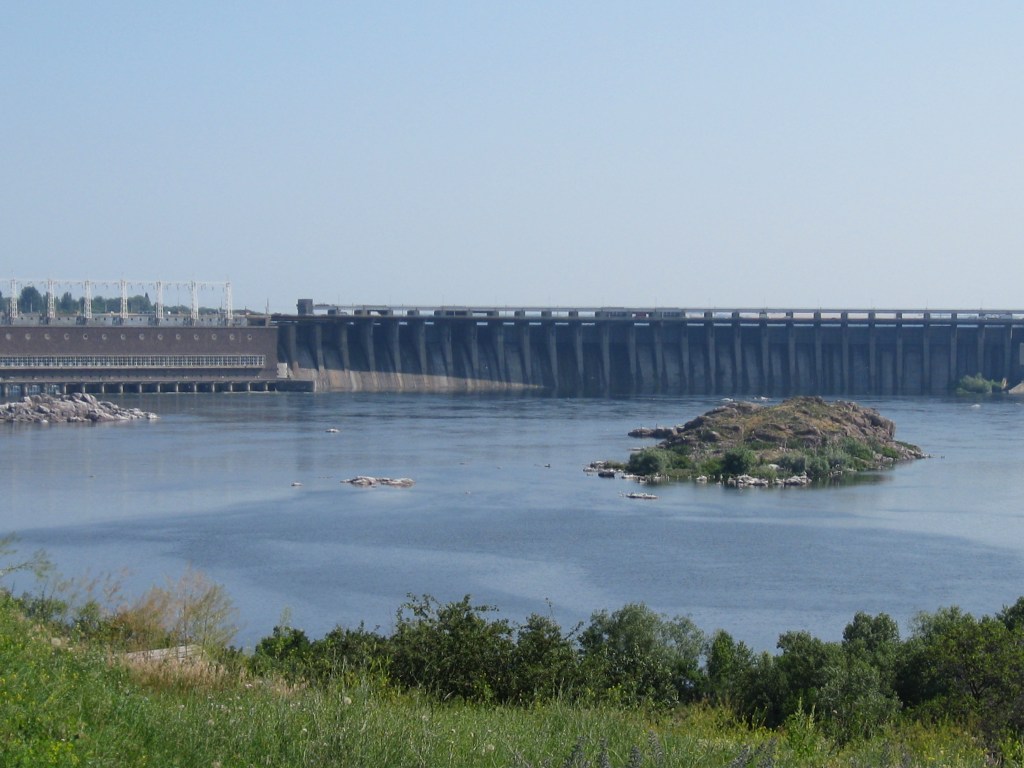
Dnieper Hydroelectric Station
The Dnieper Hydroelectric Station, also known as Dneprostroi Dam, is the largest hydroelectric power station on the Dnieper River, located in Zaporizhia. It is the fifth step of Dnieper hydroelectric stations cascade that provides electric power for Donets–Kryvyi Rih Industrial region.
The station was built in two stages. DniproHES-1 was originally built between 1927-1932, but was destroyed during World War II to make use of the river as a natural obstacle. It was rebuilt between 1944-1950. DniproHES-2 was built between 1969-1980 and later modernized during the 2000s.
The Dnieper Hydroelectric Station dam is an important crossing of the Dnieper. It has a water lock that allows navigation along the river and around the dam. There is also a bridge over the lock that carries a highway that connects the banks of the Dnieper.
Zaporizhian Sich Museum
The Zaporizhian Sich was a semi-autonomous polity and proto-state of Cossacks in the 16th to 18th centuries, centred in the region around today’s Kakhovka Reservoir and spanning the lower Dnieper river. In different periods the area came under the sovereignty of the Polish-Lithuanian Commonwealth, the Ottoman Empire, the Tsardom of Russia, and the Russian Empire.
In 1775, shortly after Russia annexed the territories ceded to it by the Ottoman Empire under the Treaty of Küçük Kaynarca (1774), Catherine the Great disbanded the Sich. She incorporated its territory into the Russian province of Novorossiya.
The term “Zaporizhian Sich” can also refer metonymically and informally to the whole military-administrative organisation of the Zaporizhian Cossack Host.
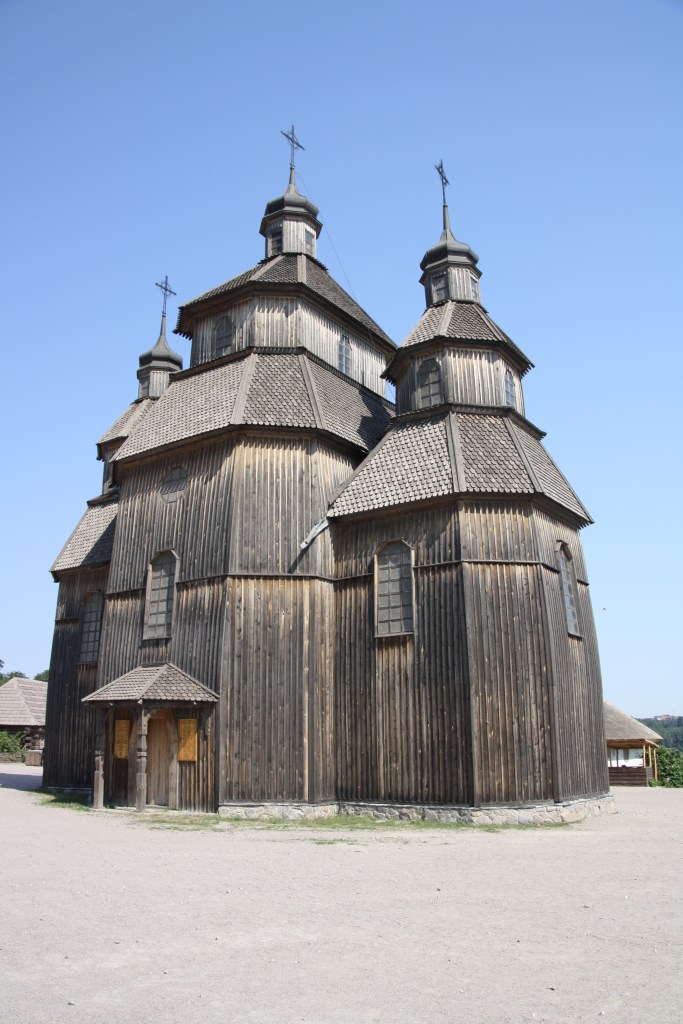
Whilst we were there we watched a genuine Cossack display which had horse-riding, sword fighting, whip fighting, gun shooting and dancing displays. The horses were so fast that we couldn’t get any decent photographs.
After this we had a typical Ukrainian rice dish with home made Vodka.


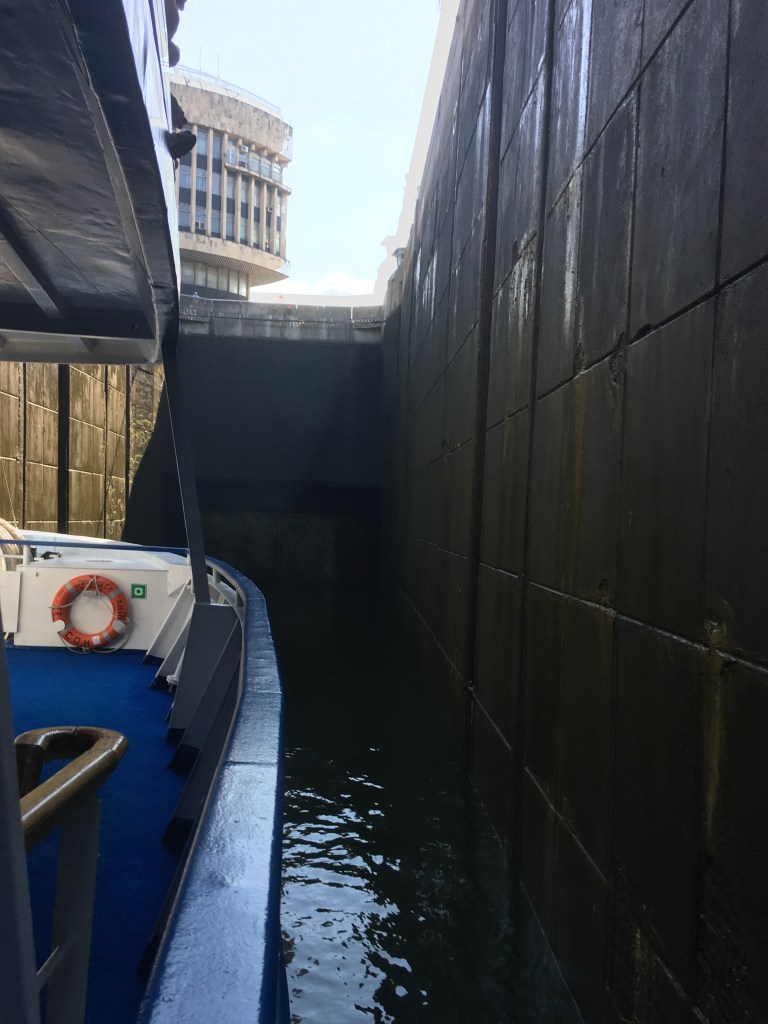
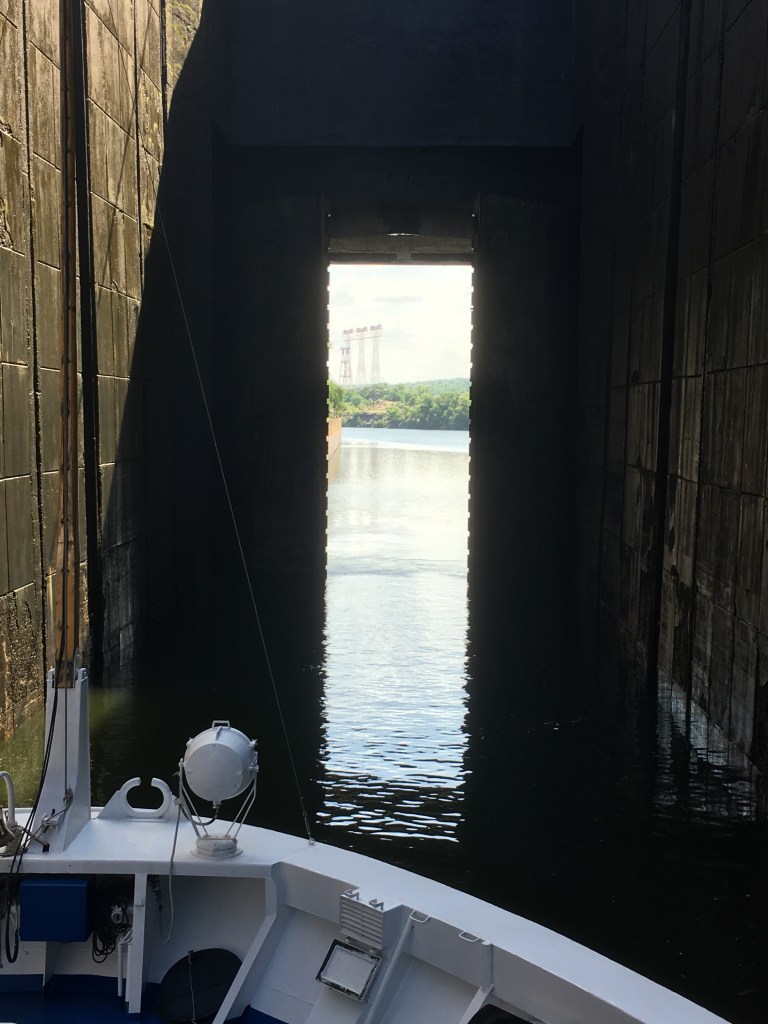
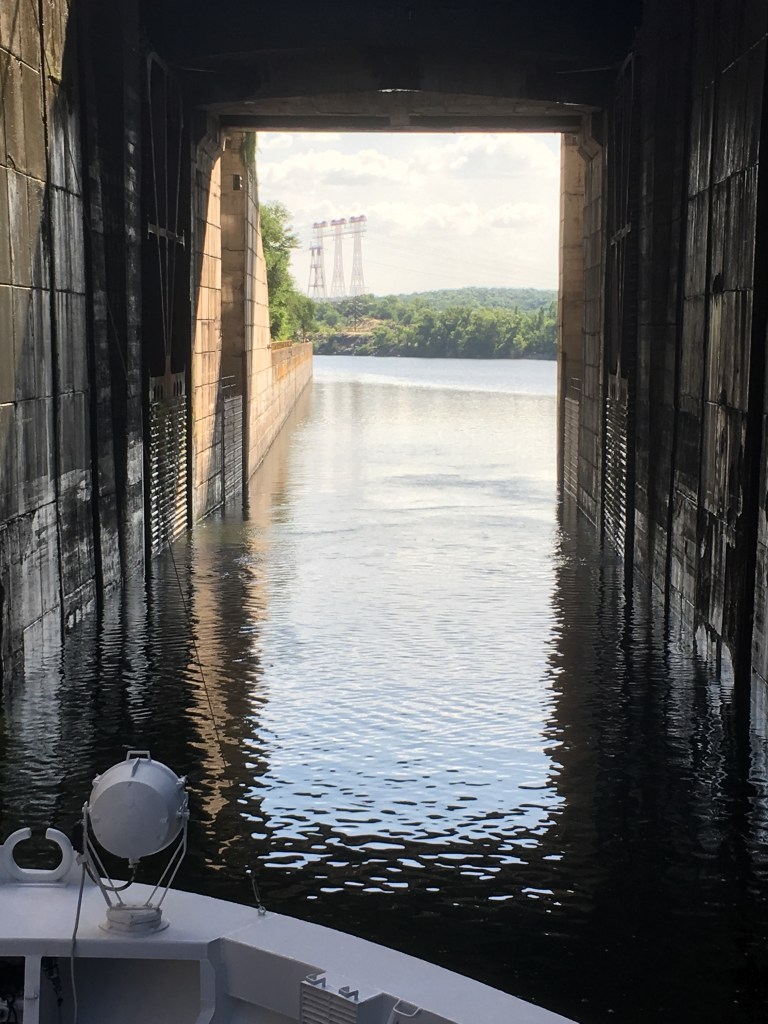
Zaporizhia Lock
This is the deepest lock on the Dneiper river at 36 metres, 118 feet.

Dneiper Delta
The Dneiper Delta is located in the lower reaches of Dnieper river, where it flows into the Black Sea.
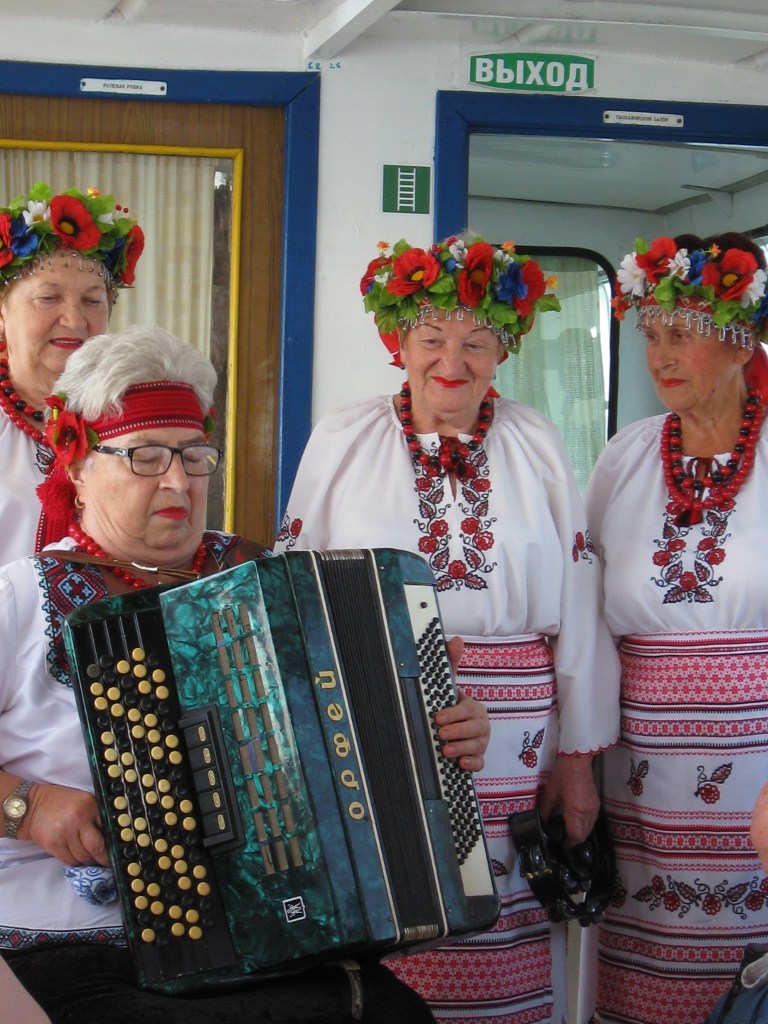
Whilst travelling around the delta we were entertained by the latest entries in Ukraine’s got talent competition.
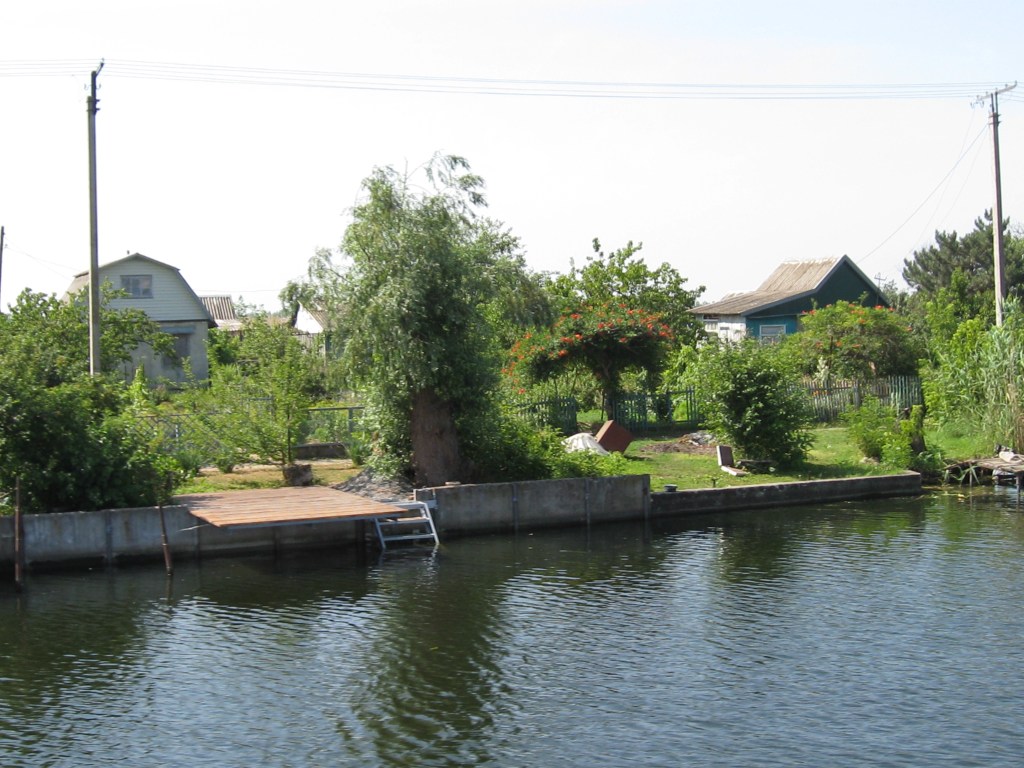
Summer houses on the Deinper delta
Danube Delta
The Danube Delta is the second largest river delta in Europe, after the Volga Delta, and is the best preserved on the continent. The greater part of the Danube Delta lies in Romania, while its northern part, is situated in Ukraine (Odessa Oblast). The approximate surface is 4152 km2, of which 3446 km2 are in Romania.
The Danube Delta is a low alluvial plain, mostly covered by wetlands and water. It consists of an intricate pattern of marshes, channels, streams and lakes. The average altitude is 0.52 m, with 20% of the territory below sea level, and more than half not exceeding one meter in altitude. Dunes on the most extensive plains of the delta (Letea and Caraorman plains) stand higher (12.4 m and 7 m respectively). The largest lakes are Dranov (21.7 km2), Rou (14.5 km2), Gorgova (13.8 km2).
The Danube, which is the second longest river in Europe after the Volga, rises in Germany and flows through Austria, Slovakia, Hungary, Croatia, Serbia, Romania, Bulgaria, Moldova and Ukraine before ending in the Black Sea. The picture below is the point at which it’s length is measured from.

Cormorants in the foreground and pelicans in the background. I, Keith, wished I had a longer lens to capture the pelicans.

Vilkovo
This is a small town on the edge of the Danube delta which is relatively poor as it is based on agriculture and fishing. They are trying to expand the tourist industry to get more people to visit. If you want to see rural Ukraine then this is the place.
We had a beer which cost 25p for a pint, not sure how strong it was but in 30+ degrees it was extremely good.
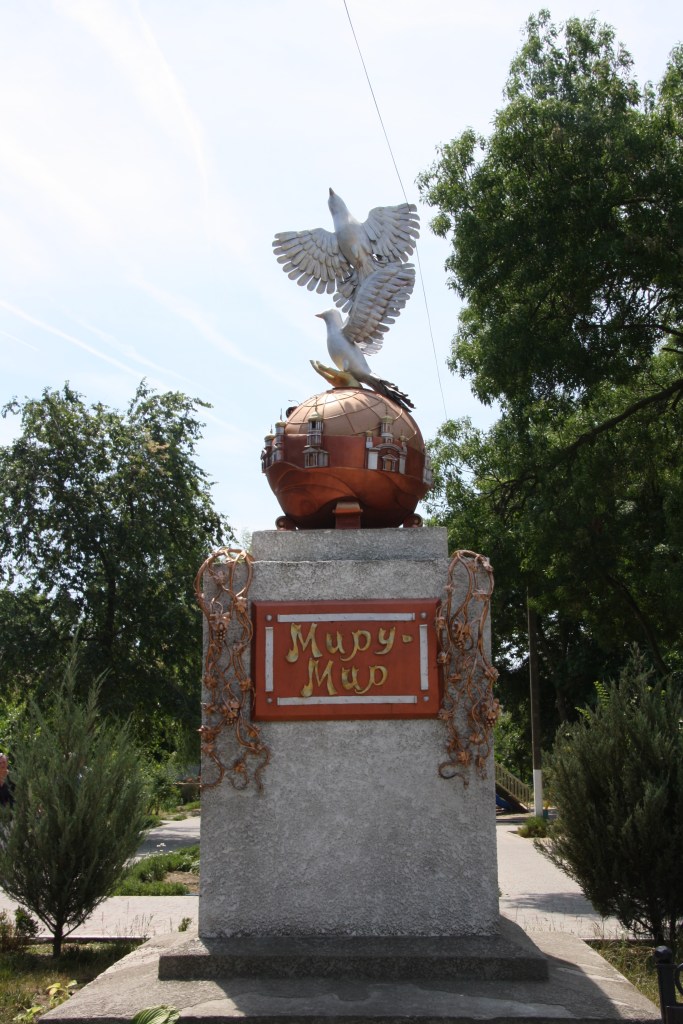
After independence Ukraine replaced a lot of statues with more modern ones reflecting the birth of a new independent nation. The statue below includes the white doves of peace.
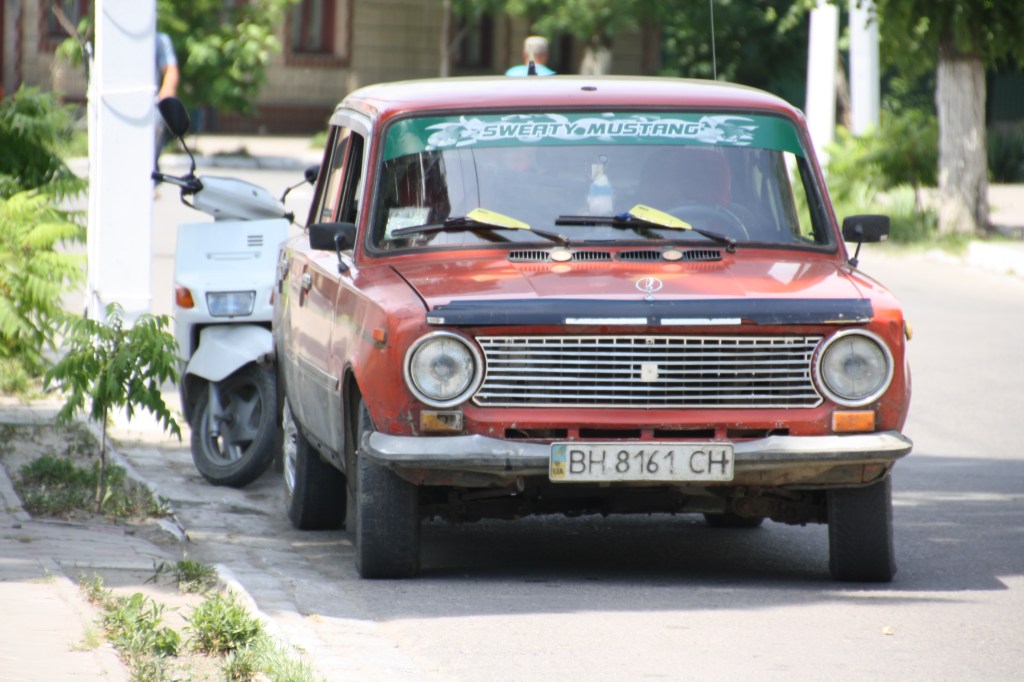
Lada, you just can’t beat quality and simplicity.
Vilkovo Ukrainian orthodox church

Odessa
With a population of 1,100,000 souls, Odessa is known as the “Pearl of the Ukraine” and “the most beautiful city on the Black Sea”. Quite unlike Kiev, Odessa looks much as it did when it was built just 200 years ago: a charming city of parks and boulevards lined with chestnut trees, and where neo-classical architecture rubs shoulders with Art Nouveau. At the same time Odessa is Ukraine’s major port and her “gate to the Black Sea”. Odessa, named for the Greek settlement of Odessos which once stood on the site, lies on the flat top of a hill, separated from the port by the 192 granite steps of the broad Potemkin Stairs
Odessa — from the very beginning — had an international, cosmopolitan air as Russians, Ukrainians, Poles, Greeks, Albanians, Romanians, Italians and Jews as well as adventurers, speculators, petty criminals and smugglers arrived to seek their fortune. Odessa was a city where runaway serfs and political refugees could find sanctuary. One of these political refugees was a Frenchman, the Duke de Richelieu, who narrowly escaped the guillotine in Paris. Governor of the city from 1803 to 1814, Richelieu is known as “the father of Odessa”. His bronze statue stands —draped in a Roman or Greek toga — in pride of place at the top of the Potemkin steps. Richelieu created the neo-classical city we enjoy today. It was his aim to make Odessa “the Paris of the East” and to do this he called in French and Italian architects. He promoted trade by slashing trade duties by three quarters. One fifth of the profit was used to embellish the city with proud public buildings built in stone. Tree-lined boulevards laid down on the regular pattern of a grid.
Statue of Duke de Richelieu.

There is a funicular which goes up in to the city however it appeared to only allow MasterCard, so we walked up and down on a day when the temperature hit 37 C in the shade. Only when we got back to the ship we found out that inside the carriage there was a lady collecting 5 Ukrainian Hryvnia, which was about 15 pence.
Below are pictures of the steps looking from the bottom and the top respectively.


The picture below could be a boulevard off the Champs-Elysee.

Odessa Passage
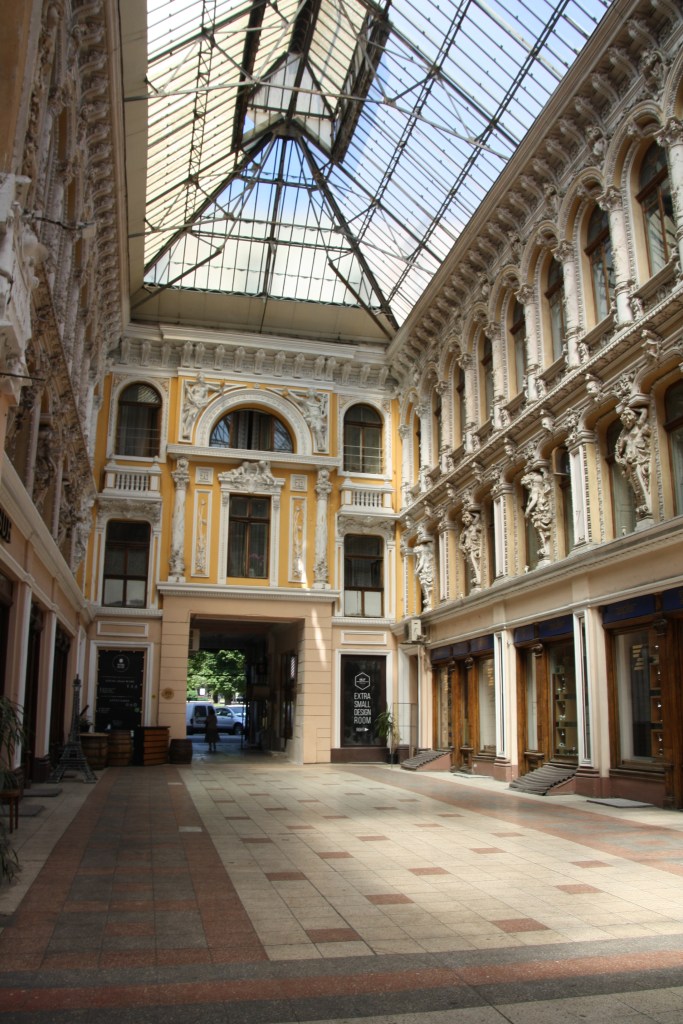
Odessa Passage is a passage and a hotel on Deribasivska Street in the centre of Odessa. It has 4 floors. On the ground floor there are many boutiques and on other 3 floors there is a hotel. Odessa Passage was built at the end of the 19th century and was the best hotel in Southern Russia until the Bristol Hotel was opened.
The inside and exterior of the Passage building are decorated by numerous sculptures. The Passage houses multiple shops, restaurants, offices and the economy hotel “Passage”. Passage is the most picturesque market of Odessa.
Transfiguration Cathedral
The Transfiguration Cathedral in Odessa is the Orthodox Cathedral dedicated to the Saviour’s Transfiguration and belongs to the Ukrainian Orthodox Church (Moscow Patriarchate).
The cathedral was designated the main church of New Russia in 1808 and was continuously expanded throughout the 19th century. The belltower was built between 1825 and 1837, and the refectory connecting it to the main church several years later. The interior was lined with polychrome marble, and the icon screen also was of marble.

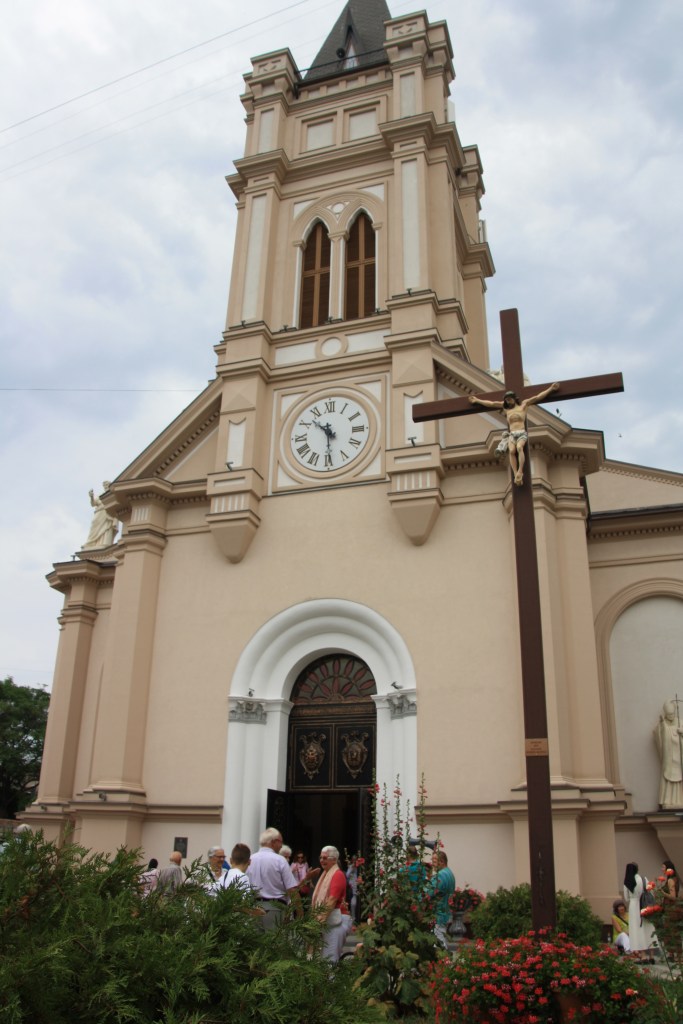
Odessa Roman Catholic church. The date we arrived there was a procession and we got stuck in the doorway whilst over thousand people made their way out of the church.
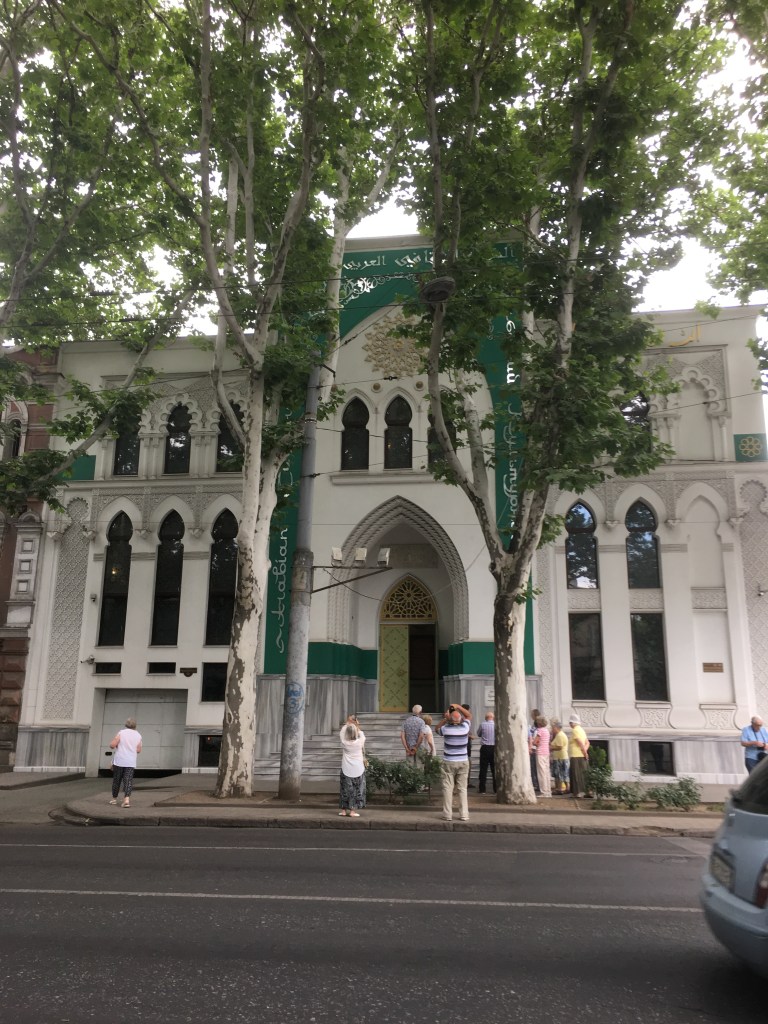
As this does not have a minaret it can’t be called a Mosque, instead this is called the Islamic centre.
Odessa Opera House
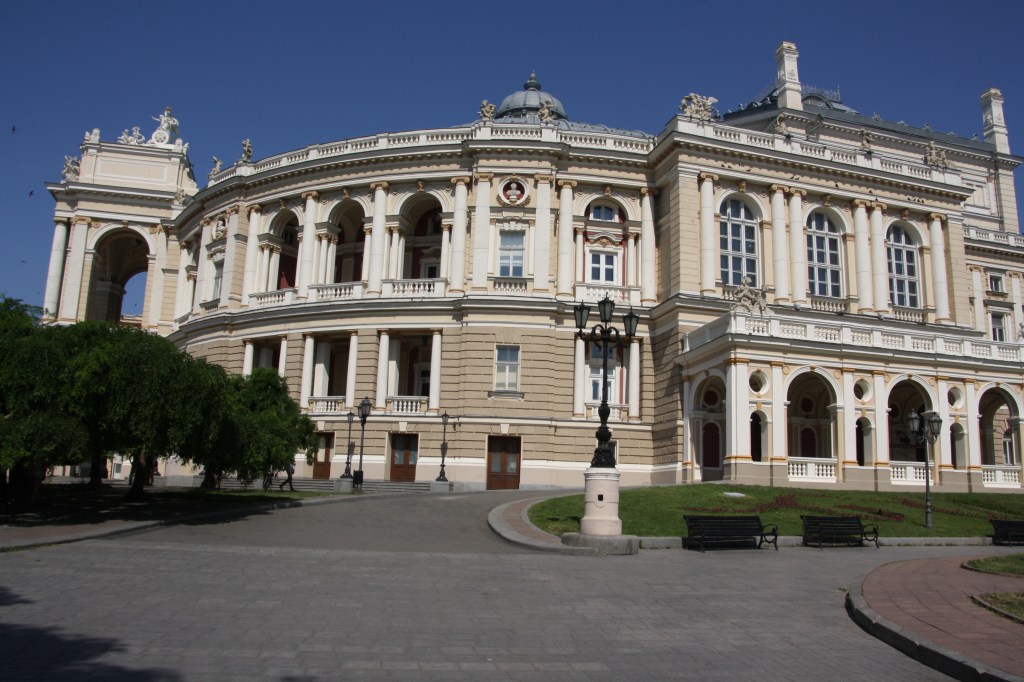
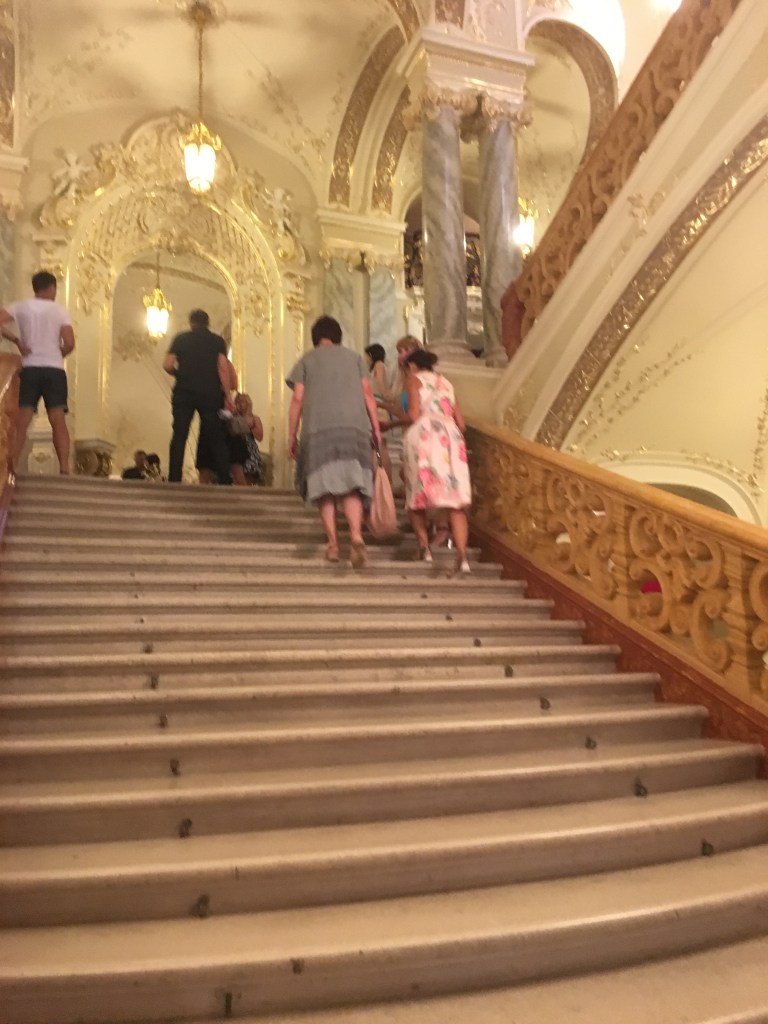
The Odessa National Academic Theatre of Opera and Ballet is the oldest theatre in Odessa, Ukraine. The Theatre and the Potemkin Stairs are the most famous edifices in Odessa.
The first opera house was opened in 1810 and destroyed by fire in 1873. The modern building was constructed by Fellner & Helmer in neo-baroque (Vienna Baroque) style and opened in 1887. The architecture of the luxurious audience hall follows the late French rococo style. The unique acoustics of the horseshoe-designed hall allows performers to deliver even a whisper-low tone of voice from the stage to any part of the hall. The most recent renovation of the theater was completed in 2007.
Inside the Opera House
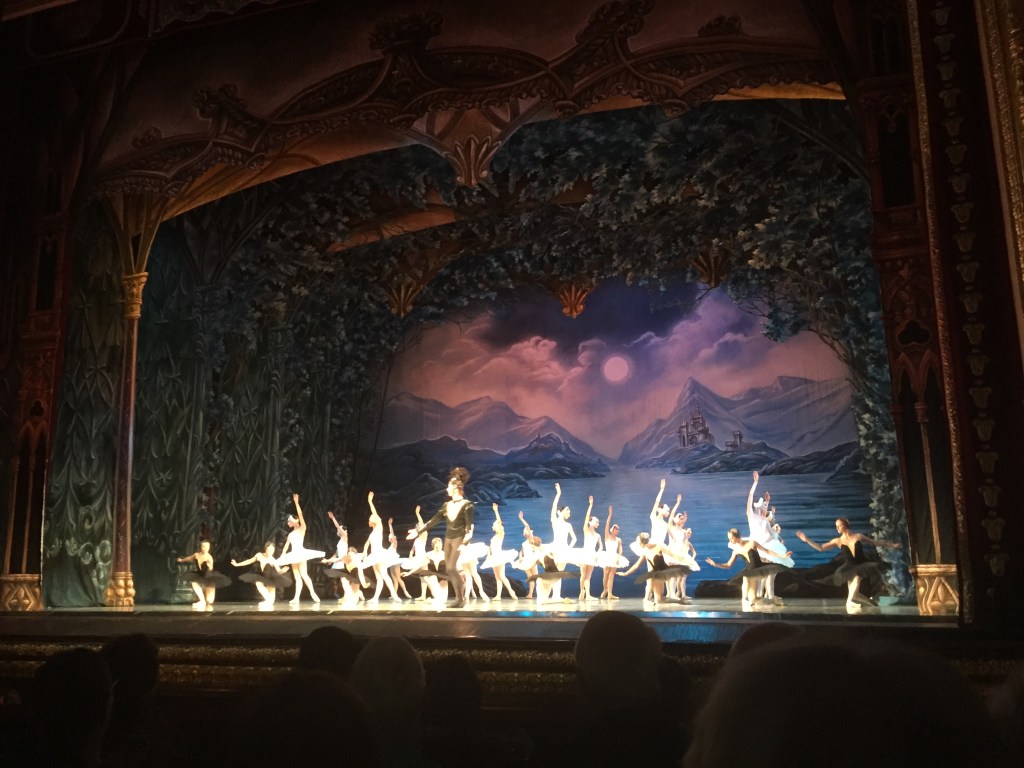
How to spend the last night of our holiday, watching Swan Lake.
Homeward Bound
The view from the ship at 4 am as we prepare for our trip back home.

Ukrainian’s like a drink so they have this signpost at Odessa airport so they know where the next bar is.

After a journey starting at 5 am, 3 am UK time, which included a mini bus, two flights, four trains and a taxi we finally arrived home at 4:15 pm .
This was an amazing trip starting in Kiev and meandering down the Dneiper river ending in Odessa. We have seen so many beautiful sights, recording a few in this blog, from cities to countryside. Ukraine is a beautiful country and well worth a visit for anyone who wants to try something different.
 Heather and Keith's travels