Kraków is the second largest and one of the oldest cities in Poland. Situated on the Vistula River the city dates back to the 7th century. Kraków was the official capital of Poland until 1596 and has traditionally been one of the leading centres of Polish academic, economic, cultural and artistic life. Cited as one of Europe’s most beautiful cities, its Old Town was declared the first UNESCO World Heritage Site in the world.
We stayed at the Best Western Old Town in September and October 2019.
Main market square
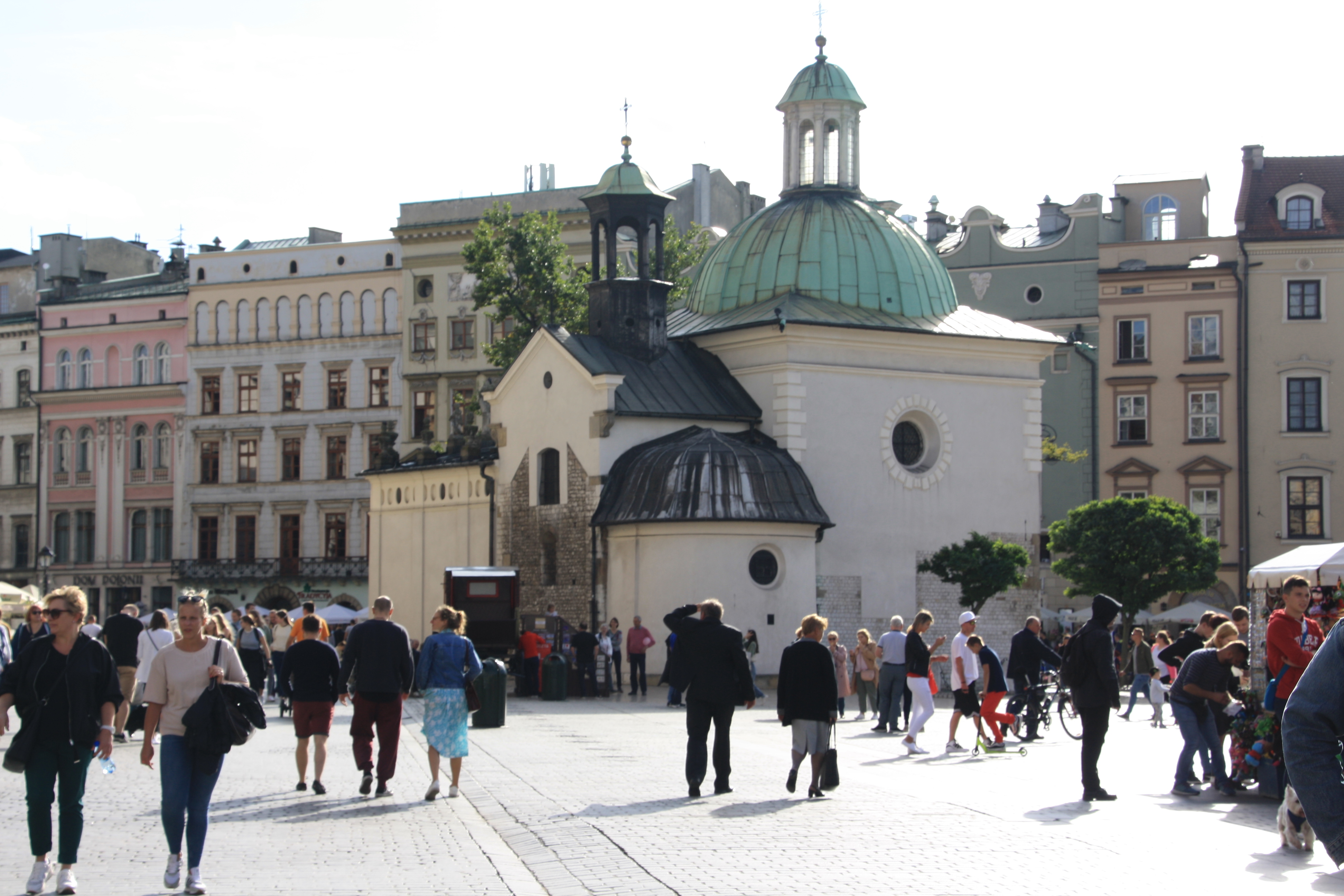
The main square of the Old Town of Kraków is the principal urban space located at the centre of the city. It dates back to the 13th century, and at 3.79 ha (9.4 acres) is one of the largest medieval town squares in Europe. The Project for Public Spaces (PPS) lists the square as the best public space in Europe due to its lively street life, and it was a major factor in the inclusion of Kraków as one of the top off-the-beaten-path destinations in the world in 2016.

St. Mary’s Basilica
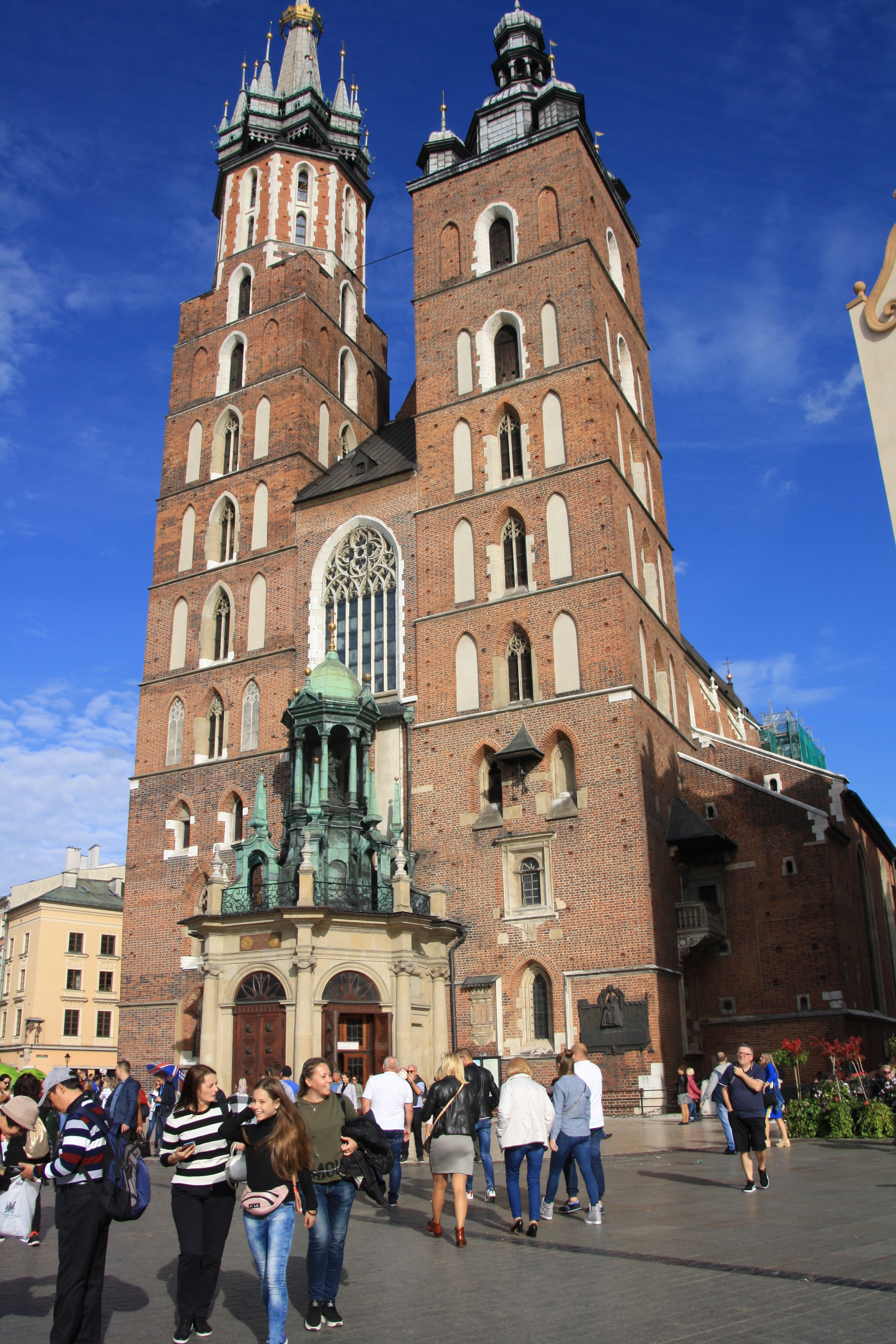
Saint Mary’s Basilica is a Brick Gothic church adjacent to the Main Market Square. Built in the 14th century, its foundations date back to the early 13th century and serve as one of the best examples of Polish Gothic architecture. Standing 80 m (262 ft) tall, it is particularly famous for its wooden altarpiece carved by Veit Stoss. In 1978 it became a UNESCO World Heritage Site alongside the Historic Centre of Kraków.
On every hour, a trumpet signal—called the Hejnał mariacki—is played from the top of the taller of Saint Mary’s two towers. The plaintive tune breaks off in mid-stream, to commemorate a famous 13th century trumpeter who was shot in the throat while sounding the alarm before a Mongol attack on the city. The noon-time hejnał is heard across Poland and abroad broadcast live by the Polish national Radio 1 Station.
The remnants of the medieval walls
The City Walls of Kraków were established around the Old Town during the thirteenth century. It once had 39 towers, 8 gates and a 6-meter wide moat.
The thirteenth-century defensive wall was renovated throughout the centuries, and during its culminating point, it measured two-miles-long, was three meters thick and had eight gates and thirty-nine towers. The moat along the whole fortification was six-meters wide.
During the nineteenth century, the no longer useful fortifications were brought down and the charming Planty Park was designed on the site.
The fourteenth century Barbican, standing by its side, was also part of Kraków’s defensive system.
The city walls were demolished, except for a fragment of 200-meters that includes St. Florian’s Gate and Carpenter’s Tower.

The Barbican
The Kraków Barbican is a barbican – a fortified outpost once connected to the city walls. It is a historic gateway leading into the Old Town. The barbican is one of the few remaining relics of the complex network of fortifications and defensive barriers that once encircled the royal city of Kraków. It currently serves as a tourist attraction and venue for a variety of exhibitions.
Today the Barbican is under the jurisdiction of The Historical Museum of the City of Kraków. Tourists may tour its interior with its displays outlining the historical development of fortifications in Kraków.

The St. Florian’s gate
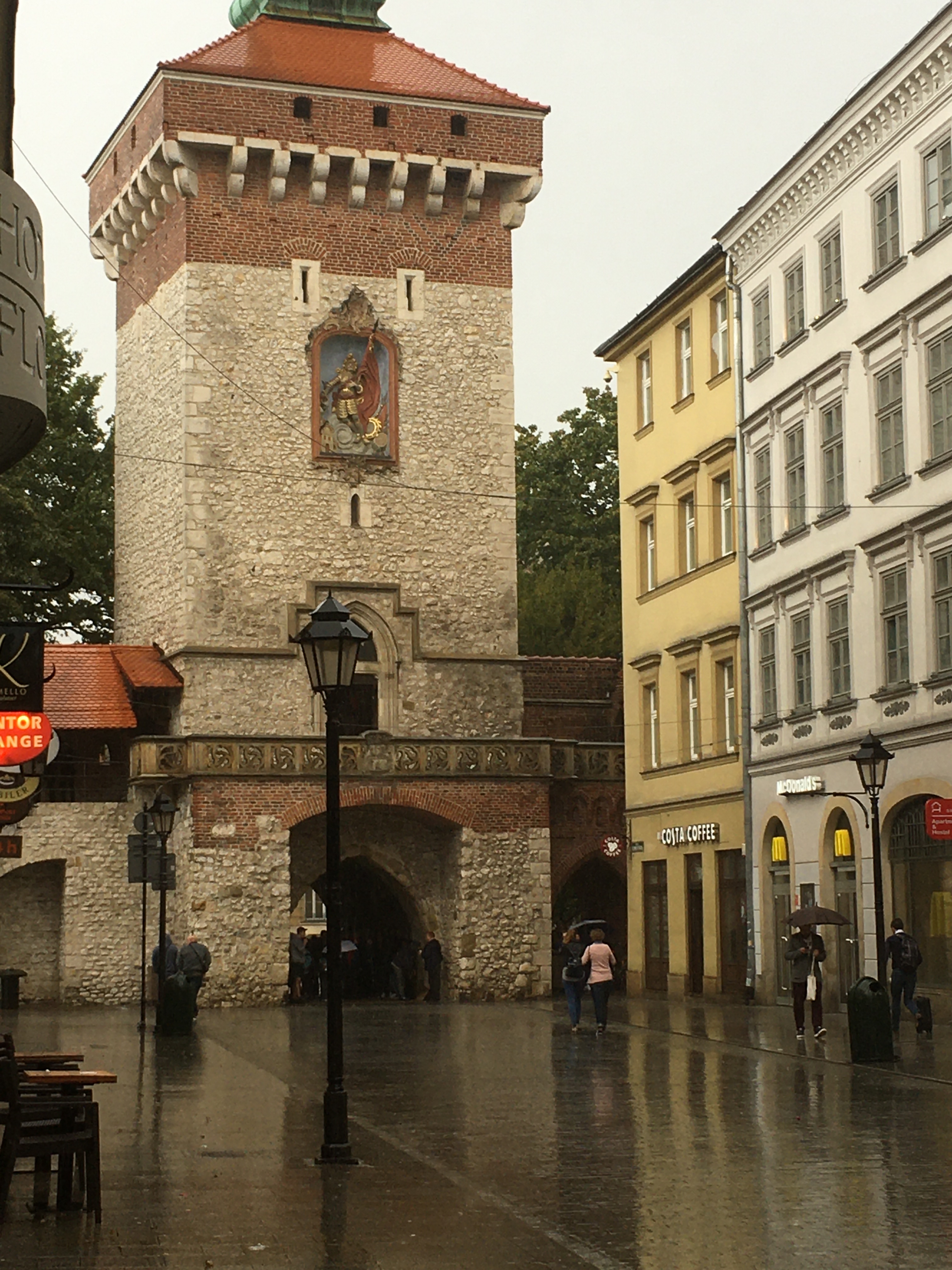
St. Florian’s Gate or Florian Gate is one of the best-known Polish Gothic towers, and a focal point of Kraków’s Old Town. It was built about the 14th century as a rectangular Gothic tower of “wild stone”, part of the city fortifications against Turkish attack.
The Cloth Hall
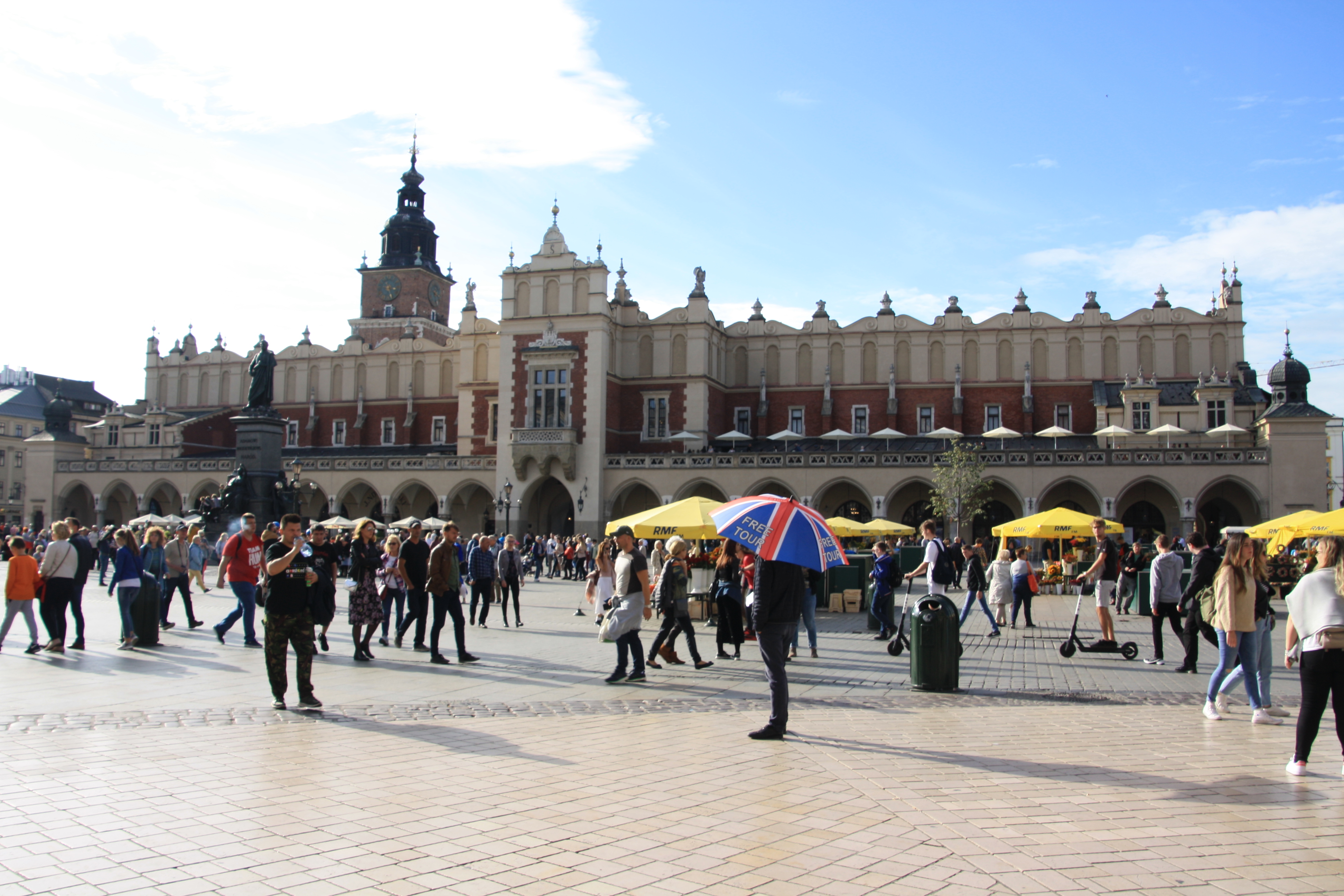
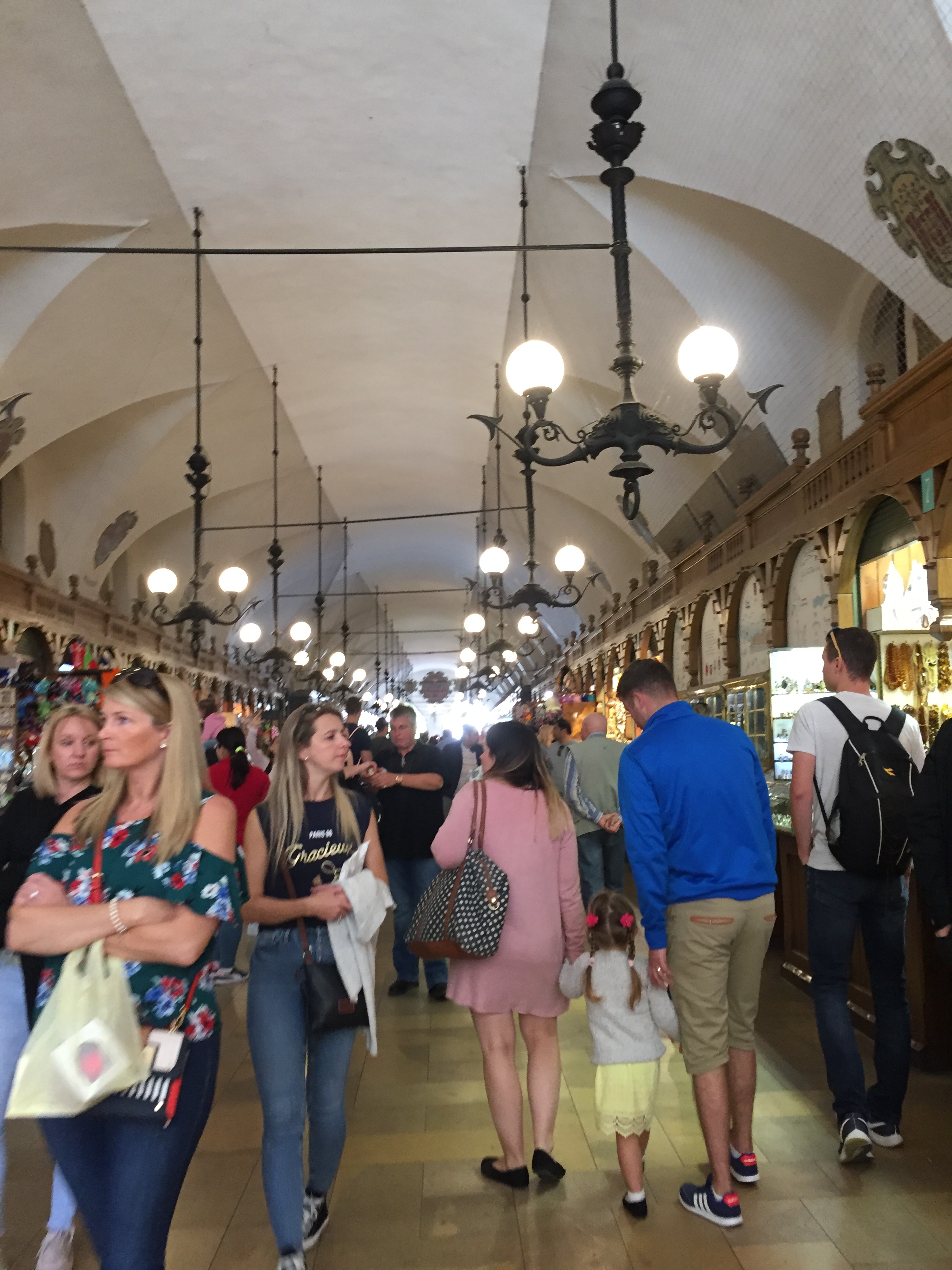
The Kraków Cloth Hall dates to the Renaissance and is one of the city’s most recognizable icons. It is the central feature of the main market square in the Kraków Old Town (listed as a UNESCO World Heritage Site since 1978).
Collegium Maius
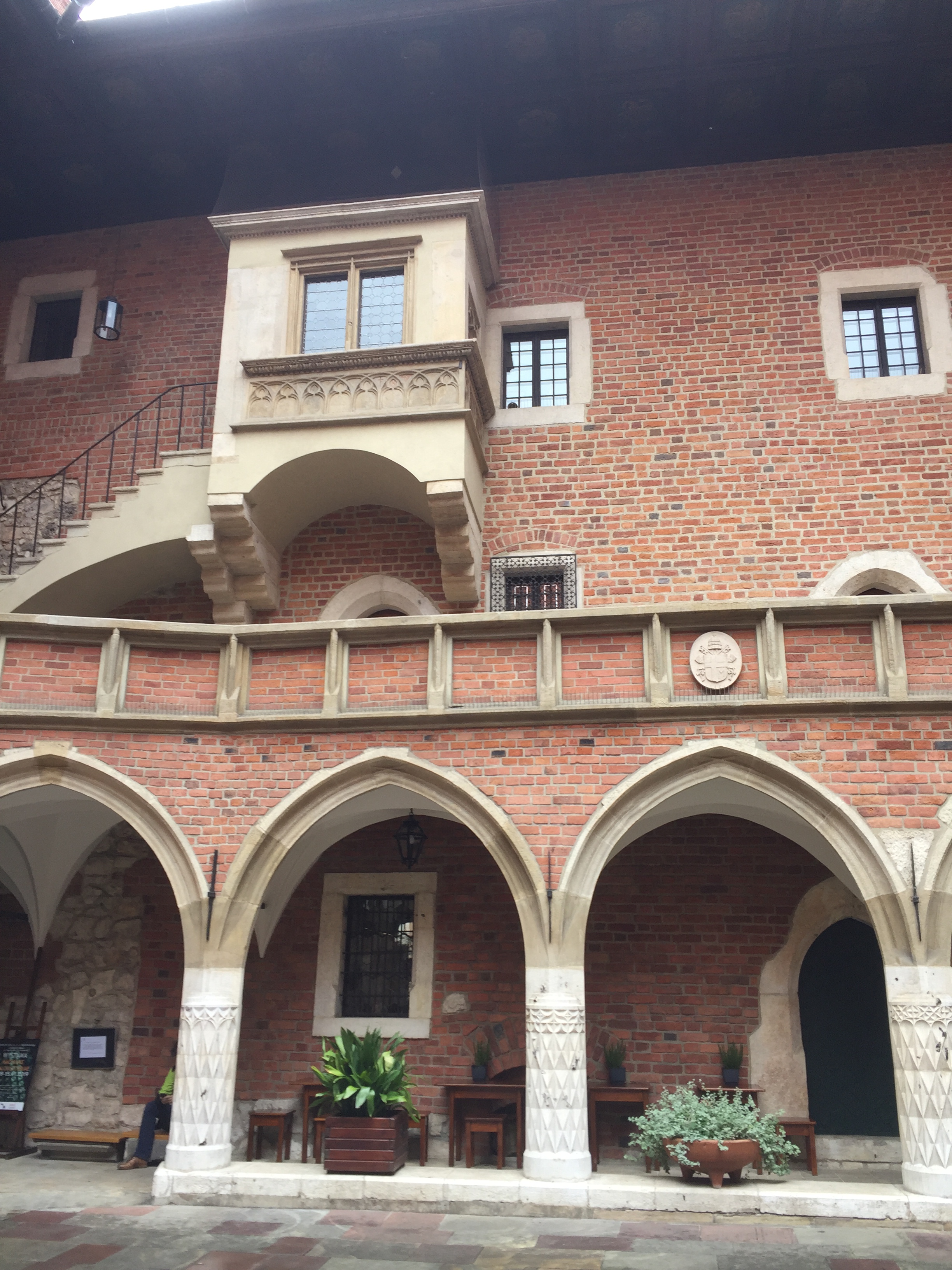
The Collegium Maius (Latin for “Great College”) located in Kraków Old Town is the Jagiellonian University’s oldest building, dating back to the 14th century. It stands at the corner of ulica Jagiellońska (Jagiellon Street) and ulica Świętej Anny (St. Anne Street) near the Main Square of the historic city centre.
Bishop’s Palace
The Bishop’s Palace is the seat of Kraków metropolitan Curia, Poland, and the traditional residence of Kraków bishops since the late 14th century. It is the second largest palace in the city after Wawel – former seat of the Polish monarchs. It is part of a monastery complex of the Franciscan Religious order. Bishop’s Palace is best known for being the residence of Pope John Paul II during his stays in the city. He used to give his blessings and talk to his followers from a window above the main entrance at night.
This is a painting of the window in the Bishop’s palace where the pope gave his blessing and is known as the pope’s window.

The Planty Park
Planty is one of the largest city parks in Kraków. It encircles the Stare Miasto (Old Town), where the Medieval city walls used to stand until the early 19th century.
The park has an area of 21,000 square meters (5.2 acres) and a length of 4 kilometers (2.5 mi). It consists of a chain of thirty smaller gardens designed in varied styles and adorned with numerous monuments and fountains. There are over twenty statues of noble historical figures in the park – monuments of Nicolaus Copernicus, Jan Matejko, queen Jadwiga and king Wladyslaw II Jagiello, just to name a few. There are also several plaques in the park commemorating, among others, Jan Dlugosz and Stanislaw Wyspianski.
The park forms a scenic walkway popular with Cracovians. In summer, sprinkled with ponds and refreshment stalls, it is a cool and shady retreat from the nearby bustling streets.

The Wawel Castle
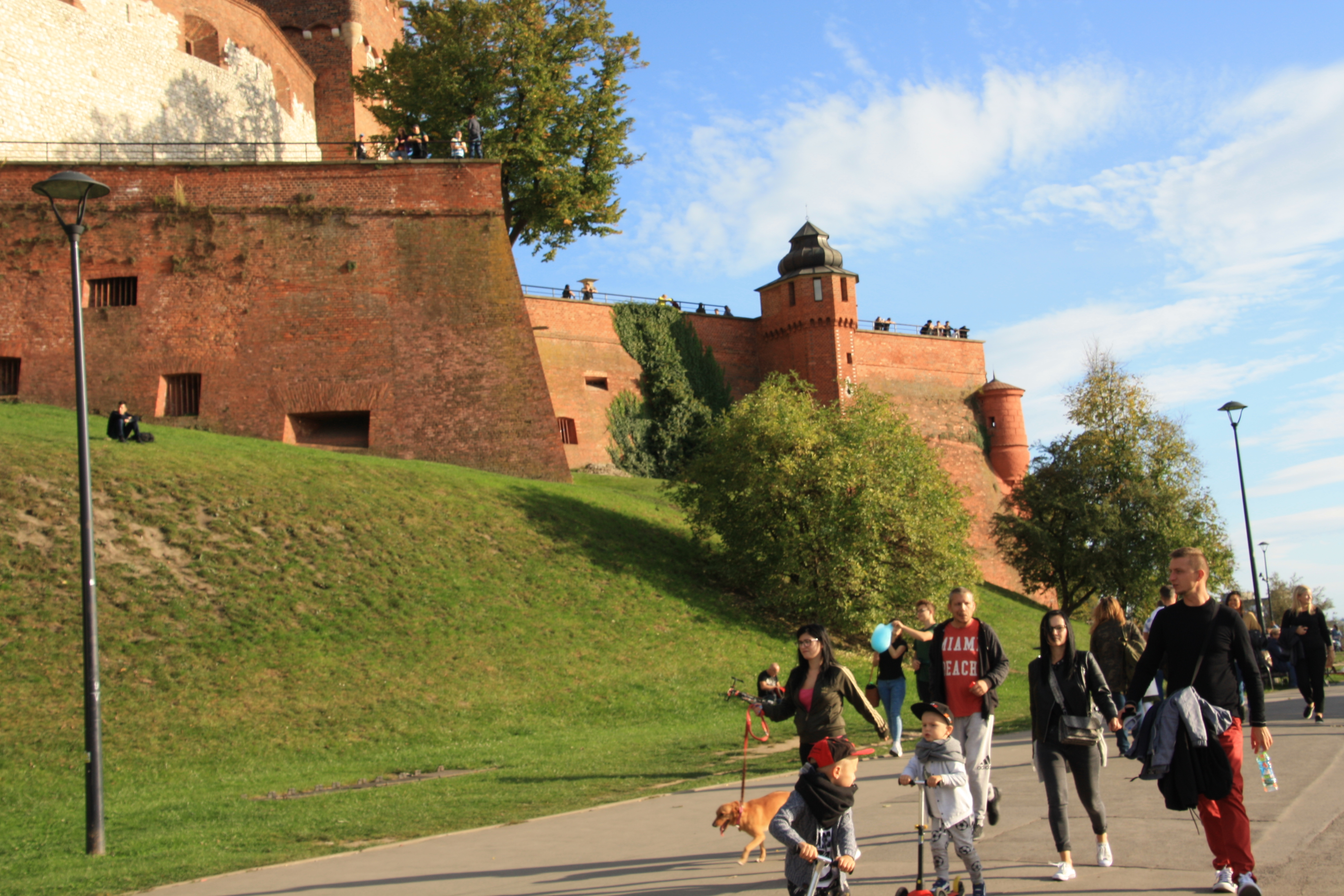
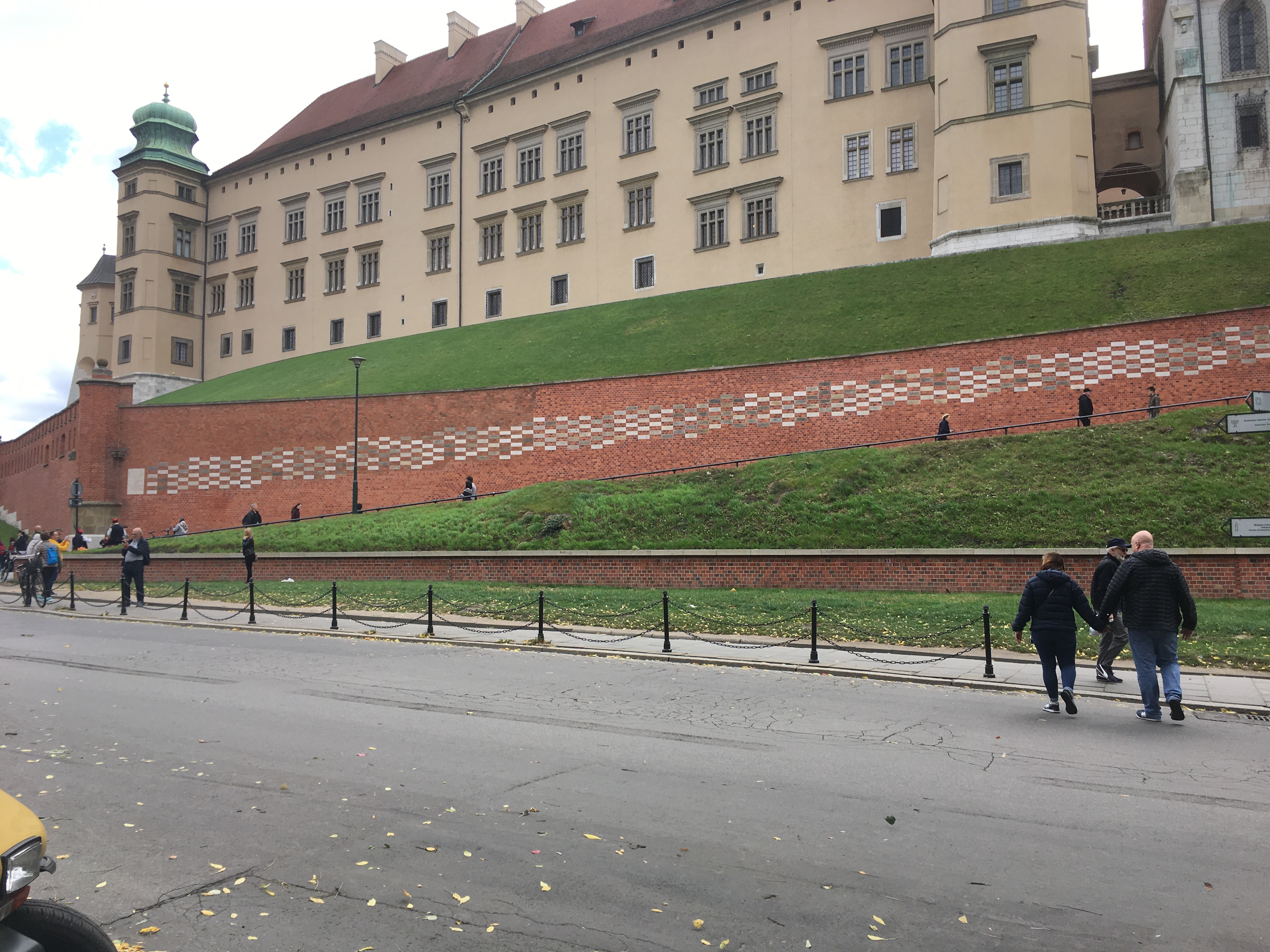
For centuries the residence of the kings of Poland and the symbol of Polish statehood, the Castle is now one of the country’s premier art museums. Established in 1930, the museum encompasses ten curatorial departments responsible for collections of paintings, including an important collection of Italian Renaissance paintings, prints, sculpture, textiles, among them the Sigismund II Augustus tapestry collection, goldsmith’s work, arms and armour, ceramics, Meissen porcelain, and period furniture. The museum’s holdings in oriental art include the largest collection of Ottoman tents in Europe. With seven specialized conservation studios, the museum is also an important centre for the conservation of works of art.
The Wawel Castle was built at the behest of King Casimir III the Great,it consists of a number of structures situated around the Italian-styled main courtyard. The castle, being one of the largest in Poland, represents nearly all European architectural styles of medieval, renaissance and baroque periods. The Wawel Royal Castle and the Wawel Hill constitute the most historically and culturally significant site in the country. In 1978 it was declared a UNESCO World Heritage Site as part of the Historic Centre of Kraków.
The Wawel Cathedral
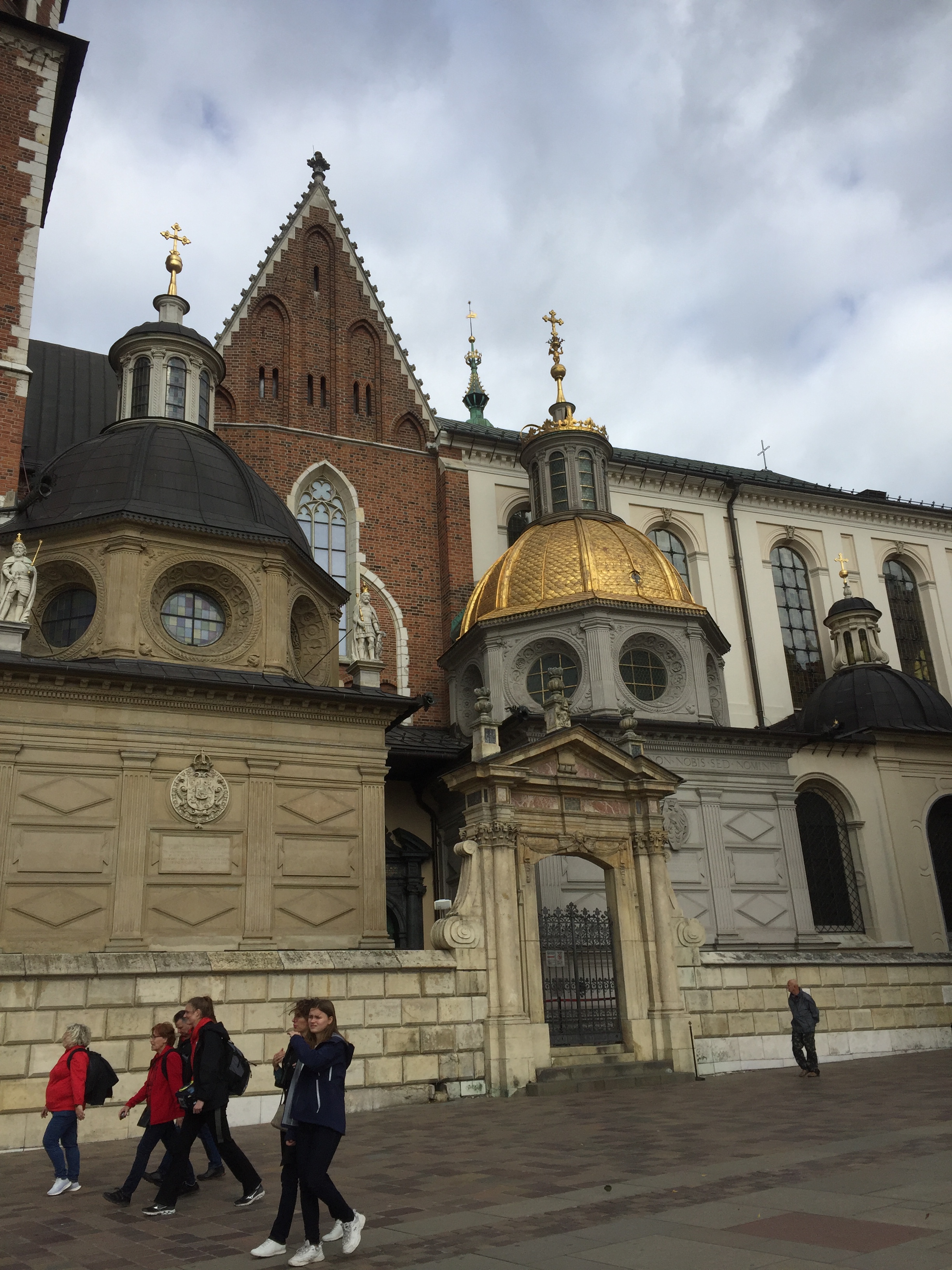
The Royal Archcathedral Basilica of Saints Stanislaus and Wenceslaus on the Wawel Hill also known as the Wawel Cathedral (is a Roman Catholic church located on Wawel Hill. More than 900 years old, it is the Polish national sanctuary and traditionally has served as coronation site of the Polish monarchs as well as the Cathedral of the Archdiocese of Krakó
Karol Wojtyla, who in 1978 became Pope John Paul II, the day after his ordination to the priesthood, offered his first Mass as a priest in the Crypt of the Cathedral on 2 November 1946, and was ordained Kraków’s auxiliary bishop in the Cathedral on 28 September 1958.
The current, Gothic cathedral, is the third edifice on this site: the first was constructed and destroyed in the 11th century; the second one, constructed in the 12th century, was destroyed by a fire in 1305. The construction of the current one began in the 14th century on the orders of bishop Nanker.
Jewish quarter
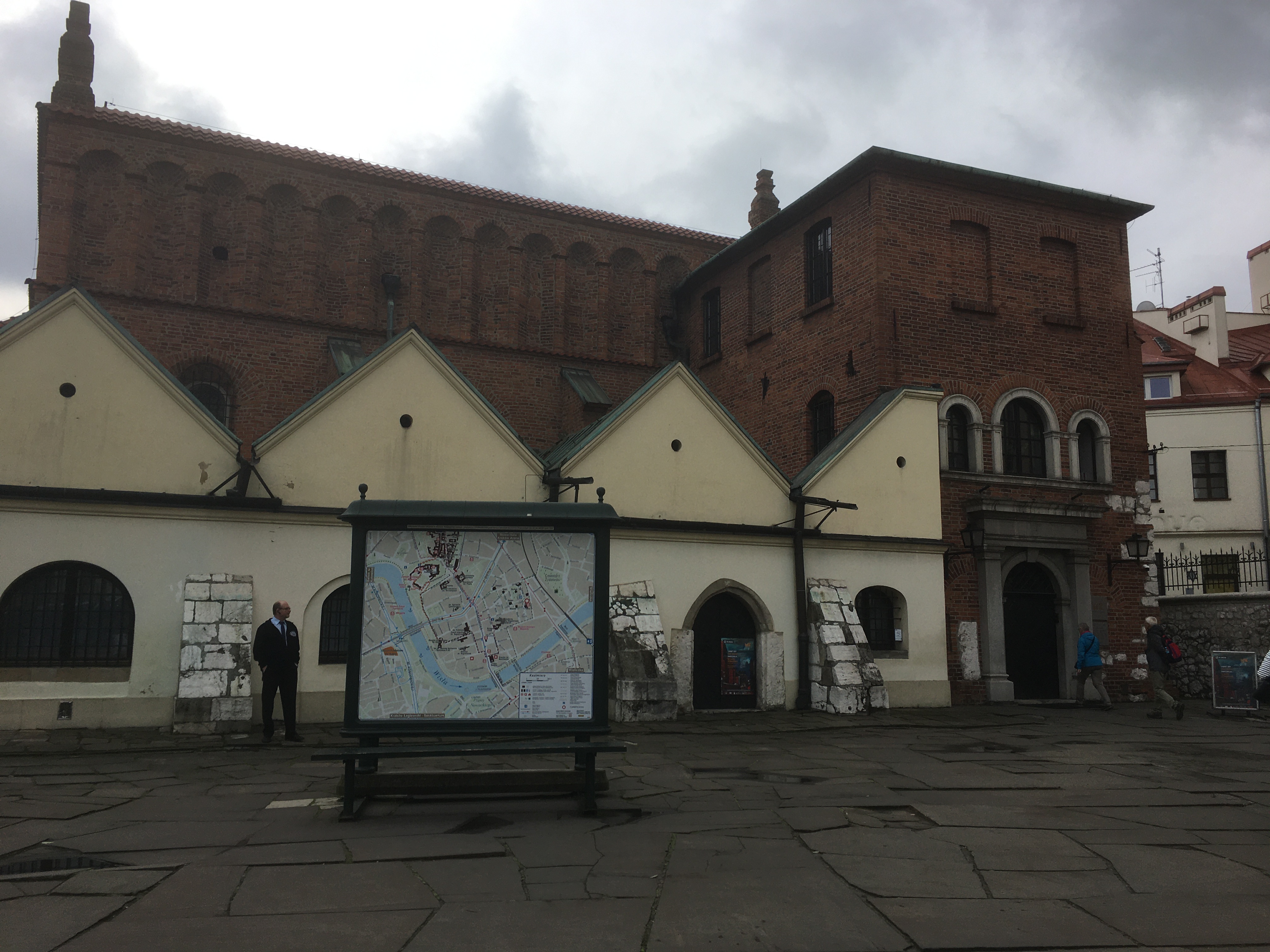
The Old Synagogue
Old Synagogue is an Orthodox Jewish synagogue in the Kazimierz district of Kraków. In Yiddish it was referred to as the Alta Shul. It is the oldest synagogue building still standing in Poland, and one of the most precious landmarks of Jewish architecture in Europe. Until the German invasion of Poland in 1939, it was one of the most important synagogues in the city as well as the main religious, social, and organizational centre of the Kraków Jewish community. In 1794 General Tadeusz Kościuszko spoke from the synagogue to gain the Jewish support in the struggle for Polish independence. A plaque in the entrance hall commemorates this event.
The Synagogue was built in 1407 or 1492; the date of building varies with several sources. The original building was rebuilt in 1570 under the watchful eye of an Italian architect Mateo Gucci. The rebuilding included the attic wall with loopholes, windows placed far above ground level, and thick, masonry walls with heavy buttressing to withstand siege, all features borrowed from military architecture.[4] There was further reconstruction work in 1904 and in 1913. The Old synagogue is a rare, surviving example of a Polish Fortress synagogue.
The synagogue was completely devastated and ransacked by the Germans during World War II. Its artwork and Jewish relics, looted. During the occupation, the synagogue was used as a magazine. In 1943, 30 Polish hostages were executed at its wall. The Old Synagogue was renovated from 1956 to 1959 and currently operates as a museum. It is a Division of the Historical Museum of Kraków, with particular focus on Kraków’s Jews. The exhibits are divided into themes dealing with birth, prayer rituals, diet, divorce and death. “The beautiful women’s prayer room, which dates from the 17th century, is often used to hold temporary exhibitions.”
The Jewish Ghetto
The Kraków Ghetto was one of five major, metropolitan Jewish Ghettos created by Nazi Germany in the new General Government territory during the German occupation of Poland in World War II. It was established for the purpose of exploitation, terror, and persecution of local Polish Jews, as well as the staging area for separating the “able workers” from those who would later be deemed unworthy of life. The Ghetto was liquidated between June 1942 and March 1943, with most of its inhabitants sent to their deaths at Bełżec extermination camp as well as Płaszów slave-labour camp, and Auschwitz concentration camp, 60 kilometres (37 mi) rail distance.

The picture below shows the bullet holes from guns fired by the Nazi’s.

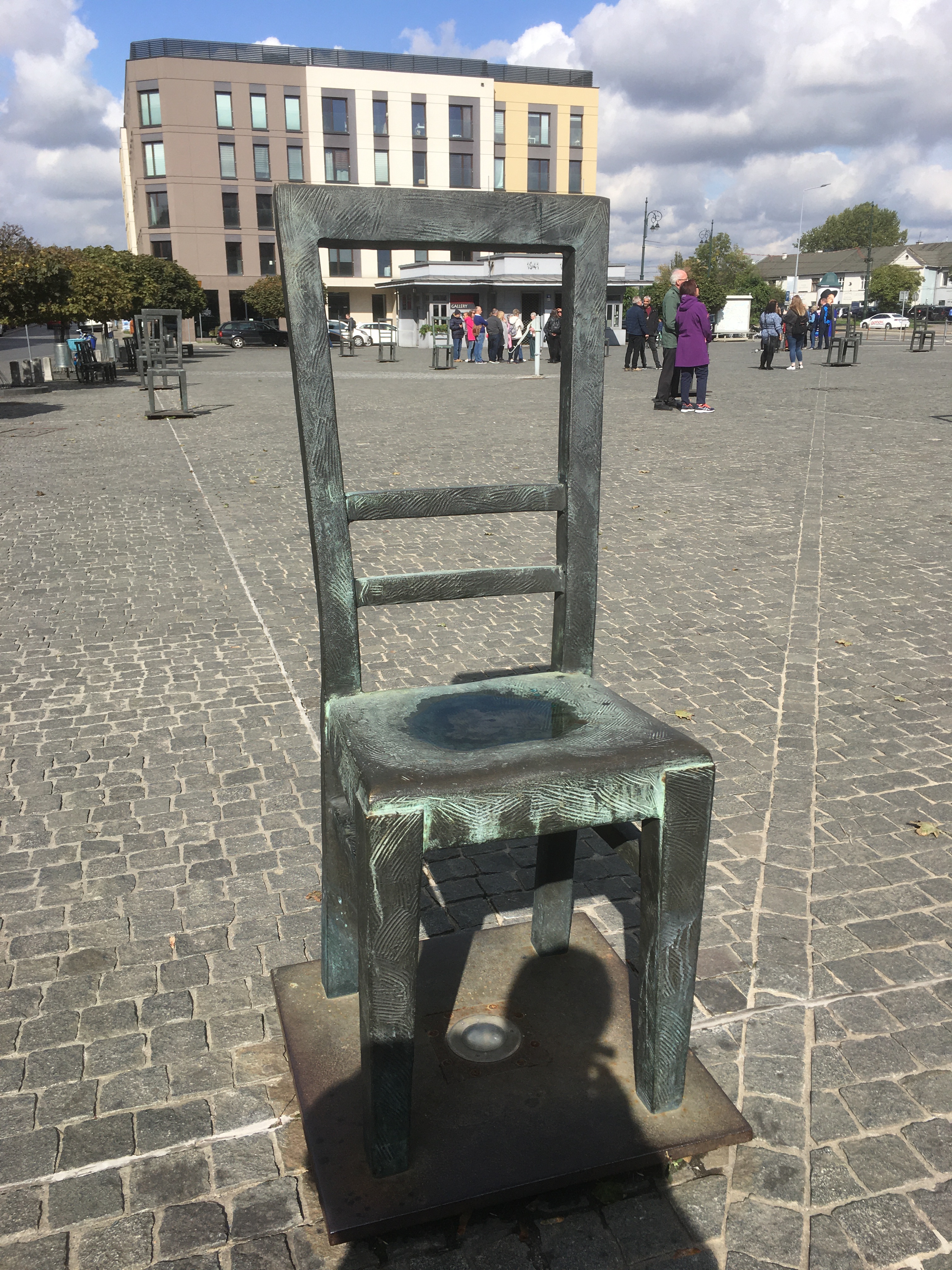
Heroes of Ghetto Square
Among the many Krakow historic monuments and memorial sites there is a very unlikely one. Almost everyone asks about when they first see it. Unfortunately, not many people can give them the right answer. So let’s try to do so here.
It is the Ghetto Heroes Square with its 33 memorial chairs of iron and bronze. These chairs symbolize the tragedy of the Polish Jews. These inhabitants of Krakow were imprisoned in the Krakow Ghetto during the Second World War and the German occupation of Poland. And then afterwards losing their lives to the Germans on the premises of the ghetto and in several German death camps.
The square was erected around 1838 as the second market square for Podgorze, which was a separate town. After 1880 it bore the name of Maly Rynek (Little Market). In 1917 it saw another name change to Plac Zgody (Concord Square). This was because of and in memory of the incorporation of Podgorze to the city of Krakow in 1915. So the present name of the square dates from 1948. It commemorate the Polish Jews who were to lose their lives in the Krakow Ghetto between 1941 and 1943.
As can be seen the Ghetto Heroes Square is in the center of the old Krakow Ghetto. The main gate to the ghetto once stood where the present entrance to the square is, coming up from the Wisla river. In March 1941 the Germans locked up all the Krakow Jews inside the recently-built ghetto. Over 20,000 people were living within the ghetto walls, where previously only 3,000 people had lived.

Bridge of Love
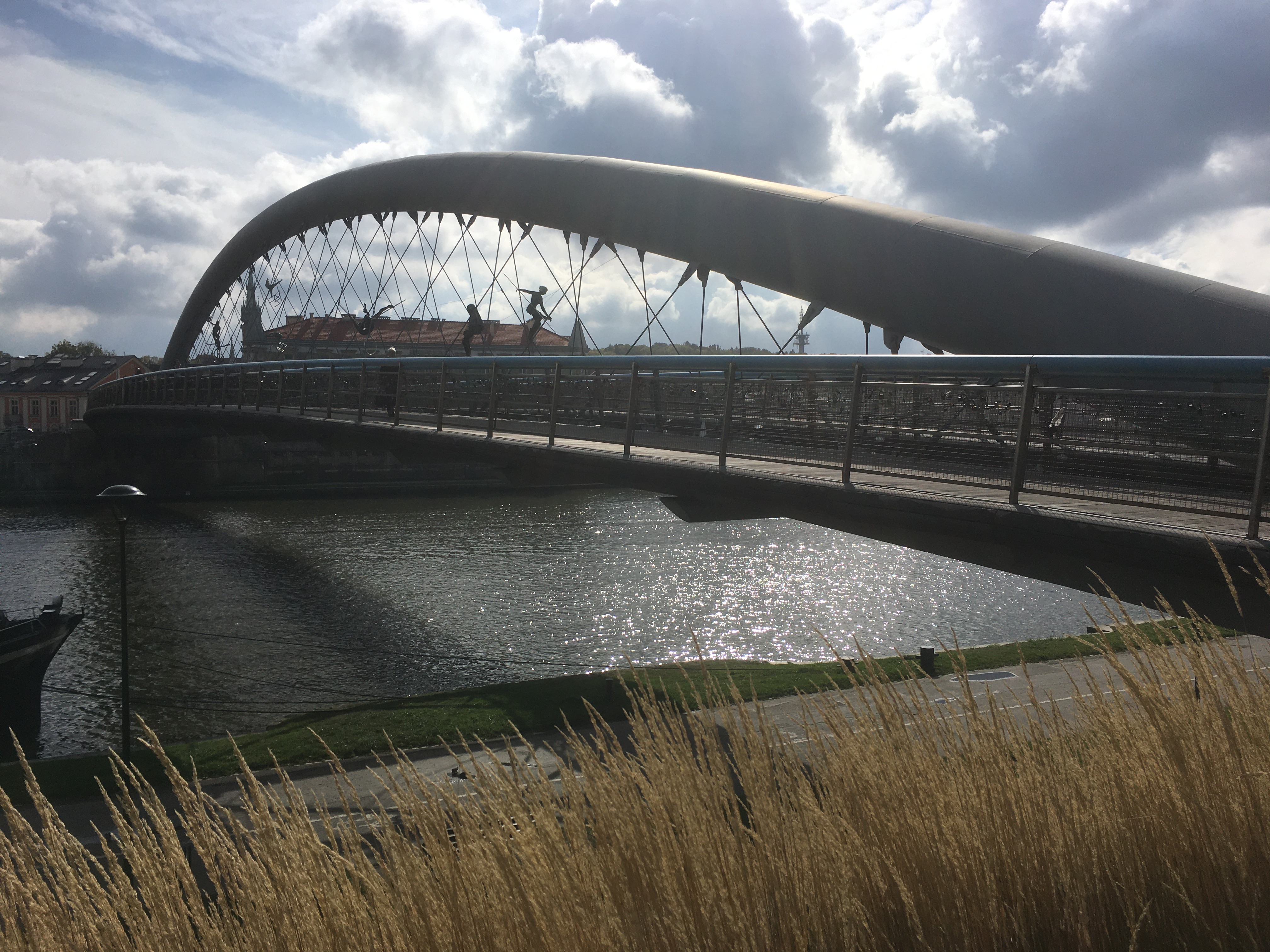
The 145 meter-long Lovers Bridge straddles the banks of the Vistula River and connects two of Krakow’s most beautiful and historic neighbourhoods It is a lovely place to walk or hang up a lock for your sweetheart. The bridge is east of the “horn” of the old Jewish Quarter. Running along Podgorska Street on the north side, and Nadwislanska Street on the Podgorze side. Due to the location, it offers breathtaking views of the Vistula promenade all year-round.
A perfect day involving the Lovers Bridge includes a stroll through Kazimierz. Starting in Plac Nowy and threading southeast through the old brick buildings, perhaps with an ice cream or zapiekanka in hand. Then a long, slow walk across the bridge itself. Stop to examining the locks and imagining their unknown owners. They are identifiable by a few hand-carved initials. And their love immortalized between the bridge’s huge, curving abutments. Finally, a quiet stroll through the twisting streets of Podgorze to the south.
Auschwitz
Auschwitz is about 1 hour or so drive from Krakow. Many people feel that it would be too upsetting to go to but I think to honour the suffering of the people that died and survived the camps you should visit. It really helps drill home the enormity of the genocide that took place.
Auschwitz-Birkenau is the site of one of the greatest mass murders in history. If you grew up sometime in the last 40 years you’ve probably studied the Second World War at school and you’ve watched Schindler’s List. Like us you probably feel like you know about the Holocaust, you know about Auschwitz.
But arriving in the place where it all happened and walking through those gates made us realise we didn’t know anything. That knowing the facts doesn’t mean you know the story. And that even the facts take on a different aspect when you’re standing in the spot where it all took place.
All over the world, Auschwitz has become a symbol of terror, genocide, and the Holocaust. It was established by Germans in 1940, in the suburbs of Oswiecim, a Polish city that was annexed to the Third Reich by the Nazis. Its name was changed to Auschwitz, which also became the name of Konzentrationslager Auschwitz.
The direct reason for the establishment of the camp was the fact that mass arrests of Poles were increasing beyond the capacity of existing “local” prisons. The first transport of Poles reached KL Auschwitz from Tarnów prison on June 14, 1940. Initially, Auschwitz was to be one more concentration camp of the type that the Nazis had been setting up since the early 1930s. It functioned in this role throughout its existence, even when, beginning in 1942, it also became the largest of the extermination centres where the “Endlösung der Judenfrage” (the final solution to the Jewish question – the Nazi plan to murder European Jews) was carried out.
Division of the camp
The first and oldest was the so-called “main camp,” later also known as “Auschwitz I” (the number of prisoners fluctuated around 15,000, sometimes rising above 20,000), which was established on the grounds and in the buildings of prewar Polish barracks;
The second part was the Birkenau camp (which held over 90,000 prisoners in 1944), also known as “Auschwitz II” This was the largest part of the Auschwitz complex. The Nazis began building it in 1941 on the site of the village of Brzezinka, three kilometers from Oswiecim. The Polish civilian population was evicted and their houses confiscated and demolished. The greater part of the apparatus of mass extermination was built in Birkenau and the majority of the victims were murdered here;
More than 40 sub-camps, exploiting the prisoners as slave laborers, were founded, mainly at various sorts of German industrial plants and farms, between 1942 and 1944. The largest of them was called Buna (Monowitz, with ten thousand prisoners) and was opened by the camp administration in 1942 on the grounds of the Buna-Werke synthetic rubber and fuel plant six kilometers from the Auschwitz camp. On November 1943, the Buna sub-camp became the seat of the commandant of the third part of the camp, Auschwitz III, to which some other Auschwitz sub-camps were subordinated.
The Germans isolated all the camps and sub-camps from the outside world and surrounded them with barbed wire fencing. All contact with the outside world was forbidden. However, the area administered by the commandant and patrolled by the SS camp garrison went beyond the grounds enclosed by barbed wire. It included an additional area of approximately 40 square kilometers (the so-called “Interessengebiet” – the interest zone), which lay around the Auschwitz I and Auschwitz II-Birkenau camps.
The local population, the Poles and Jews living near the newly-founded camp, were evicted in 1940-1941. Approximately one thousand of their homes were demolished. Other buildings were assigned to officers and non-commissioned officers from the camp SS garrison, who sometimes came here with their whole families. The pre-war industrial facilities in the zone, taken over by Germans, were expanded in some cases and, in others, demolished to make way for new plants associated with the military requirements of the Third Reich. The camp administration used the zone around the camp for auxiliary camp technical support, workshops, storage, offices, and barracks for the SS.
The entrance to Auschwitz.
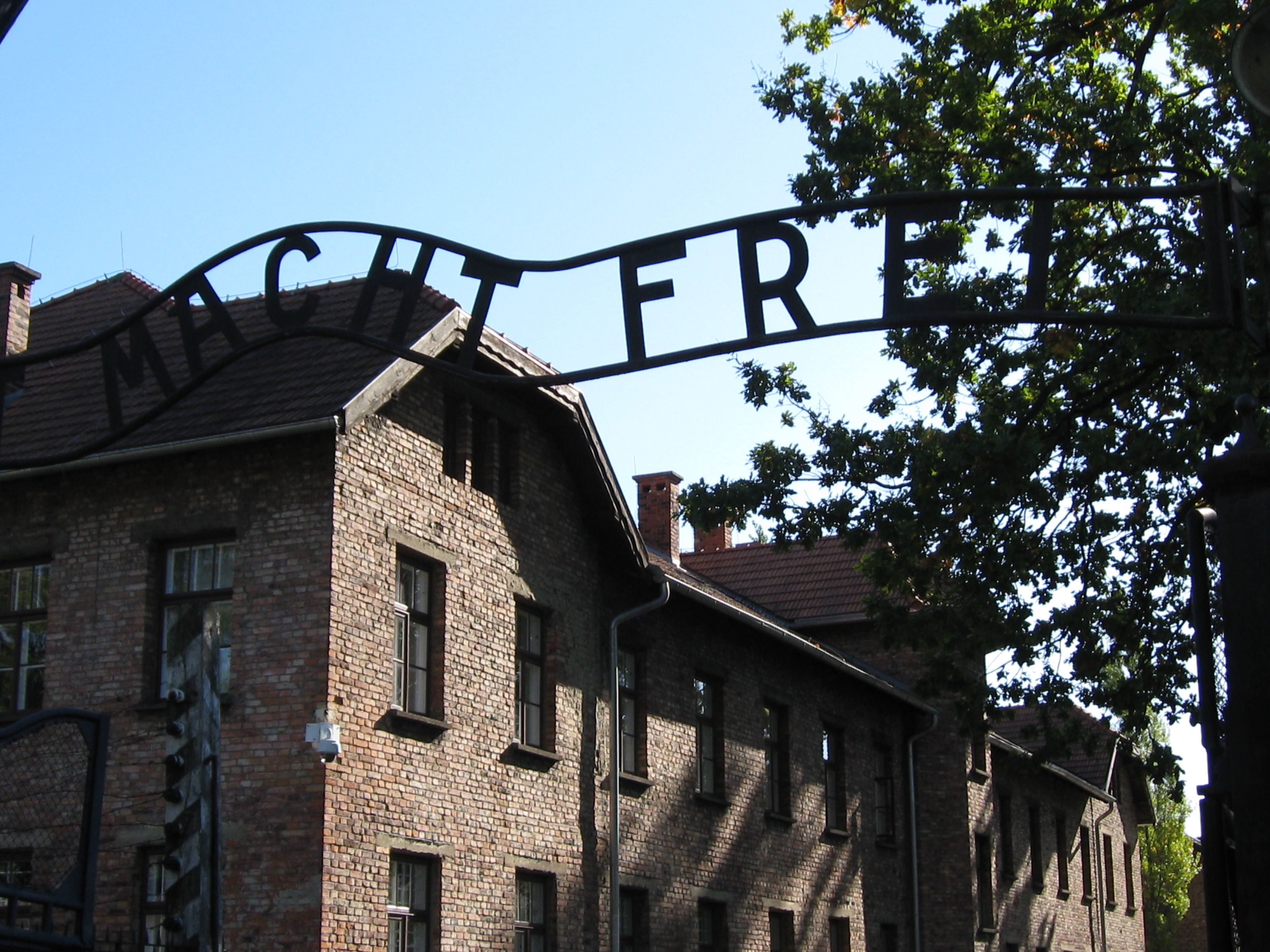
Barbwire fence and buildings to stop the prisoners from escaping.

The notice below hits home the scale of the mass extermination undertaken.
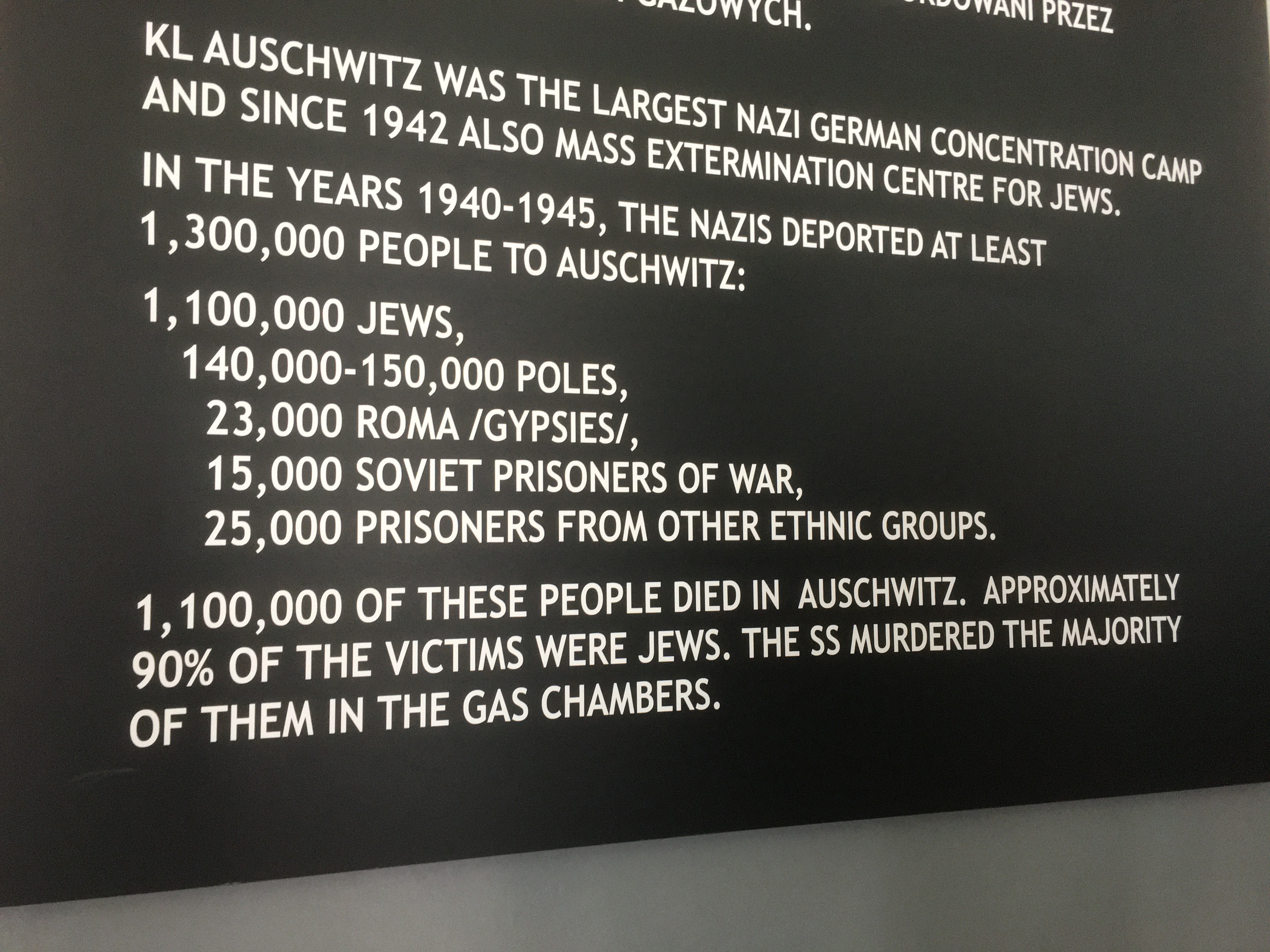
People were told to gather their things and they would be off to a better life. The picture below is some of the suitcases that were recovered after the liberation of the camp.

People had to remove their shoes. The picture below is more poignant because of the single red shoe in amongst the monochrome ones.
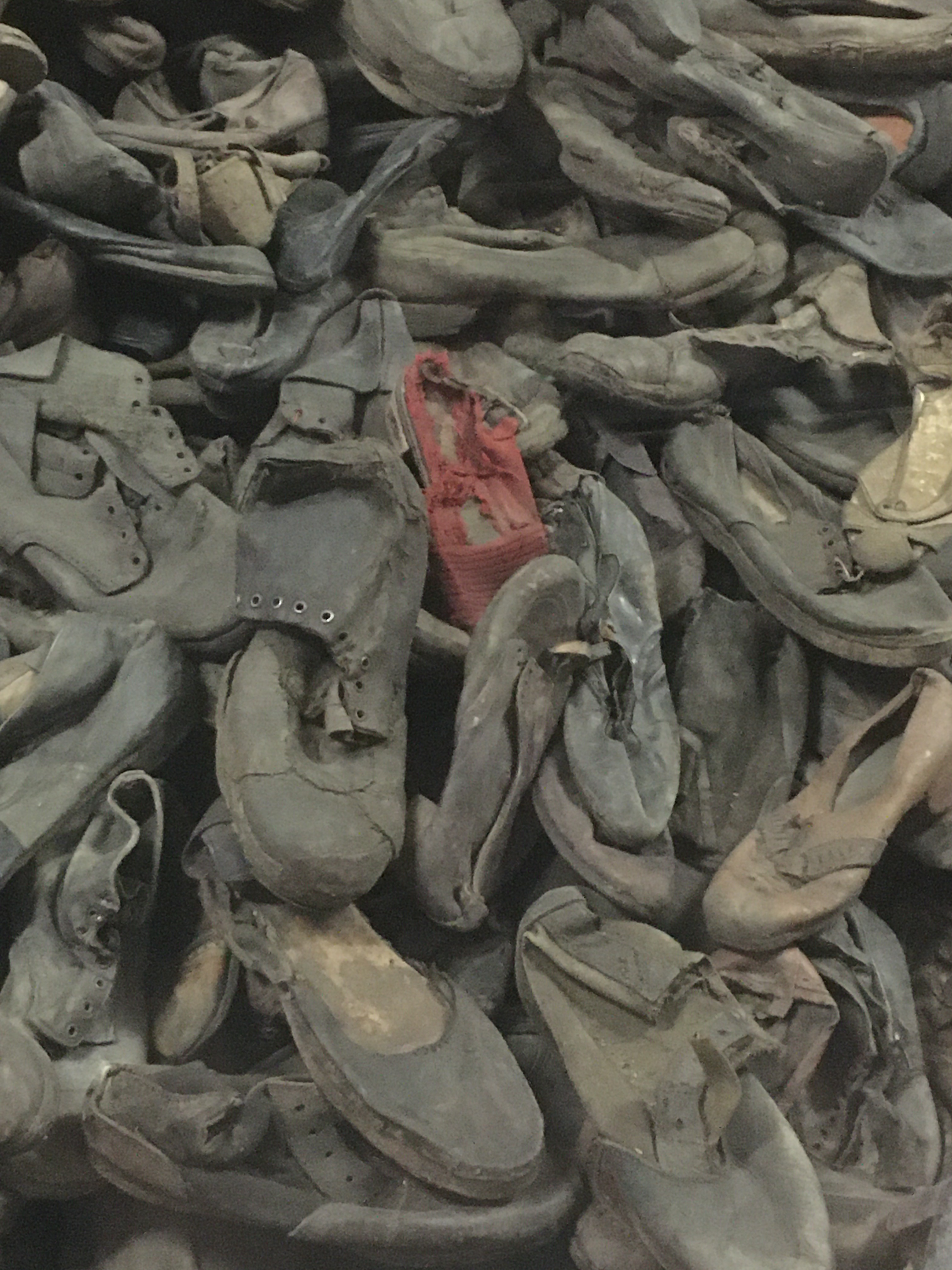
The gas chamber, what else can you say.

Birkenau known as Auschwitz II. The train track brought the prisoners in to camp.

This is a carriage used as a gas chamber, people were loaded and told they were going somewhere when the truth was that gas was pumped in and they were killed.

These are the sleeping blocks, each compartment known as a Buk had 4 people sleeping in it.

The Nazi’s tried to destroy the camp from the approaching Russian army to hide what they had done but a small number of buildings remained. The odd thing about Auschwitz I and II is that there was no wildlife. It was so still and devoid of any sound.

Wieliczka Salt Mines
The Wieliczka Salt Mine in the town of Wieliczka lies within the Kraków metropolitan area. Sodium chloride (table salt) was formerly produced there from the upwelling brine – and had been since Neolithic times. The Wieliczka salt mine, excavated from the 13th century, produced table salt continuously until 2007, as one of the world’s oldest operating salt mines. Throughout its history, the royal salt mine was operated by the Żupy Krakowskie (Kraków Salt Mines) company.
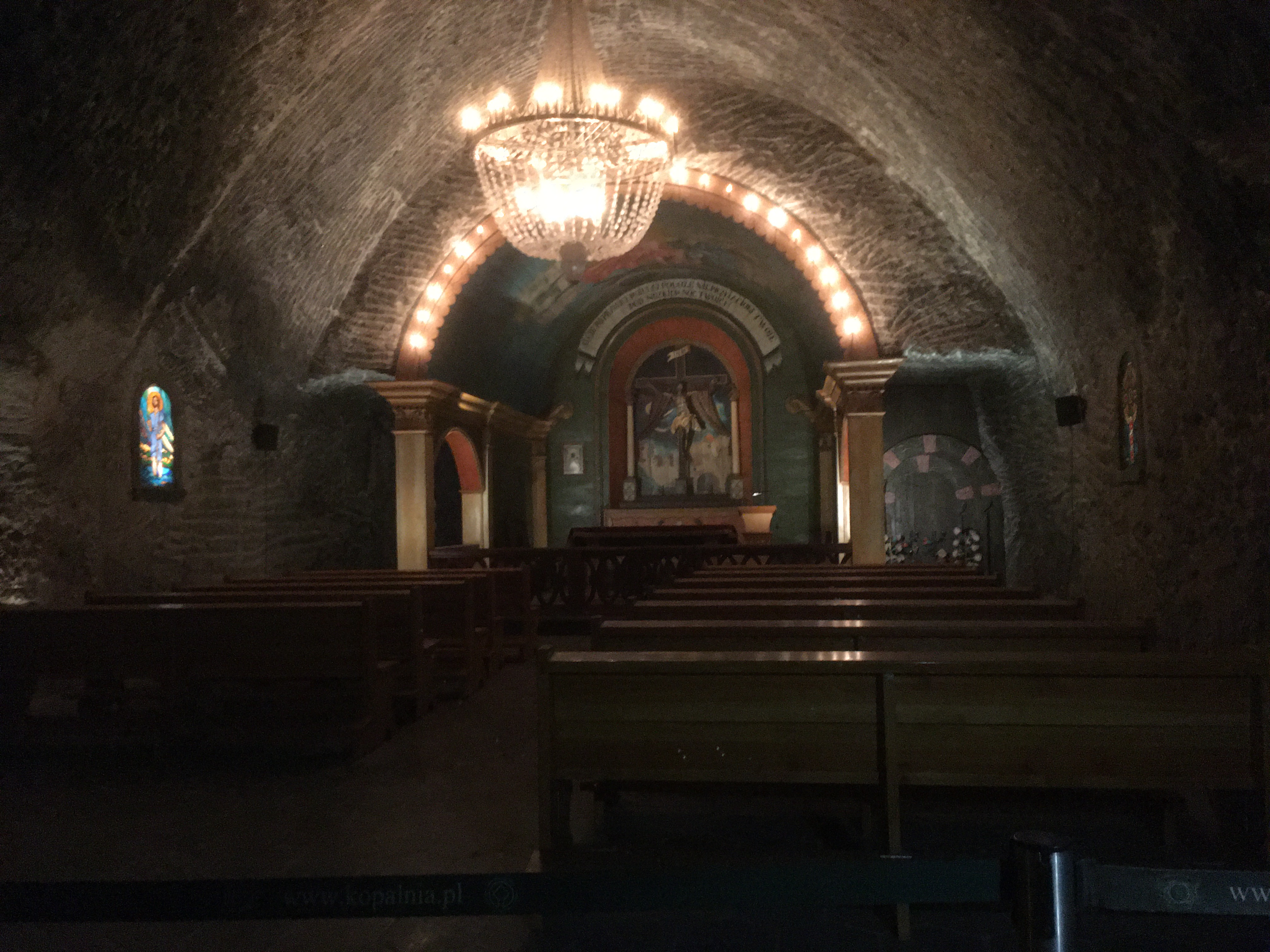
Commercial salt mining was discontinued in 1996 owing to falling salt prices and mine flooding. The Wieliczka Salt Mine is now an official Polish Historic Monument (Pomnik Historii). Its attractions include the shafts and labyrinthine passageways, displays of historic salt-mining technology, an underground lake, four chapels and numerous statues carved by miners out of the rock salt, and more recent sculptures by contemporary artists.


 Heather and Keith's travels