Spread across steep hillsides that overlook the Rio Tejo, Lisbon has captivated visitors for centuries.. Windswept vistas at breath-taking heights reveal the city in all its beauty. Roman and Moorish ruins, white domed cathedrals and grand plazas lined with sun drenched cafes. The real delight of discovery, though, is delving into the narrow cobblestone lanes
As bright-yellow trams clatter through curvy tree-lined streets, lisboetas (residents of Lisbon) stroll through lamp lit old quarters, much as they’ve done for centuries. Village-life gossip is exchanged over fresh bread and wine at tiny patio restaurants as fado singers perform in the background.
We visited in April 2015 and stayed at the Casa Da Patio Hotel . If you ever stay at this hotel then get them to get you a cab from the airport otherwise you will never find it.
Lisbon Castle
São Jorge Castle is located in the locality of Santa Maria Maior. Human occupation of the castle hill dates to at least the 8th century while the first fortifications built date from the 1st century BC. The hill on which São Jorge Castle stands has played an important part in the history of Lisbon, having served as the location of fortifications occupied successively by Phoenicians, Carthaginians, Romans, and Moors, before its conquest by the Portuguese in the 1147 Siege of Lisbon. Since the 12th century, the castle has variously served as a royal palace, a military barracks, home of the Torre do Tombo National Archive, and now as a national monument and museum.
A view from the Castle of São Jorge, which is a Moorish castle occupying a commanding hilltop overlooking the historic centre of the Portuguese city of Lisbon and Tagus River
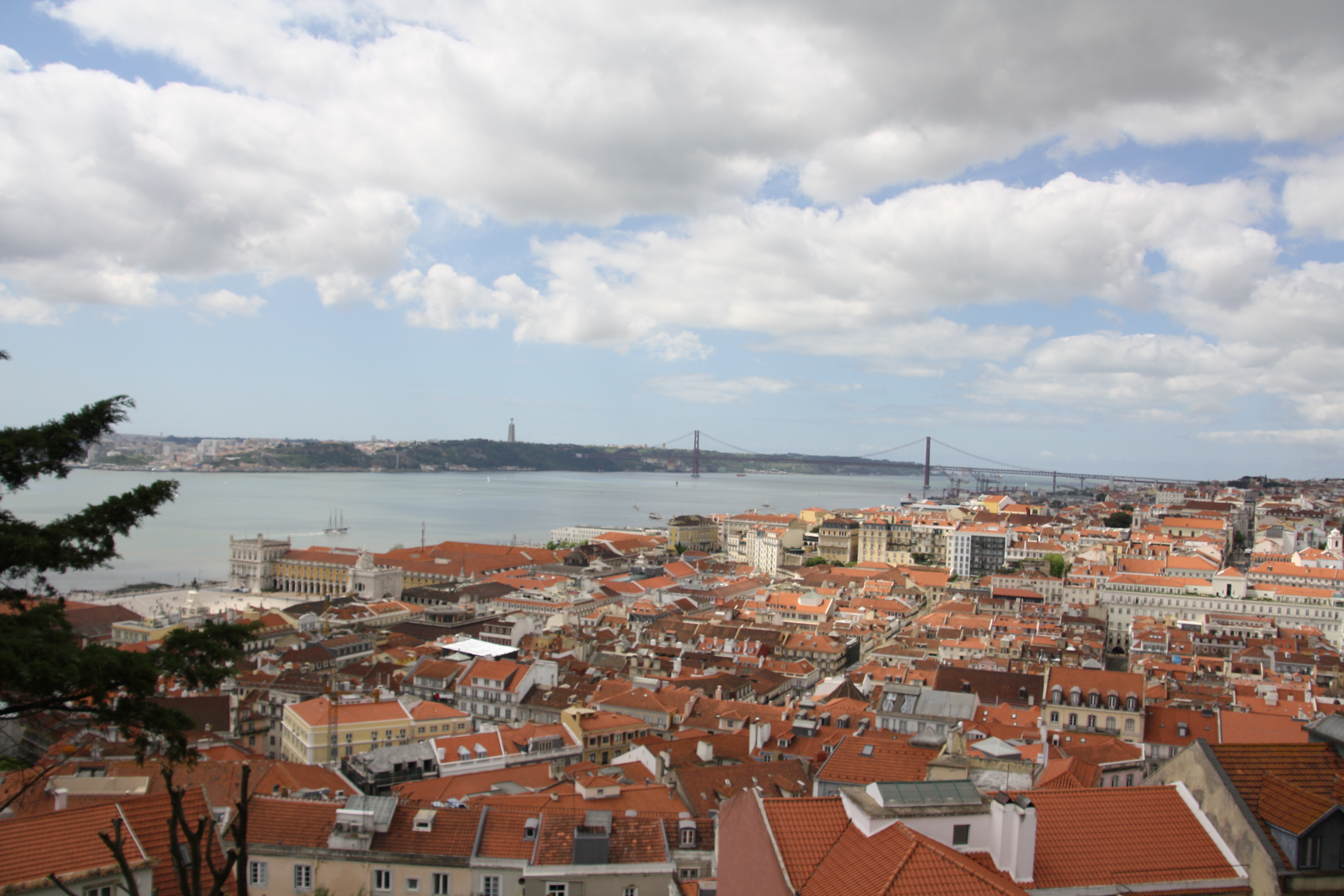
A view from the castle of one of the many squares that are present in Lisbon.

Lisbon Cathedral
The Lisbon Cathedral (Metropolitan Cathedral of St. Mary Major), often called simply the Sé, is Roman Catholic cathedral. The oldest church in the city is the seat of the Patriarchate of Lisbon. Built in 1147, the cathedral has survived many earthquakes and has been modified, renovated and restored several times. It is nowadays a mix of different architectural styles. It has been classified as a National Monument since 1910.
This the inside of the church of Santo António Church (Portuguese: Igreja de Santo António de Lisboa). It is dedicated to Saint Anthony of Lisbon. The churches are mainly catholic as 81% of the population are Catholics.
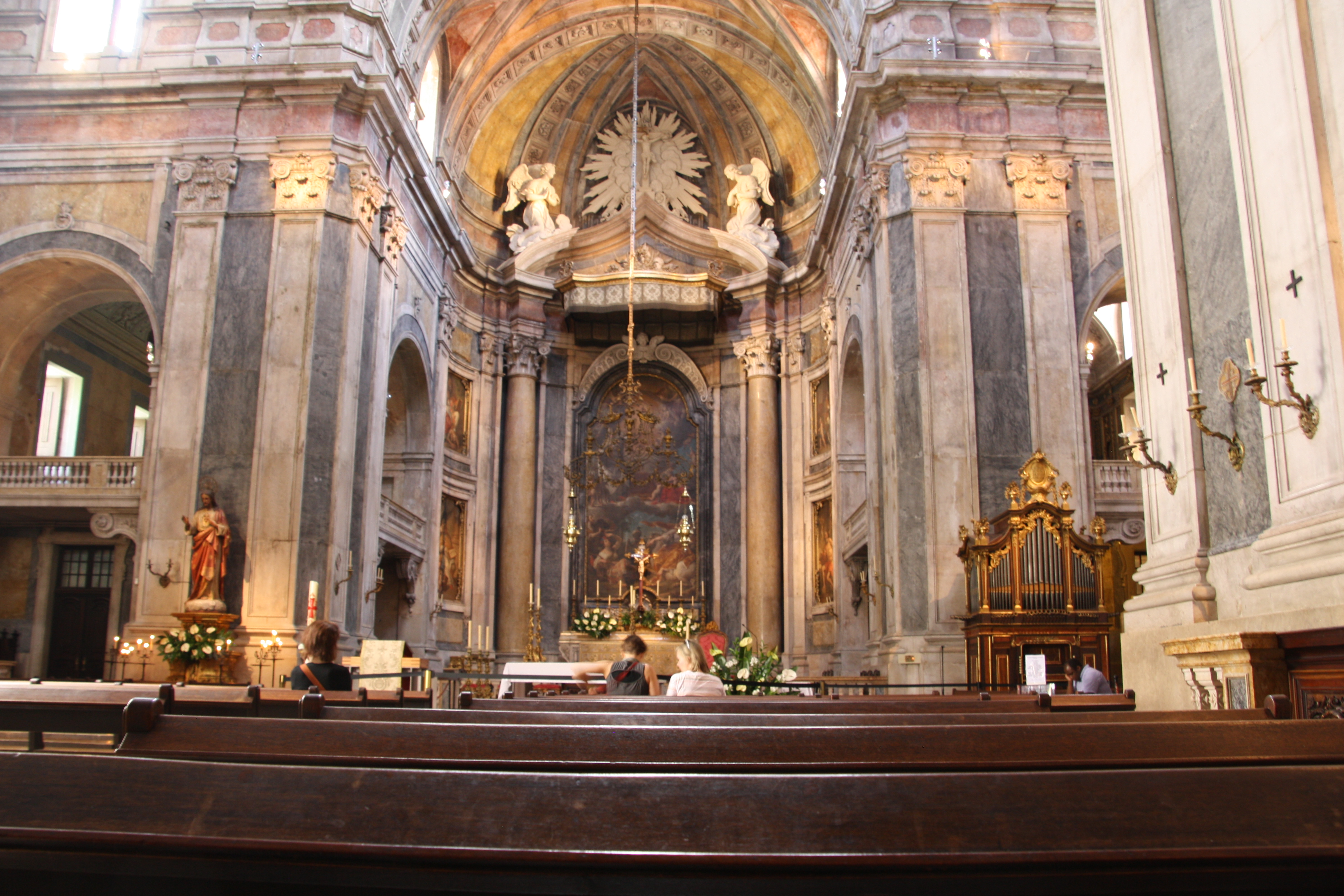
Praca Do Comercio Square
The Praça do Comércio is a large harbour-facing square. When facing south you can see the Tagus river. The square was destroyed by the great 1755 Lisbon earthquake. After the earthquake, the square was completely remodeled as part of the rebuilding of the Pombaline Downtown, ordered by Sebastião José de Carvalho e Melo, 1st Marquis of Pombal, who was (chief) Minister of Portugal from 1750 to 1777, during the reign of Dom José I, King of Portugal.
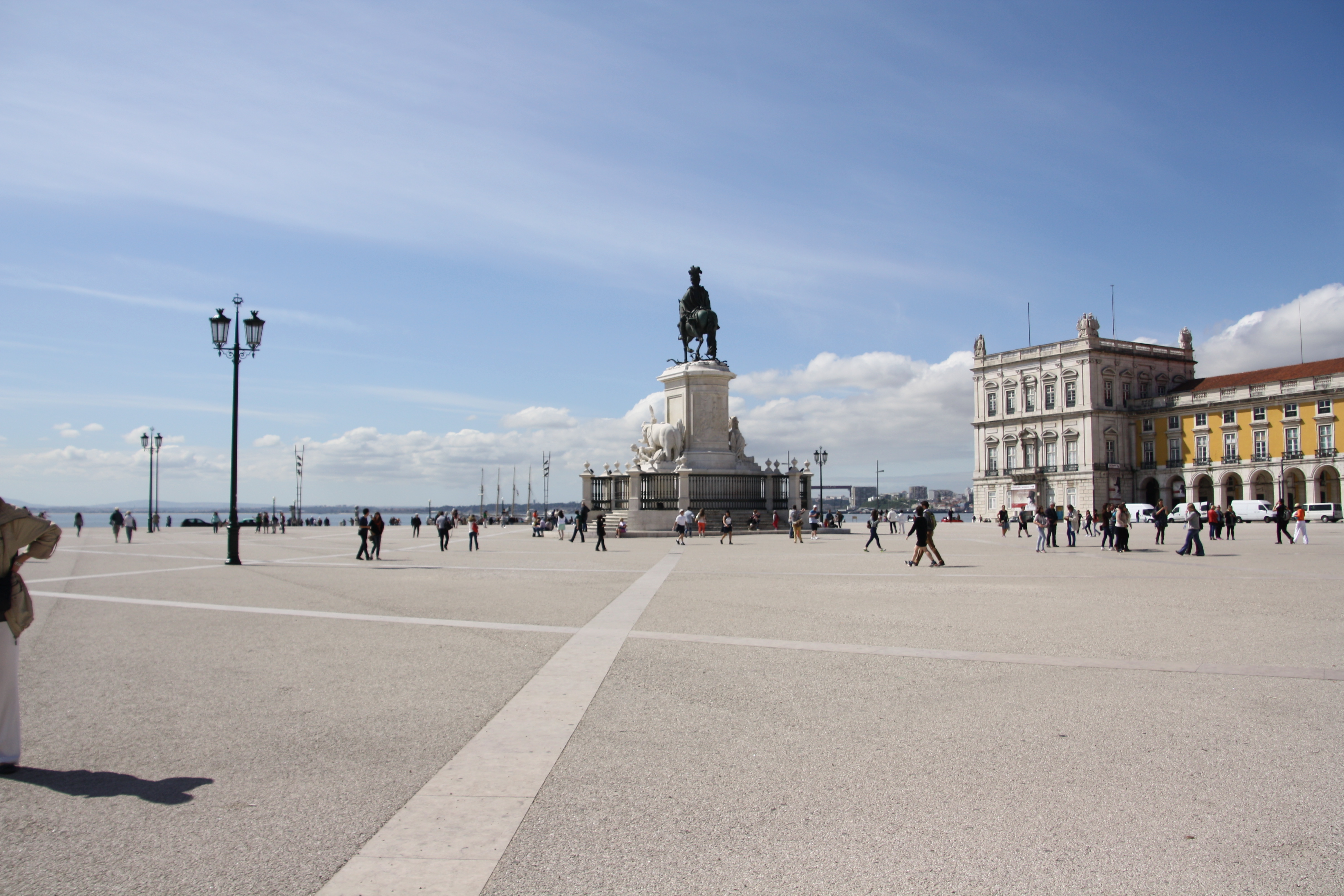
Ministry of Justice
This is probably one of the prettiest government buildings that we have seen.

Belem
Belém is a laid-back area on the Tagus River, known for its seafood restaurants and houses decorated with colorful tiles. Among the area’s shaded green lawns are historic landmarks that recall Portugal’s seafaring past.
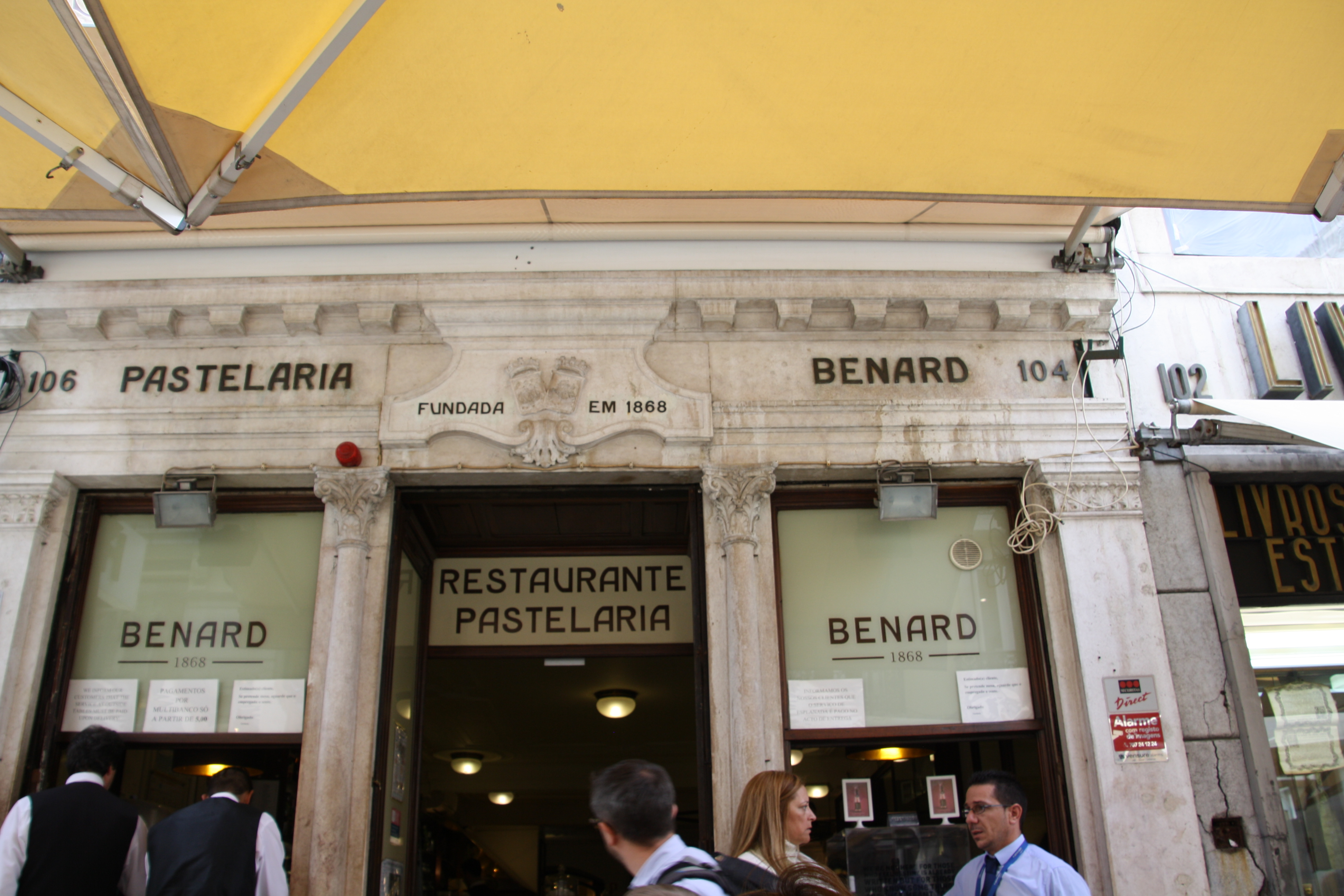
This is a very famous Portuguese patisserie which was established in Belem area of West Lisbon. The shop has the original recipe for mini custard tarts, which are delicious.
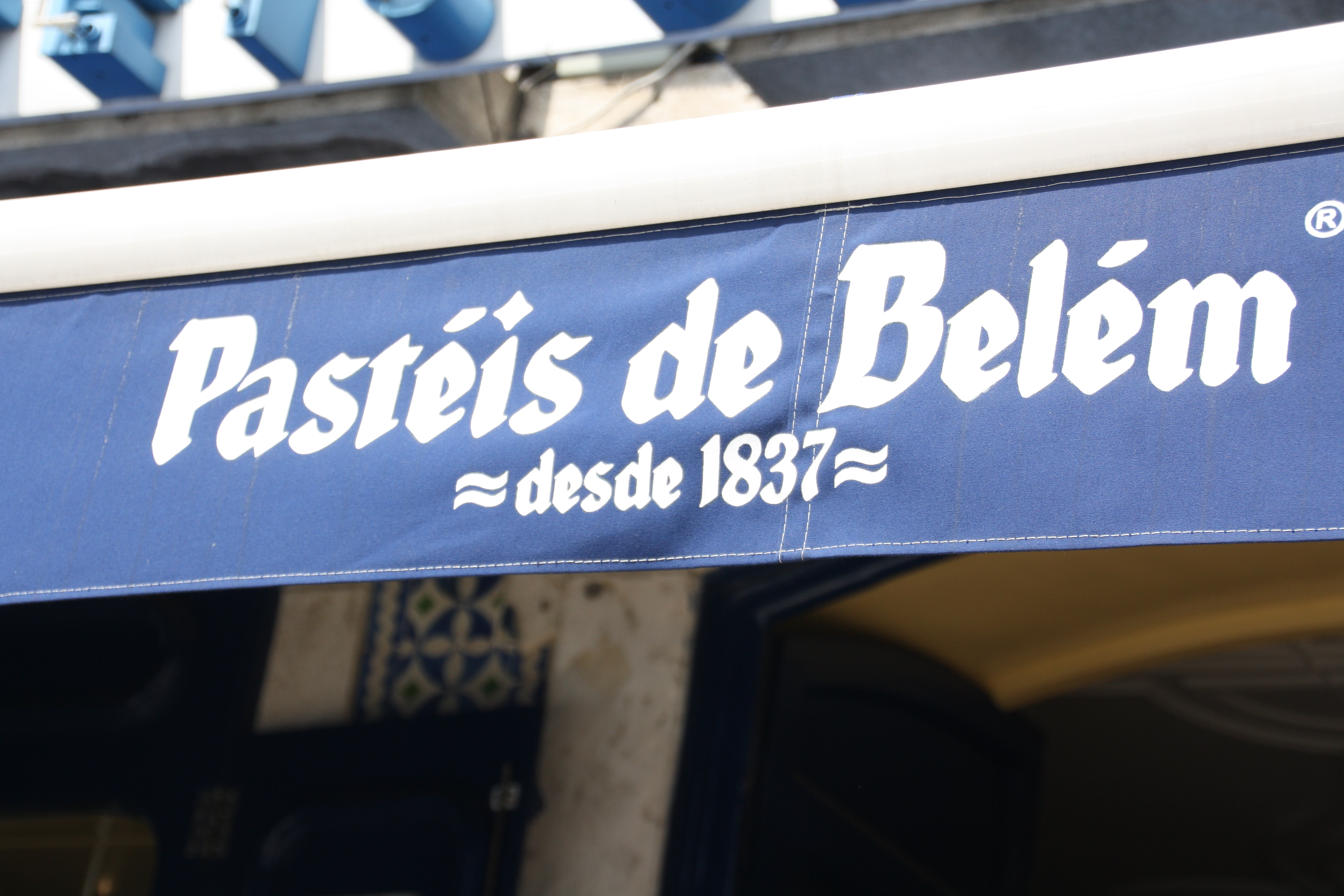
The shop makes and sells approximately 20,000 custard tarts a day. There are queues outside the shop every date, this was at 1pm. The queue was the same size when we passed again at 5pm.

This monument at Belem is called Padrão dos Descobrimentos, which roughly translated means Monument to the Discoveries. It is a located along the river where ships departed to explore and trade with India and Orient, the monument celebrates the Portuguese Age of Discovery during the 15th and 16th centuries. The monument is dedicated to Henry the Navigator.
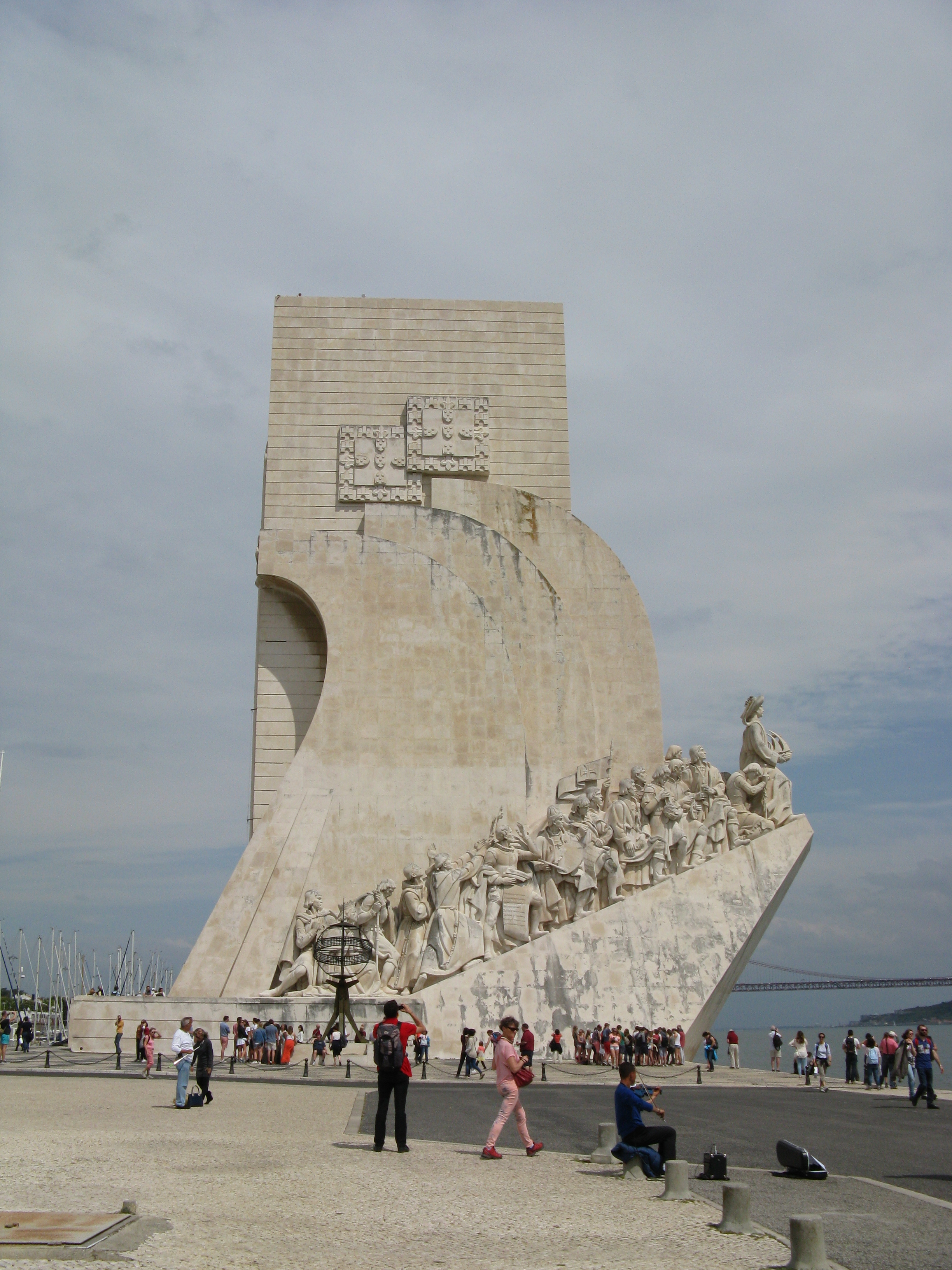
This is a close up of the monument which shows the detail in the stone masonry.

This photograph was taken from the top of Padrão dos Descobrimentos.
The building is called Torre de Belém, Tower of St Vincent, is a fortified tower which was commissioned by King John II to be part of a defines system at the mouth of the Tagus river and a ceremonial gateway to Lisbon. It has incorrectly been stated that the tower was built in the middle of the Tagus and now sits near the shore because the river was redirected after the 1755 Lisbon earthquake. In fact, the tower was built on a small island in the Tagus River near the Lisbon shore.

View of the Tagus river looking East from the top Padrão dos Descobrimentos
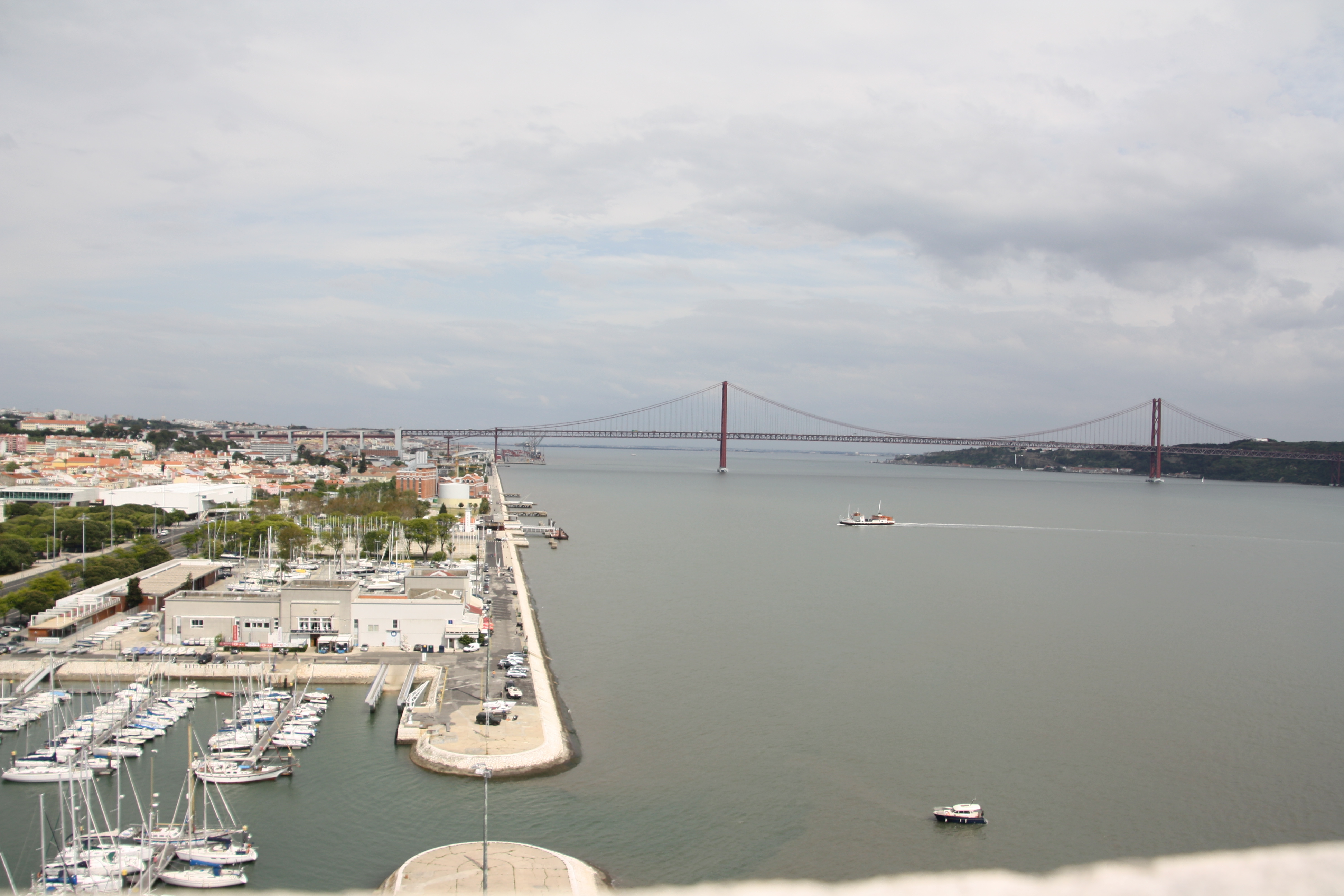
View of the marina from the top Padrão dos Descobrimentos
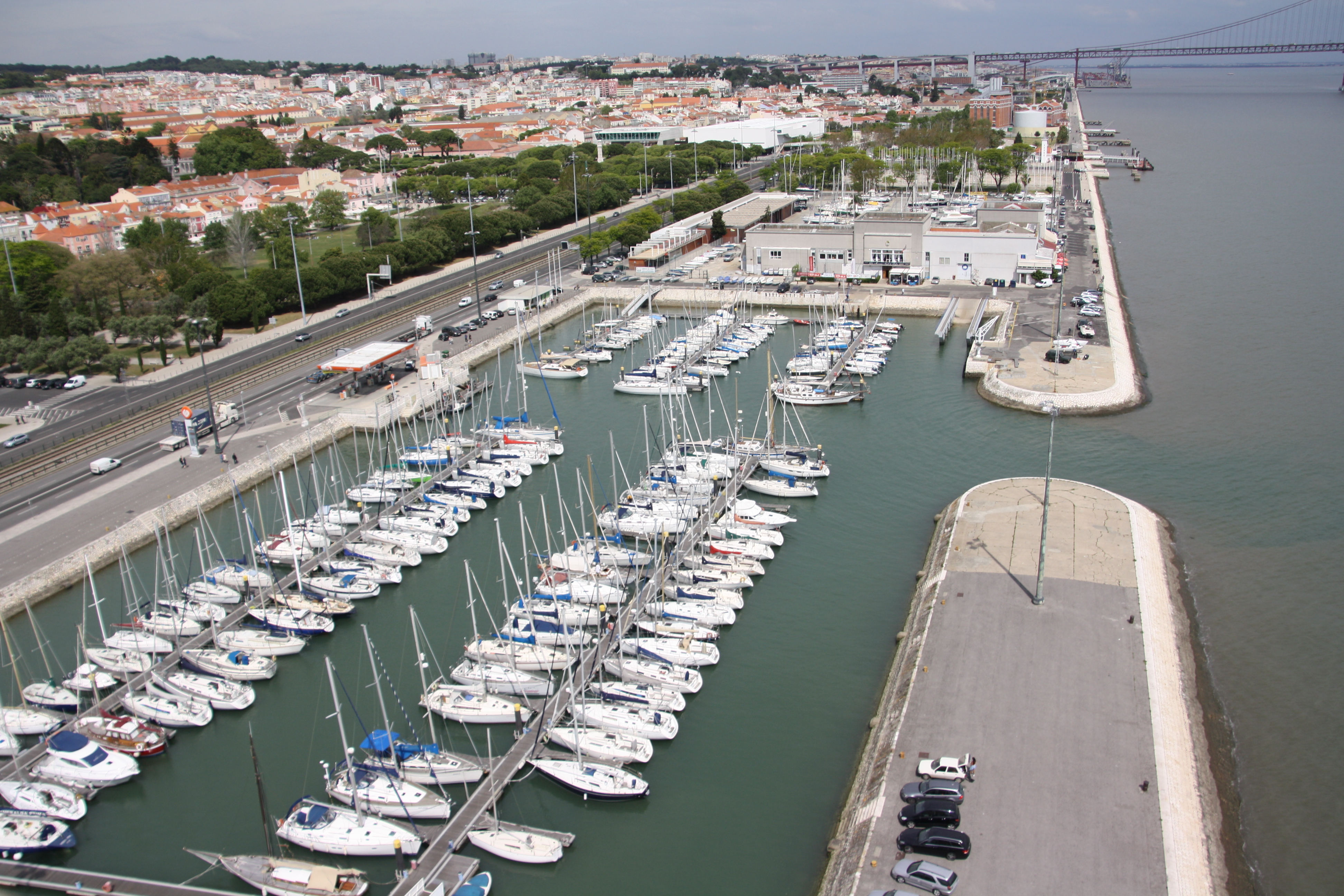
View of the Jerónimos Monastery from the top Padrão dos Descobrimentosview.
The Jerónimos Monastery is a monastery of the Order of Saint Jerome .The monastery is one of the most prominent examples of the Portuguese Late Gothic Manueline style of architecture in Lisbon.

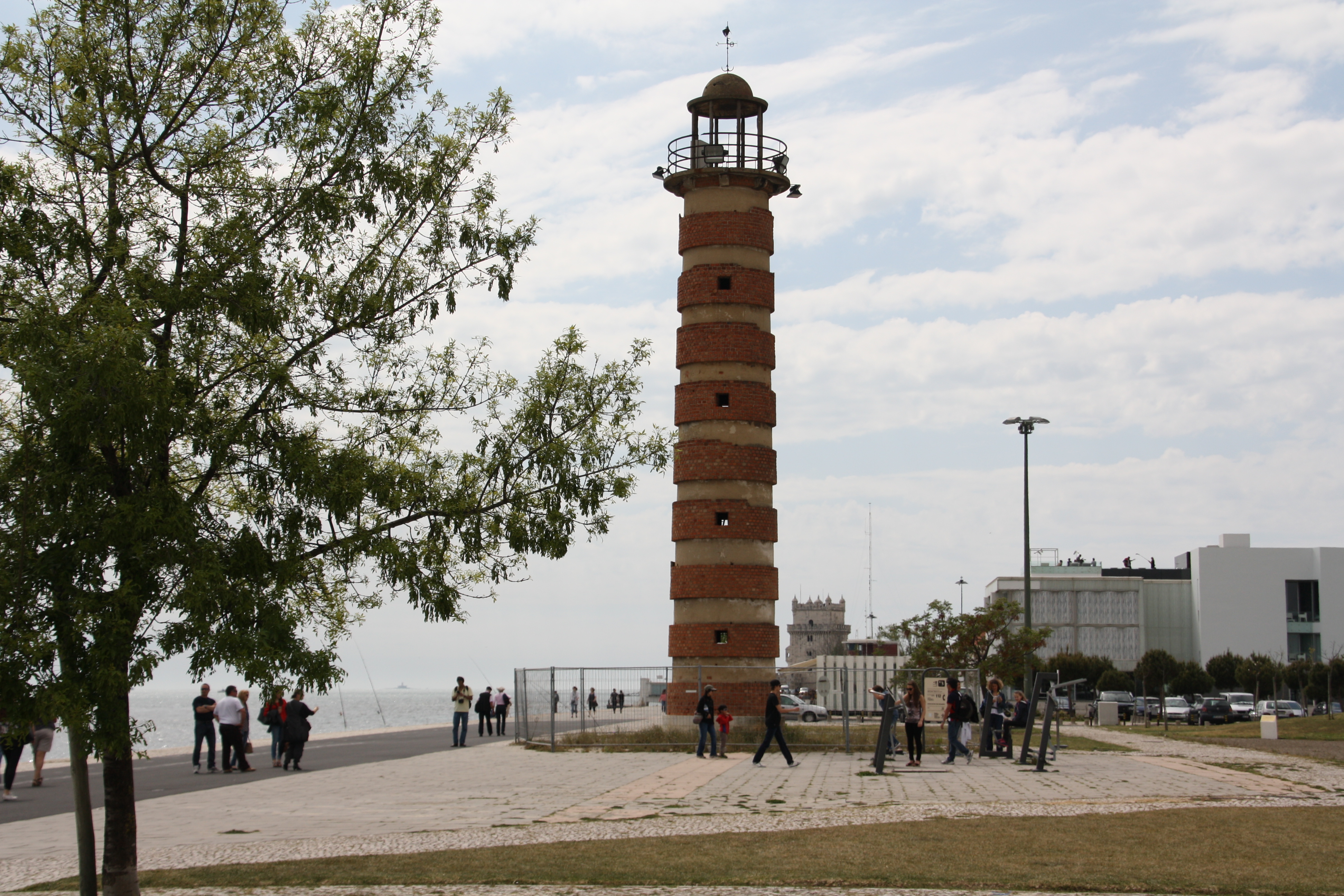
Lighthouse on the shore of the Targus river at Belem.
Trams
With much of Lisbon climbing steeply away from the Baixa (downtown area) and the banks of the Tagus River, there are some superb viewpoints from which to marvel at Portugal’s picturesque capital city. Reaching them can be a little hard on the legs however, so it is fortunate that Lisbon has an effective bus, metro and tram system. This interconnecting system is further enhanced by three street funiculars and one street elevator, which provide quick and easy access to some of the hillier districts. These are known collectively as the Lisbon funiculars
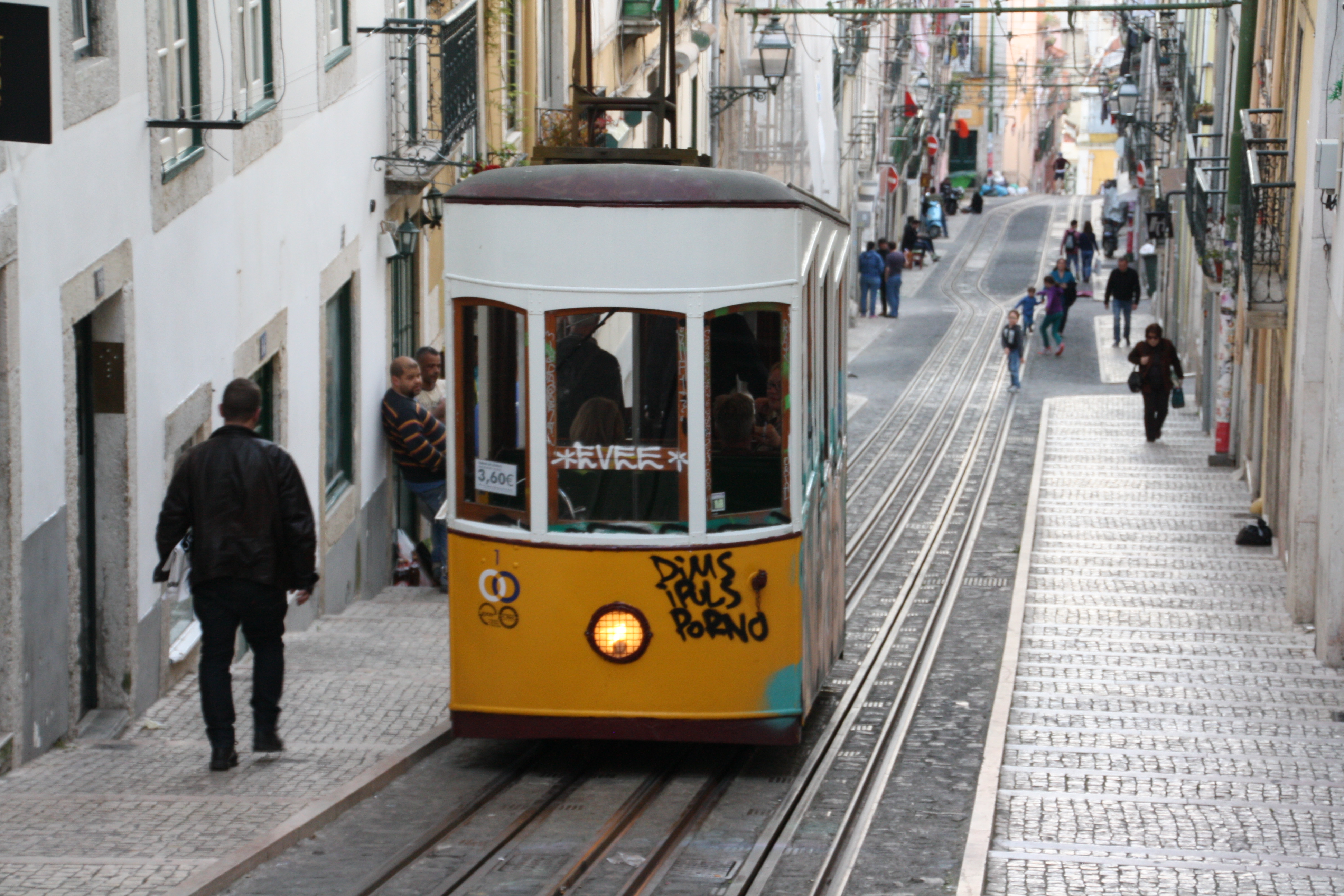
Lisbon trams are very busy and instead of running more frequently they come in pairs or three’s. We found after day one that everyone tries to get on the first tram and will squeeze on until there is literally no space. The best approach was wait for the next tram which is usually pretty empty.
The picture below is the Bica funicular. The Bica Funicular is 245 metres long and is the only stepped street funicular in the city. It climbs the Rua da Bica from the Rua Sao Paulo, near Santos, to the Calhariz district up an average gradient of 20%.

Elevators
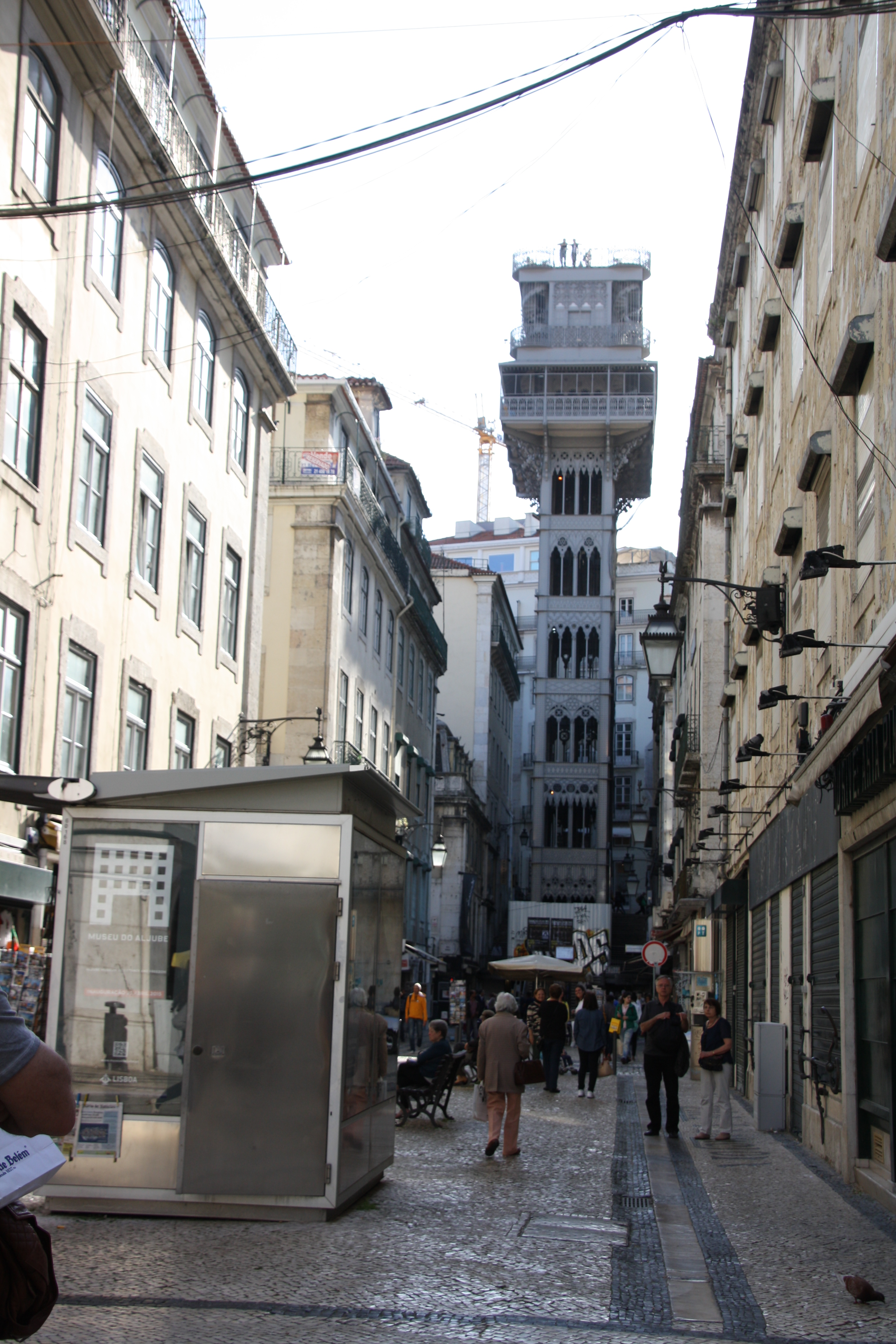
This is the Santa Justa Lift, also called Carmo Lift, which is an elevator/lift in civil parish of Santa Justa and is situated at the end of Rua de Santa Justa. It connects the lower streets of the Baixa with the higher Largo do Carmo (Carmo Square). Since its construction, the Lift has become a tourist attraction for Lisbon as, among the urban lifts in the city, Santa Justa is the only remaining vertical one.
City Streets
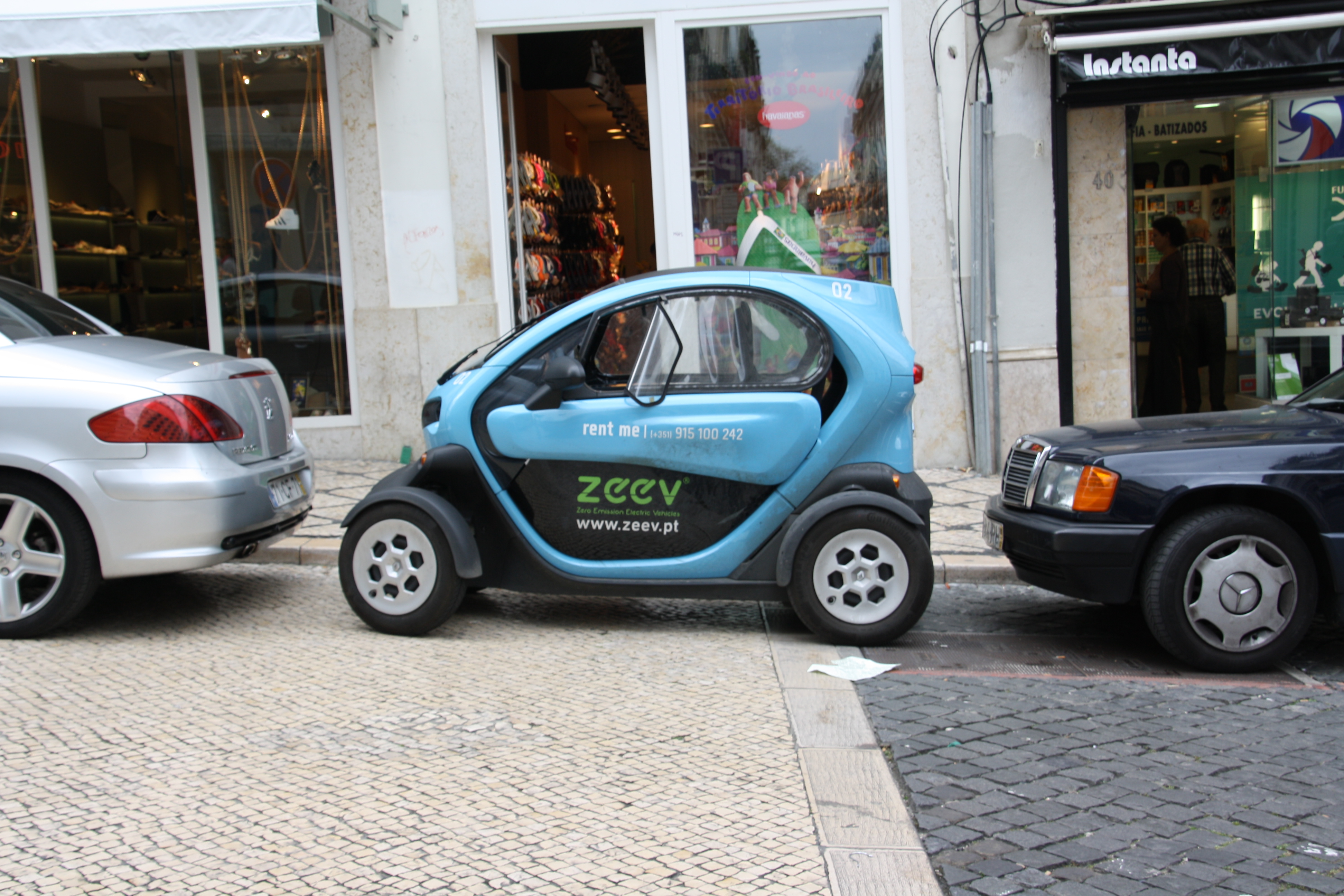
Lisbon is probably the only city in the world that doesn’t have any parking restrictions. If you are not blocking the road then it is considered a perfect parking space.
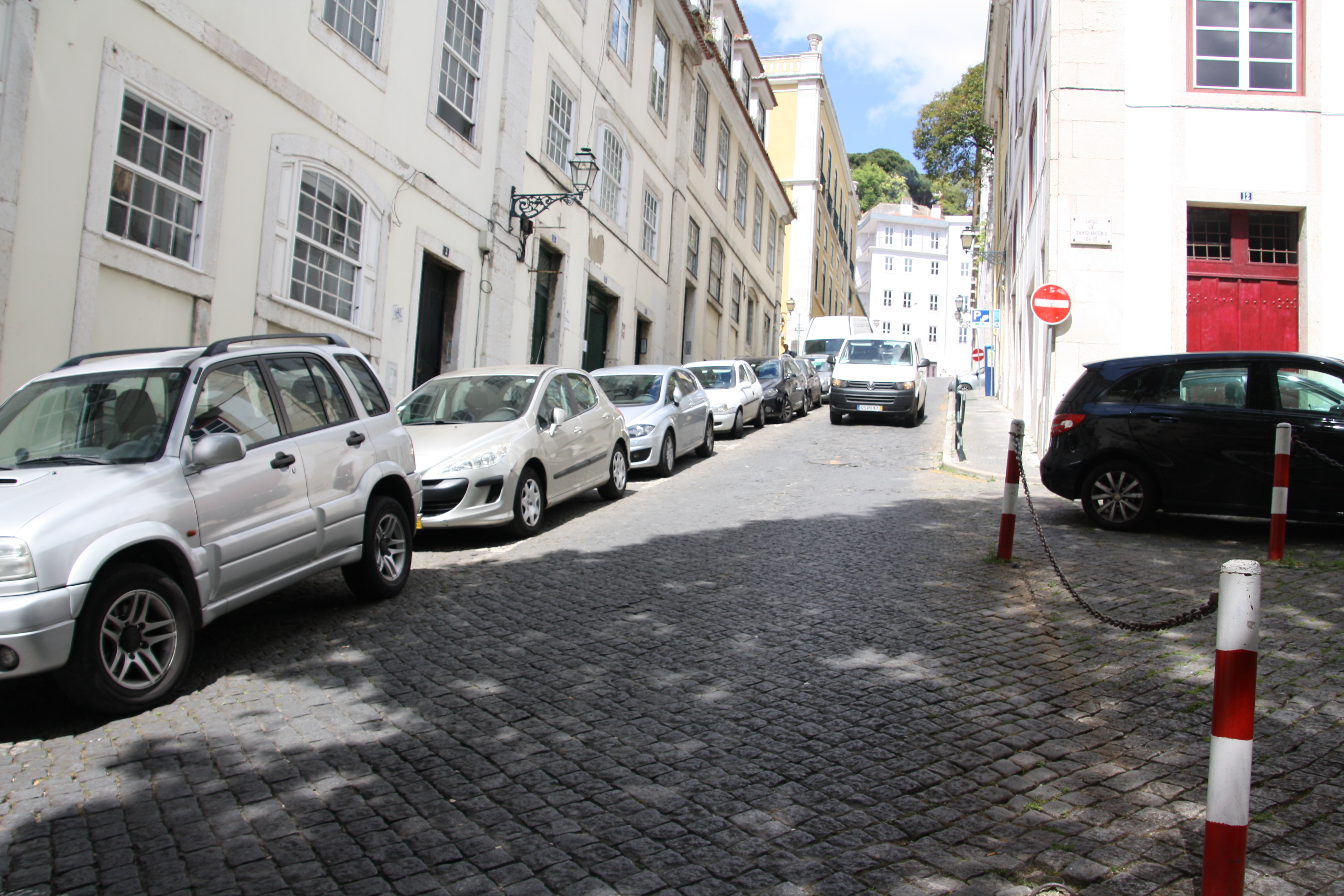
We tried to get a picture which shows how hilly Lisbon is. This is probably the best, but still doesn’t give the magnitude of the slope.

Buildings and Statues
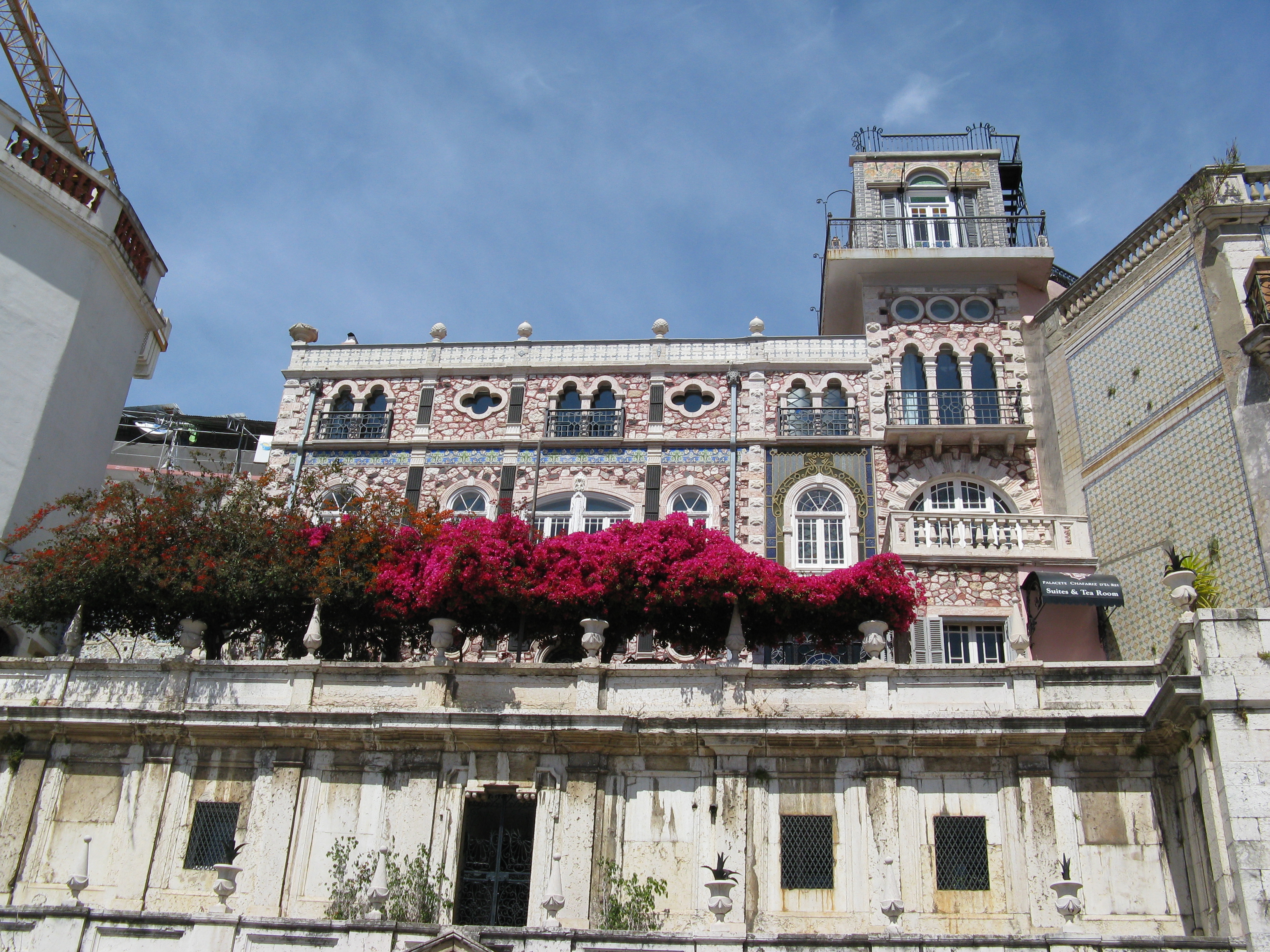
There are a number of buildings in Lisbon that are many years old and have started renovation work. This is the Irish version, they have started at the top and are working down.
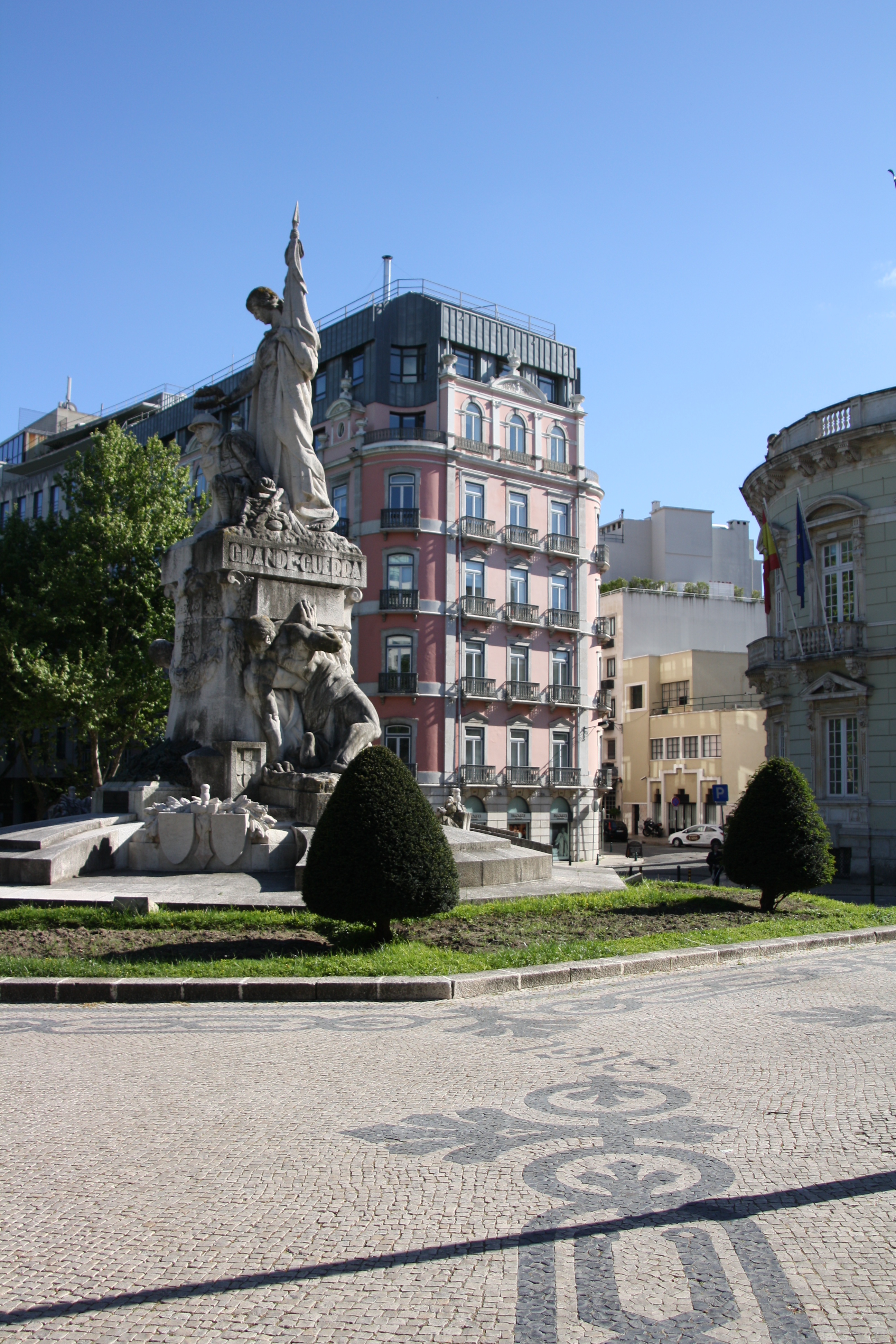
The city has a lot of statues.
Getting Around Lisbon
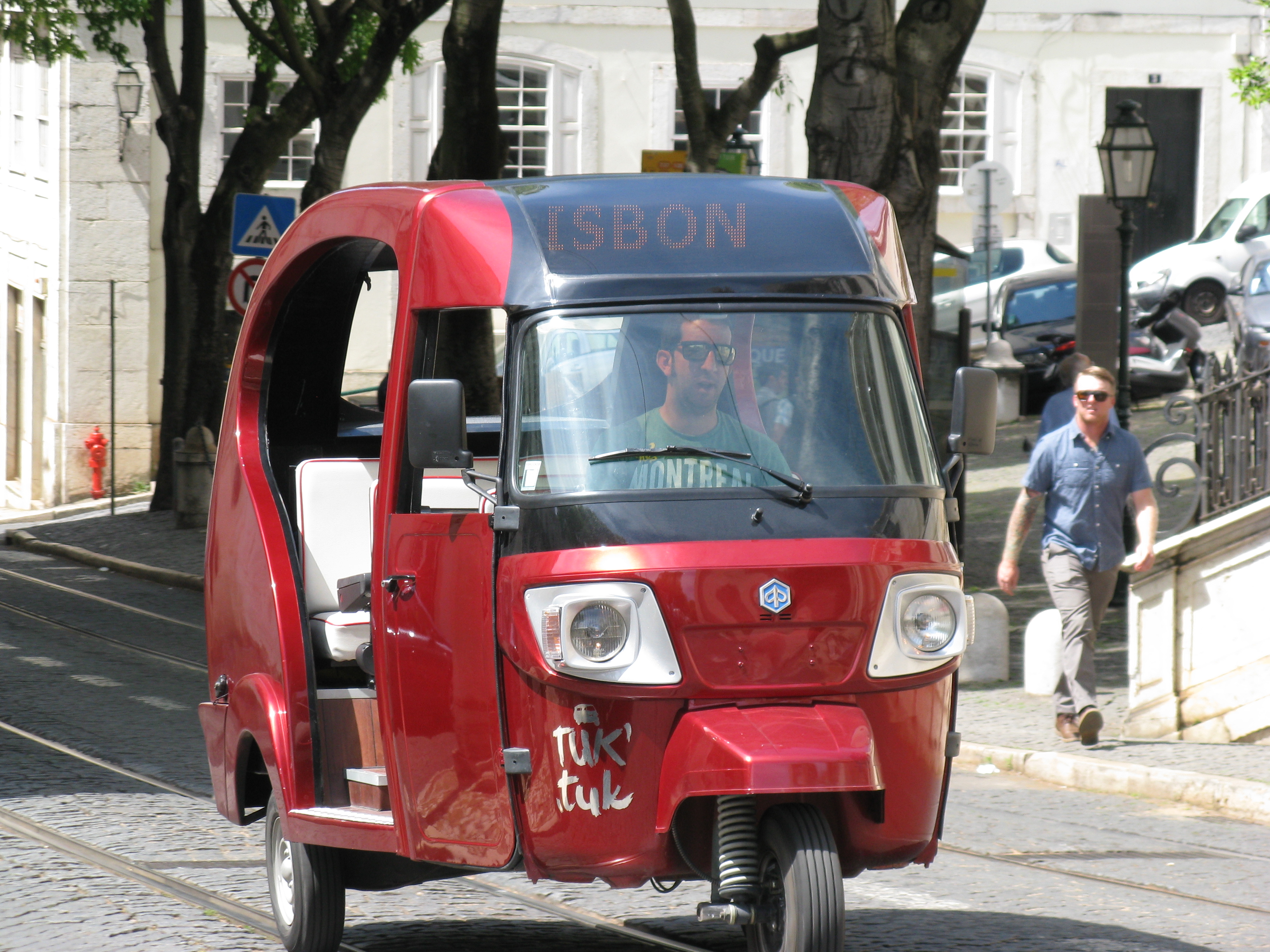
A popular form of tourist transport for those who want to be driven round. The ‘Tuk Tuk’ is a three wheeled Piaggio vehicle from Italy. There are lots of these all different designs but on the same chassis.
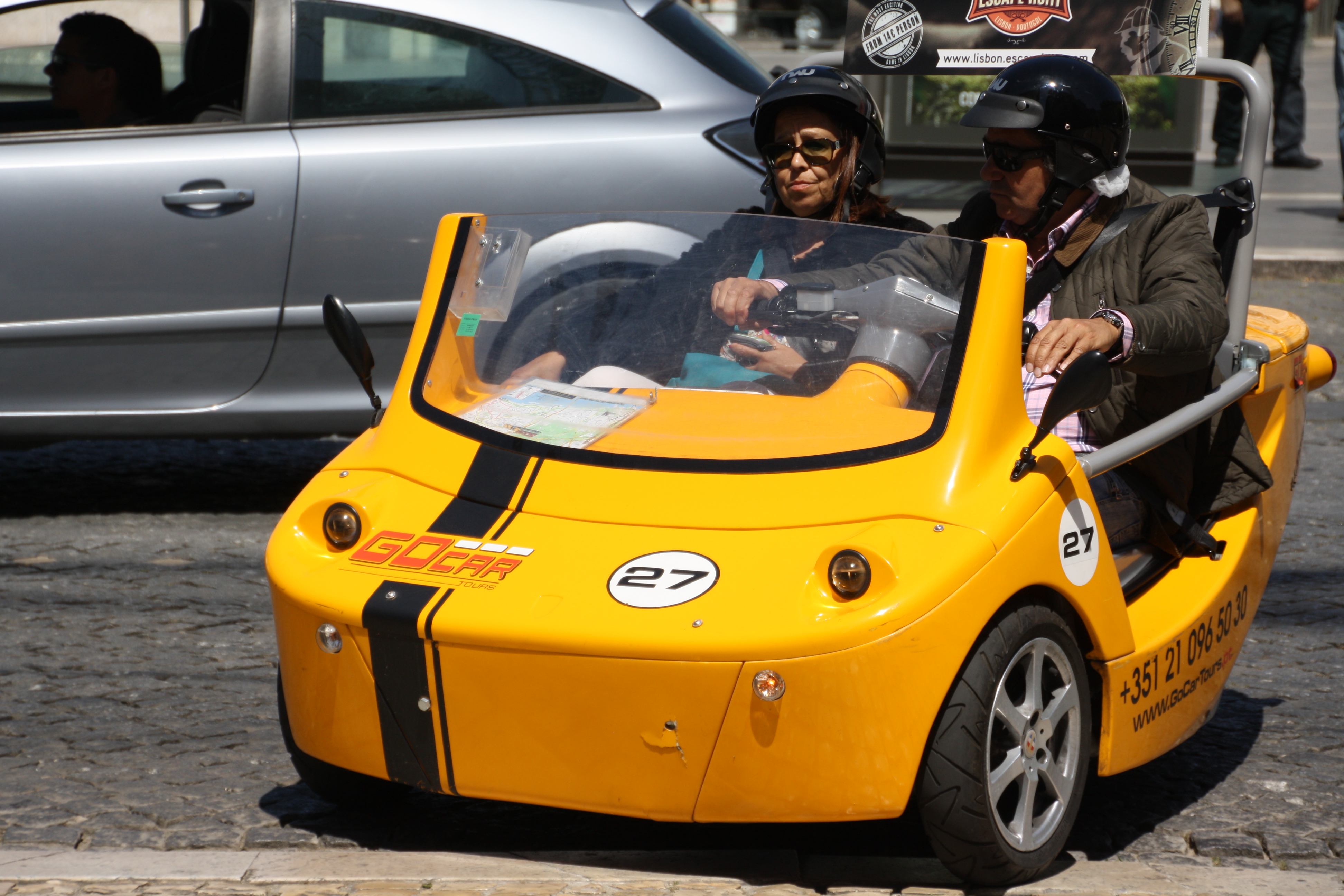
For those who want there own vehicle but want something completely different this is it.
This is the ideal Lisbon Car. The technique for parking is touch the car in front, reverse and touch the car behind – repeat once and it should be parked. This technique has been imported from I Capsey!!!
At the End of the Perfect Day
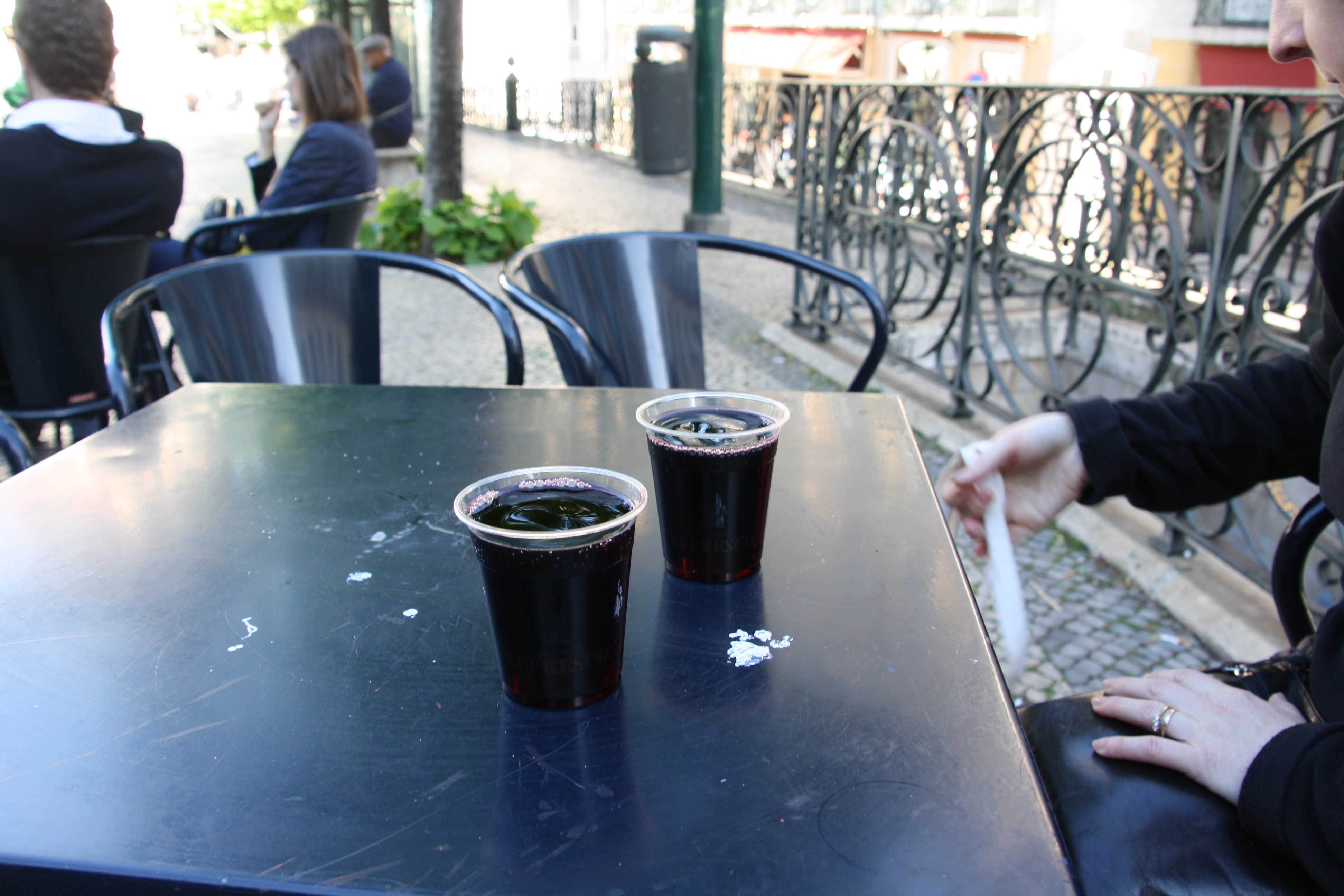
A drink in an outside bar, the choice was water, coffee or a glass (plastic) of Portuguese vermelho (Red) wine. All the same price and an absolute bargain at 1.60 euro a glass.
This bar serves the best, or at least the largest, Gin and Tonic in the world, it is alleged. The waiter brought a very large glass with ice and filled it half full of gin, no measures are used to save time, and added a smidgeon of tonic, obviously this is the most expensive part of the drink.
 Heather and Keith's travels
Fab blog H&K will have to go just for g&t and custard tart and maybe some scenary ha ha Hazel
LikeLike
At last I found it heather. Scenery looks fab, but the bar with the g & t is my first port of call whilst Antony Is in the queue for the custard tarts xxx
LikeLike