Madrid is a cosmopolitan city that combines the most modern infrastructures and the status as an economic, financial, administrative and service centre, with a large cultural and artistic heritage, a legacy of centuries of exciting history. It is located in the geographic centre of the Iberian Peninsula at an altitude of 646 m above sea level, Madrid has one of the most important historic centres of all the great European cities. This heritage merges seamlessly with the city’s modern and convenient infrastructures, a wide-ranging offer of accommodation and services, and all the latest state-of-the-art technologies in audiovisual and communications media. These conditions, together with all the drive of a dynamic and open society –as well as high-spirited and friendly– have made this metropolis one of the great capitals of the Western world.
Madrid is a small city which is easy to travel around on foot, albeit some parts are quite hilly.
We visited Madrid in March 2017 and stayed at the Hotel Liabeny which was close to the Plaza del Callao.
Plaza Mayor
This is known in English Main Square and was built during Philip III’s reign (1598–1621) and is a central plaza in Madrid. It is located only a few Spanish blocks away from another famous plaza, the Puerta del Sol. The Plaza Mayor is rectangular in shape, measuring 129 m × 94 m (423 ft × 308 ft), and is surrounded by three-story residential buildings having 237 balconies facing the Plaza. It has a total of nine entrance ways. The Casa de la Panadería (Bakery House), serving municipal and cultural functions, dominates the Plaza Mayor.


Royal Palace
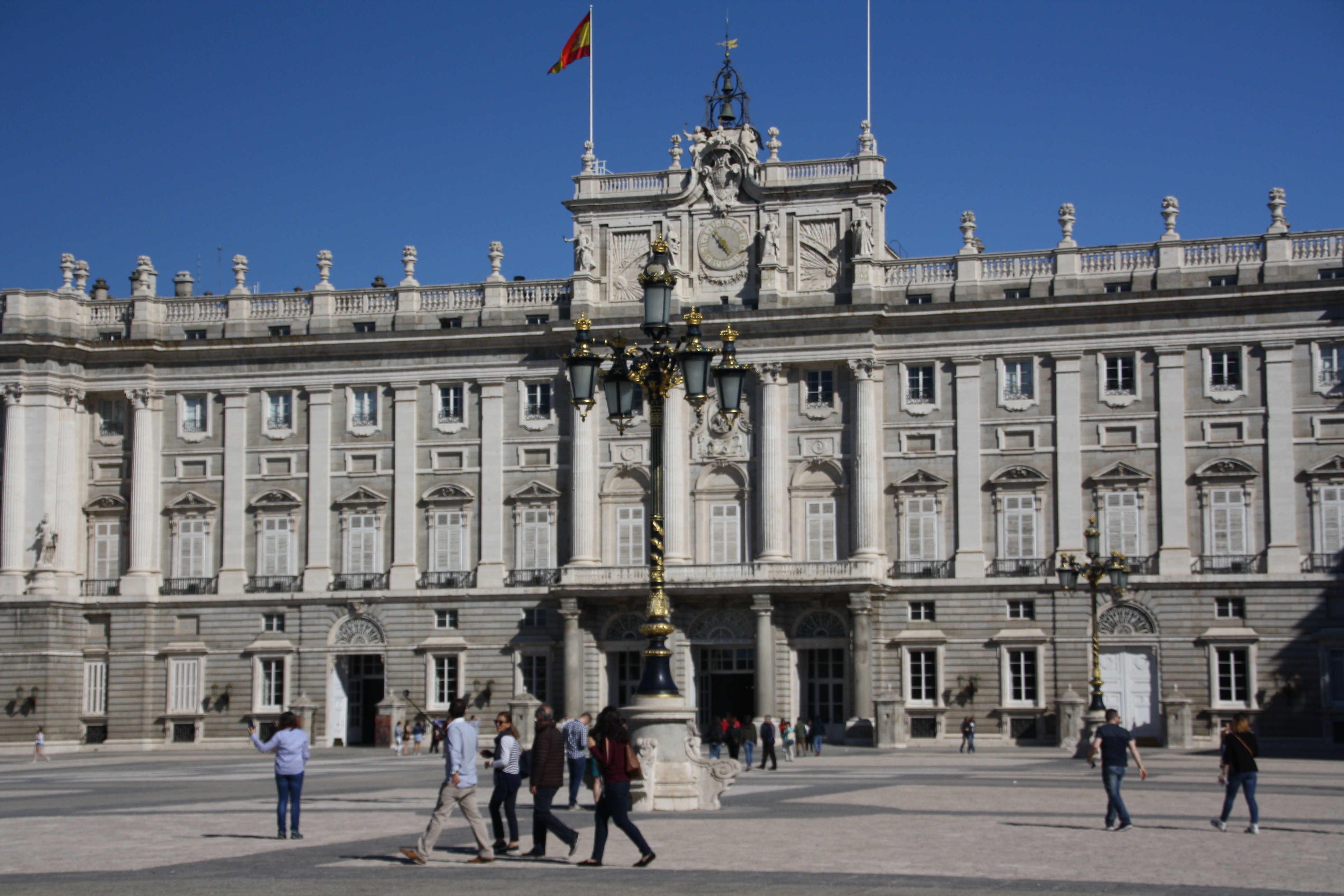
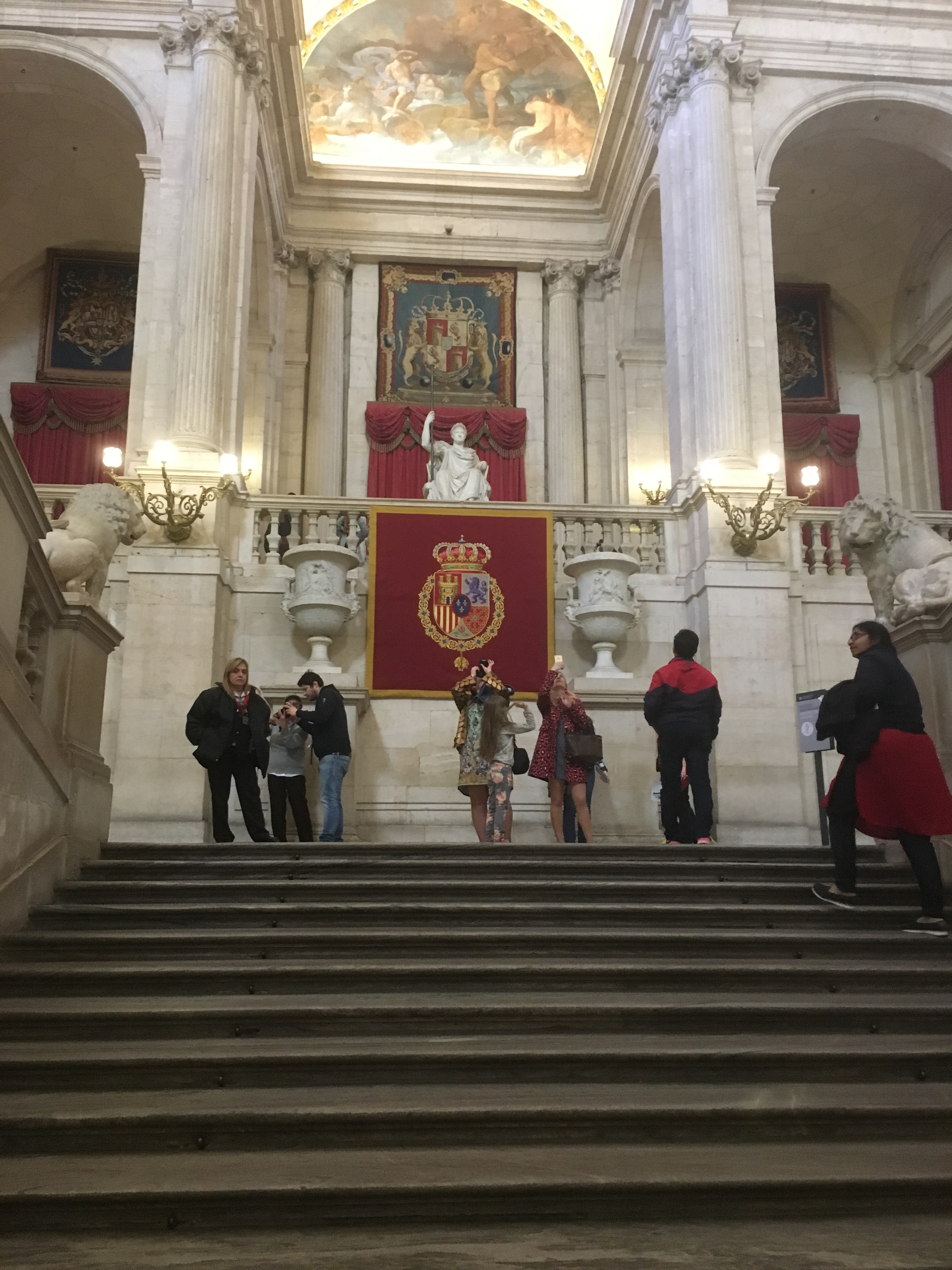
The Royal Palace of Madrid is the official residence of the Spanish Royal Family, but it is only used for state ceremonies. King Felipe VI and the Royal Family do not reside in the palace, choosing instead the more modest Palacio de la Zarzuela on the outskirts of Madrid.
The palace is located on Calle de Bailén (“Bailén Street”) in the western part of downtown Madrid, east of the Manzanares River, and is accessible from the Ópera metro station. Several rooms in the palace are regularly open to the public except during state functions.
The palace has 135,000 square metres (1,450,000 sq ft) of floor space and contains 3,418 rooms. It is the largest royal palace in Europe by floor area. The interior of the palace is notable for its wealth of art and the use of many types of fine materials in the construction and the decoration of its rooms. These include paintings by artists such as Caravaggio, Francisco de Goya, and Velázquez, and frescoes by Giovanni Battista Tiepolo, Juan de Flandes, Corrado Giaquinto, and Anton Raphael Mengs. Other collections of great historical and artistic importance preserved in the building include the Royal Armoury of Madrid, porcelain, watches, furniture, silverware, and the world’s only complete Stradivarius string quintet.
Buen Retiro Park
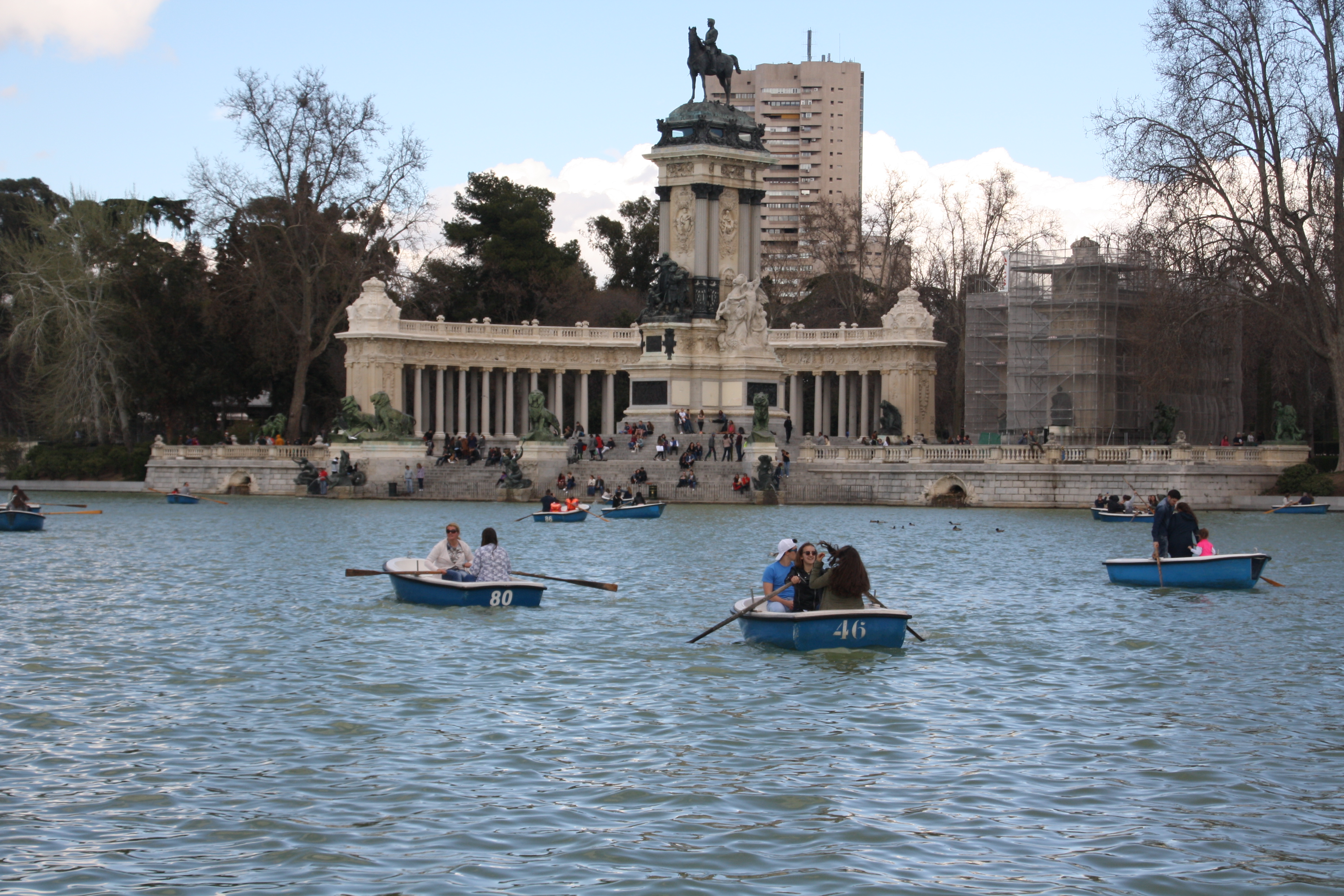
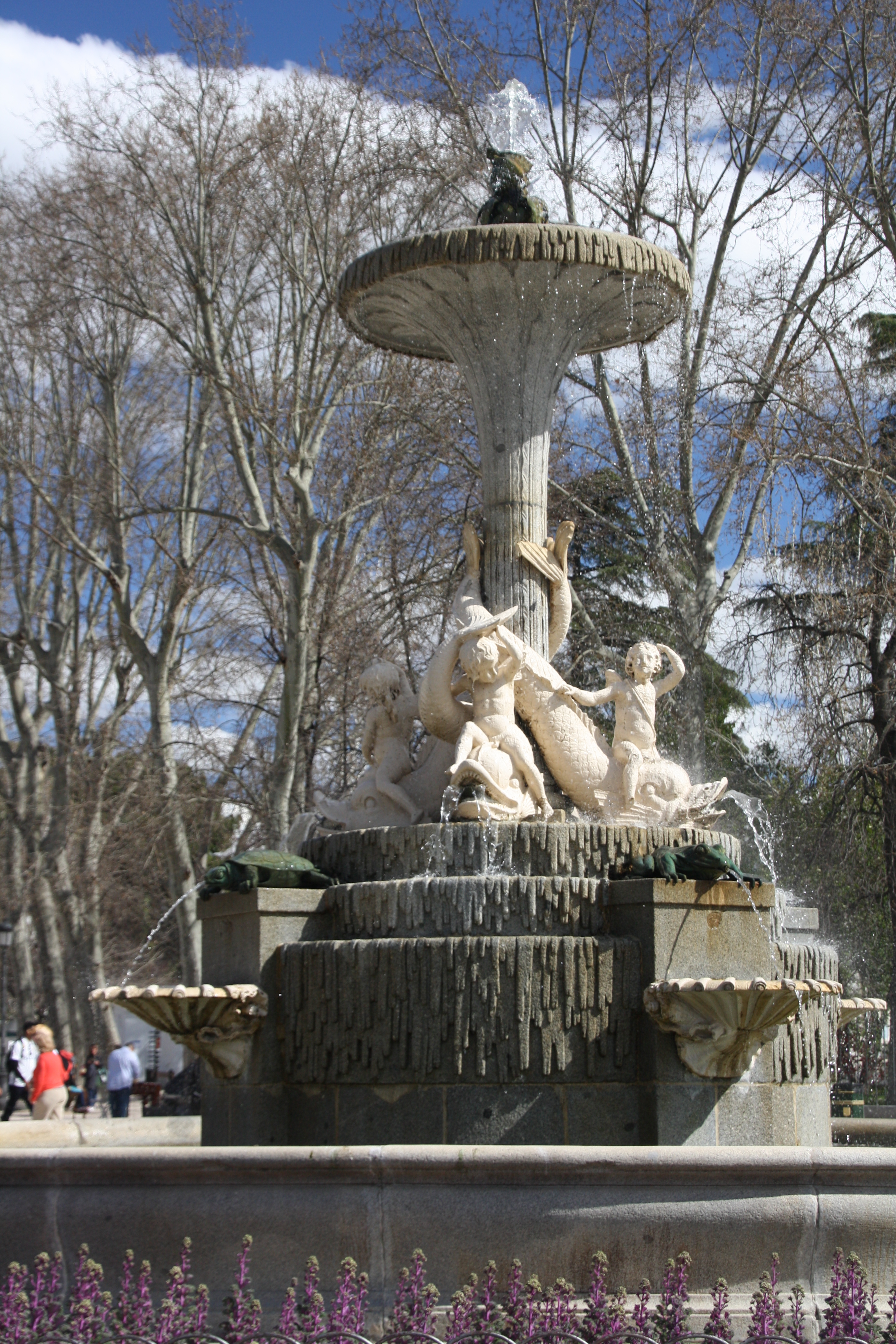
The Buen Retiro Park literally “Park of the Pleasant Retreat” is one of the largest parks in Madrid. The park belonged to the Spanish Monarchy until the late 19th century, when it became a public park.
The is a large and popular 1.4 km2 (350 acres) park at the edge of the city centre, very close to the Puerta de Alcalá and not far from the Prado Museum. A magnificent park, filled with beautiful sculpture and monuments, galleries, a peaceful lake and host to a variety of events, it is one of Madrid’s premier attractions. The park is entirely surrounded by the present-day city.
Museum del parado
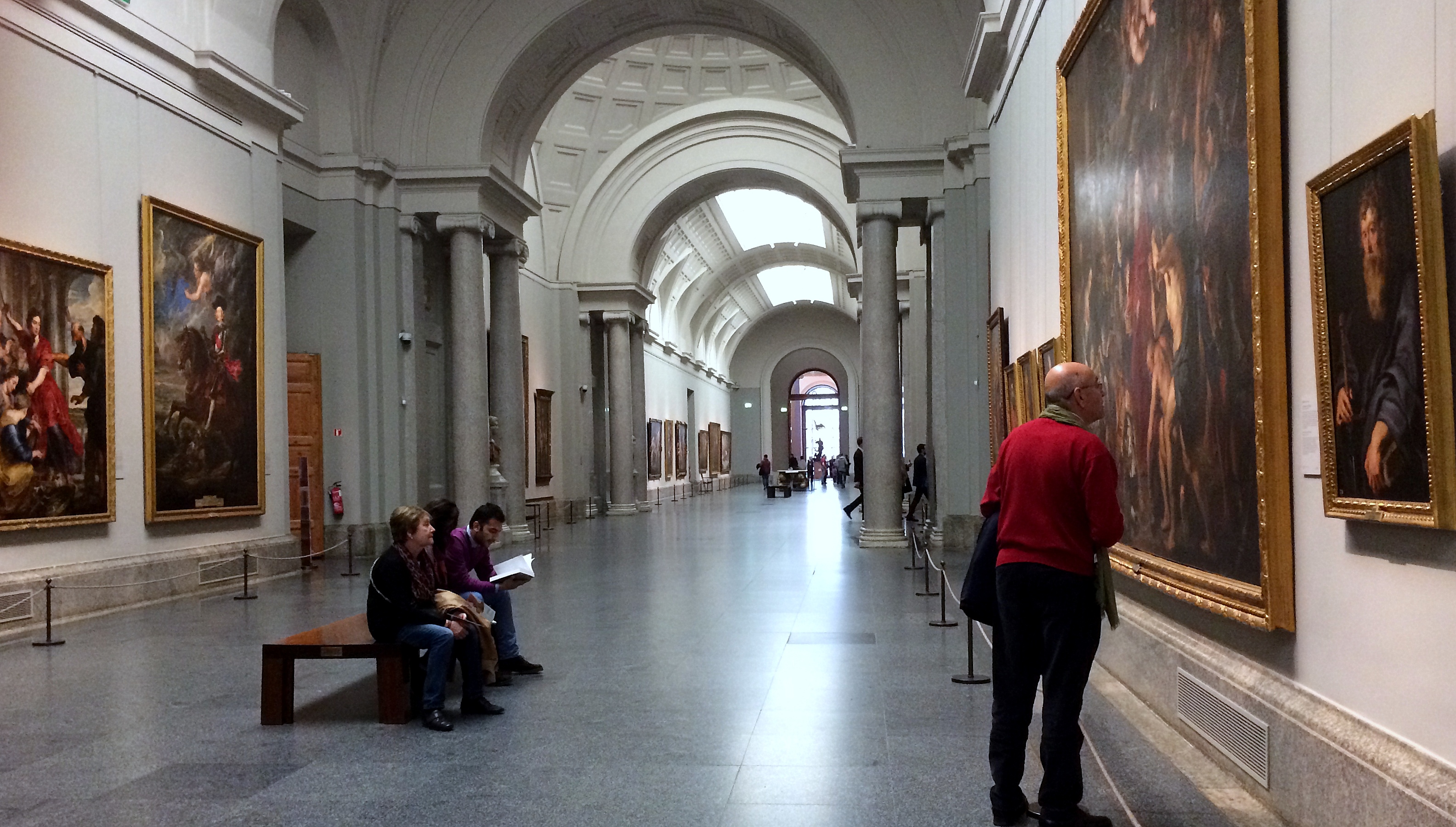
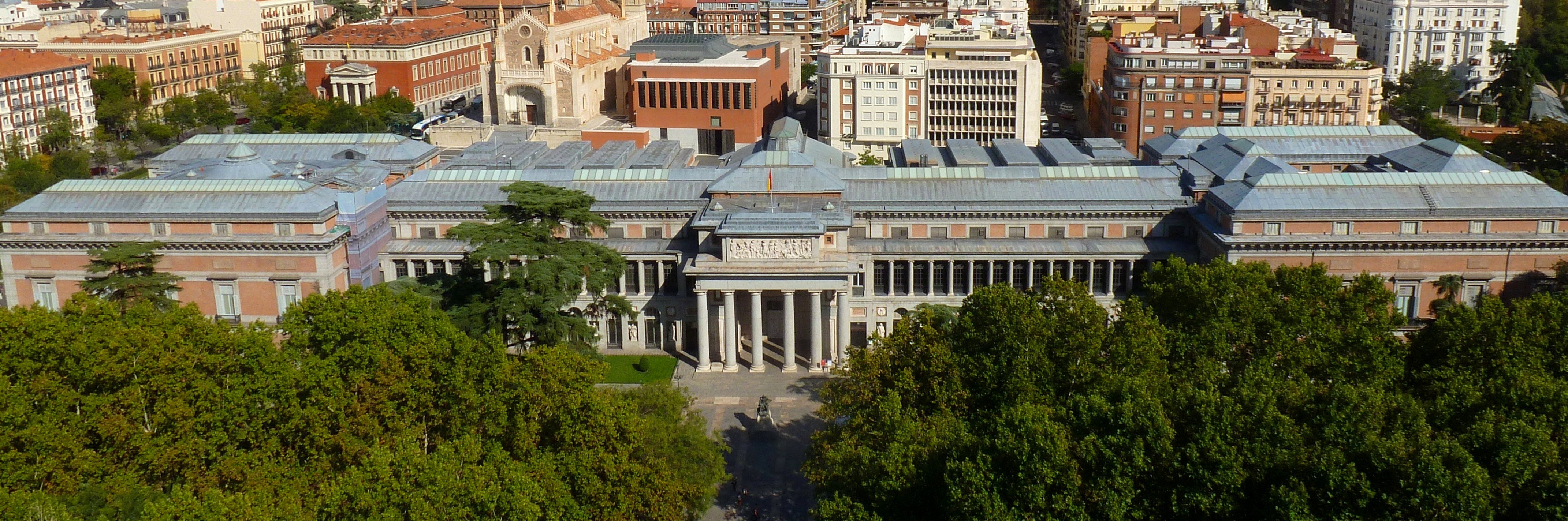
The Prado Museum is the main Spanish national art museum. It features one of the world’s finest collections of European art, dating from the 12th century to the early 20th century, based on the former Spanish Royal Collection, and unquestionably the best single collection of Spanish art. Founded as a museum of paintings and sculpture in 1819, it also contains important collections of other types of works. El Prado is one of the most visited sites in the world, and it is considered one of the greatest art museums in the world. The numerous works by Francisco de Goya, the single most extensively represented artist, as well as by Hieronymus Bosch, El Greco, Peter Paul Rubens, Titian, and Diego Velázquez, are some of the highlights of the collection.
Grand Via
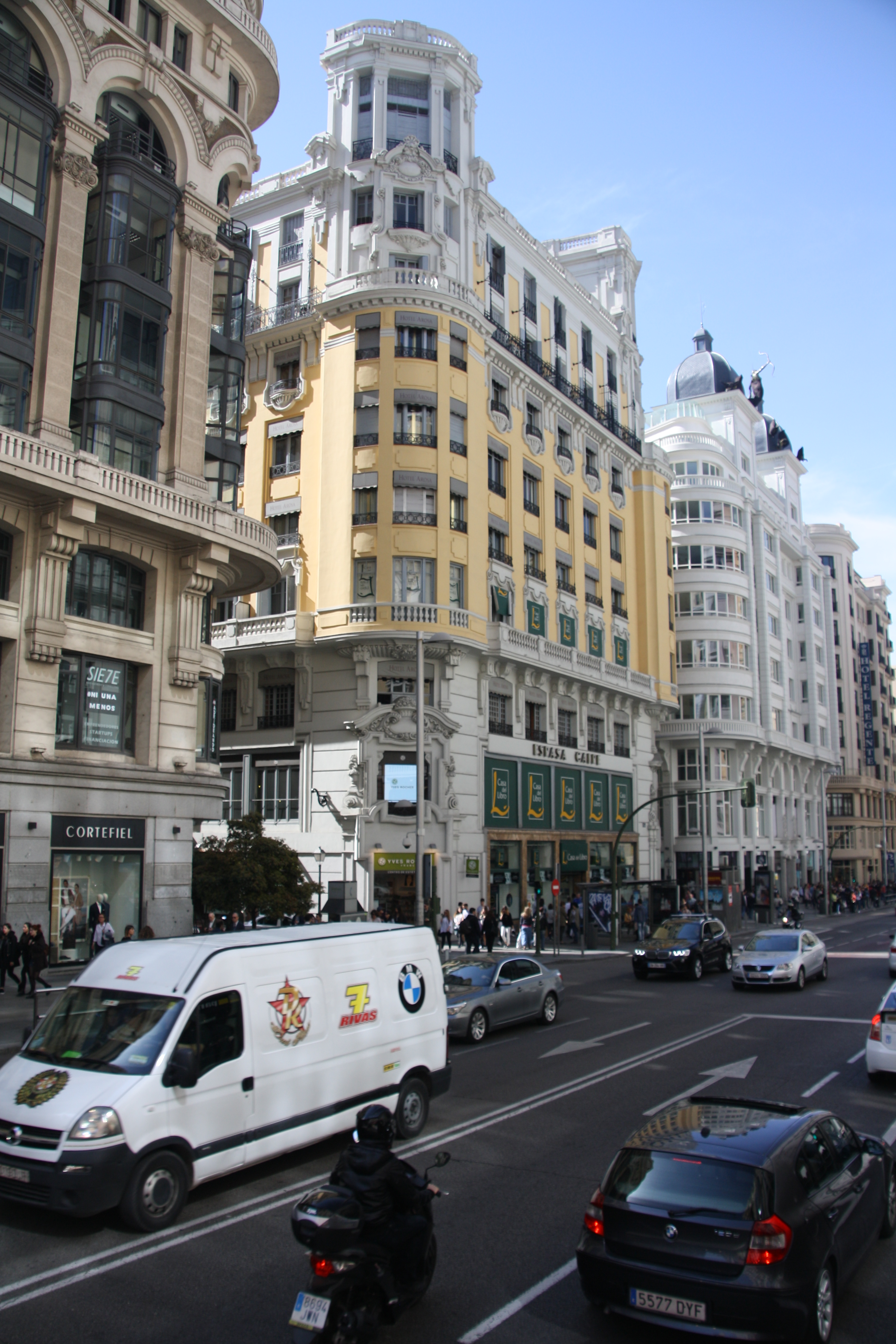
Gran Vía (literally “Great Way”) is an ornate and upmarket shopping street land Today the street is known as the Spanish Broadway, and it is one of the streets with the most nightlife in Europe. It is known as the street that never sleeps. It leads from Calle de Alcalá, close to Plaza de Cibeles, to Plaza de España.
The lively street is one of the city’s most important shopping areas, with a large number of hotels and large movie theatres; however, in recent times many of these theatres are being replaced by shopping centres. The street is also noted for the grand architecture of many of the buildings.
It is considered a showcase of early 20th-century architecture, with patterns ranging from Vienna Secession style, Plateresque, Neo-Mudéjar, Art Deco, and others.
Cathedral
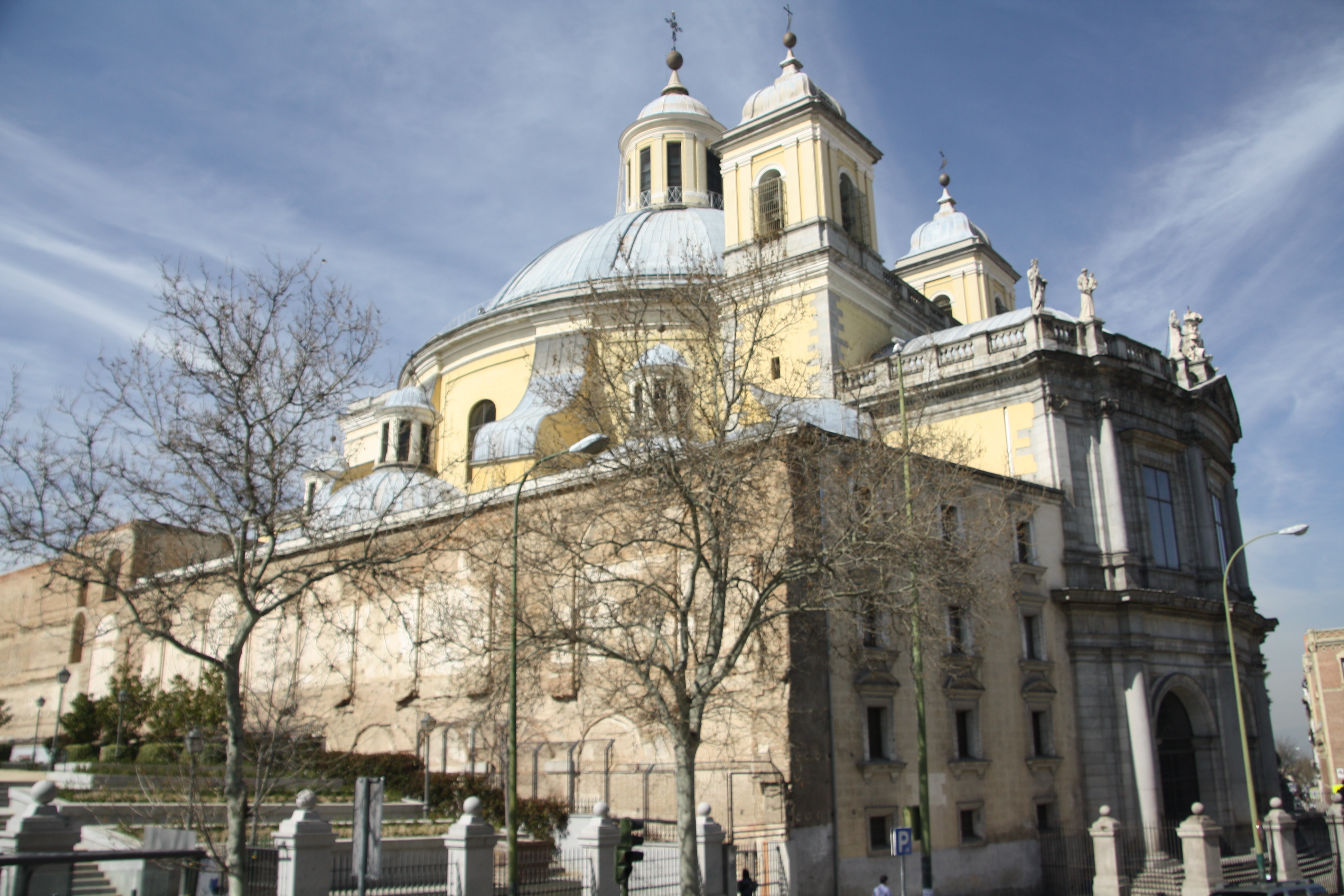
Almudena Cathedral (Santa María la Real de La Almudena) is the Catholic cathedral and is the seat of the Roman Catholic Archdiocese of Madrid. The cathedral was consecrated by Pope John Paul II in 1993.
When the capital of Spain was transferred from Toledo to Madrid in 1561, the seat of the Church in Spain remained in Toledo and the new capital had no cathedral. The construction of Almudena only began in 1879. However construction ceased completely during the Spanish Civil War, and the project was abandoned until 1950, when Fernando Chueca Goitia (es) adapted the plans of de Cubas to a baroque exterior to match the grey and white façade of the Palacio Real, which stands directly opposite. The cathedral was not completed until 1993, when it was consecrated by Pope John Paul II.

Santiago Bernabéu Stadium
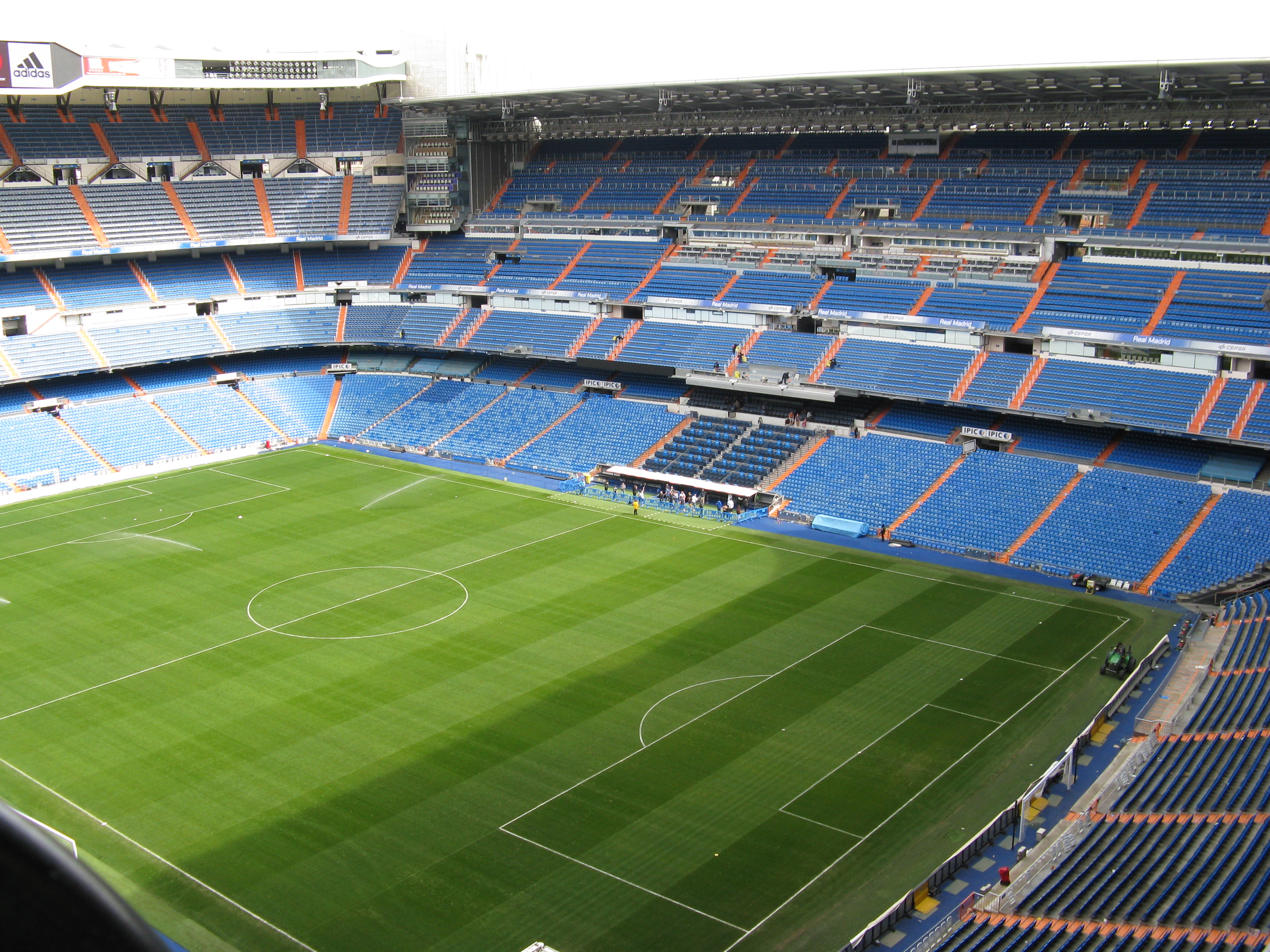
The Santiago Bernabéu Stadium is the current home stadium of Real Madrid. The name Real actually means Royal in English.
Santiago Bernabéu is one of the most spectacular stadia in the world and most prestigious football venues. It has hosted the European Cup final on four occasions: in 1957, 1969, 1980, the UEFA Champions League Final in 2010. The final matches for the 1964 European Nations’ Cup and the 1982 FIFA World Cup were also held at the Bernabéu.
The grounds capacity has changed over the years where it has been extended and then capacity reduced to allow for seating.:
100,000 (1947–1952)
125,000 (1952–1982)
98,000 (1982–1994)
110,000(1994-1999)
85,000(1999–2011)
81,044(2011–)


Puerta del Sol
The Puerta del Sol public square is one of the best known and busiest places in the city. This is the centre of the radial network of Spanish roads. The square also contains the famous clock whose bells mark the traditional eating of the Twelve Grapes and the beginning of a new year. The New Year’s celebration has been broadcast live on national television since 31 December 1962.

 Heather and Keith's travels