Minsk will almost certainly surprise you. The capital of Belarus is, despite its thoroughly dreary-sounding name, a progressive and modem place quiet at odds with its own reputation. Despite the strong police presence and obedient citizenry, Minsk is a thoroughly pleasant place that’s not hard to become fond of.
Razed to the ground in WWII, Minsk has almost no buildings remaining from the pre-war years, and there are relatively few traditional sights in the city, save two excellent museums. Instead though, there are myriad places of interest to anyone fascinated by the Soviet period and a smattering of cosmopolitan pursuits to keep you entertained come the evening.
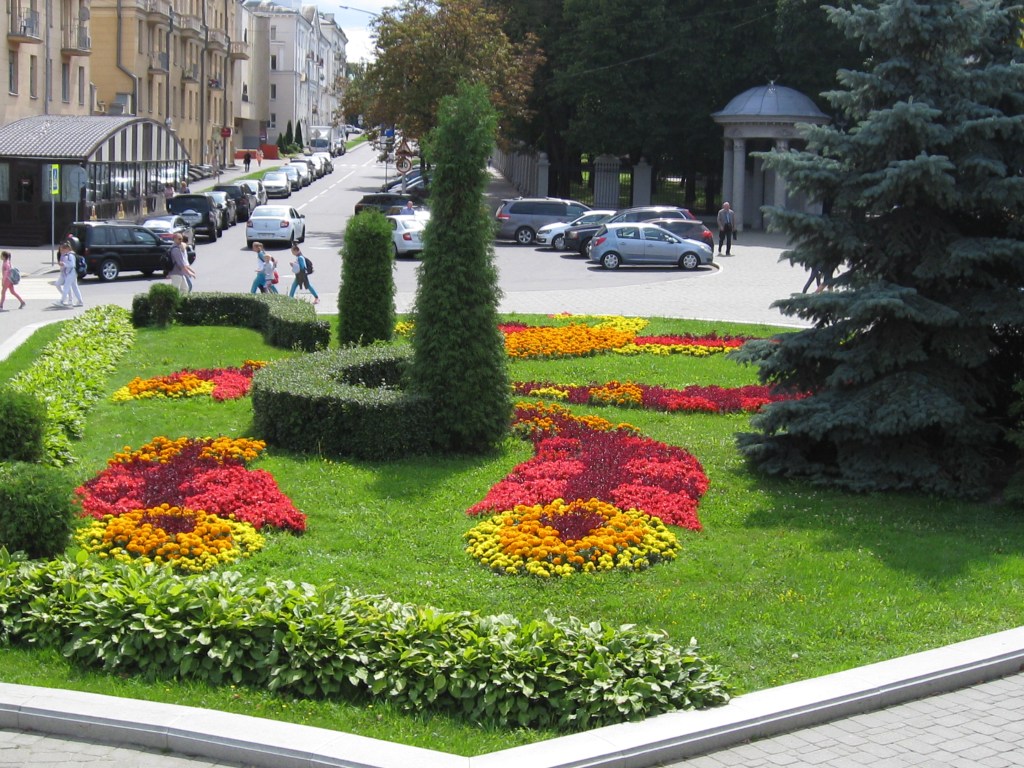
When travelling from the airport the thing that hits you most is how clean and green the city is. There is no litter or graffiti and there are flowers everywhere, we have added some pictures below.
It is not that hard to get to Minsk, in the summer there are direct flights once a week from Manchester. No visa is required if you are there less than 30 days. The only things that you will need are passports, travel insurance and at least 20 euro’s a day.
English is spoken in hotels but mainly Russian elsewhere, although all restaurants have an English menu if you ask.
In all our travels this is one of the nicest places that we have ever been and should be on the list of places for the independent traveller. The people are friendly and it is relatively cheap.
We visited in August 2019 and stayed at the Doubletree by Hilton.
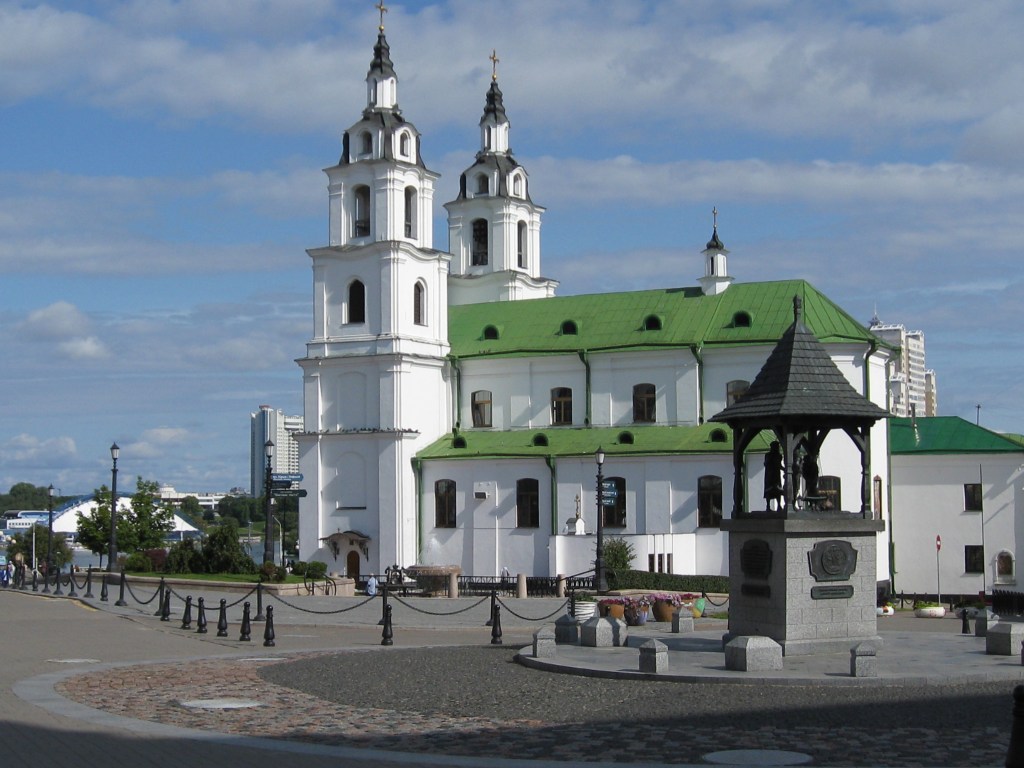
Holy Spirit Cathedral
One of the most instantly recognisable symbols of Minsk is this magnificent, gleaming, two-towered Orthodox cathedral in the heart of the city. Completed in 1642 as part of a larger ensemble to serve Bernadine nuns, consecration was delayed for 40 years because of the Muscovite invasions. In 1741 the original structure was damaged by fire but later reconstructed. The convent was closed in 1852 and the building given to the Russian Orthodox Church for use as a monastery before being closed by the Bolsheviks after the October Revolution. Today the church has been restored to its former glory.
Island of Courage and Tears
Standing on a small island connected to the Lower Town by a walking bridge, this evocative Afghan war memorial is known colloquially as the Island of Tears by locals. Built in the form of a tiny church with four entrances, the monument is surrounded by towering gaunt statues of the sorrowful mothers and sisters of Belarusian soldiers who perished in the war between the Soviet Union and Afghanistan (1979–89).

Upper Town
The very heart of the Minsk is rightly occupied by Upper Town. This is one of the most frequently visited metropolitan attractions.
During the past few years Upper Town has been acquiring more and more its historical appearance. The town hall again has become one of the main capital’s symbols, the historical buildings of the streets came to be renewed, the restoration works returned the atmosphere and an unusual mood to the local back streets and houses of this place.
Upper Town offers an amazing view of the Svislach river. Small paved streets, small atmospheric restaurants and small stores, located in historical buildings, attract with their beauty and uniqueness. A small town in the centre of Metropolis is unlikely to leave indifferent even the most sophisticated tourist


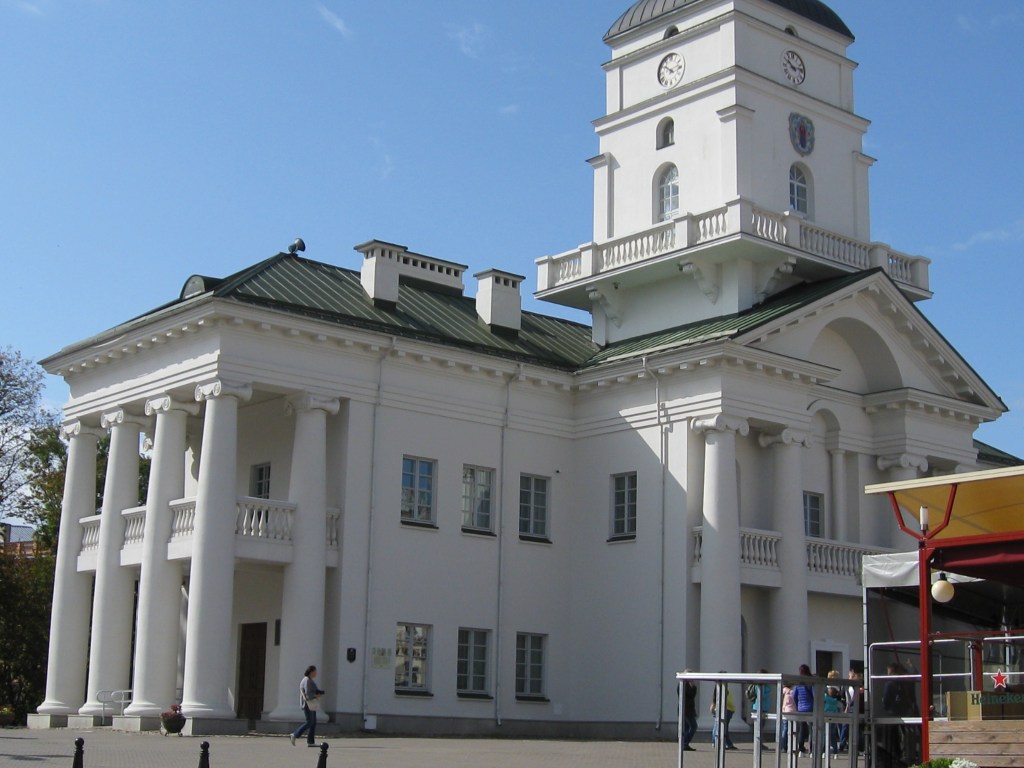
City Hall
The City Hall was blown up when Emperor Nicholas I himself issued a decree to demolish Minsk City Hall under the formal pretext that it spoiled the overall appearance of the city. The building materials were used to cover roadways, to construct small architectural forms of the city, metal structures were used to cast signs on citizens’ houses.
Restoration of the City Hall was carried out to try comply with all known subtleties of the old building in details, the park and alleys adjacent to the City Hall were accurate restored. There is a glass pyramid on the former site of a monument to Emperor Alexander II, and a layout of Minsk of the late nineteenth century inside it.
A weather vane and the coat of arms of Minsk are set on the spire of the restored building of the City Hall, every hour the chimes beat off the melody of “The Song about Minsk” by I. Luchenok, representing civic consciousness of citizens, their pride for their home city, and the capital of the Republic of Belarus.
Pabedy (Victory) Park
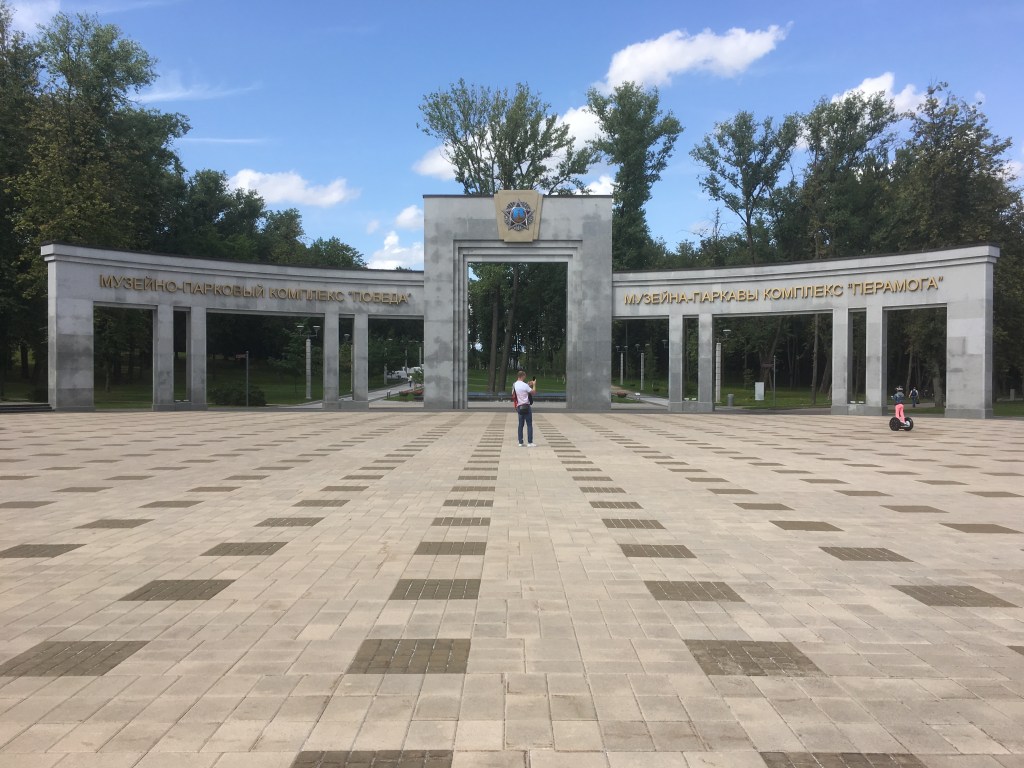
Victory Park is the largest park in Minsk. Today, it is virtually inseparable from the Komsomolsk lake, which is housed in its territory. The park was due to open on June 22, 1941, but on that same day Nazi Germany attacked the USSR.
After the war, the dam was rebuilt, which held the Komsomol Lake, as well beautiful park was laid out. They did not have to think long about the name of the park – it was given the name of long-awaited victory.
To the fortieth anniversary of the Victory in WWII in 1985 at the entrance of the park the obelisk “Minsk – Hero City” was installed. Large-scale reconstruction of the park’s victory began only in 2005 and in 2011, Victory Park was completely renovated.
Victory Park area increased up to 200 hectares, 40 of which are for Komsomol Lake. Around the lake was built “health-track” and equipped beach for a rest. Today, there are also and footpaths, playgrounds and a site, used for concerts and shows. During the reconstruction three fountains been installed – “Eternity”, “Victory”, “Sail”.

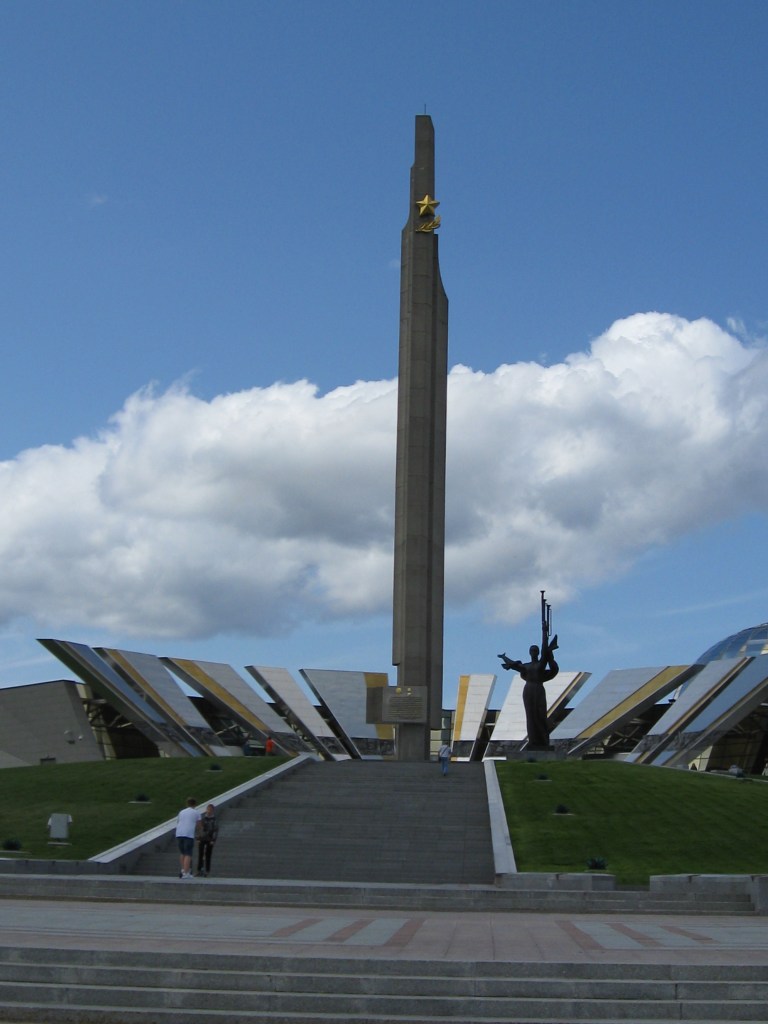
Stela Minsk Hero City
The stela Minsk Hero City was erected in 1985 in honour of the 40th anniversary of the Great Patriotic War. It is now part of the magnificent compound of the Great Patriotic War History Museum. In 1974 Minsk was honoured with the title of hero city for the courage and bravery its residents demonstrated during the Nazi occupation that lasted for 1,100 days and nights. On top of the 45-meter obelisk is a Hero Star. At the bottom visitors can see an engraved text that describes the acquisition of the honourable title by the city. Standing with fanfares raised high, the symbolical figure of the Motherland is part of the compound. Nowadays majestic military parades and processions on the day of the key national holiday – Independence Day – take place near the stela Minsk Hero City
KFC Monument
Everyone who visits Minsk stops in their tracks when they see the city’s bizarre KFC restaurant, a landmark of capitalism installed underneath one of the city’s most famous Communist monuments.

Victory Square Monument
square is located in the historic centre of Minsk nearby with the museum of the 1st Congress of RSDRP, Main offices of National State TV and Radio and City House of Marriages. A green park stretches from the Victory Square to the river of Svislach and to the entrance to the M. Gorky Park. Victory Square is the key landmark of Minsk. Holiday parades go through the square. The newly married traditionally take their picture at the square. Victory Square is the Belarusian version of Red Square in Moscow in the Russian Federation.
A 3-meter replica of the Order of Victory crowns a granite column of 38 metre erected in the centre of the square. The Sacred Sword of Victory is at the base of the monument. The monument was built in 1954 in honour of the soldiers of the Soviet Army and partisans of Belarus. Sculptors: Z. Azgur, A. Bembel, S. Selikhanau. Architects: U. Karol, G. Zagorski.
The four facets of the pedestal hold bronze relief thematic images: “May 9, 1945”, “Soviet Army during the Great Patriotic War”, “Belarusian Partisans”, “Honour to Heroes who gave their lives for liberation”.
The four bronze wreaths around the obelisk signify the four Fronts. The soldiers of these fronts gave their lives fighting to liberate Belarus from German Fascist invaders.

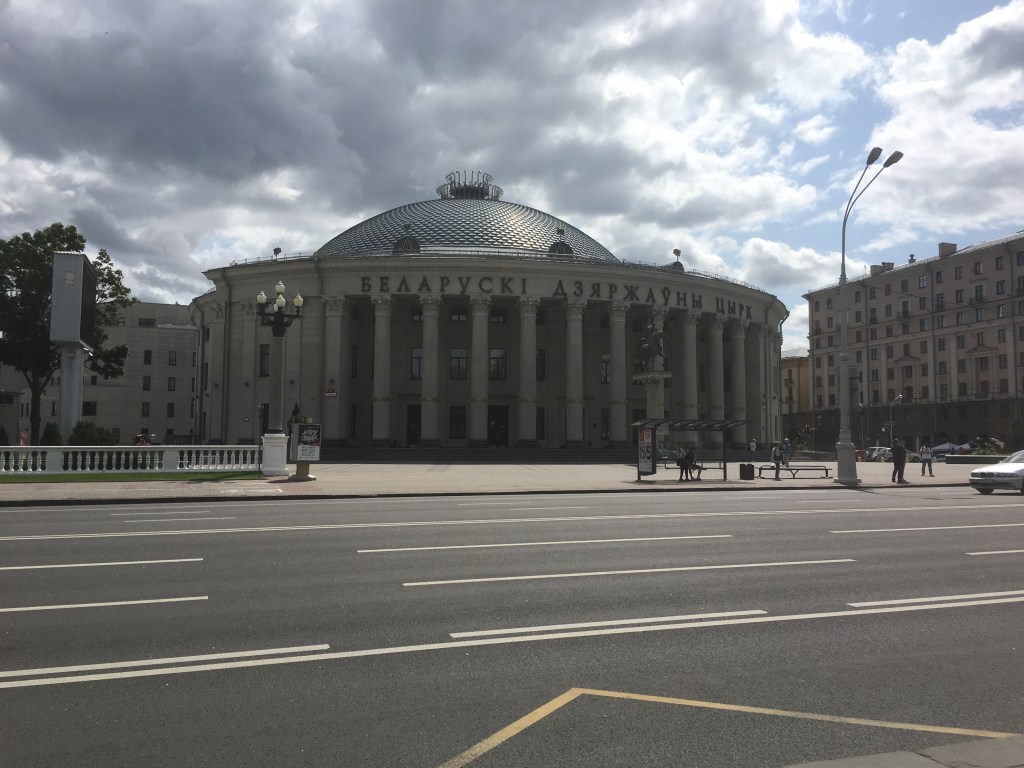
Minsk Circus
The stone-built circus in Minsk was the first stationary winter circus in the Soviet Union. The decision to build this circus was made in 1952 to acknowledge Belarus’ contribution to the victory in the Great Patriotic War and the post-war revival of the Soviet Union.
Minsk Opera House
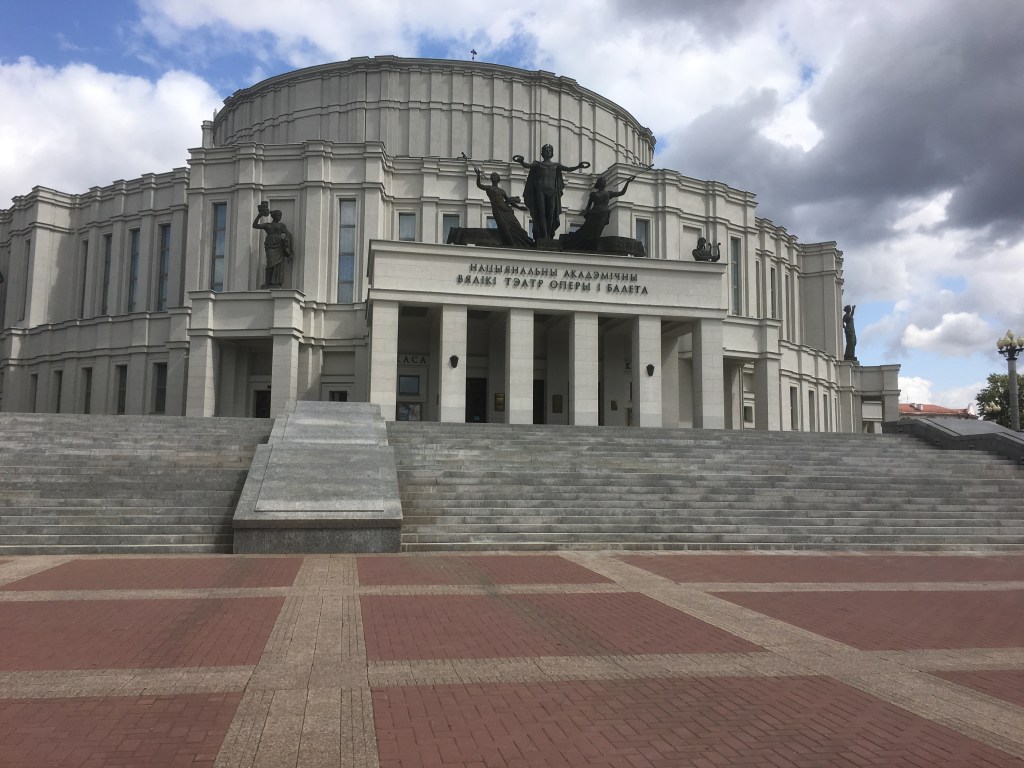
The National Academic Grand Opera and Ballet Theatre of the Republic of Belarus is located in a park in the Trinity Hill district of Minsk. Local people call it the “Opierny Teatr” or the “Opera and Ballet Theatre”.
The building was designed to be taller but when construction started it was realised that this would be bigger than the one in Moscow so the top part was never built.
National Library
The National Library of Belarus is the biggest library in the Republic of Belarus. It houses the largest collection of Belarusian printed materials and the third largest collection of books in Russian behind the Russian State Library (Moscow) and the Russian National Library (Saint Petersburg).
Construction of the new building started in November 2002 and completed in January 2006. The library’s main architectural component has the shape of a rhombicuboctahedron. The height of the building is 73.6 metres and has 23 floors. There is an obesrvation tower on the 23rd floor which gives amazing views of Minsk.

The library is set in a small park with a lake and fountains.
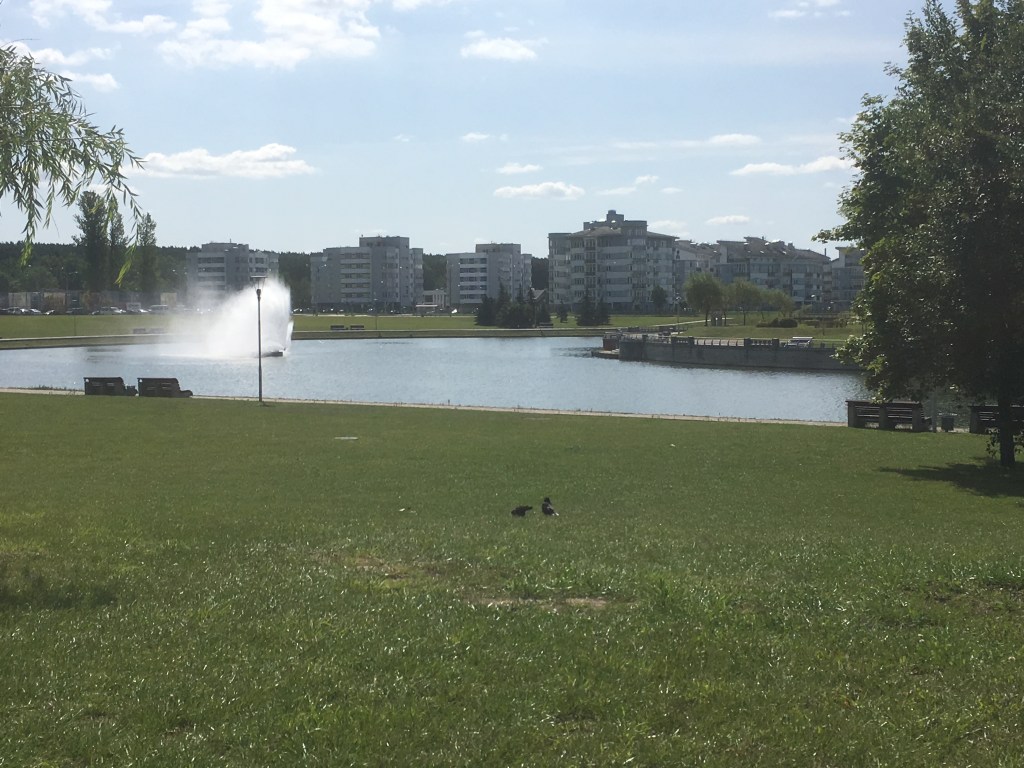
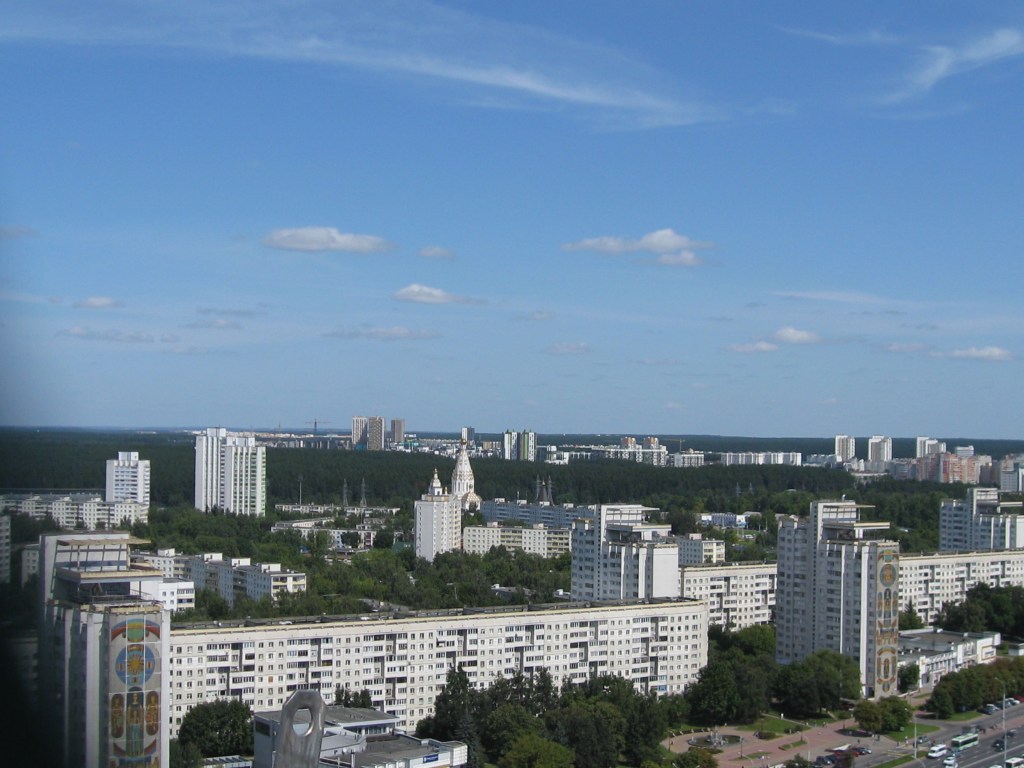
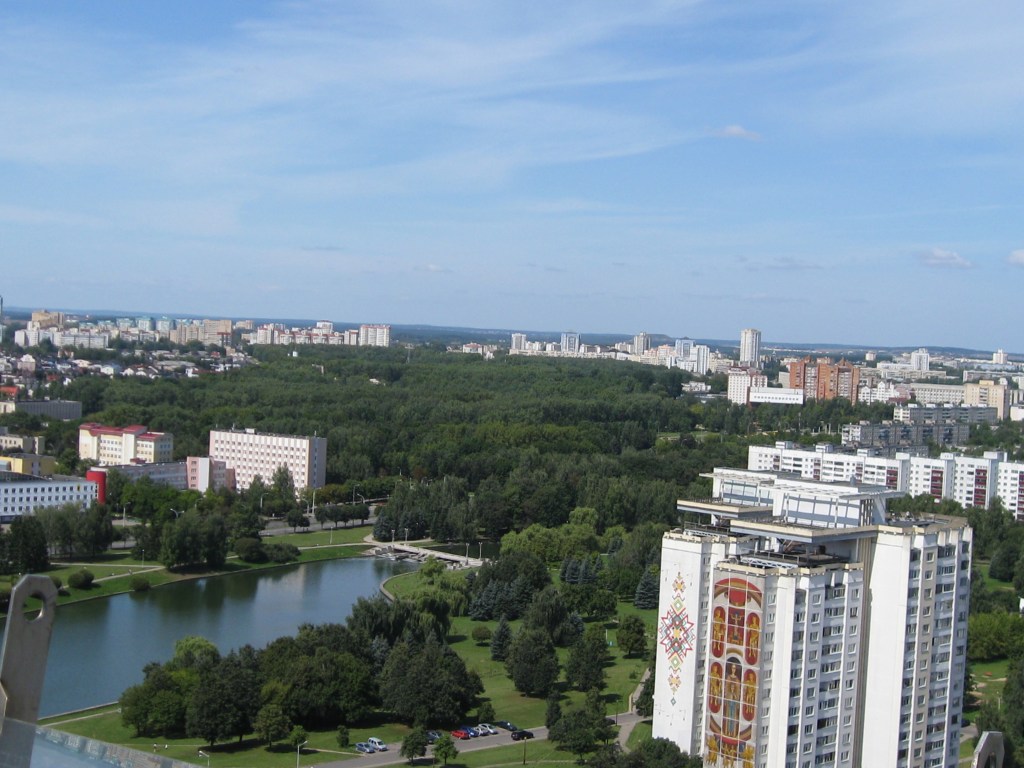
The two pictures below were taken from the observation tower. They highlight how Minsk has combined tall apartment blocks with significant amounts of green space.
City Gates
The Gates of the City of Minsk are two symmetrical high towers in the style of Stalin classicism (Empire style). This style combines the elements of baroque, late classicism and art deco. All the buildings of the Stalin Empire style are distinguished by their grandeur, luxury and even pomposity.

Dinamo National Olympic Stadium
Dinamo National Olympic Stadium is now a multi-purpose stadium and was recently reopened after a massive renovation project. Earlier it was used mostly for football matches and was the home ground of Dinamo Minsk, FC Minsk and the Belarus national football team. Previously the stadium officially held 40,000, but because part of the upper stand had been abandoned in the mid-1990s for safety reasons, the actual capacity before renovations was only 34,000. After renovation the capacity is 22,246.

Niezalieznasci (Independence) Square
Independence Square is a square which is one of the landmarks on Independence Avenue. The Supreme Soviet of Belarus and Minsk City Hall are on this square. During the period of the Soviet Socialist Republic it was called Lenin Square. It is currently one of the biggest squares in Europe.
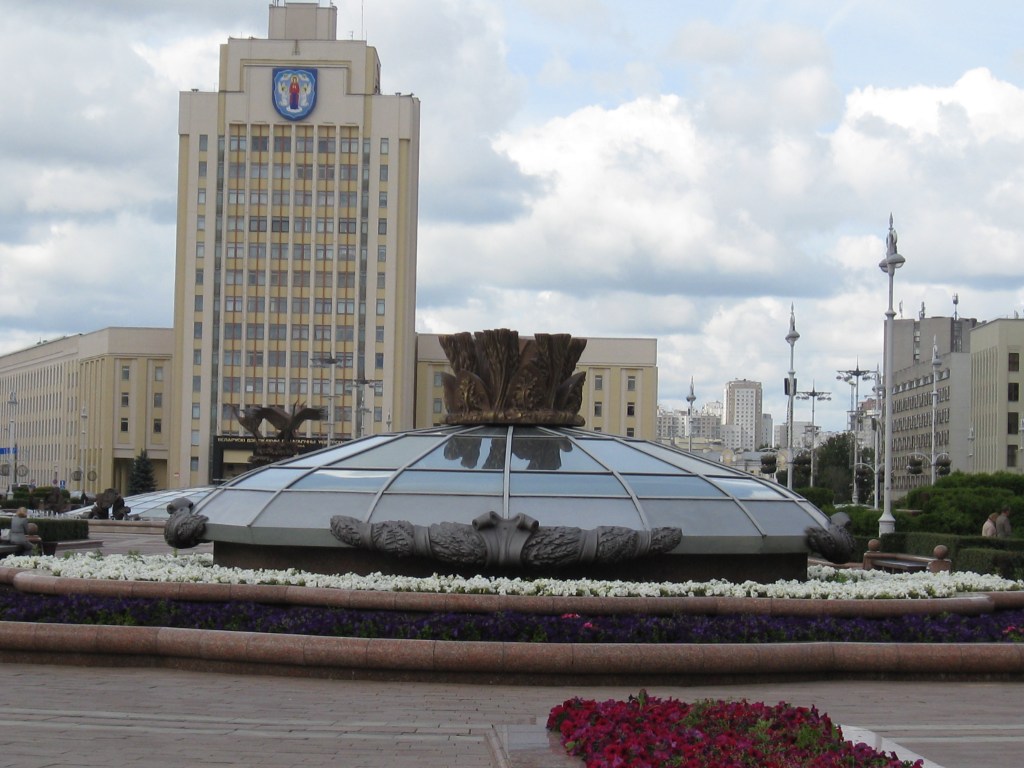
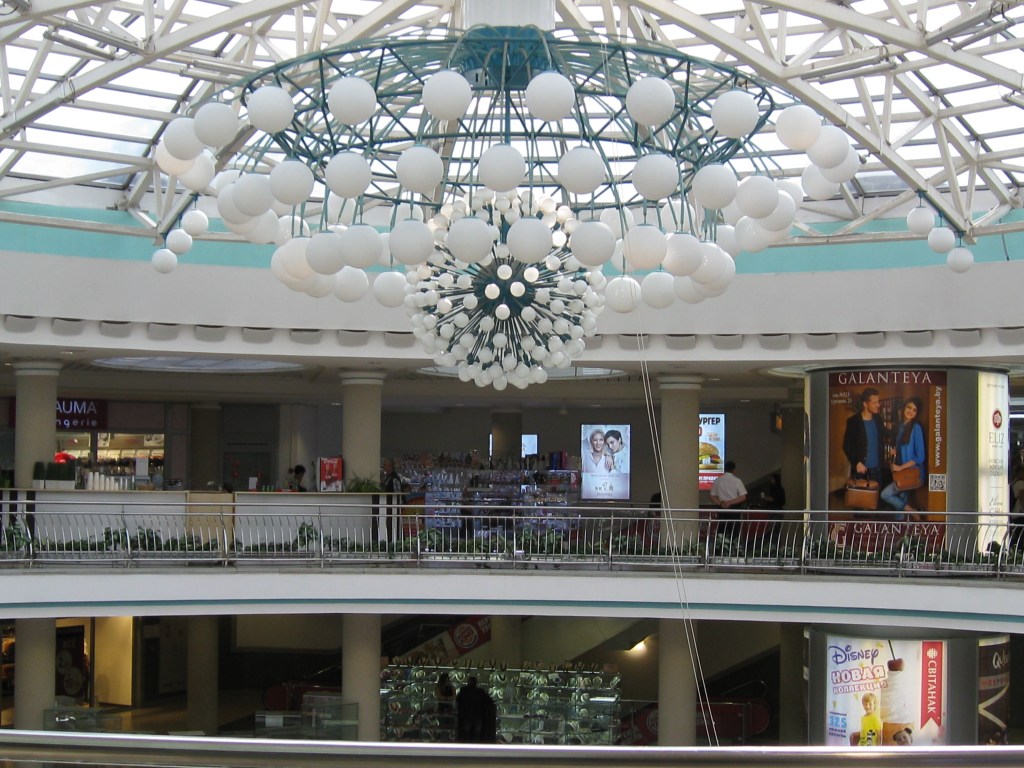
We were wondering what the domes were for and though they were for natural light for the Minsk metro. when we went down we found an amazing shopping centre.
View of the city
There are flowers in beds and planters all over the city.

The mix of modern high rise architecture and green space.
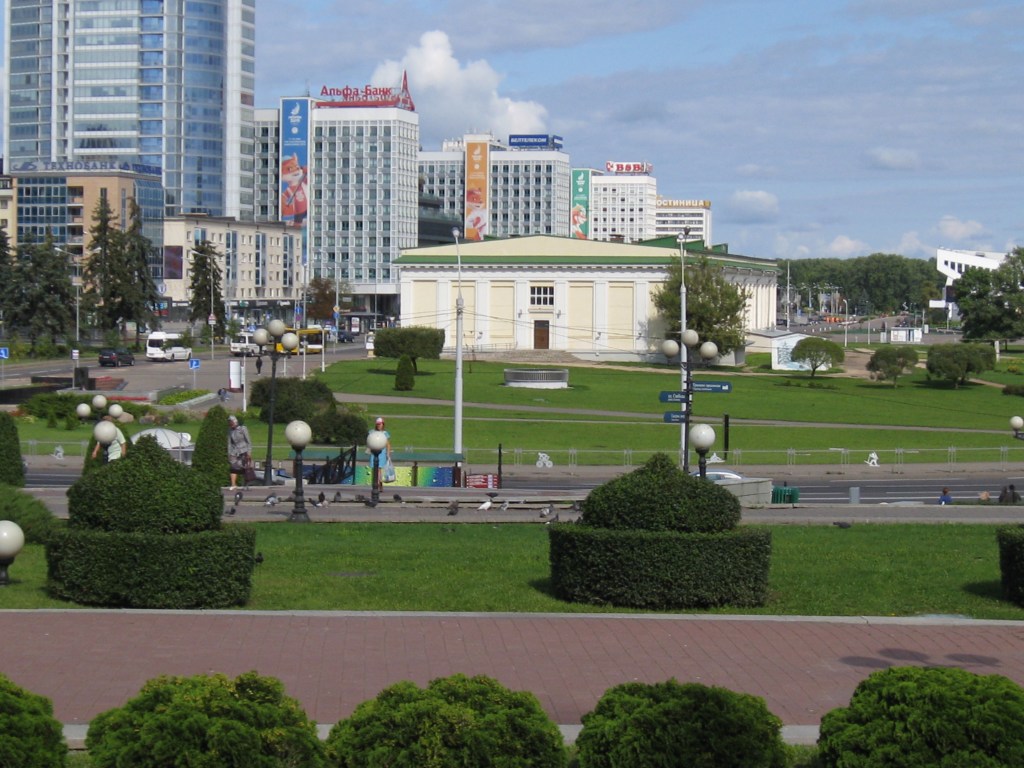
The Svislach river runs through the city just out of shot on the picture above. The two pictures below are of the opposite bank of the river.

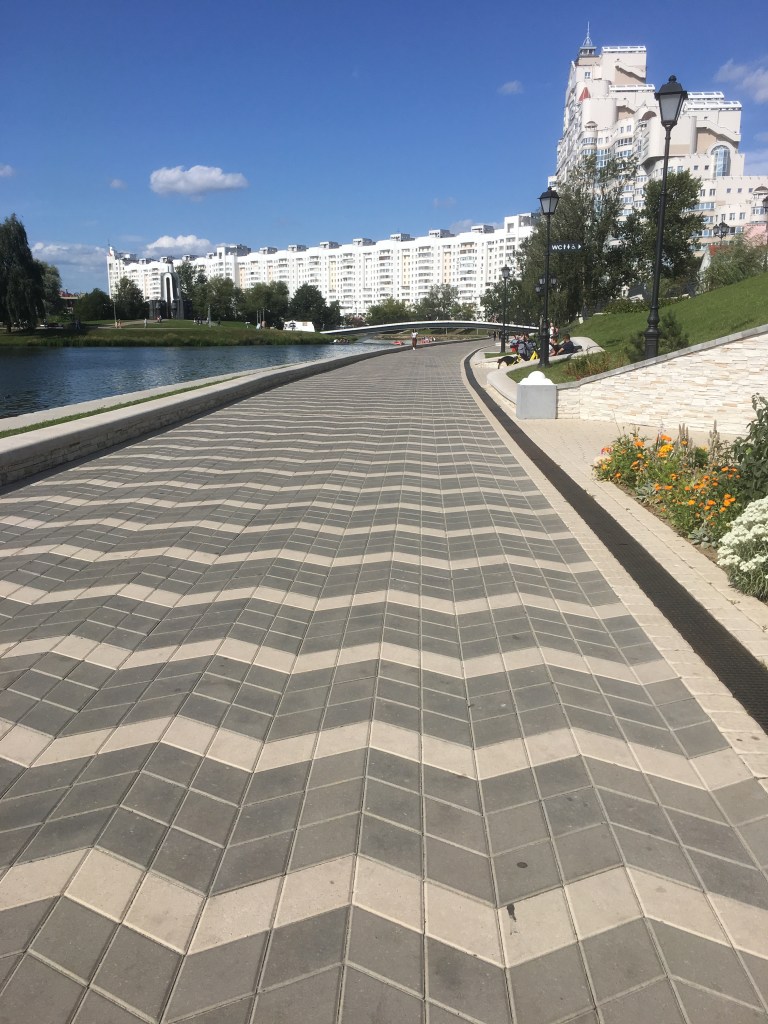
A view of the river from Park Horkaha.

A modern apartment block on the banks of the river.

Breakfast
When they said on the menu that the breakfast was eggs, mushrooms, tomatoes and beans. We didn’t expect scrambled eggs with mushrooms, a tomato and cucumber salad and cold pinto beans.
Although it was an unusual combination it tasted really good.

 Heather and Keith's travels