Oslo is home to world-class museums and galleries to rival anywhere else on the European art trail and is fringed with forests, hills and lakes. Add to this mix a thriving cafe and bar culture and top-notch restaurants and the result is a thoroughly intoxicating place in which to forget about the fjords for a while.
We visited in September 2018 and stayed at the Scandic Grensen Hotel.
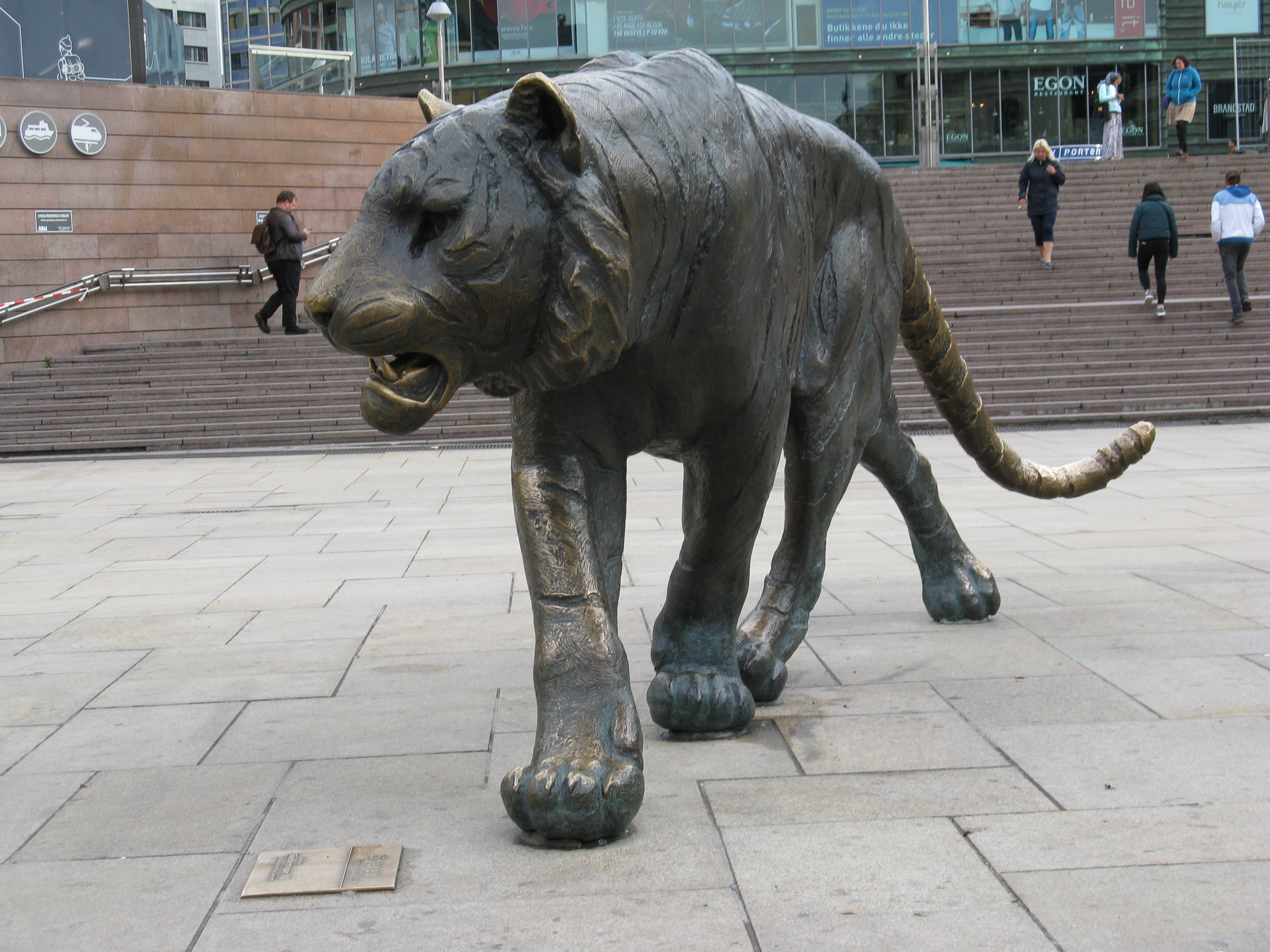
Jernbanetorget ( The Tiger)
The tiger in front of Oslo Central Station is one of Oslo’s most photographed “inhabitants” and one of the first things that meet a visitor arriving at Oslo Central Station.
When Oslo celebrated its 1000-year anniversary in 2000, Eiendomsspar wanted to give the city a gift. Oslo wanted a tiger, and that’s what they got: a 4.5-metre bronze tiger made by Elena Engelsen.
Why a tiger?
The reason Oslo wanted a tiger, is the city’s nickname Tigerstaden (“The Tiger City”), which most Norwegians are familiar with. The name was probably first used by Norwegian poet Bjørnstjerne Bjørnson. His poem “Sidste Sang” from 1870 describes a fight between a horse and a tiger; the tiger representing the dangerous city and the horse the safe countryside.
Since then Oslo has been known as “The Tiger City”, but these days it’s not necessarily meant as a negative thing. “The Tiger City” can be an exciting and happening place rather than dangerous.
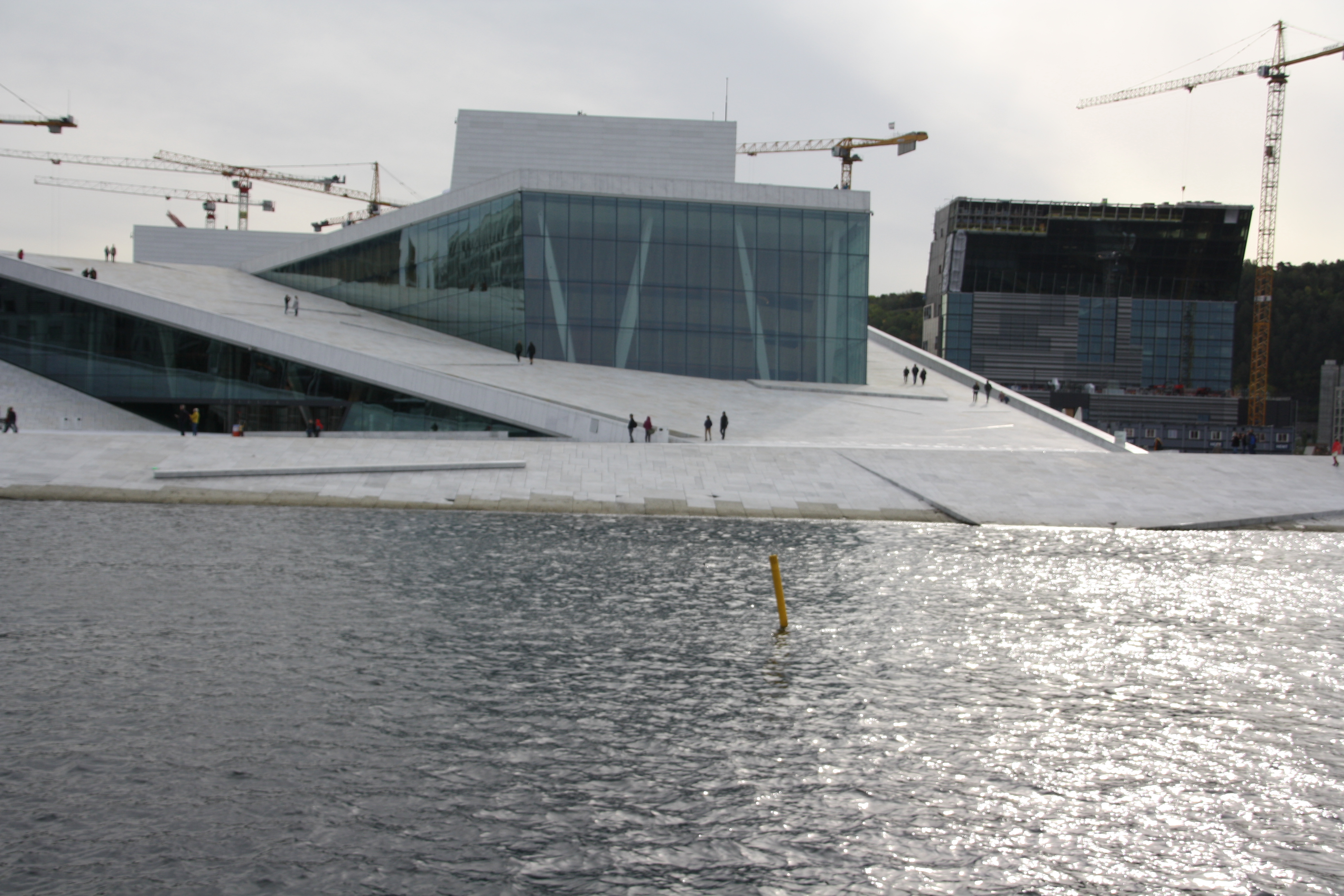
The Oslo Opera House
The Oslo Opera House is the home of The Norwegian National Opera and Ballet, and the national opera theatre in Norway. The building is situated at the head of the Oslofjord. The structure contains 1,100 rooms in a total area of 38,500 m2 (414,000 sq ft). The main auditorium seats 1,364 and two other performance spaces can seat 200 and 400. The main stage is 16 m (52 ft) wide and 40 m (130 ft) deep. The angled exterior surfaces of the building are covered with marble from Carrara, Italy and white granite and make it appear to rise from the water like an ice berg.
This is the only opera house in the world where you can walk on the top of the building.
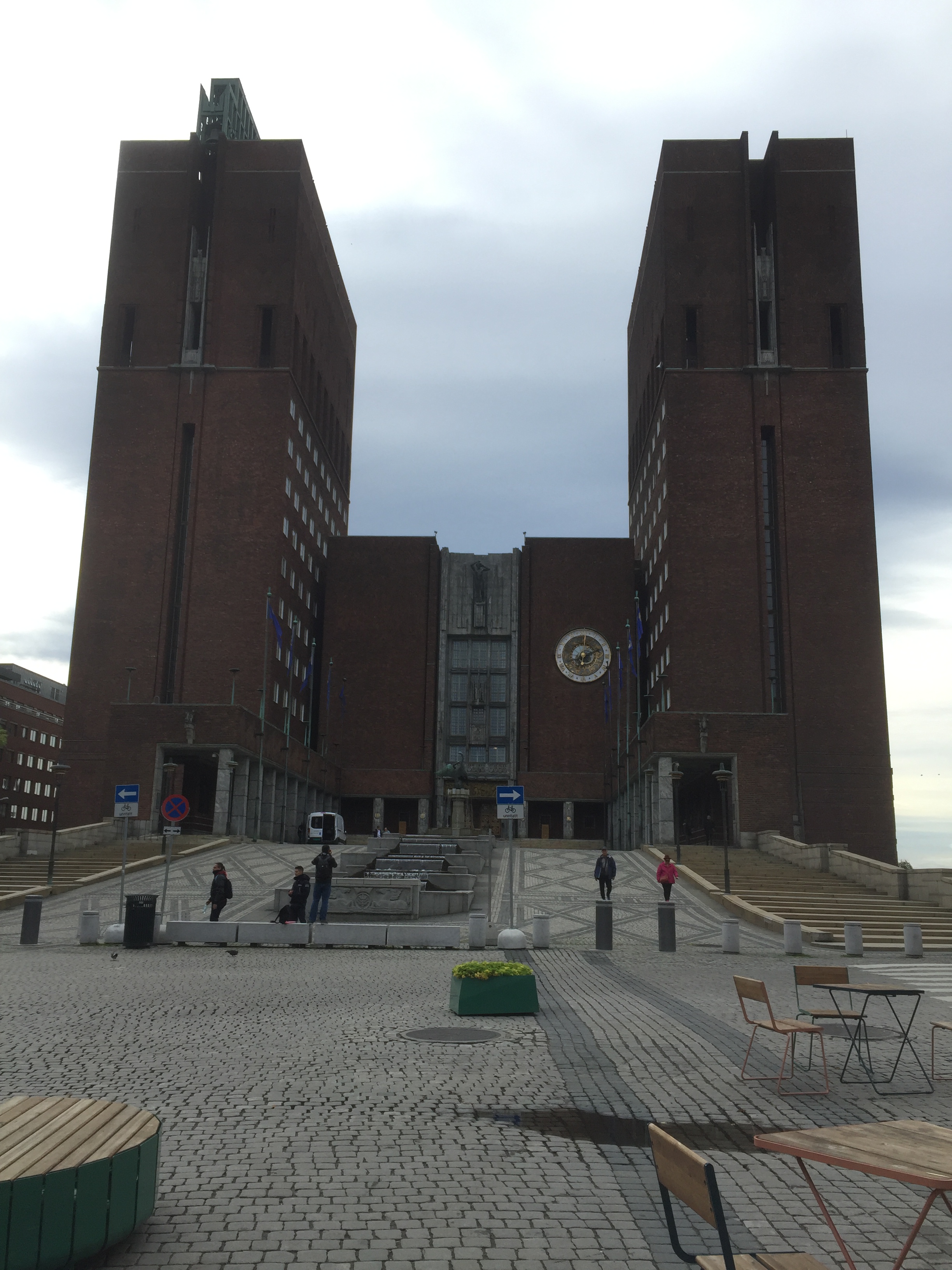
Oslo City Hall
Oslo City Hall is a municipal building which houses the city council, the city’s administration and various other municipal organisations. The building as it stands today was constructed between 1931 and 1950, with an interruption during the second world war.
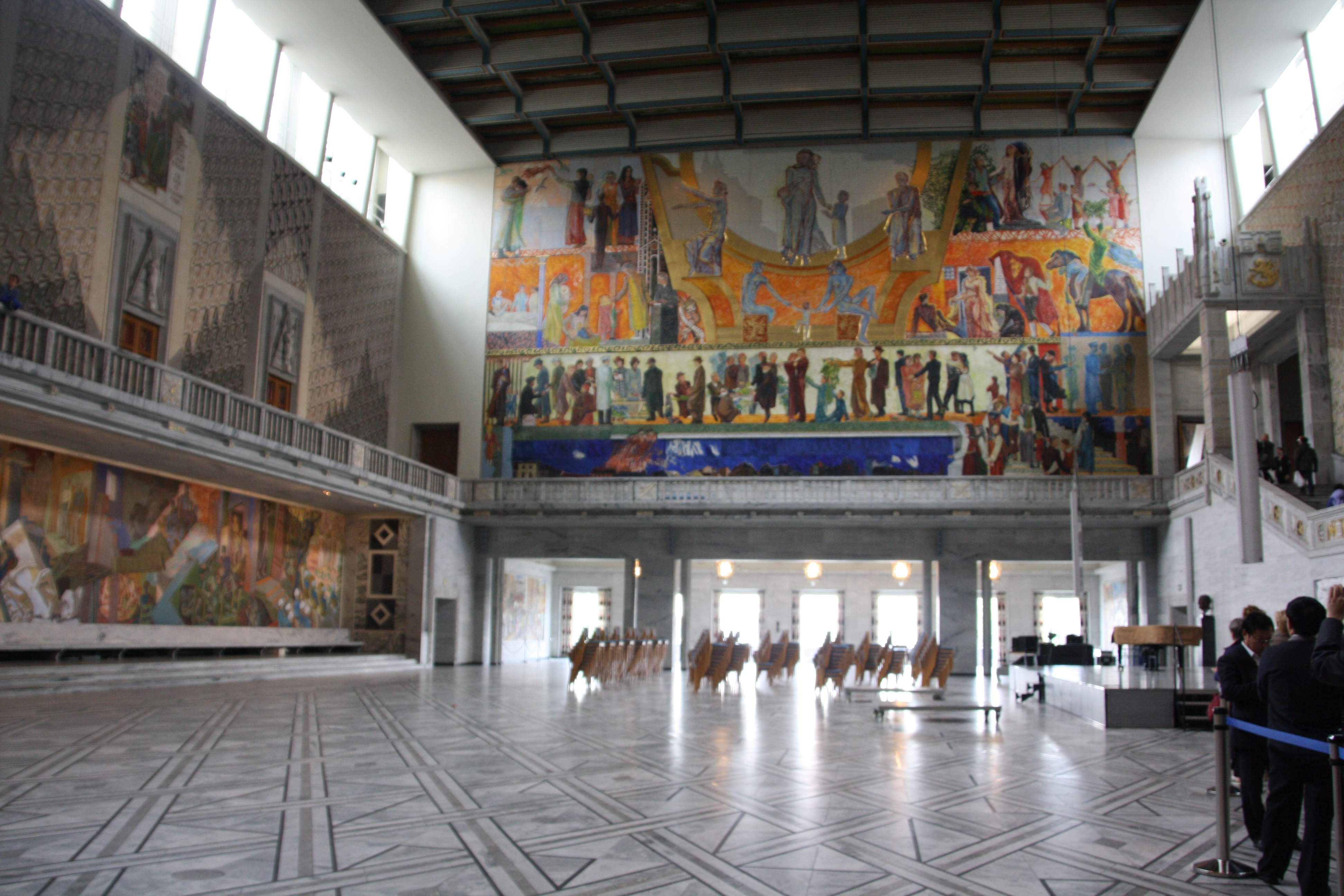
Oslo City Hall is built of red brick and has two towers, one 63 meters tall and other 66 meters tall. The bricks used are larger than what was typical at the time of construction, but are roughly the same size as bricks used in the middle ages. The eastern tower has a set of 49 bells. Various events and ceremonies take place in the building, including the Nobel Peace Prize ceremony which takes place every December.
It looks to us like a soviet style building and is not very pretty on the outside but is nice on the inside
The inside of the city hall is much nicer than the outside.
Royal Palace
The Royal Palace (Norwegian: Slottet or formally Det kongelige slott) was built in the first half of the 19th century as the Norwegian residence of the French-born King Charles III of Norway, who reigned as king of Norway and Sweden. The palace is the official residence of the current Norwegian monarch while the Crown Prince resides at Skaugum in Asker west of Oslo.
The palace is located at the end of Karl Johans gate in central Oslo and is surrounded by the Palace Park with the Palace Square in the front.

Norwegian Parliament
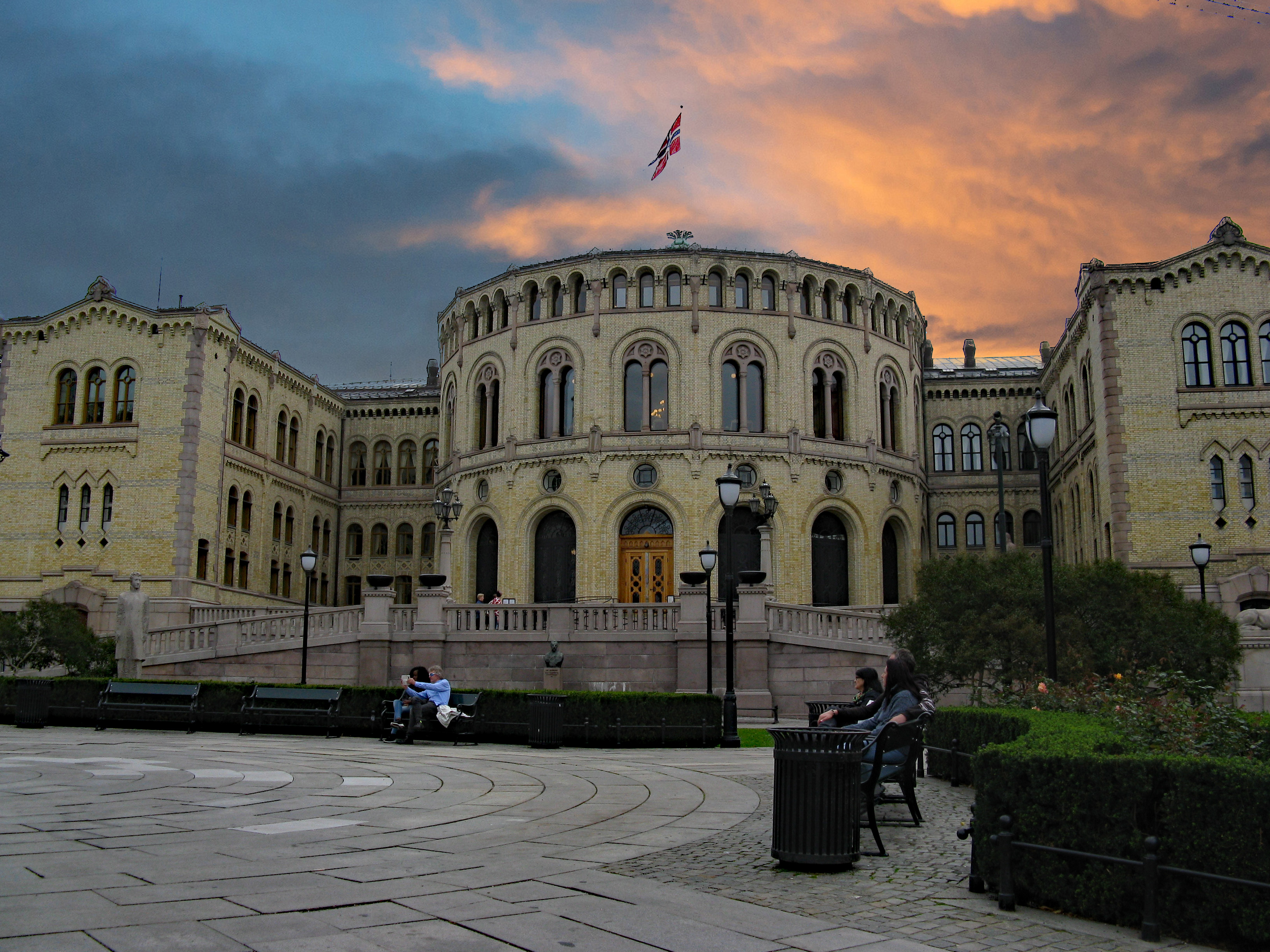
The Storting is the supreme legislature of Norway, established in 1814 by the Constitution of Norway. The parliament has 169 members, and is elected every four years based on party-list proportional representation in nineteen constituencies. A member of the Storting is known in Norwegian as a stortingsrepresentant, literally “Storting representative”.
She Lies
She Lies is a public sculpture by Monica Bonvicini made of stainless steel and glass panels measuring approximately 12 metres (39 ft) by 17 metres (56 ft) by 16 metres (52 ft) next to the Oslo Opera House, in Norway.
It is a permanent installation, floating on the water in the fjord on a concrete platform, 12 metres (39 ft) above the water surface. The sculpture turns on its axis in line with the tide and wind, offering changing experiences through reflections from the water and its transparent surfaces.

Christiania Torv
Historic square in Rådhusgata in Oslo’s old city centre, known as Kvadraturen.
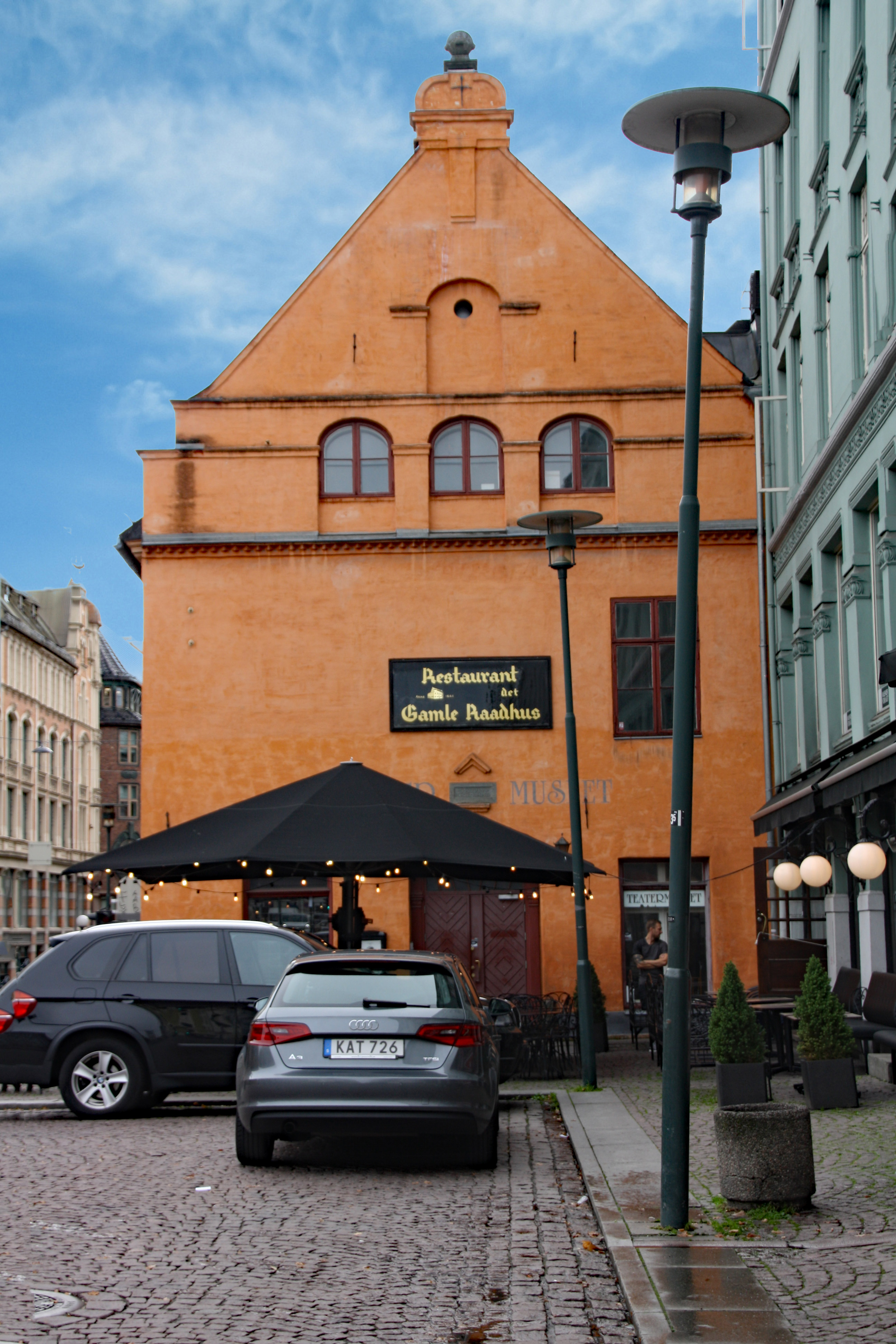
Some of Oslo’s oldest buildings are found around this square, including Christiania’s first town hall from 1641 (today Gamle Raadhus Restaurant).
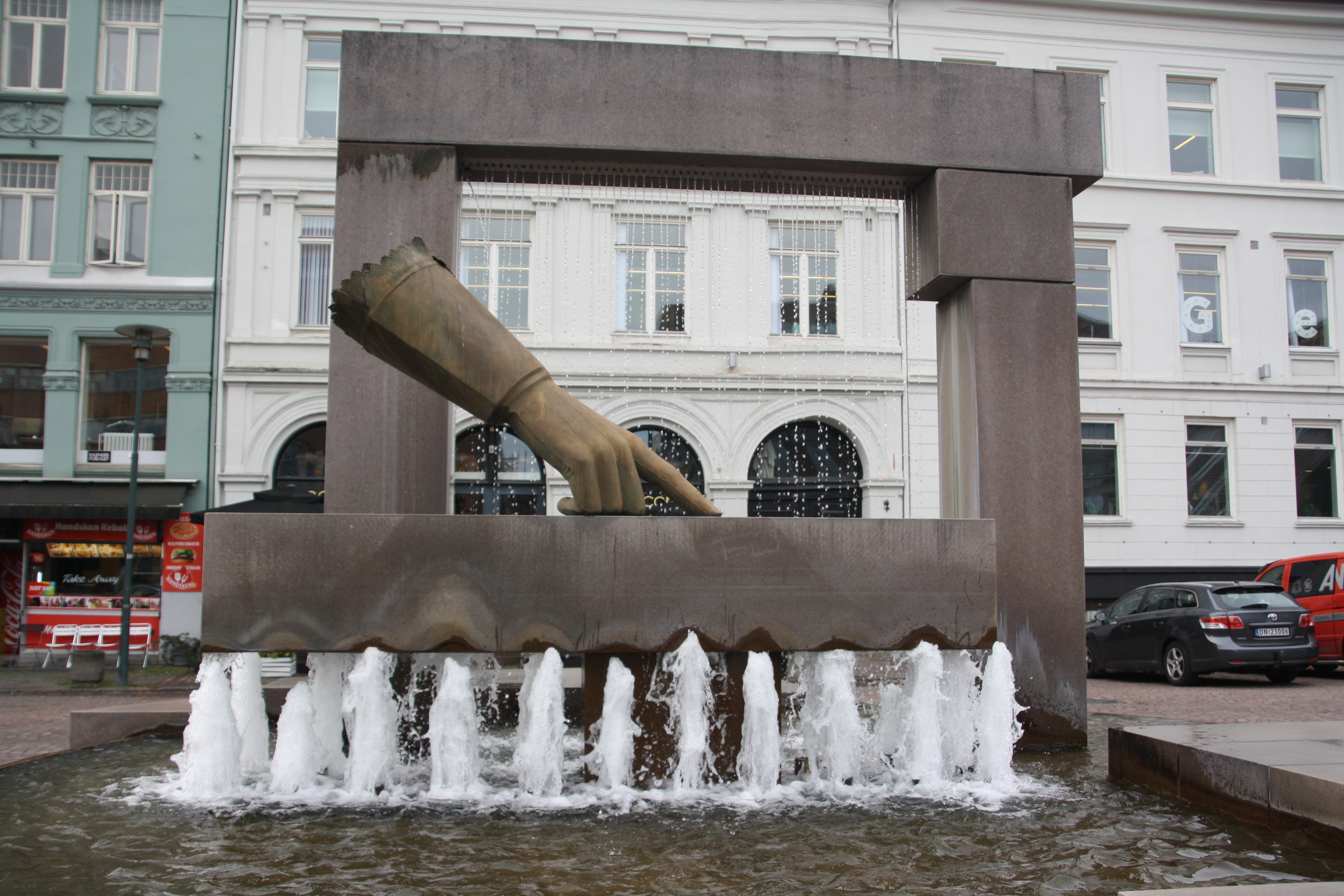
The square is known for its fountain, with a sculpture of a hand pointing to the ground. After the big town fire in 1624, the Danish-Norwegian king Christian IV decided to rebuild the town in this area (and name it after himself). He supposedly pointed to this spot and said: “The new town will lie here!”.
Akershus Fortress
Akershus Fortress or Akershus Castle is a medieval castle that was built to protect and provide a royal residence for Oslo. The castle has also been used as a military base, a prison and government offices.
It is not known exactly when the construction of the castle started but it is believed that it took place around the late 1290s, by King Haakon V, replacing Tønsberg as one of the two most important Norwegian castles of the period (the other being Båhus). It was constructed in response to the Norwegian nobleman, Earl Alv Erlingsson of Sarpsborg’s earlier attack on Oslo that occurred in 1287. In the aftermath of the attack, it became clear that the city’s existing defences weren’t effective and therefore, a stronger defensive centre was needed.
The castle is mentioned in written sources for the first time in 1300 in a letter from King Haakon to a church in Oslo. However, the letter does not mention how far the construction of the castle had progressed by then.
The fortress has successfully survived all sieges, primarily by Swedish forces, including those by forces led by Charles XII in 1716.

 Heather and Keith's travels