It’s the perfect irony of Prague: you are lured here by the past, but compelled to linger by the present and the future. Fill your days with ‘its illustrious artistic and architectural heritage – from Gothic and Renaissance to art nouveau and cubist. If Prague’s seasonal legions of tourists wear you down, that’s OK. Just drink a glass of the country’s legendary lager, relax and rest reassured that quiet moments still exist: a private dawn on Charles Bridge, the glorious cityscape of Stare Mesto or getting lost in the intimate lanes of Mala Strana.
Can words describe how beautiful the Old Town of Prague is? You can endlessly wander down the beautiful cobble streets and view the sites and architecture. The shopping is also good and the ice-cream I still dream about. There is a lot to see, do and experience here . A great cultural experience!
We visited in Prague in June 2014 and stayed at the Unitas Hotel, which was close to the city centre. This hotel has been a convent, the Grey Sisters of St Franciscus, and a communist secret police building where the president Vaclav Havel was incarcerated.
Charles Bridge
The Charles Bridge is an historic bridge that crosses the Vltava river in Prague. Its construction started in 1357 under the auspices of King Charles IV, and finished in the beginning of the 15th century. The bridge replaced the old Judith Bridge built 1158–1172 that had been badly damaged by a flood in 1342. This new bridge was originally called the Stone Bridge (Kamenný most) or the Prague Bridge (Pražský most) but has been the “Charles Bridge” since 1870. As the only means of crossing the river Vltava (Moldau) until 1841, the Charles Bridge was the most important connection between Prague Castle and the city’s Old Town and adjacent areas. This “solid-land” connection made Prague important as a trade route between Eastern and Western Europe.
The bridge is 621 metres (2,037 ft) long and nearly 10 metres (33 ft) wide, following the example of the Stone Bridge in Regensburg, it was built as a bow bridge with 16 arches shielded by ice guards. It is protected by three bridge towers, two of them on the Lesser Quarter side and the third one on the Old Town side. The Old Town bridge tower is often considered to be one of the most astonishing civil gothic-style buildings in the world. The bridge is decorated by a continuous alley of 30 statues and statuaries, most of them baroque-style, originally erected around 1700 but now all replaced by replicas.
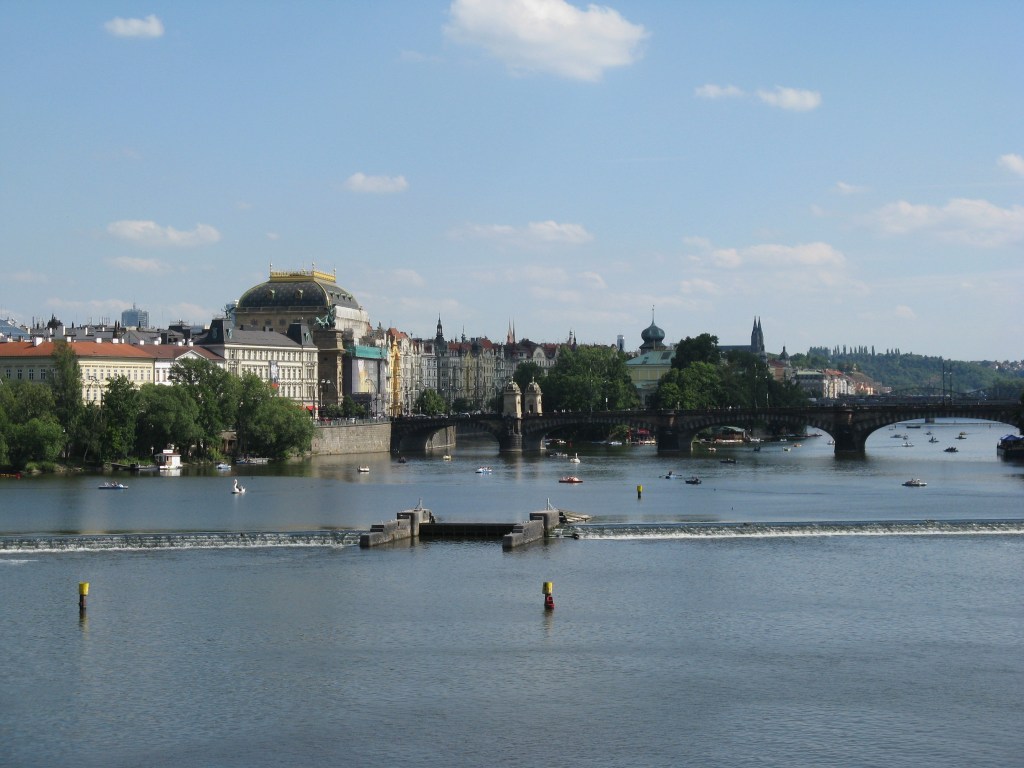
Old Town Square
Old Town Square is a historic square in the Old Town quarter of Prague and is located between Wenceslas Square and the Charles Bridge.
The square features various architectural styles including the Gothic Church of Our Lady before Týn, which has been the main church of this part of the city since the 14th century; the church’s towers are 80 m high. Prague Orloj is a medieval astronomical clock located on the Old Town Hall.
The Baroque St. Nicholas Church is another church located in the square, while the tower of the Old Town Hall offers a panoramic view of Old Town. An art museum of the Czech National Gallery is located in Kinský Palace.
The square’s centre is home to a statue of religious reformer Jan Hus, who for his beliefs was burned at the stake in Constance, this led to the Hussite Wars. The statue known as the Jan Hus Memorial was erected on July 6, 1915 to mark the 500th anniversary of his death.
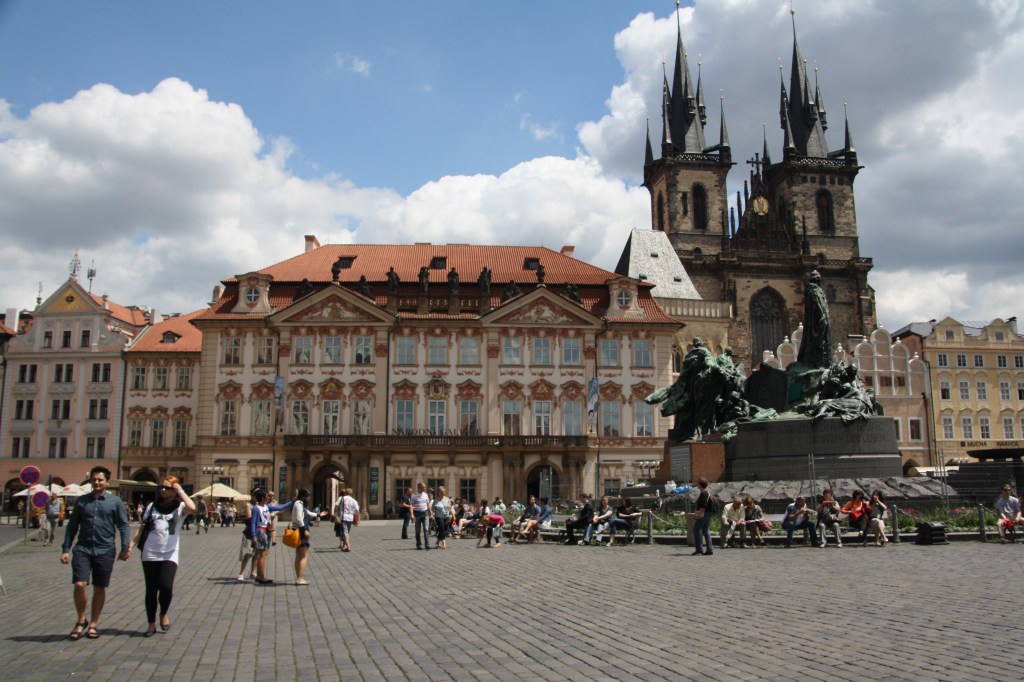
Astrological Clock
The Prague astronomical clock, or Prague orloj is a medieval astronomical clock. The clock was first installed in 1410, making it the third-oldest astronomical clock in the world and the oldest one still operating.
The Orloj is mounted on the southern wall of Old Town Hall in the Old Town Square. The clock mechanism itself has three main components: the astronomical dial, representing the position of the Sun and Moon in the sky and displaying various astronomical details; “The Walk of the Apostles”, a clockwork hourly show of figures of the Apostles and other moving sculptures—notably a figure of Death (represented by a skeleton) striking the time; and a calendar dial with medallions representing the months. According to local legend, the city will suffer if the clock is neglected and its good operation is placed in jeopardy; a ghost, mounted on the clock, was supposed to nod its head in confirmation. According to the legend, the only hope was represented by a boy born on New Year’s night.
The oldest part of the Orloj, the mechanical clock and astronomical dial, dates back to 1410 when it was made by clockmaker Mikuláš of Kadaň and Jan Šindel, then later a professor of mathematics and astronomy at Charles University. The first recorded mention of the clock was on 9 October 1410.Later, presumably around 1490, the calendar dial was added and the clock facade was decorated with gothic sculptures.
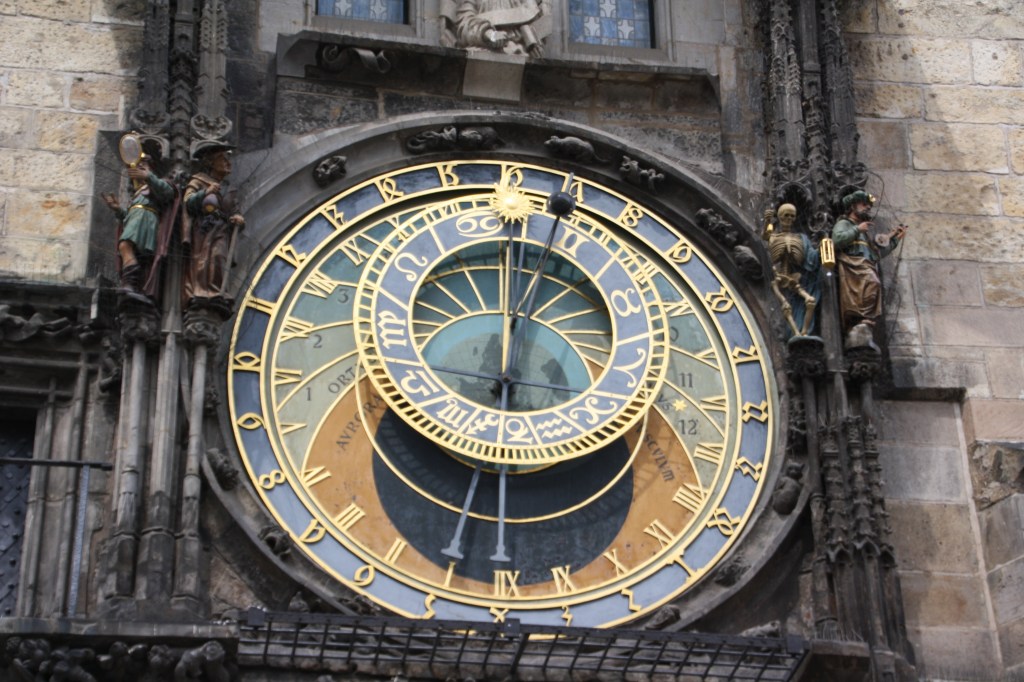
Old Town Hall
The Old Town Hall in Prague is one of the city’s most noteworthy monuments. It is located in Old Town Square.
In 1338 the councilors of the Old Town bought a magnificent patrician house by the family of Volflin and adapted it for their purposes. During centuries the original building of the Town Hall practically disappeared under the addition reconstructions of later years and one of the external remnant of the original structure today is the Gothic stone portal with mouldings in the western part of the building.
The burghers of the Old Town extended their original Town Hall towards the west by buying the adjoining house and they started the construction of a stone tower on a square plan. The tower, which was the highest in the city in the Middle Ages, was completed in 1364 and the following centuries hardly left any traces on the structure.
The Town Hall is one very unusual historical object, because it is made out of many different smaller houses. The expansion continued in 1458 when so called “Mikes’ house” was added to the west side. The Council Chamber in the east wing was vaulted with the net vault, which was supported with 2 pillars, at the end of the 15th century.
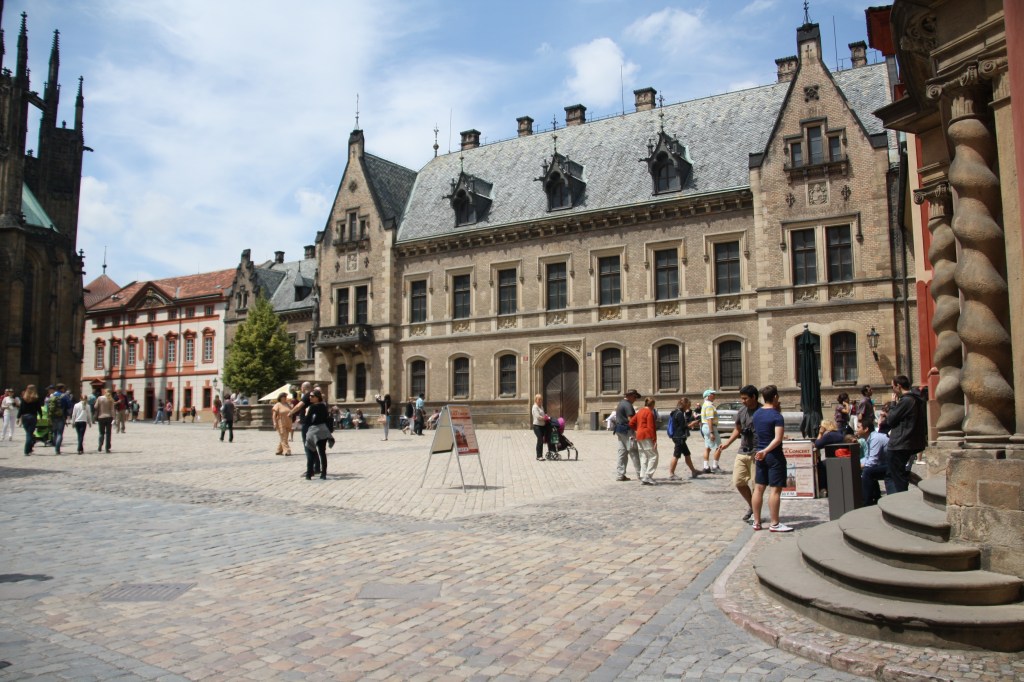
Prague Castle
Prague Castle is a castle complex dating from the 9th century. It is the official residence of the President of the Czech Republic. The castle was a seat of power for kings of Bohemia, Holy Roman emperors, and presidents of Czechoslovakia. The Bohemian Crown Jewels are kept within a hidden room inside it.
According to the Guinness Book of Records, Prague Castle is the largest ancient castle in the world, occupying an area of almost 70,000 m2, at about 570 meters in length and an average of about 130 meters wide. The castle is among the most visited tourist attractions in Prague attracting over 1.8 million visitors annually.
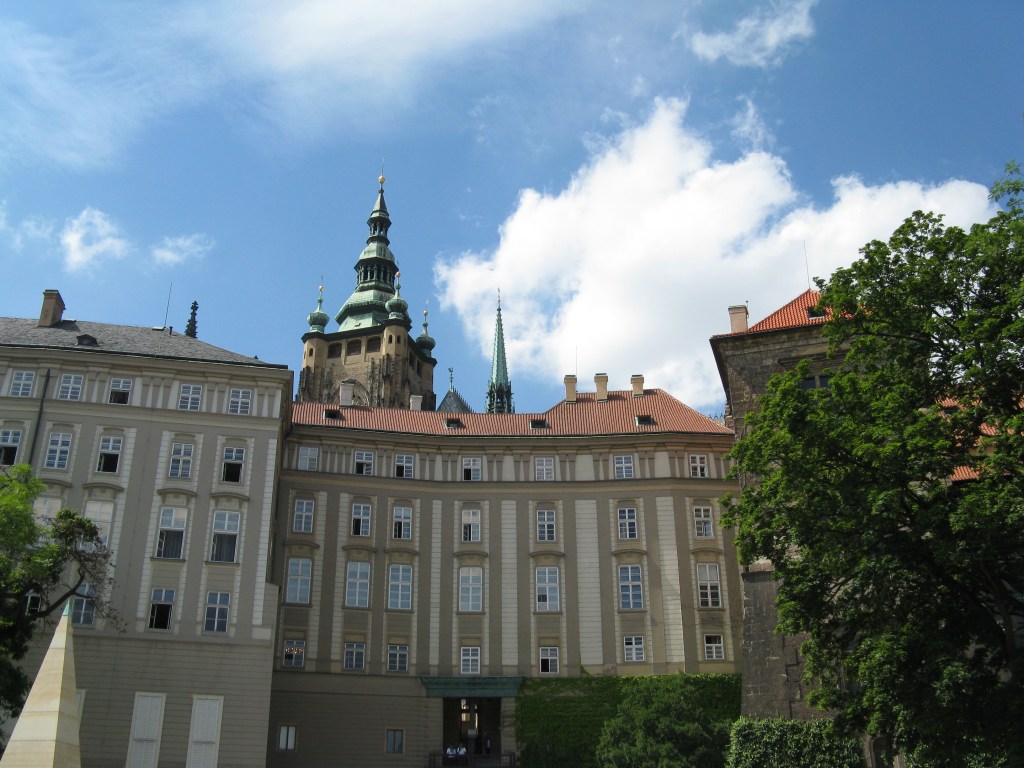
Wenceslas Square
Wenceslas Square is one of the main city squares and the centre of the business and cultural communities in the New Town of Prague. Many historical events occurred there, and it is a traditional setting for demonstrations, celebrations, and other public gatherings. The square is named after Saint Wenceslas, the patron saint of Bohemia. It is part of the historic centre of Prague, a World Heritage Site.
Formerly known as Koňský trh (Horse Market), for its periodic accommodation of horse markets during the Middle Ages, it was renamed Saint Wenceslas square in 1848 on the proposal of Karel Havlíček Borovský.
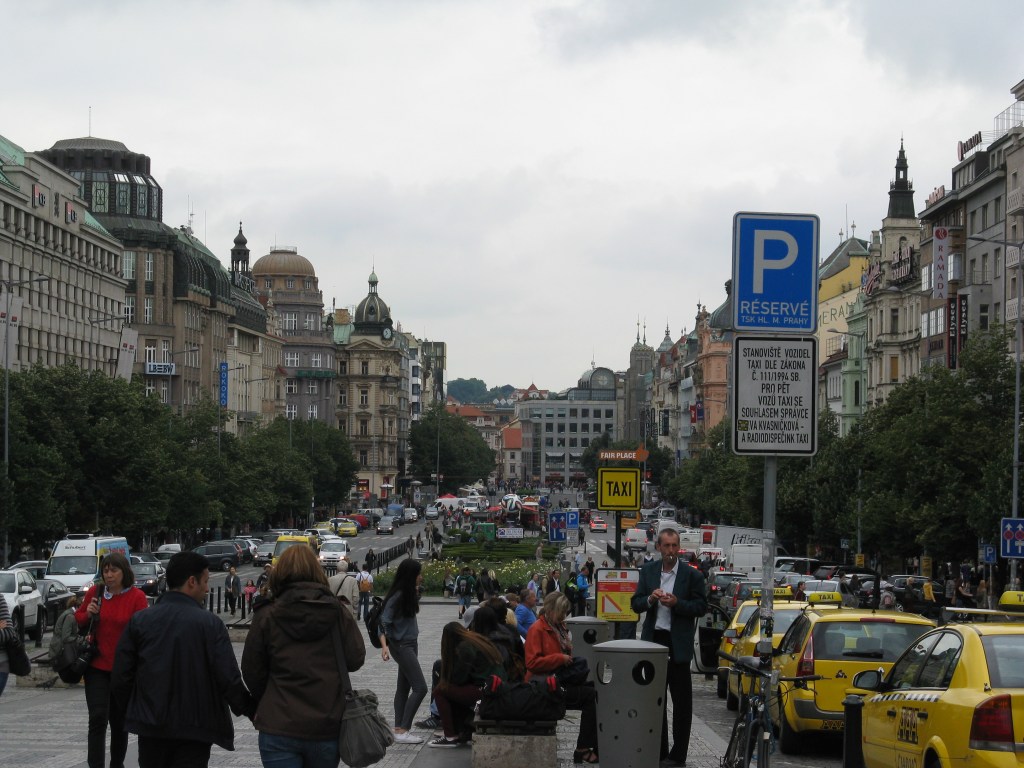
St Nicholas Church
The Church of Saint Nicholas is a Baroque church in the Lesser Town of Prague. It was built between 1704-1755 on the site where formerly a Gothic church from the 13th century stood, which was also dedicated to Saint Nicholas.
The original Gothic Parish church of Saint Nicholas stood on the site of the present church which dated from the 13th century. In the second half of the 17th century the Jesuits decided to build a new church designed by Giovanni Domenico Orsi. A partial impression of the original planned appearance of the church at the time the Jesuits chose the initial plans by Giovanni Domenico Orsi in 1673 and laid the foundation stone is provided by the Chapel of St Barbara, which was built first so that mass could be celebrated. The church was built in two stages during the 18th century. From 1703 till 1711 the west façade, the choir, the Chapels of St Barbara and St Anne were built.
During the communist era the church tower was used as an observatory for State Security since from the tower it was possible to keep watch on the American and Yugoslav embassies respectively and the access route to the West German embassy.
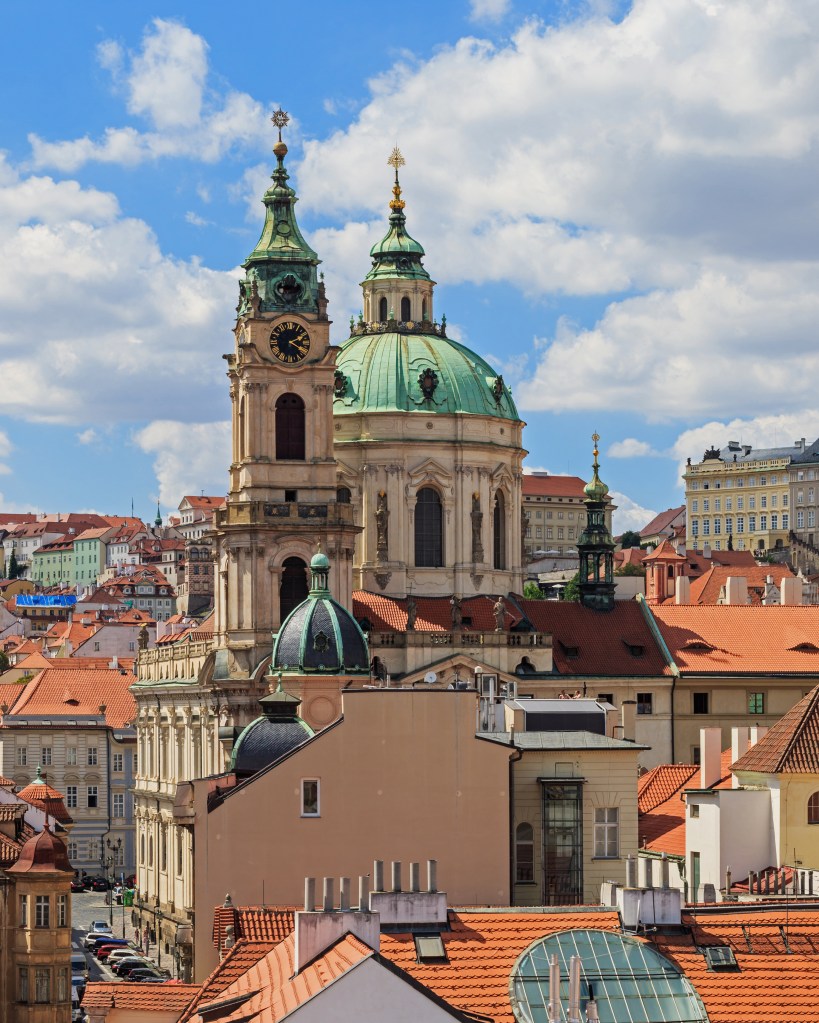
Golden Lane
Golden Lane is a street situated at the Prague Castle. Its name is connected with 16th century alchemists, who had to look there, according to legends, for a reaction to produce gold. Even though the lane was temporarily called the Street of Alchemists or Alchemists’ Alley, alchemists have never worked or lived there.
Golden Lane consist of tiny colored houses. Today it is a part of small and big castle ring (i.e. entrance is available for paying a fee), while from the closing hour of Prague Castle interiors it is open for free. Nowadays there are many souvenir shops in the houses and there is a medieval museum of armory within the former 14th-century fortification accessible from the Golden Lane.
House no. 22 is connected with Franz Kafka, Czech-Jewish writer, who used this house for approximately two years (from 1916 to 1917) coming here to write in peace.
Jaroslav Seifert, who won the Nobel Prize in Literature in 1984 and who was one of the signatories of Charter 77, lived there in 1929.[2]
Golden Lane is connected with Dalibor Tower, which used to be a dungeon.
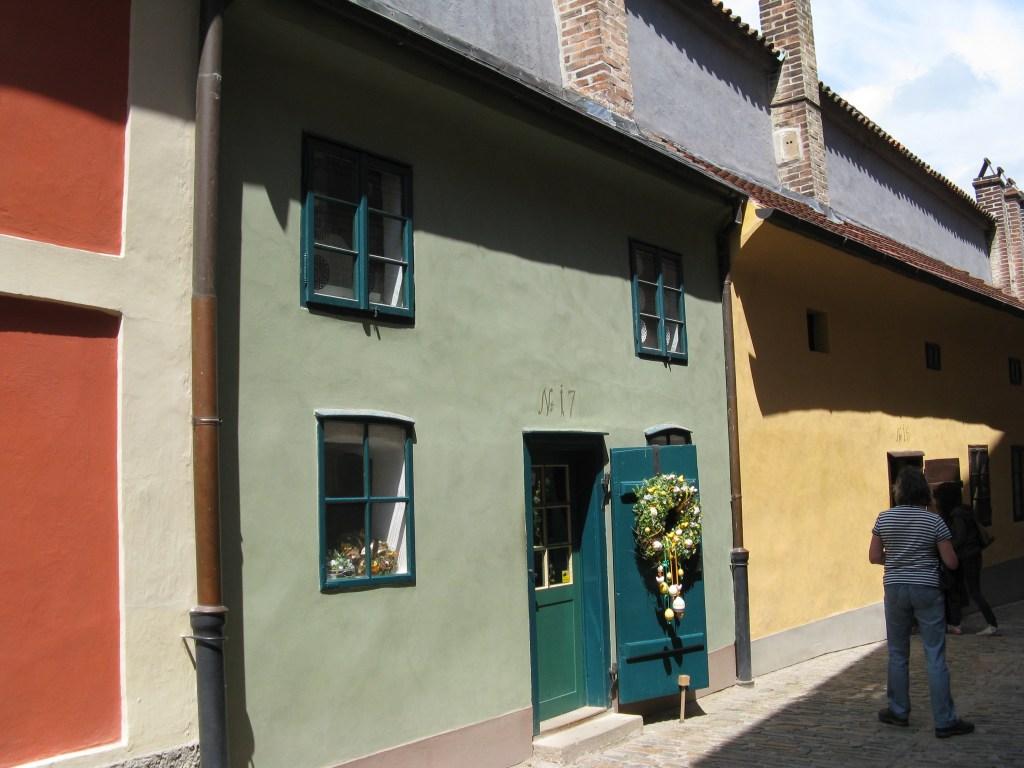
St Vitius Cathedral
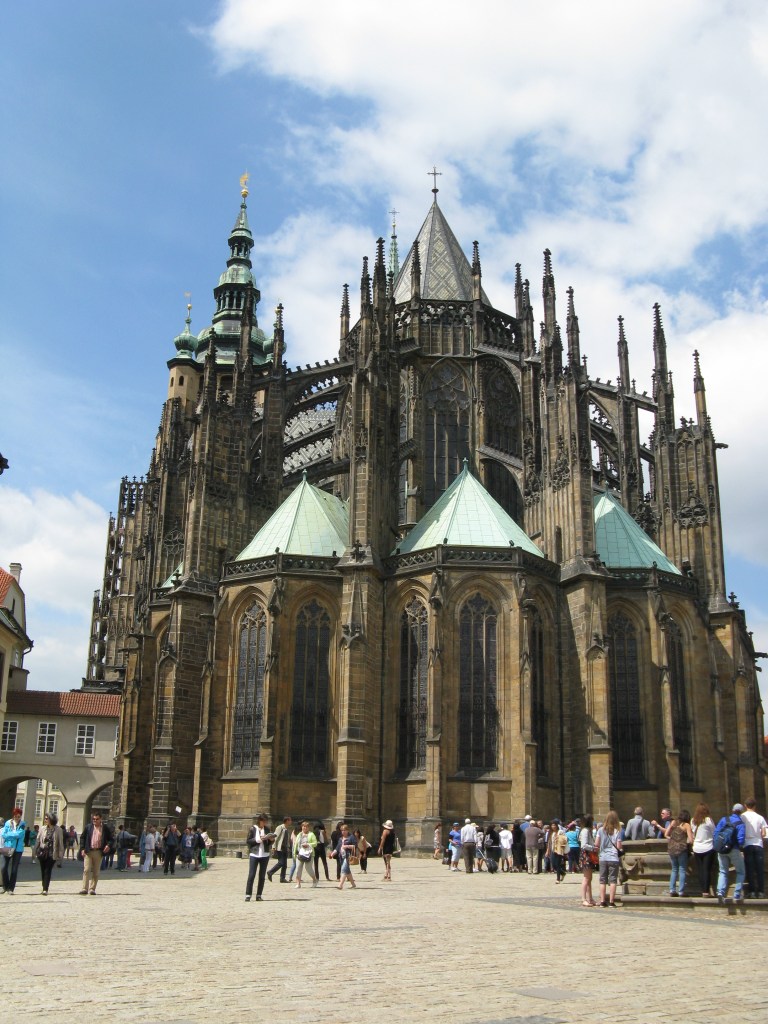
The Metropolitan Cathedral of Saints Vitus, Wenceslaus and Adalbert is a Roman Catholic metropolitan cathedral in Prague, the seat of the Archbishop of Prague. Up to 1997, the cathedral was dedicated only to Saint Vitus, and is still commonly named only as St. Vitus Cathedral.
This cathedral is an excellent example of Gothic architecture and is the biggest and most important church in the country. Located within Prague Castle and containing the tombs of many Bohemian kings and Holy Roman Emperors, the cathedral is under the ownership of the Czech government as part of the Prague Castle complex.Cathedral dimensions are 124 × 60 meters, the main tower is 96.5 meters high, front towers 82 m, arch height 33.2 m.
Old and the new Synagogue
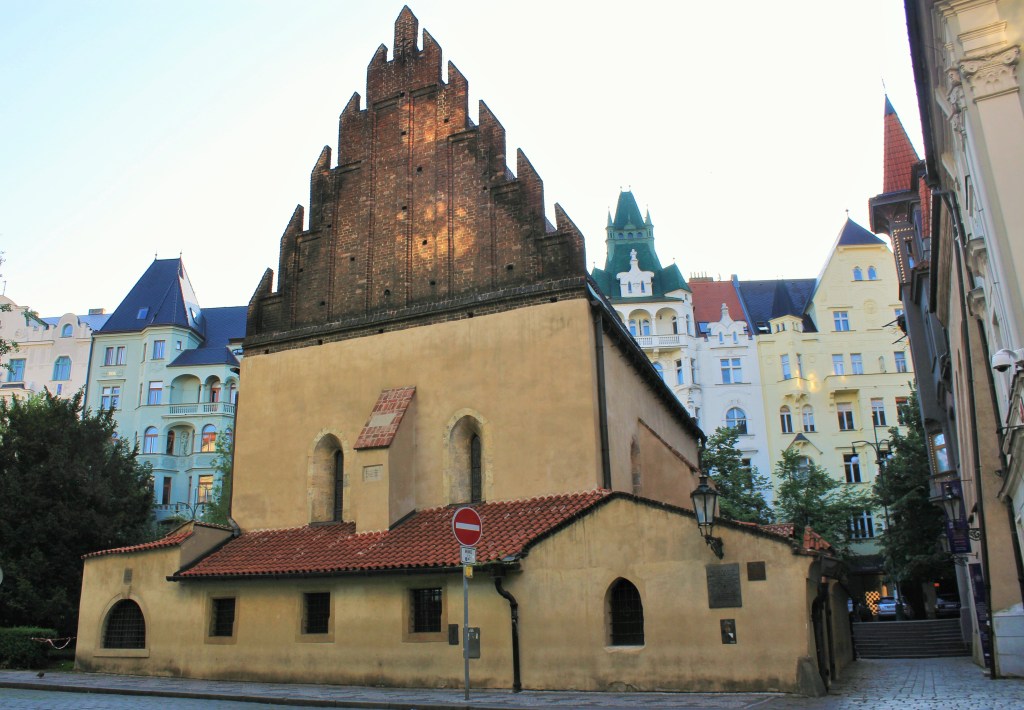
The Old New Synagogue or Altneuschul situated in Josefov, Prague, is Europe’s oldest active synagogue.It is also the oldest surviving medieval synagogue of twin-nave design.
Completed in 1270 in gothic style, it was one of Prague’s first gothic buildings. A still older Prague synagogue, known as the Old Synagogue, was demolished in 1867 and replaced by the Spanish Synagogue.
The synagogue was originally called the New or Great Synagogue and later, when newer synagogues were built in the 16th century, it became known as the Old-New Synagogue. Another explanation derives the name from the Hebrew עַל תְּנַאי (al tnay), which means “on condition” and sounds identical to the Yiddish “alt-nay,” or old-new. According to legend angels have brought stones from the Temple in Jerusalem to build the Synagogue in Prague — “on condition” that they are to be returned, when the Messiah comes, i.e., when the Temple in Jerusalem is rebuilt and the stones are needed.[citation needed]
 Heather and Keith's travels