Iceland is known as the land of fire and ice because of its volcanoes and glaciers and when you go outside the city you can see why.
Reykjavik is the world’s most northerly capital city but it is probably not the coldest. The capital lies on the gulf stream and is therefore hard to believe that the minimum average temperature is only zero degrees bearing in mind how far north it is in. In summer the average is only 13 Centigrade.
We visited in December 2017 and stayed at Hotel Orkin, which was a short 10 minutes walk to the central shopping area.
Arriving in Iceland
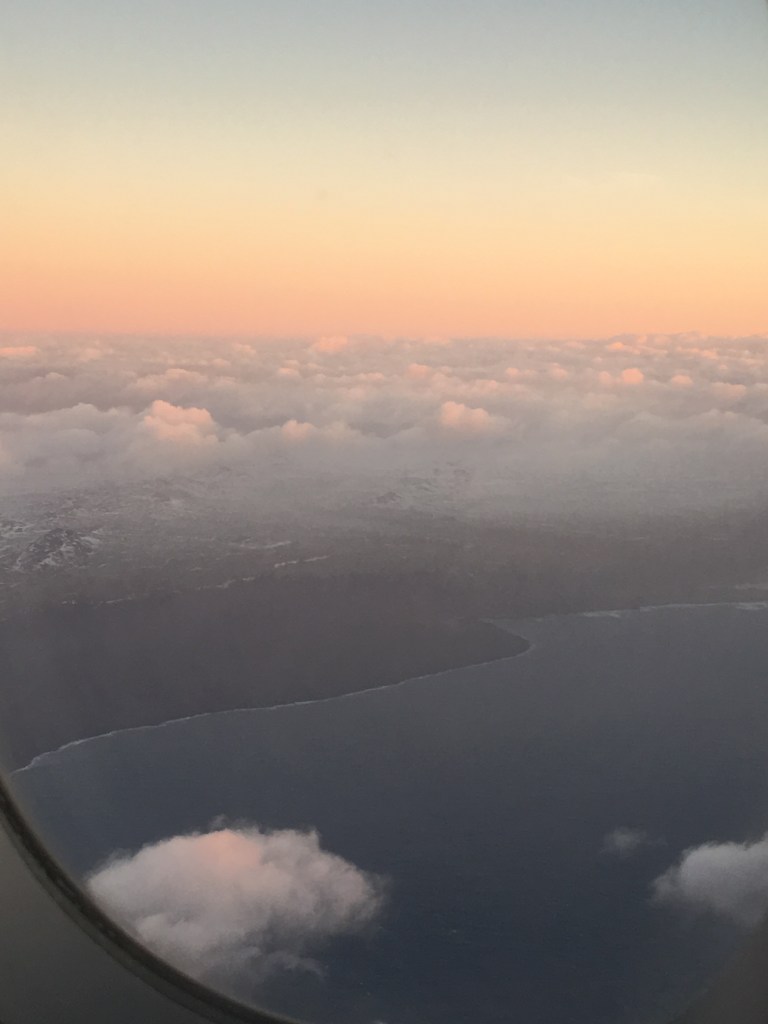
The main airport which is used for flights from the UK is Keflavik Airport, 50 km southwest of Reykjavik. We arrived just as the sun rises at about 11 am.
Reykjavik
It’s no secret by now that Iceland’s laid-back, diminutive capital punches way above its weight on pretty much every level. It’s ostensibly a cosmopolitan and highly progressive fishing village, home to more than half of the country’s 300,000 citizens, as well as a slew of expats and a constant stream of visitors all year round.
Its tiny central area can be walked in less than a day and yet a surprisingly diverse array of cultural treats — first-class museums featuring medieval sagas and thrilling Viking history, edgy art galleries and particularly peppy music and nightlife scenes — mean you can easily spend weeks here without getting bored. Reykjavik is an ideal base as there are a range of day-trip options to geothermal pools, lunar lava fields, majestic waterfalls and spouting geysers add to Reykjavik’s undeniable charm.
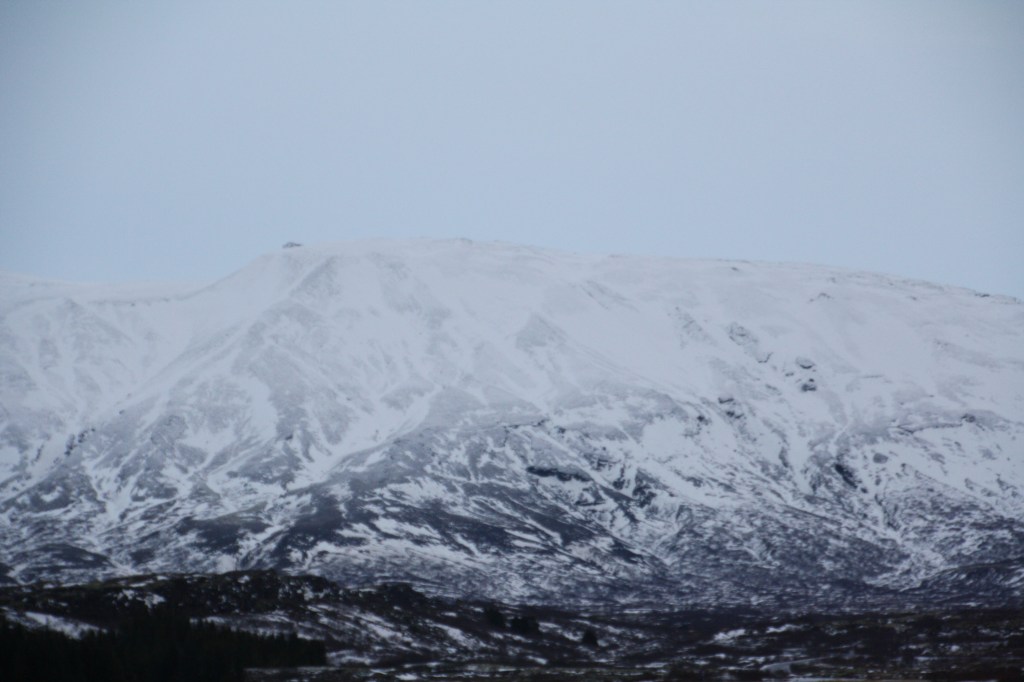
You look one way and you see a city and then turn around 180 degrees and you have snow capped mountains.
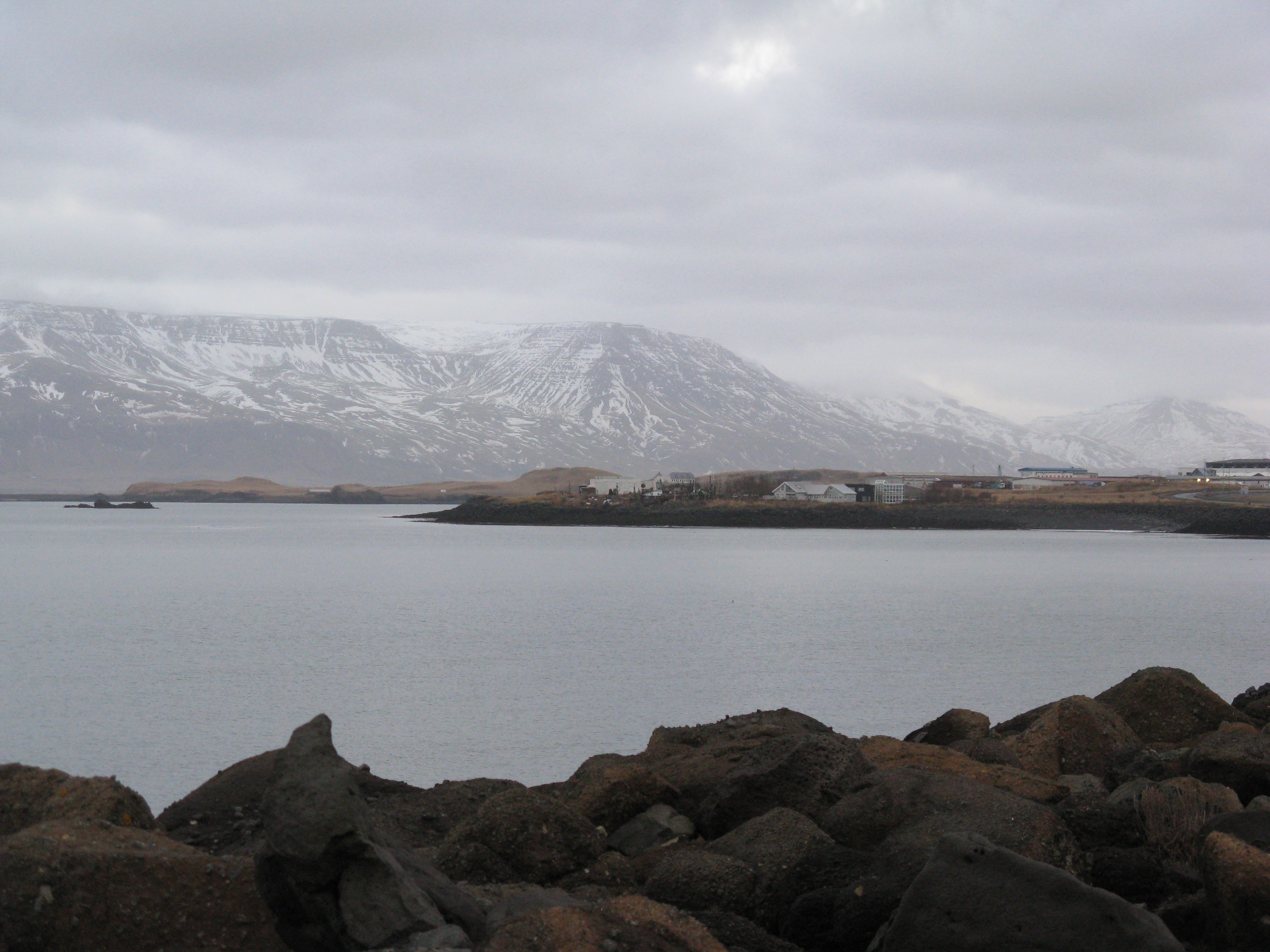
In the centre is the city’s pretty lake, Tjörnin, where you can see lots of bird life and surrounding views. In the winter people skate, play ice hockey and bizarrely play football as well.

The main shopping street typifies Icelandic’s use colourful buildings which are to compensate for the long cold dark winter nights.. When you walk down it, it is hard to believe that you are in a capital city it feels more like a small English fishing town.
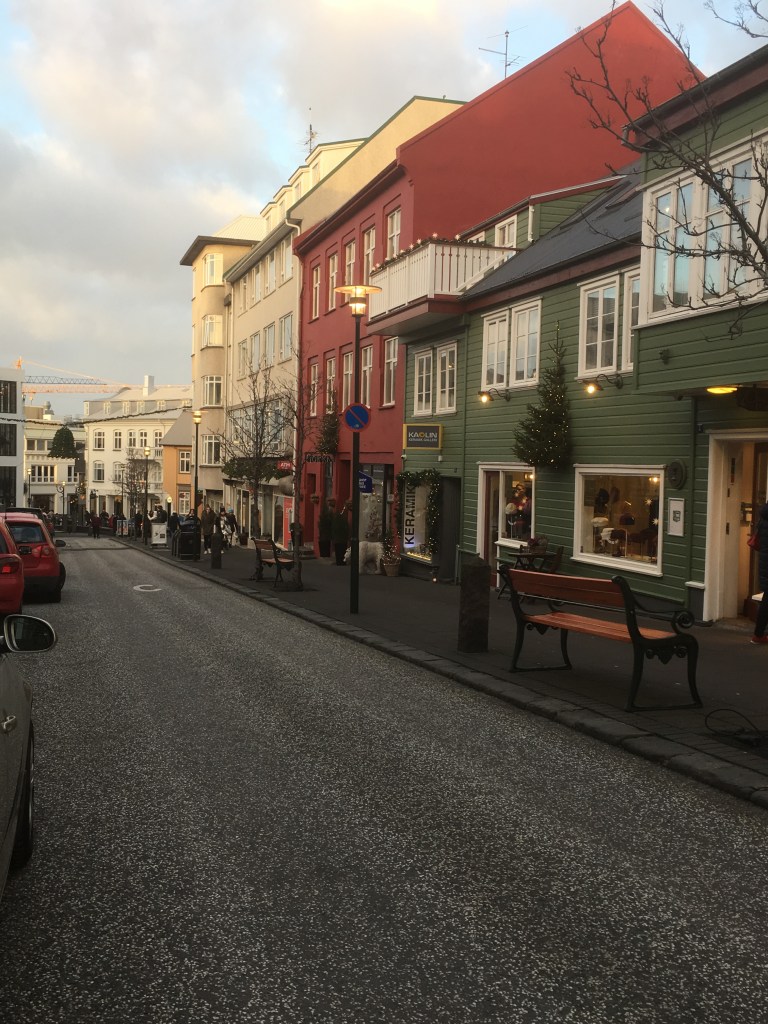
In Reykjavik the houses were originally made of wood as this was the only available material. The use of wood for both building and heating meant that any forests that they had were extinguished. There are very few trees but there are attempts to re-forest using imported trees from Norway, Scotland and North America.
There was a great fire in Reykjavik which destroyed a large number of wooden properties and it was decreed that no further wooden buildings could be built. The only properties remaining are in the old town and these only survived because they were built apart from each other having small gardens around them.
The houses were very cold and so to protect the buildings against the harsh conditions they were covered in corrugated iron.

One of the meetings between Ronald Reagan and Mikhail Gorbachev which was to bring an end to the cold war took place in Reykjavik.
In recognition of this Mikhail Gorbachev has a statue in his honour. We never found an equivalent one for Ronal Reagan.
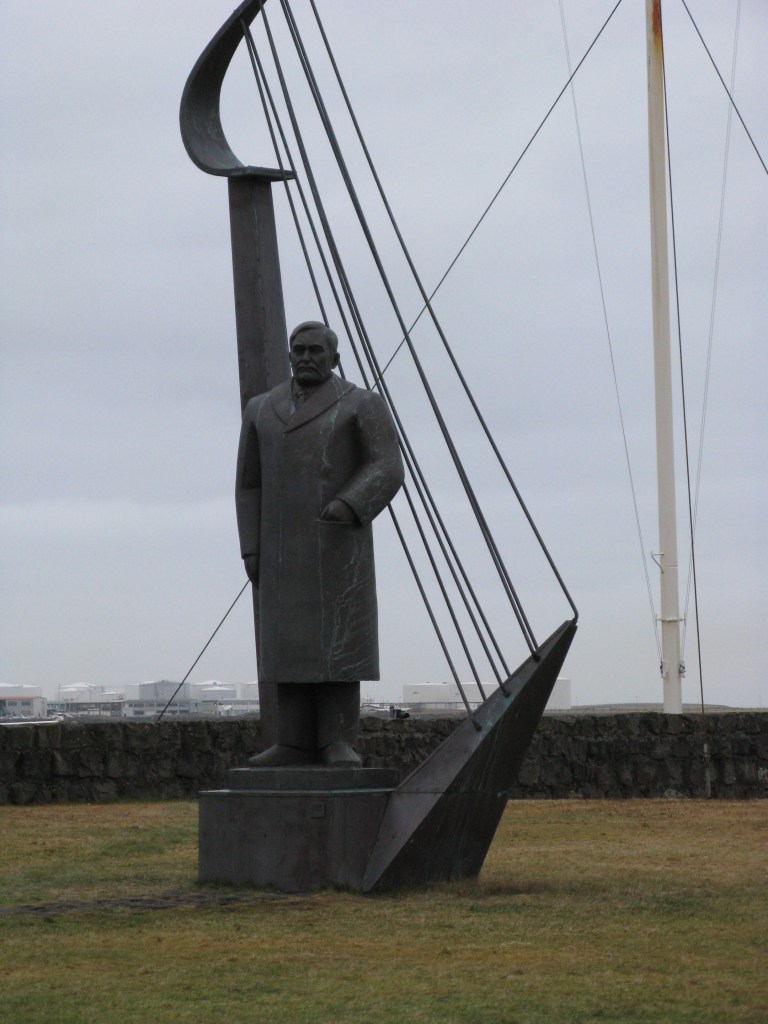
The picture below is Solfar (Sun Voyager) and is described as a dreamboat, or an ode to the Sun. The artist intended it to convey the promise of undiscovered territory, a dream of hope, progress and freedom.

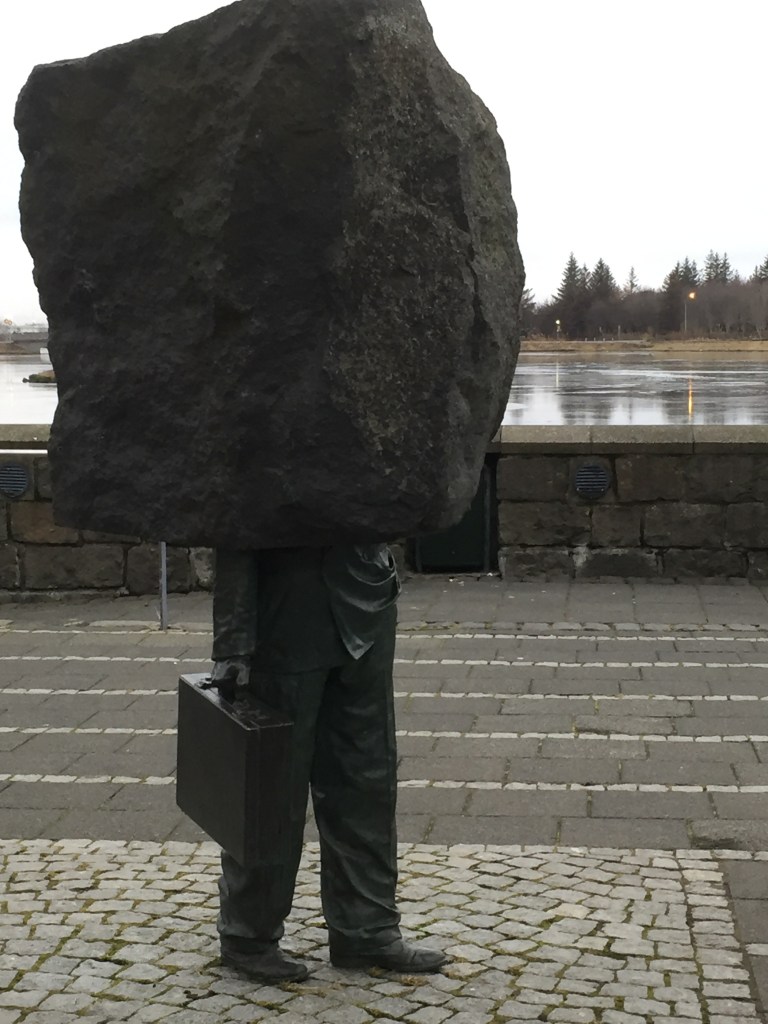
In Reykjavik there are many statues the one below is a dedication to the unknown bureaucrat and was sculpted by Magnus Thomasson.
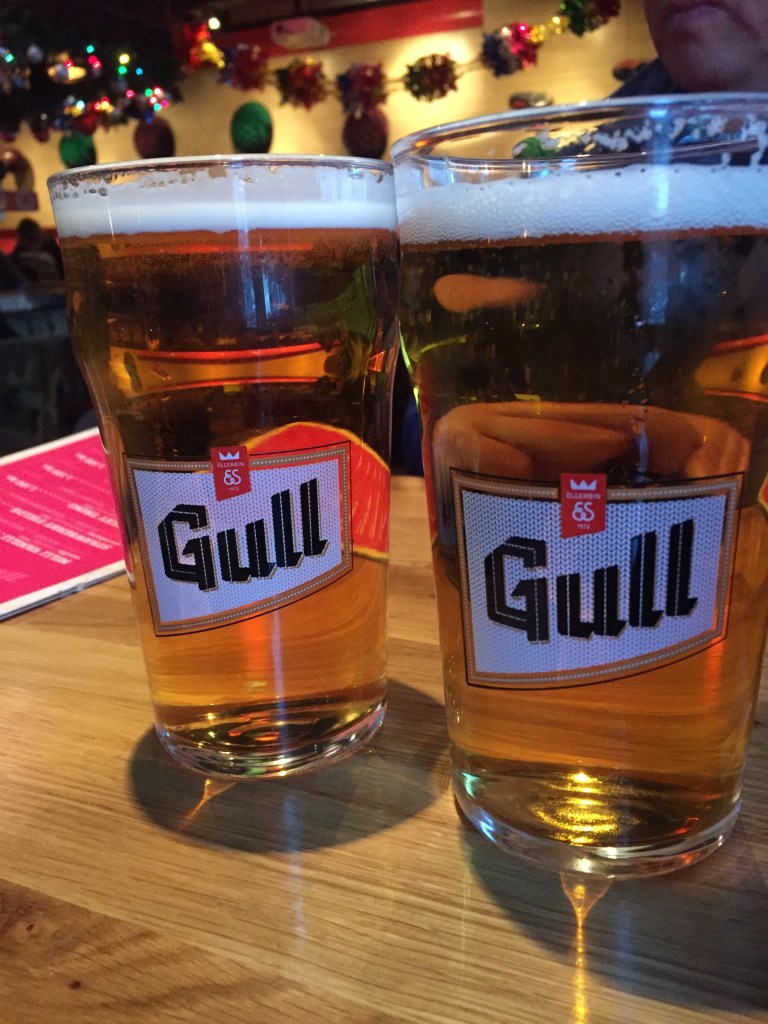
There are lots of bars in Reykjavik which are surprisingly busy given the cost of alcohol. As the day approached dusk we found a bar at the end of the main street decked out ready for Christmas.
When we passed the bar the first time people were standing outside, obviously smokers? On closer inspection there wasn’t a cigarette in sight. When we came back just after 4 pm everyone had disappeared. It then dawned on us that this was the start of happy hour, a 37.5% discount was well worth the wait.
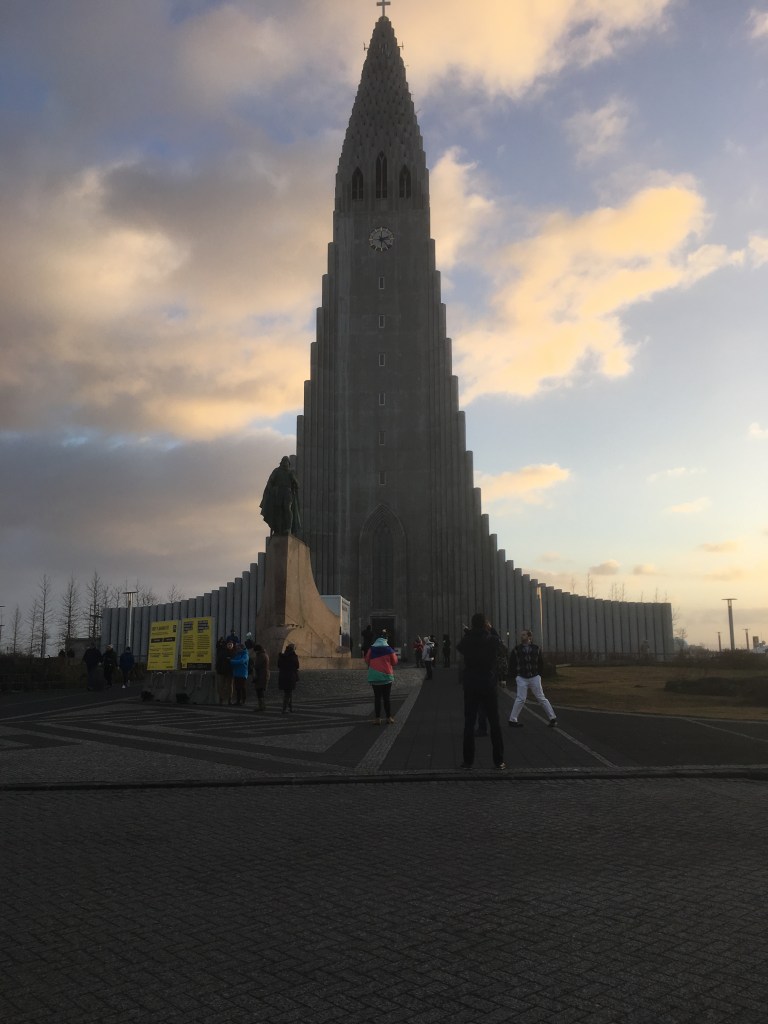
Reykjavik Cathedral
This is called Hallgrímskirkja, church of Hallgrímur, and is a Lutheran (Church of Iceland) parish church. At 74.5 metres (244 ft) high, it is the largest church in Iceland and among the tallest structures in Iceland. The church is named after the Icelandic poet and clergyman Hallgrímur Pétursson (1614–1674), author of the Passion Hymns. It took 41 years to build the church: construction started in 1945 and ended in 1986, but the landmark tower being completed long before the whole church was completed.
The church is supposed to look like a Geysir.
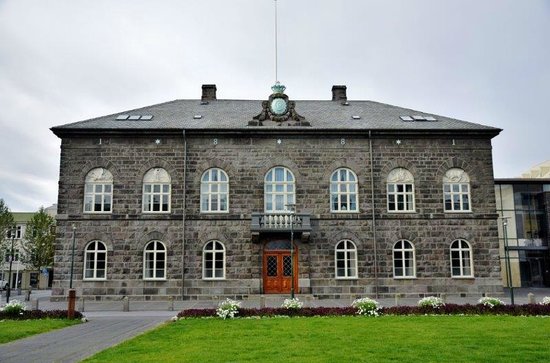
Althingi Parliament House
Alþingishúsið is a classical 19th century structure which stands by Austurvöllur in central Reykjavík. It houses Alþingi, the Icelandic parliament. The building was designed by Danish architect Ferdinand Meldahl and built using hewn dolerite from 1880 to 1881.
There is no fortifications around the parliament building, in fact the only building with any armed guards in the whole of Iceland is the American embassy.
Iceland is a member of NATO but doesn’t have it’s own military personnel, the closest it gets is the 3 coastguard ships.
Prime Ministers Office
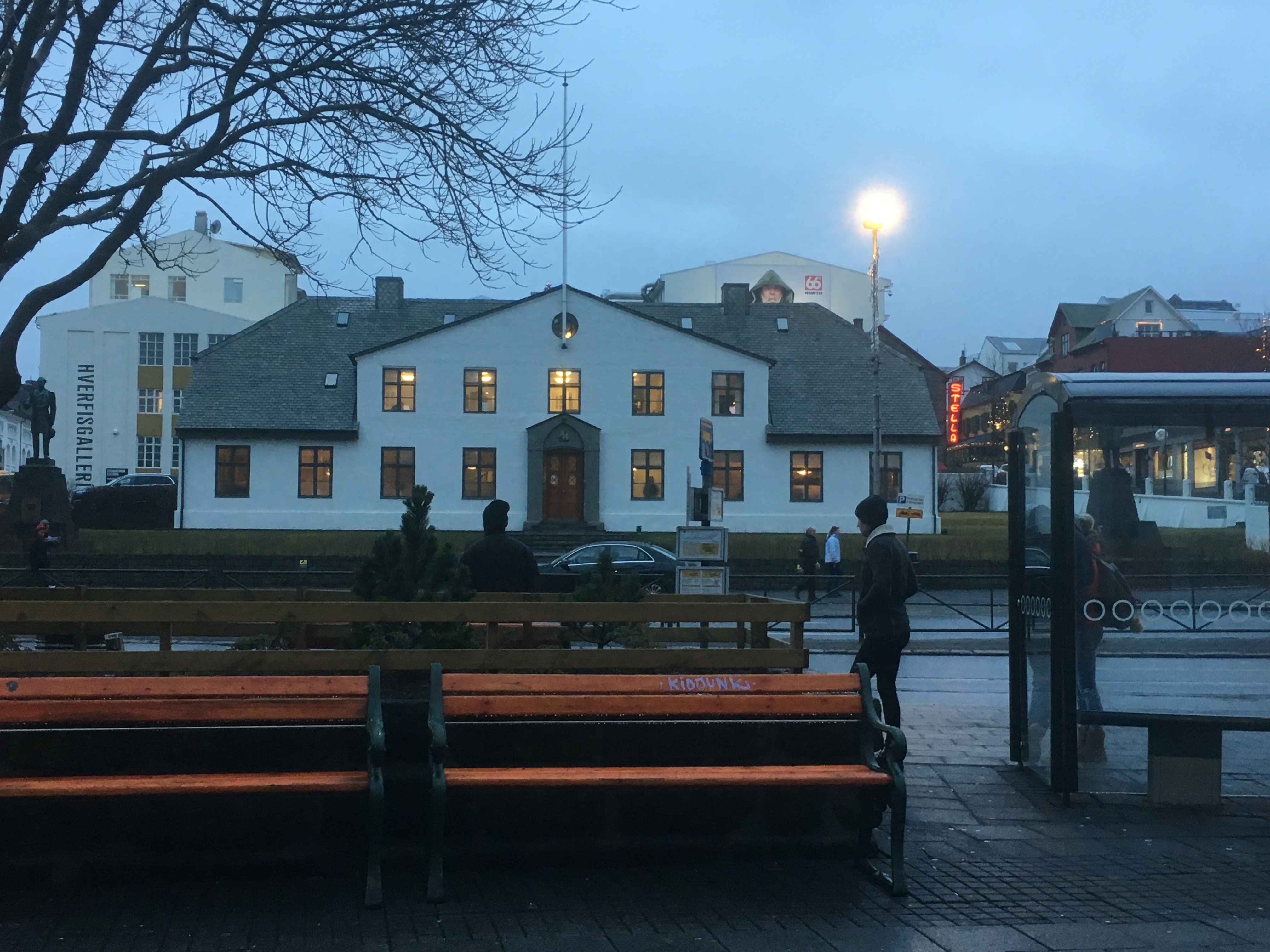
The prime minister’s office, see picture below, is located in Stjórnarráðið, where their secretariat is based and where cabinet meetings are held. Not the lavish white house that other presidents seem to have.
When we visited we saw the outgoing prime minister walking across a park to this building. There we no security guards or protection officers. In Iceland if asked who protects the prime minister the answer is we all do.
Gullfoss Waterfall
Gullfoss (“Golden Falls) is located in the canyon of Olfusa river in the southwest and is one of the most popular tourist attractions in Iceland. It is part of the golden circle which includes the Geothermal area and Pingvellir National Park.

The wide Ölfusá river rushes southward, and about a kilometre above the falls it turns sharply to the right and flows down into a wide curved three-step “staircase” and then abruptly plunges in two stages (11 metres or 36 feet, and 21 metres or 69 feet) into a crevice 32 metres (105 ft) deep. The crevice, about 20 metres (66 ft) wide and 2.5 kilometres (1.6 mi) in length, extends perpendicular to the flow of the river.


Pingvellir National Park
The national park covers an area in which the North American Tectonic Plate meets the Eurasian Tectonic Plate and is therefore an area subject to many earth quakes. The two plates have moved approximately 10 kilometres apart over the years so it is not possible to straddle both plates, unless you are a mythological Icelandic Giant.

Every time the plates move apart, about 20 cm each year, they are filled with magma from the earth’s crust, according to our guide that is.
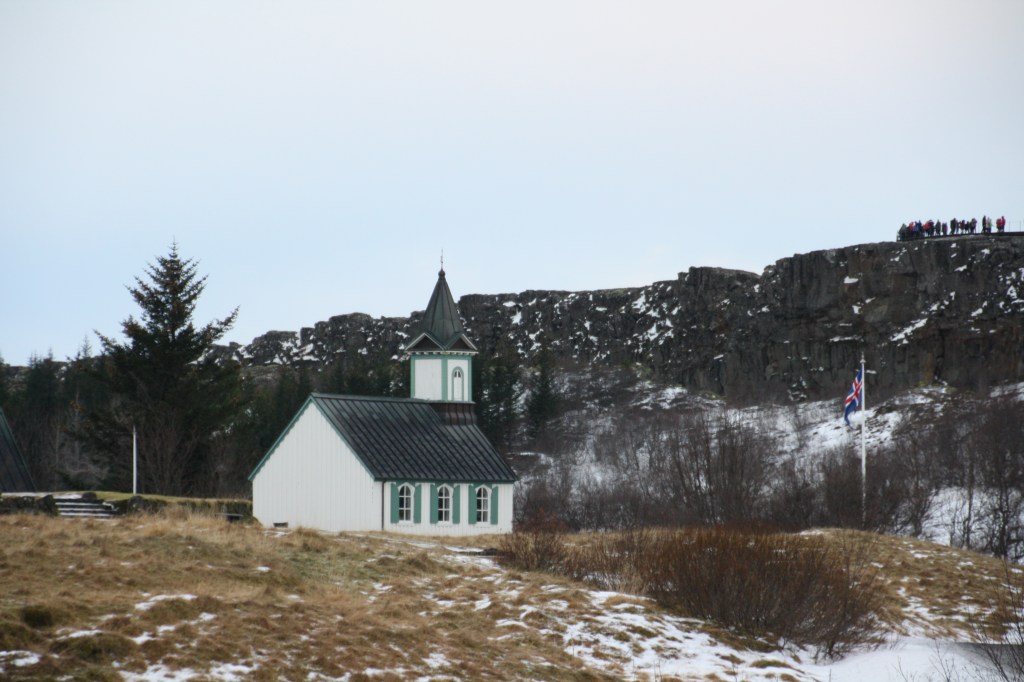
This area is also the site of the worlds oldest parliament, the Althing, which was formed in 930 by Vikings. The picture below is the church that now stands on this site.
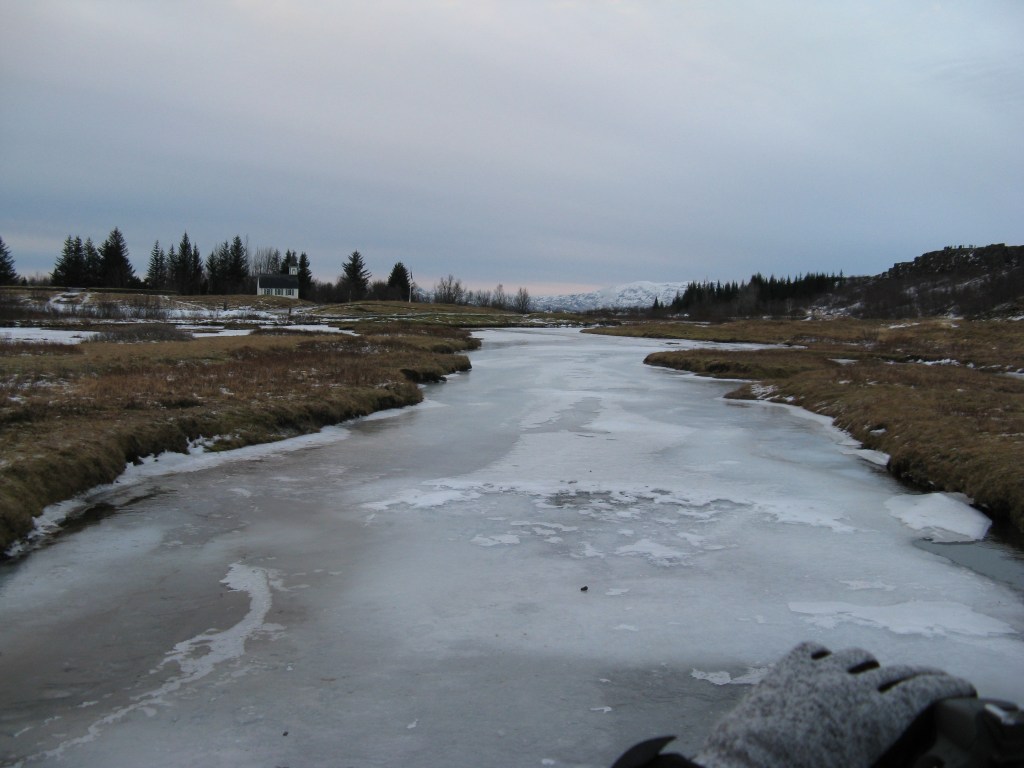
View of the church along the frozen river.
Geysir Geothermal Area
This area is named after Geysir which was the original hot spring and which is now used for any hot spring. These springs can remain dormant for years and then, normally after an earthquake, re-open and then start shooting hot water and steam in to the air.
The whole area has the little bubbling pools emitting steam.
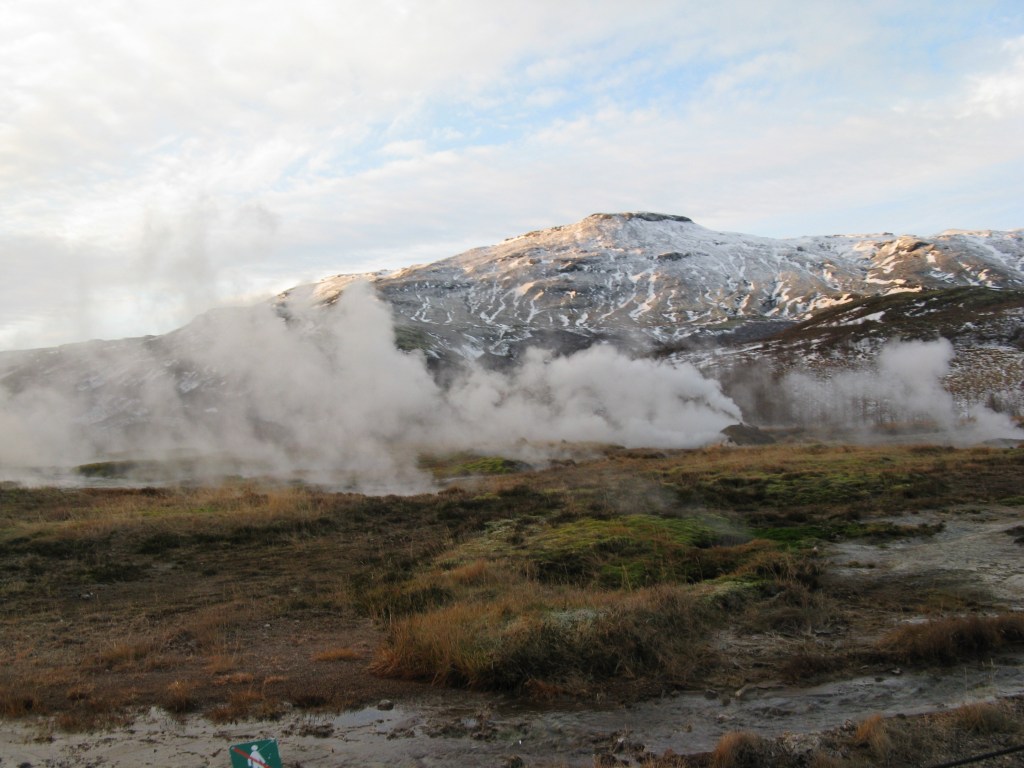
The only hot spring to shoot water in the air, as at December 2017, is called Strokkur and it is so famous it has it’s own plaque.

This geysir can shoot water up to 30 meters in the air and will do this every few minutes. The picture below is the start of an explosion of water.

This is showing the height of the spring.

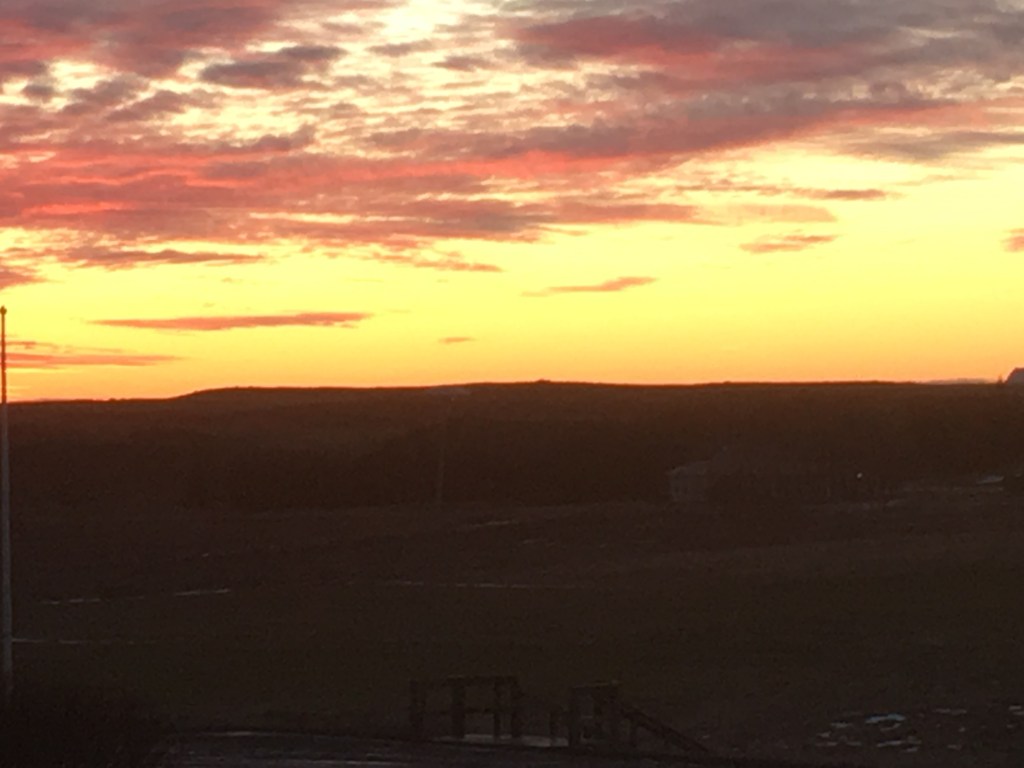
As the sun sets over the Geysir area it just looks as though the whole place is on fire.

The sun slowly setting, about 4 hours after it has risen on a cold Icelandic day.
We think that Reykjavik and Iceland in general is a place to visit at least twice, once in the summer and again in the winter to appreciate it’s diversity.
This was the 30th capital city that we visited and once the challenge of visiting all independent capital city’s has been completed we will be back in the summer.
 Heather and Keith's travels