Riga isn’t a ‘wallop you over the head with grand sights’ kind of city. Its charms are much more subtle than that, coalescing around its laid-back riverside vibe, a compact historic heart and ramshackle suburbs of wooden houses. Most impressively, Riga has the largest array of art nouveau architecture in Europe. Nightmarish gargoyles and praying goddesses adorn more than 750 buildings along the stately boulevards radiating out from the city’s core.
Despite the carnage of wartime bombing, the slaughter of its large Jewish community and the subsequent decades locked behind the Iron Curtain, Riga has entered the 21st century with a thriving cultural life and a heady cosmopolitan buzz to it.
We visited Riga in February 2016 and stayed at the Mercure Riga Centre Hotel.

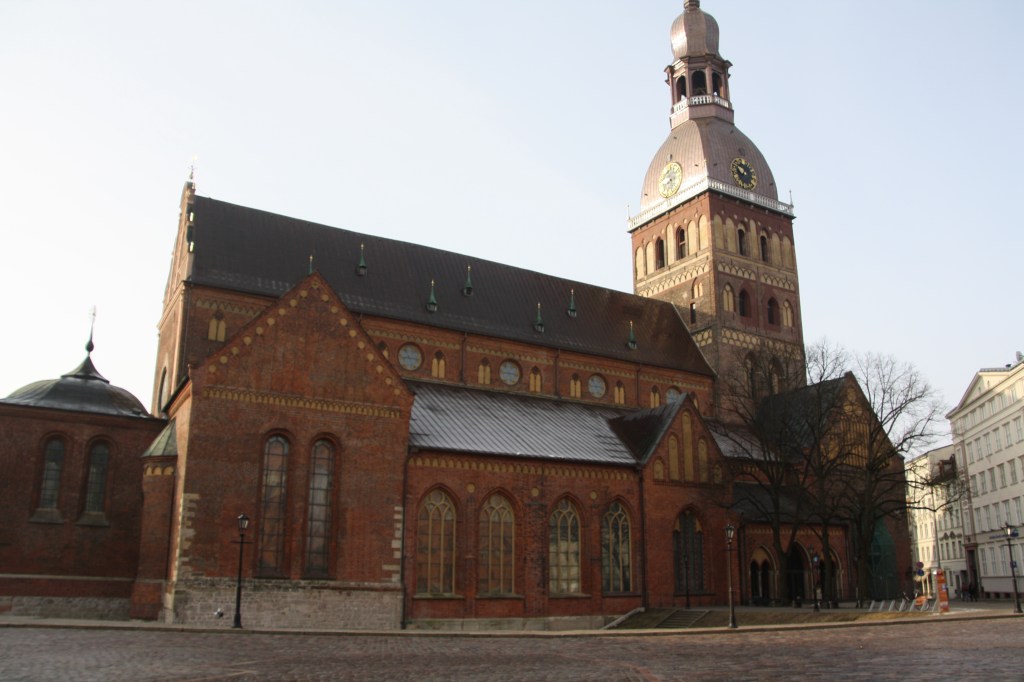
Riga Cathedral
Riga Cathedral is the Evangelical Lutheran cathedral in Riga, Latvia. It is the seat of the Archbishop of Riga.
The cathedral is one of the most recognizable landmarks in Latvia, and is featured in or the subject of paintings, photographs and television travelogues. Like all of the ancient churches of the city, it is known for its weathercock.
The church is commonly called the Dome Cathedral, a tautology as the word ‘Dome’ comes from the German Dom meaning ‘cathedral’.
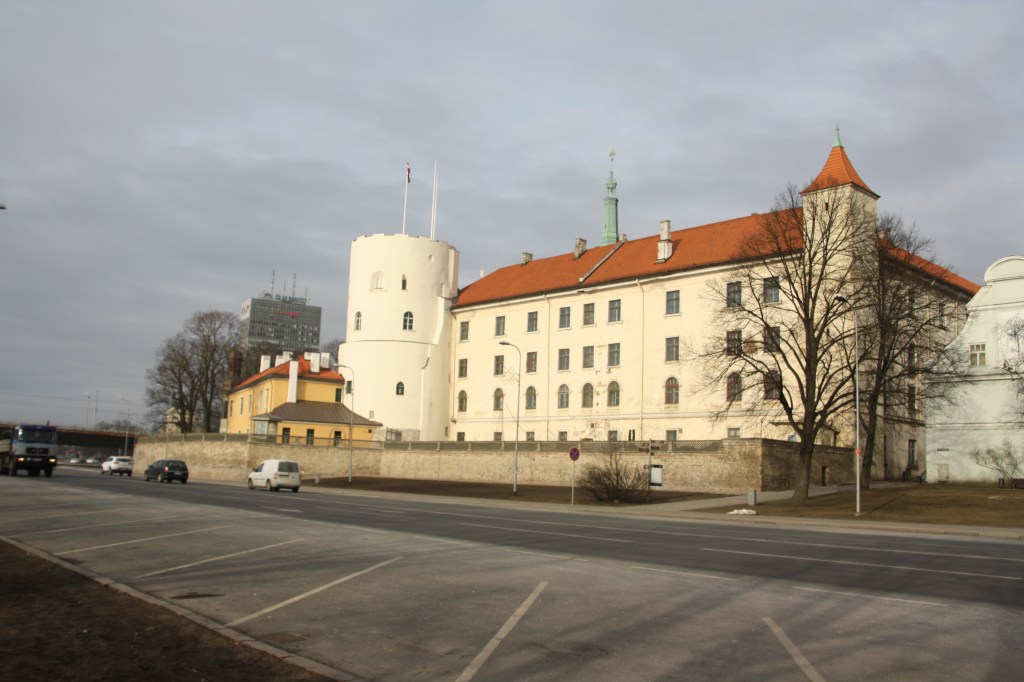
Riga Castle
Riga Castle is a castle on the banks of River Daugava in Riga, the capital of Latvia. The castle was founded in 1330. This structure was thoroughly rebuilt between 1497 and 1515. Upon the castle’s seizure by the Swedes, they constructed spacious annexes in 1641. The fortress was continually augmented and reconstructed between the 17th and 19th centuries. Sometime in the 1930s, some renovation work was done by architect Eižens Laube. The Latvian government declared the castle its residence in 1938. Today it is the official residence of the President of Latvia as well as home to several museums.
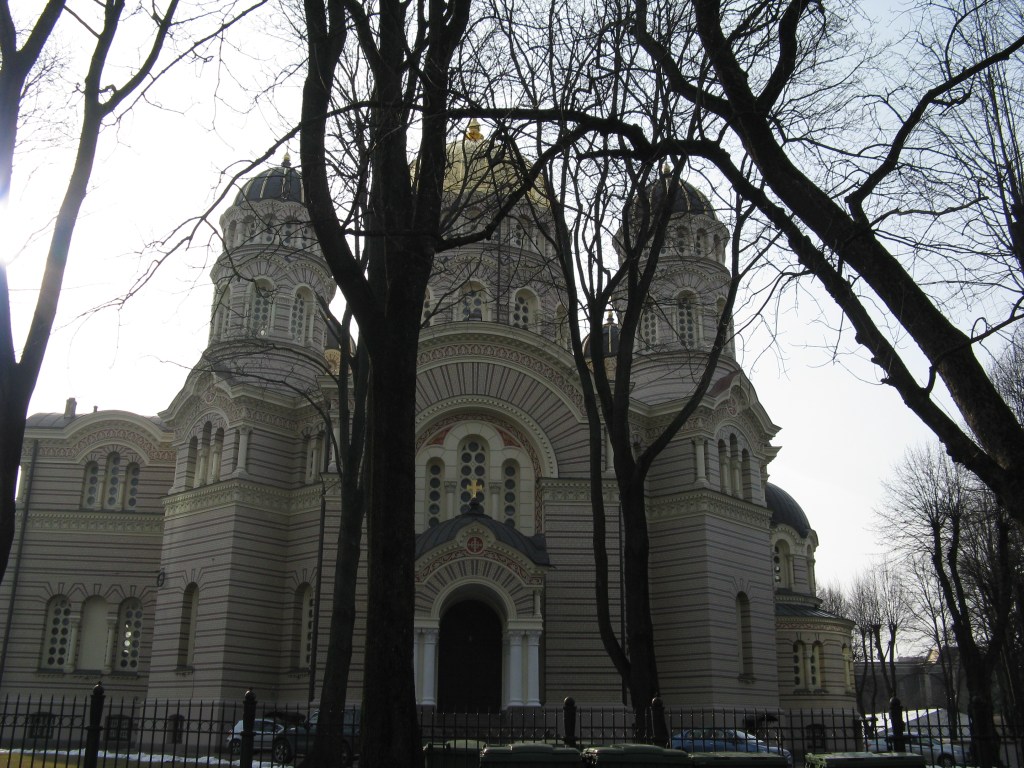
Russian Orthodox Nativity of Christ Cathedral
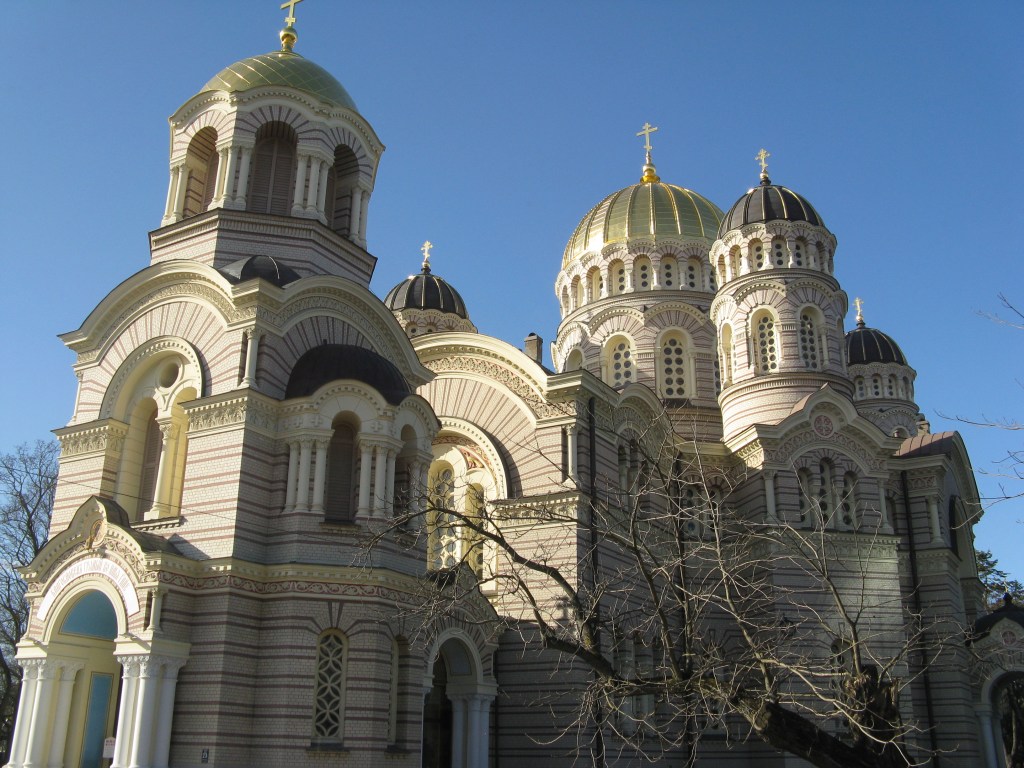
The Nativity of Christ Cathedral, Latvia was built to a design by Nikolai Chagin and Robert Pflug in a Neo-Byzantine style between 1876 and 1883, during the period when the country was part of the Russian Empire. It is the largest Orthodox cathedral in the Baltic provinces built with the blessing of the Russian Tsar Alexander II on the initiative of local governor-general Pyotr Bagration and bishop Veniamin Karelin. The Nativity of Christ Cathedral is renowned for its icons, some of which were painted by Vasili Vereshchagin. During the First World War German troops occupied Riga and turned its largest Russian Orthodox cathedral into a Lutheran church. In independent Latvia, the Nativity of Christ Cathedral once again became an Orthodox cathedral in 1921. Archbishop Jānis Pommers, a native Latvian, played a key part in the defence of the cathedral, including defence from the Latvian government which was extremely unfriendly to Orthodox Church in the first years of an independent Latvia. In the early 1960s, Soviet authorities closed down the cathedral and converted its building into a planetarium. The cathedral has been restored since Latvia regained independence from the Soviet Union in 1991
The picture below is a close of the domes
Freedom Monument
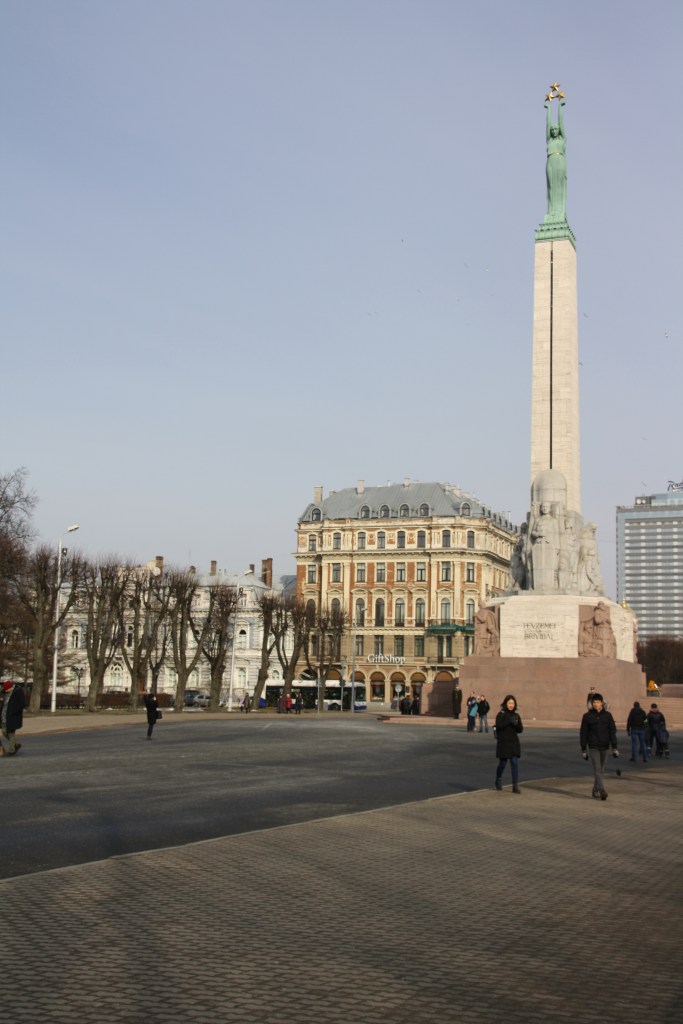
The Freedom Monument is a memorial located in Riga, Latvia, honouring soldiers killed during the Latvian War of Independence (1918–1920). It is considered an important symbol of the freedom, independence, and sovereignty of Latvia.Unveiled in 1935, the 42-metre (138 ft) high monument of granite, travertine, and copper often serves as the focal point of public gatherings and official ceremonies in Riga.
The sculptures and bas-reliefs of the monument, arranged in thirteen groups, depict Latvian culture and history. The core of the monument is composed of tetragonal shapes on top of each other, decreasing in size towards the top, completed by a 19-metre (62 ft) high travertine column bearing the copper figure of Liberty lifting three gilded stars.
Following the Soviet occupation of Latvia in 1940 Latvia was annexed by the Soviet Union and the Freedom Monument was considered for demolition, but no such move was carried out. Soviet sculptor Vera Mukhina is sometimes credited for rescuing the monument, because she considered it to be of high artistic value. Soviet propaganda attempted to alter the symbolic meaning of the monument to better fit with Communist ideology, but it remained a symbol of national independence to the general public. Indeed, on June 14, 1987, about 5,000 people gathered at the monument to commemorate the victims of the Soviet regime and to lay flowers. This rally renewed the national independence movement, which culminated three years later in the re-establishment of Latvian sovereignty after the fall of the Soviet regime.
Powder Tower
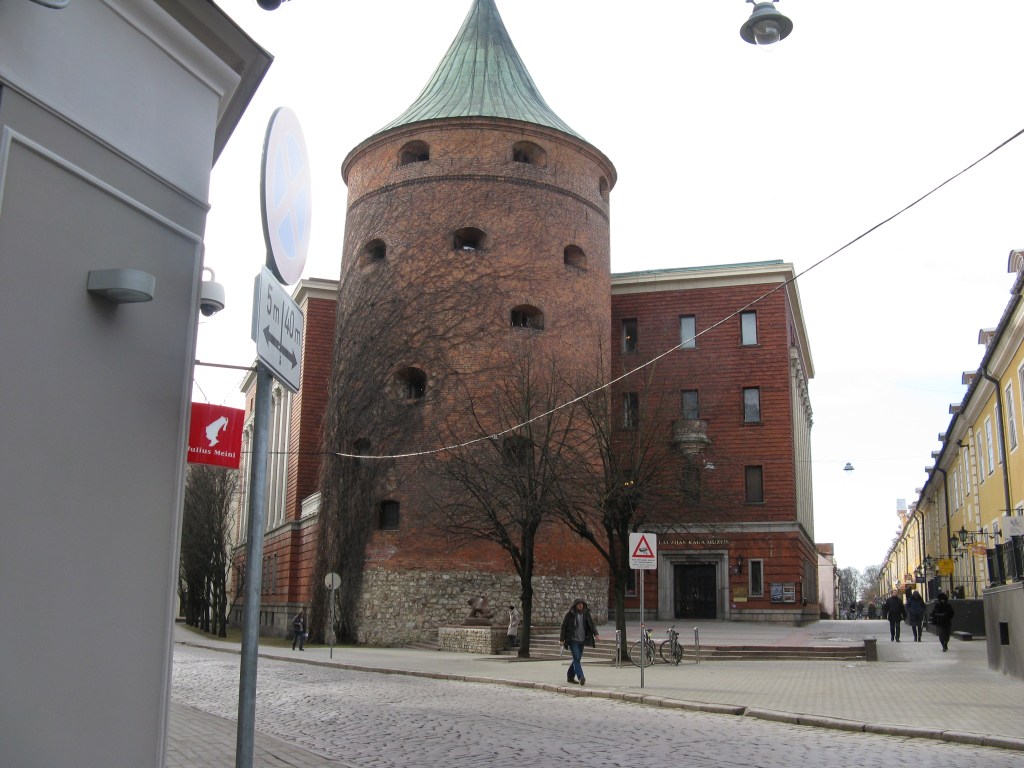
The Powder Tower is one of the original 13 city gates in Old Town, Prague, Construction began in 1475. The tower was intended to be an attractive entrance into the city, instead of a defensive tower. The foundation stone was placed by Vladislav II. The city council gave Vladislav II the tower as a coronation gift. While it was being built, it was called the New Tower. The look of the tower was inspired by the work of Peter Parler on the Charles Bridge in Prague.
Vladislav II had to relocate due to riots, so the tower building stopped. He returned in 1485 to live back in Prague Castle, where he lived for the rest of his life, along with the rest of the Kings of Bohemia who lived in Prague.[1] Kings would not return to use the tower or Royal Court until using it for coronation ceremonies starting again in 1836, where they would pass through the tower to go to St. Vitus Cathedral.[citation needed]
The gate was used to store gunpowder in the 17th century, hence the name Powder Tower or Powder Gate. The gate suffered considerable damage during the Battle of Prague. The sculptures on the tower were replaced in 1876.
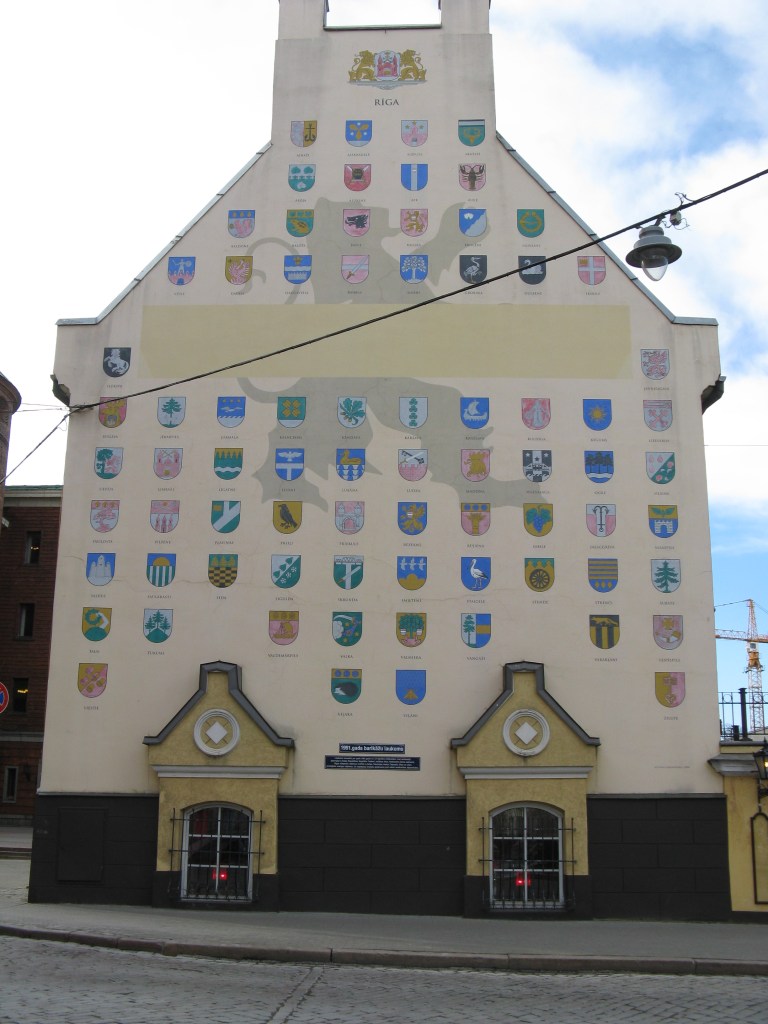
The building next to the powder tower has one end which has been painted to incorporate a flag for each of the administrative districts in Latvia, these were changed from 1 July 2009 to 110 separate municipalities.
House of the Blackheads
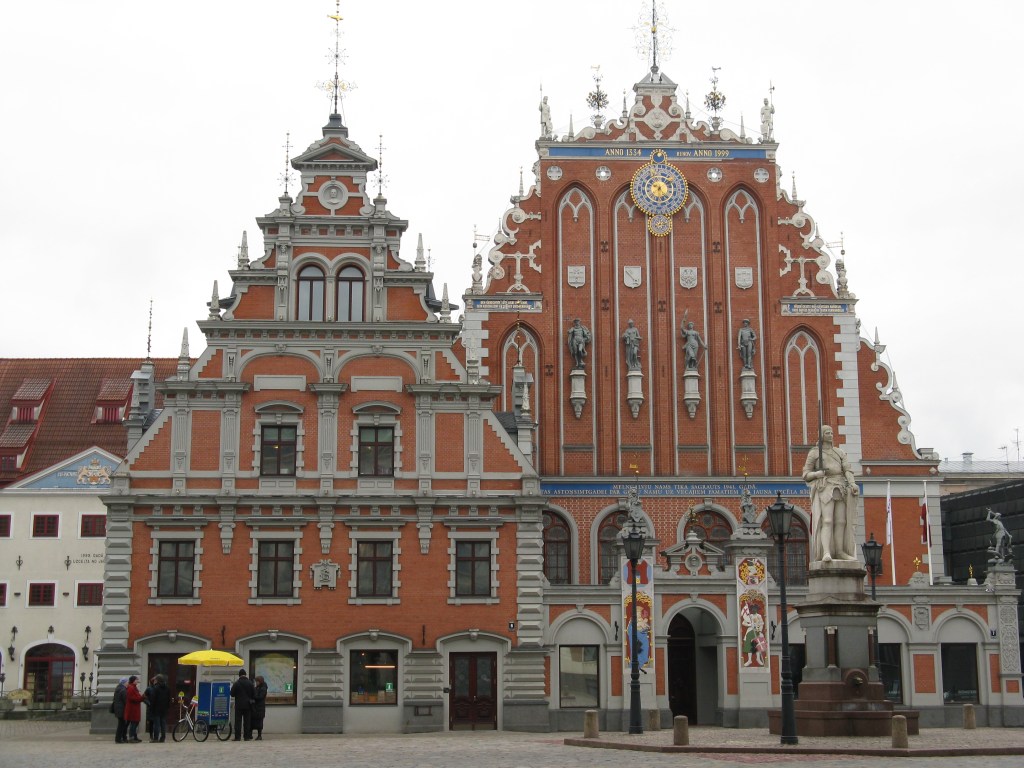
House of the Blackheads is a building situated in the old town of Riga.The original building was erected during the first third of the 14th century for the Brotherhood of Blackheads, a guild for unmarried German merchants in Riga. Major works were done in the years 1580 and 1886, adding most of the ornamentations.
The structure was bombed to a ruin by the Germans June 28, 1941 and the remains demolished by the Soviets in 1948. The current reconstruction was erected from 1995 to 1999.
Dome Square
Dome Square is the largest square in the Old Town. It is considered as the Old City ‘s central square, which often hosts various social public events. Dome Square facing the street seven – Sand, Rosen, Shed, Horse, Castle, James and Jauniela. The area includes a number of monumental 19th and 20th century. built buildings. The building below is the Latvian Museum of foreign art.

The building below is the National Library of Latvia which was built in 1919 and contains 4.1 million books and other publications.

River Daugava
The River Daugava is the main river which splits Riga. It starts in the Valdai Hills in Russia, and flows through Russia and Belarus before going into the Gulf of Riga. At the widest pint it is 1 mile (1.6 km) wide. There are a number of bridges which cross over.


Oldest Department Store
This is allegedly the oldest department store in Riga and is typical of some of the older architecture.

Renovation in Riga
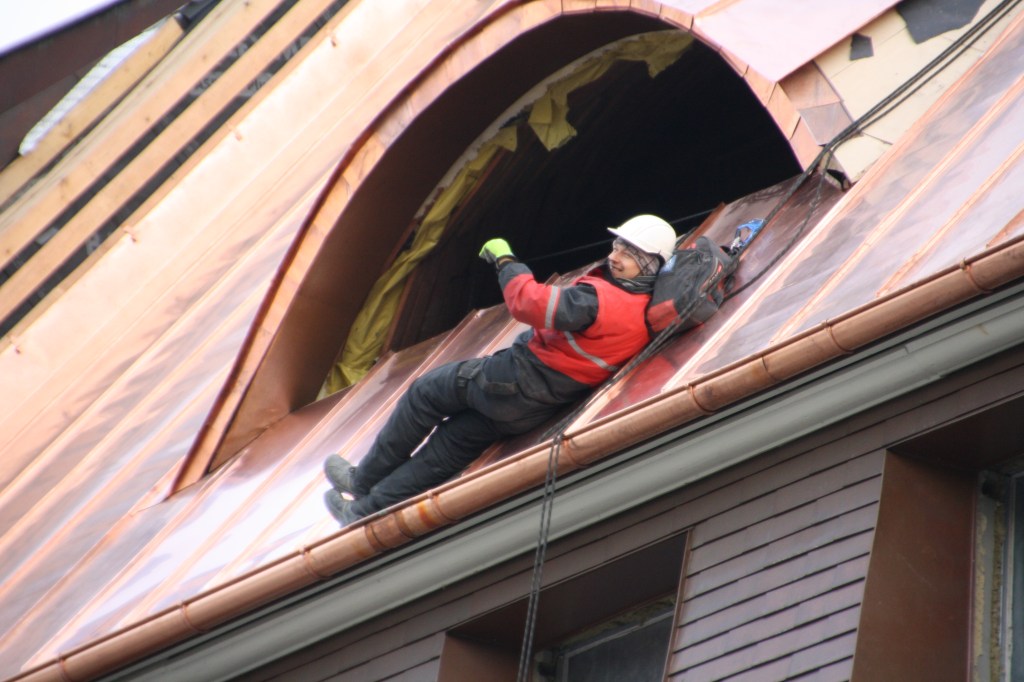
There is some renovation going on in the city. The picture below shows someone taking their tea break and having a lie down. When his mate spotted us taking a picture he woke up to give us a wave.
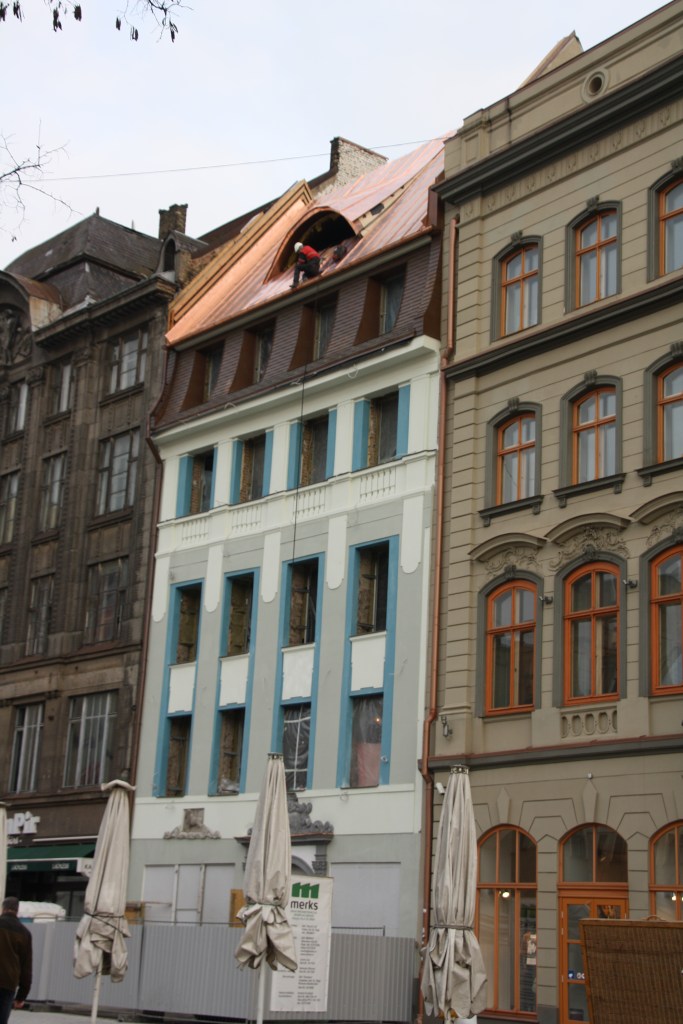
The picture below shows how high up he was, and by the way he didn’t have any safety ropes.
Painted Buildings
The restaurant “Zilā govs” (Blue Cow) is located in Līvi Square in the Old Town. The tavern-like restaurant is named after a special cow species in Latvia— the blue cow. We didn’t see any blue cows roaming around the city

Lovely Parks of Riga
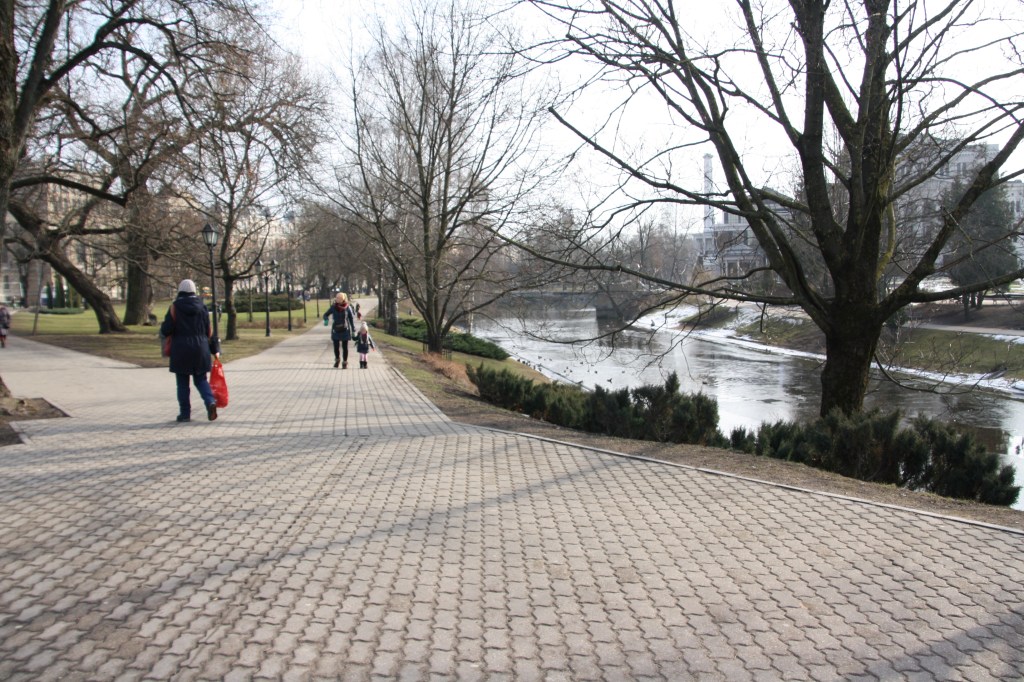
The city has a number of parks which make it feel more rural than a countries capital city.

Our Favourite Tea Shop
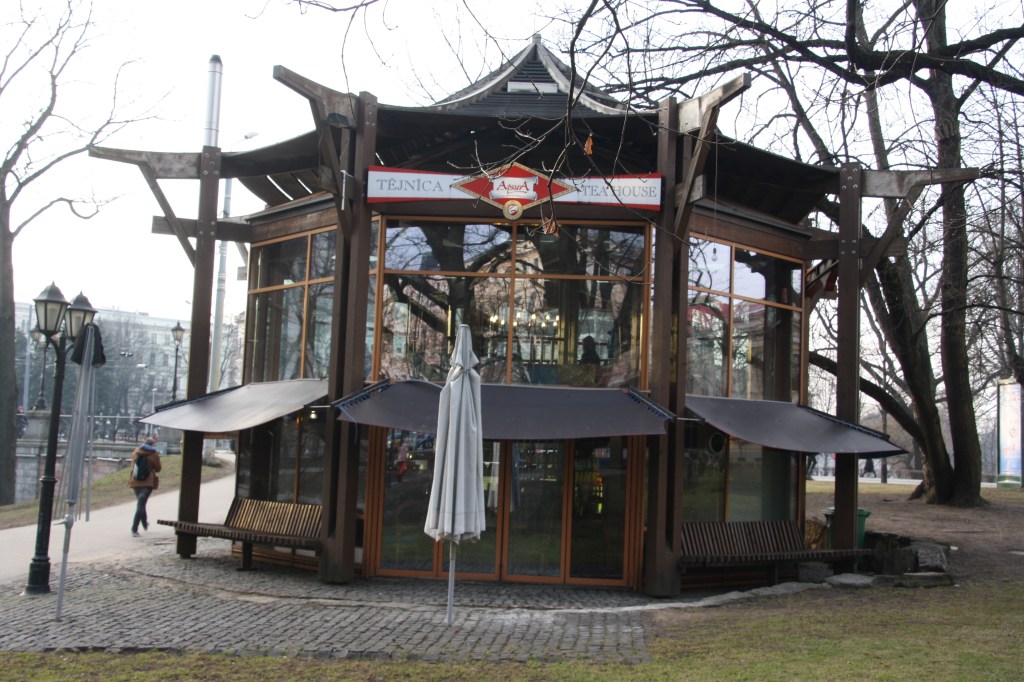
Finally at the end of the day this was our favourite tea shop. This was opened in 1992 and was the first tea house to open in Riga after more than fifty years.
 Heather and Keith's travels