Rome
Even in this country of exquisite cities, Rome is special. Pulsating, seductive and utterly disarming, the Italian capital is an epic, monumental metropolis that will steal your heart and haunt your soul. They say a lifetime’s not enough, but even on a short visit you’ll be swept off your feet by its artistic and architectural masterpieces, its operatic piazzas, romantic corners and cobbled lanes. Yet while history reverberates all around, modern life is lived to the full – and it’s this intoxicating mix of past and present, of style and urban grit that makes Rome such a compelling place. It’s just like a vast open air museum with every stone telling it’s own story.
This is probably our favourite city and the most exhausting. I don’t think we could ever get bored of Rome. It does help that there is fantastic food, wine and gelato.
We visited Rome in June 2013 and stayed at the Golden Hotel near the Borghese Gardens.
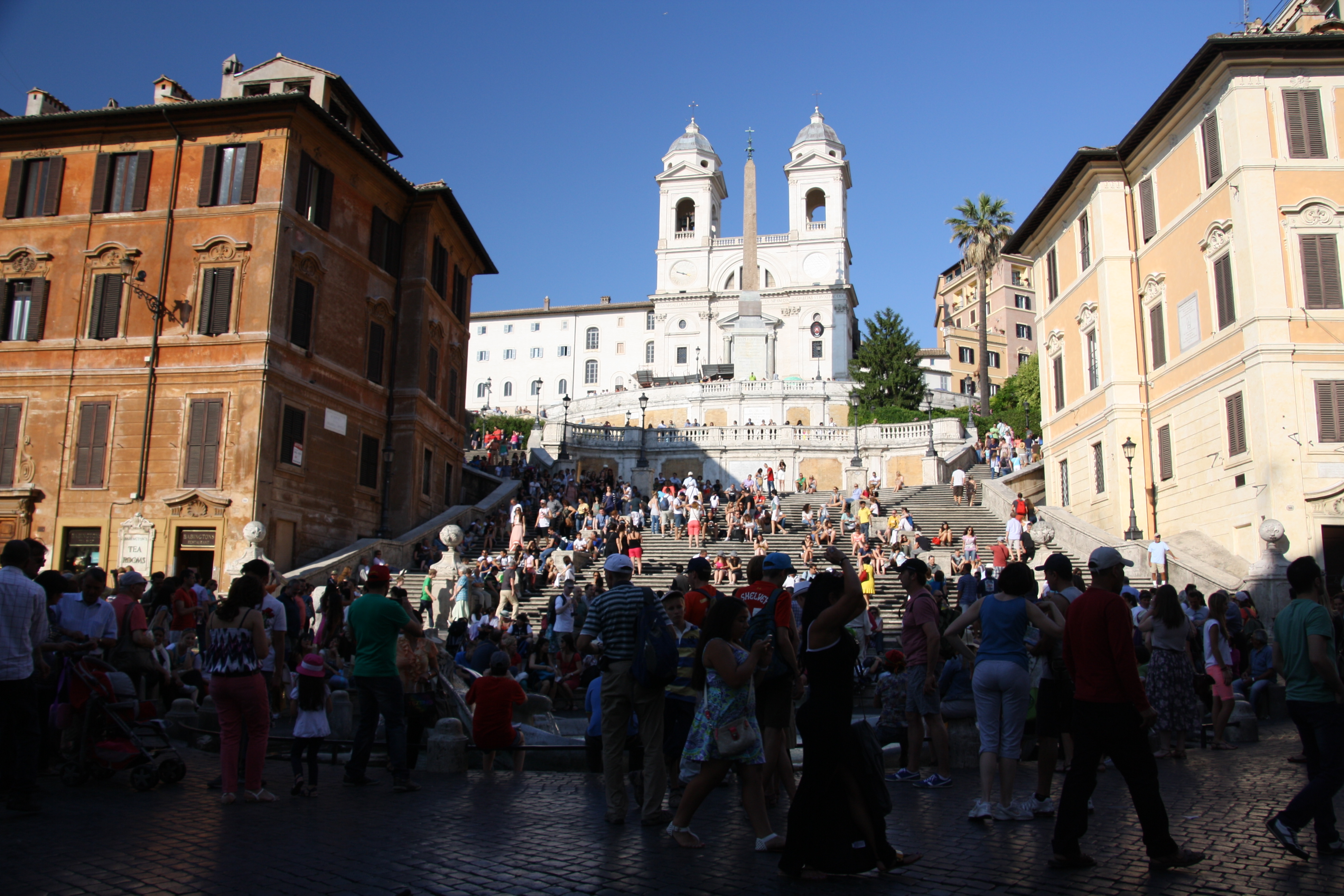
Spanish Steps
The Spanish Steps are a set of steps climbing a steep slope between the Piazza di Spagna at the base and Piazza Trinità dei Monti, dominated by the Trinità dei Monti church at the top.
The monumental stairway of 135 steps (the slightly elevated drainage system is often mistaken for the first step) was built with French diplomat Étienne Gueffier’s bequeathed funds of 20,000 scudi, in 1723–1725, linking the Bourbon Spanish Embassy, and the Trinità dei Monti church that was under the patronage of the Bourbon kings of France, both located above — to the Holy See in Palazzo Monaldeschi located below. The stairway was designed by architects Francesco de Sanctis and Alessandro Specchi.
Colossuem
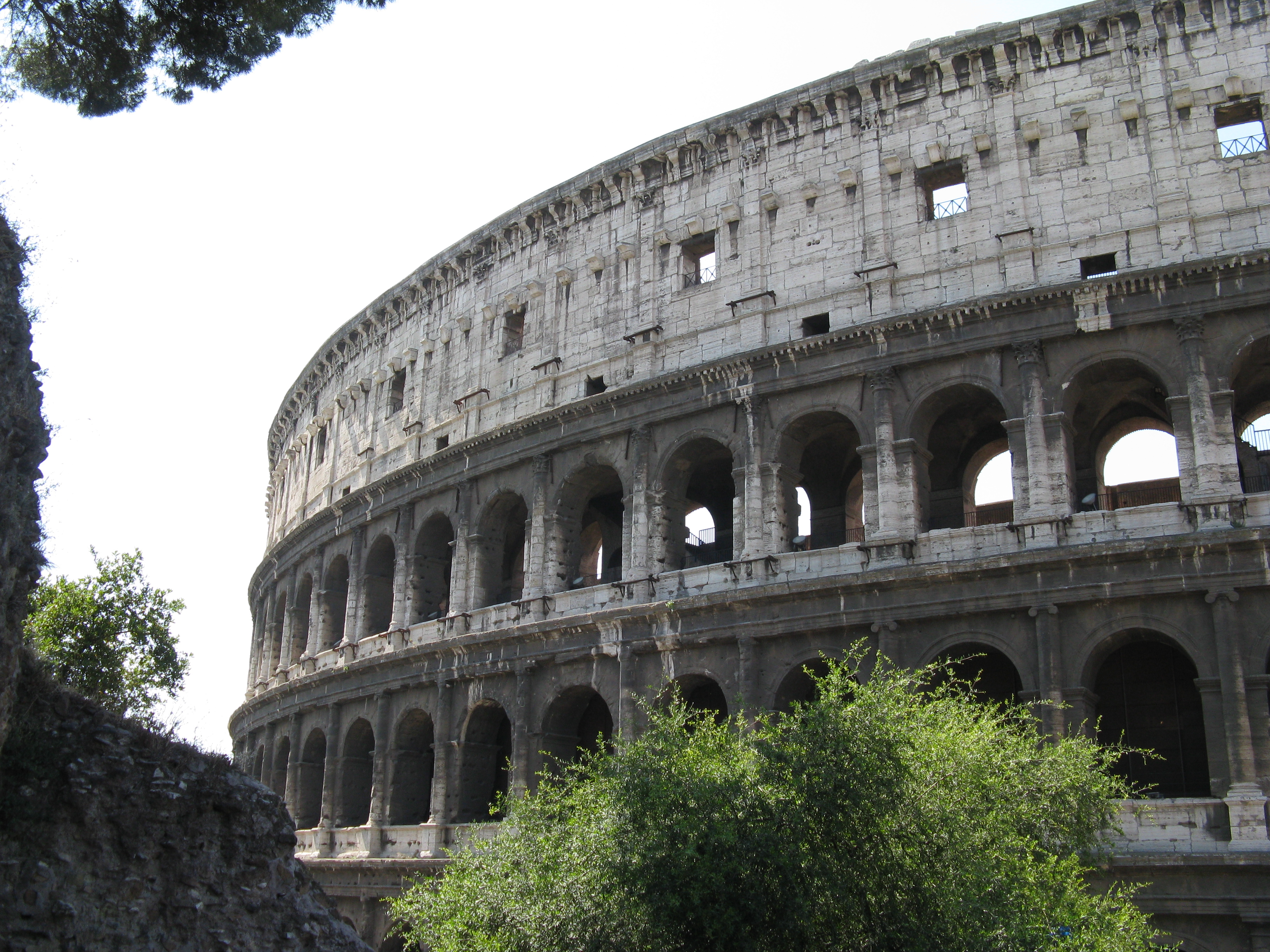
The Colosseum or Coliseum also known as the Flavian Amphitheatre is an oval amphitheatre in the centre of Rome. Built of concrete and sand, it is the largest amphitheatre ever built. The Colosseum is situated just east of the Roman Forum. Construction began under the emperor Vespasian in AD 72, and was completed in AD 80 under his successor and heir Titus. Further modifications were made during the reign of Domitian (81–96). These three emperors are known as the Flavian dynasty, and the amphitheatre was named in Latin for its association with their family name (Flavius).
The Colosseum could hold, it is estimated, between 50,000 and 80,000 spectators, having an average audience of some 65,000; it was used for gladiatorial contests and public spectacles such as mock sea battles (for only a short time as the hypogeum was soon filled in with mechanisms to support the other activities), animal hunts, executions, re-enactments of famous battles, and dramas based on Classical mythology. The building ceased to be used for entertainment in the early medieval era. It was later reused for such purposes as housing, workshops, quarters for a religious order, a fortress, a quarry, and a Christian shrine.
Although partially ruined because of damage caused by earthquakes and stone-robbers, the Colosseum is still an iconic symbol of Imperial Rome. It is one of Rome’s most popular tourist attractions and also has links to the Roman Catholic Church, as each Good Friday the Pope leads a torchlit “Way of the Cross” procession that starts in the area around the Colosseum.
Inside the Colosseum

Outside the Colosseum
Pantheon
The Pantheon is a former Roman temple, now a church, on the site of an earlier temple commissioned by Marcus Agrippa during the reign of Augustus (27 BC – 14 AD). The present building was completed by the emperor Hadrian and probably dedicated about 126 AD. He retained Agrippa’s original inscription, which has confused its date of construction as the original Pantheon burnt down so it is not certain when the one now standing was built.
The building is circular with a portico of large granite Corinthian columns (eight in the first rank and two groups of four behind) under a pediment. A rectangular vestibule links the porch to the rotunda, which is under a coffered concrete dome, with a central opening (oculus) to the sky. Almost two thousand years after it was built, the Pantheon’s dome is still the world’s largest unreinforced concrete dome. The height to the oculus and the diameter of the interior circle are the same, 43.3 metres (142 ft).
It is one of the best-preserved of all Ancient Roman buildings, in large part because it has been in continuous use throughout its history, and since the 7th century, the Pantheon has been used as a church dedicated to “St. Mary and the Martyrs” (Latin: Santa Maria ad Martyres) but informally known as “Santa Maria Rotonda”. The square in front of the Pantheon is called Piazza della Rotonda. The Pantheon is a state property, ruled by Italy’s Ministry of Cultural Heritage and Activities and Tourism through the Polo Museale del Lazio; in 2013 it was visited by over 6 million people.

Roman Forum
The Roman Forum is a rectangular forum (plaza) surrounded by the ruins of several important ancient government buildings. Citizens of the ancient city referred to this space, originally a marketplace, as the Forum Magnum, or simply the Forum.
It was for centuries the center of Roman public life: the site of triumphal processions and elections; the venue for public speeches, criminal trials, and gladiatorial matches; and the nucleus of commercial affairs. Here statues and monuments commemorated the city’s great men. The teeming heart of ancient Rome, it has been called the most celebrated meeting place in the world, and in all history. Located in the small valley between the Palatine and Capitoline Hills, the Forum today is a sprawling ruin of architectural fragments and intermittent archaeological excavations attracting 4.5 million sightseers yearly.
Many of the oldest and most important structures of the ancient city were located on or near the Forum. The Roman kingdom’s earliest shrines and temples were located on the southeastern edge. These included the ancient former royal residence, the Regia (8th century BC), and the Temple of Vesta (7th century BC), as well as the surrounding complex of the Vestal Virgins, all of which were rebuilt after the rise of imperial Rome.

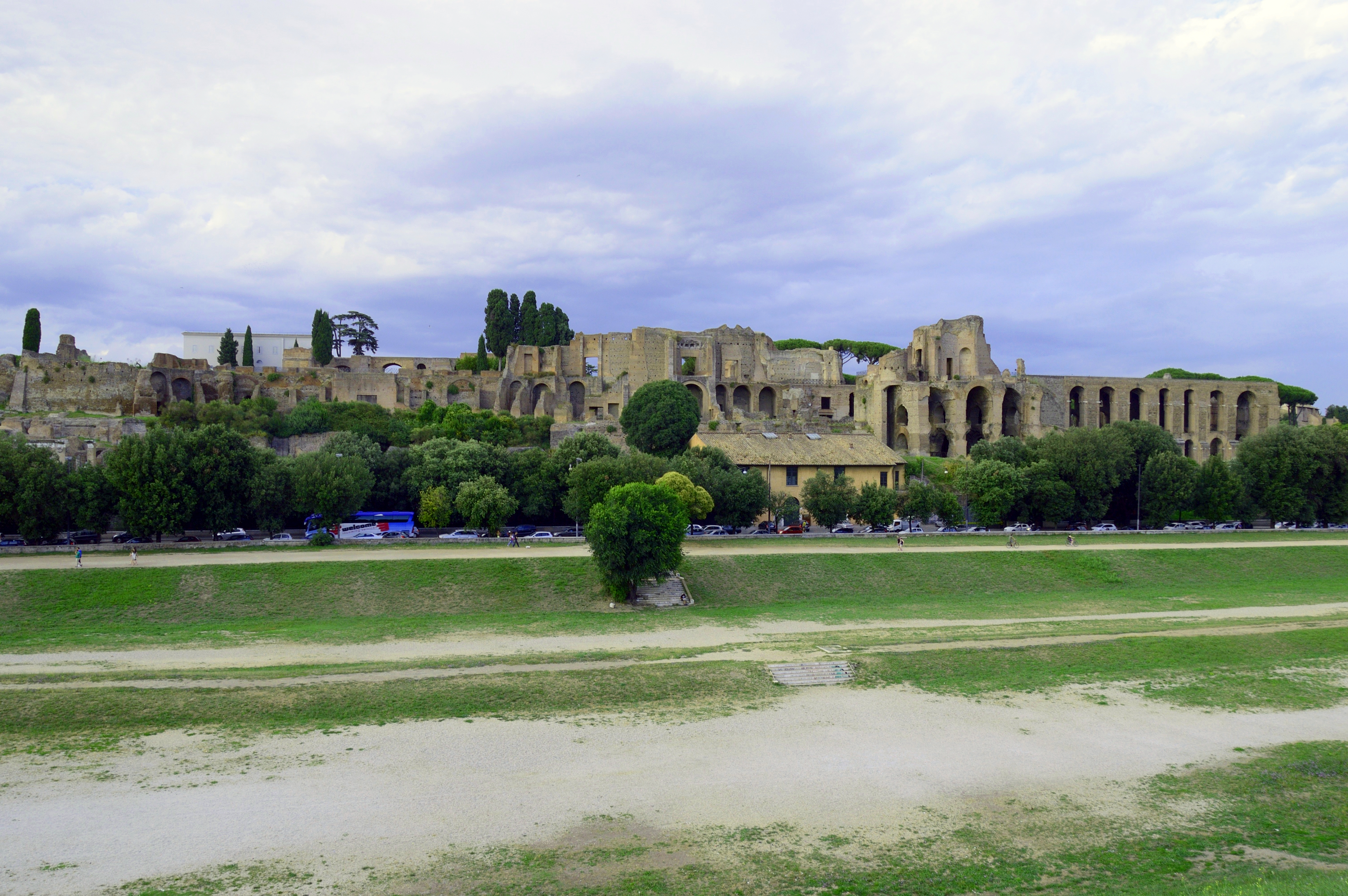
Palatine Hill
The Palatine Hill is the centermost of the Seven Hills of Rome and is one of the most ancient parts of the city. It stands 40 metres above the Roman Forum, looking down upon it on one side, and upon the Circus Maximus on the other.
Trevi Fountain
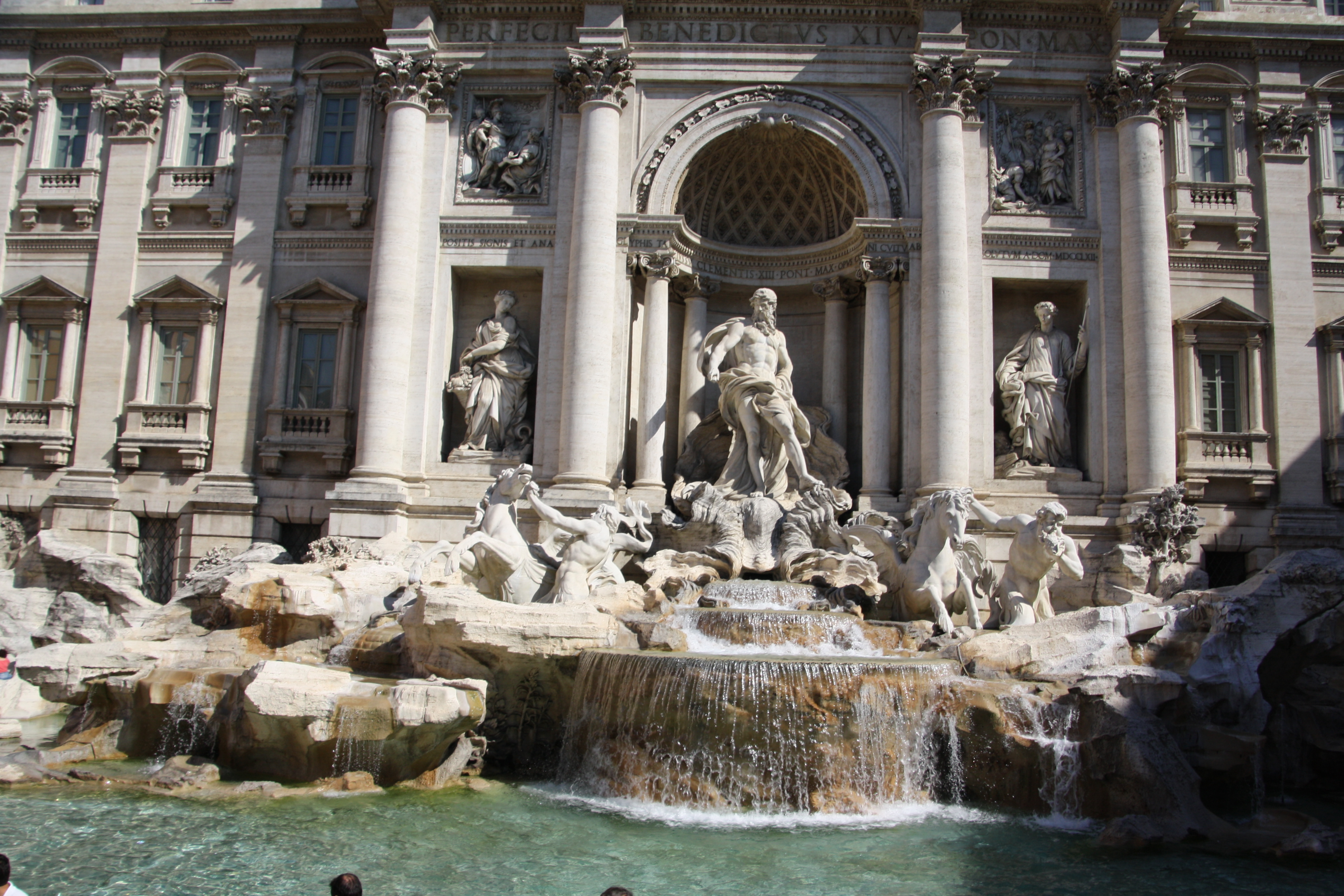
The Trevi Fountain is a fountain in the Trevi district, designed by Italian architect Nicola Salvi and completed by Pietro Bracci. Standing 26.3 metres (86 ft) high and 49.15 metres (161.3 ft) wide, it is the largest Baroque fountain in the city and one of the most famous fountains in the world.
The fountain at the junction of three roads (tre vie) marks the terminal point[3] of the “modern” Acqua Vergine, the revived Aqua Virgo, one of the aqueducts that supplied water to ancient Rome. In 19 BC, supposedly with the help of a virgin, Roman technicians located a source of pure water some 13 km (8.1 mi) from the city. (This scene is presented on the present fountain’s façade.) However, the eventual indirect route of the aqueduct made its length some 22 km (14 mi). This Aqua Virgo led the water into the Baths of Agrippa. It served Rome for more than 400 years.
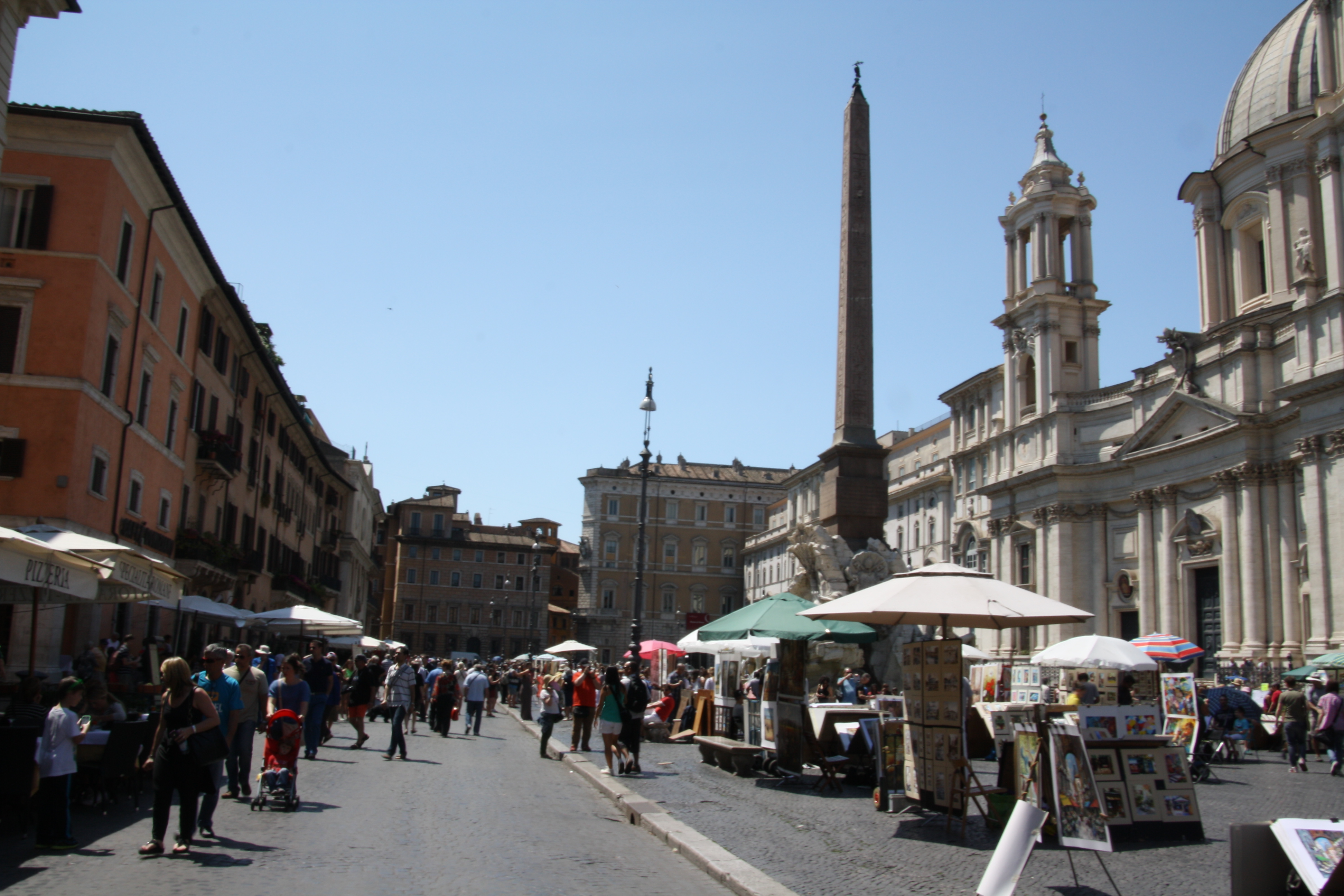
Piazza Navarro
Piazza Navona is one of the main piazza in Rome. It is built on the site of the Stadium of Domitian, built in 1st century AD, and follows the form of the open space of the stadium. The ancient Romans went there to watch the agones (“games”), and hence it was known as “Circus Agonalis” (“competition arena”). It is believed that over time the name changed to in avone to navone and eventually to navona.
Defined as a public space in the last years of 15th century, when the city market was transferred there from the Campidoglio, Piazza Navona was transformed into a highly significant example of Baroque Roman architecture and art during the pontificate of Innocent X, who reigned from 1644 until 1655, and whose family palace, the Palazzo Pamphili, faced the piazza. It features important sculptural and architectural creations: in the center stands the famous Fontana dei Quattro Fiumi or Fountain of the Four Rivers (1651) by Gian Lorenzo Bernini, topped by the Obelisk of Domitian, brought in pieces from the Circus of Maxentius; the church of Sant’Agnese in Agone by Francesco Borromini, Girolamo Rainaldi, Carlo Rainaldi and others; and the aforementioned Pamphili palace, also by Girolamo Rainaldi, that accommodates the long gallery designed by Borromini and frescoed by Pietro da Cortona.
Vatican City
Vatican City officially Vatican City State or the State of Vatican City is a walled enclave within the city of Rome. With an area of approximately 44 hectares (110 acres), and a population of 842,[4] it is the smallest sovereign state in the world by both area and population.
It is an ecclesiastical state ruled by the Bishop of Rome – the Pope. The highest state functionaries are all Catholic clergy of various national origins. Since the return of the Popes from Avignon in 1377, they have generally resided at the Apostolic Palace within what is now Vatican City, although at times residing instead in the Quirinal Palace in Rome or elsewhere.
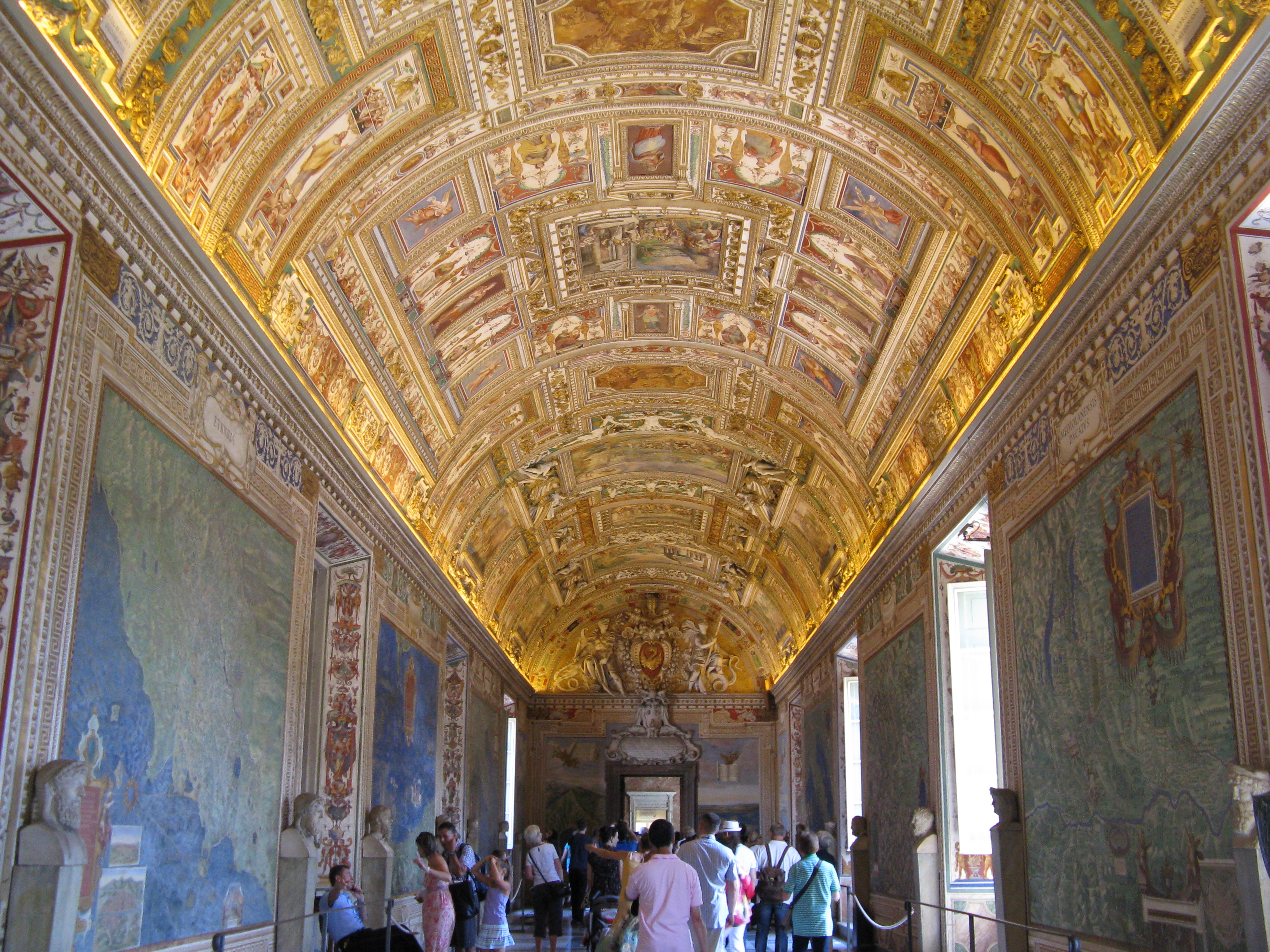
Within Vatican City are religious and cultural sites such as St. Peter’s Basilica, the Sistine Chapel and the Vatican Museums. They feature some of the world’s most famous paintings and sculptures. The unique economy of Vatican City is supported financially by the sale of postage stamps and tourist mementos, fees for admission to museums, and the sale of publications.
Inside the Vatican city.
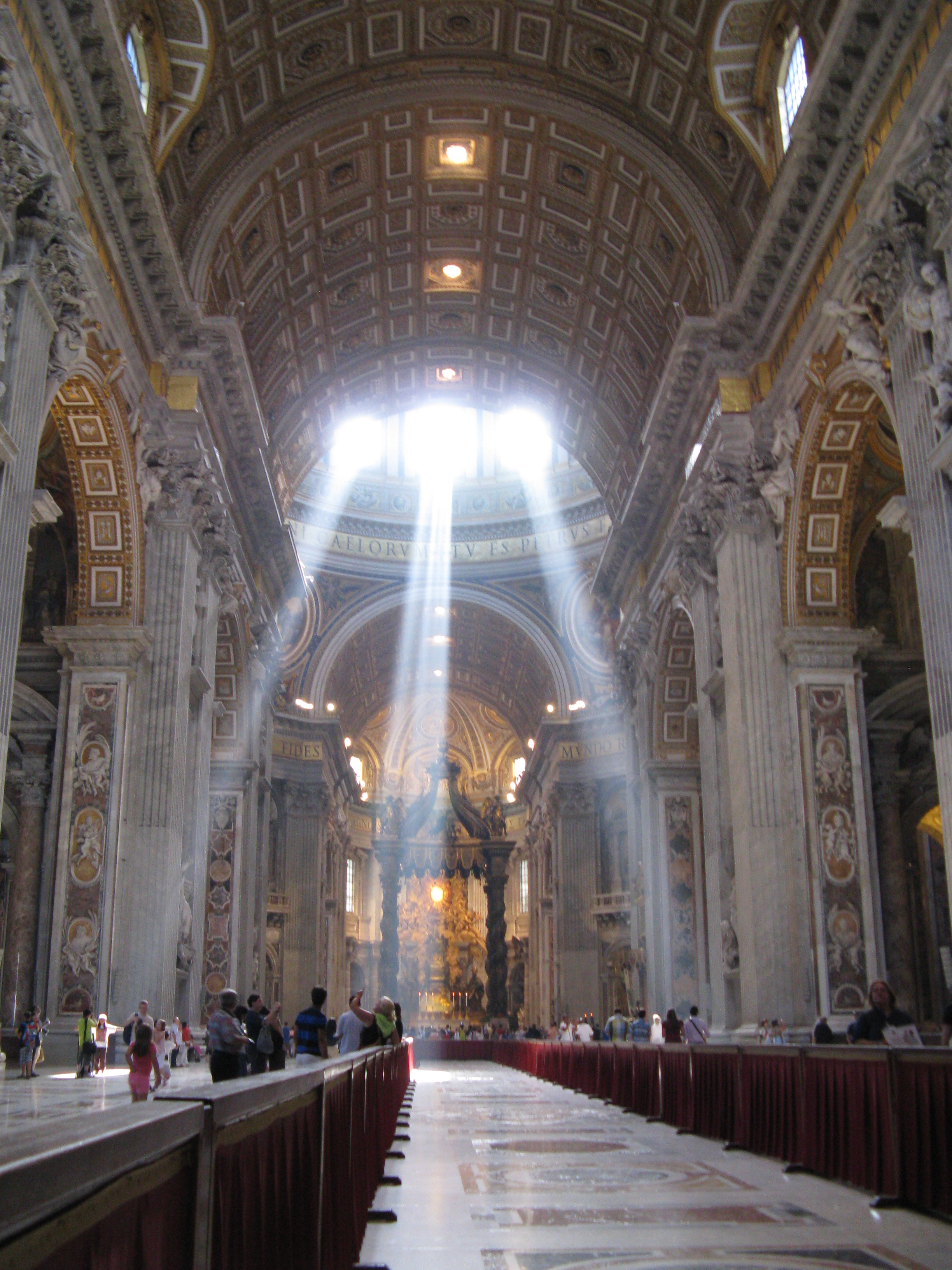
St Peter’s Square
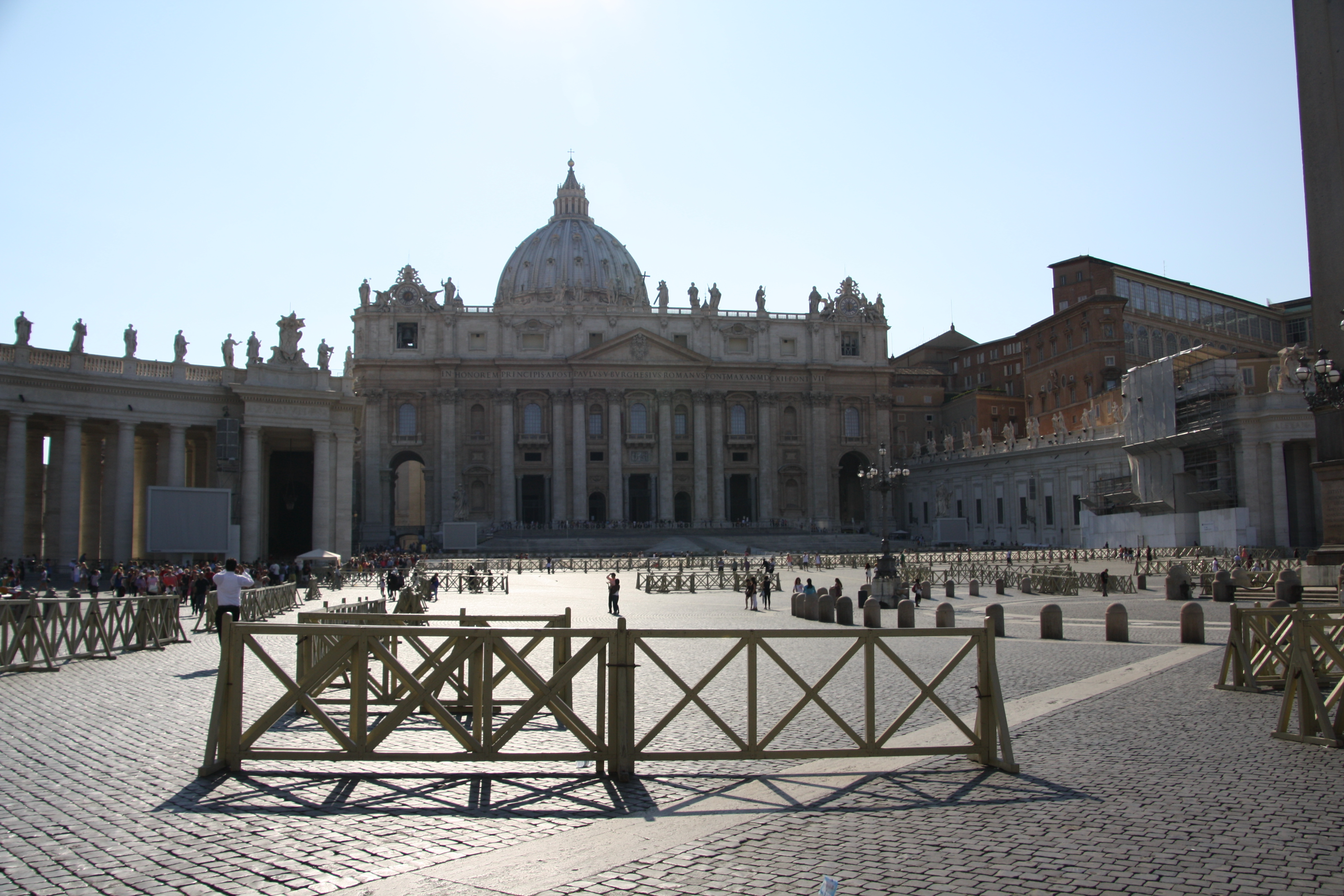
Sistine Chapel
The Sistine Chapel is a chapel in the Apostolic Palace, the official residence of the Pope, in Vatican City. Originally known as the Cappella Magna, the chapel takes its name from Pope Sixtus IV, who restored it between 1477 and 1480. Since that time, the chapel has served as a place of both religious and functionary papal activity. Today it is the site of the Papal conclave, the process by which a new pope is selected. The fame of the Sistine Chapel lies mainly in the frescos that decorate the interior, and most particularly the Sistine Chapel ceiling and The Last Judgment by Michelangelo.
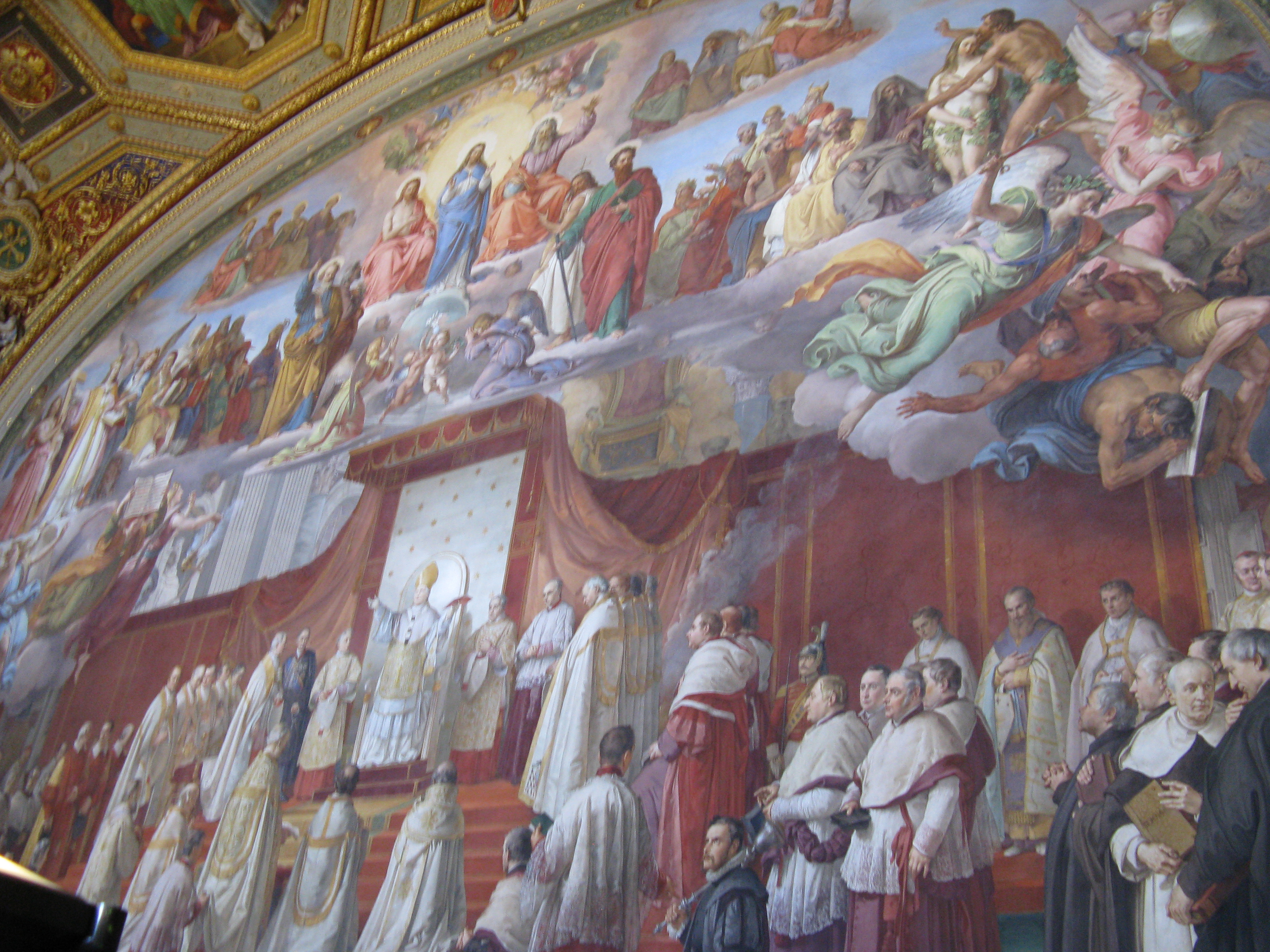
St Peters Basillica
The Papal Basilica of St. Peter in the Vatican , or simply St. Peter’s Basilica, is an Italian Renaissance church in Vatican City, the papal enclave within the city of Rome.
Designed principally by Donato Bramante, Michelangelo, Carlo Maderno and Gian Lorenzo Bernini, St. Peter’s is the most renowned work of Renaissance architecture and one of the largest churches in the world.While it is neither the mother church of the Catholic Church nor the cathedral of the Diocese of Rome, St. Peter’s is regarded as one of the holiest Catholic shrines. It has been described as “holding a unique position in the Christian world” and as “the greatest of all churches of Christendom”.

 Heather and Keith's travels