This trip was primarily to visit San Marino. When we looked at this we found that San Mario is not the easiest place to get to from the UK as it doesn’t have an airport or train station. The easiest way for us was to fly to Bologna in Italy and then take a train to Rimini and finally a bus to San Marino. The capital city has the same name as the country.
We visited in August and September 2017 staying at the Star Excelsior hotel in Bologna.
San Marino
This is the 3rd smallest country in Europe after Holy See (Vatican City) and Monaco.
Things to note about San Marino
- It is the oldest republic in the world founded in 301.
- it has the oldest constitution in the world dating from 1600’s which is written in Latin and dictate’s the country’s political system, among other matters.
- San Marino is a diarchy meaning it has two head of state.
- It is one of the wealthiest countries in the world in terms of GDP (per capita), with a figure comparable to the most developed European regions. San Marino has one of the lowest unemployment rates in Europe, no national debt and a budget surplus.
- It is the only country in the world with more vehicles than people.
- The San Marino international football team have only ever won once, as at August 2017, beating Liechtenstein 1–0 in a friendly match on 28 April 2004.
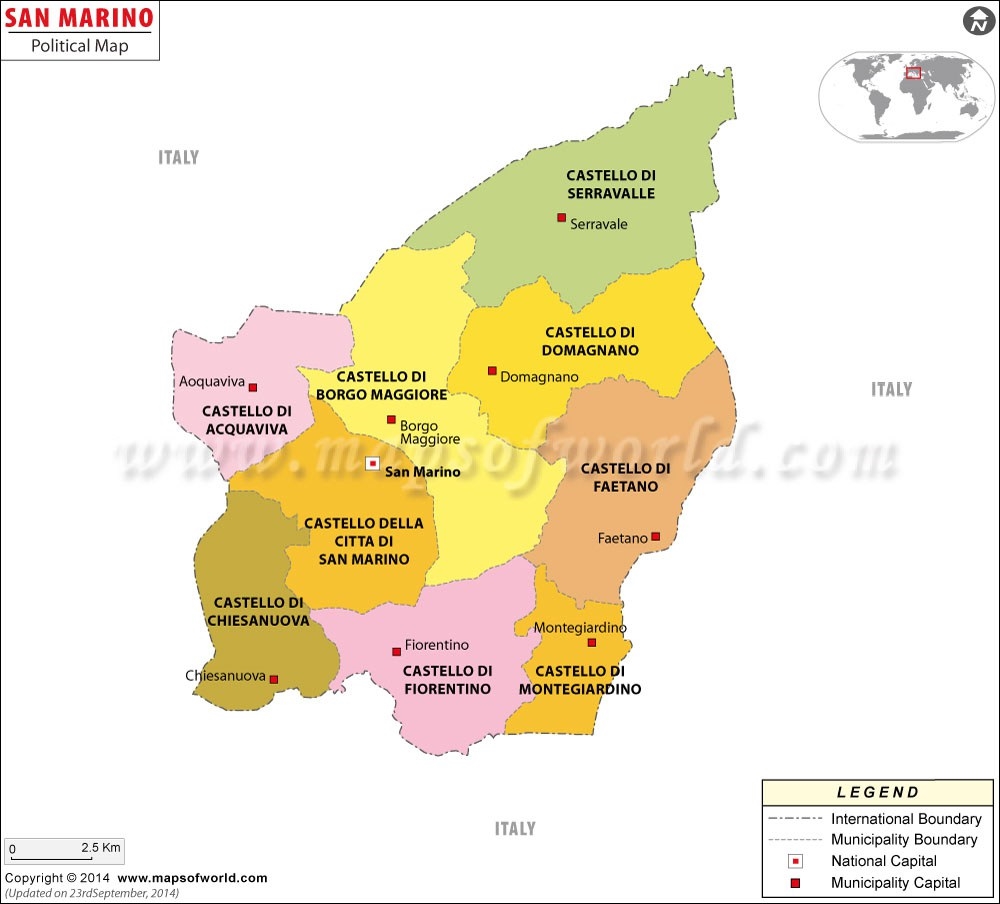
San Marino is a mountainous micro-state surrounded by north-central Italy. Among the world’s oldest republics, it retains much of its historic architecture. On the slopes of Monte Titano sits the capital, also called San Marino, known for its medieval walled old town and narrow cobblestone streets. The Three Towers, castle like citadels dating to the 11th century, sit atop Titano’s neighbouring peaks.
View from the top of the fortress in San Marino
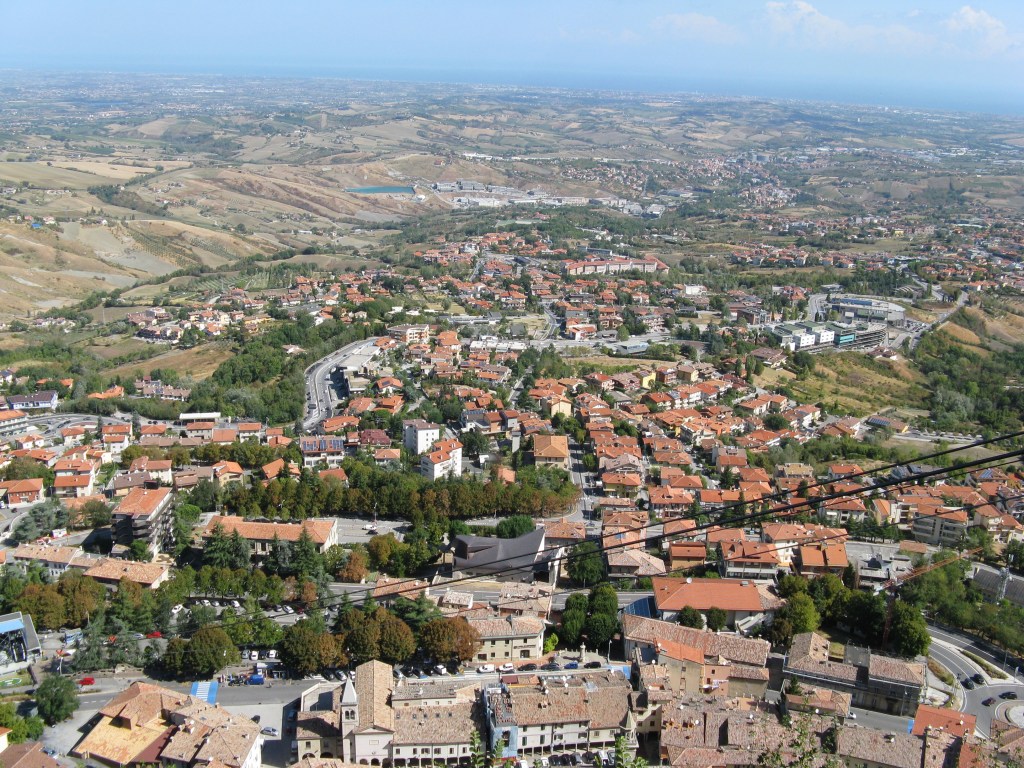
This is the first of the 3 towers, which all look very similar.
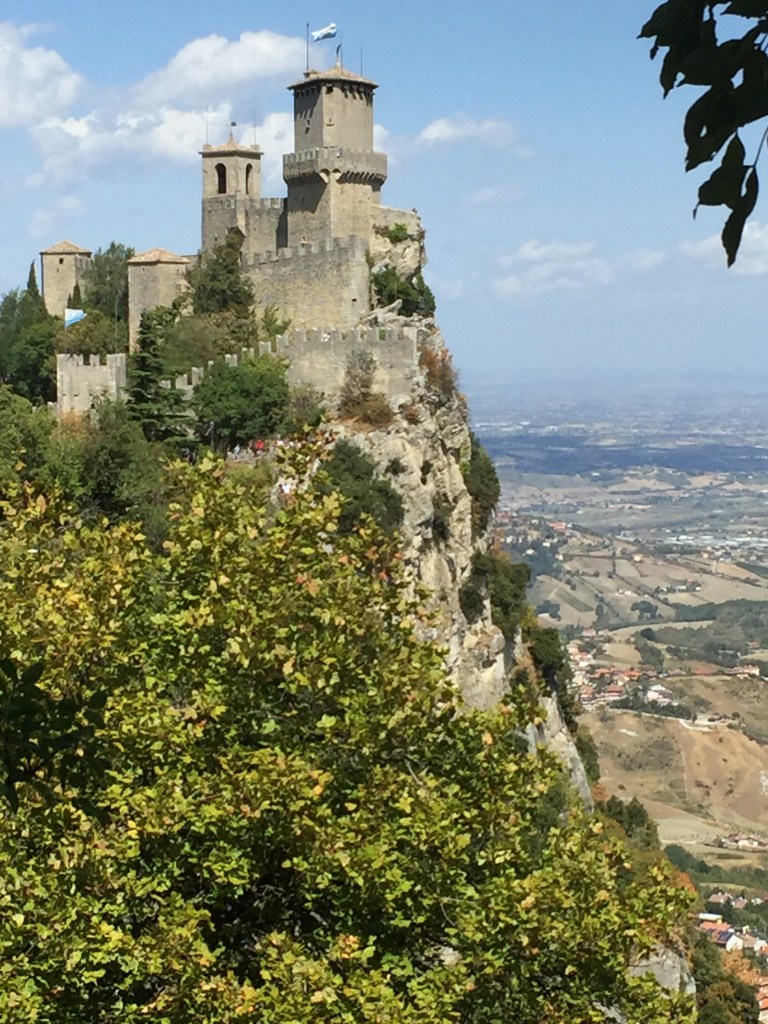
Part of the old castle wall

The Basilica di San Marino is the main Catholic church located in San Marino which is situated on Piazza Domus Plebis in the north-eastern edge of the city, adjacent to the Church of St. Peter.
The present church was built in 1836 in place of an earlier one that dated to 7th century.

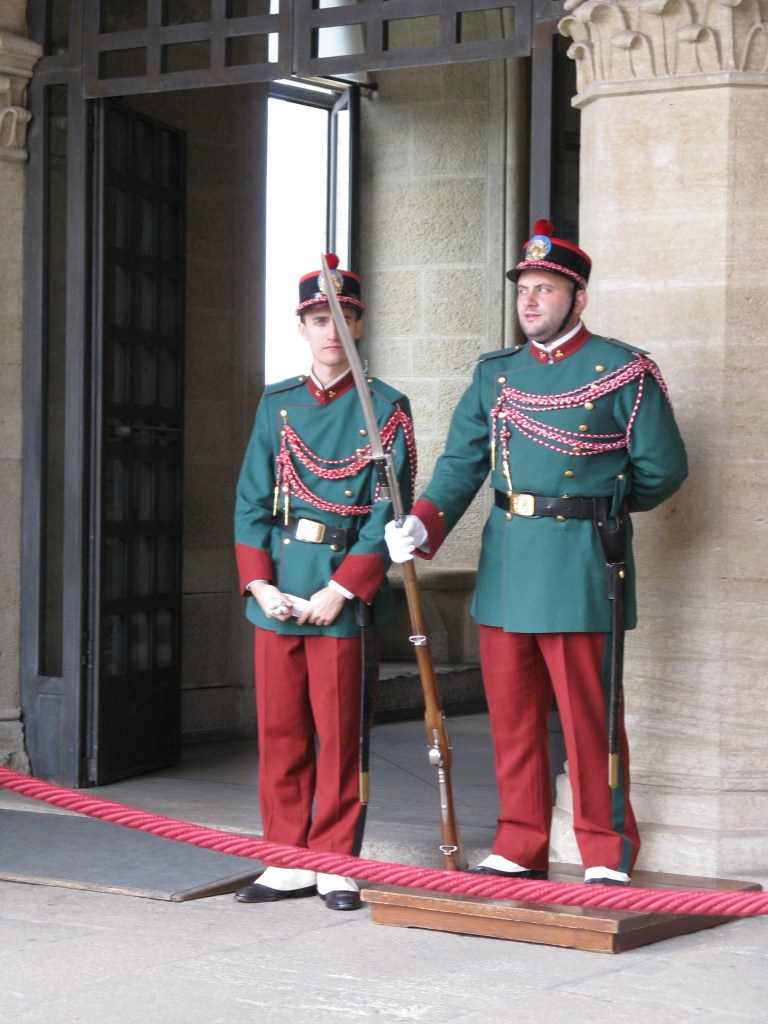
The Palazzo Pubblico (‘Public Palace’) is the town hall of the City of San Marino as well as its official Government Building. The building, where official State ceremonies take place, is the seat of the Republic’s main institutional and administrative bodies: the Captains Regent, the Grand and General Council, the Council of XII, and the Congress of State.
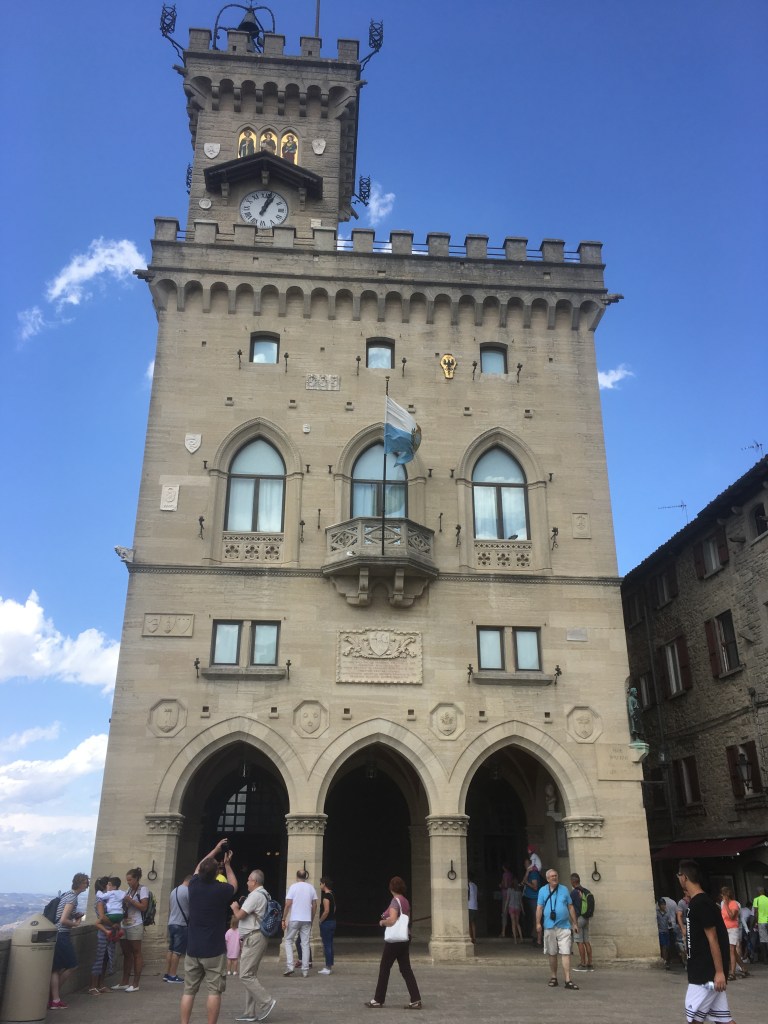
Two guards who are on duty protecting the town hall.
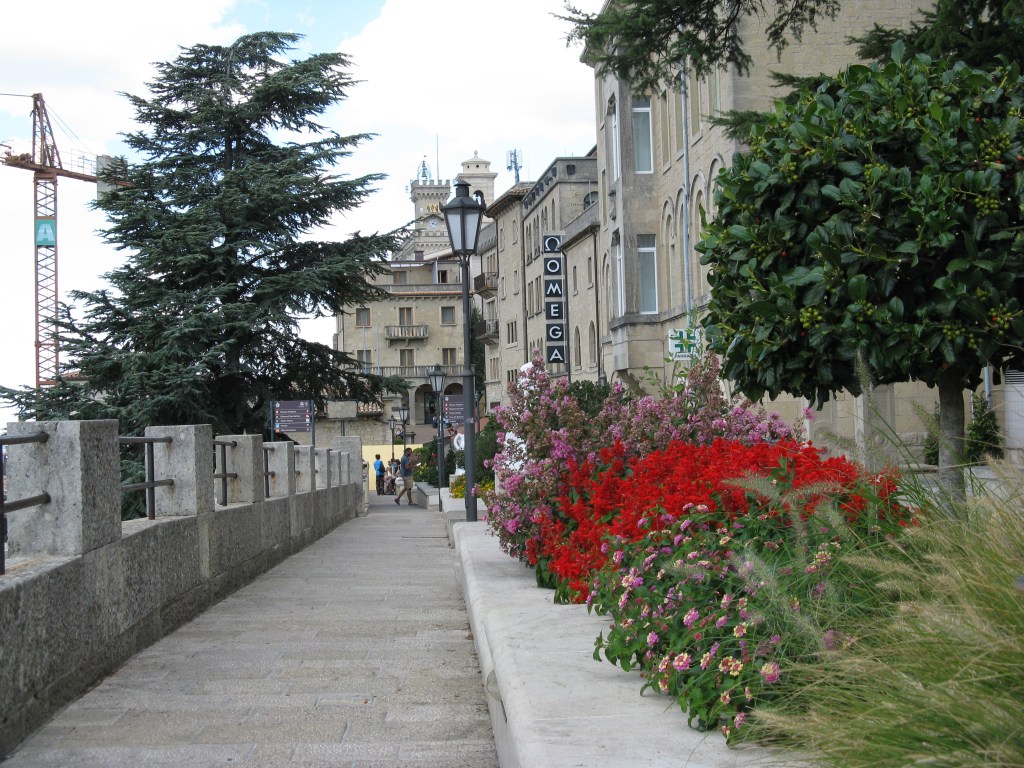
San Marino is extremely hilly, not the best choice of holiday destination if you have a walking difficulties.

A typical street in the centre of San Marino with colourful flower beds.
Bologna
This is the capital city of the Emilia-Romania region of italy and occupies 140 square kilometres. The main claim to fame for Bologna is that this has the oldest university in the world which was founded in 1088. The next oldest is Oxford in 1096.
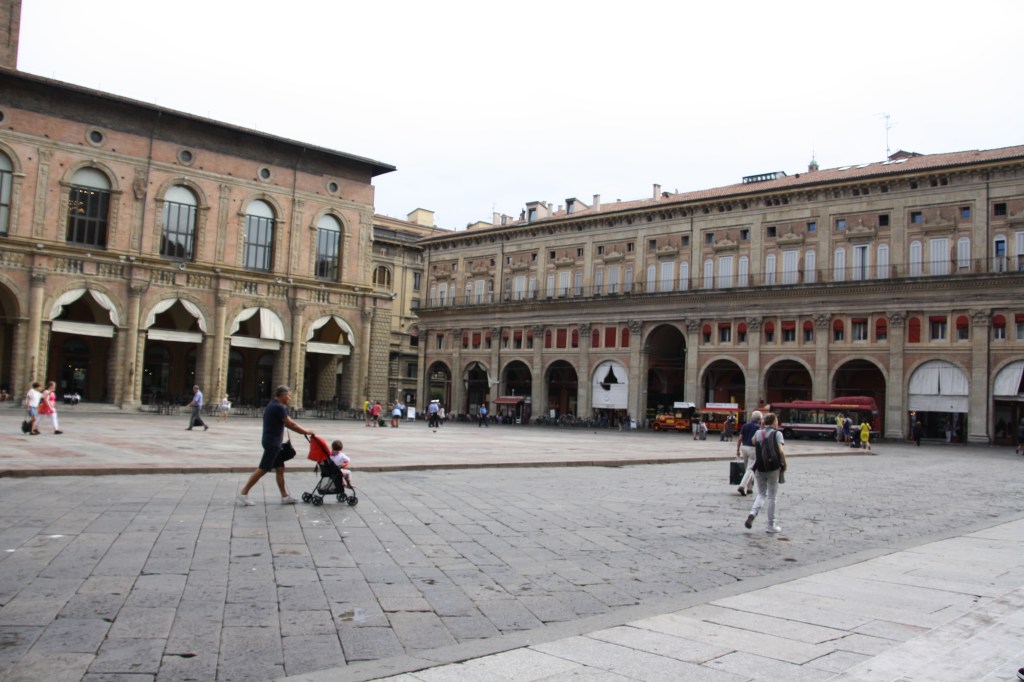
Piazza Maggiorie
The main square in Bologna called the Piazza Maggiorie.

This is a statue which is contained on the front of the Palazzo d’Accursio. This buildingis on the Piazza Maggiorie and used to be a palace containing the houses of administration of the city but is now to the civic art gallery which contains paintings from the middle ages to the 19th century.

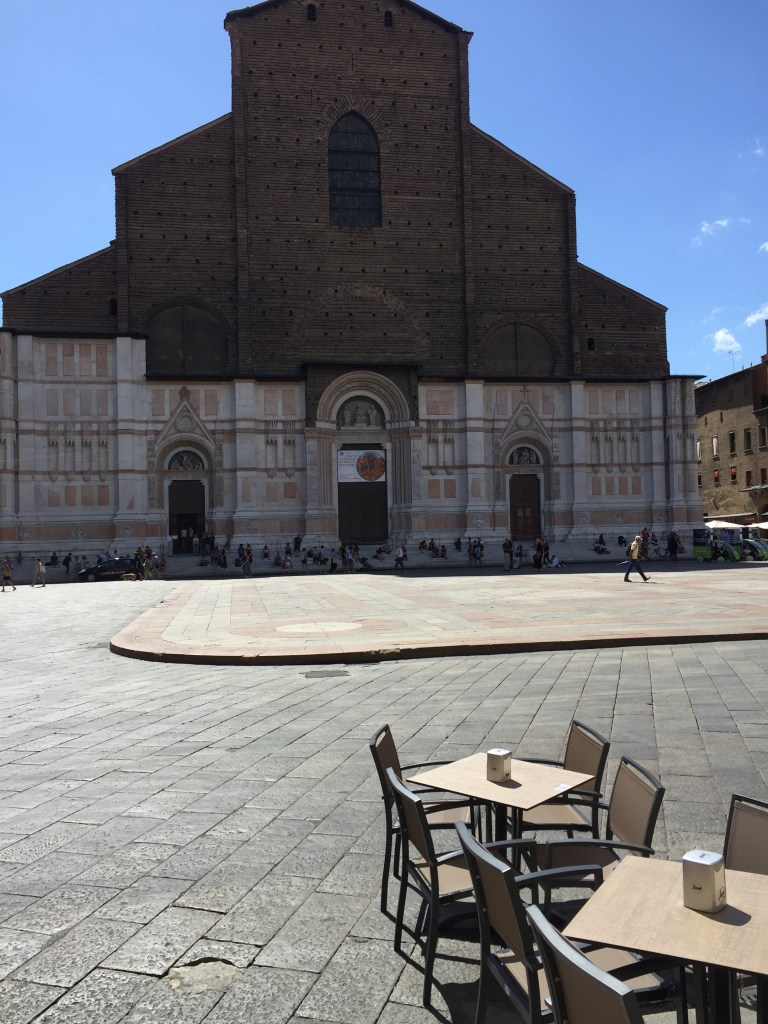
The Basilica of San Petronio is the main church in Bologna and dominates Piazza Maggiore. It is the tenth-largest church in the world by volume, 132 metres long and 66 metres wide, while the vault reaches 45 metres inside and 51 metres in the facade. With its volume of 258,000 m³, it is the largest (Gothic or otherwise) church built of bricks of the world.
Other Piazza’s
This is the Piazza Galvani which is situated behind the Basillica San Petronio.

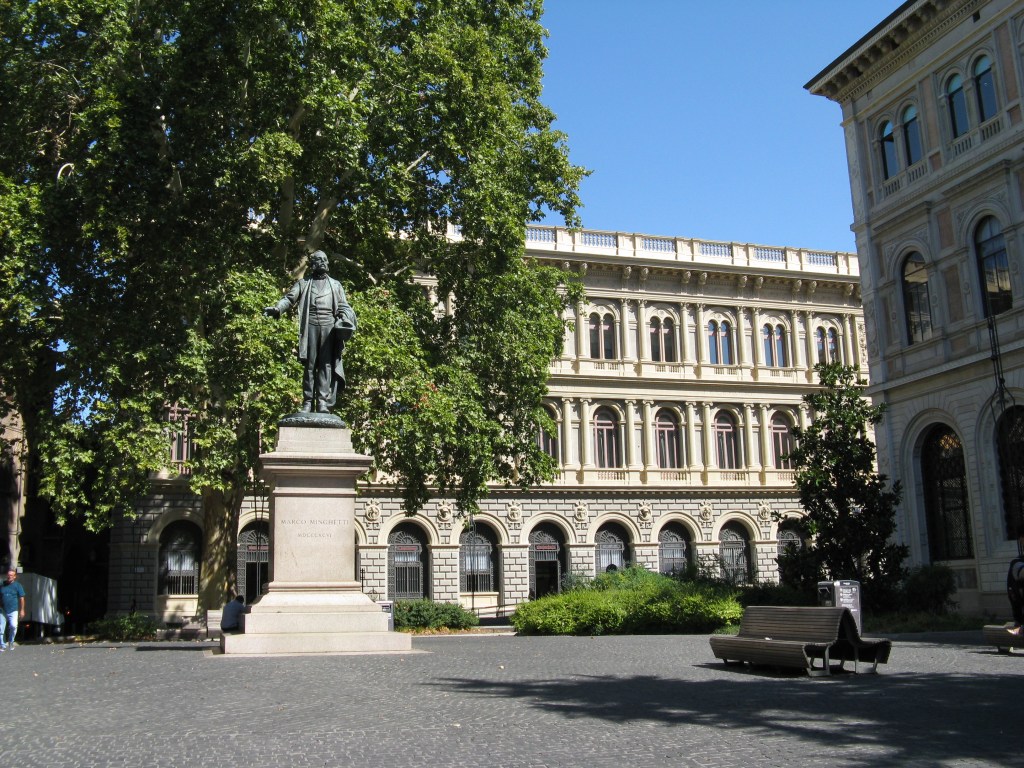
It seems that every Piazza in Bologna has a statue, this one, Piazza Minghetti, is of Marco Minghetti who was a famous Italian economist and statesman. He must have been famous because he has a statue in Rome plus other cities where he once lived.
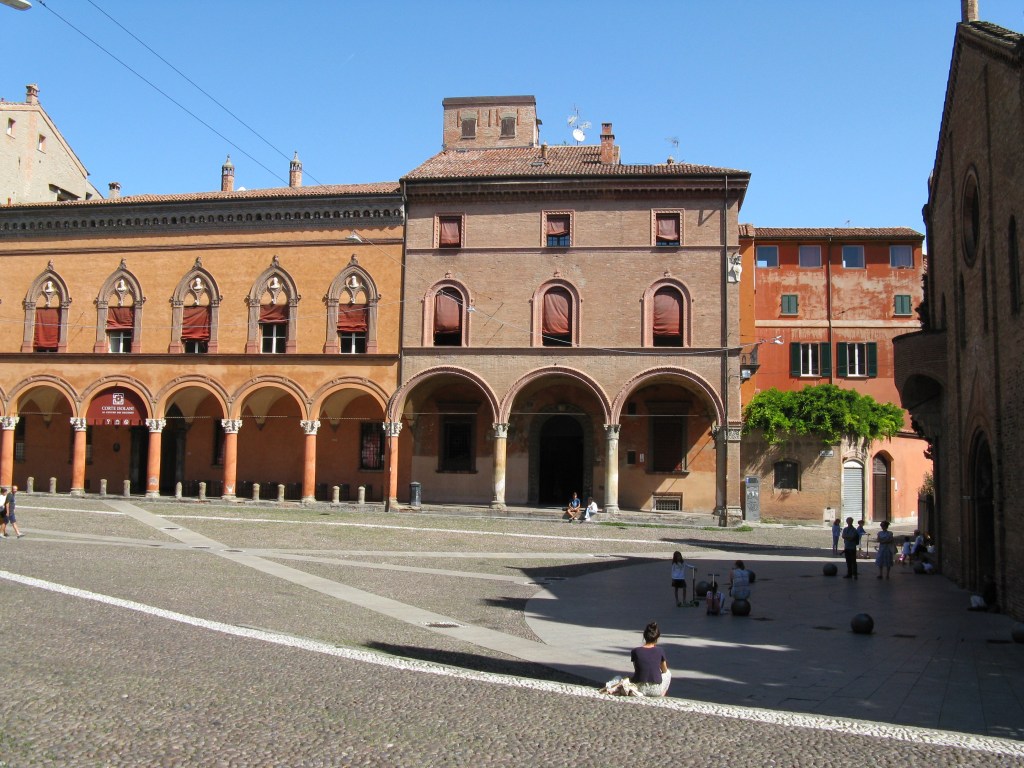
This is the Piazza Santo Stefano also known as Piazza delle Sette Chiese (Seven churches square). This was the first place that we found that had resturants serving food. After we had eaten we found that it in Bologna most retsuants serve snacks up to 7pm and then melas after. The odd thing was we never found anywhere that served spaghetti Bolognaise?
Towers
Bologna use to have many towers but now only twenty three remain. These two are the most famous, the tallest is called Asinelli and is 97 meters high and the smaller one is Garisenda and is 48 metres high. It is hard to take a picture of the two towers which shows how much Garisenda leans.

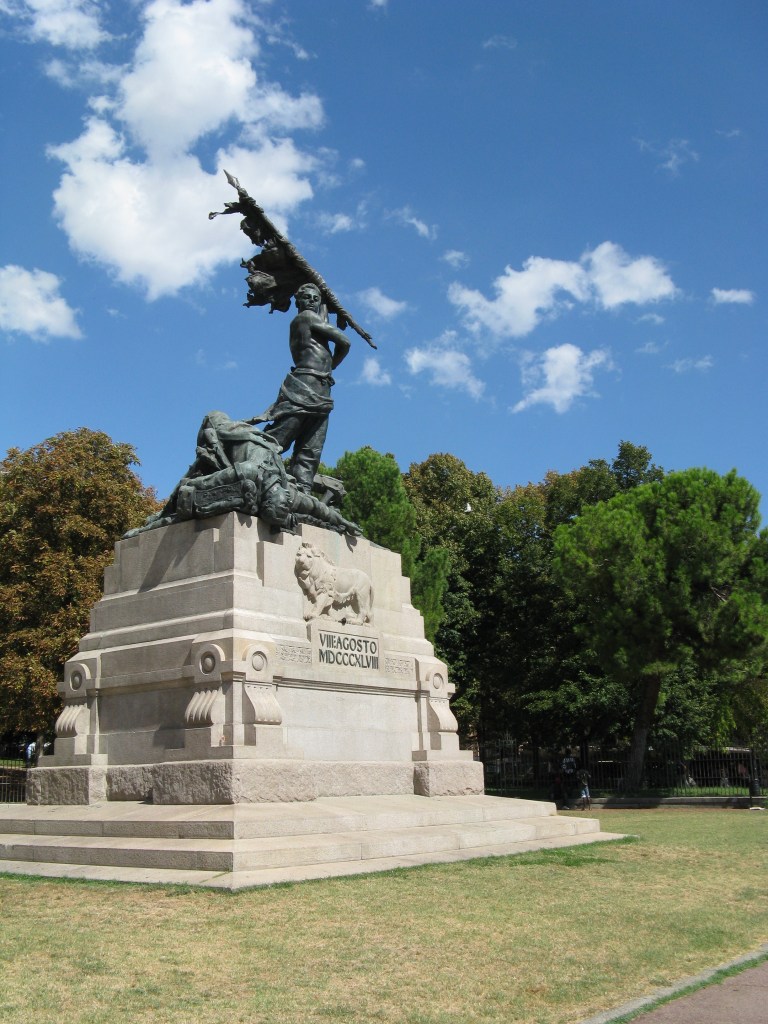
Monument of the Fallen
This is the monument to the fallen of the VII August 1848 when an uprising by the citizens of Bologna drove out the Austrian Garrisons. The Italians will build a monument for anything.
City Walls and Gates
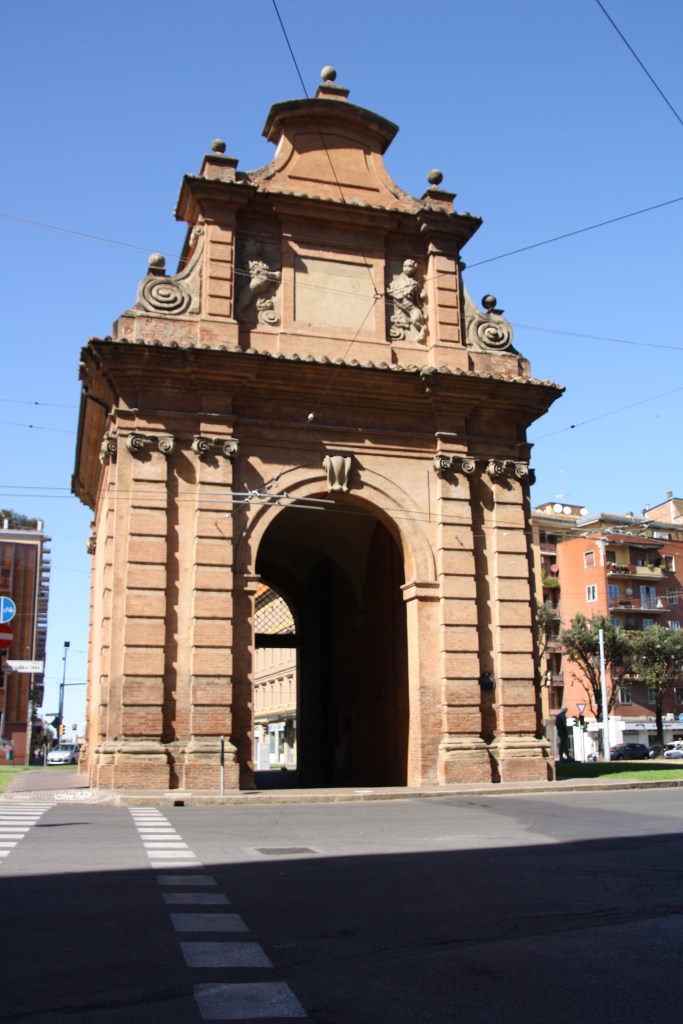
The city is surrounded by a road which can be described as a ring road. On this there are 10 different city gates each of which is different. The one above is Porta Maggiore
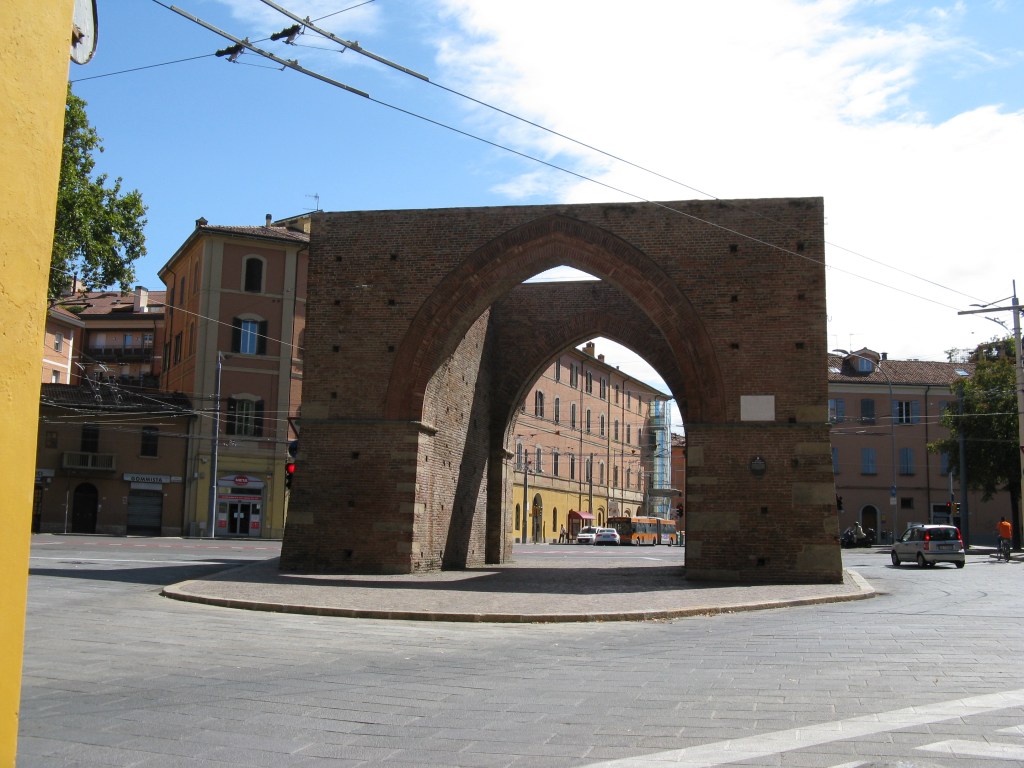
This is the Porta Saragozza.

This is Porta Lame
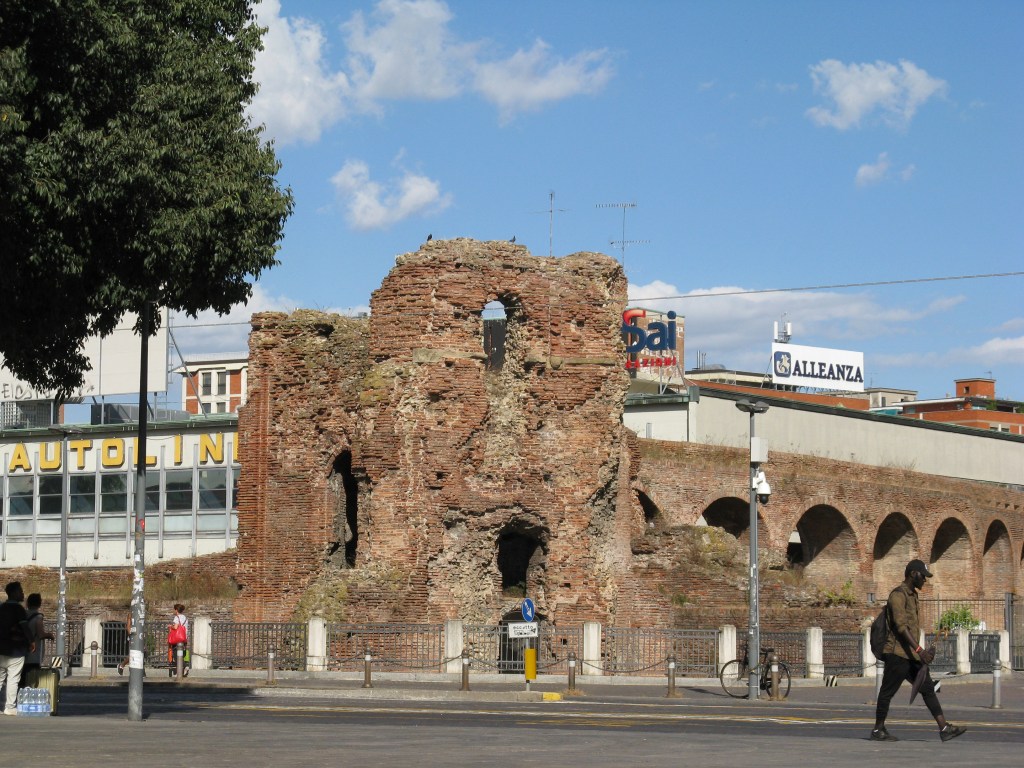
This is the remains of a medieval papal fortress and has been in ruins since the 16th century.
City Views
A view from the hotel window taken in late evening which shows Bologna main railway station. The hotel had triple glassing and was extremely quiet. We were amazed at how popular the station in, there seemed to be droves of people all day long.

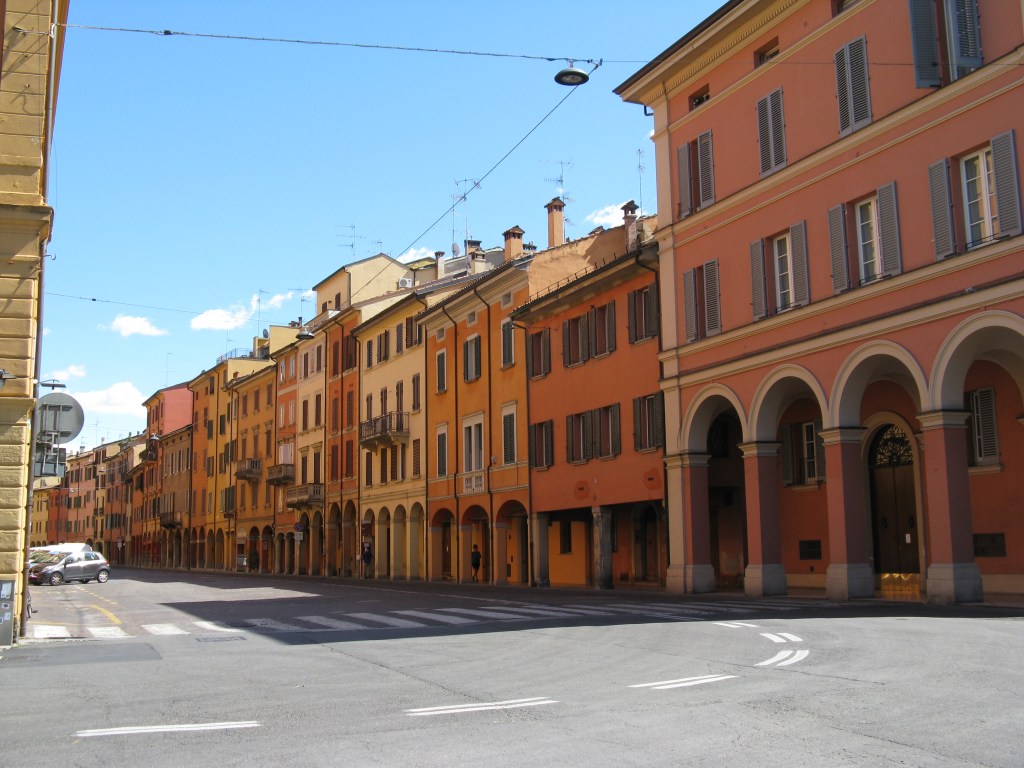
A typical street with a mixture of pink and orange coloured buildings.
Bologna is like many cities which has pop up markets all over the cities where locals shop and things are cheap. T-shirts were even cheaper than Sports Direct.

Parco Della Montagnola
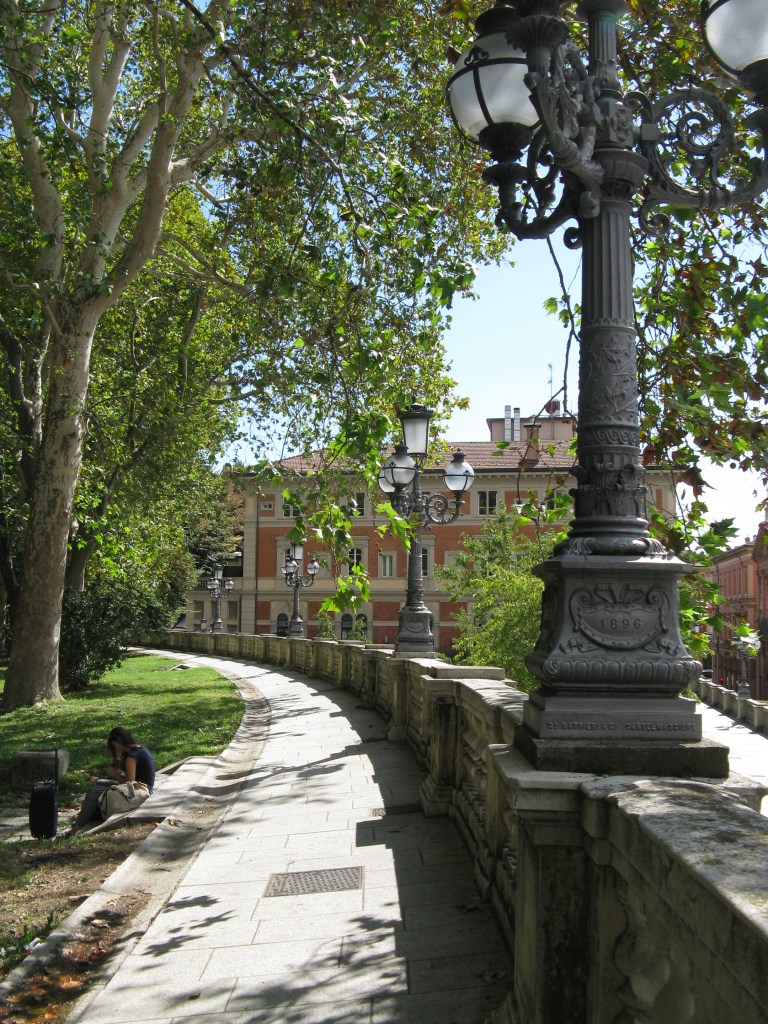
These steps lead up to the Parco Della Montagnola.
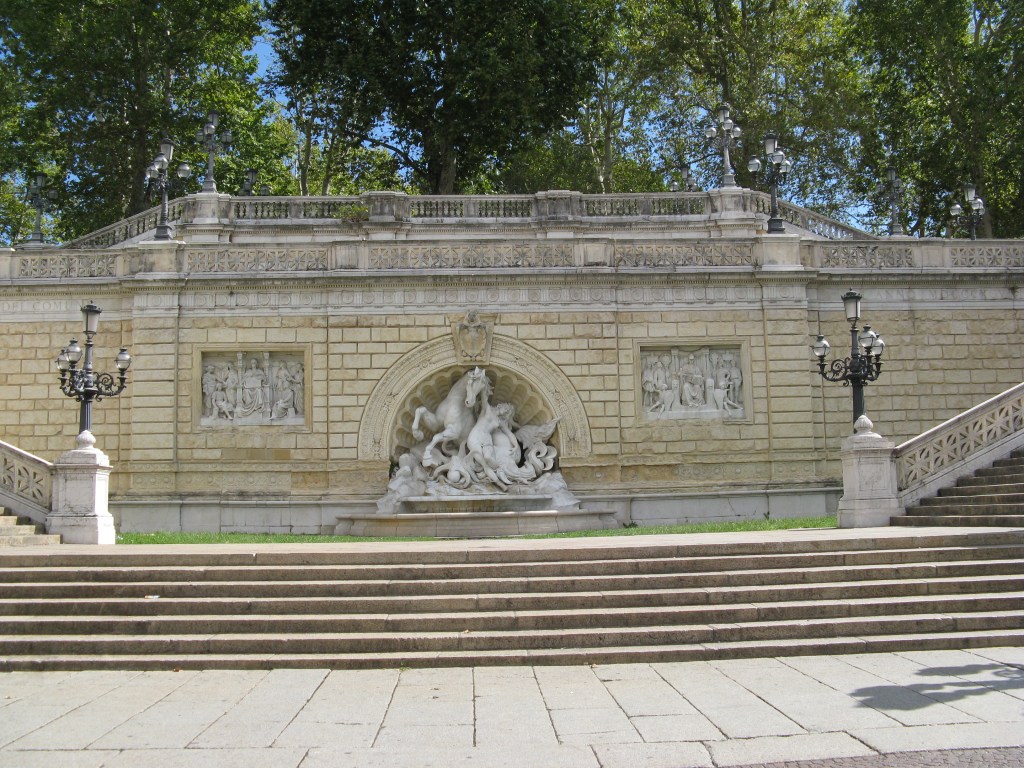
The park is oldest park of Bologna and and has been open to the public since 1664.
Porticos
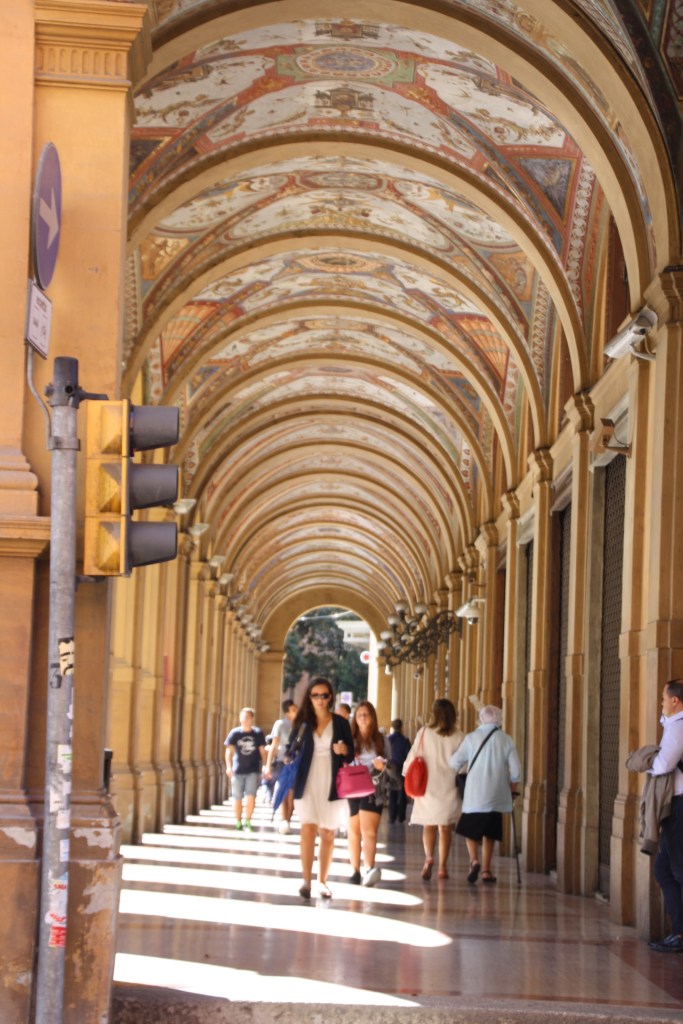
The city was designed with lots of Portico’s. These were created so that rich people could avoid the dusty roads and stay dry when it is wet and cool when it was hot. The portico had to be the hieght of a man on a horse including their hat.
Sanctuary of the Madonna of San Luca
The Sanctuary of the Madonna of San Luca is a basilica church sited atop a forested hill, Colle or Monte della Guardia, some 300 metres above the city plain, just south-west of the historical centre of the city.
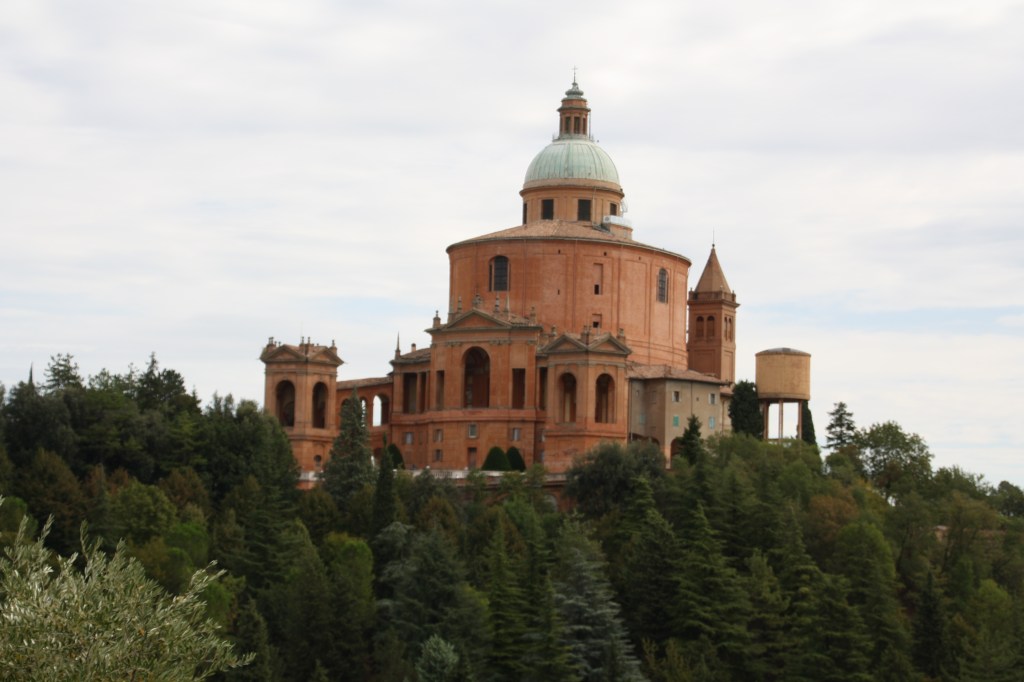
A road now leads up to the sanctuary, it is also possible to reach it along a (3.8 km) monumental roofed arcade (Portico di San Luca) consisting of 666 arches, which was built in 1674-1793. It was meant to protect the icon as it was paraded up the hill. A yearly procession from the Cathedral of San Pietro in the centre of Bologna to the Sanctuary goes along this path. Originally the arches held icons or chapels erected by the patron family.
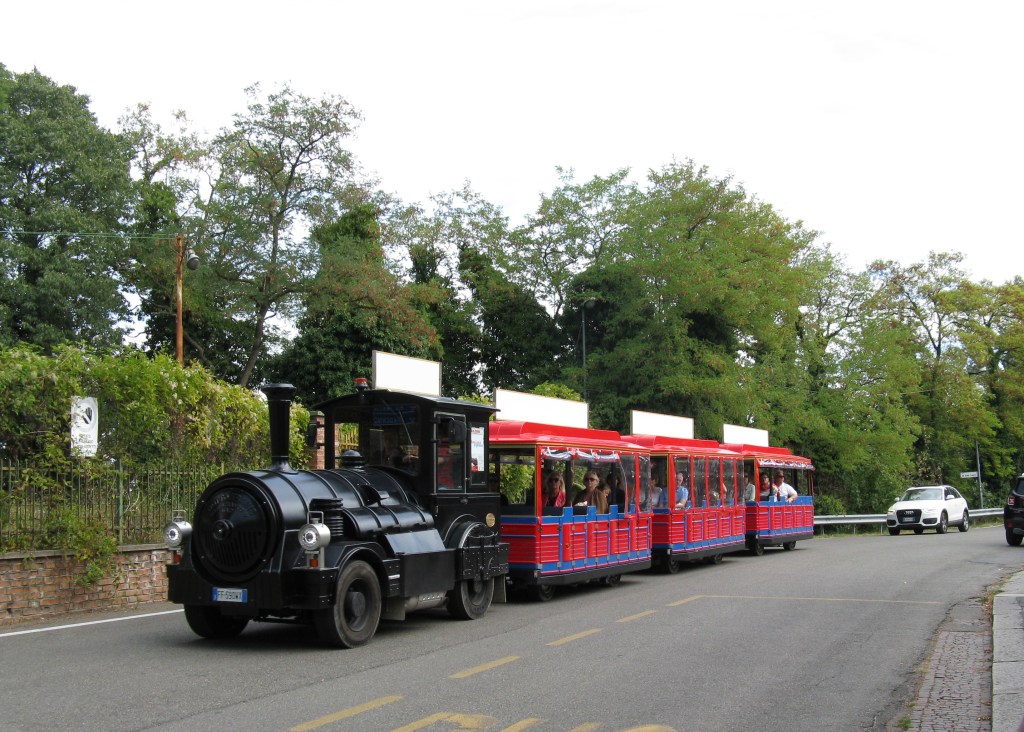
Instead of walking we decided to take the little road train.
Medieval Canals
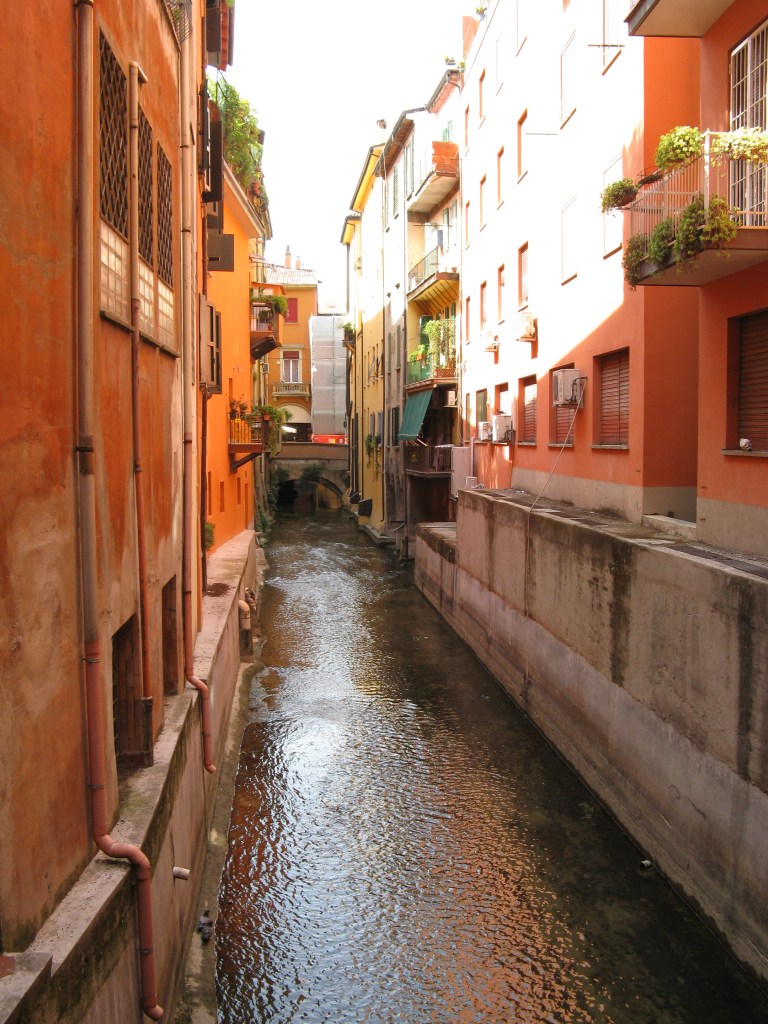
This is one of Bologna’s medieval canals, these are so hidden that a lot of the locals don’t even know they exist. We found this by accident.
In the summer there are underground tours in which you can raft around the canal. We decided against this, didn’t fancy getting attacked by Rats and creepy crawlies.
Prosecco Time
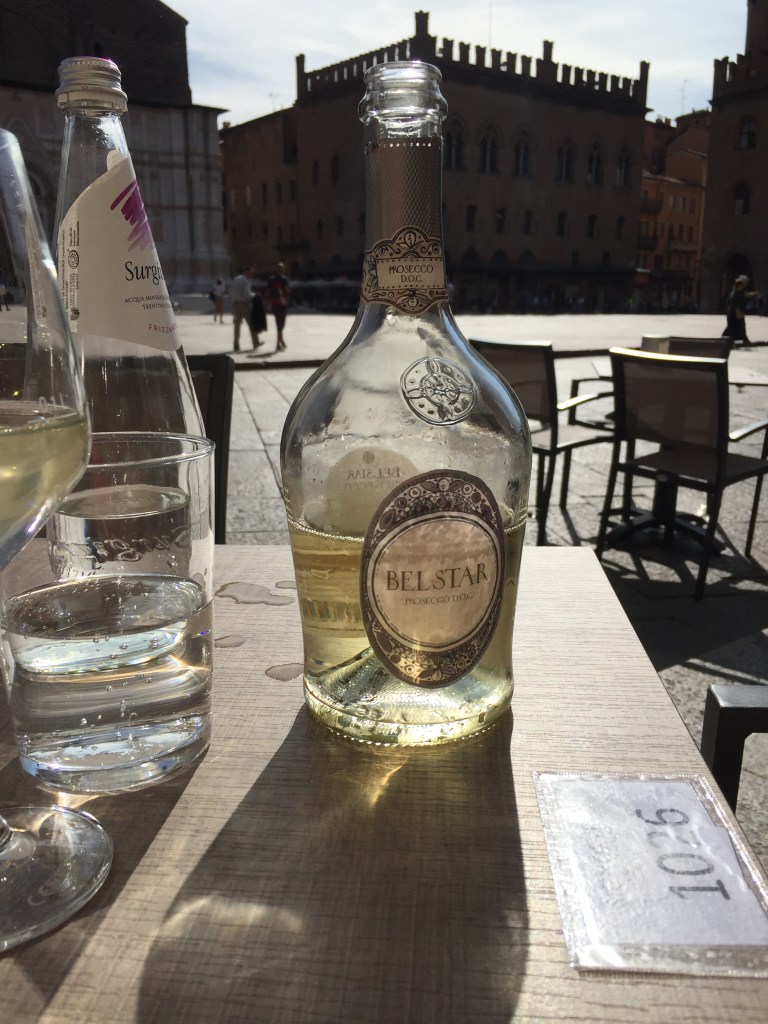
After days of visiting piazza after piazza and tourist attraction after tourist attraction, we ended with a bottle of Prosecco, people watching and sitting in the sun.
 Heather and Keith's travels