Sofia is no Paris or Prague, but Bulgaria’s capital and biggest city has a Balkan beguilement all its own. The old east-meets west feel is still here, with a scattering of onion-domed churches, Ottoman mosques and stubborn Red Army monuments, and the city’s grey, blocky architecture adds a lingering, interesting Soviet flavour to the place. Vast, leafy parks and manicured gardens offer welcome respite from the busy city streets and the ski slopes and hiking trails of mighty Mt Vitosha are right on the doorstep.
Sofia is unusual for a capital city as it doesn’t lie on a river or has a port. It is a small city which is easy to get round on foot. On a longer trip there are a number of places to visit within day trip distance from the city.

The old town has disappeared in the majority of places as they have just built the new town on top.
We visited Sofia in March 2018 and stayed at the Central Hotel which is a five minute walk from the main street.
Arrived at passport control at Sofia airport and was met by organised chaos. There were four booths and a free for all, never been anywhere that doesn’t have a queuing system.
The public transport to the hotel is not easy to navigate so we organised a taxi from the hotel prior to our arrival which was great. Our taxi driver was waiting and we headed off. The driver seemed to have number dyslexia and didn’t seem to notice that the speed limit was 80 when we were travelling at 135. He also didn’t seem to care that other drivers were on the road as he overtook or undertook vehicles at will.
When we arrived the temperature was 22 degrees and we sat in T-shirts drinking a nice cold beer. Looking down the Main Street you have a beautiful view of snow capped mountains
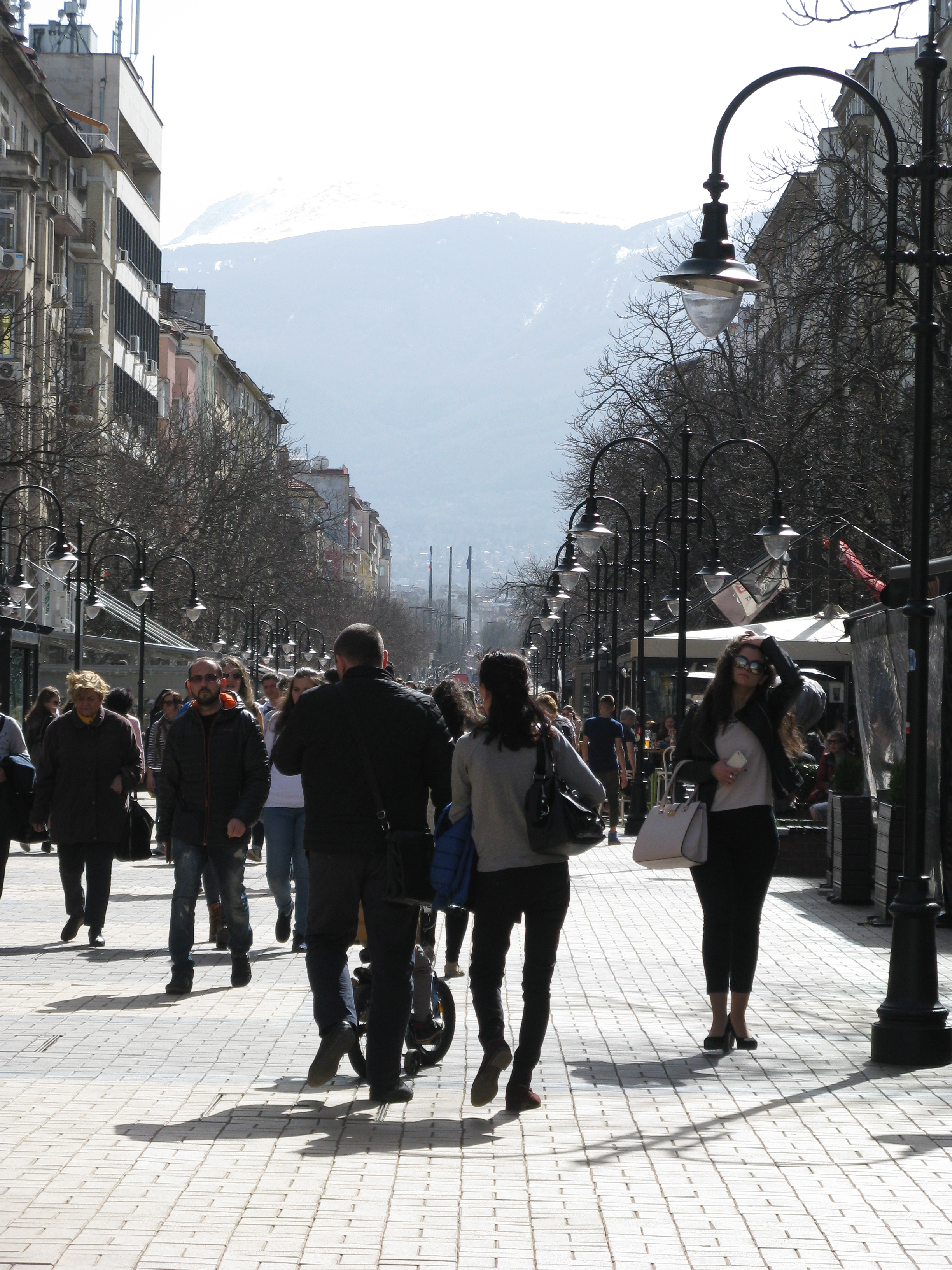
We went in to a trendy bar at 7:30 on a Saturday night and there was two tourists, us, two locals and 8 bar staff. The bar had nibbles consisting not of nuts or crisps but carrot or celery sticks which don’t really go with beer or wine. After one drink we decided to leave and chance a different bar.
National Palace of Justice
The Sofia Court House is a simplistic yet monumental structure and the need for a common building to house all the courts in Sofia was raised in 1926 with the foundation of the Judicial Buildings fund. Construction began in 1929 and finished in 1940. The Court House has a syenite plinth, a facing of white limestone and a noticeable cornice below the top floor. The four-storey building (with two additional underground floors) spreads over a ground area of 8,500 square metres and has 430 premises, of which 24 courtrooms, a library and a bank hall, totalling 48,000 square metres of used area.

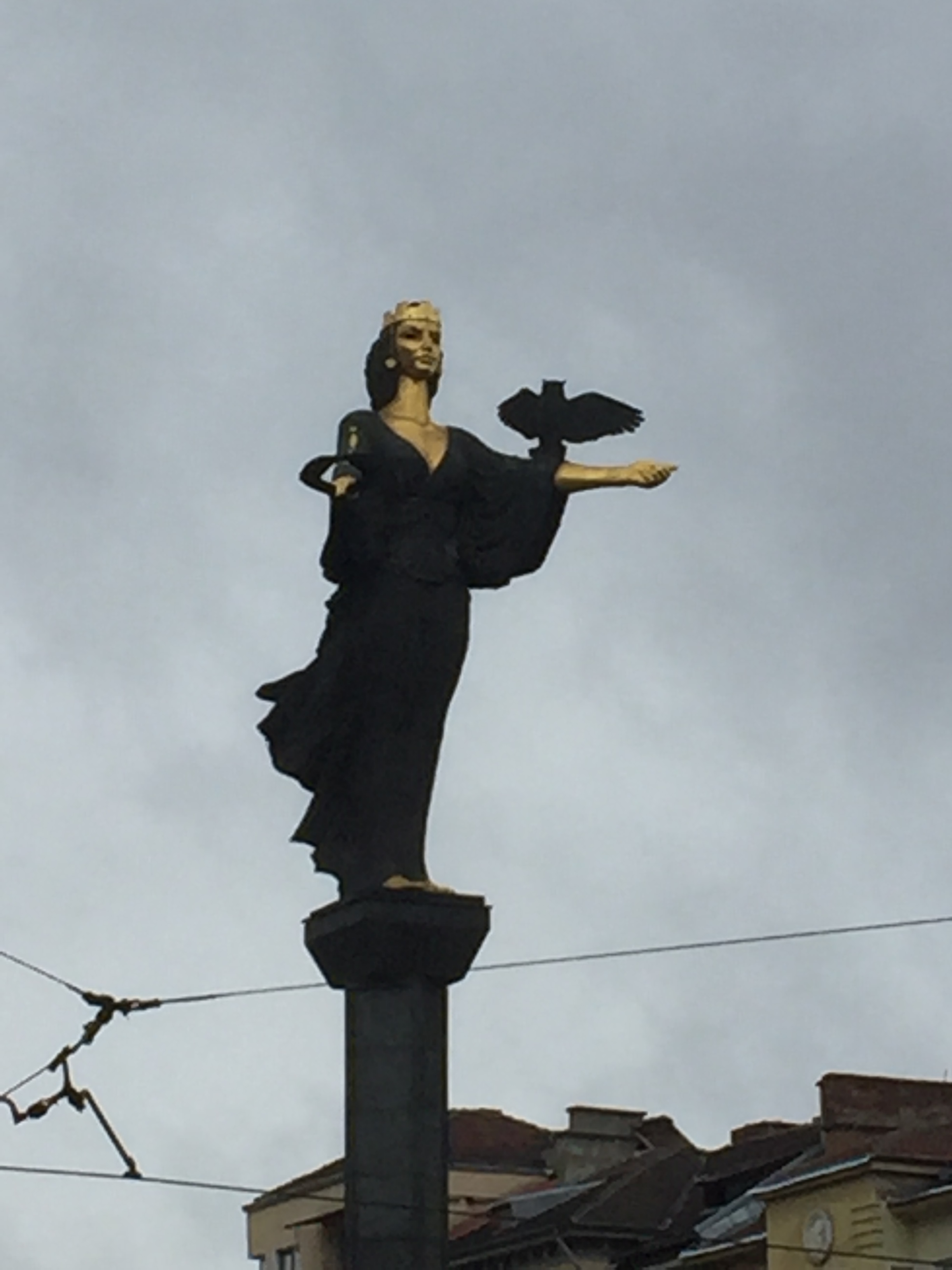
Sveta Nedelya Church
St. Nedelya Church is an Eastern Orthodox cathedral of the Sofia bishopric of the Bulgarian Patriarchate. Sveta Nedelya is a medieval church that has suffered destruction through the ages and has been reconstructed many times. The present building of the temple is among the landmarks of Sofia.
The history of the cathedral’s earliest years is to a large extent unknown. It was probably built in the 10th century and had stone foundations and an otherwise wooden construction, remaining wooden until the middle of the 19th century, unlike most other churches in the city.
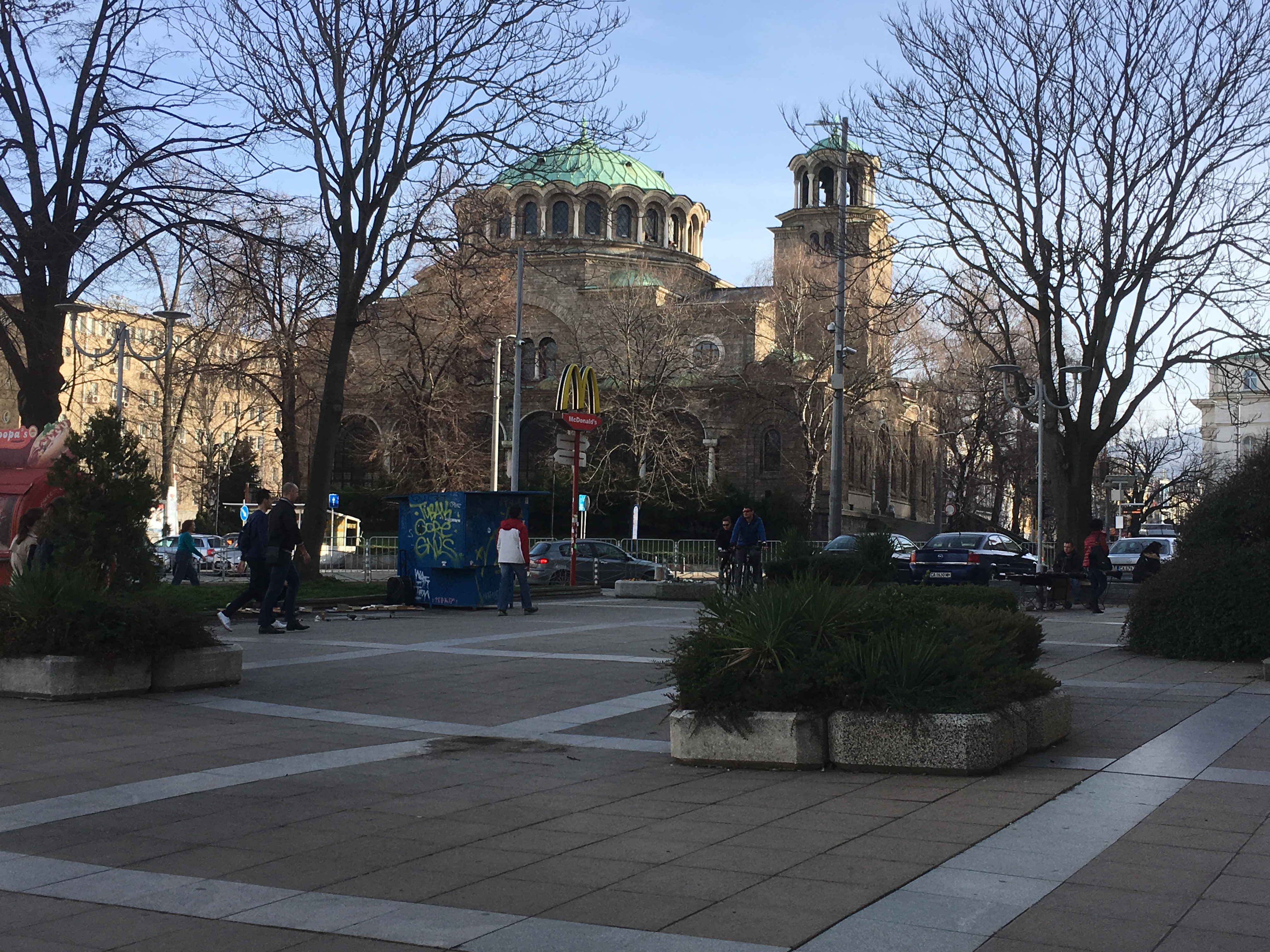
Coat of Arms of Sofia
The coat of arms of Sofia consists of a shield divided into four. The image of the Church of St. Sophia which gave the name to the city takes up the upper left quarter (as seen from behind the shield) and a humanized picture of the ancient town of Serdica taken from an antique coin is located to the right (again, heraldry reverses right and left as it is from the point of view of someone holding the shield from behind). At lower left is a golden baldachin and a statue of Apollo Medicus representing the mineral springs around the city, while the lower right quarter is reserved for Vitosha, the mountain at the foot of which Sofia is located.
In the middle is another, smaller shield, with a lion rampant, a traditional Bulgarian symbol. A crown of walls and towers tops the larger shield, an element typically reserved for city coat of arms. At the bottom is the city motto, “Расте, но не старее” — Raste, no ne staree (“Ever Growing, Never Ageing”).
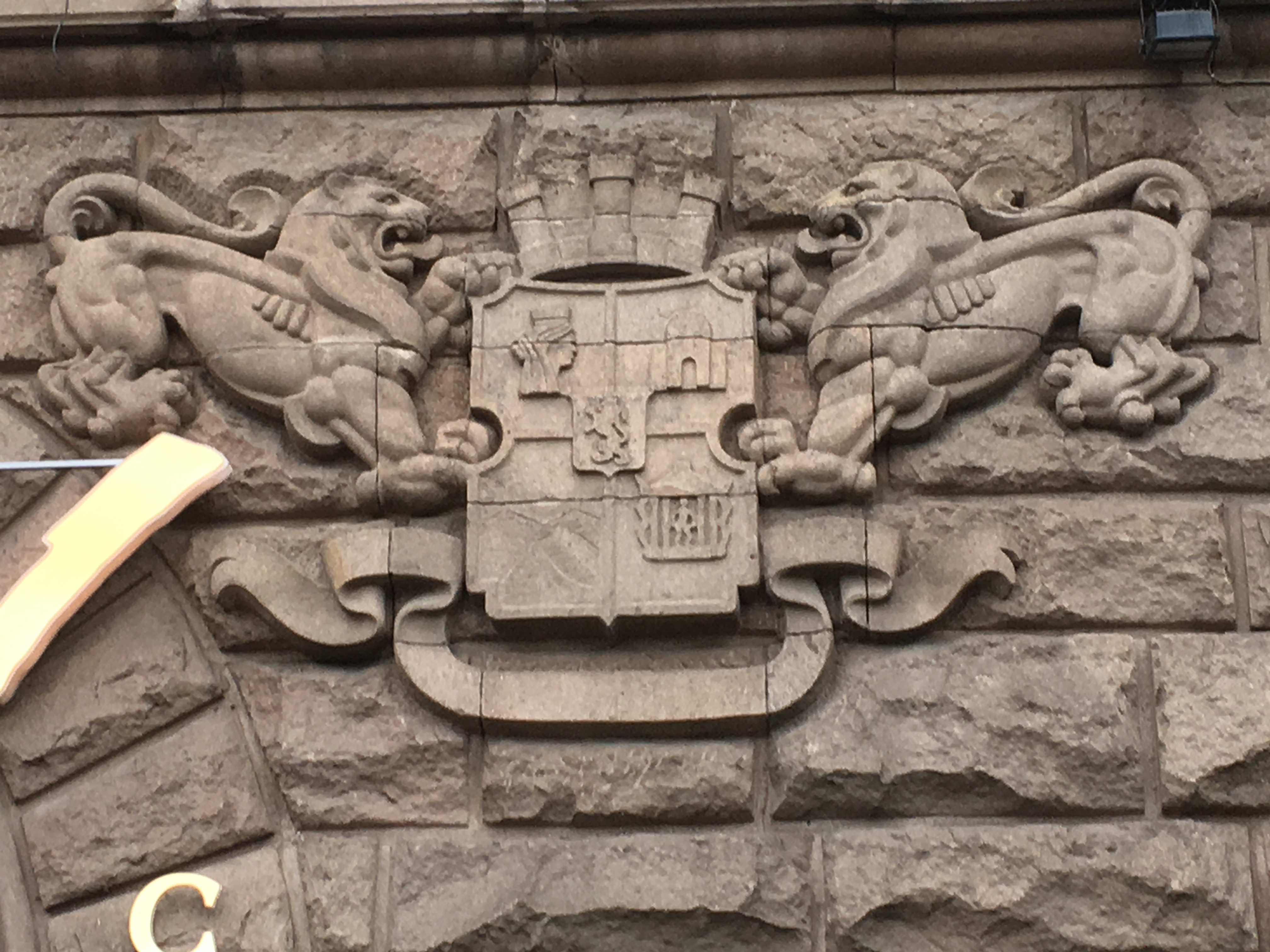
Statue of Sofia
The Statue of Sveta Sofia is a monumental sculpture and the statue, erected in 2000, stands in a spot once occupied by a statue of Lenin.
Sophia was considered too erotic and pagan to be referred to as a saint. 24 feet in height, the copper and bronze statue by the sculptor Georgi Chapkanov, stands on a 48 feet high pedestal. Adorned with the symbols of power (crown), fame (wreath) and wisdom (owl), the crown is also a reference to the Goddess of Fate – Tyche, inspired by the old emblem of Sofia dating back to 1900.
Church of St. Petka
The Church of St Petka of the Saddlers is a medieval Bulgarian Orthodox church.
It is a small one-naved building partially dug into the ground located in the very centre of both the modern and the antique city, in the TZUM subway. The church features a semi-cylindrical vault, a hemispherical apse, and a crypt discovered during excavations after the Second World War. The walls are 1 m thick and made from brick and stone.
The church was first mentioned in the 16th century and was constructed at the place of a former Roman religious building. It is today a monument of culture known for its mural paintings from the 14th, 15th, 17th and 19th century depicting biblical scenes.

Bath / Museum of Sofia
The Central Mineral Baths (Централна минерална баня, Tsentralna mineralna banya) is a landmark an area of the city known for the mineral springs in the area. It was built in the early 20th century near the former Turkish bath (then destroyed) and was used as the city’s public baths until 1986.Public baths have existed in Sofia since at least the 16th century.
The north wing was damaged during the bombing of Sofia in World War II, but was restored several years later. The baths continued to work as public baths until 1986, when the building was closed due to its bad condition and the possible collapse of the roof. It was subsequently partially reconstructed and thoroughly cleaned and accommodates the Sofia Regional Historical Museum since September 2015.

Former Communist Party Headquarters
The former Communist Party House /Bulgarian: Partien Dom/ is now used by the National Assembly of Bulgaria. Today the building is mainly used as Government offices and the splendid Sofia Hall is occasionally used for charity concerts.
The light-coloured neo-classical edifice lies at the end of the Independence Square, but it is the evidence how former Communism leaders in Bulgaria made their effort to follow the whole Communism concept and establish a grandiose building with the intention to house the Communist Party central Committee. The impressive building, now one of top Sofia’s landmarks, was designed by a team of prominent architects. It was completed in 1955. In order to represent the Communism in Bulgaria, a massive red star crowned the rocket-shaped spire of the building. However, when Bulgarians attempted to torch the building in 1990, the star was removed in a hasty manner. Subsequently the red star was substituted by the flag of Bulgaria.

Presidency
In the history of modern Bulgarian State, the functions of head of State have been performed by a monarch, a Regency Council and, later on, by collegial bodies like a Presidium of the National Assembly and a State Council. The presidential institution in Bulgaria came into being upon the adoption of the country’s new Constitution on 12 July 1991. The establishment of a republic with a parliamentary system of government was accordingly accompanied by introduction of the institution of President of the Republic as head of State.
The President, as head of State is traditionally Supreme Commander-in-Chief of the Bulgarian Armed Forces. This function is performed both in peacetime and in wartime. The President is empowered to appoint and discharge the highest command personnel of the Armed Forces and to award the highest military ranks, acting on a recommendation by the Council of Ministers.
The President practically governs the country during the period between a dissolution of the National Assembly and the conduct of early parliamentary elections. In this case, the President appoints a caretaker cabinet, which is accountable to him or her.

Rotunda of St George
The Church of St George is an Early Christian red brick rotunda that is considered the oldest building in Sofia. It is situated behind the Sheraton Hotel, amid remains of the ancient town of Serdica.
Built by the Romans in the 4th century, it is a cylindrical domed structure built on a square base. It is believed that it was built on the site of a pagan temple, though the original purpose of the building was for public use. The building is famous for the 12th-, 13th- and 14th-century frescoes inside the central dome. Three layers of frescoes have been discovered, the earliest dating back to the 10th century. Magnificent frescoes of 22 prophets over 2 metres tall crown the dome. Painted over during the Ottoman period, when the building was used as a mosque, these frescoes were only uncovered and restored in the 20th century.

Russian Church
The Russian Church (Bulgarian: Руска църква, translit. Ruska tsarkva), officially known as the Church of St Nicholas the Miracle-Maker (Bulgarian: църква „Св. Николай Чудотворец“, translit. tsarkva “Sv. Nikolay Chudotvorets”), is a Russian Orthodox church , which was was built on the site of the Saray Mosque, which was destroyed in 1882, after the liberation of Bulgaria by Russia from the Ottoman Empire.
Construction began in 1907 and the church was consecrated in 1914. The church remained open after the Russian Revolution and during the Communist period in Bulgaria (1944–1989), though priests and church-goers were carefully watched by the State Security police.
The exterior was recently restored by the Russian Government. The interior murals unfortunately are darkened by smoke from candles and from time and are in need of restoration.
The crypt housing the remains of Saint Archbishop Seraphim is located beneath the Russian Church’s main floor. Dozens of people still visit the grave of the archbishop, who died in 1950, praying and leaving notes asking for wishes to be granted.

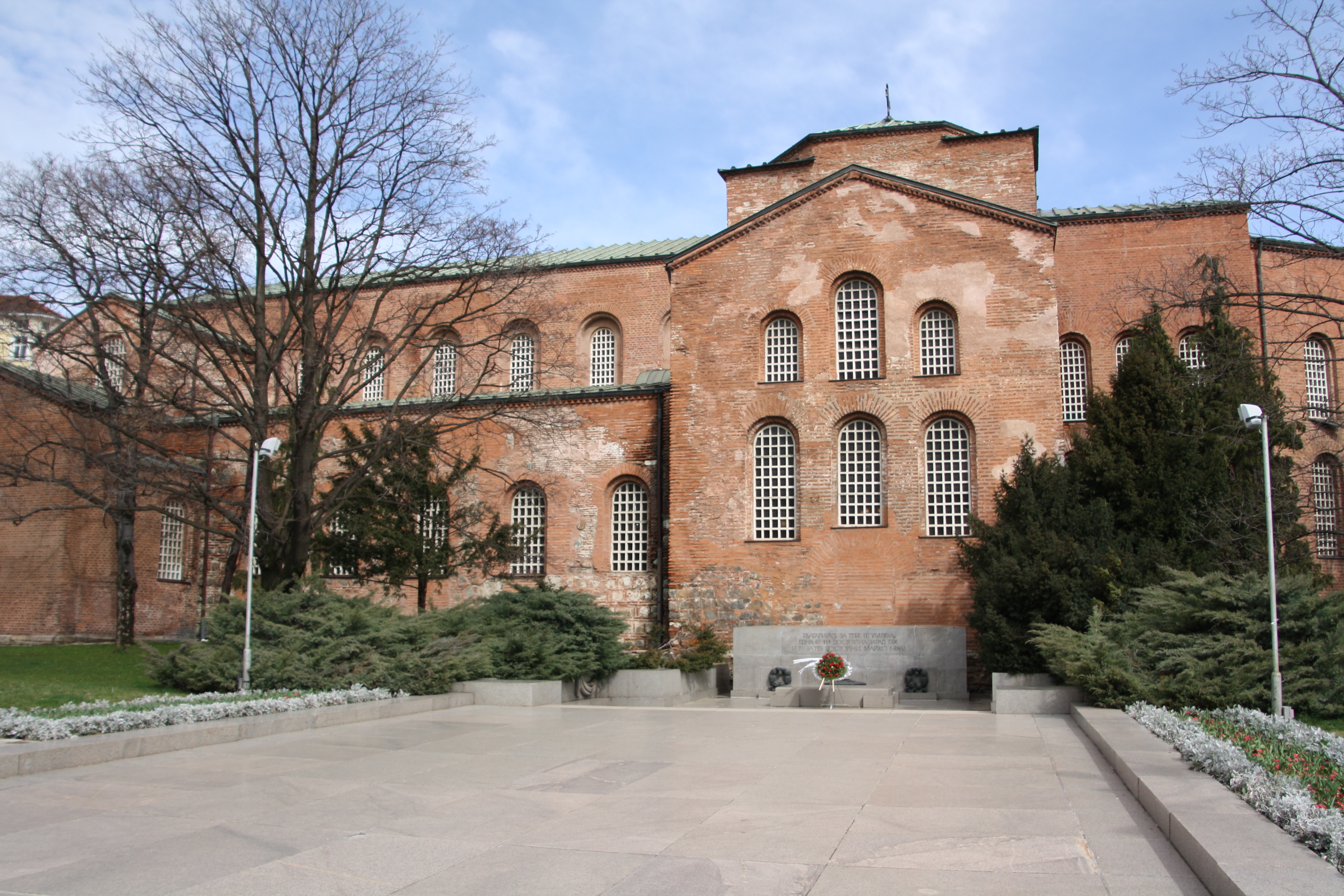
St. Sophia Basilica
The Saint Sofia Church is the second oldest church, dating to the 4th-6th century.
The Saint Sofia Church is now one of the most valuable pieces of Early Christian architecture in South-Eastern Europe. The present building is a cross basilica with three altars. The floor of the church is covered with complex Early Christian ornamental or flora and fauna-themed mosaics. The Saint Sofia Church stands in the middle of an ancient necropolis and many tombs have been unearthed both under and near the church. Some of the tombs even feature frescoes.
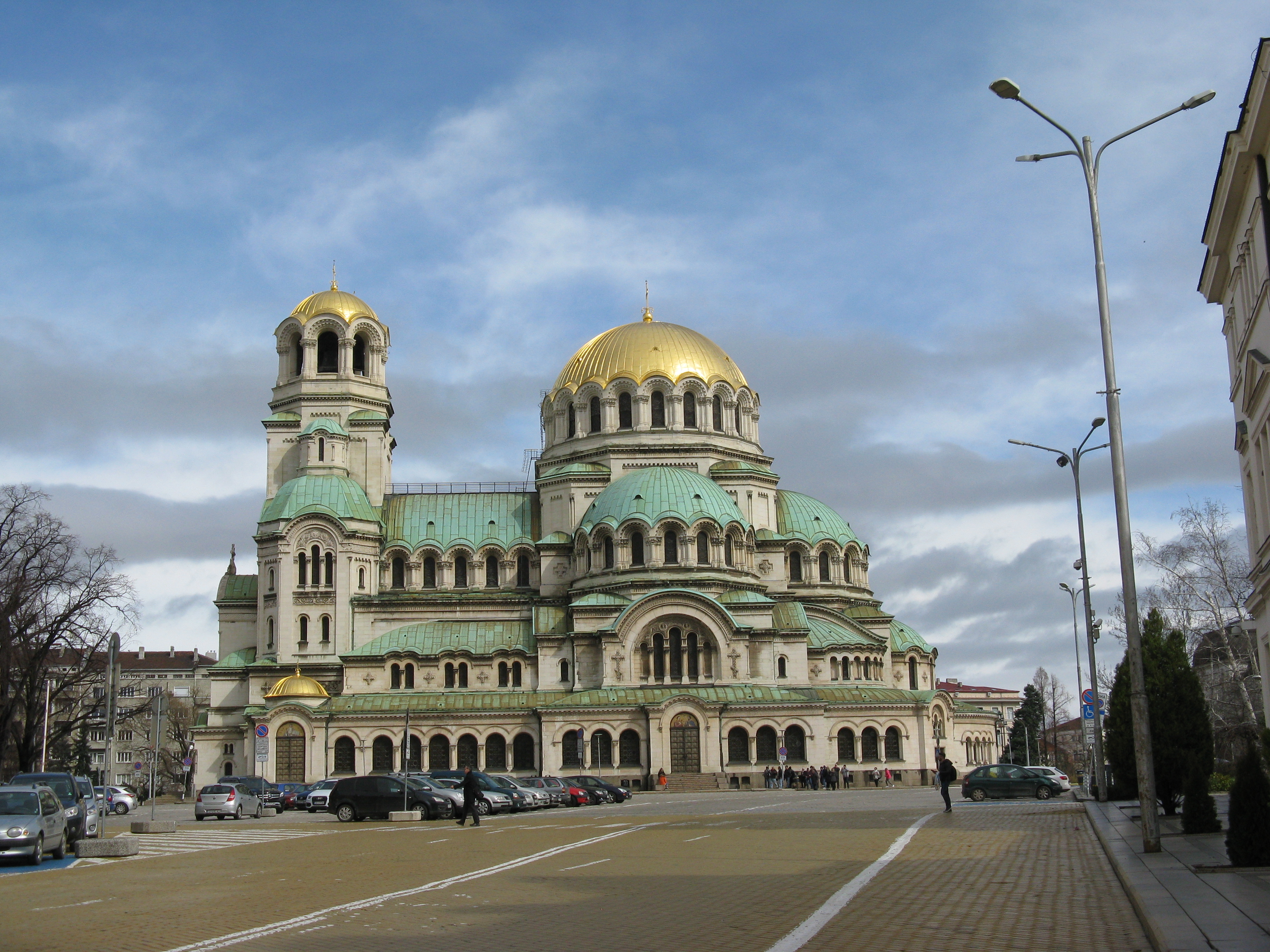
St. Alexander Nevski Cathedral
The St. Alexander Nevsky Cathedral is a Bulgarian Orthodox cathedral which is built in Neo-Byzantine style, it serves as the cathedral church of the Patriarch of Bulgaria and it is one of the largest Eastern Orthodox cathedrals in the world, as well as one of Sofia’s symbols and primary tourist attractions. The St. Alexander Nevsky Cathedral in Sofia occupies an area of 3,170 square metres (34,100 sq ft) and can hold 10,000 people inside. It is the second largest on the Balkan Peninsula after St Sava in Belgrade. However the Bulgarians consider this to be the largest as St Sava’s isn’t finished yet (see Belgrade page for St Sava).
Monument to the Unknown Soldier (Паметник на Незнайния воин)
The Monument to the Unknown Soldier located just next to the 6th-century Church of St Sophia, on 2 Paris Street. The monument commemorates the hundreds of thousands of Bulgarian soldiers who died in wars defending their homeland. Ceremonies involving the President of Bulgaria and foreign state leaders are often performed here.
The Monument to the Unknown Soldier features an eternal flame, turf from Stara Zagora and Shipka Pass, sites of two of the most important battles of the Russo-Turkish War of Liberation (the Battle of Stara Zagora and the Battle of Shipka Pass), a sculpture of a lion (a national symbol of Bulgaria) by the noted sculptor Andrey Nikolov, as well as a stone inscription of a stanza (part of The New Graveyard Above Slivnitsa 1885 poem) by the national writer Ivan Vazov:

Sofia in the Snow
This trip started in 22 degree heat and ended in the snow at -4.

 Heather and Keith's travels