Lively, colourful Tirana is the beating heart of Albania, where this tiny nation’s hopes and dreams come together into a vibrant whirl of traffic, brash consumerism and uninhibited fun. Having undergone a transformation of extraordinary proportions since it awoke from its communist slumber in the early 1990s, Tirana’s centre is now unrecognisable, with its buildings painted in primary colours, and public squares and pedestrianised streets a pleasure to wander.
Tirana’s traffic does daily battle with both itself and pedestrians in a constant scene of unmitigated chaos. Loud, crazy, colourful and dusty – Tirana is never dull.
We visited in October 2021 and stayed at the Tirana international hotel and conference centre.
Communism
It is only when you visit a country and talk to local people that you get a true understanding of what it is like to live there. We knew bits about Albania’s communist regime e.g. it was closed to visitors and had lots of bunkers along the shoreline to protect it from invasion. This only scratched the surface. In our short stay we learned, and remembered, from our free walking tour guide the following
- The country was not only closed to international travel but also to domestic travel. If you wanted to go from A to B you needed a reason and a pass.
- Albania formed associations with the USSR and China at different times but the president Enver Hoxha severed these associations because these countries weren’t “Communist Enough”
- When communism fell people had no idea about banking credit cards and telecommunications so everyone had to learn very quickly.
- In the whole country there were only a 1,000 cars when the fall of communism occurred. After this people were given the freedom to drive without taking a driving test. Our experience was that this decision was very unwise, trying to cross the road even under a green light was fraught with danger as cars just drove straight at you.
- The bunkers were built all over the country and between the 1960’s and 1980’s there was a total of 173,371.
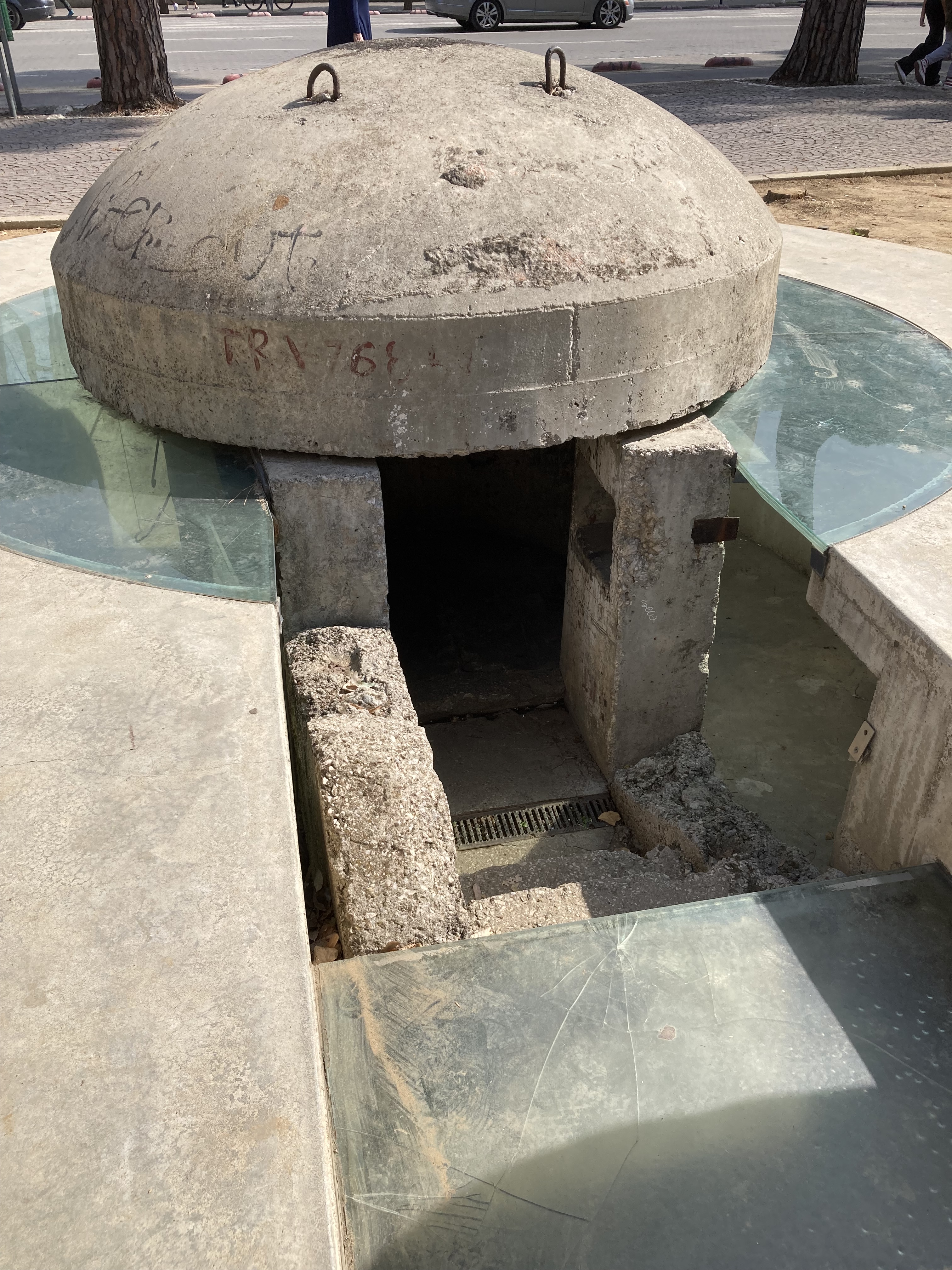
The picture below is the entrance to a bunker which is in the centre of Tirana. The entrance is protected by another bunker and so on.
Skanderbeg Square
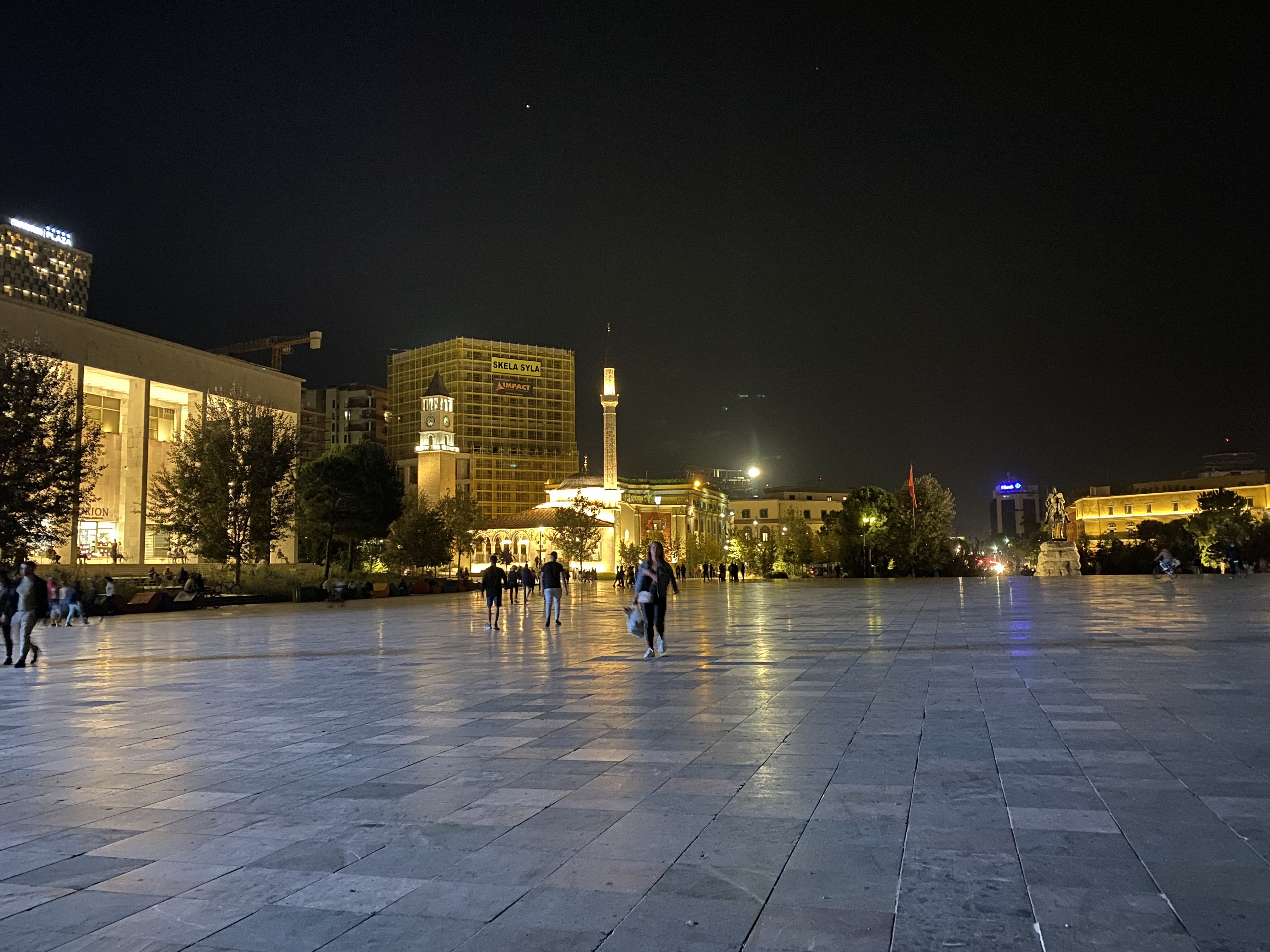
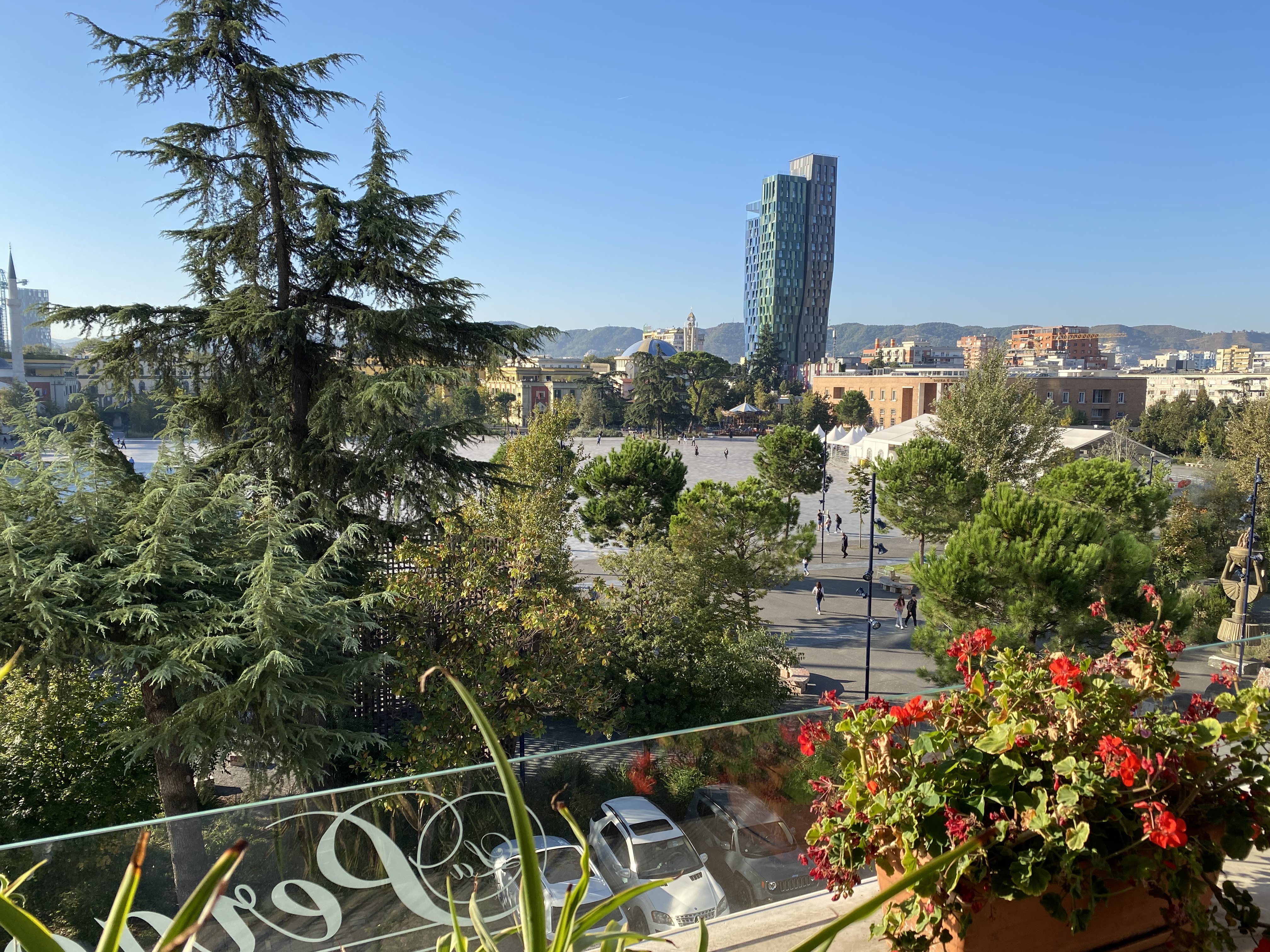
This is the main square in the centre of Tirana and is named after the Albanian national hero Gjergj Kastrioti Skënderbeu. The total area is about 40.000 square metres. The Skanderbeg Monument dominates the square.
The square presents itself as an oasis in the chaos of the city. It is not flat but has a slight some shape which is surrounded by trees and bushes to create a green belt between the congested city and the square. It was originally a roundabout but then became pedestrianised, a further developed turned the space into a paved area. The keen eyed will spot gaps in some paving stones, this is to allow fountains to cover the square in water when the heat of the city becomes too oppressive. The water rolls away from the dome and is recycled.
There are a number of buildings located at the edge of the square including the Tirana International Hotel (where we stayed), the Palace of Culture, the National Opera, the National Library, the National Bank, the Ethem Bey Mosque, the Clock Tower, the City Hall, the Ministry of Infrastructure, the Ministry of Agriculture, the Ministry of Economy, the Ministry of Energy, and the National Historical Museum.

Dajti Ekspress Cable Car
This is definitely worth doing, only a 30 minute bus ride from the centre of Tirana. The cable car is long , climbs nearly 1100 metres and takes 15 minutes.
At the top you get a fantastic view over Tirana, on a clear day we were told you can see the Adriatic Sea and the port of Durres.
At the top there is a hotel, restaurant and bar which rotates 360 degrees. Outise there are lots of attractions including an adventure park, walking trails and a mini golf course

Sou Fujimoto’s “Cloud”
This was originally created for the serpentine pavilion in London in 2013 and resembles a soft cloud, even though it is made of white steel rods. In 2013 it was moved to the green gardens in front of the National Gallery of Arts in Tirana.
As well as being admired its beauty, it also serves as an independent art space. In warm summer evenings, the Cloud becomes a stage for musicians and theatre performances.

Bunk’Art
The former dictator, Enver Hoxha, was so paranoid about the threat of enemy hunting him that he commissioned an underground protective bunker to protect him from nuclear fallout. The bunker has five levels and is 3000 M2.
After the fall of communism and the death Enver Hoxha this bunker was subsequently turned into a combined history museum and contemporary art gallery and is known a Bunk’Art 1. This lies on the outside of Tirana.

Following on from the success of Bunk’Art 1, Bunk’Art 2 was born. This nuclear bunker lies in the heart of Tirana and is approximately 1000 M2. museum inside a preserved, Communist-era nuclear pit bunker.
The journey through Bunk’Art 2 gives an insight to the isolation and paranoia of the psot war period until 1991. Each of its 24 rooms recount stories of the political persecutions of approximately 100,000 Albanians during this period, the creation of Sigurimi’s (the state security, intelligence and secret police service) and exhibitions showing the persecution during this dark period of history.
In these museums you couldn’t use flash and so the only pictures we took were from the outside.
Museum of Secret Surveillance
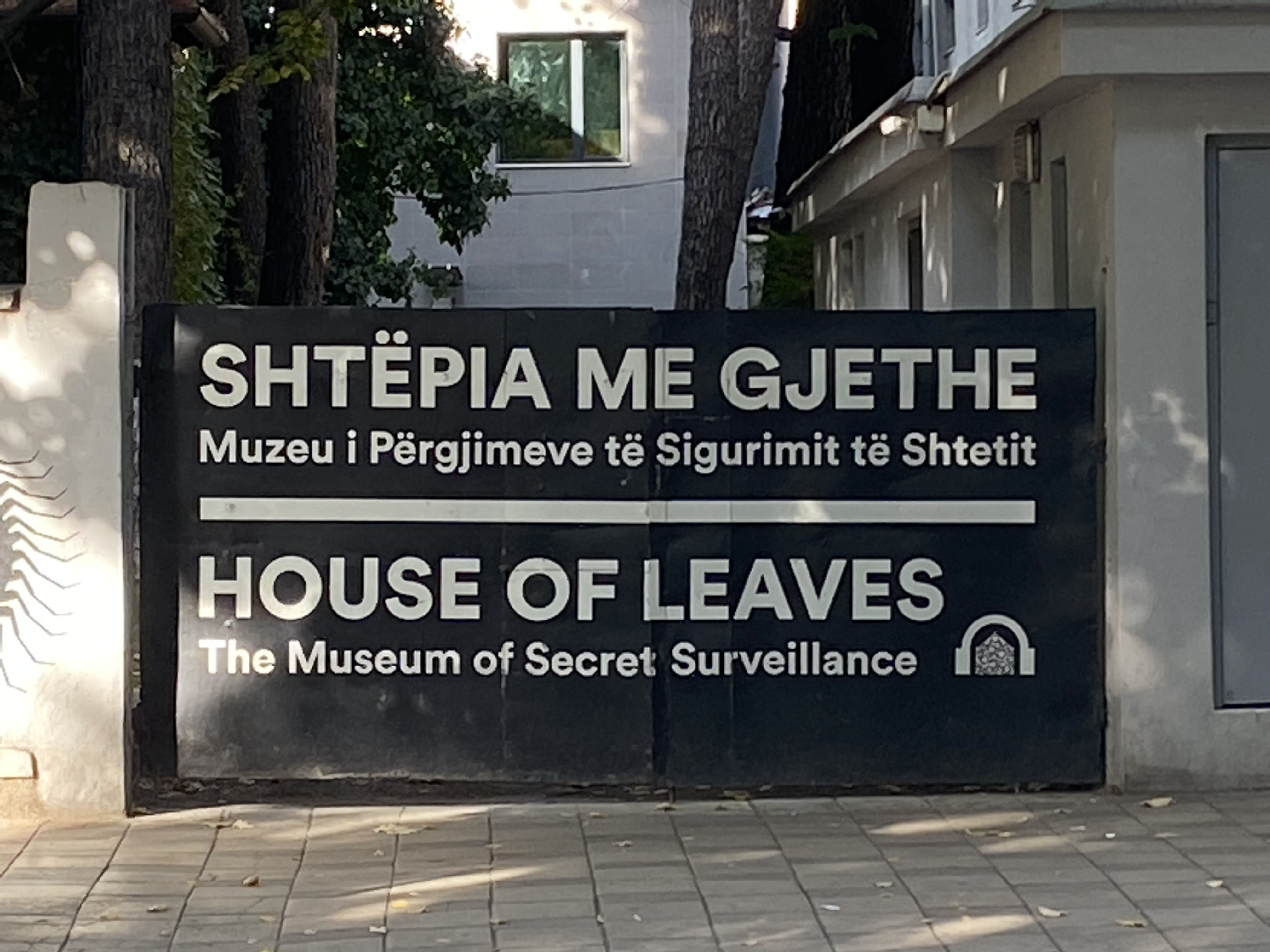
This is in the building known as the “House of Leaves”, it is called this because of the clambering plant covering the outside. Originally it was a private clinic before being occupied by the Gestapo during the German occupation. After the war the building became the headquarters of Sigurimi’s. In 2017 it was opened and is one of the most intriguing museum that that tries to narrate one of the darkest periods of the country’s history.
Albania became a Communist state at the end of World War II and continued to be for almost half a century, the House of Leaves also, was covered for a long time with all sorts of legends and myths.
Interceptions, checks, spying … that brought arrests, internments, tortures, severe punishments for many innocent people. This museum uncovers there story.
Unfortunately no pictures were allowed to be taken in the museum so have a look at the House of Leaves Website
Castle
The Fortress of Justinian is more commonly known as Tirana castle, it’s history dates back before 1300 and is a remnant from the Byzantine-era. The fortress is the place where the main east-west and north-south roads crossed, and formed the heart of Tirana.
Inside the fortified walls of the former castle , there are many buildings that can be visited, including restaurants, hotels, and cultural institutions. About all that is left of the fortress above ground is a 6-metre (20 ft) high Ottoman-era wall, covered in vines.
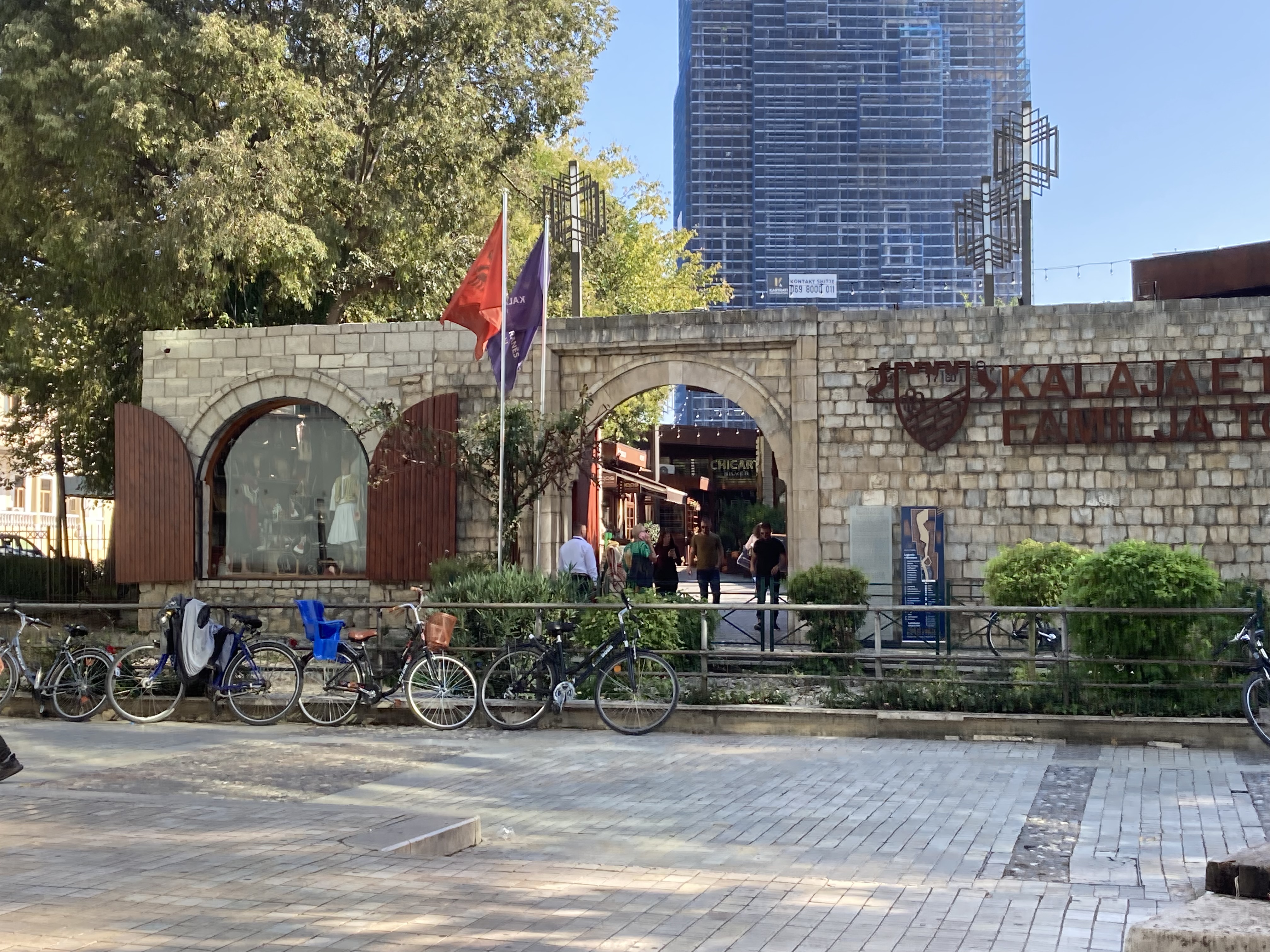
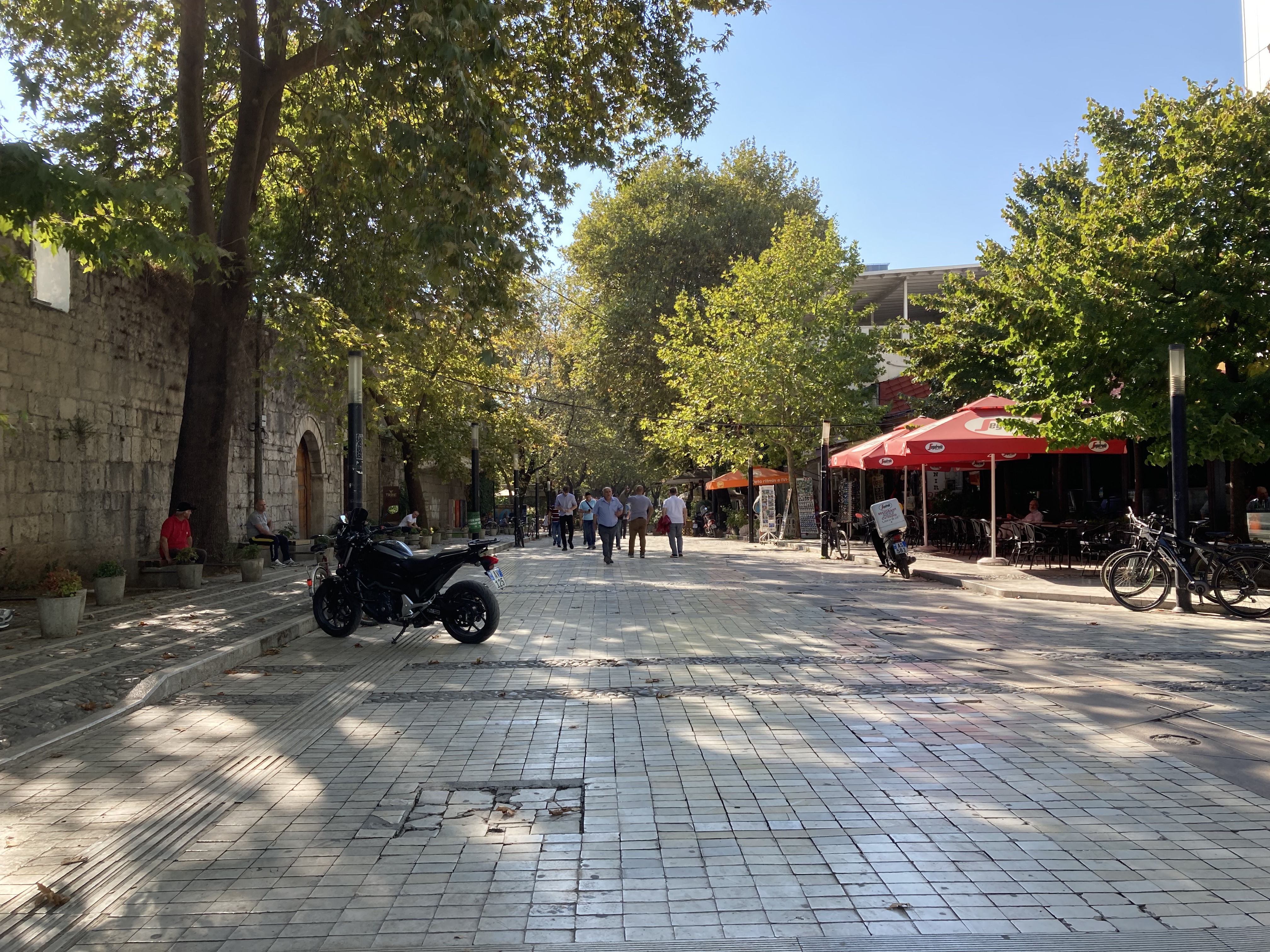
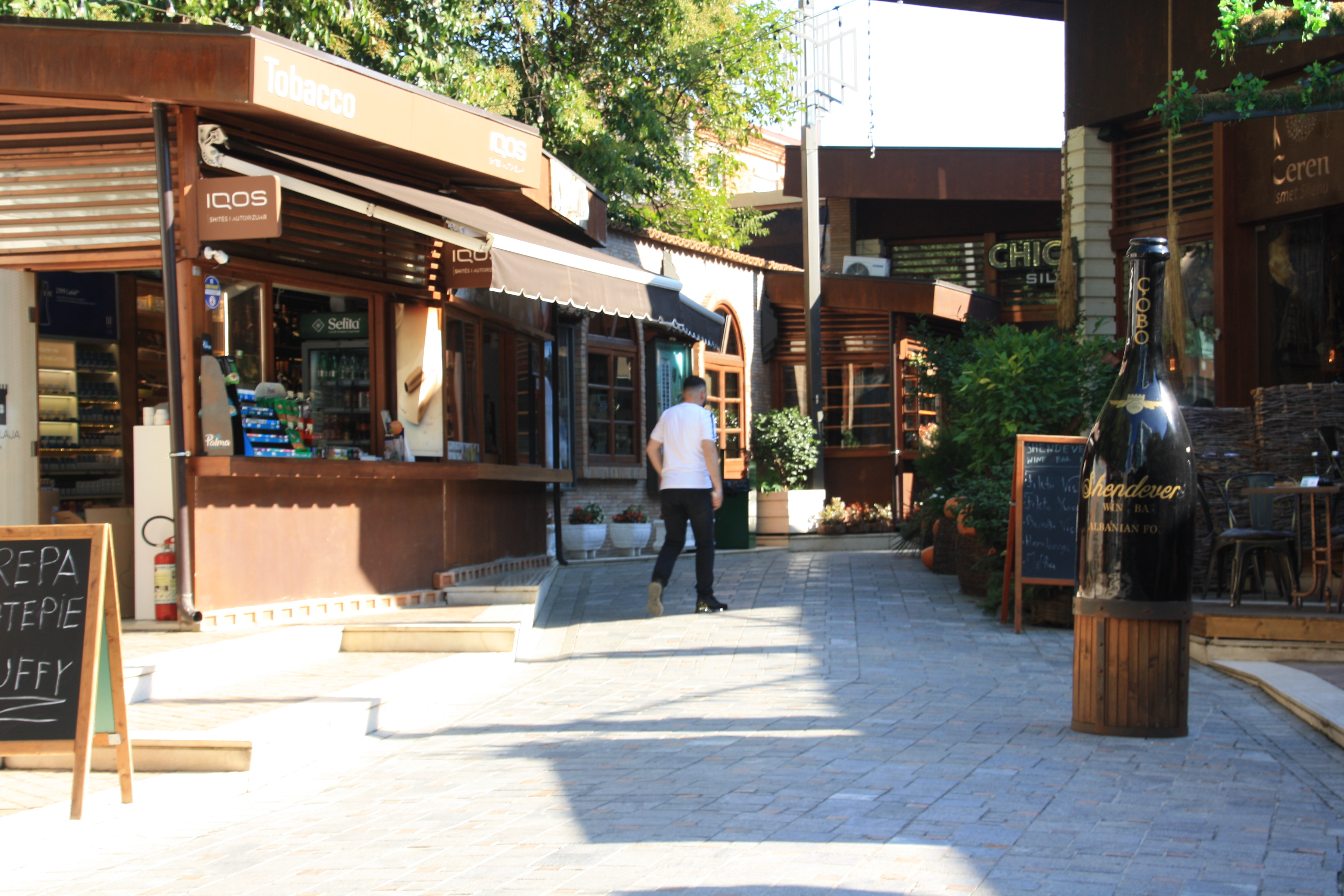
Opposite the castle is the “New Castle” as our walking tour guide referred to it as. This the 7 floor Toptani shopping centre..


Piramida
This is the pyramid of Tirana which was used in the past as a museum, a conference centre nad as a base for NATO and humanitarian organizations during the Kosovo War. This is now being redeveloped into a youth-focused cultural hub, a sort of “peoples monument” that will contain cafes, studios, workshops and classrooms where free lessons will be available to young Albanians.
Mother Teresa Square
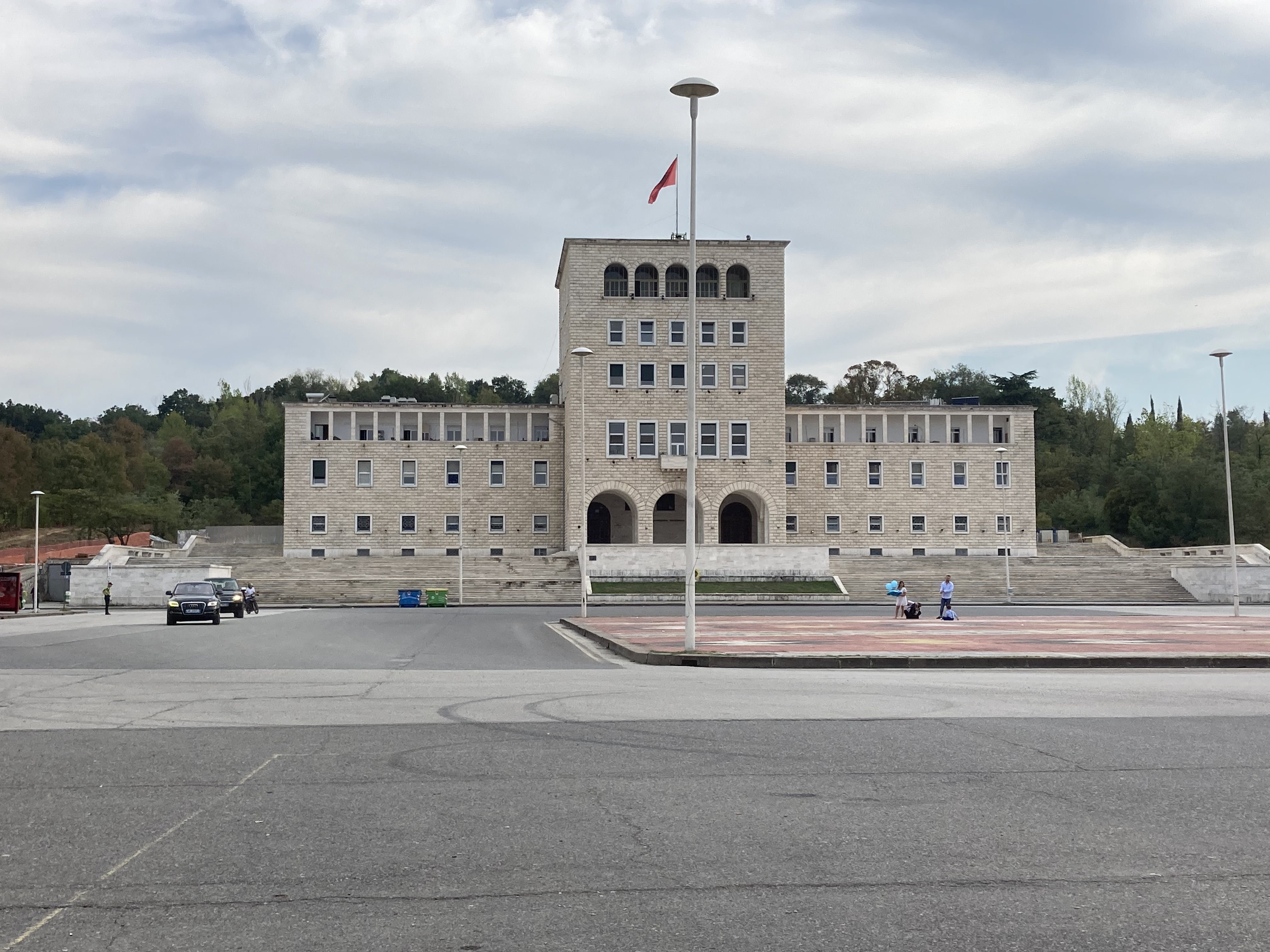
The square has the name “Mother Teresa” in honour of the Catholic nun and missionary. Mother Teresa is often referred to as Albanian. She was born in Skopje, North Macedonia and never actually lived in Albania but the country has adopted her because both of her parents are Albanian. It is the second largest square in Tirana and was built between 1939 to 1941, during the Italian occupation of Albania.
Around the square area the University of Tirana, the Polytechnic University, the University of Arts, the Archaeological Museum and the Academy of ‘Albanological’ Studies

Religion under communism
During the communist period all religion was banned and many places of worship were destroyed, our free walking tour guide suggested that this was about 80%.
Our hotel, Tirana International, stands on the site of the former cathderal.
Et’hem Bey Mosque
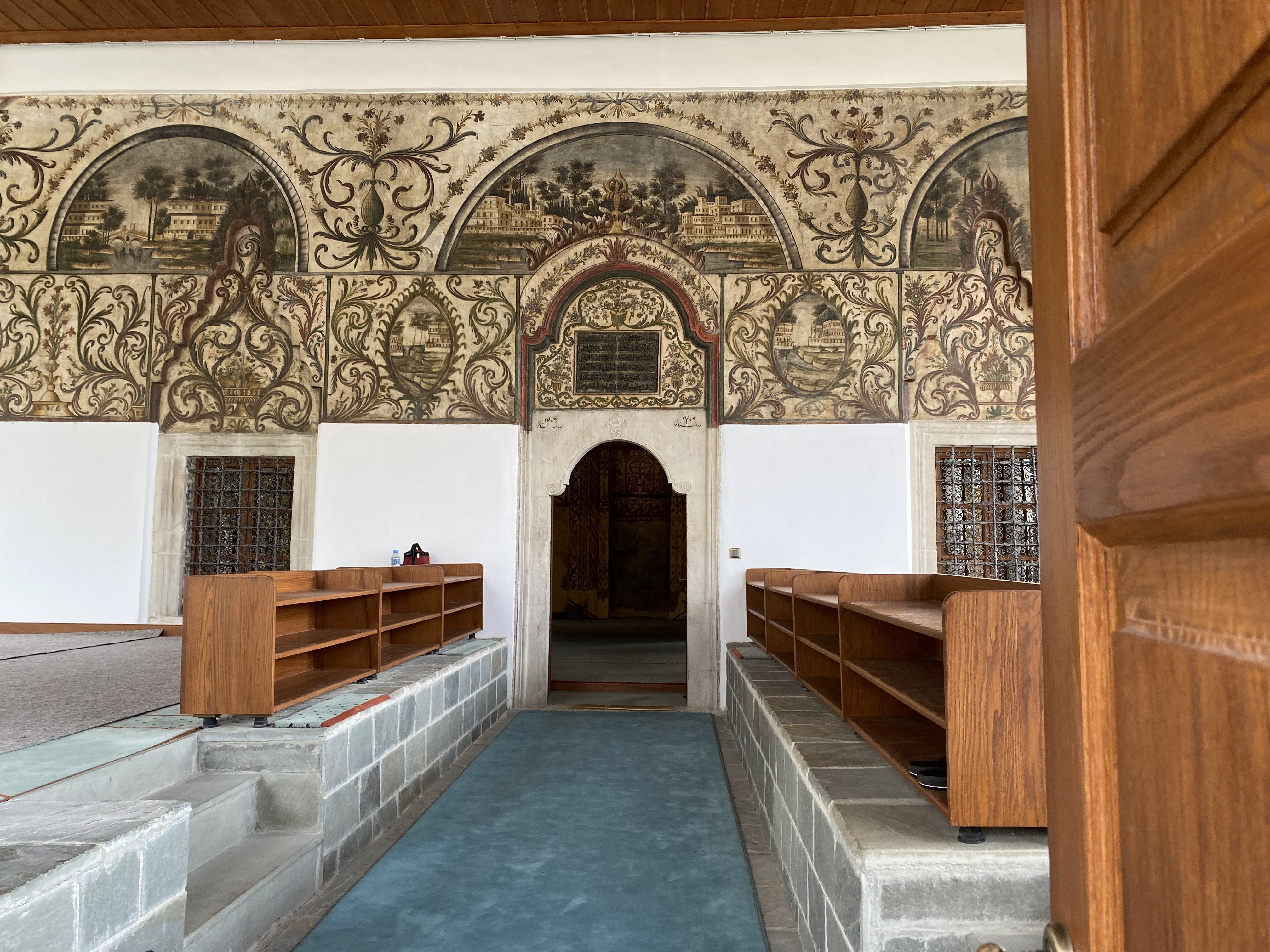
This mosque was started in the early 1790s and finally finished in about 1820. Like all religious places this was closed closed under Communist rule, the building reopened as a house of worship in 1991 without the permission of the authorities. A large number of people dared to attend, and remarkably the police did nothing to intervene, an event now hailed as a milestone in the rebirth of religious freedom in Albania.
On the outside and in the portico there are colourful frescoes outside which depict trees, waterfalls and bridges, motifs rarely seen in Islamic art.

Clock Tower
The Clock Tower of Tirana was built in 1822 by Haxhi Et`hem Bey, who also oversaw the construction of the Et’hem Bey Mosque. The tower is 35 meters high and has a spiral staircase with 90 steps. This was until 1970 it was the tallest building in Tirana. The bell in the clock tower was from Venice until 1928 when the clock was replaced by a German one. During World War II the clock was destroyed by bombs and was replaced in 1946 with a Roman numeral clock from a church in Shkoder, Albania. The tower has been renovated in 1970 when the numeral clock was replaced by a clock from China. The tower underwent renovation in 1981 and again in 1999.
Saint Paul Catholic Cathedral
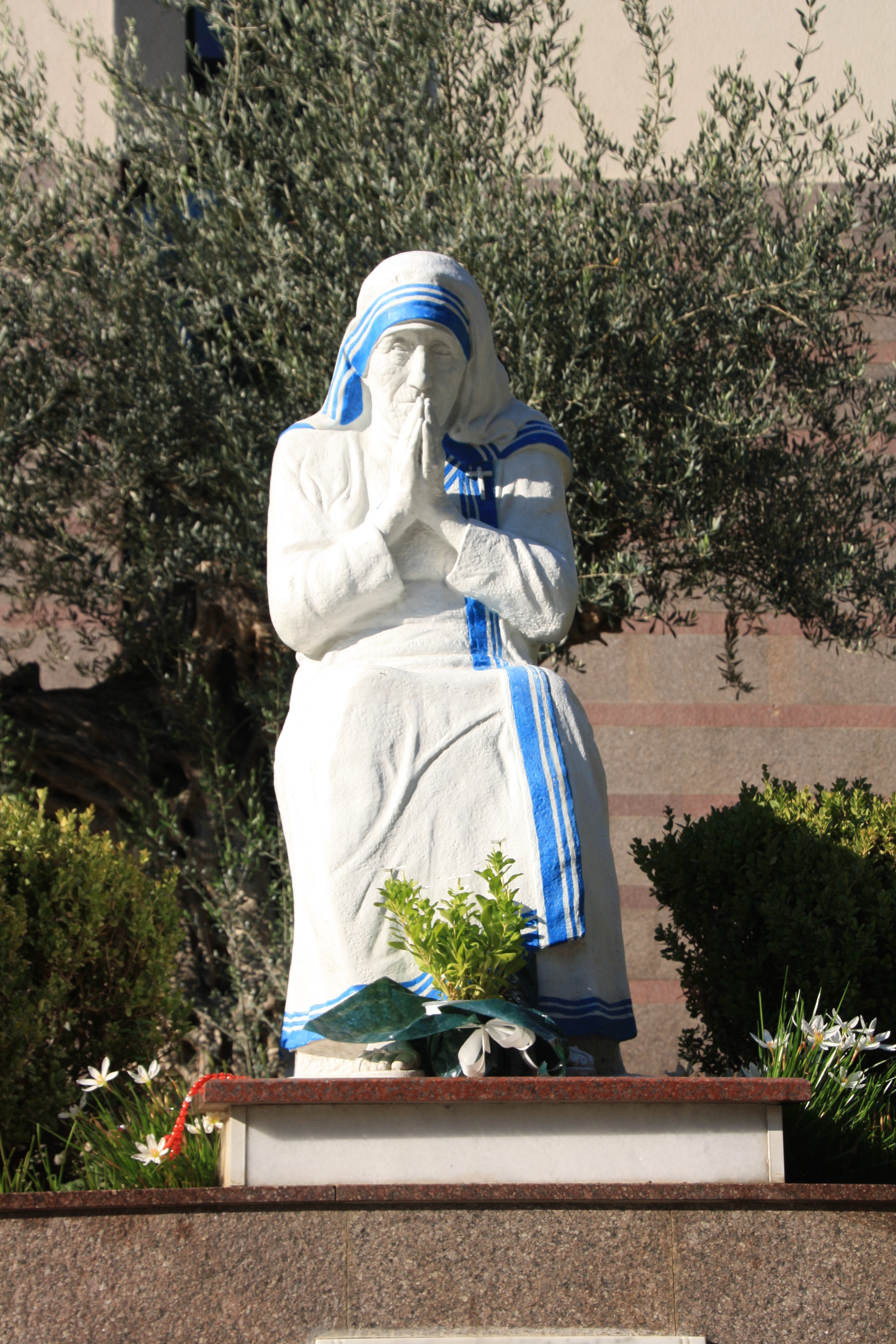
St Paul’s Cathedral belongs to the Roman Catholic Archdiocese of Tiranë-Durrës. The stained glass window to the left of the front door features Pope John Paul II and Mother Teresa, with a further statue of Mother Teresa at the entrance of the cathedral.

It is said that this is the first church to display a statue doing a selfie.

Mother Teresa, who although had Albanian parents, never lived in Albania.
Resurrection of Christ Orthodox Cathedral
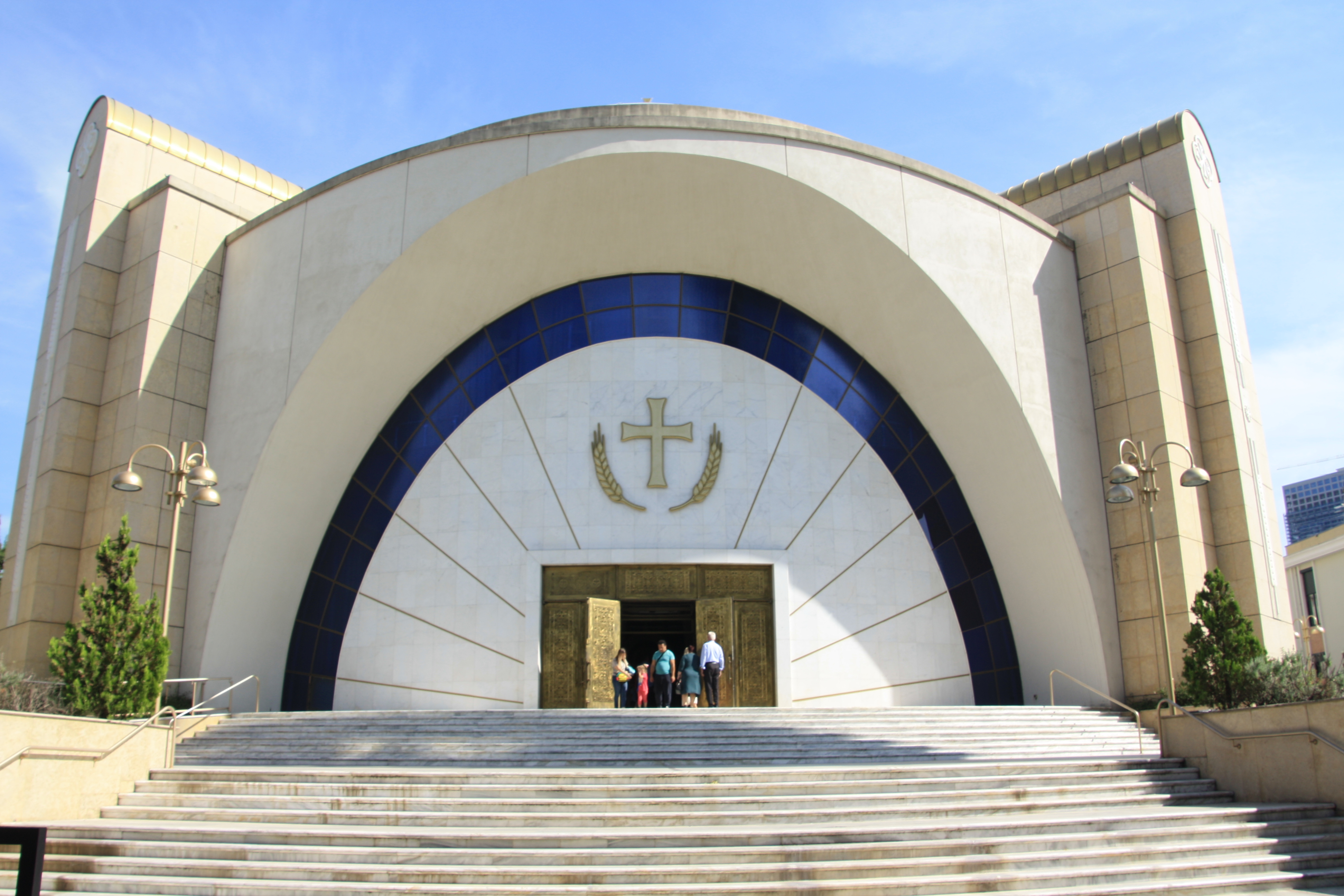
The Resurrection Cathedral is an Albanian Orthodox church and is considered among the largest Orthodox churches in the Balkan Peninsula
New Mosque
Namazgah Mosque also known as the Great Mosque of Tirana is a currently being built in and when complete, it will be the largest mosque in the Balkans. It will have sufficient space for 5,000 worshippers inside and a further 5,000 outside. It doesn’t seem to matter that there are not that many regular worshippers attending services.
The Turkish state, through its international development agency TIKA, is also investing millions in restoring a handful of small Ottoman-era mosques throughout Albania.
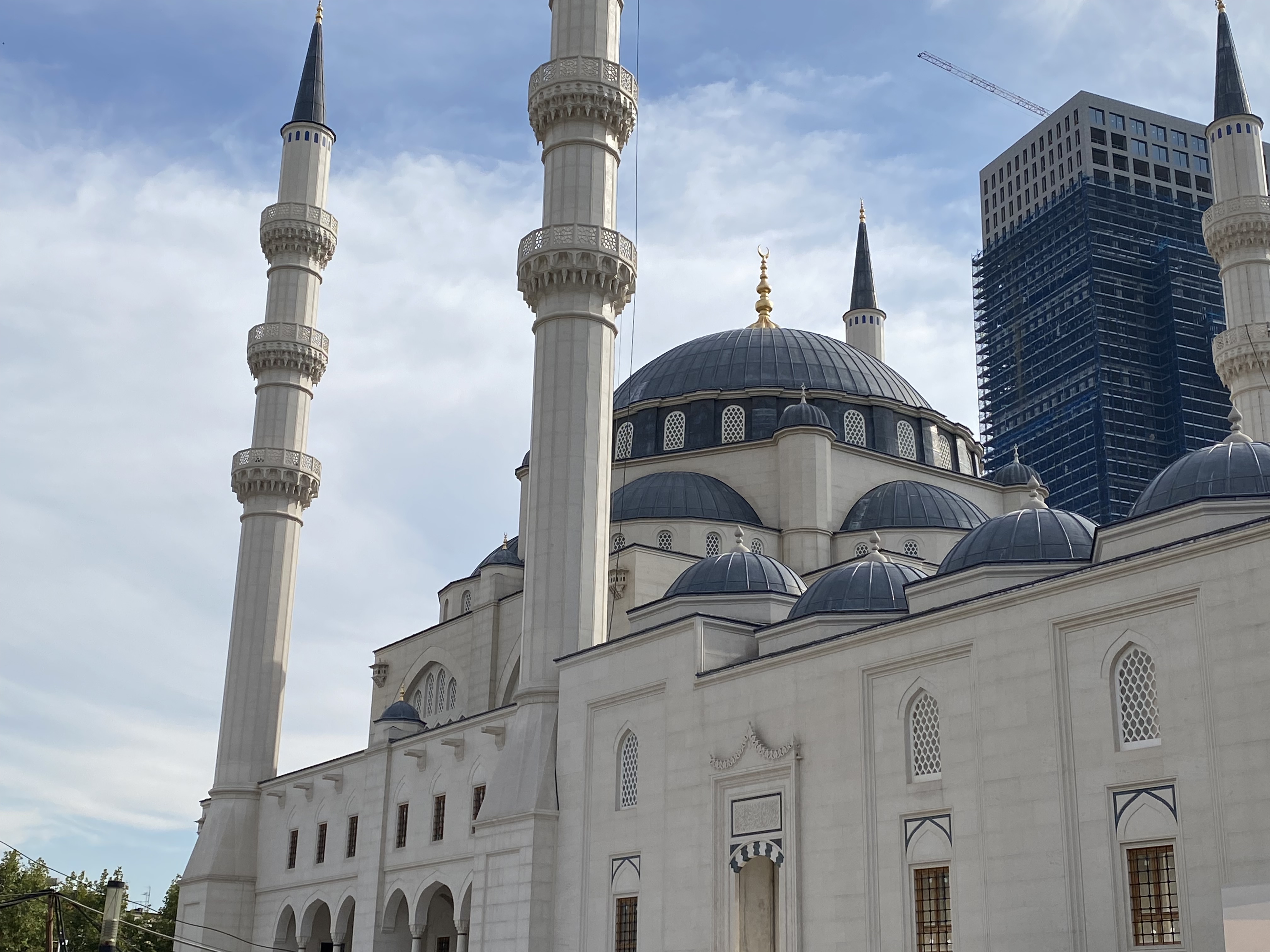
Friendship Monument
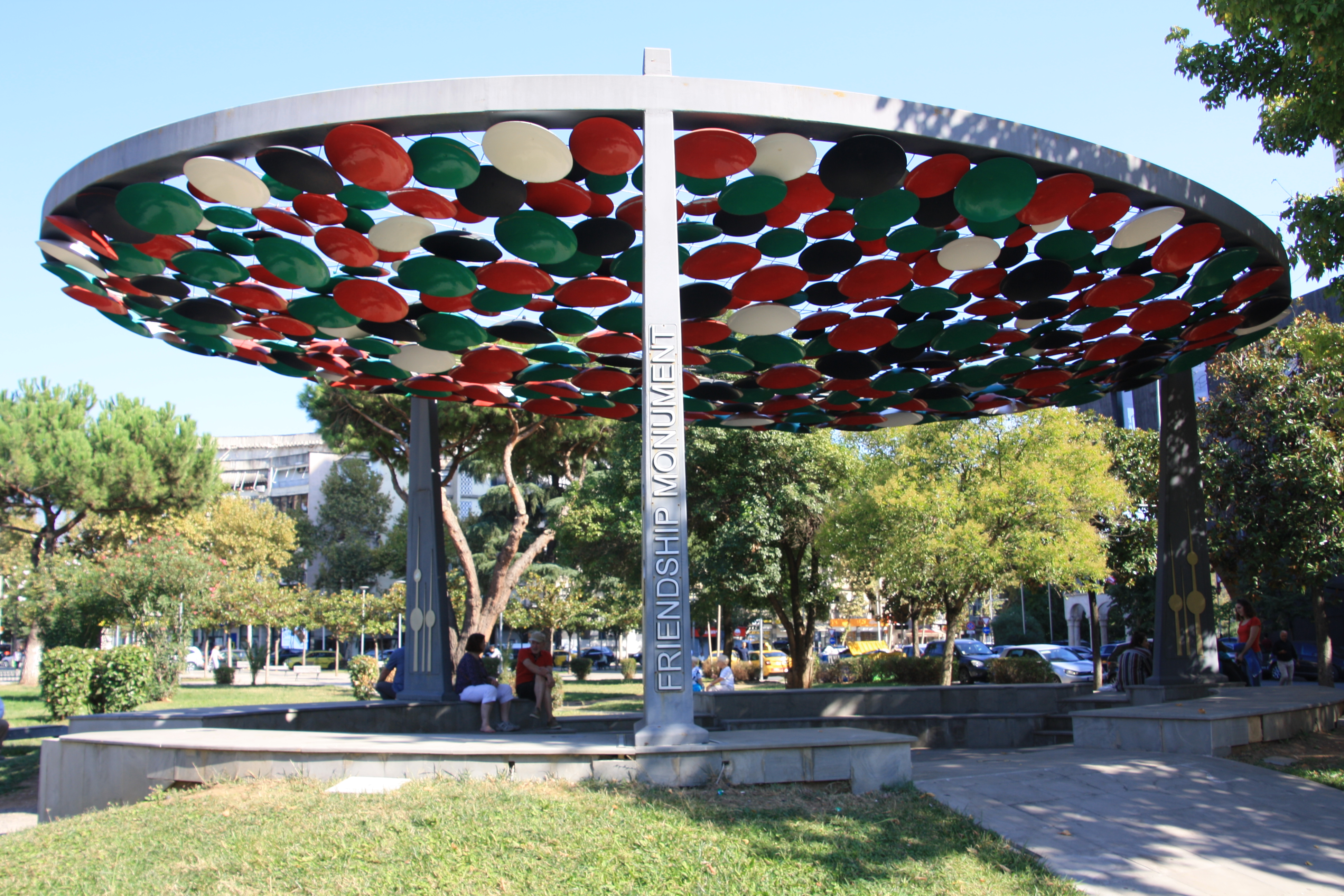
The monument was built to commemorate the friendship and cooperation between Albania and Kuwait. The circles are the same as the colours that make up Kuwaiti flag.
It provides wonderful shelter in the heat of the summer.
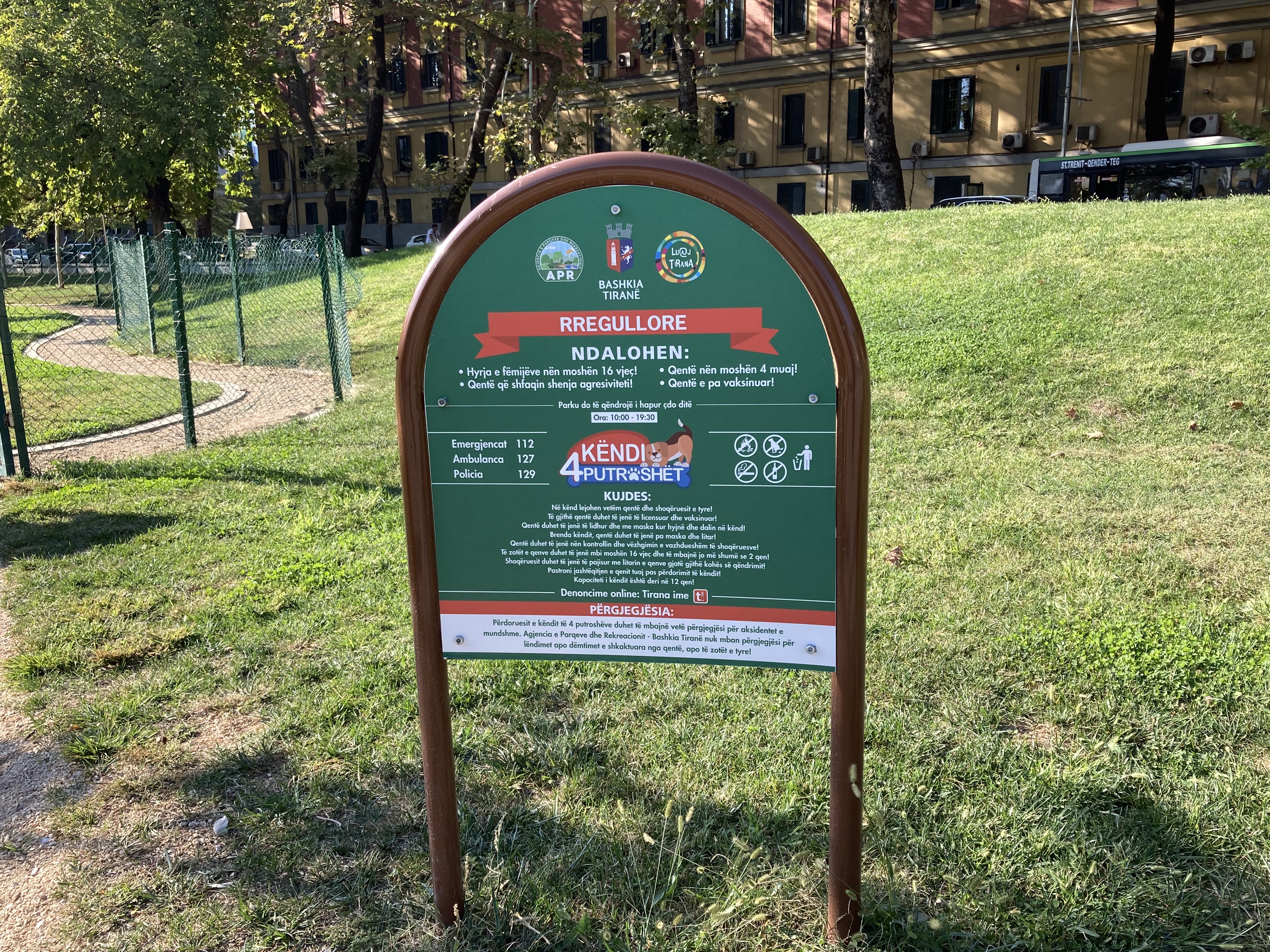
Dog Park
In most city’s there is a children’s playground but in Tirana they don’t forget their four legged friends.

Beer, Food and Wine
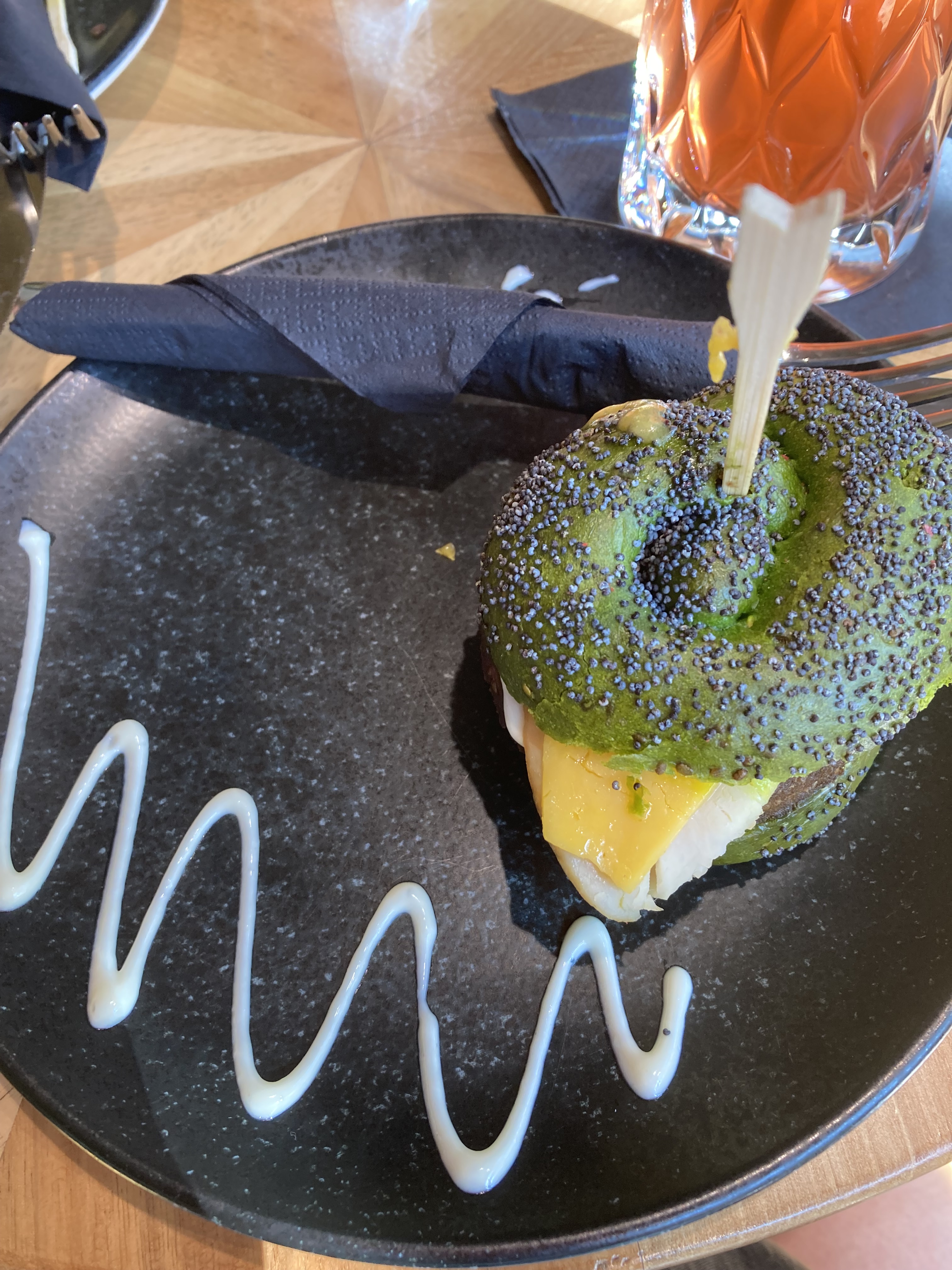
Albania, in 2021, is very cheap compared to the United Kingdom. We found that a beer was costing as little as 85p per pint and a two course dinner and two glasses of wine was under £12.00.
The meal below was a mini burger for the principle sum of 80p.
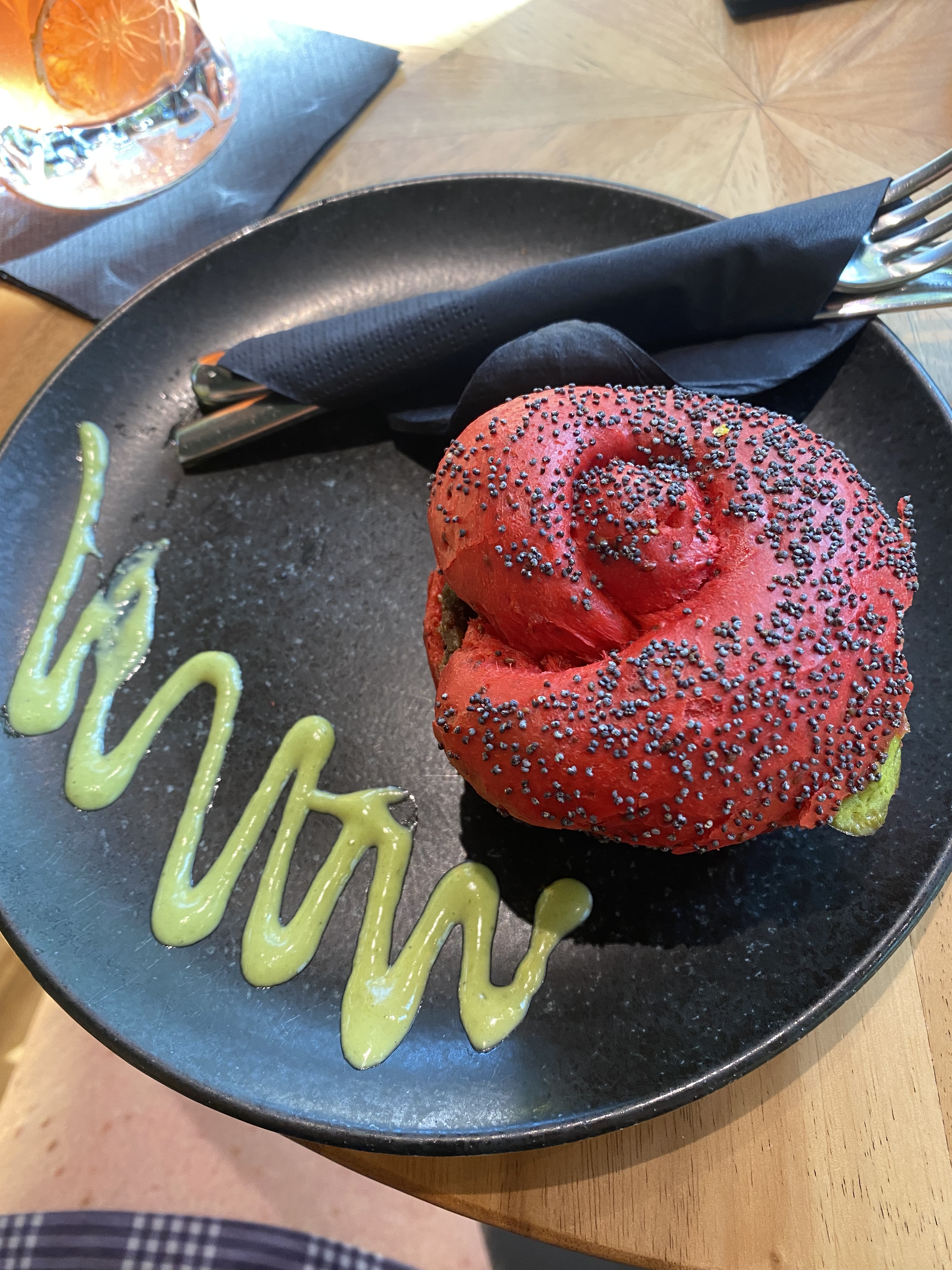
This is, at the time or writing, the only European capital city that doesn’t have a MacDonald’s. In fact the only global food chain is KFC. The Albanian’s had their own before KFC arrived. So which came first in the world KFC or TFC.

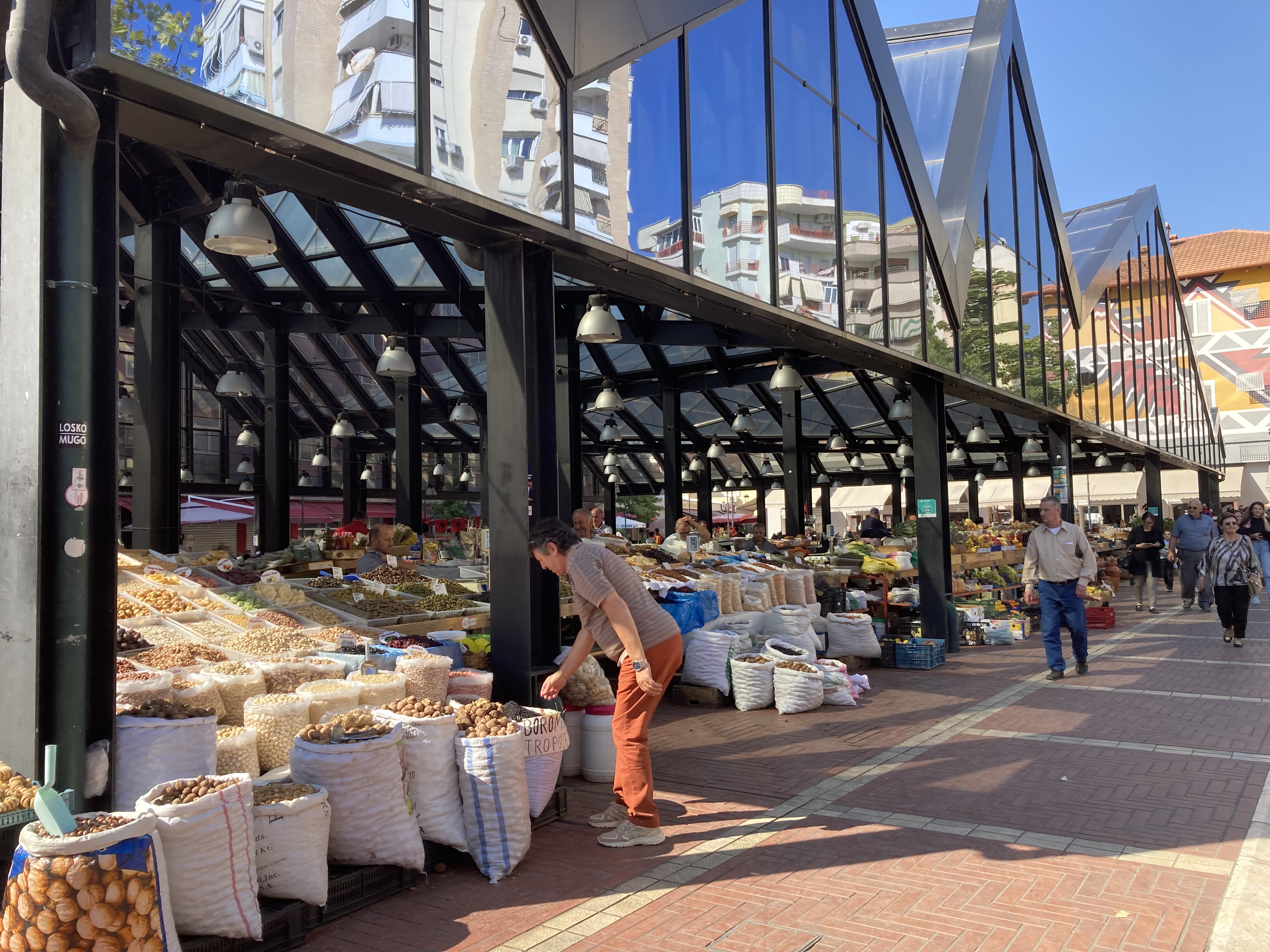
Albania is no different from most European countries as people buy fresh fruit and vegetables from local markets and shops. The market below had an amazing selection of produce.
Colourful Buildings
The current president is an artist and wants the city buildings to be painted brighter. The one blow looks like a giant Christmas present.


 Heather and Keith's travels