Vaduz is a postage stamp-size city with a postcard-perfect backdrop. Crouching at the foot of forested mountains, hugging the banks of the Rhine and crowned by a turreted castle,the city has a visually stunning location.
The centre itself is curiously modern and sterile, yet just a few minutes’ walk brings you to traces of the quaint village that existed just 50 years ago and quiet vineyards where the Alps seem that bit closer.
We only spent a few hours here but managed to see most of the tourist attractions.
Vaduz is the capital of Liechtenstein, officially the Principality of Liechtenstein which is a constitutional monarchy headed by the Prince of Liechtenstein.
It has an area of just over 160 square kilometres (62 square miles), the fourth smallest in Europe, and an estimated population of 37,000. It is also the smallest country to border two countries, Switzerland and Austria.
Economically, Liechtenstein has one of the highest gross domestic products per person in the world when adjusted for purchasing power parity, and the highest when not adjusted by purchasing power parity. The unemployment rate is one of the lowest in the world at 1.5%.
We visited in July 2018 and stayed in Sargans in Switzerland at the Hotel Post.
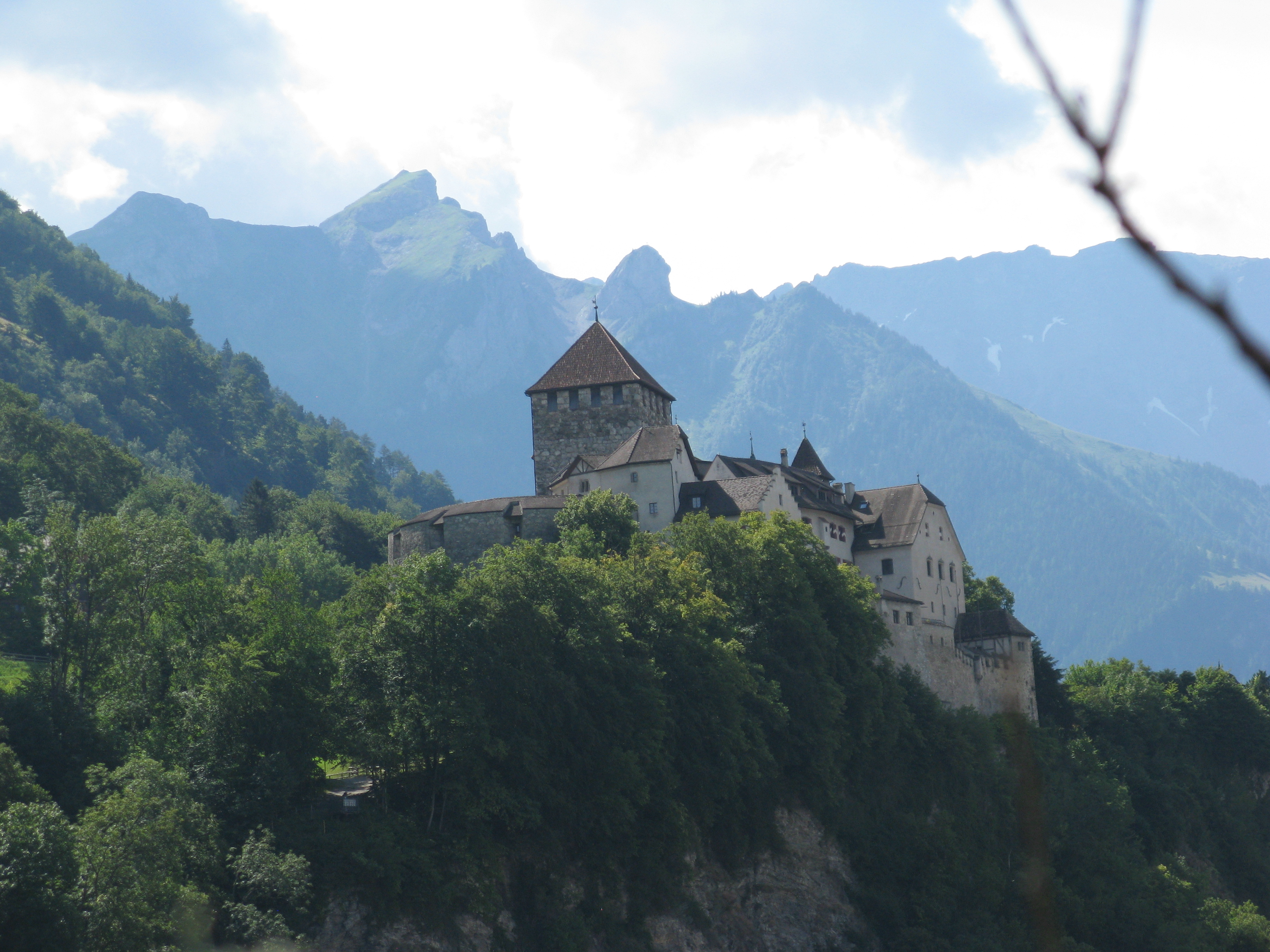
Vaduz Castle
Vaduz Castle is the palace and official residence of the Prince of Liechtenstein. The castle gave its name to the town of Vaduz, the capital of Liechtenstein, which it overlooks from an adjacent hilltop.
The Princely Family of Liechtenstein acquired Vaduz Castle in 1712 when it purchased the countship of Vaduz. At this time, Charles VI, Holy Roman Emperor, combined the countship with the Lordship of Schellenberg, purchased by the Liechtensteins in 1699, to form the present Principality of Liechtenstein.
Since 1938, the castle has been the primary residence of Liechtenstein’s Princely Family. The castle is not open to the public as the princely family still lives in the castle.
Vaduz Cathedral
Vaduz Cathedral, or Cathedral of St. Florin is a neo-Gothic church and the centre of the Roman Catholic Archdiocese of Vaduz. Originally a parish church, it has held the status of cathedral since 1997.
It was built in 1874 by Friedrich von Schmidt on the site of earlier medieval foundations. Its patron saint is Florinus of Remüs (Florin), a 9th-century saint of the Vinschgau Valley.

Inside the cathedral

Parliament Building
The parliament lies at the heart of the Peter-Kaiser-Platz square, just a stone’s throw from the government building.
After a proposal to create a new parliament building in Liechtenstein was rejected in a 1993 referendum due to its high cost, the Munich-based architect Hansjörg Göritz designed the building which is currently home to the parliament in 2008.
Göritz was also responsible for redesigning the central Peter-Kaiser-Platz square, named after the famous local historian Peter Kaiser, who represented Liechtenstein at the first publicly and freely elected German National Assembly in St Paul’s Church in Frankfurt in 1848.
Together with the government building and the national archive, the parliament forms the government district in Vaduz.

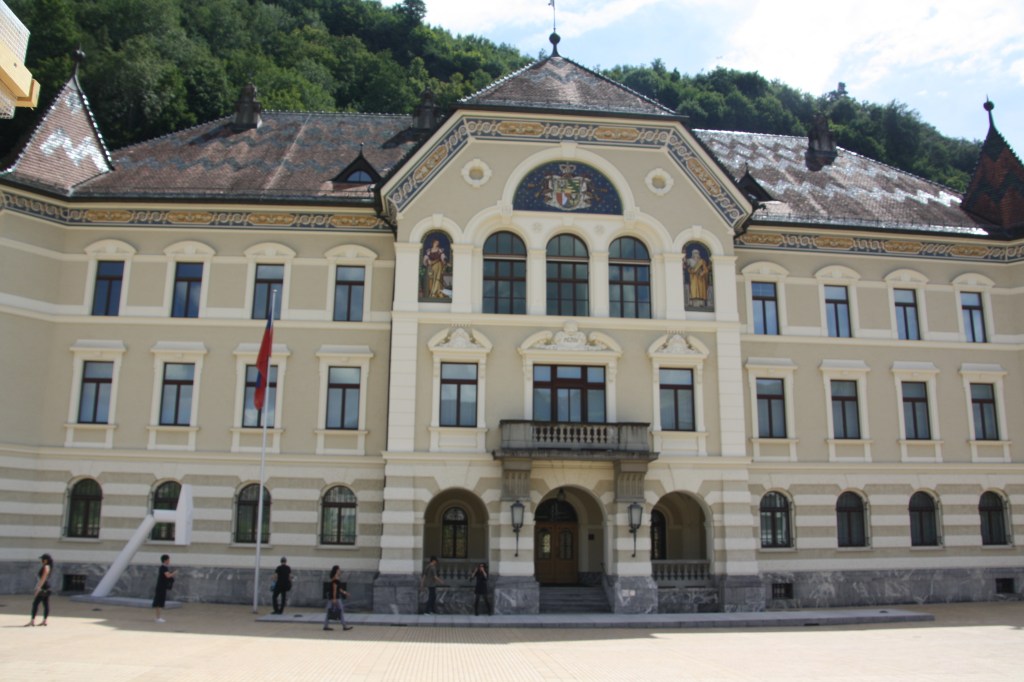
Government Building
The government district dominates the eastern side of the Peter-Kaiser-Platz square in Vaduz.
Peter-Kaiser-Platz square is home to the parliament building, the government offices and the state archives. The government building was constructed between 1903 and 1905 according to plans drawn by the Viennese architect Gustav Ritter von Neumannt.
The parliament building, fronted by an imposing square, was completed in 2008 and contains the plenary hall of the parliament, the secretariat, a range of offices for the different political parties represented in parliament as well as the state archives and its own library. The building was designed by the German architect Hansjörg Göritz. Built using over one million bricks, it is immediately recognisable as you enter Vaduz from the south. In 2010 it received the Brick Award.
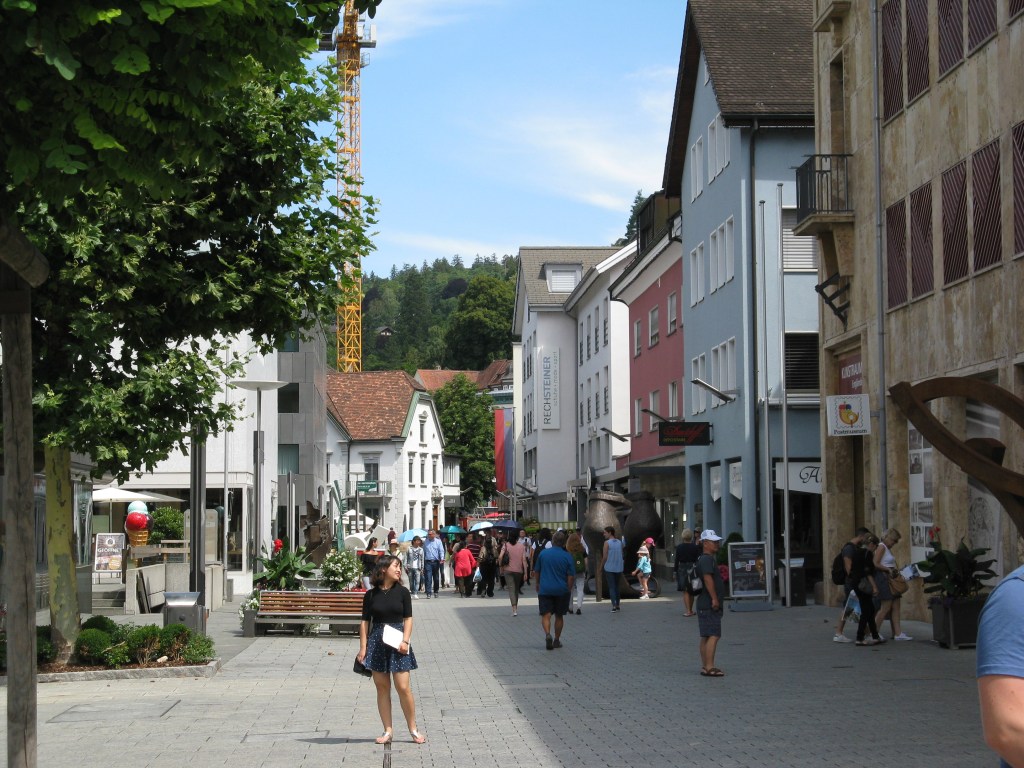
Pedestrian Zone
The Vaduz pedestrian zone is a true chest of artistic treasures. Sculptures and architectural highlights line the unmarked Culture Trail, which leads through Vaduz.
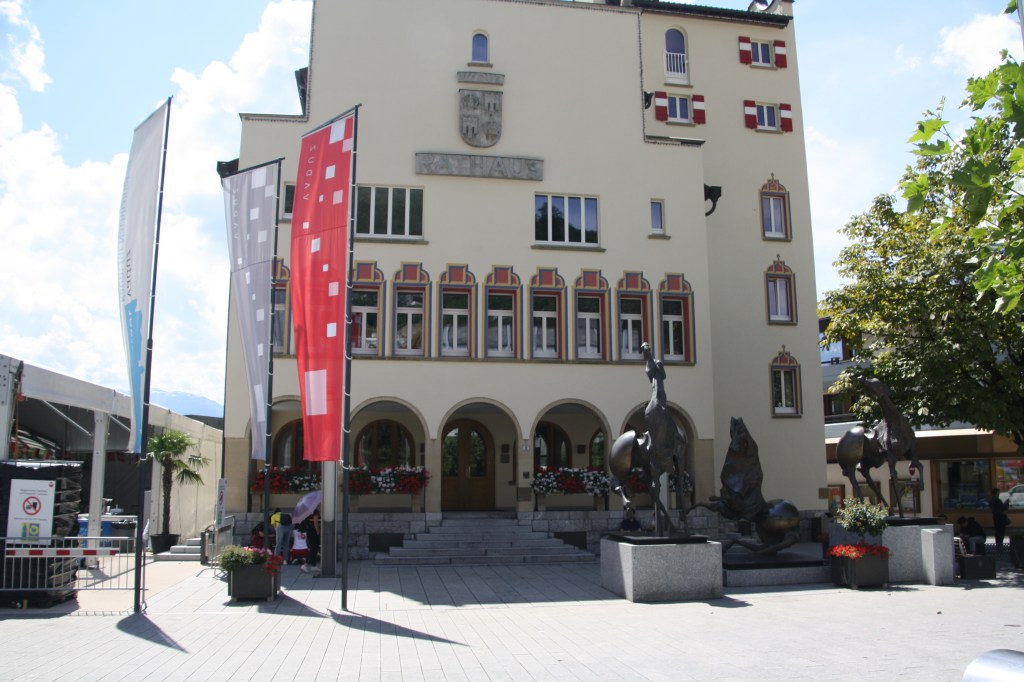
Rathaus
Vaduz Town Hall dates from 1932/33. It was extensively renovated in the years 1982 to 1984.
The balcony fresco by Johannes Troyer on the south façade depicts St. Urban, the patron saint of wine growers. The municipal coat of arms can be seen carved in stone above the entrance.
Liechtenstein National Football Stadium
Rheinpark Stadion in Vaduz is the national stadium of Liechtenstein. It plays host to home matches of the Liechtenstein national football team, and is also the home of football club FC Vaduz. It lies on the banks of the river Rhine, just metres from the border with Switzerland.
The stadium has a seating capacity of 5,873, with additional standing room space giving it a total capacity of 7,584.
The national team has won only twelve of its 178 matches, as at July 2018, their largest victory came on 13 October 2004 when they defeated Luxembourg by four goals to nil in the 2006 FIFA World Cup qualification tournament.

 Heather and Keith's travels