Verona is one of Italy’s most beautiful and romantic cities and is often described as little Rome reflecting it’s importance in ancient times.
We visited for Heather’s 40th, primarily to go to see the opera in the Arena Di Verona.
Arena Di Verona
This Roman Amphitheatre was opened in year 30 AD, and it is one of the best-preserved Roman amphitheatres. After the theatre was built, it could hold 30.000 spectators and became an essential place for the region, and people from all surroundings came to visit the plays and sports in the theatre.
It is impressive to see a the opera, it is such an amazing place it’s so hard to describe the atmosphere.
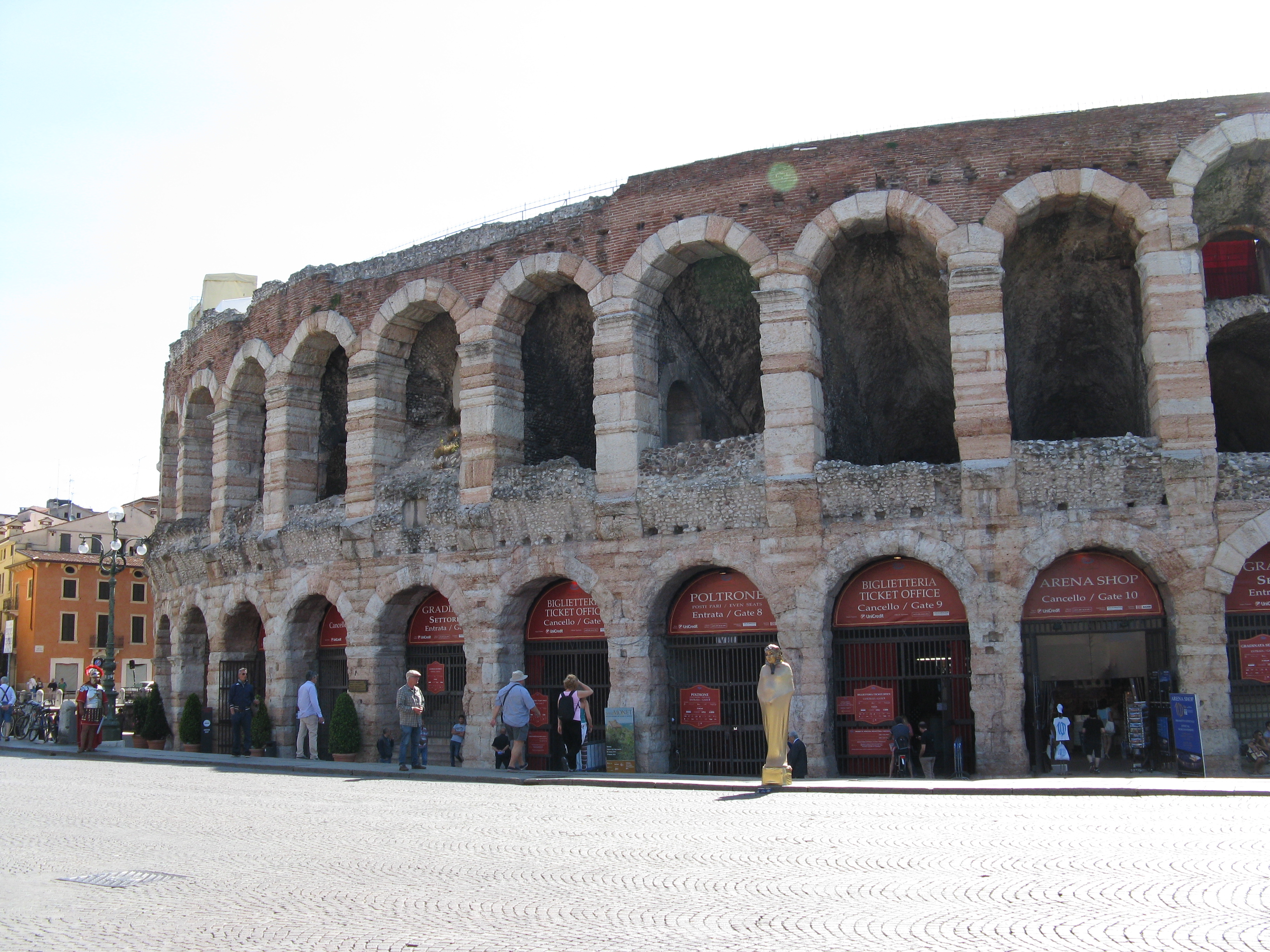
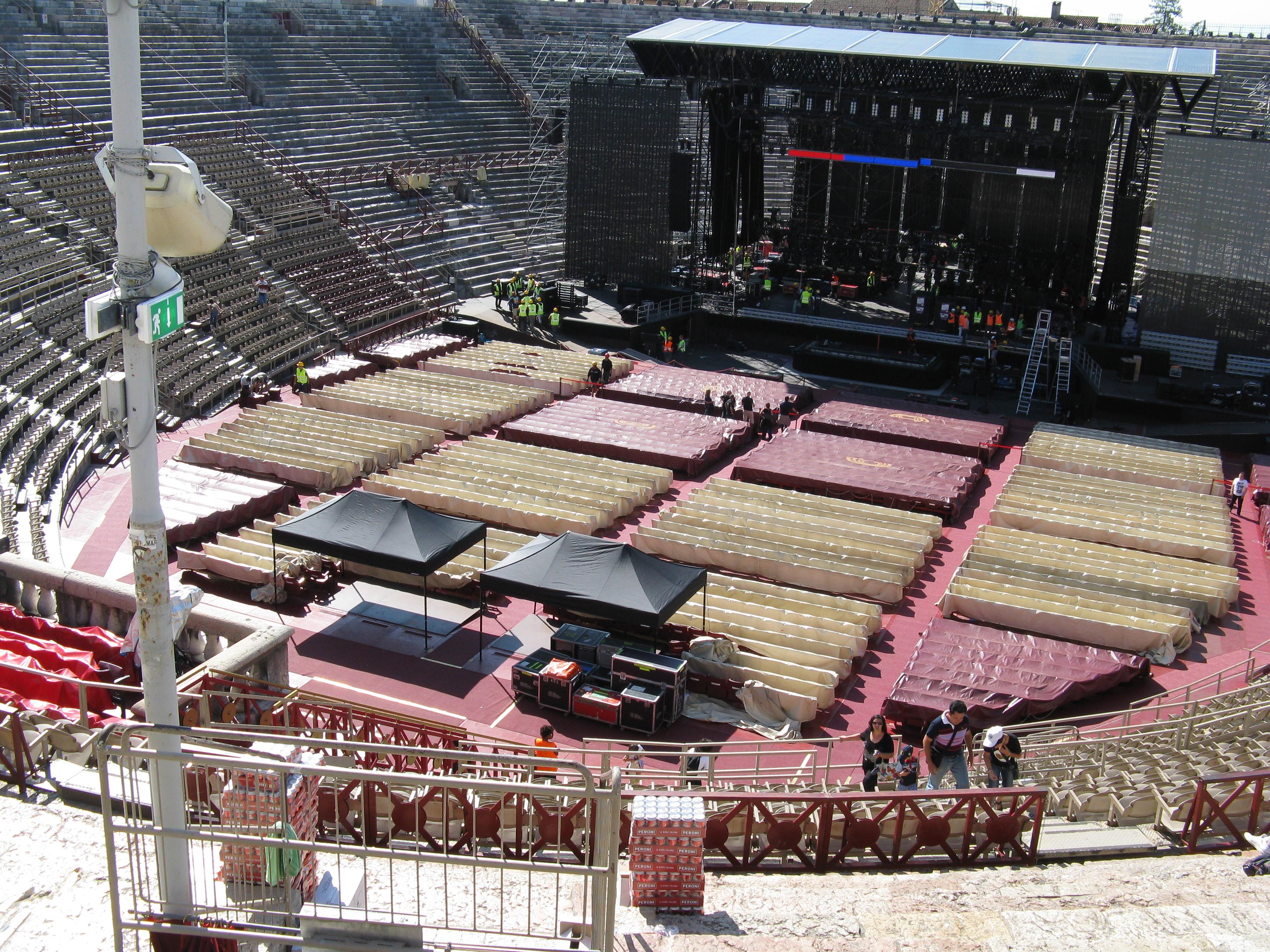
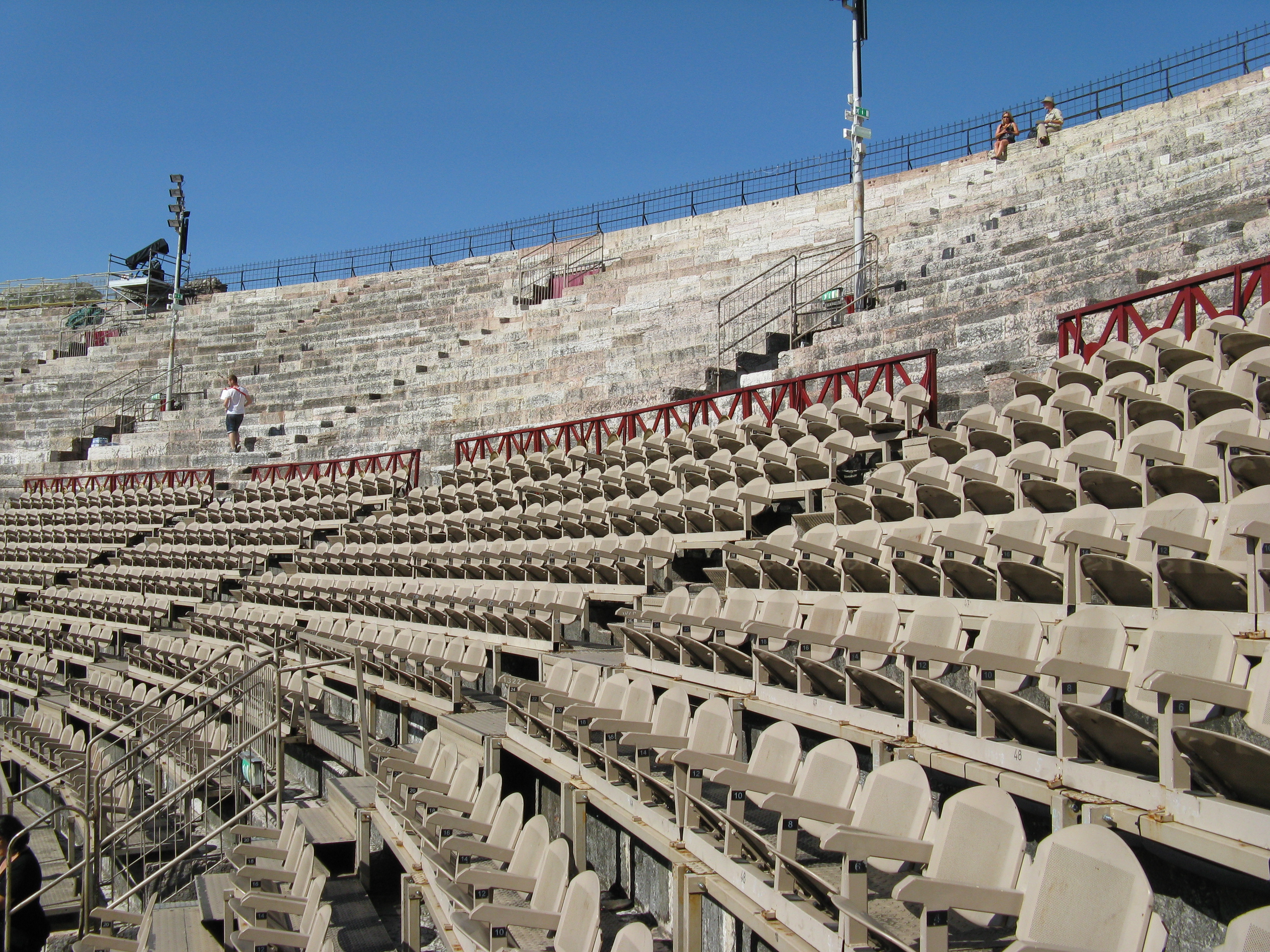
A friend had given us some good advice, the weather can be very hot so the higher up the more you can take advantage of any breeze. This is one occasion when going for the cheap seats (sitting on the stone steps) is a distinct advantage.
Piazza Bra
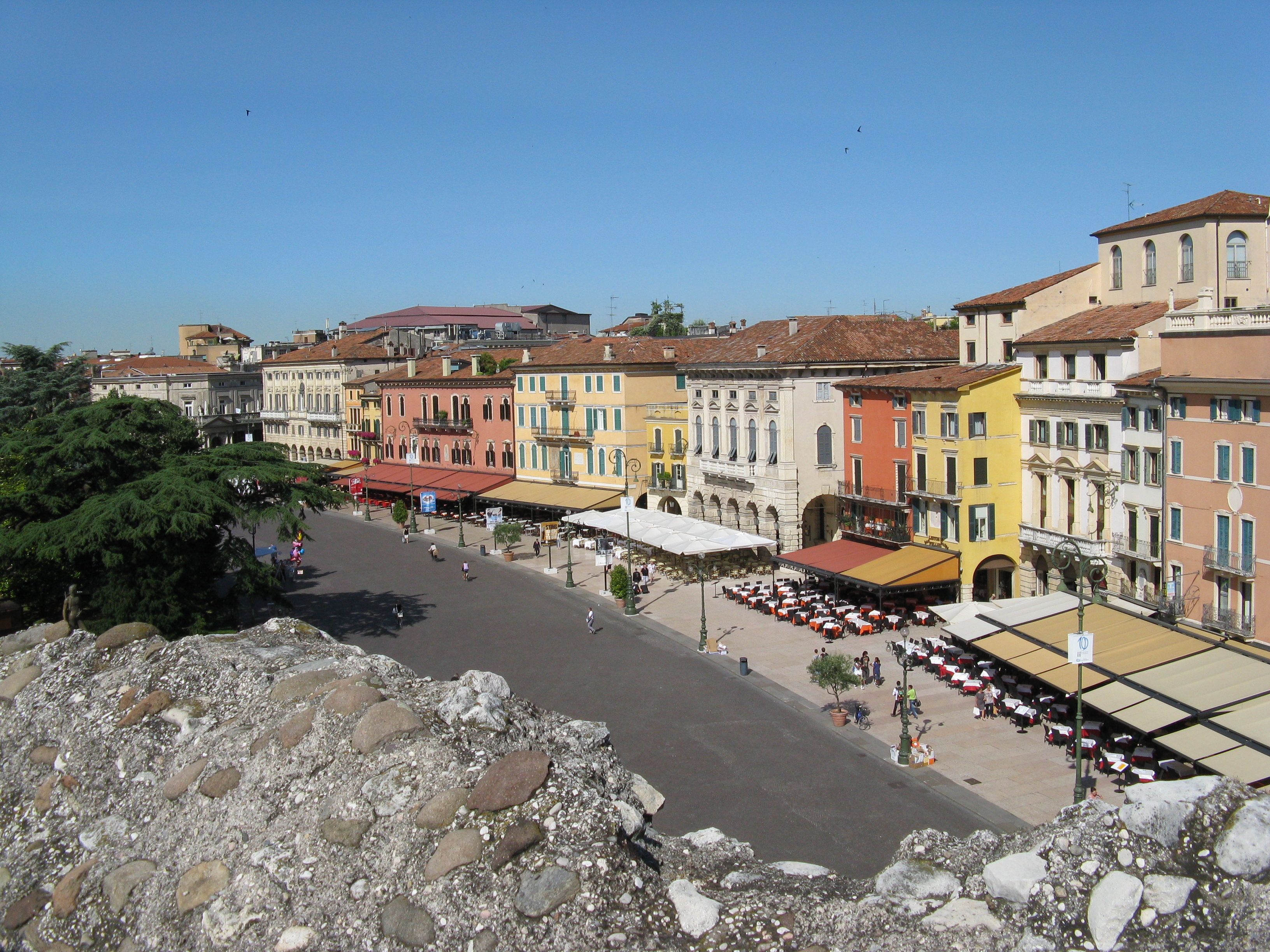
This is the biggest square in Verona. Apart from the Arena the other famous landmarks in the square are Verona’s town hall and Palazo Barbieri.
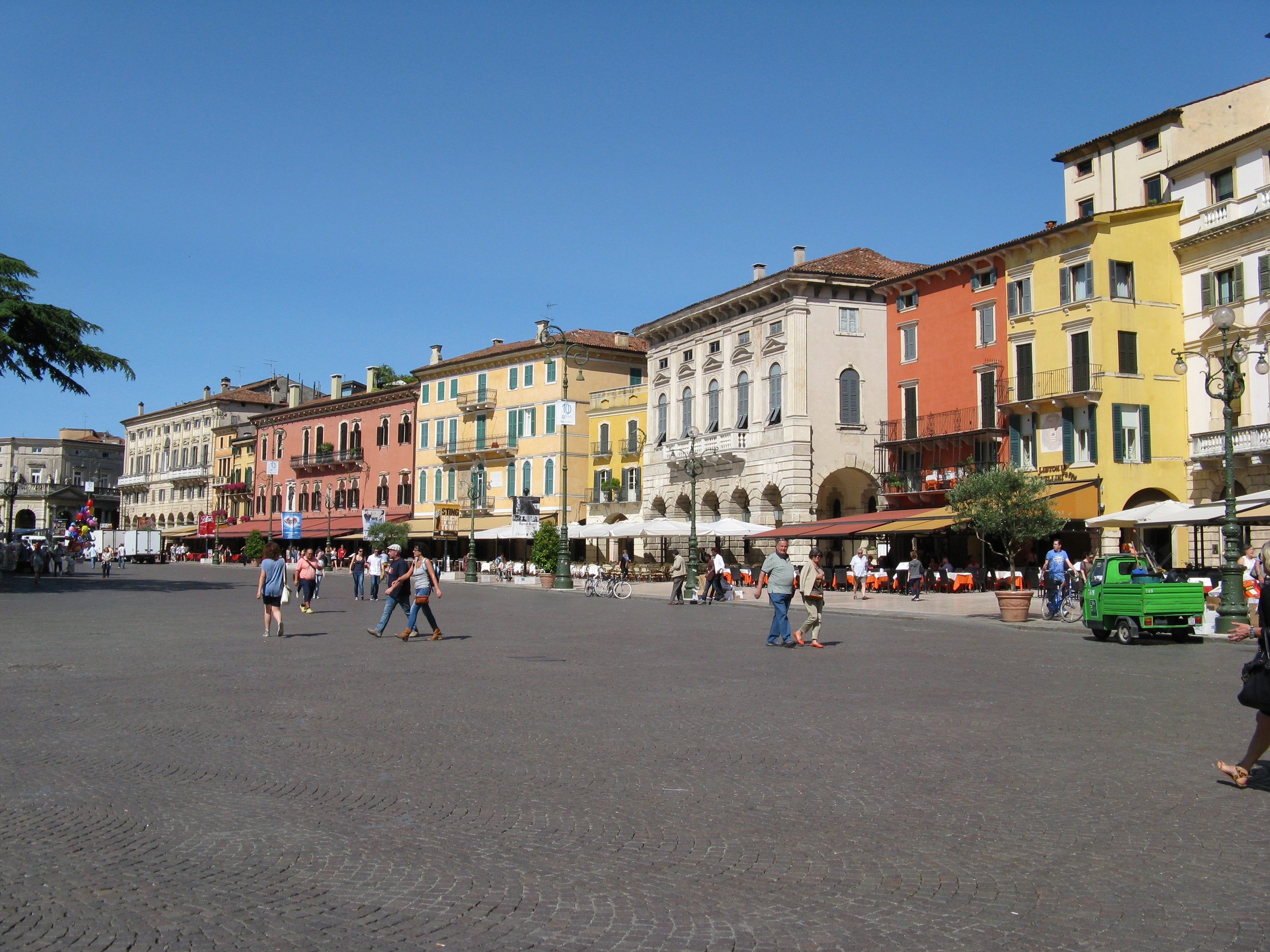
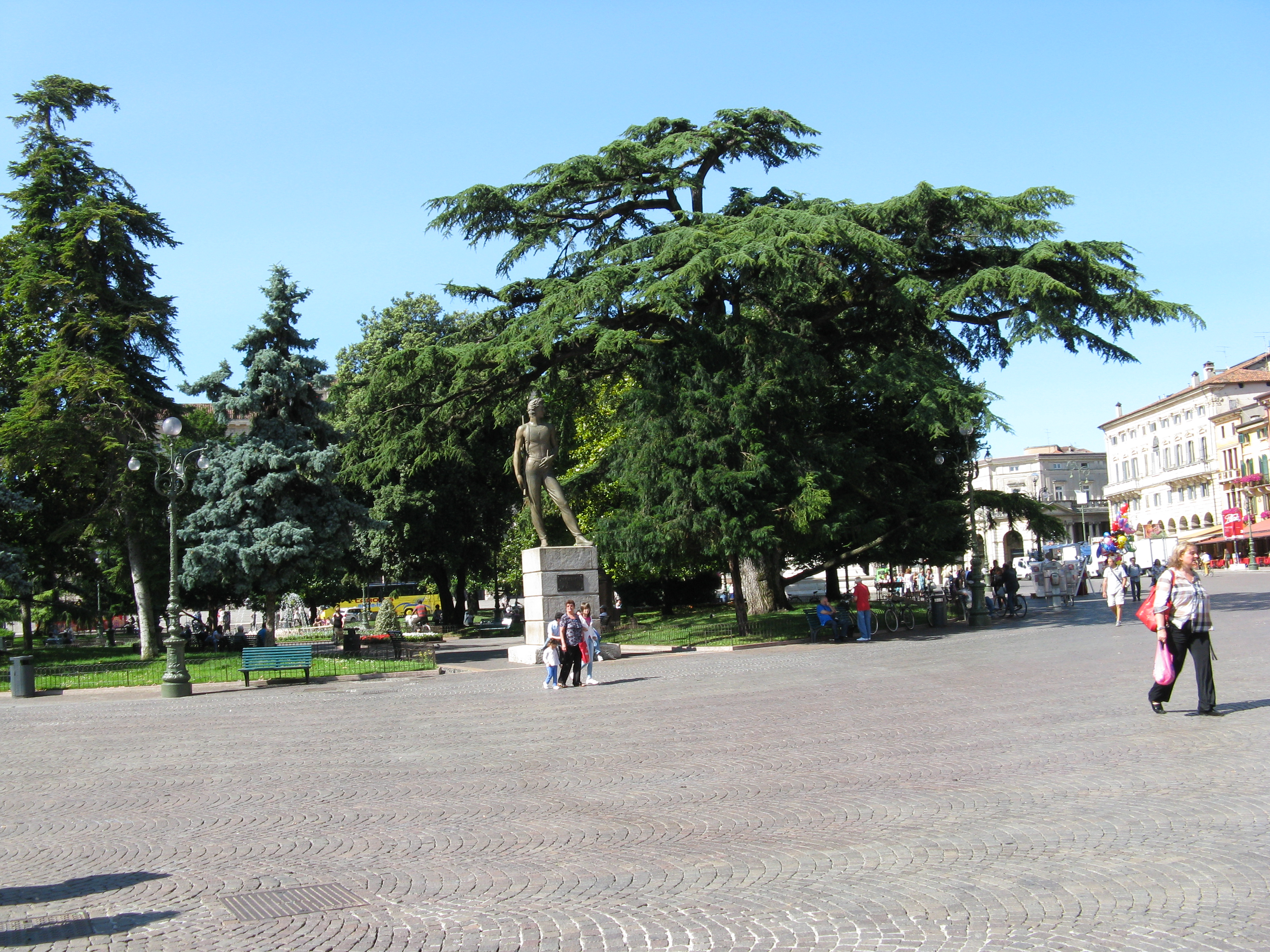
In the middle of the square, there’s a garden with a big marble fountain and a statue of Victor Emmanuel II (the first king of United Italy).
Juliet’s House
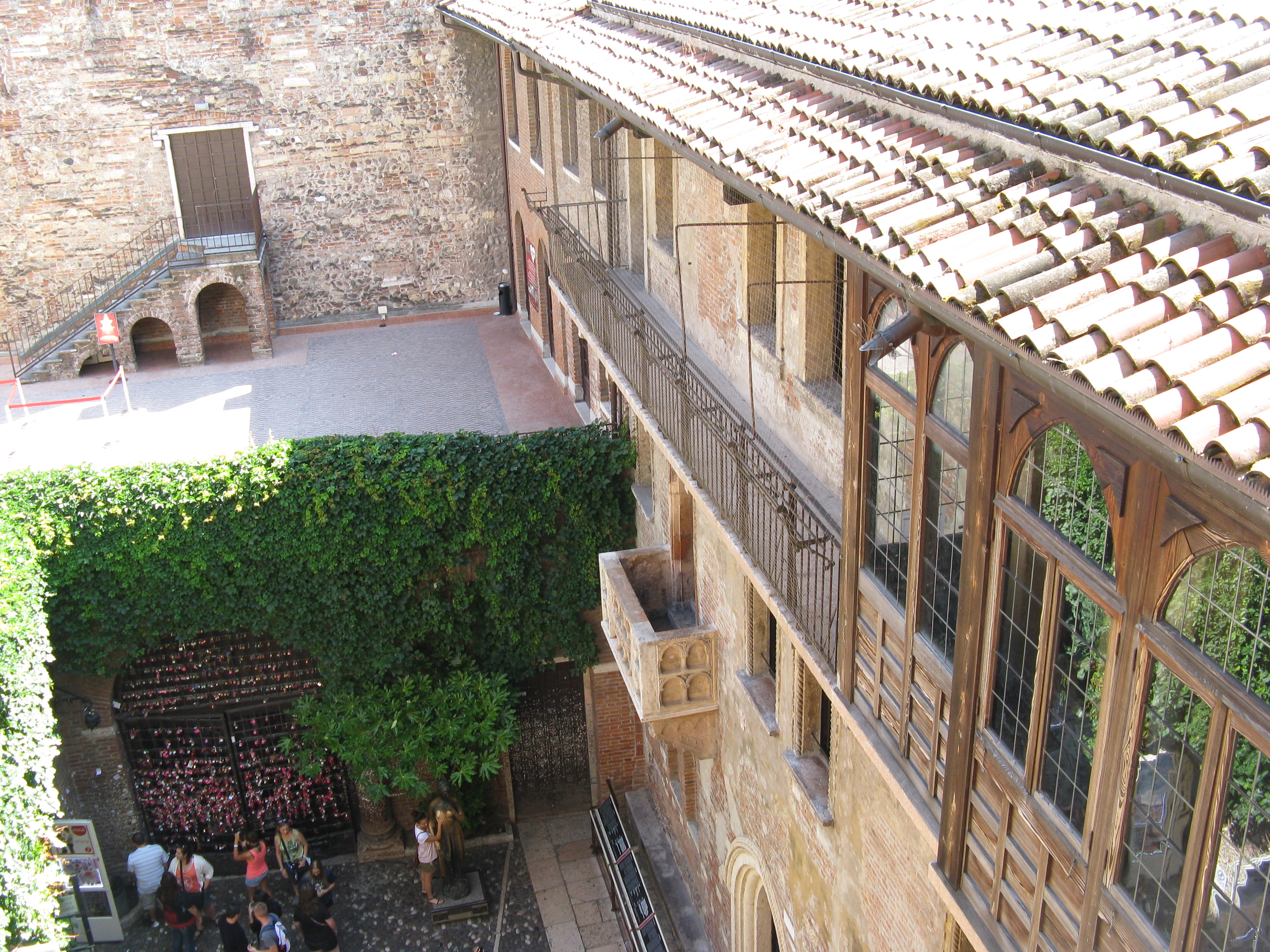
This is the most visited house in Verona, Casa di Guileta, and is the house of Juliet from Shakespeare’s Romeo and Juliet. Although Shakespeare never visited Verona, and Romeo and Juliet are fictional figures, this house, with its stone balcony, became a symbol of the world-famous love story.
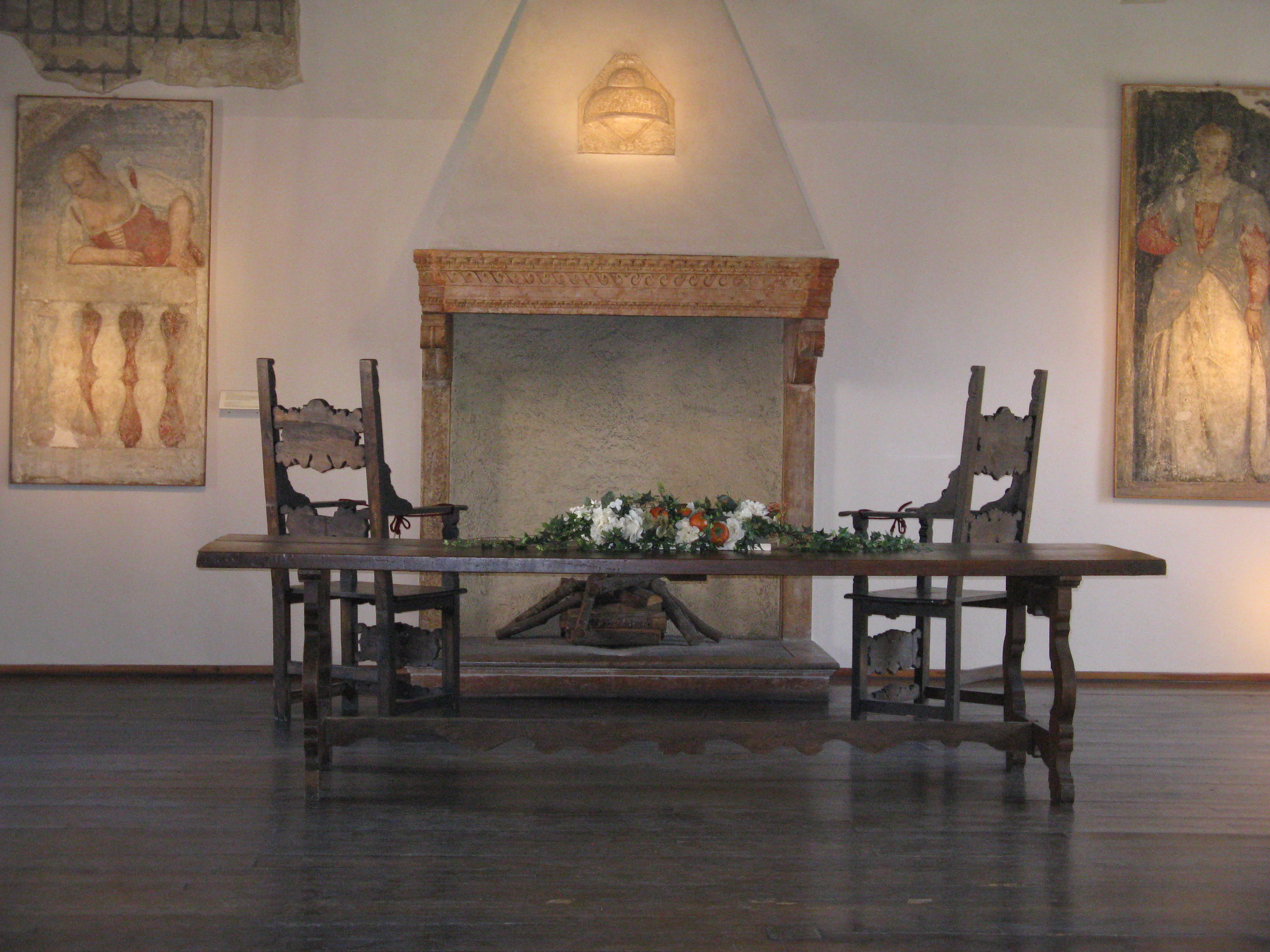
Inside Juliet’s house, not a laptop or tablet in sight.
Not a bad view from Juliet’s house.
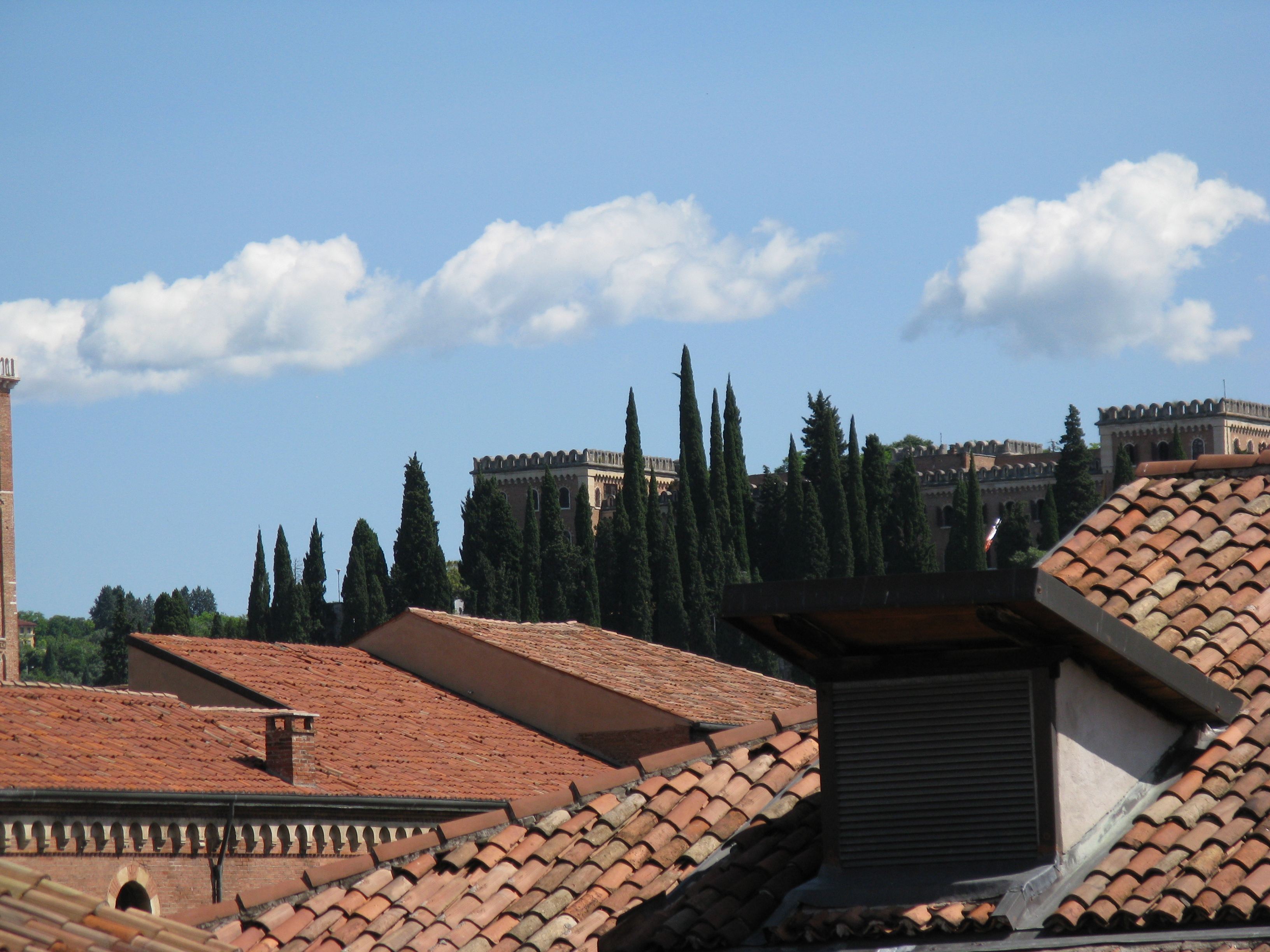
Castelvecchio
The castle was built between 1354 – 1356 by order of the Scala Family, which ruled the region at that time. The purpose of the castle was both to live in and as a fortress for protection against rebellion. Nowadays it is a museum which combines exhibitions of modern art with the tremendous medieval history of Verona.
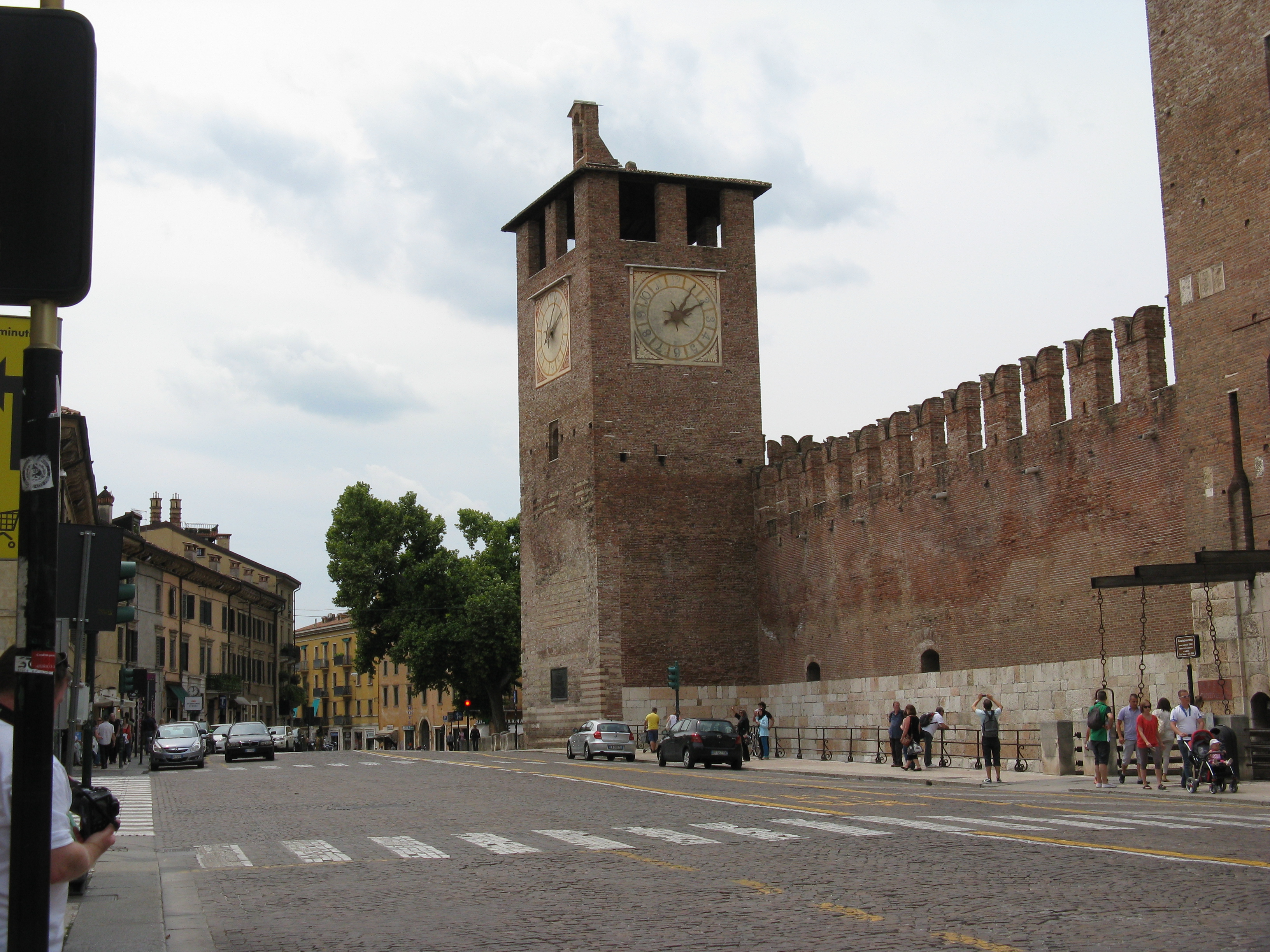
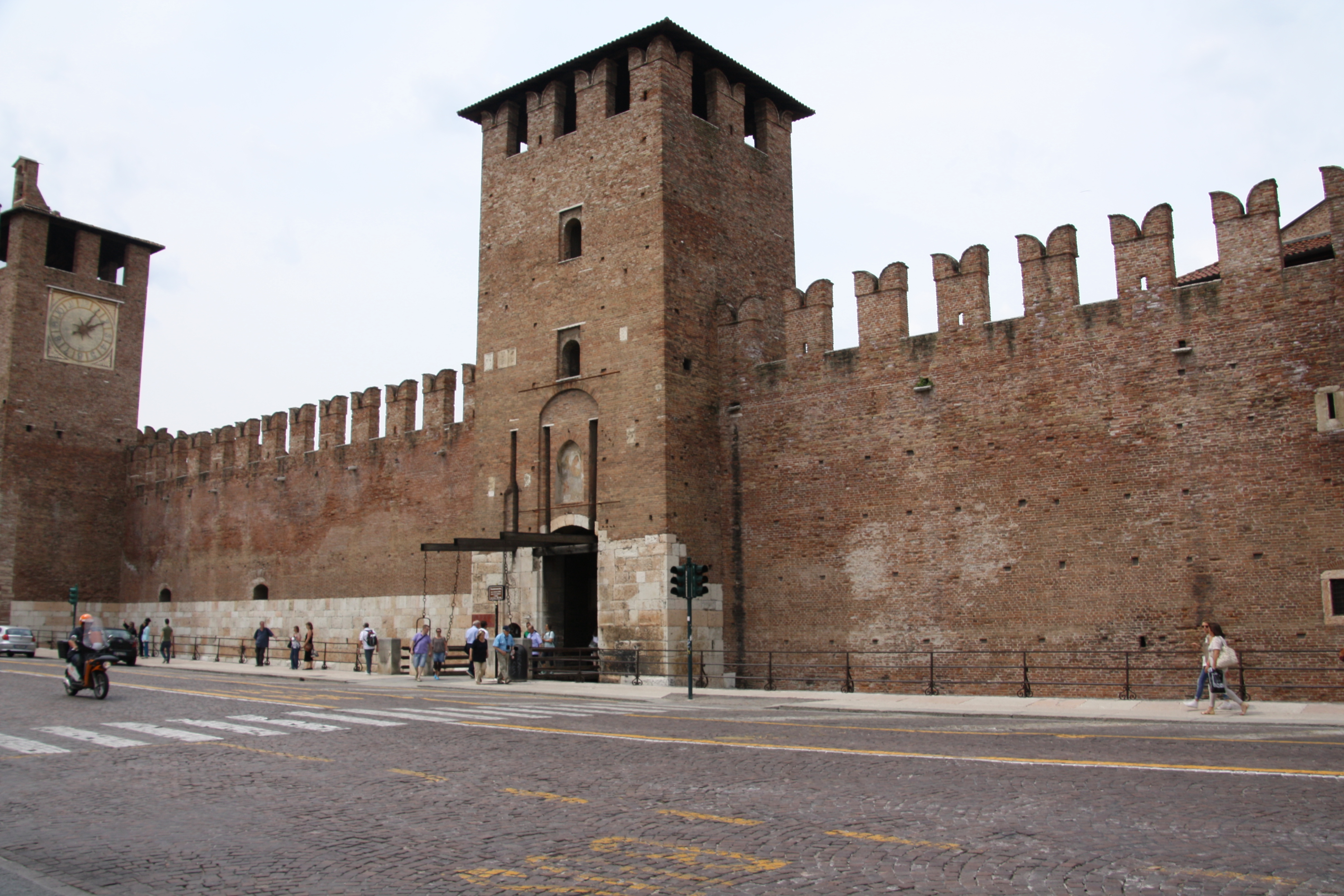
Ponte di Vecchio
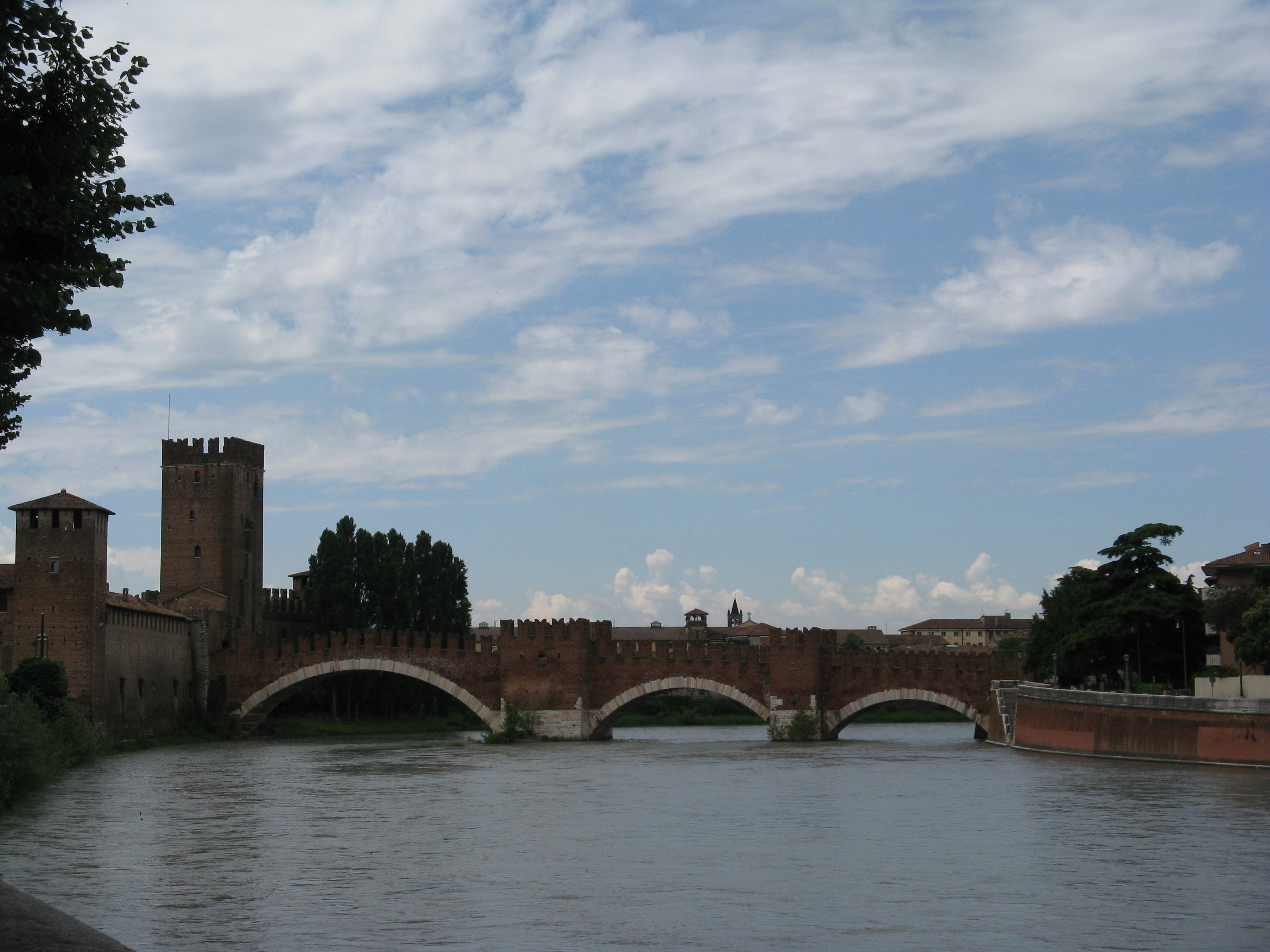
This was built initially as a fortified bridge which connects the castle with a safe route out of the city. It is one of the seven important bridges that connect the old centre of Verona.
Ponte di Vecchio looks like it’s still in its original state, however during WWII the bridges were destroyed. It has been rebuilt to look medieval.
Torre dei Lombarti
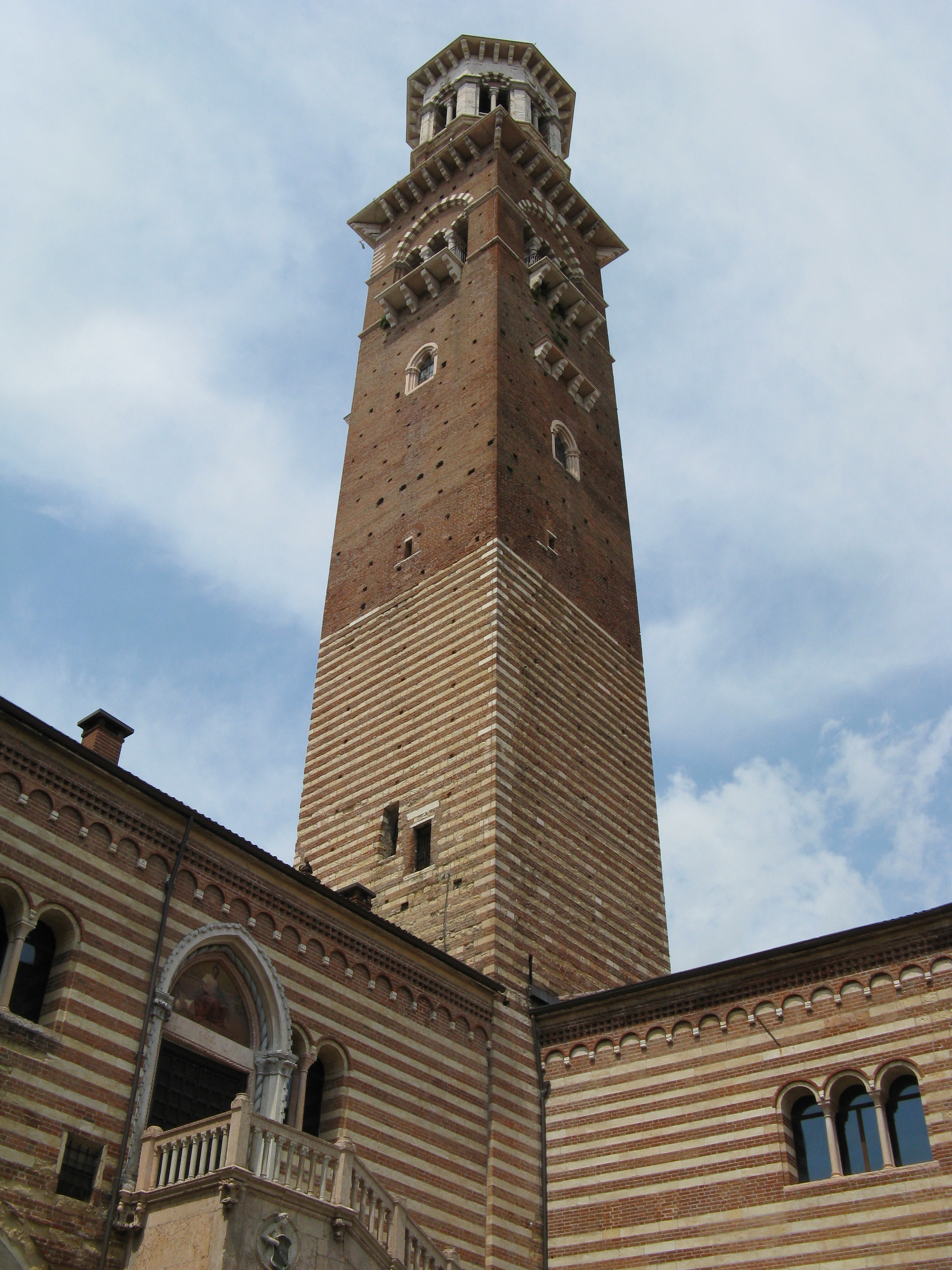
This is the highest building in this medieval city and overlooks the historical centre. Visiting the tower, you can either walk up using the 368 steps or conveniently take the lift.
The tower was constructed in 1172 ordered by the Lamberti family. The family was banished from the city a few years later. It became a belltower in 1295, when two bells were placed for calling up the army when necessary.
After a heavy thunderstorm in 1403, the tower was heavily damaged, and the top collapsed. It took until 1448 before they started with the reconstruction of the tower. The clock was only added it 1798.
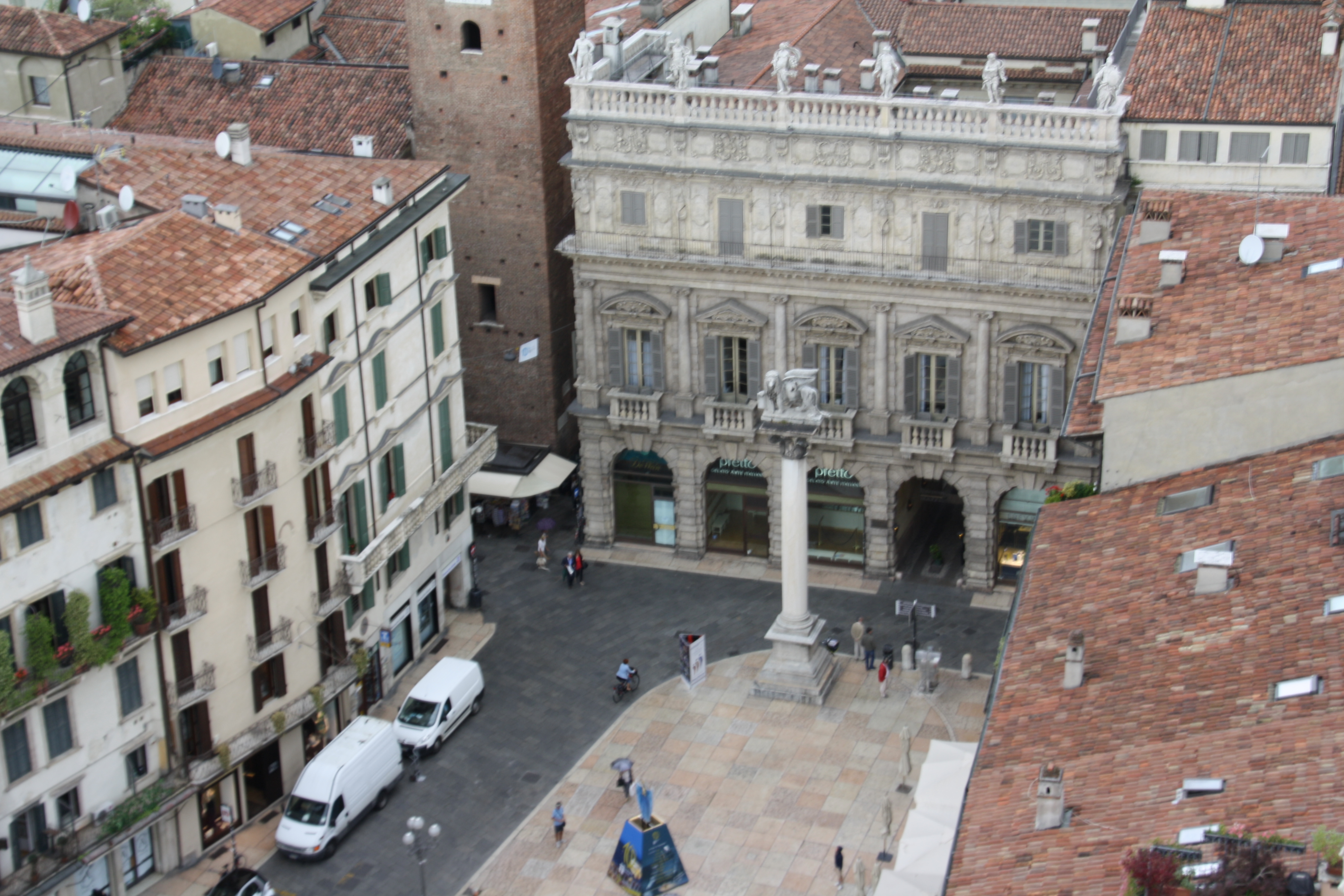
Views from the top of the tower into the square below.
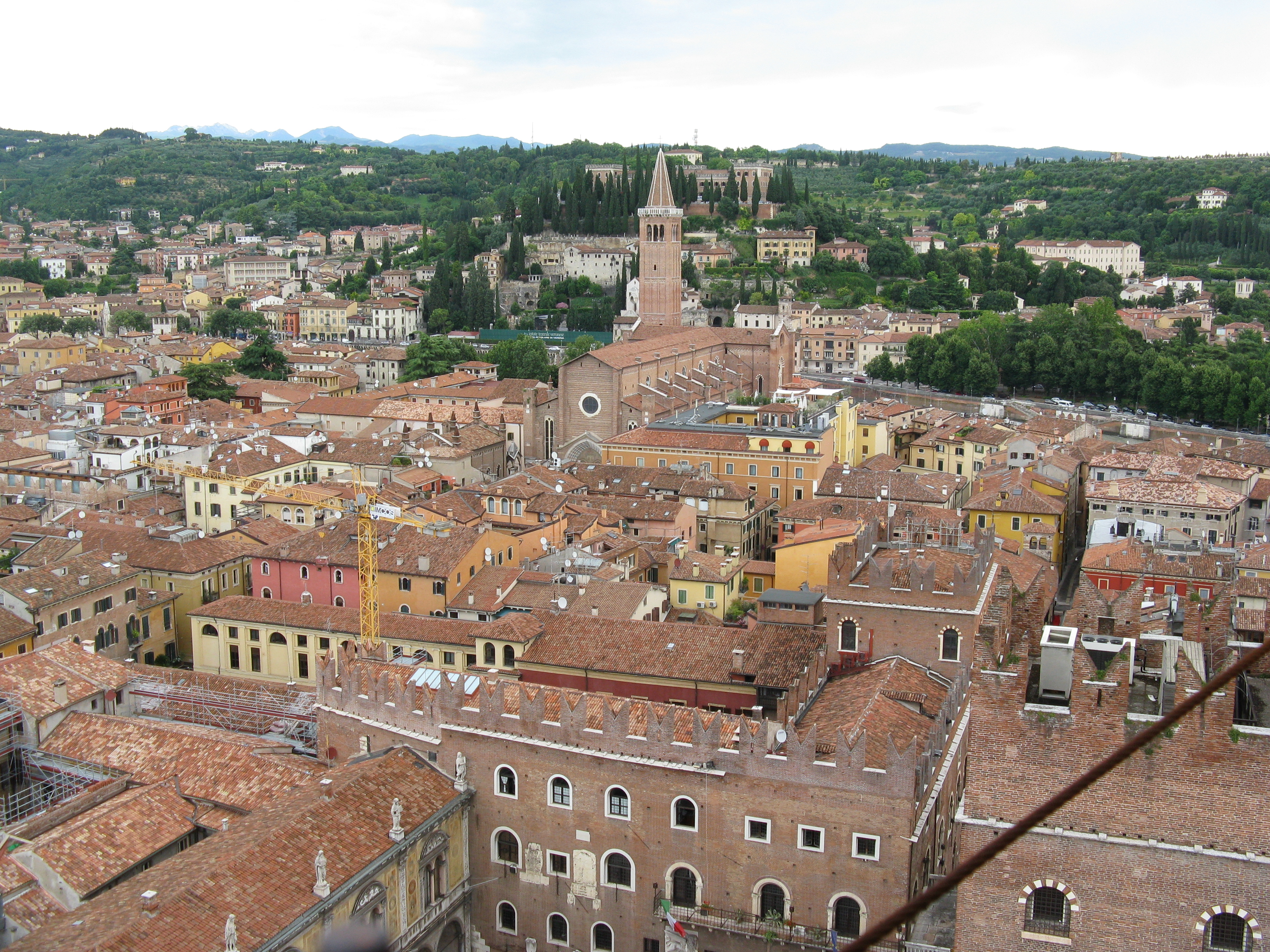
Stunning view to the hills outside the city.
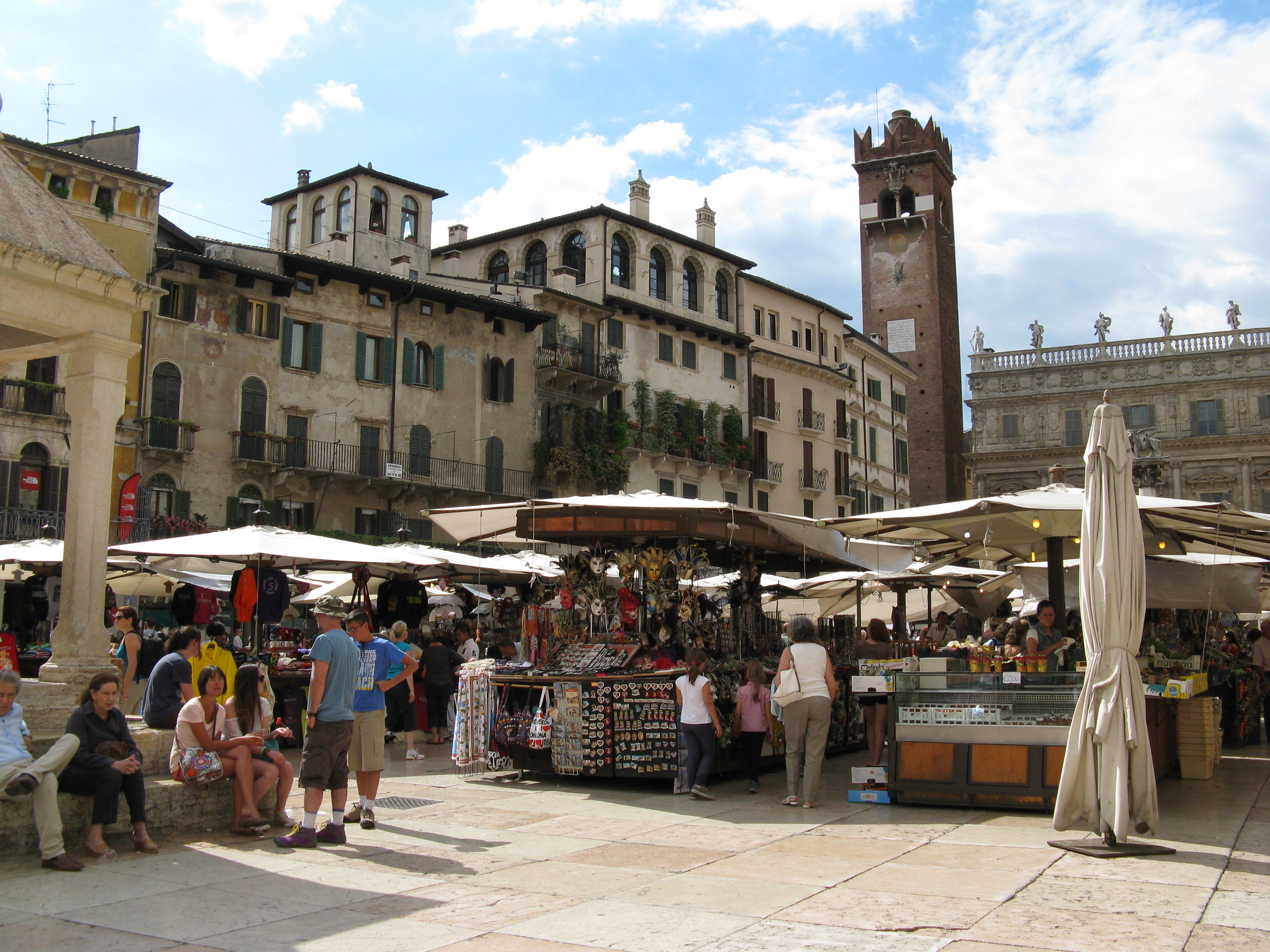
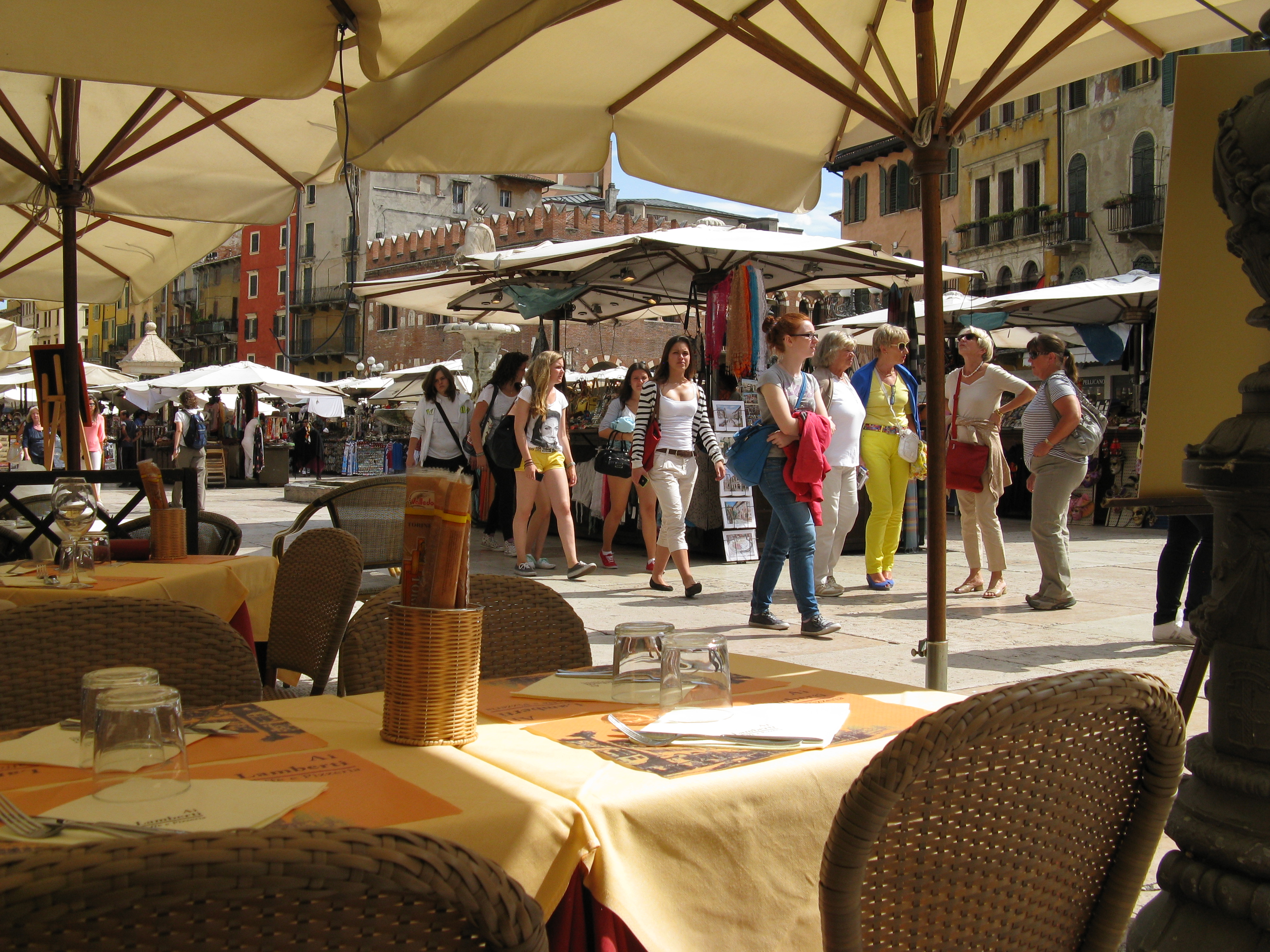
Osteria Sottocosta – Piazza Erbe (Main Square)
This historic town square is the centre of the old town. There are several cafés and historical buildings and in the middle is a market with street food and beautiful souvenirs.
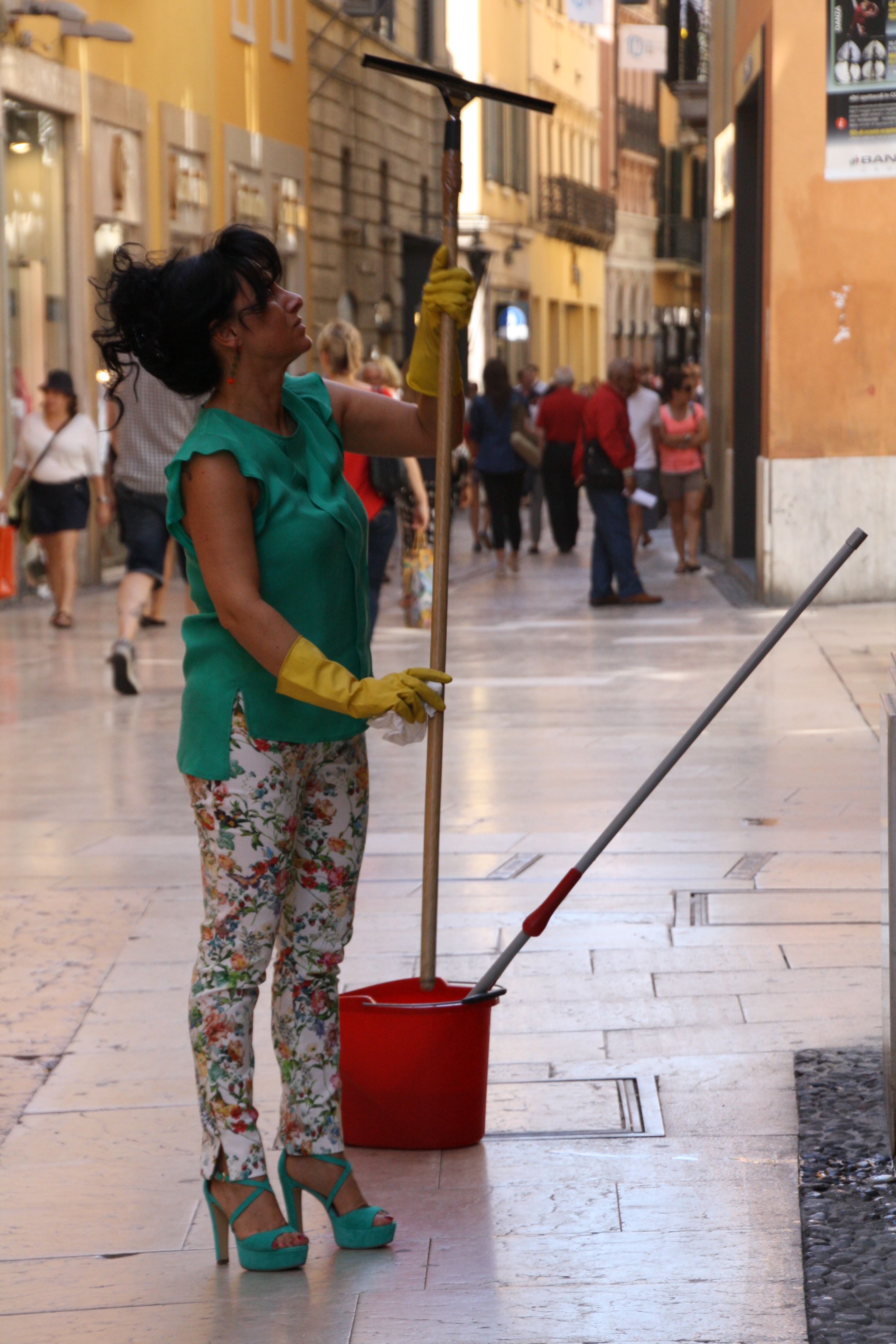
Italian Style
In Italy even the window cleaner has style, don’t fancy climbing a ladder in those shoes.
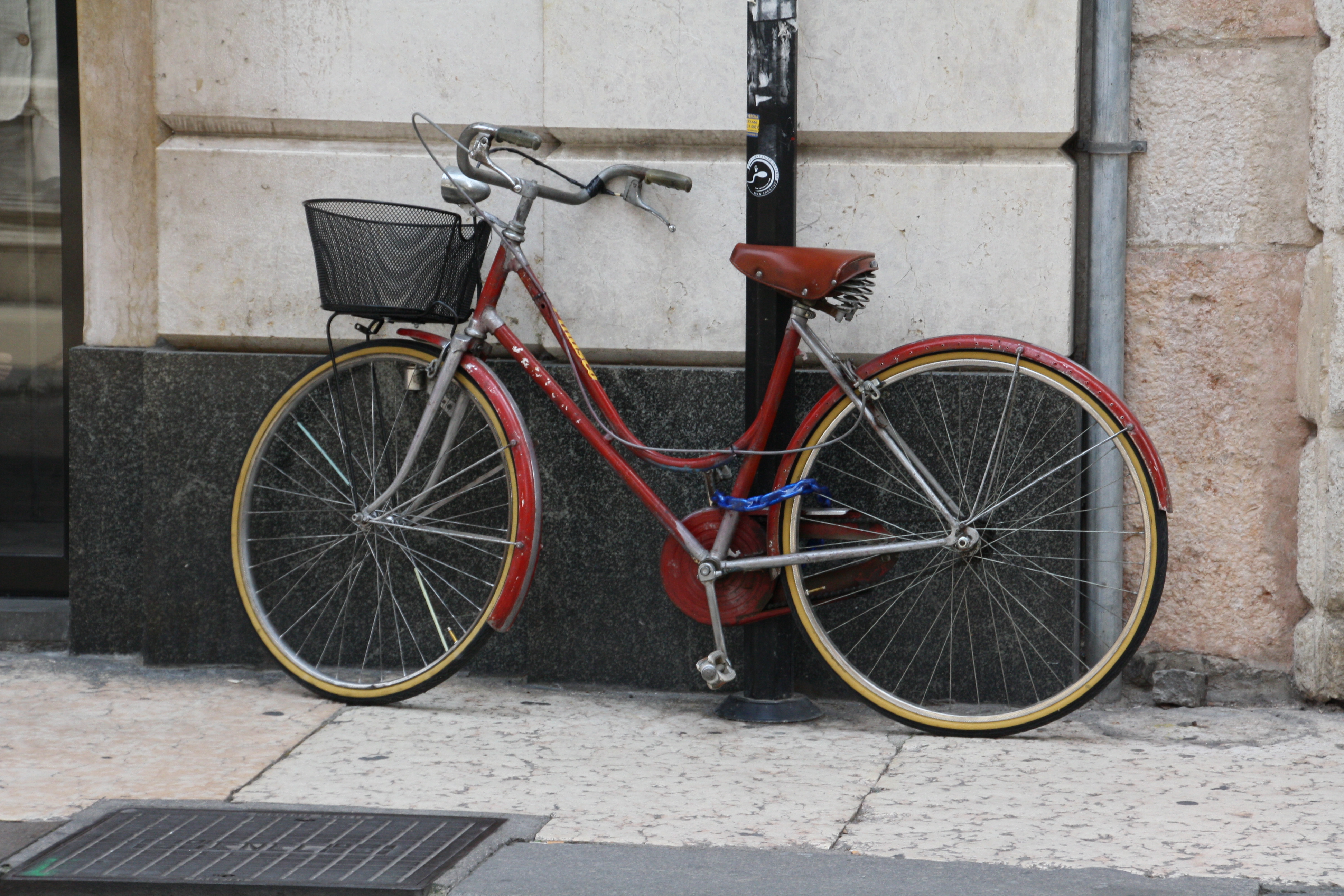
Italian’s have style and must spent significant parts of their salary on clothes, to save money they don’t spend it on bikes.
 Heather and Keith's travels