Few cities in the world waltz so effortlessly between the present and the past like Vienna. Its splendid historical face is easily recognisable: grand imperial palaces and bombastic baroque interiors, revered opera houses and magnificent squares. Vienna is beyond beautiful! It’s centre is magnificent, impressive, eternal and out of this world!
But Vienna is also one of Europe’s most dynamic urban spaces. A stone’s throw from Hofburg (the Imperial Palace), the Museums Quartier houses some of the world’s most provocative contemporary art behind a striking basalt facade.
Throw in the mass of green space within the confines .of the city limits and the ‘blue’ Danube cutting a path east of the historical centre, this is a capital that is distinctly Austrian.
There is so much to see and do that the 4 days we had wasn’t long enough.
We visited Vienna in June 2014 and stayed at the Altstadt Hotel.
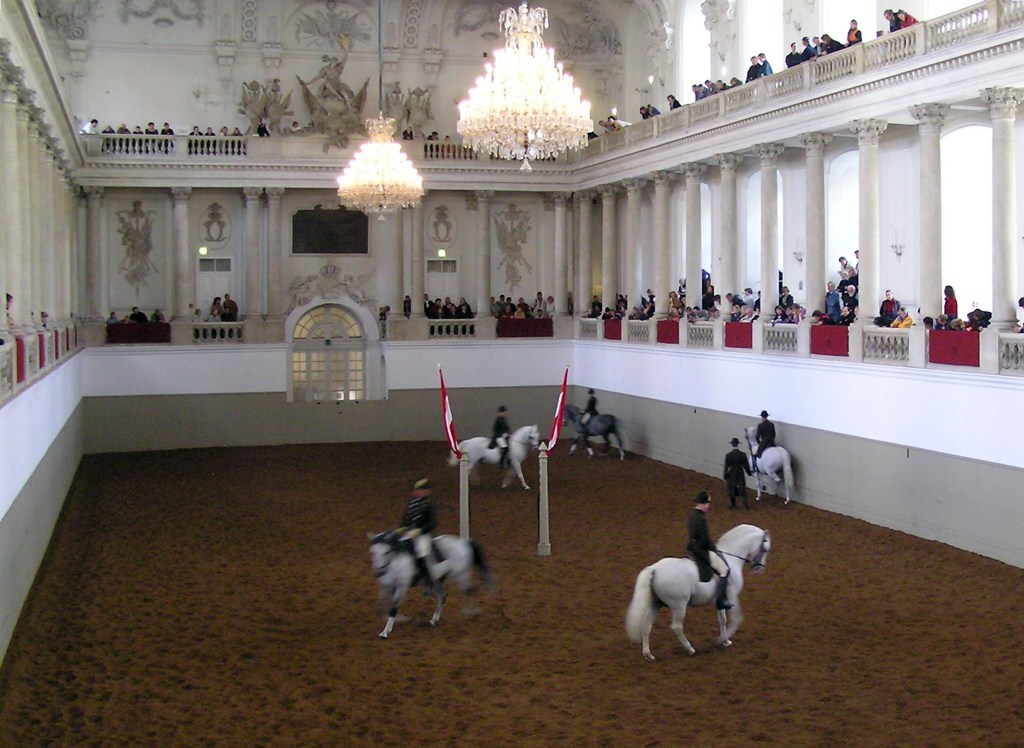
Spanish riding school
The Spanish Riding School of Vienna, Austria, is a traditional riding school for Lipizzan horses, which perform in the Winter Riding School in the Hofburg. Not only is it a centre for classical dressage, the headquarters is a tourist attraction in Vienna that offers public performances as well as permitting public viewing of some training sessions. The presentation builds on four centuries of experience and tradition in classical dressage. The leading horses and riders of the school also periodically tour and perform worldwide.
Hofburg palace
Hofburg Palace is the former imperial palace in the centre of Vienna. Part of the palace forms the official residence and workplace of the President of Austria. Built in the 13th century and expanded in the centuries since, the palace has housed some of the most powerful people in European and Austrian history, including monarchs of the Habsburg dynasty, rulers of the Austro-Hungarian Empire. It was the principal imperial winter residence, as Schönbrunn Palace was their summer residence.
Since 1279 the Hofburg area has been the documented seat of government for various empires and republics. The Hofburg has been expanded over the centuries to include various residences (with the Amalienburg), the Imperial Chapel (Hofkapelle or Burgkapelle), the Naturhistorisches Museum and Kunsthistorisches Museum, the Austrian National Library (Hofbibliothek), the Imperial Treasury (Schatzkammer), the Burgtheater, the Spanish Riding School (Hofreitschule), the Imperial Horse Stables (Stallburg and Hofstallungen), and the Hofburg Congress Center.
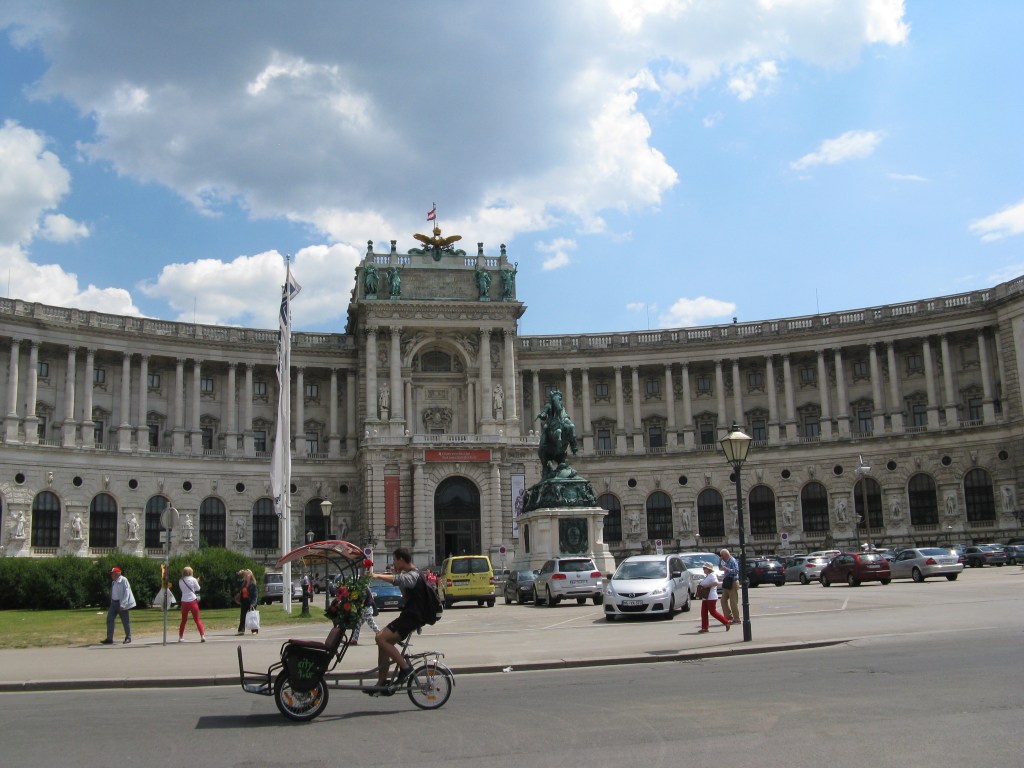
Transport at the rear entrance of the palace.
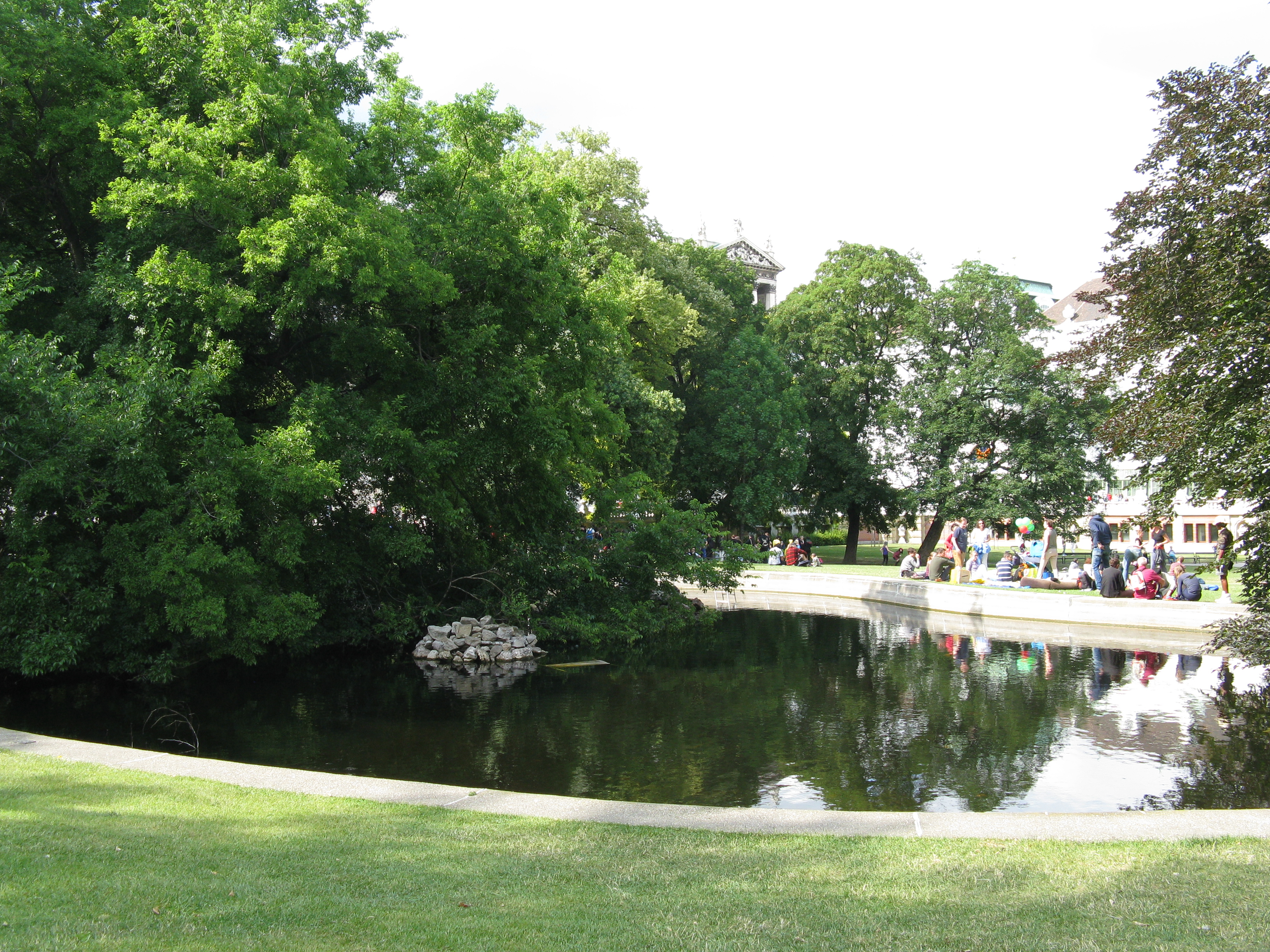
The grounds of the palace are stunning and are basically an inner city park for everyone to enjoy.
Karlskinche church
Karlskirche (St. Charles’s Church) is a baroque church located on the south side of Karlsplatz. Widely considered the most outstanding baroque church in Vienna, as well as one of the city’s greatest buildings, Karlskirche is dedicated to Saint Charles Borromeo, one of the great counter-reformers of the sixteenth century.
Located on the edge of the Innere Stadt, approximately 200 meters outside the Ringstraße, Karlskirche contains a dome in the form of an elongated ellipsoid. Since Karlsplatz was restored as an ensemble in the late 1980s, Karlskirche has garnered fame due to its dome and its two flanking columns of bas-reliefs, as well as its role as an architectural counterweight to the buildings of the Musikverein and of the Vienna University of Technology. The church is cared for by a religious order, the Knights of the Cross with the Red Star, and has long been the parish church as well as the seat of the Catholic student ministry of the Vienna University of Technology. Next to the Church was the Spitaler Gottesacker. Antonio Vivaldi was buried there.

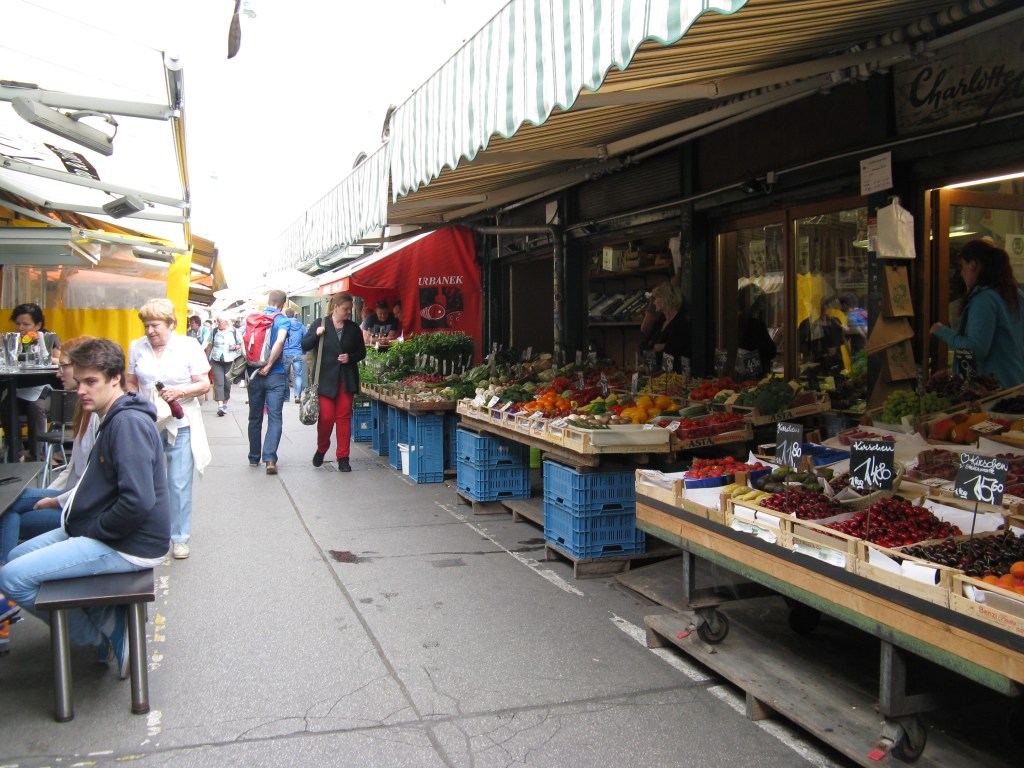
Naschmarkt
The Naschmarkt is Vienna’s most popular market. Located at the Wienzeile over the Wien River, it is about 1.5 kilometres (0.93 mi) long.
The Naschmarkt has existed since the 16th century when mainly milk bottles were sold (as milk bottles were made out of ash (wood from an ash tree), “Asch” (German for “ash”) led to the name “Aschenmarkt”). From 1793 onwards, all fruits and vegetables brought to Vienna with carts had to be sold there, while goods arriving on the Danube were sold elsewhere. Nowadays, one can buy fresh fruit and vegetables from around the world, exotic herbs, cheese, baked goods such as bread, kaiser rolls, and torte, meats, and seafood. There are also many small restaurants which offer e.g. sushi, kebab, seafood, traditional Viennese food such as Kaiserschmarrn or Palatschinken (compares to rolled up crepes) and stalls which offer clothes and accessories. Since 1977, the market extends further along the Wienzeile to an adjacent area every Saturday, when a flea market takes place there.
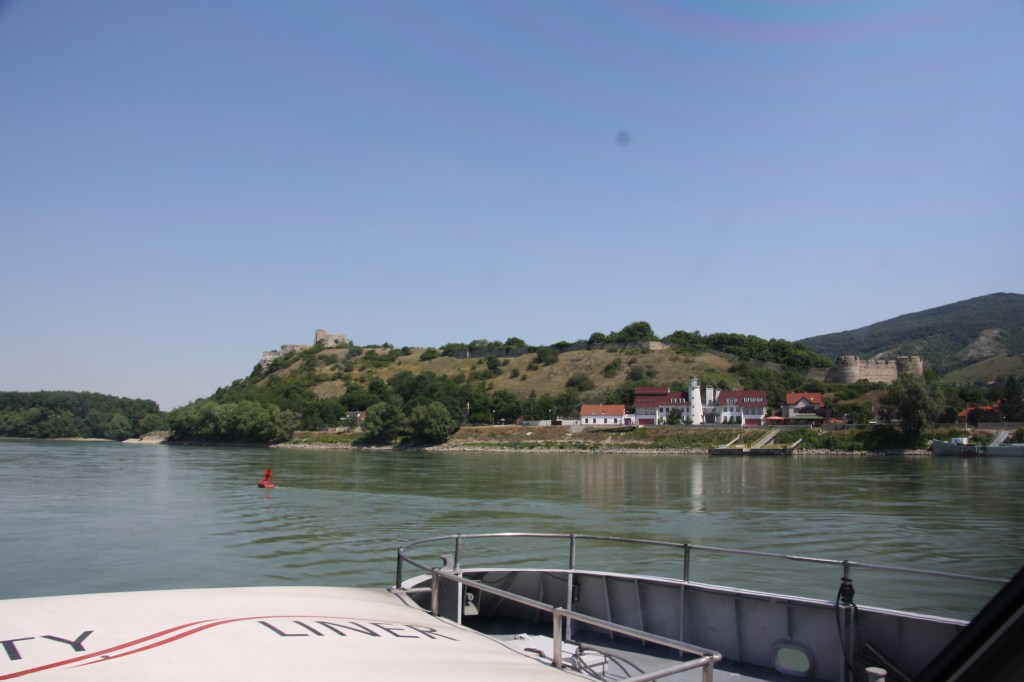
Danube cruise
This trip started in Bratislava before moving in to Vienna. The two capital cities are very close approximately 40 miles apart and the easiest and most pleasant way is to take one of the many boats that sail on the Danube between the two cities.
Golden hall
The Wiener Musikverein, the Golden Hall in the Musikverein is known all over the world, not only because of the annual worldwide broadcast of New Year’s Concert by the Vienna Philharmonics, but also for being permanent seat of the Vienna Philharmonics and main stage of the Vienna Mozart Orchestra.

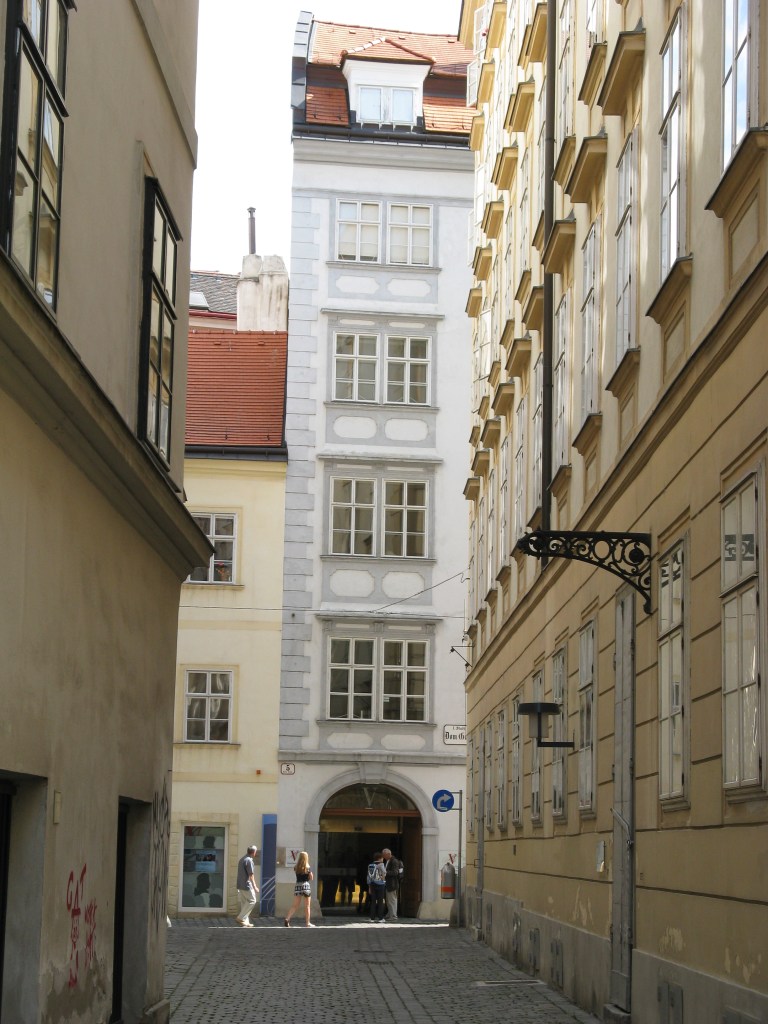
Mozart House
The Mozarthaus Vienna was Mozart’s residence from 1784 to 1787. This building in Vienna’s Old Town, not far from St. Stephen’s Cathedral, is his only surviving Viennese residence and is now a museum.
The house is located on Domgasse. It was built in the 17th century, originally with two storeys, and redeveloped in 1716. Mozart rented rooms here from 1784, at which time it was also known as the Camesina House, after the family which had owned it since 1720. Since the original entrance of the house facing the Schulerstraße (the one Mozart used) was walled up to make room for a shop, the house has to be entered today from its rear in the Domgasse.
Mozart Statue
You can’t really go very far in Vienna without seeing a statue, a sign or something relating to Wolfgang Amadeus Mozart. As non-musical people we haven’t a clue what the note depicted by the flowersis.

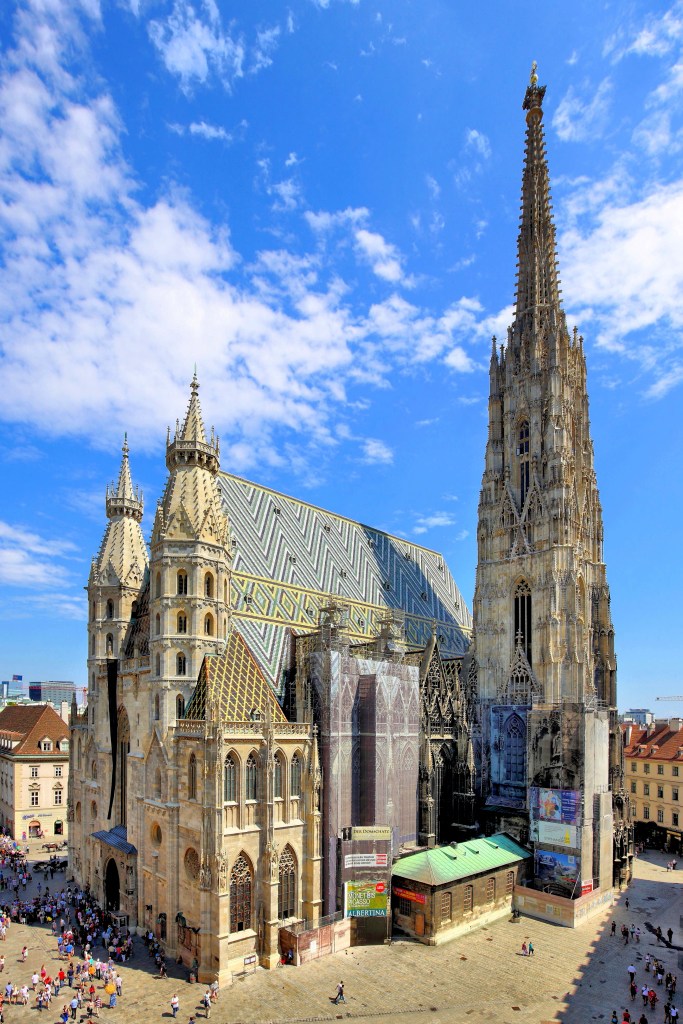
Vienna Cathedral
St. Stephen’s Cathedral is the mother church of the Roman Catholic Archdiocese of Vienna and the seat of the Archbishop of Vienna, Christoph Cardinal Schönborn, OP. The current Romanesque and Gothic form of the cathedral, seen today in the Stephansplatz, was largely initiated by Duke Rudolf IV (1339–1365) and stands on the ruins of two earlier churches, the first a parish church consecrated in 1147. The most important religious building in Vienna, St. Stephen’s Cathedral has borne witness to many important events in Habsburg and Austrian history and has, with its multi-coloured tile roof, become one of the city’s most recognizable symbols.
Altstadt Hotel
We don’t normally include hotels but this one was very different. It was an art hotel where each room had painting’s and sculptures by different local artists. In the afternoon between 4 and 6 they served afternoon tea and cake (very English).
This is one of the hotels many “feature” walls.

 Heather and Keith's travels