Vilnius, doesn’t get the attention it deserves. The city’s surprising Old Town is a dazzling assemblage of baroque houses, inviting alleyways and colourful churches built around quiet courtyards. But it’s no museum piece: the city’s cosmopolitan heritage, enriched by Polish, Jewish and Russian influences, lends a sophisticated vibe.
When we visited Vilnius it was not very touristy. It felt like a working city and a base for capital and commerce. It is becoming more popular which hopefully won’t change is simplicity and charm.
We visited Vilnius in June 2012 and stayed at the Grotthuss Hotel (it wasn’t Grotty by the way).
Church of St Anne’s Church
St. Anne’s Church is a Roman Catholic church in Vilnius’ Old Town, on the right bank of the Vilnia River. It is a prominent example of both Flamboyant Gothic and Brick Gothic styles. St. Anne’s is a prominent landmark in the Old Town of Vilnius that enabled the district to be included in the list of UNESCO World Heritage sites. And it is one of the most interesting examples of Gothic architecture in Lithuania.
The first church at this site, constructed of wood, was built for Anna, Grand Duchess of Lithuania, the first wife of Vytautas the Great. Originally intended for the use of Catholic Germans and other visiting Catholics, it was destroyed by a fire in 1419. The present brick church was constructed on the initiative of the King of Poland and Grand Duke of Lithuania Alexander I Jagiellon in 1495–1500; the exterior of the church has remained almost unchanged since then.

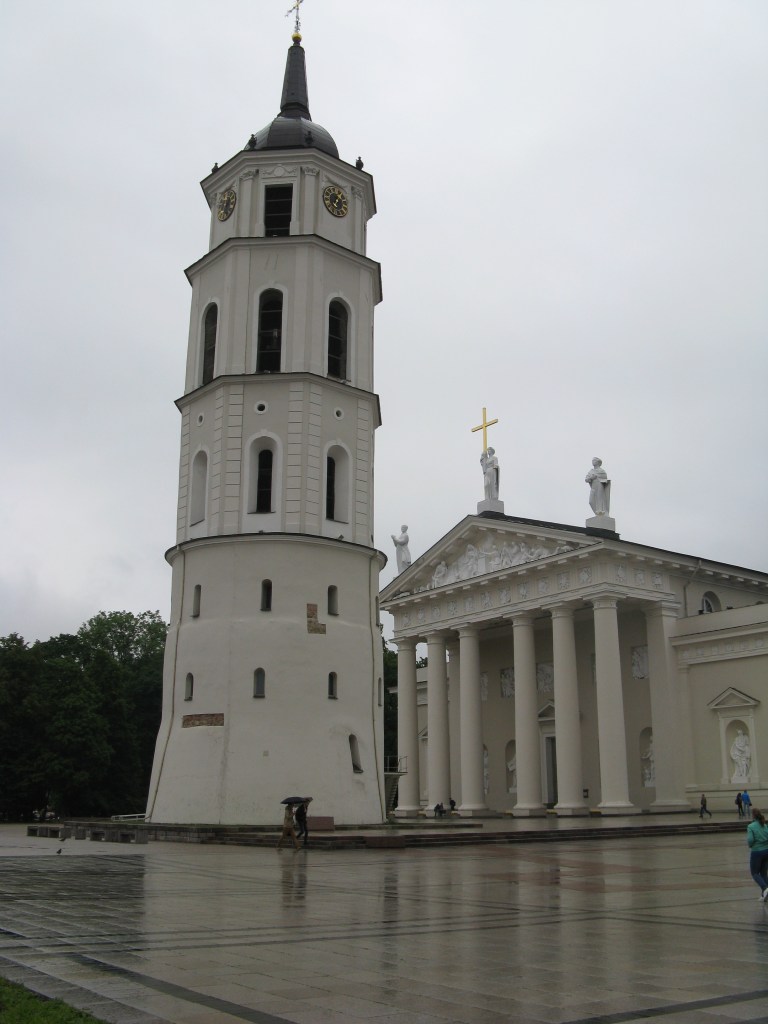
Vilnius Cathedral
The Cathedral of Vilnius is the main Roman Catholic Cathedral of Lithuania. It is situated in Vilnius Old Town, just off of Cathedral Square. Dedicated to Saints Stanislaus and Ladislaus, the church is the heart of Catholic spiritual life in Lithuania.
Inside, there are more than forty works of art dating from the 16th through 19th centuries, including frescoes and paintings of various sizes. During the restoration of the Cathedral, the altars of a presumed pagan temple and the original floor, laid during the reign of King Mindaugas, were uncovered. In addition, the remains of the cathedral built in 1387 were also located. A fresco dating from the end of the 14th century, the oldest known fresco in Lithuania, was found on the wall of one of the cathedral’s underground chapels.
During the Soviet regime initially the cathedral was converted into a warehouse. Masses were celebrated again starting in 1988, although the cathedral was still officially called “The Gallery of Images” at that time. In 1989, its status as a cathedral was restored.
Old Town
The Old Town of Vilnius, one of the largest surviving medieval old towns in Northern Europe, has an area of 3.59 square kilometres (887 acres). It encompasses 74 quarters, with 70 streets and lanes numbering 1487 buildings with a total floor area of 1,497,000 square meters. The oldest part of the Lithuanian capital of Vilnius, it has developed over the course of many centuries, and has been shaped by the city’s history and a constantly changing cultural influence. It is a place where some of Europe’s greatest architectural styles—gothic, renaissance, baroque and neoclassical—stand side by side and complement each other.
Pilies Street is the Old Town’s main artery and the hub of cafe and street market life. The main street of Vilnius, Gediminas Avenue, is partially located in the Old Town. The central squares in the Old Town are the Cathedral Square and the Town Hall Square.
In 1994 the Vilnius Old Town was included in the UNESCO World Heritage List (No. 541) in recognition of its universal value and originality.
Higher Castle Museum
The Vilnius Castle Complex is a group of cultural, and historic structures on the left bank of the Neris River, near its confluence with the Vilnia River. The buildings, which evolved between the 10th and 18th centuries, were one of Lithuania’s major defensive structures.[1
The complex consisted of three castles: the Upper, the Lower, and the Crooked. The Crooked Castle was burned down by the Teutonic Knights in 1390 and was never rebuilt. The Vilnius Castles were attacked several times by the Teutonic Order after 1390, but they did not succeed in taking the entire complex. Its complete capture occurred for the first time during the 1655 Battle of Vilnius. Soon afterwards, the severely damaged castles lost their importance, and many buildings were abandoned. During the Tsarist annexation, several historic buildings were demolished; many more were damaged during the fortress construction in the 19th century.

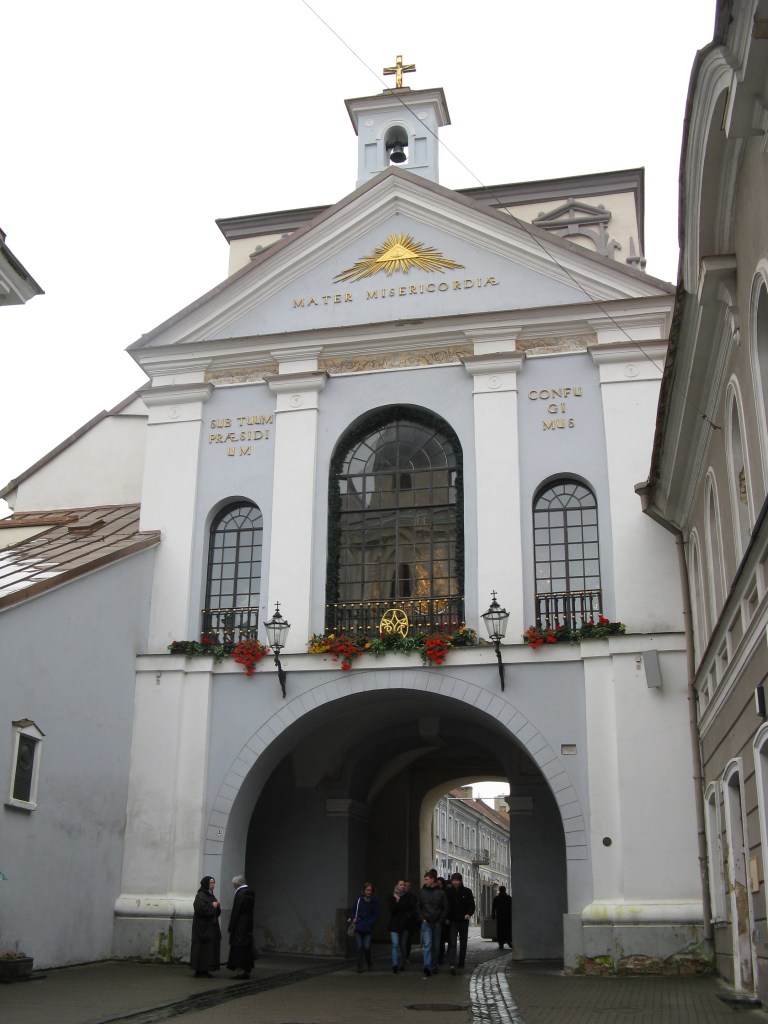
Gate of Dawn
The Gate of Dawn is a city gate of Vilnius and one of the most important religious, historical and cultural monuments.
It was built between 1503 and 1522 as a part of defensive fortifications for the city of Vilnius, the capital of the Grand Duchy of Lithuania. It has also been known as the Medininkai Gate, as it led to the village Medininkai south of Vilnius as well as Aštra broma, which derivative for the Lithuanian language word aštra meaning sharp. Of the nine city gates, only the Gate of Dawn remains, while the others were destroyed by the order of the government at the end of the 18th century.
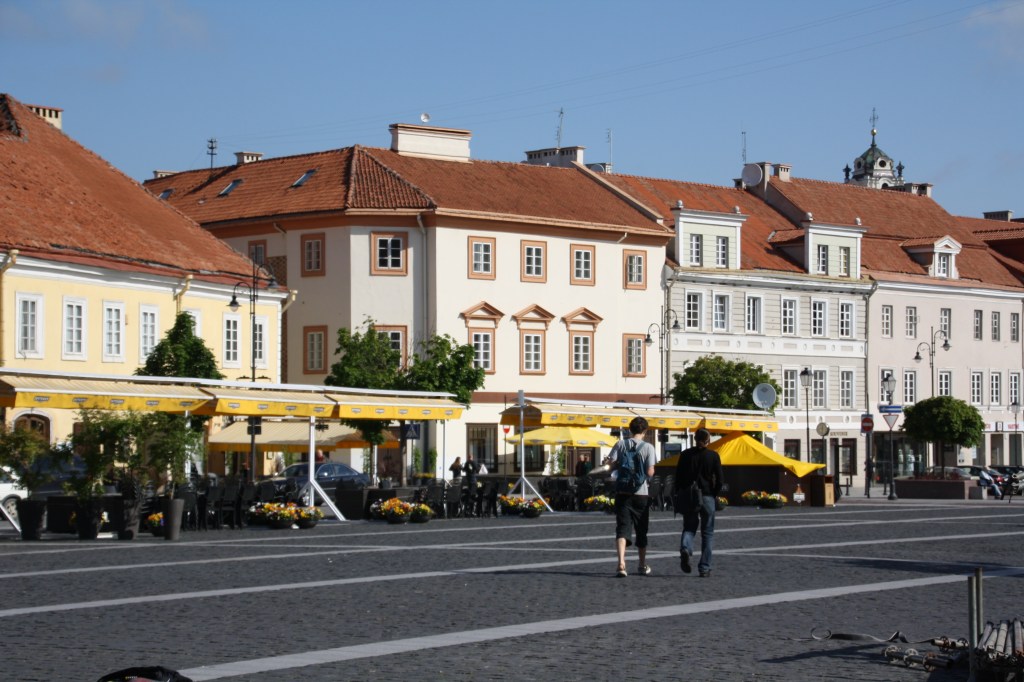
Town Hall Square
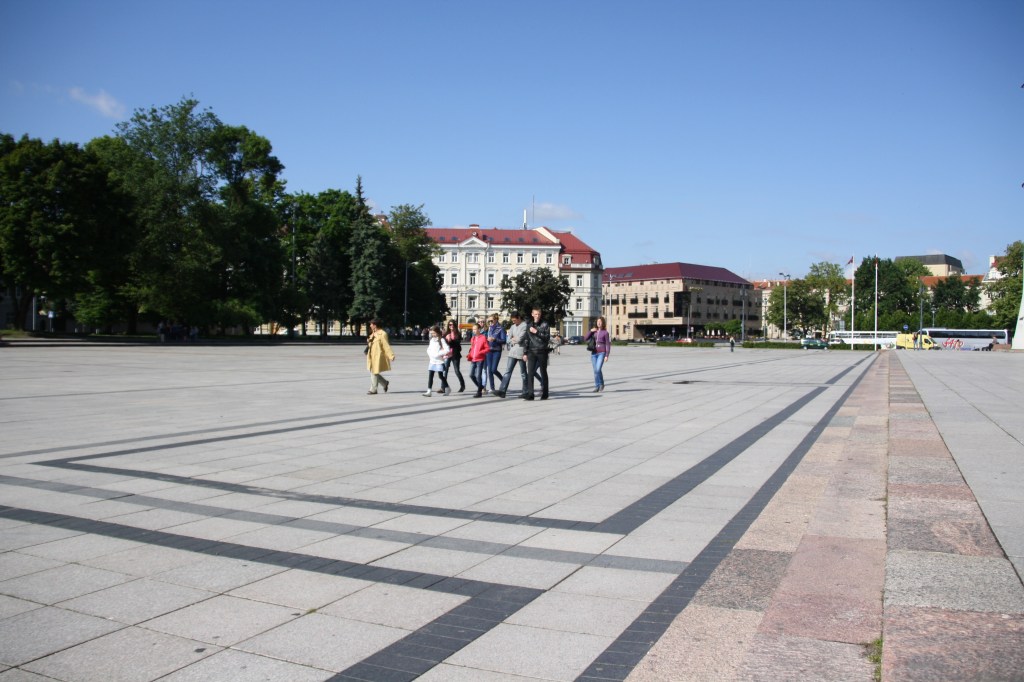
The Town Hall Square at the end of the Pilies Street is a traditional centre of trade and events in Vilnius. Major annual fairs, such as Kaziukas Fair, are held in this square, the main Christmas tree is decorated here, various concerts and other attractions are organised as well as celebrations of the important dates of the state.
Three Crosses
Three Crosses is a prominent monument in Vilnius, Lithuania, on the Hill of Three Crosses, originally known as the Bleak Hill , in Kalnai Park. According to a legend, seven Franciscan friars were beheaded on top of this hill. Wooden crosses were built in the location since the early 17th century. It soon became a symbol of the city and an integral part of the city’s skyline. As wood rots, the crosses needed to be periodically replaced. In 1916, a concrete monument was designed by Polish–Lithuanian architect and sculptor Antoni Wiwulski. It was torn down in 1950 by order of the Soviet authorities. A new monument designed by Henrikas Šilgalis was erected in its place in 1989. The monument was depicted on 50 litas banknote. A spectacular panorama of the Vilnius Old Town can be observed from a small observation deck at the base of the crosses.

Vilnius TV Tower
The Vilnius TV Tower is a 326.5 m (1,071 ft) tower in the Karoliniškės microdistrict of Vilnius. It is the tallest structure in Lithuania, and is occupied by the SC Lithuanian Radio and Television Centre.

Uzupis Angel
The tall pillar in the heart of Vilnius’ breakaway republic Užupis (where every dog has the right to be a dog) gave birth to a long-awaited angel on April 1, 2002, the official independence day of the wacky district. After a long and sometimes tedious unveiling ceremony the covers were finally lifted, and in a burst of billowing balloons the surprisingly beautiful figure of an angel was revealed, playing a trumpet and generally being rather awesome.

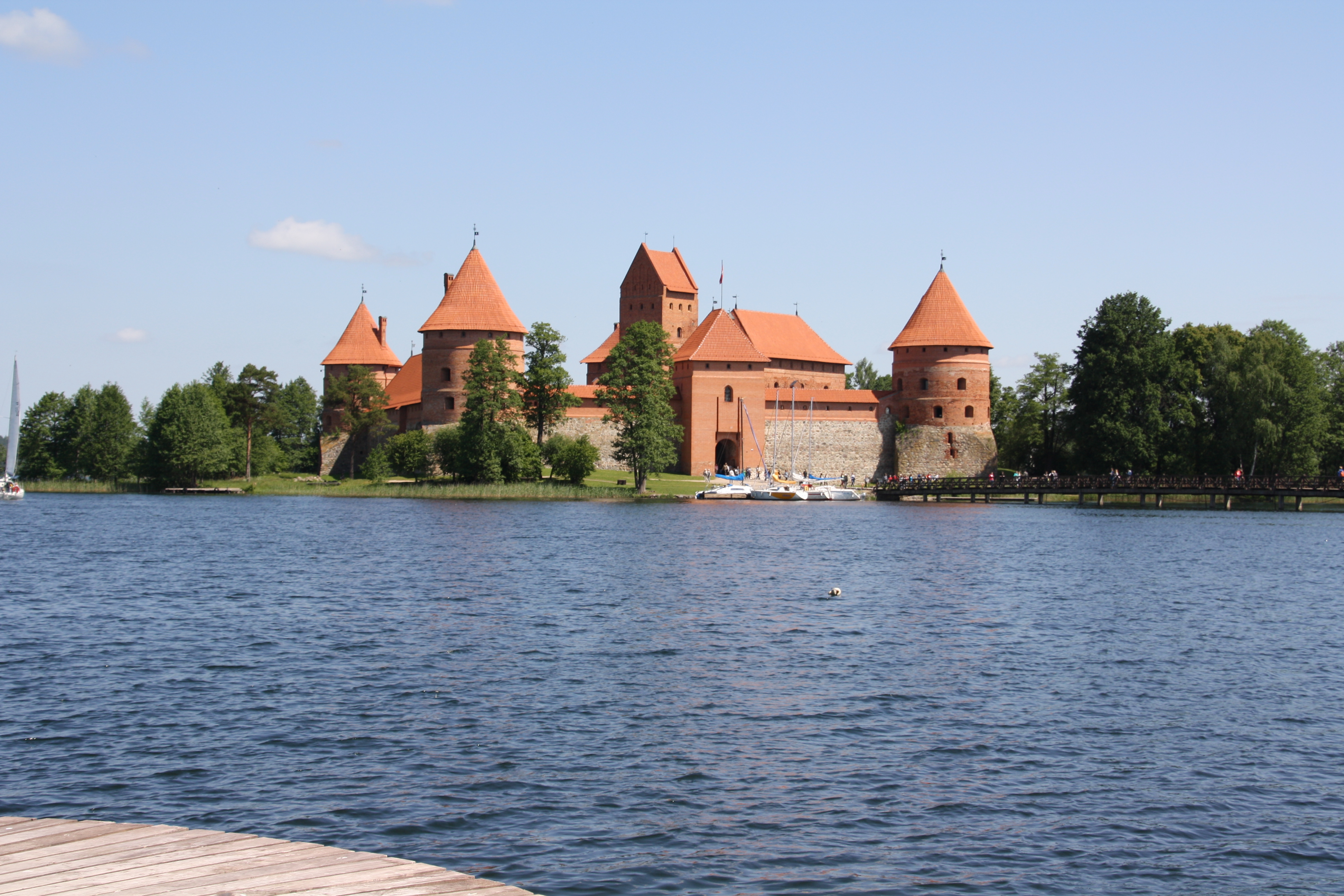
Traki Island Castle
Trakai Island Castle is an island castle located in Trakai just outside of Vilnius. The construction of the stone castle was begun in the 14th century by Kęstutis, and around 1409 major works were completed by his son Vytautas the Great, who died in this castle in 1430. Trakai was one of the main centres of the Grand Duchy of Lithuania and the castle held great strategic importance.
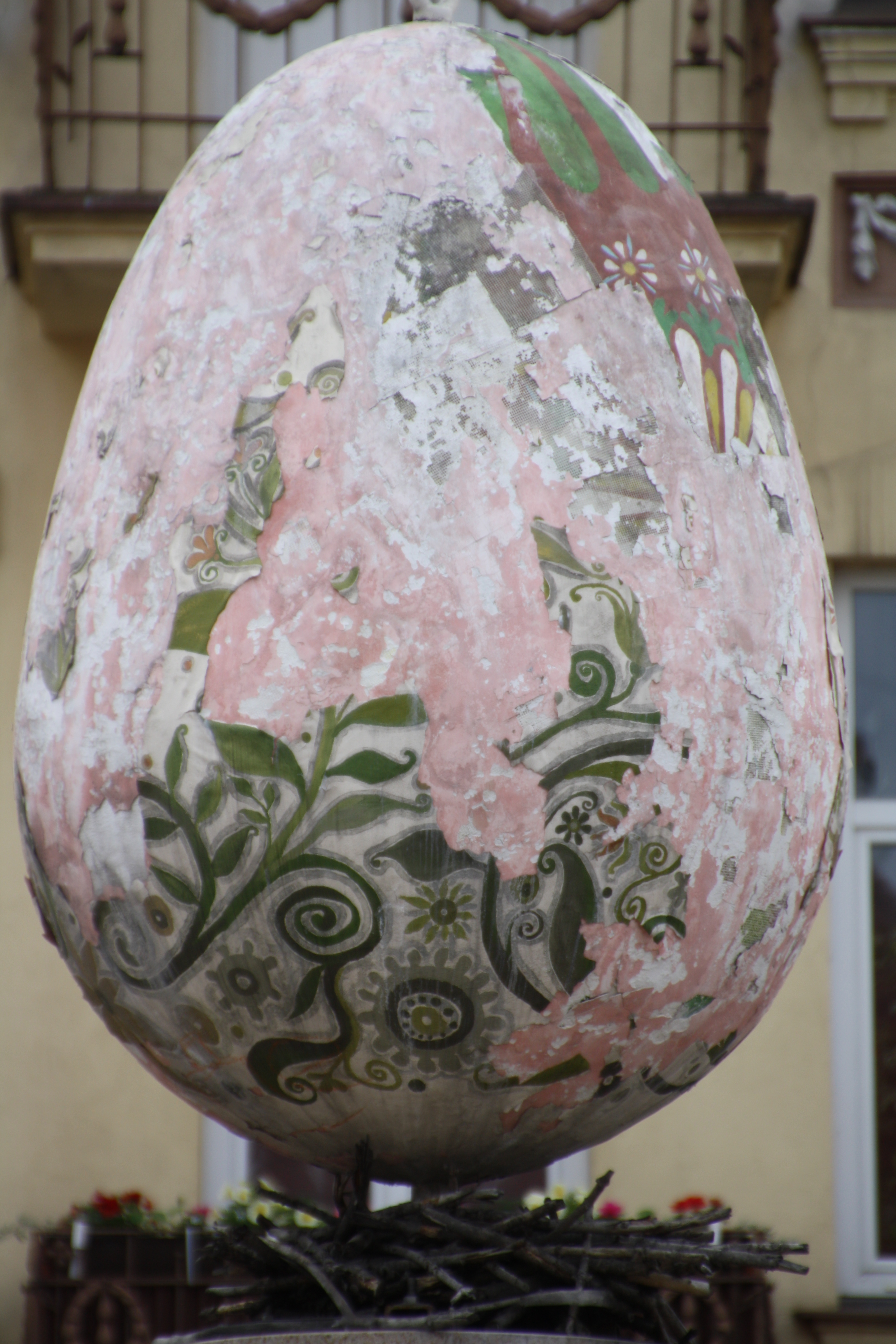
The Egg Sculpture
On the crossing of Pylimo, Šv. Stepono and Raugyklos streets, stands a sculpture of the egg. Previously this part of the city was very busy because of the bird market situated next to the egg“. Bird market was the point of attraction for people from all around the Vilnius precincts.
This sculpture was a present from the republic of Užupis. The egg weighs about 300 kg and was completely built in 2003. A couple of times it was painted during the Easter day celebration.
 Heather and Keith's travels