First impressions may of Warsaw may not be entirely positive. It was levelled during World War II by occupying German soldiers and rebuilt in the 1950s and ’60s in bleak Soviet style. Modern touches added since communism fell in 1989 have softened the edges, however and the passing decades have lent that old Soviet architecture a hip, retro gloss.
This was a hidden gem for us. We were amazed and found a beautiful city which had open spaces and a wonderful old town.
We visited in March 2015 and stayed at the Bristol Hotel which is an excellent place to stay with it’s central location. It is reputed to be the best hotel not only in Warsaw but in Poland. It’s really grand, fortunately we got a cheap deal
Old Town
When you tour a historic city centre you’re normally out for genuine, untouched architecture and monuments. But after Warsaw’s experiences in the 20th century, the magic of this quarter is in the detailed and faithful reconstruction carried out up to 1962. After almost nine tenths of the city was wiped out, the Old Town’s rebirth was an incredible feat that has earned it Old Town UNESCO World Heritage Status.
The old town market place, this is often referred to as the most picturesque area of Poland’s capital. All of these buildings are post-war replicas of what came before, as the square was first bombed by the Luftwaffe and then blown up by the Germans at the end of the Warsaw Uprising in 1944. Immediately after the war the square was rebuilt as it had been, including the bizarre but charming vertical extensions that cap some of the houses.
The mermaid figure on the fountain in the centre holds special meaning for Warsaw, while in summer you can park up at a restaurant table and watch the city going about its day

New Town
This area is called the new town because it lies outside the city walls. This is the hipster area of the city centre which contains area has lots of small art galleries and shops selling collectables, not just the usual tourist tatt.
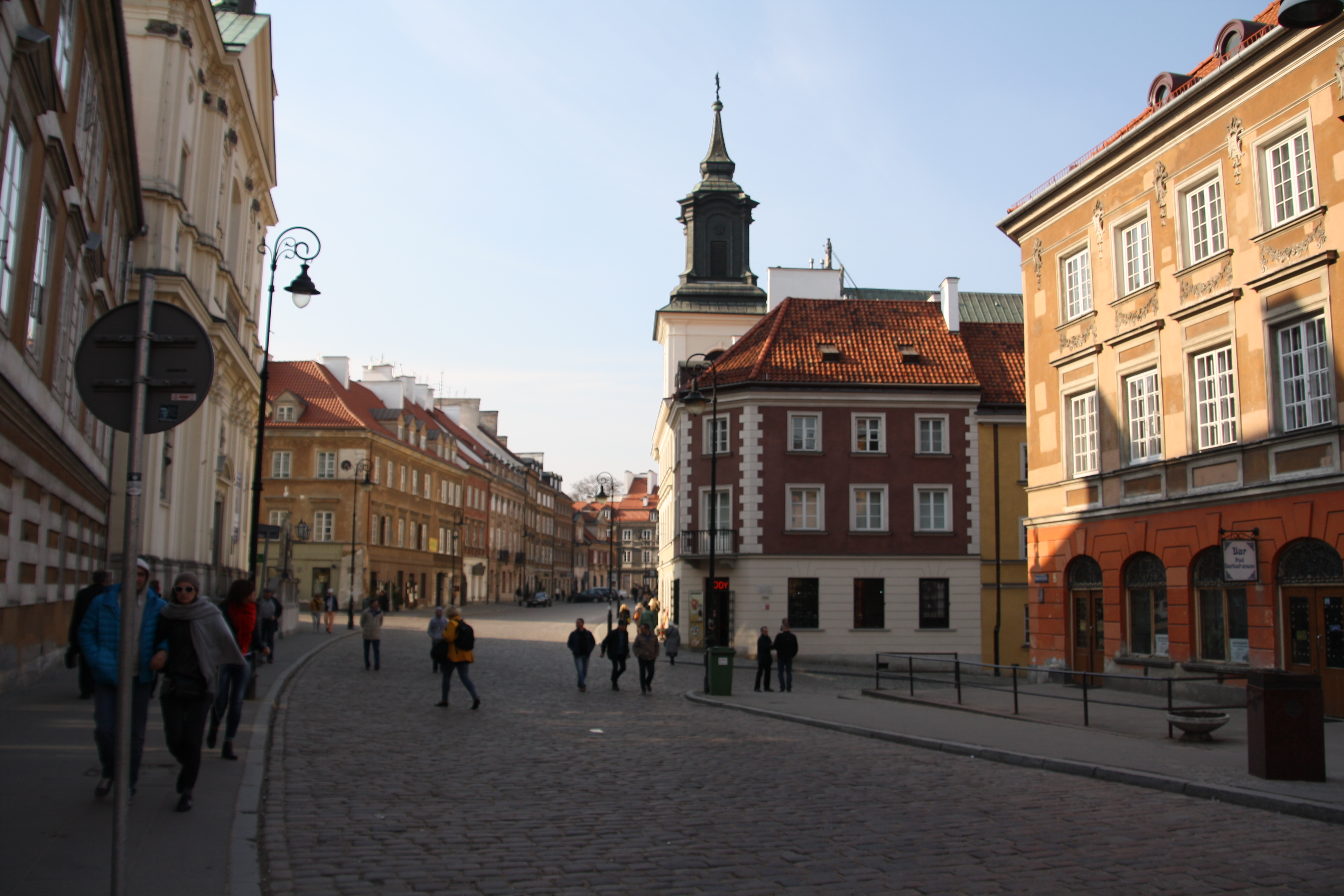
The old town was separated from the new town by the city walls. This is the Barbican which is part of the long city wall defences but now is a place for artists and musicians. This was rebuilt after demolition by the Nazi’s

Warsaw Royal Castle
At the southern entrance to the Old Town you’ll be met by the 90-metre facade of the Mannerist and Baroque castle, the seat of the Polish monarchs for hundreds of years.
The castle has come through an eventful 700 years involving two demolitions, one by the Swedes in the mid-17th century and another by the Germans in the Second World War.
Since the last reconstruction in the 1980s the castle has been a museum, where you can view the apartments of the 16th-century King Sigismund II Augustus, and visit the House of Parliament, the fountain-head of Polish democracy and where amendments made to the Polish-Lithuanian constitution ushered in unprecedented religious tolerance.
There’s also a collection of paintings from the 16th to the 18th century by masters like Rembrandt, van Dyck, Joos van Cleve and Gainsborough

Castle Square
When Poland’s capital moved from Kraków to Warsaw in 1596 the square beside the castle became the cornerstone of the largest Empire in Renaissance Europe.
The man who brought about this switch was Sigismund III Vasa, who is commemorated by a bronze statue atop an 8.5-metre column.
This was first raised in 1644, but was toppled by the Germans in 1944 and its original red marble was replaced with granite.
There are still fragments of the marble column by the castle walls. Some events that shook Poland have taken place here, like a bloody riot during the period of Martial Law in 1982, a massacre by the Russians during an uprising in 1861 and a speech by Bill Clinton welcoming Poland into NATO in 1997. Whether it’s a rally or concert there’s often something going on at Castle Square in summer

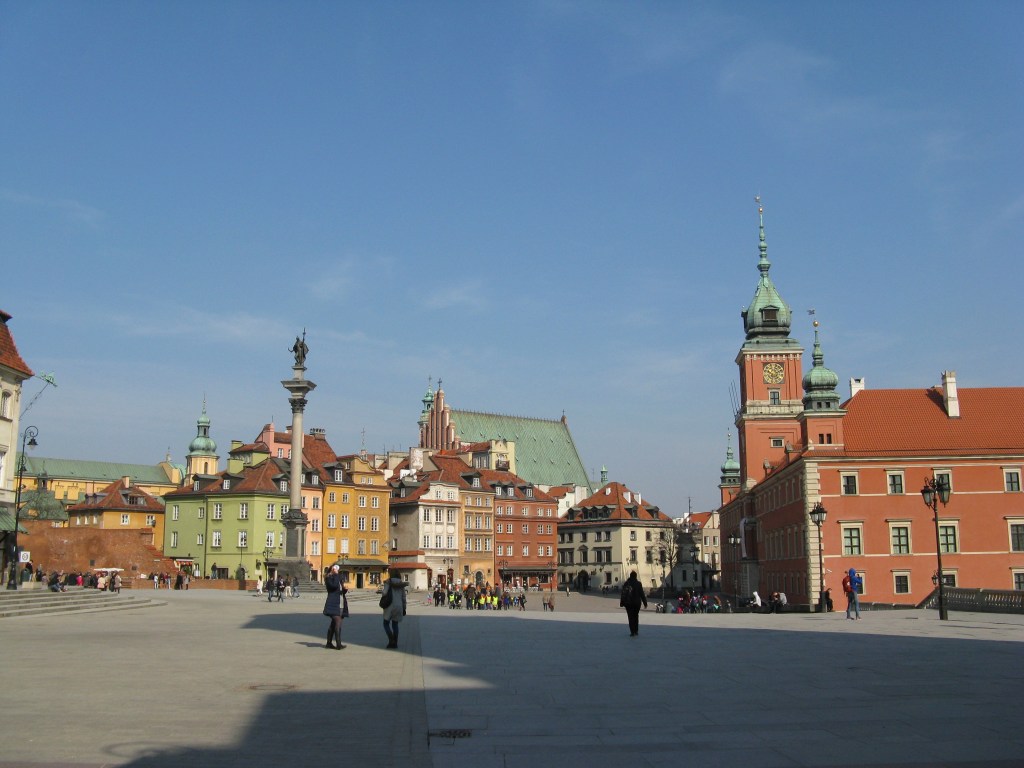
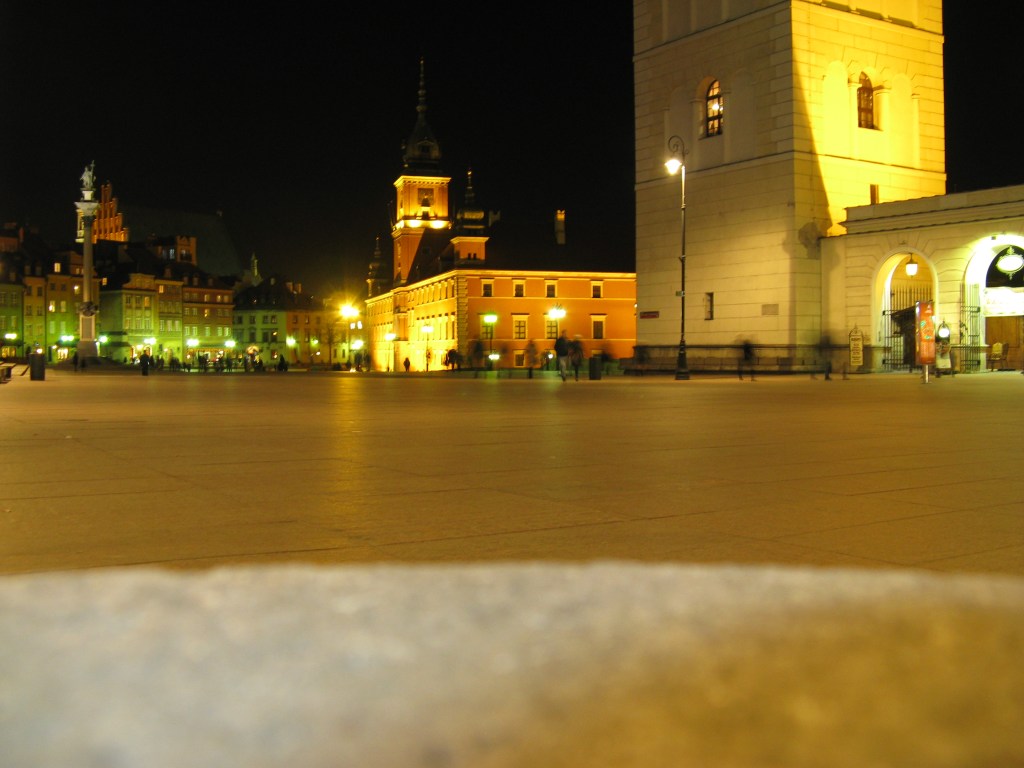
Castle square on a cold winters night (-5 degrees in March)
Little Insurgent Monument
Mały Powstaniec (the “Little Insurrectionist”) is a statue in commemoration of the child soldiers who fought and died during the Warsaw Uprising of 1944. It is located on Podwale Street, next to the ramparts of the Old Town.
The statue is of a young boy wearing a helmet too large for his head and holding a submachine gun. It is reputed to be of a fighter who went by the pseudonym of “Antek”, and was killed on 8 August 1944 at the age of 13. The helmet and submachine gun are stylized after German equipment, which was captured during the uprising and used by the resistance fighters against the occupying forces.
Jerzy Jarnuszkiewicz created the design for the monument in 1946, which was later used to make smaller copies of its present state. The statue was unveiled on 1 October 1983 by Professor Jerzy Świderski – a cardiologist who was a courier for the resistance during the uprising (pseudonym: “Lubicz”) serving in the Gustaw regiment of the Armia Krajowa. Behind the statue is a plaque with the engraved words of “Warszawskie Dzieci” (“Varsovian Children”), a popular song from the period: “Warszawskie dzieci, pójdziemy w bój – za każdy kamień twój, stolico damy krew” (“Varsovian children, we’ll head into battle – for every stone of yours, we shall give our blood”).

Tomb of the Unknown Soldier
In Piłsudski Square, the largest in Warsaw, is a monument for unidentified soldiers who have died fighting for Poland.The tomb dates to 1925, and contains the body of a soldier who fell in the Battle of Lemberg of 1918-1919 between Poland and the West Ukrainian People’s Republic.
The monument housing the tomb is a fragment (three arches) from the arcade that once belonged to the Saxon Palace, demolished after the Warsaw Uprising. Under the central arch is the tomb and eternal flame, watched by the Representative Honour Guard Battalion of the Polish Armed Forces. At the stroke of every hour 365 days a year the guard is changed. The monument and square are the focus of ceremonies for the Polish Armed Forces Day every 15 August.


Palace of Science and Culture
This was a gift from Stalin to the Polish people symbolising 40 years of Soviet rule. It was originally called Joseph Stalin’s Palace of Science and Culture but in the wake of destalinization the dedication to Stalin was revoked. Stalin’s name was removed from the colonnade, interior lobby and one of the building’s sculptures.
The building was when it was built the tallest in Poland at 237 metres. It houses various public and cultural institutions such as cinemas, theatres, libraries, sports clubs, university faculties and authorities of the Polish Academy of Sciences. There is a viewing platform on the 30th floor.
The building is very divisive as some Poles see it as a beautiful piece of architecture and others see it is an unwanted reminder of Poland’s Soviet rule.

View from the top of central Warsaw

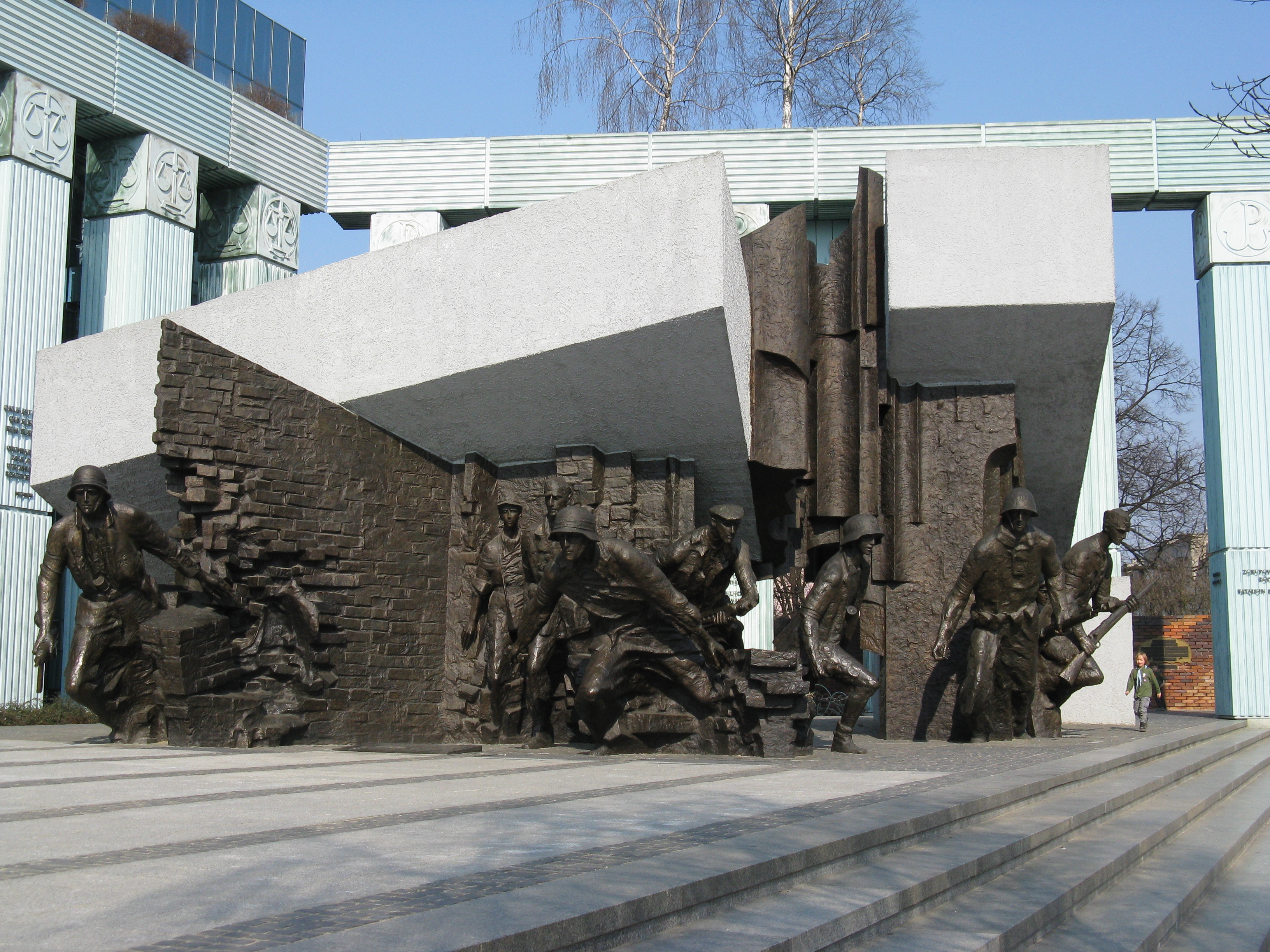
Uprising Monument
This celebrates the Warsaw Uprising, Powstanie Warszawskie, which was a major World War II operation by the Polish resistance Home Army, Armia Krajowa, to liberate Warsaw from Nazi Germany.
Krkowskie Przedmiescie
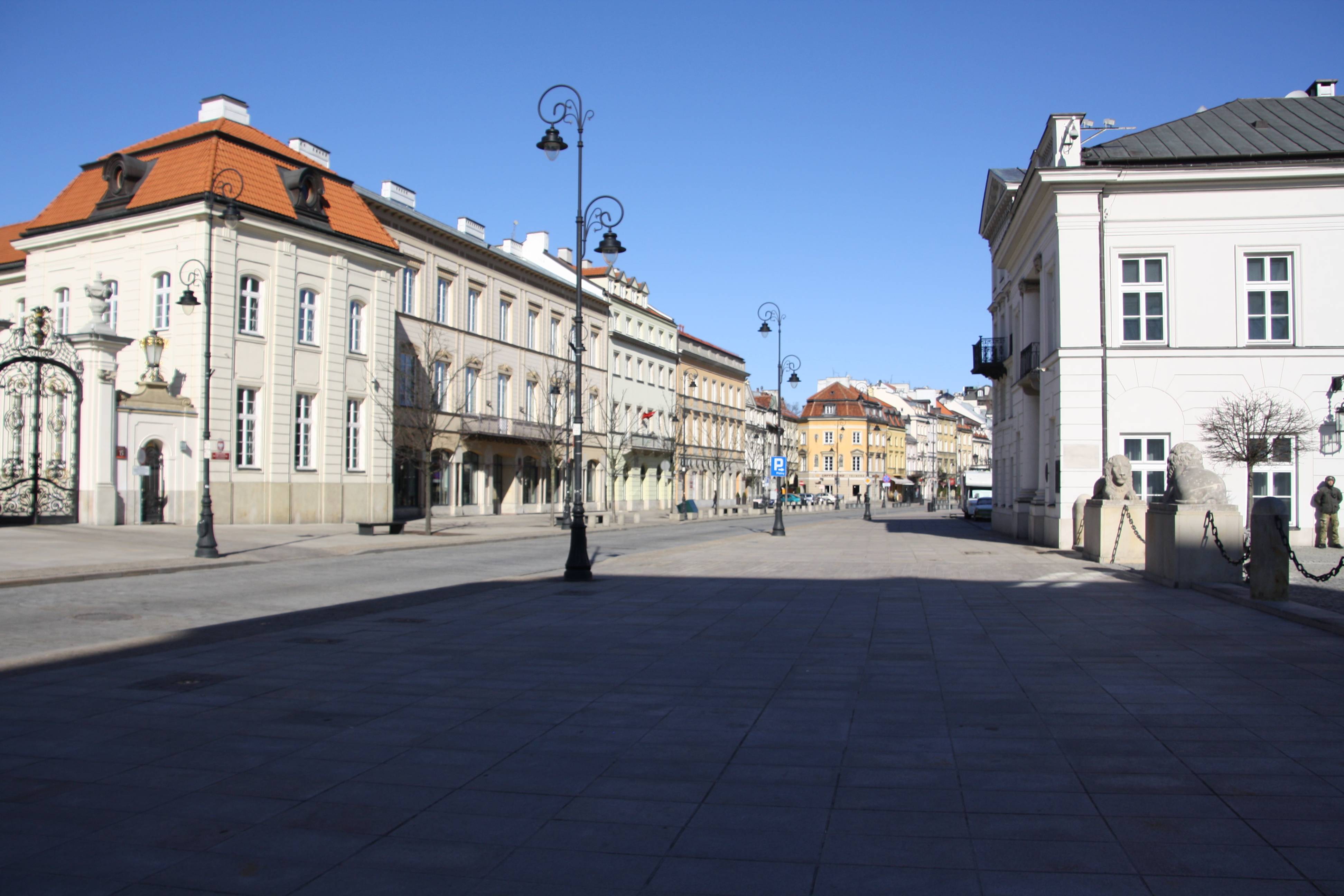
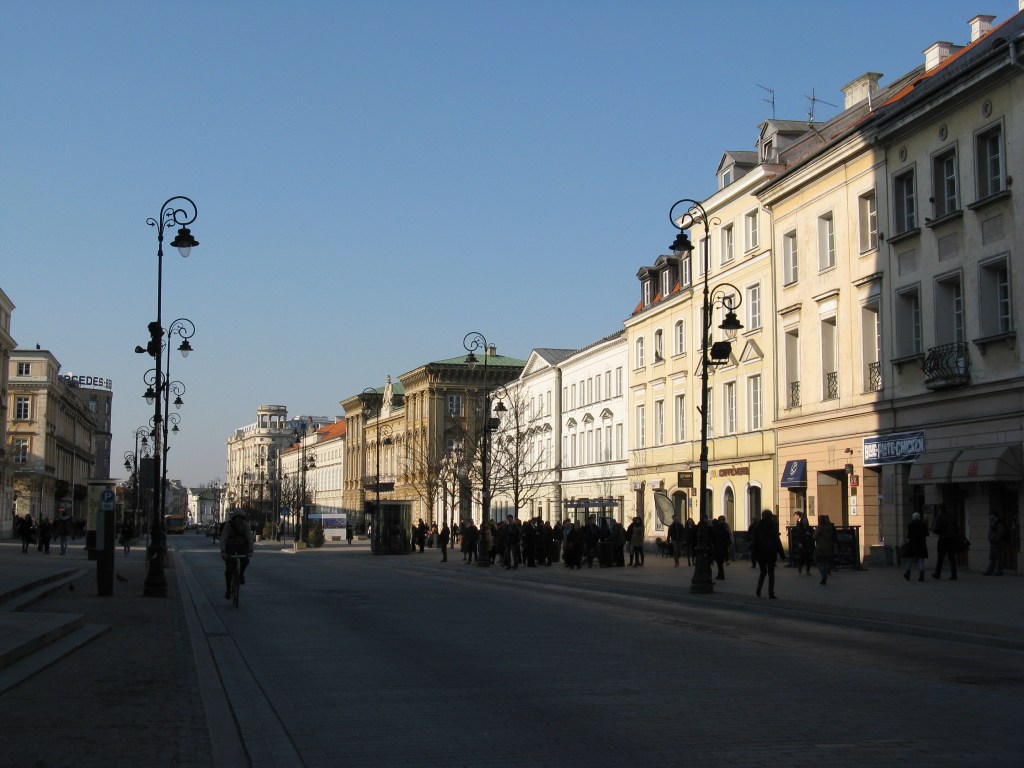
The most prestigious street in Warsaw makes its way southwards at the beginning of the Royal Route from near the Castle Square.
On this road there are palaces, dignified monuments and eminent Polish institutions like the Polish Academy of Sciences, Warsaw University and the Presidential Palace.
Holy Cross Church
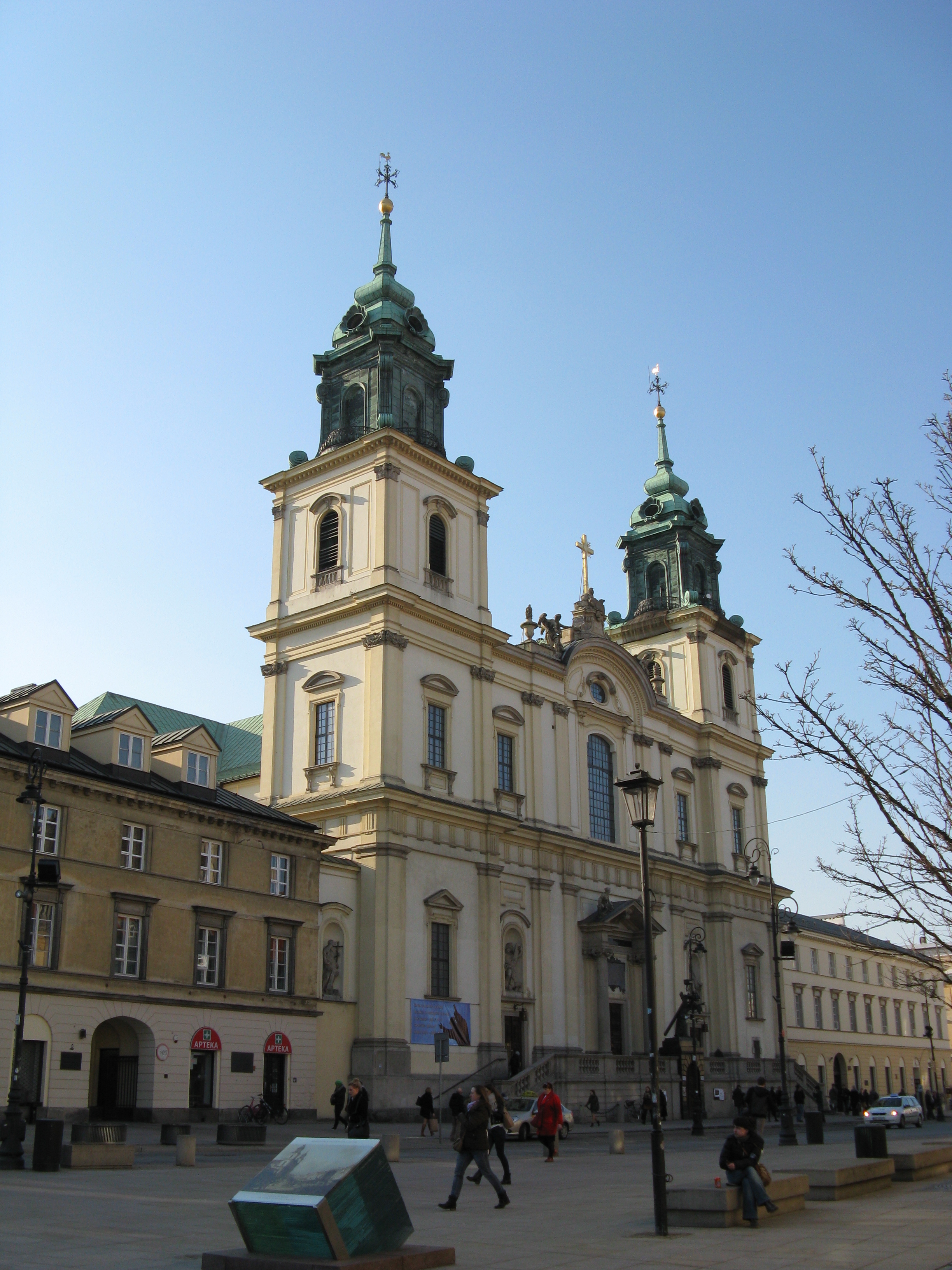
Another of the head-turning sights on Krakowskie Przedmieście, the Holy Cross Church is a Baroque monument built in the first half of the 18th century to a design by the royal court architect Józef Szymon Bellotti.
The church was badly damaged in the Warsaw Uprising and was later blown up by the German army in 1945. And when it was rebuilt right after the war the design was simplified and didn’t include the frescoes and polychrome statues that came before.
But there’s still a very good reason to pay a visit: In accordance with his will, Frédéric Chopin’s heart was brought to this church by his sister in an urn, and embedded in a pillar in one of the chapels.
Presidential Palace
The Presidential Palace (Polish: Pałac Prezydencki) is the official residence of the Polish head of state and president. Originally constructed in 1643 as an aristocratic mansion, it was rebuilt and remodelled several times over the course of its existence by notable architects. The current neoclassical palace was completed in 1818.
During World War II, it served as a Deutsches Haus for the country’s German occupiers and survived the 1944 Warsaw Uprising intact. After the war, it resumed its function as seat of the Polish Council of Ministers. On 14 May 1955, the Warsaw Pact was signed inside the Presidential Palace between the Soviet Union and the Eastern Bloc countries. Since July 1994, the palace has been the official seat of the President of the Republic of Poland.

Hotel Bristol
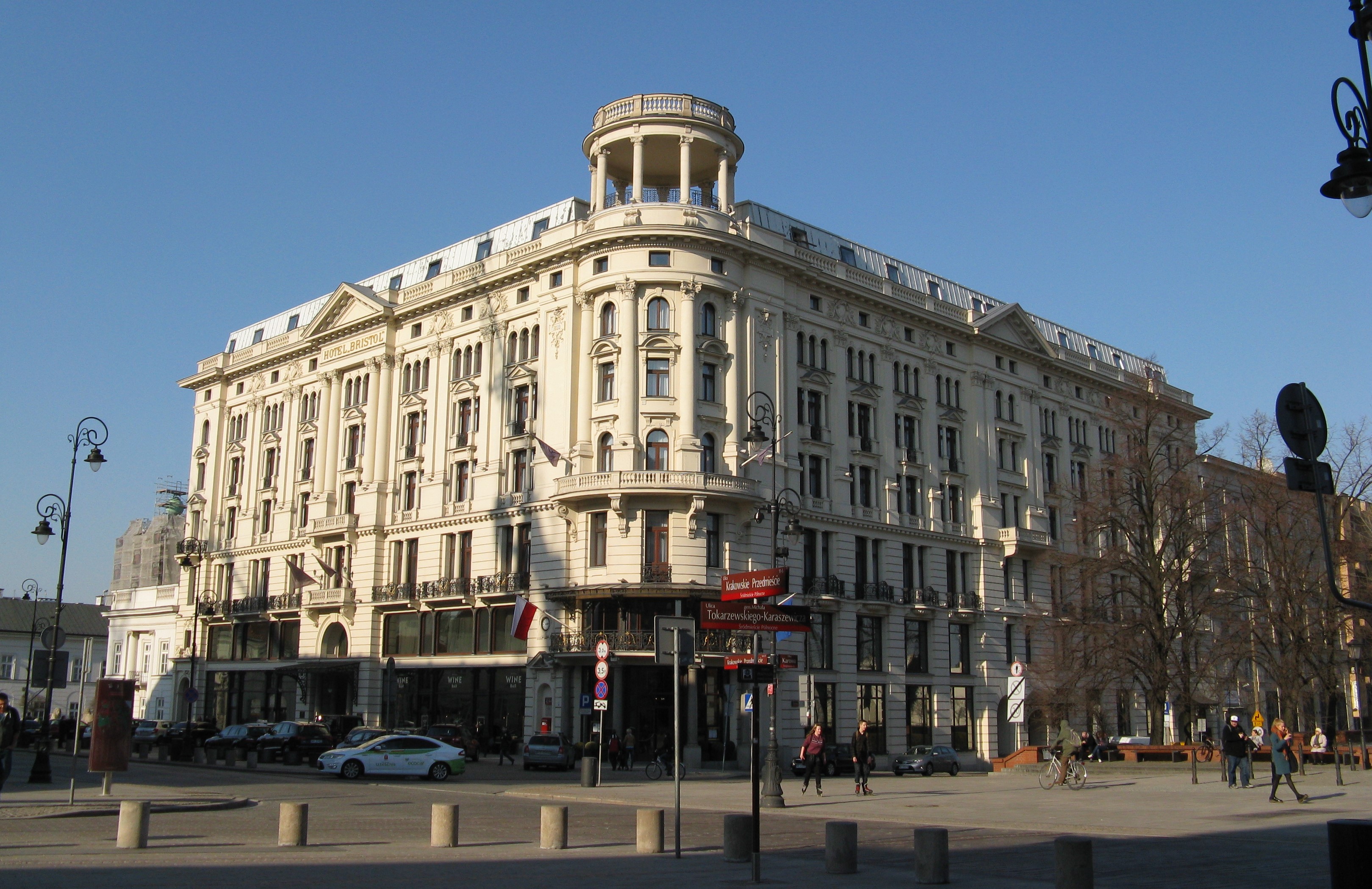
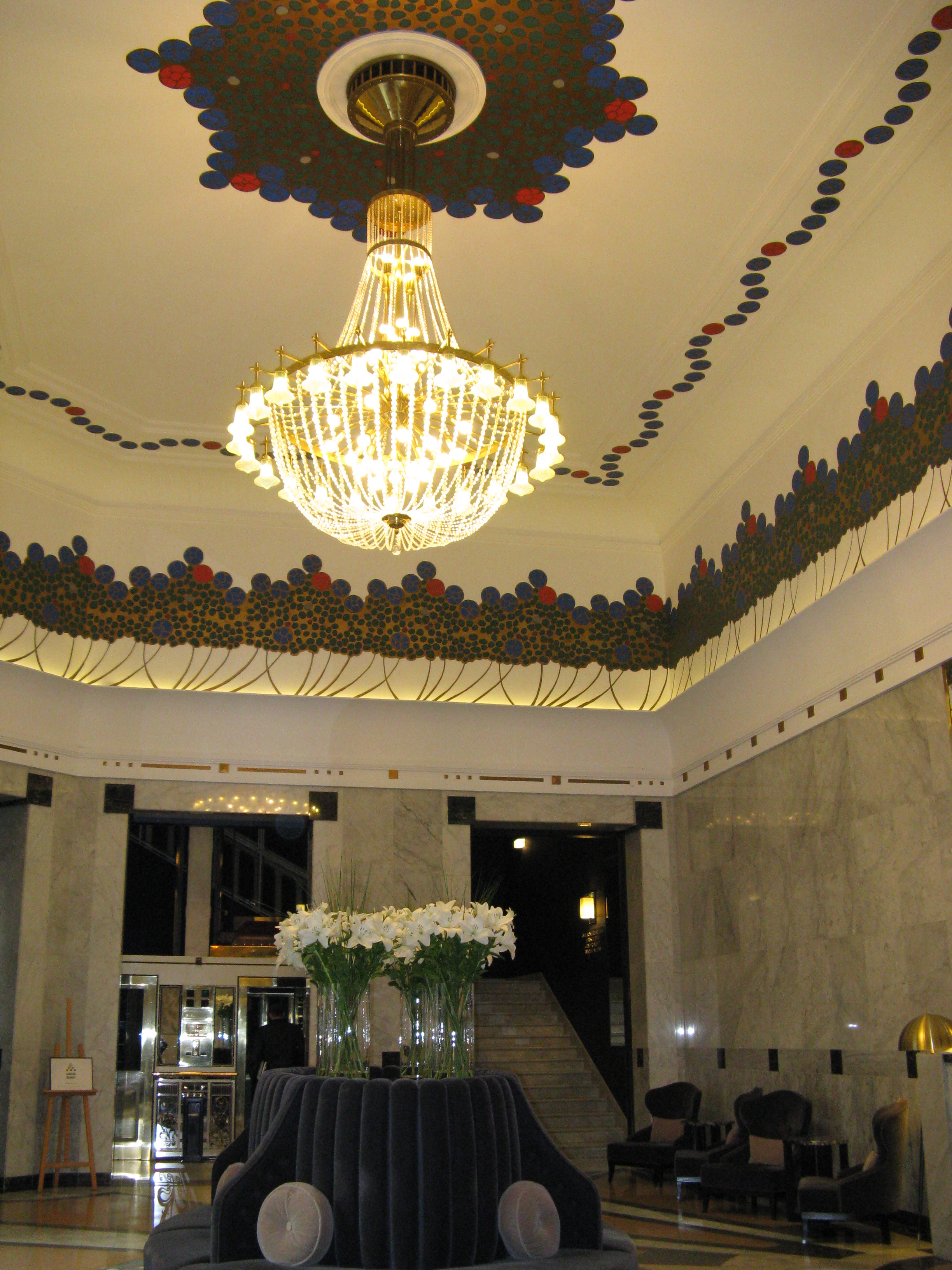
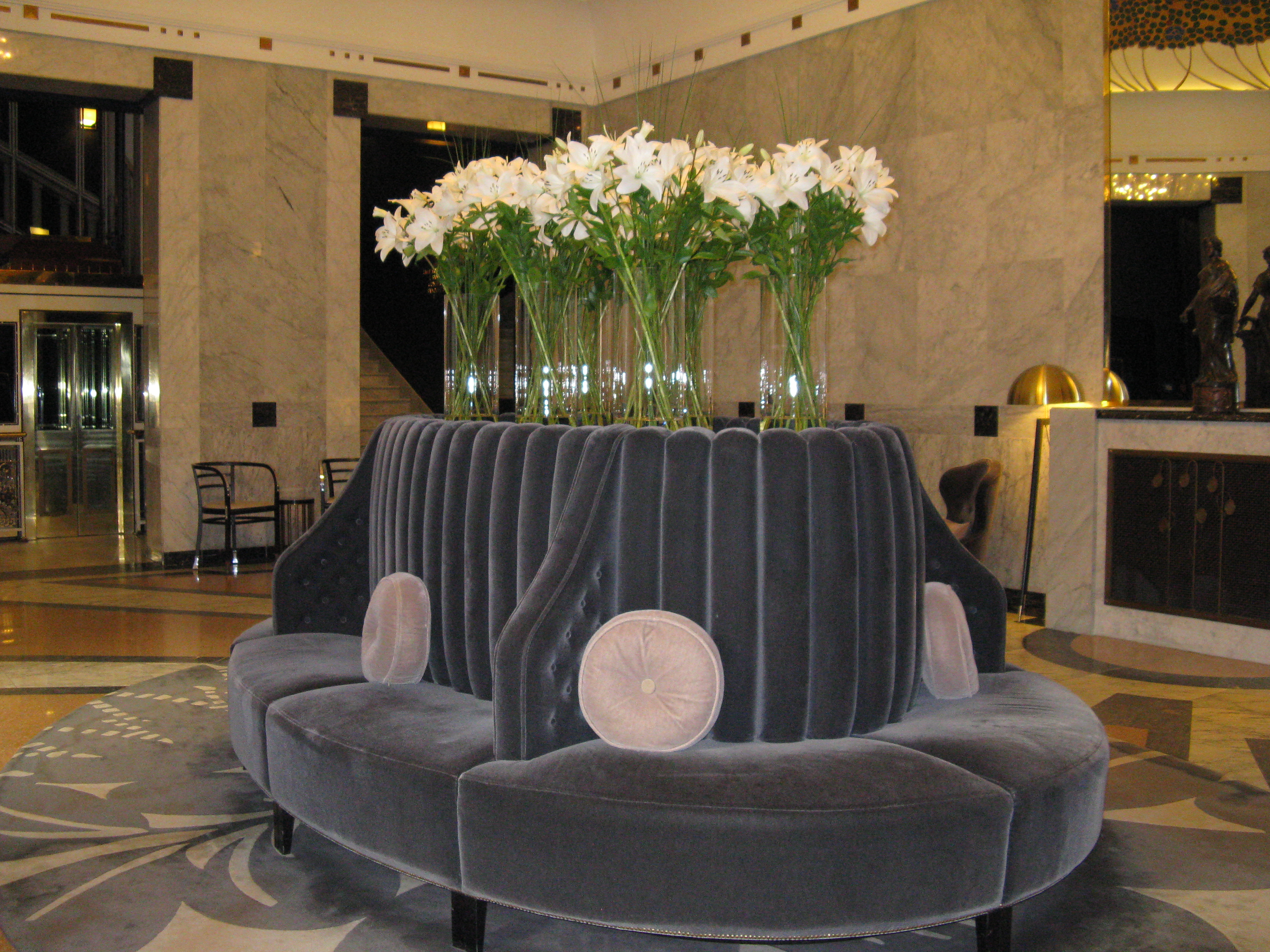
We don’t usually include hotels as part of our blog but this one is an exception, it is not only a stunning place to stay but has a lot of history behind it having survived the through adversity.
The Hotel Bristol was constructed from 1899-1900 on the site of the Tarnowski Palace in an Art Nouveau design. However the builders decided to change the style to a Neo-Renaissance design. The cornerstone was laid on April 22, 1899 and the hotel was dedicated on November 17, 1901 and opened on November 19, 1901.
Upon the German invasion in 1939, the hotel was made into the headquarters of the Chief of the Warsaw District. It miraculously survived the war relatively unscathed, standing nearly alone among the rubble of its neighbourhood. Following the war, the hotel was renovated and reopened in 1945.
It closed in 1981. However no work was done and the building languished through the waning days of the Communist government. After the fall of Communism in 1989, the hotel was finally completely restored it to its former glory from 1991-1993, with the original interiors of the public rooms recreated to match the 1901 designs. The Bristol was reopened on April 17, 1993, with Margaret Thatcher in attendance.
Saxon Park (Ogród Saski)
When Saxon Garden off Piłsudski Square opened its gates to the public in 1727 it became one of the first public parks in the World. It had been landscaped in the 17th century for the Saxon Palace, which was lost in the Second World War, along with the Rococo Brühl Palace that also backed onto the park.
Beautiful park in an amazing city.

National Stadium
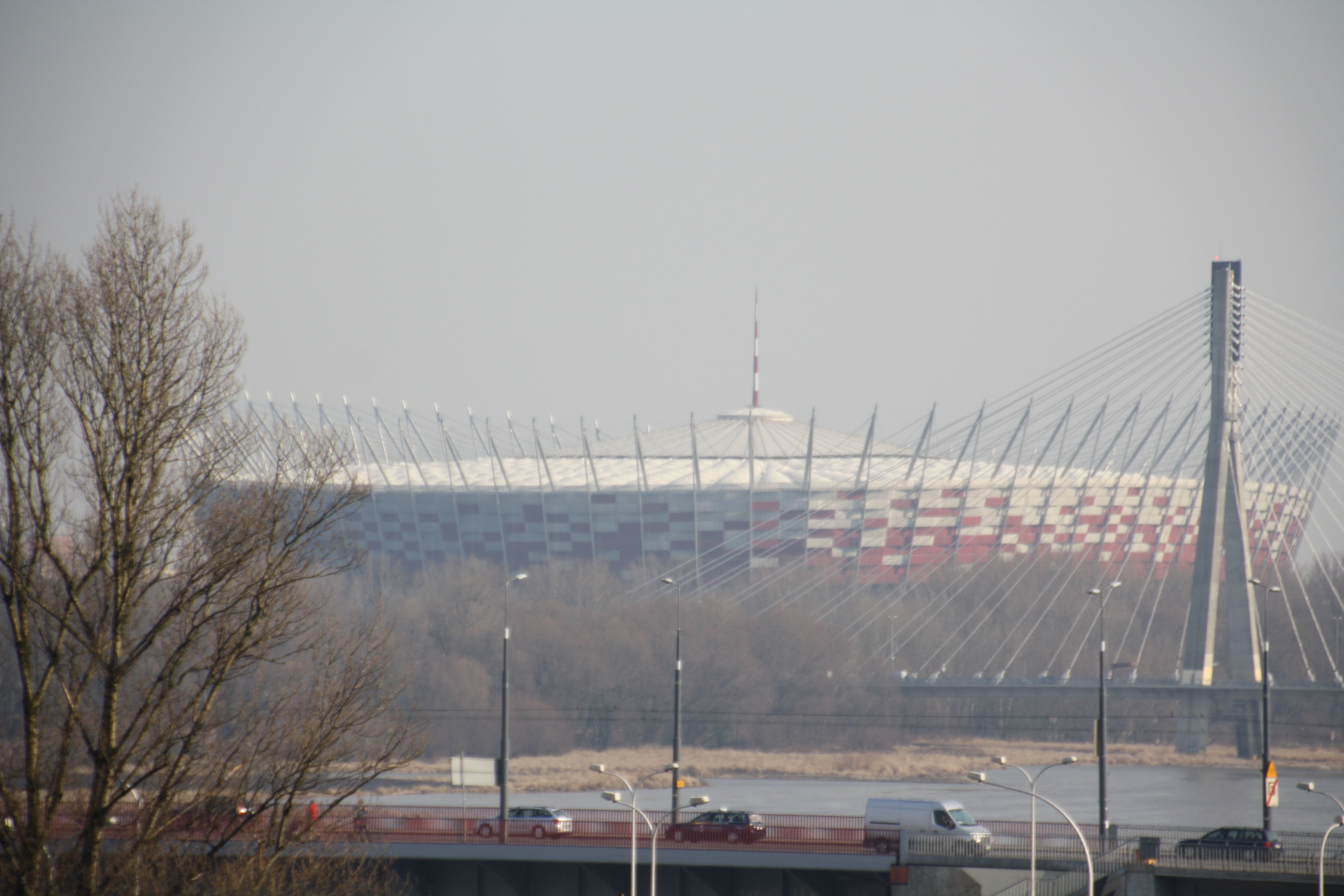
There aren’t many capital cities where you can walk from the centre of the old town to the national stadium. Unfortunately when we were in Warsaw there were no events on. If we had waited a couple of months this stadium hosted the Europa Cup Final between Ukrainian side Dnipro Dnipropetrovsk and the title holders, Spanish side Sevilla. Sevilla won the match 3–2 for a then record fourth title.
They have the Polish Speedway Grand Prix at the stadium so maybe one day we will return to Warsaw.
 Heather and Keith's travels